WEBVTT
00:00:01.120 --> 00:00:06.320
Trauma-informed leadership is the practice of understanding stress and trauma.
00:00:06.559 --> 00:00:08.640
We all kind of know how to be cops.
00:00:08.800 --> 00:00:10.160
We know how to be tactical.
00:00:10.320 --> 00:00:11.759
We know how to be operational.
00:00:11.919 --> 00:00:13.679
What we don't know how to be is human.
00:00:13.839 --> 00:00:18.800
Emotional intelligence in law enforcement doesn't mean the reduction of accountability.
00:00:18.879 --> 00:00:21.199
It actually heightens accountability.
00:00:21.440 --> 00:00:28.559
The trauma-informed piece, right, is that physiological, psychological piece that is such a key framework for leadership.
00:00:28.800 --> 00:00:30.719
And we don't teach that.
00:00:31.359 --> 00:00:36.799
We send them to the academy, we teach them how to handle calls, but we don't teach them how to lead.
00:00:37.200 --> 00:00:40.719
And I always like to use the term expose the buriance of others.
00:00:40.880 --> 00:00:42.880
That's what a great leader does.
00:00:46.560 --> 00:00:49.520
Welcome to Responder Resilience, along with my guest co-host, Dr.
00:00:49.600 --> 00:00:50.560
Tracy Hemonowski.
00:00:50.719 --> 00:00:52.079
I'm David Dashinger.
00:00:52.320 --> 00:00:55.280
What if the thing that's breaking your department isn't attitude?
00:00:55.359 --> 00:00:56.880
It's unaddressed trauma.
00:00:57.039 --> 00:01:04.959
Today, retired chief deputy and trauma-informed leadership and executive coach Roseanne Richel is flipping the script on law enforcement leadership.
00:01:05.120 --> 00:01:14.319
Roseanne is pulling back the curtain on why command presence alone isn't enough anymore, and what today's leaders actually need to build teams that perform and heal.
00:01:14.480 --> 00:01:22.239
Thanks to our resource partner, First Responder Project, whose no-cost First Responder retreats offer you a chance to reclaim connection and learn vital skills.
00:01:22.400 --> 00:01:28.719
This isn't just a retreat, it's a lifeline to keep you mentally strong at work and emotionally present at home.
00:01:28.879 --> 00:01:32.159
Take a stand for your well-being and the connections that matter most.
00:01:32.319 --> 00:01:34.560
Sign up now for your FRP retreat.
00:01:34.719 --> 00:01:38.480
Learn more and register at firstresponderproject.org.
00:01:38.719 --> 00:01:43.280
There's a new app built by Firefighters for Firefighters, and it's called Crackle.
00:01:43.599 --> 00:01:50.000
Download the app now for free as a legacy member and get early access to exclusive content, tools, and updates as they drop.
00:01:50.159 --> 00:01:53.599
Get the free app at crackle.responderTV.com.
00:01:55.200 --> 00:02:01.760
Remember to like and subscribe, YouTube Responder Resilience, Facebook, Responder TV, LinkedIn, Apple Podcasts, and Spotify.
00:02:01.920 --> 00:02:06.640
And please check out our website responderTV.com for past episodes and guest information.
00:02:06.799 --> 00:02:09.840
We'll be right back to speak with Roseanne after this.
00:02:10.639 --> 00:02:15.919
Ask a first responder who they are, and you're likely to hear I am a police officer.
00:02:16.080 --> 00:02:17.280
I am a firefighter.
00:02:17.439 --> 00:02:18.639
I am a paramedic.
00:02:19.039 --> 00:02:21.439
I am a 911 communications operator.
00:02:21.680 --> 00:02:24.960
Not I do this work, but I do this job.
00:02:25.199 --> 00:02:28.000
Ask a clinician why they work with first responders.
00:02:28.159 --> 00:02:32.080
And they may say, There's no higher falling than helping the helper.
00:02:32.639 --> 00:02:44.639
Join us in shaping a culture where mental health, wellness, and leadership are prioritized, not whispered about, where support is a sign of strength, not failure, and where no one has to carry the weight alone.
00:02:45.039 --> 00:02:47.280
Welcome to Responder Resilience.
00:02:47.439 --> 00:02:56.400
We shine a spotlight on the unseen battles of first responder reality and celebrate the powerful wins that come from the grit of post-traumatic growth.
00:02:56.560 --> 00:03:04.319
We understand the culture, honor the trust, and bring you conversations from the change makers, passionate about helping first responders come home whole.
00:03:04.479 --> 00:03:08.000
With your hosts, retired Lieutenant David Dashinger, Dr.
00:03:08.080 --> 00:03:12.719
Stacy Raymond, and Bonnie Roomily, LCSW EMT.
00:03:18.639 --> 00:03:21.120
I'm really excited to have a guest host today.
00:03:21.199 --> 00:03:21.520
It's Dr.
00:03:21.599 --> 00:03:27.680
Tracy Hemonowski, who has been on the show multiple times and been a contributor to our book, among other things.
00:03:27.919 --> 00:03:36.800
A little bit about Tracy, she's a licensed clinical psychologist with 26 years of experience in occupational stress and trauma among first responders and military communities.
00:03:37.039 --> 00:03:45.599
As founder of the First Responder Project, she leads a nonprofit dedicated to summits, peer trainings, and recalibration retreats for first responders and their families.
00:03:45.840 --> 00:03:56.000
A former active duty and contracted Navy psychologist for 19 years, Tracy has worked with repatriated POWs, special warfare operations, law enforcement, and fire rescue.
00:03:56.159 --> 00:04:05.280
Today she consults with Sheriff's Offices and the Air Force Ready Firefighter Program and delivers advanced peer support training and speaks and publishes nationally.
00:04:05.439 --> 00:04:14.080
She's an IAF-trained red and blue line rescue provider, a designated national FOP vetted provider.
00:04:14.400 --> 00:04:16.480
Tracy, welcome as a guest host.
00:04:16.959 --> 00:04:18.319
It's a pleasure to be here, Dave.
00:04:18.399 --> 00:04:19.199
Thanks so much.
00:04:19.600 --> 00:04:20.000
Sure.
00:04:20.240 --> 00:04:23.360
And now for our guest today, Roseanne Richell.
00:04:23.600 --> 00:04:32.399
Nearly four decades in law enforcement and EMS gave Roseanne Richell a front row seat to resilience, leadership, and what it really means to perform under pressure.
00:04:32.560 --> 00:04:43.600
As a retired chief deputy with a background in counseling psychology and trauma-informed therapy, she brings something rare to the table: the ability to bridge operational experience with clinical insight.
00:04:43.759 --> 00:04:57.040
As founder of the Ritchill Group and senior faculty with the National Command and Staff College, Roseanne partners with executives to build trauma-informed organizations, ones that elevate accountability, resilience, and ethical performance.
00:04:57.199 --> 00:05:02.319
She helps leaders navigate the hardest decisions with clarity, steadiness, and confidence.
00:05:02.560 --> 00:05:04.800
Roseanne, welcome to Respond to Resilience.
00:05:05.120 --> 00:05:07.199
Thank you very much for having me on your podcast.
00:05:07.279 --> 00:05:08.480
I really look forward to this.
00:05:08.959 --> 00:05:20.720
I'm still going and very passionate about uh this part of my career, my second career, my third career, my the rest of my life, to be honest with you.
00:05:21.040 --> 00:05:21.279
Great.
00:05:21.360 --> 00:05:23.759
Let's dive into what brought you to this place.
00:05:24.079 --> 00:05:37.199
I wanted to mention, following up on what you just said, you've had a remarkable evolution from nearly four decades in law enforcement and EMS to pursuing certifications from John Maxwell and Tony Robbins to then earning a master's in counseling psychology.
00:05:37.279 --> 00:05:39.839
So that's a lot of professional reinvention.
00:05:40.000 --> 00:05:45.439
What's the moment you realize your law enforcement career was just the first chapter of who you were meant to be?
00:05:46.240 --> 00:05:51.600
Oh boy, I, you know, that's funny you say that because I had that revelation, I had that moment.
00:05:52.480 --> 00:05:56.000
So if if if you'll indulge me for a minute, I'll just go back to when I started.
00:05:56.079 --> 00:05:58.639
So I I knew growing up there was four things I wanted to be.
00:05:58.720 --> 00:06:08.720
I wanted to be a doctor, a vet, a paramedic, um and uh and a doc uh doctor, a paramedic vet, and a police officer, right?
00:06:09.040 --> 00:06:14.720
And I was very fortunate to be able to do two of those in my career.
00:06:14.959 --> 00:06:21.519
Um before we had paramedics here, we had EMTs and here in Northern California in the Sacramento area.
00:06:21.759 --> 00:06:30.240
And uh when I was 19, I became an EMT and I worked that on an ambulance for six years.
00:06:30.480 --> 00:06:34.079
And you know, seeing everything to everything, not every call.
00:06:34.240 --> 00:06:37.759
Every call was traumatizing for the most part, right?
00:06:37.839 --> 00:06:41.759
That you go with some and deal with somebody who's had their worst day.
00:06:42.079 --> 00:06:59.199
And then at that point, I was testing to become a police officer, and then I finally, after six years, um, you know, put myself to the academy and became uh a police officer, and then spent the rest of my career 27 years in law enforcement and uh the six years in EMS.
00:06:59.680 --> 00:07:07.199
And as I began climbing the ranks, I didn't start promoting until I was had 13 years in law enforcement before I became a sergeant.
00:07:07.439 --> 00:07:11.279
And one of the things that I wanted to do, quite frankly, was just be a canine handler.
00:07:11.360 --> 00:07:13.199
I just wanted to work a dog, right?
00:07:13.279 --> 00:07:17.120
And I really got I got that opportunity to do that for five years.
00:07:17.279 --> 00:07:18.800
And so that was a blessing.
00:07:18.959 --> 00:07:24.480
So anything thereafter, I thought, well, maybe I'll be a sergeant, but beyond that, it really wasn't on my radar.
00:07:24.800 --> 00:07:31.600
And as I became more involved in law enforcement and responding to more to more issues, more concerns.
00:07:31.839 --> 00:07:39.120
Um I decided, you know, I want to take those steps and start building my career and becoming a sergeant lieutenant.
00:07:39.199 --> 00:07:50.319
And the the pickle point for me was when I made that middle manager uh portion of my career, we got to select to go to different management schools.
00:07:50.399 --> 00:07:56.319
And I chose to go to the West Point Leadership School that was put on with uh by LAPD.
00:07:56.800 --> 00:08:09.680
And during that school, uh, during that time, that course, it was four months, one week, excuse me, one week out of each month, and we went over 26 theories, leadership theories during that time frame.
00:08:09.759 --> 00:08:11.600
And we wrote papers on them, we did everything.
00:08:11.759 --> 00:08:30.160
And at the time I had started developing leadership um curriculum, and I was teaching leadership courses because again, at that point as a lieutenant, I'd already now had about 18 years in, and I had experienced many different leadership styles, some good, some not so good.
00:08:30.879 --> 00:08:37.759
And one of the things is I was learning and self-educating is that we don't teach everybody, we don't give them the tools right out of the gate.
00:08:37.919 --> 00:08:42.799
We send them to the academy, we teach them how to handle calls, but we don't teach them how to lead.
00:08:43.679 --> 00:08:49.919
And you know, here I am uh investigating internal affairs and just complaints and all these different things.
00:08:50.000 --> 00:08:51.840
I'm thinking we're missing something here.
00:08:52.000 --> 00:08:59.279
We're not giving people the tools to lead themselves and lead others and lead the community.
00:08:59.519 --> 00:09:07.039
And so during that coursework at LAPD, uh there was a two-hour block on emotional intelligence.
00:09:07.759 --> 00:09:11.919
And this was back in 2014, and I'd never heard that term before.
00:09:12.320 --> 00:09:30.000
And although I could not put, you know, I knew what I was looking for, but when I learned about emotional intelligence and and the the you know, the five pillars that Daniel Goleman was talking about, I thought, oh my god, that's the missing piece to my leadership courses.
00:09:30.559 --> 00:09:34.240
So I started infusing that into the different leadership courses that I had.
00:09:34.320 --> 00:09:35.360
I had three of them.
00:09:35.679 --> 00:09:40.879
And when I started teaching it in all my evaluations, people were like, oh my God, I we need more of this.
00:09:41.039 --> 00:09:42.799
It's like they'd never heard the term.
00:09:43.120 --> 00:09:47.120
So it was it was a fresh term in public safety, right?
00:09:47.200 --> 00:09:51.200
It was a fresh term to me, even though some people might have spoken that.
00:09:51.440 --> 00:09:56.000
So it was that piece on emotional intelligence that really resonated with me.
00:09:56.480 --> 00:10:02.399
And from that point forward, I was just consumed and immersed with leadership development.
00:10:02.559 --> 00:10:05.840
I was reading all the books behind me, I think I read in a year.
00:10:06.000 --> 00:10:07.679
And I'm not a big reader.
00:10:07.840 --> 00:10:16.240
And all of a sudden I was just reading everything, and then I was, you know, really I went through the process, become a coach, speaker with John Maxwell team.
00:10:16.399 --> 00:10:20.000
Um, I started listening to Tony Robbins, getting certified in coaching there.
00:10:20.080 --> 00:10:28.639
So I started doing the coaching certifications and just being a consumer of knowledge, basically, in the leadership realm.
00:10:28.799 --> 00:10:37.600
And then as I promoted up to captain-in-chief, that's when things really started paying off for me in consuming all of that knowledge.
00:10:37.759 --> 00:10:45.200
And it just became a passion for me to convey that information to all the ranks.
00:10:45.600 --> 00:10:52.399
Um, and then the trauma piece comes later because and we can talk about that from we can interweave that in this conversation.
00:10:52.480 --> 00:11:01.600
But that's really that the pivotal point that you're talking about, David, was in 2014 going to the West Point Leadership Program and the piece on emotional intelligence.
00:11:01.919 --> 00:11:11.120
You're trained to help people heal, but first responders, they carry trauma that's buried under silence, stigma, and stress.
00:11:11.440 --> 00:11:19.440
Helping the helpers gives you the framework to connect, to speak their language, earn their trust, and actually make an impact.
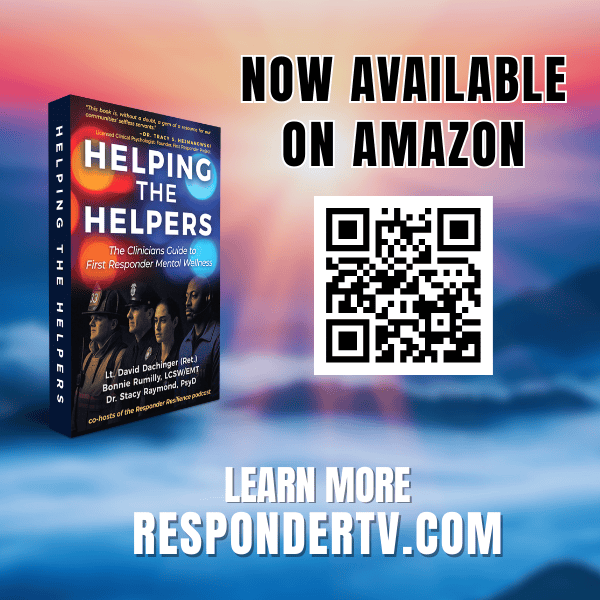
00:11:20.320 --> 00:11:26.480
From the experienced team and clinicians behind the Responder Resilience Podcast, this isn't theory.
00:11:26.639 --> 00:11:29.919
It's real-world support for the ones who need you most.
00:11:30.080 --> 00:11:32.320
And this book isn't just for clinicians.
00:11:32.559 --> 00:11:44.720
If you're an agency leader, peer support team, chaplain, EAP, wellness program coordinator, or family member, helping the helpers will equip you with the tools, language, and insight to make a difference.
00:11:45.039 --> 00:11:47.519
Be the resource they can count on.
00:11:47.840 --> 00:11:51.679
Order your copy of Helping the Helpers on Amazon today.
00:12:21.200 --> 00:12:21.679
Right.
00:12:22.080 --> 00:12:23.840
But what does that look like, right?
00:12:24.639 --> 00:12:25.039
Exactly.
00:12:25.120 --> 00:12:27.519
And I think we're gonna dive into that a little more.
00:12:27.679 --> 00:12:34.480
You've you brought up a couple of things that I want to circle back to, Roseanne, uh, one being retirement, the other being the promotional process.
00:12:34.639 --> 00:12:38.399
But before we get there, let's talk about trauma-informed leadership.
00:12:38.639 --> 00:12:46.000
For someone hearing that term for the first time, how would you describe it and what does it look like in practice inside a law enforcement agency?
00:12:46.720 --> 00:13:09.200
So for me, the trauma-informed leadership piece of it, the trauma-informed terminology came out when I was going through my master's program in counseling psychology to become a marriage family therapist because I really wanted to infuse that into, you know, not only leadership, but you know, I talk leadership all day, but there's a missing piece when it comes to public safety.
00:13:09.279 --> 00:13:16.399
And that's the trauma piece that we kind of bury, that's kind of shameful, that we need to display our stoicism.
00:13:16.559 --> 00:13:17.919
You know, we need to be strong.
00:13:18.080 --> 00:13:24.720
There's this command presence about us all the time, the control, the compliance, the rigidity behind that.
00:13:24.960 --> 00:13:36.879
And so as I became more educated again during my master's program and then working with clients, uh, there was this, you know, the terminology trauma-informed was introduced into my vernacular.
00:13:36.960 --> 00:13:42.159
And I thought, well, you know what, there's I I kind of like to marry those both up with trauma-informed leadership.
00:13:42.240 --> 00:13:47.840
So I started doing more um education on that, so I educate myself on that.
00:13:48.000 --> 00:13:58.240
So for me, trauma-informed leadership is really practice, the practice of leading uh and understanding how stress and trauma impact our behavior in law enforcement.
00:13:58.399 --> 00:14:07.200
And I can think back um how many times we we experienced a run of deaths in our organization.
00:14:07.759 --> 00:14:14.879
Uh and I worked for the Sacramento County Sheriff's Department, very proud for that organization and and you know, elevate through the ranks.
00:14:15.039 --> 00:14:20.639
And we experienced a time where there was like seven deaths every one every year, and that's kind of unheard of.
00:14:20.720 --> 00:14:22.720
And we're a large organization.
00:14:23.279 --> 00:14:39.840
And just seeing the behavior, what my behavior at that point, you know, I'm a sergeant, I'm a lieutenant, you know, now it's not about I can bury myself in this, my head in the sand and just process or attempt to process my own trauma, but now I have to be there for my troops.
00:14:39.919 --> 00:14:41.120
And what does that mean?
00:14:41.279 --> 00:14:41.519
Right?
00:14:41.919 --> 00:14:48.320
Arm around the shoulder, hey, you'll be okay, go see the uh peer support or something like that.
00:14:48.799 --> 00:14:49.919
It's not that.
00:14:50.320 --> 00:14:52.559
That's just one spoke in the wheel.
00:14:52.720 --> 00:15:05.120
It's understanding how to approach somebody and not push the envelope if they're not ready to um deal with the trauma that they're experiencing from an event like that.
00:15:06.000 --> 00:15:21.279
And so that's why I really started to become more involved and again immerse myself in what trauma-informed leadership should look like and how to infuse that all the way up and down the chains, right?
00:15:21.519 --> 00:15:27.360
Break that barrier, break that hardness, uh, and be softer, but yet be accountable, right?
00:15:28.000 --> 00:15:36.960
Emotional intelligence in law enforcement doesn't mean the reduction of accountability, it actually heightens accountability, right?
00:15:37.360 --> 00:15:40.799
And intensifies accountability if you do it right.
00:15:42.240 --> 00:15:49.120
So I don't know if that answers your question, but there's so much more uh features in that.
00:15:49.360 --> 00:15:50.159
Yeah, well, good.
00:15:50.320 --> 00:15:51.360
That was a good start to it.
00:15:51.919 --> 00:16:12.720
I wanted to ask, um, when you when you say trauma-informed, I think sometimes there might be a resistance to this idea of I've been traumatized, um, as opposed to this vicarious trauma of you know being exposed to other people's worst days and moments, um, vice being you know, receiving trauma directly.
00:16:13.039 --> 00:16:19.039
Do you do you find that you separate the two, or is it all combined in the idea of trauma informed?
00:16:19.919 --> 00:16:24.960
So it's in the it's it's integrated, right?
00:16:25.200 --> 00:16:28.720
There's no black and white behind trauma informed.
00:16:29.200 --> 00:16:45.360
And so, you know, I have these, I have core principles behind what I call trauma-informed, and they're they're similar, uh not verbatim, but similar um to what the the substance abuse and mental health services administration calls trauma-informed, right?
00:16:45.519 --> 00:16:51.519
So trauma-informed leadership under what I teach and and what I've decided is you know, safety is number one, right?
00:16:51.600 --> 00:16:54.320
You have to have this psychological and operational safety.
00:16:54.559 --> 00:17:03.759
And you know, that comes that allows you to be able to speak, you know, without the fear of humiliation, right?
00:17:03.840 --> 00:17:11.039
To be able to say something rather than just kind of cowering back and just letting life happen in front of you and not being a participant.
00:17:11.200 --> 00:17:15.680
Um, this is also huge as regulation, being able to regulate yourself.
00:17:15.839 --> 00:17:22.000
This also kind of falls under the umbrella of emotional intelligence, the self-awareness piece and self-regulation, right?
00:17:22.160 --> 00:17:32.880
So being able to regulate yourself that comes with that unapologetic pause that I talked about, is being able to catch yourself and go, whoo, I'm getting flooded, right?
00:17:32.960 --> 00:17:37.039
All these emotions, physiologically, psychologically, all these things are happening to me.
00:17:37.200 --> 00:17:39.039
I need to take a step back, right?
00:17:39.200 --> 00:17:45.359
And then accountability with dignity, not shaming somebody for something that they have done, right?
00:17:45.519 --> 00:17:47.039
We all make mistakes.
00:17:47.279 --> 00:17:57.279
It's being able to listen and being able to be there for somebody at the worst, maybe most embarrassing or humiliating moment, right?
00:17:57.359 --> 00:18:04.079
So there's that accountability with dignity, and then again the transparency and trust piece of it is being honest, right?
00:18:04.240 --> 00:18:05.680
Being honest with somebody.
00:18:05.759 --> 00:18:11.839
And then the last part, which should always be introduced there, is the empowerment of the voice.
00:18:12.480 --> 00:18:17.759
Just being there with somebody empowers them to say, you know what, this was horrible.
00:18:18.079 --> 00:18:31.759
But my supervisor, my person, whether it's relational, home, uh, work, whatever the case may be, that is huge that I am able to have a voice and say what I need to say.
00:18:32.000 --> 00:18:36.000
So again, those are core principles of trauma-informed leadership.
00:18:36.160 --> 00:18:44.559
And that that is all kind of on a personal level, and then we pay that forward in how we communicate and engage with other people.
00:18:45.440 --> 00:18:49.200
From recruit to retiree, we're wired for readiness.
00:18:49.359 --> 00:18:50.720
Always ready to respond.
00:18:50.799 --> 00:18:52.720
The grind can be relentless.
00:18:52.960 --> 00:19:00.240
Every seasoned first responder knows eventually the weight of horror and heartbreak becomes heavier than we expected.
00:19:00.480 --> 00:19:07.200
The weight is not just carried by first responders, our loved ones who step up, hold down the fort, and fill the gaps.
00:19:07.359 --> 00:19:11.839
They are the underappreciated support system, keeping it all together through the chaos.
00:19:12.079 --> 00:19:17.200
And the reality, those who stand by the first responder are living their own ride along.
00:19:17.359 --> 00:19:29.200
The traumas their first responder absorbs reverberate through their relationships, sometimes leaving partners feeling reactive or even resentful, struggling under the weight of what their loved one brings home.
00:19:30.880 --> 00:19:37.440
First responders don't get the clock out, so finding a way to decompress isn't just a luxury, it's a necessity.
00:19:37.680 --> 00:19:41.599
That's why First Responder Project No Cost Retreats are crucial.
00:19:41.759 --> 00:19:49.680
They are tailored specifically for you, the public safety professional, and your spouse, partner, family member, or close friend.
00:19:49.839 --> 00:19:58.720
We provide you and your support person with a chance to reset, regroup, and recalibrate, and finally reclaim the quality of life you deserve.
00:19:58.960 --> 00:20:05.279
Nestled in the heart of North Florida, this 520-acre camp isn't just a nature-based getaway.
00:20:05.440 --> 00:20:22.400
It's a battlefield reset, an escape from the tempo of work and home to soak in the calm of nature, a chance to reclaim connection and learn vital skills, all while enjoying great food, private accommodations, and camaraderie around nightly bonfires.
00:20:22.640 --> 00:20:32.000
Recalibrate and restore with team-building activities, decompression strategies, expert instruction, and all the materials and resources you need.
00:20:32.319 --> 00:20:39.519
This isn't just a retreat, it's a lifeline to keep you mentally strong at work and emotionally present at home.
00:20:39.839 --> 00:20:43.759
Take a stand for your well-being and the connections that matter most.
00:20:44.000 --> 00:20:45.279
Spaces are limited.
00:20:45.440 --> 00:20:49.119
Sign up now for your no-cost First Responder Project retreat.
00:20:49.279 --> 00:20:51.359
Your resiliency strengthens here.
00:20:51.599 --> 00:20:55.920
Learn more and register at FirstresponderProject.org.
00:21:11.599 --> 00:21:14.000
And the you know the natural wear and tear.
00:21:14.240 --> 00:21:26.880
I'm wondering how do you what's the connection between that psychological safety that's so um essential and performance, both as a leader, but also for those receiving that um that demonstration?
00:21:27.359 --> 00:21:33.440
So the psychological safety piece of it is right, we're we're creating an environment, we're creating a culture.
00:21:33.920 --> 00:21:43.680
And this is where the cultural piece of law enforcement comes into play is you can't dictate culture through policy guidelines, initiatives, and all those.
00:21:43.839 --> 00:21:46.079
Culture is modeled, right?
00:21:46.160 --> 00:21:47.680
It's modeled from the top down.
00:21:47.839 --> 00:21:53.839
And again, there's that accountability piece and culture, uh, you know, it also encourages open communication.
00:21:54.400 --> 00:21:57.680
You know, you can say something, and I'm actually gonna listen.
00:21:57.920 --> 00:22:08.000
At the end of the day, if I'm the boss, I Might go a different direction, but I am giving you the empowerment and the voice to say, because you might have a great idea, right?
00:22:08.319 --> 00:22:09.839
And so we need to have that.
00:22:09.920 --> 00:22:13.599
So that psychological safety is giving that voice, right?
00:22:13.759 --> 00:22:18.799
One of those core principles to empower somebody and this the psychological safety.
00:22:18.880 --> 00:22:25.200
And again, it's the allowing for mistakes without everything being punitive, right?
00:22:25.359 --> 00:22:32.160
To be able to listen to somebody as a buffer, but to not not to amplify the issue.
00:22:32.960 --> 00:22:40.240
And then again, and this is huge, is building trust through consistency and not favoritism, right?
00:22:40.319 --> 00:22:42.640
That's that internal procedural justice piece.
00:22:42.880 --> 00:22:52.880
And we see it all the time where somebody's buddy um maybe gets a slap on proverbial slap on the hand, but somebody else gets days off or something like that, right?
00:22:52.960 --> 00:22:58.640
So there's inconsistency of, and and I get not everything is in a box, right?
00:22:58.720 --> 00:23:00.000
You do this, this happens.
00:23:00.079 --> 00:23:01.519
You do this, this happens.
00:23:01.759 --> 00:23:04.079
But you know, people aren't dumb.
00:23:04.240 --> 00:23:09.759
They recognize who has some favoritisms and who does not get that benefit.
00:23:10.000 --> 00:23:16.640
And so the consistency piece of it from the top down is is huge, right?
00:23:16.799 --> 00:23:25.359
And and you want to be able to uh so the moral injury piece, right?
00:23:26.160 --> 00:23:35.759
Your values don't no longer uh align with the organizational values or the administration of the organization, right?
00:23:35.920 --> 00:23:40.160
And so you feel betrayed, and and you feel betrayed in so many ways, right?
00:23:40.319 --> 00:23:41.839
I don't have a voice, you know.
00:23:41.920 --> 00:23:50.000
I have 15 years on, and now I'm relegated to some duty that you know nobody wants because I'm not a favorite, right?
00:23:50.160 --> 00:24:02.480
So now you start producing cynicism, and now you have burnout, now you have disengagement, now you have all of that, and then you have people watching that happen to somebody, or it's happening to them.
00:24:03.200 --> 00:24:16.160
And so that the trauma-informed piece, right, is that physiological, psychological piece that is such a key framework for leadership, and we don't teach that, or at least we haven't taught that in the past.
00:24:16.319 --> 00:24:22.960
And my goal and my passion is to introduce that into law enforcement culture and for that matter in public safety, right?
00:24:23.039 --> 00:24:28.640
It doesn't matter if it's fire, EMS, um, or anything, but I, you know, I'm staying in my lane.
00:24:28.720 --> 00:24:31.759
My lane is law enforcement, that's what I know, and EMS.
00:24:31.839 --> 00:24:33.119
So I'm I'm good there.
00:24:33.279 --> 00:24:38.559
Um, fire, I you can't tell me that you don't have the same concerns or issues.
00:24:38.960 --> 00:24:40.640
That's very similar, very similar.
00:24:40.720 --> 00:24:45.680
And and this is a great time to kind of connect the dots and talk a little more about leadership training.
00:24:46.000 --> 00:24:56.319
This perhaps is influenced somewhat by what's happening in in recruitment and retention, people moving through agencies a little quicker than perhaps we've seen before.
00:24:56.640 --> 00:25:07.599
So, uh, from your perspective, having seen leadership development from the inside, you've held multiple roles, supervisor chief, you've been a trainer, educator, instructor.
00:25:08.079 --> 00:25:16.640
What's the biggest gap in how we law enforcement leaders are currently being prepared, especially when they are rising through the ranks so quickly?
00:25:19.279 --> 00:25:23.200
I think you're seeing a lot of institutional knowledge walk out the door, right?
00:25:23.359 --> 00:25:24.640
With people retiring.
00:25:25.599 --> 00:25:28.160
And we're in changing times again.
00:25:28.319 --> 00:25:46.960
You have transparency through body worn cameras, you have the urgency, uh, is a lot more prevalent because things are out in the open and for everybody to see, whether it's a YouTube clip, a TikTok, you know, short or whatever it is, that never really tells the whole story.
00:25:47.440 --> 00:26:06.319
And so when you have officers that are becoming FTOs, field training officers in two years, and sergeants in five years, I remember back five years, there was no way, no way in the world I'd want to supervise somebody because I was felt like I was just at that point trying to figure out what life was about for me.
00:26:06.960 --> 00:26:11.839
By then I was a field training officer, and I felt comfortable in that role.
00:26:12.079 --> 00:26:19.279
But now elevating to supervisor, and then you start going into management as a lieutenant, a captain, and then a chief, right?
00:26:19.359 --> 00:26:20.880
The politics change.
00:26:21.759 --> 00:26:22.079
Right.
00:26:22.240 --> 00:26:28.480
And and so I think that's that's a huge gap, too, is the politics change, but we never teach people.
00:26:29.119 --> 00:26:32.799
I this is one thing I can tell you that I have learned about myself.
00:26:33.039 --> 00:26:38.000
I have always taught myself above the level which I stand.
00:26:39.359 --> 00:26:47.279
And that way it has helped me with my behavior and how I deal with issues, right?
00:26:47.359 --> 00:26:52.240
So if I know what the expectation is from the next level above me, then I'm gonna do my job to that.
00:26:52.400 --> 00:26:54.559
Not everybody needs to do that, that's just me, right?
00:26:54.640 --> 00:26:55.680
I'm an over-achiever.
00:26:55.759 --> 00:26:56.000
I know that.
00:26:56.079 --> 00:27:08.240
I'm OCD, I get that, but that has helped me elevate to where I am, and so being able to um have these conversations, right?
00:27:08.319 --> 00:27:10.640
These aren't one and done classes.
00:27:10.960 --> 00:27:13.200
Um, I coach a lot of organizations.
00:27:13.440 --> 00:27:17.279
I'm just breaking into the therapy world, the clinical side of the house.
00:27:17.440 --> 00:27:25.839
I have the background educationally, but um, and I have a few therapy clients, but I'm knee deep in the executive coaching piece of it.
00:27:26.000 --> 00:27:32.160
And I can tell you constantly the number one issue is moral injury.
00:27:32.319 --> 00:27:34.400
People do not know valued.
00:27:36.240 --> 00:27:45.839
And so we have to provide, and when people come to me from other organizations for executive coaching, it's again usually punitive.
00:27:46.640 --> 00:27:59.440
And when I have a conversation with the chief after everything is said and done, or even before, you know, you know, thank you for allowing me to come in here and and hopefully help this person on the right track or whatever the goal is you're looking for.
00:27:59.839 --> 00:28:16.960
But I would recommend in the future you bring someone like me in ahead to teach people how to be good leaders, not to punish them for being bad leaders because they've never were given the skill set to understand what leadership was.
00:28:18.960 --> 00:28:28.799
Rosanne, if you could redesign how we train sergeants and lieutenants, the people who are closest to the day-to-day human experience of officers, what would you change first?
00:28:29.920 --> 00:28:32.160
And how would you go about doing that?
00:28:33.680 --> 00:28:34.960
That's a tough one.
00:28:35.039 --> 00:28:36.000
And I'll tell you why.
00:28:36.160 --> 00:28:39.519
Because for me, it was when I became a sergeant, I went to a two-week school.
00:28:39.599 --> 00:28:42.240
When I became a lieutenant, I went to a three-week school.
00:28:42.559 --> 00:28:53.039
And I I remember my first day as lieutenant, I walked into my office and I had a list of 11 things to do from the outgoing lieutenant.
00:28:53.519 --> 00:29:01.599
And I looked at that and I called him and I said, I know exactly what to do with all 11 of these things as a sergeant.
00:29:01.759 --> 00:29:06.319
I have no idea what I'm supposed to do with these 11 things as a lieutenant.
00:29:06.559 --> 00:29:09.039
Can you please walk me through each step?
00:29:09.440 --> 00:29:22.559
You know, and one of them was to create the emergency operations plan for the city, because we had a contract city to create the emergency operations plan, and here's the one-inch binder as your starter pack.
00:29:23.200 --> 00:29:25.839
And I thought, oh my God.
00:29:26.000 --> 00:29:34.640
So we, you know, we go through the academy, we go through a four here in California, we go through a four-month uh FTO program, but then you promote to sergeant, lieutenant, captain, and on.
00:29:34.799 --> 00:29:39.119
You have no shadow program, you have nothing, and mentors, right?
00:29:39.200 --> 00:29:42.880
We know the difference between teaching, mentoring, consulting, and coaching.
00:29:43.039 --> 00:29:45.519
Mentors are a bunch of storytellers, right?
00:29:45.680 --> 00:29:50.559
I don't, I I the stories fit, but I also need you to teach me.
00:29:51.920 --> 00:29:59.680
Um, and so we don't, we just kind of make the assumption people know what to do every time we elevate them to that next step.
00:30:00.400 --> 00:30:07.440
And and rather than going to a two-week course, leadership course or something, there needs to be a program.
00:30:07.920 --> 00:30:24.480
Um, and I again I'm a huge proponent now that I've been coaching uh for 10 years, right, in these organizations and seeing the same thing over and over, I wish I had what I have now developed as a skill set for myself.
00:30:24.720 --> 00:30:29.359
I wish there was somebody that knew how to coach and do all those things.
00:30:29.440 --> 00:30:31.680
But instead, it was a suck it up, get it done.
00:30:31.920 --> 00:30:33.279
This is what you're supposed to do.
00:30:33.359 --> 00:30:34.799
Don't ask questions.
00:30:36.240 --> 00:30:41.920
So I what I would change ultimately is definitely more training.
00:30:42.400 --> 00:30:48.160
Um, but not just if leadership is such a broad umbrella, right?
00:30:48.640 --> 00:31:00.559
And Google leadership probably get eight million hits on what everybody thinks leadership is, but teach people how to treat people with with compassion and empathy and listen.
00:31:00.799 --> 00:31:21.200
And not to forget where they came from, but to, you know, it's very quickly, it's very easy, I think, when you're when you're looking forward to okay, now I've done this new hat and this new set of responsibilities, to forget what it was like to be, you know, several ranks below that, and you know, being compassionate and empathic and um appreciating that.
00:31:21.359 --> 00:31:31.759
I think there's such a forward look, you know, when you when you make rank that it's very easy to lose track of, you know, what it used to be like, you know, even weeks, moments before.
00:31:32.079 --> 00:31:34.079
Well, and appreciate the differences, right?
00:31:34.160 --> 00:31:38.000
You use the word appreciate, appreciate the differences that each one of us brings to the table.
00:31:38.160 --> 00:31:42.000
And I always like to use the the term expose the brilliance of others.
00:31:42.799 --> 00:31:44.559
That's what a great leader does.
00:31:44.880 --> 00:31:48.880
Because if I expose the brilliance of you, that's less work I have to do.
00:31:49.279 --> 00:31:49.599
Right?
00:31:49.680 --> 00:31:57.359
I just got I can sit back and watch you shine and be there like a proud parent, right?
00:31:57.519 --> 00:32:00.960
And go, yeah, that person works works with me, right?
00:32:01.680 --> 00:32:07.920
Um, so that that to me, that's a a key leadership skill to expose the brilliance of others.
00:32:08.400 --> 00:32:09.759
I love the way you phrased that.
00:32:09.839 --> 00:32:27.920
Um, Tracy and I had actually talked about this in the context of uh uh a music concert that I went to where the band leader, who's well known, he's had a lot of hit records, he's out there, he has really figured out a formula where he can bring in brilliant people and step aside and let them shine.
00:32:28.160 --> 00:32:33.680
He'll he'll do his thing from time to time, but he's not competing with them, he's not trying to take up the spotlight.
00:32:33.839 --> 00:32:41.359
And I thought it was just the greatest way to kind of showcase everyone's brilliance without um without stifling them.
00:32:41.440 --> 00:32:46.400
And I was we were talking about this like how can we translate this into the things that we do, right?
00:32:46.480 --> 00:32:50.720
In in first responder world and mental health and and leadership.
00:32:51.119 --> 00:32:59.119
You know, the irony behind that is when you expose the brilliance of others, you shine as a leader silently, right?
00:32:59.200 --> 00:33:02.960
You don't have to just say, hey, look at me.
00:33:03.039 --> 00:33:06.880
Yeah, I trained that person, I did this, that everybody knows the hierarchy, right?
00:33:07.039 --> 00:33:11.920
Everybody knows where people come from, and and you remove the ego out of it.
00:33:13.519 --> 00:33:13.839
Right?
00:33:14.000 --> 00:33:18.400
And you you let that person, and that's where the value comes in, right?
00:33:18.480 --> 00:33:20.000
They feel valued.
00:33:20.400 --> 00:33:25.680
From recruit to retiree, we're wired for readiness, always ready to respond.
00:33:25.839 --> 00:33:27.680
The grind can be relentless.
00:33:27.920 --> 00:33:35.200
Every season first responder knows eventually the weight of horror and heartbreak becomes heavier than we expected.
00:33:35.519 --> 00:33:42.160
The weight is not just carried by first responders, our loved ones who step up, hold down the fort, and fill the gaps.
00:33:42.319 --> 00:33:46.799
They are the underappreciated support system, keeping it all together through the chaos.
00:33:47.119 --> 00:33:52.160
In the reality, those who stand by the first responder are living their own right along.
00:33:52.400 --> 00:34:04.000
The traumas their first responder absorbs reverberate through their relationships, sometimes leaving partners feeling reactive or even resentful, struggling under the weight of what their loved one brings home.
00:34:05.839 --> 00:34:12.400
First responders don't get the clock out, so finding a way to decompress isn't just a luxury, it's a necessity.
00:34:12.639 --> 00:34:16.559
That's why First Responder Project No Cost Retreats are crucial.
00:34:16.719 --> 00:34:24.639
They are tailored specifically for you, the public safety professional, and your spouse, partner, family member, or close friend.
00:34:24.800 --> 00:34:33.679
We provide you and your support person with a chance to reset, regroup, and recalibrate, and finally reclaim the quality of life you deserve.
00:34:33.920 --> 00:34:40.239
Nestled in the heart of North Florida, this 520-acre camp isn't just a nature-based getaway.
00:34:40.400 --> 00:34:57.360
It's a battlefield reset, an escape from the temple of work and home, soak in the calm of nature, a chance to reclaim connection and learn vital skills, all while enjoying great food, private accommodations, and camaraderie around nightly bonfires.
00:34:57.679 --> 00:35:06.159
Recalibrate and restore with team-building activities, decompression strategies, expert instruction, and all the materials and resources.
00:35:07.360 --> 00:35:14.400
This isn't just a retreat, it's a lifeline to keep you mentally strong at work and emotionally present at home.
00:35:14.880 --> 00:35:18.719
Take a stand for your well-being and the connections that matter most.
00:35:18.960 --> 00:35:20.239
Spaces are limited.
00:35:20.400 --> 00:35:24.079
Sign up now for your no-cost First Responder Project retreat.
00:35:24.239 --> 00:35:26.320
Your resiliency strengthens here.
00:35:26.559 --> 00:35:30.880
Learn more and register at Firstresponder Project.org.
00:35:35.360 --> 00:35:38.079
You may have touched on this earlier.
00:35:38.480 --> 00:35:43.840
What's one trauma-informed leadership habit that a sergeant, a lieutenant, or chief could start practicing this week?
00:35:43.920 --> 00:35:50.239
It's like a practical, actionable strategy, something that's also simple, sustainable, and immediately impactful.
00:35:50.320 --> 00:35:51.360
What do you recommend?
00:35:51.440 --> 00:35:54.159
What would one takeaway be that they could get from you?
00:35:54.639 --> 00:35:59.920
Again, I go back to pause, being able to pause and and listen.
00:36:00.960 --> 00:36:12.800
And being able to sit in that silence for a moment when somebody talks, because we're always thinking about what we're going to say when somebody talks, then a lot of times we don't hear what they say.
00:36:13.039 --> 00:36:19.440
And it's so uncomfortable for us to hear that silence for just a few minutes, right?
00:36:19.519 --> 00:36:22.079
It's like, why are we so silent here?
00:36:22.320 --> 00:36:24.400
I gotta say something, fill the gap.
00:36:24.639 --> 00:36:26.639
So maybe sometimes don't fill the gap.
00:36:26.800 --> 00:36:32.239
And then the other piece of it that can happen is rather than telling, ask.
00:36:32.800 --> 00:36:37.519
Ask more questions, inquire more, dig deeper, right?
00:36:37.679 --> 00:36:38.800
And and ask.
00:36:38.960 --> 00:36:44.320
So I'd say, you know, you could start literally today by being able to pause, right?
00:36:44.559 --> 00:36:52.079
Being able to understand if you start to get feel this the physiological uh signs of flooding, right?
00:36:52.159 --> 00:37:02.559
That the heart pumping, the the stress, the jitteries, the all the the clouded mind, all of those different things, and being able to recognize that within yourself, and that's a practice, right?
00:37:02.639 --> 00:37:04.559
Because we live on autopilot all the time.
00:37:04.719 --> 00:37:12.960
But being able to pause and then during your communications, be more inquisitive rather than directive.
00:37:13.199 --> 00:37:15.760
Not everything has to be directive.
00:37:16.639 --> 00:37:16.960
Right.
00:37:17.519 --> 00:37:18.880
So that's the question that comes in.
00:37:19.199 --> 00:37:31.039
That that whole process is probably uh goes against the grain of everything where you've kind of been trained and conditioned to do, you know, to act, respond, react immediately, um, to do something in that moment.
00:37:31.280 --> 00:37:40.400
Um, and you're saying pretty much the opposite, like just be able to like take a breath and let let a moment of silence pass, which can be uncomfortable.
00:37:40.800 --> 00:37:41.679
Yeah, exactly.
00:37:41.760 --> 00:37:43.679
And those and those are free.
00:37:44.880 --> 00:37:45.519
Right?
00:37:46.000 --> 00:37:48.719
You don't need to go on Amazon and buy something for that.
00:37:48.880 --> 00:37:50.159
You don't need to go anywhere.
00:37:50.320 --> 00:37:56.239
Those are free key and pivotal tools that you can put in your toolbox today.
00:37:56.559 --> 00:38:00.639
Because we get in the habit of go, go, go, go, go, right.
00:38:00.800 --> 00:38:05.679
And if we constantly are on the go, um, we don't take time to pause.
00:38:05.760 --> 00:38:07.840
And that ends up coming out somewhere, right?
00:38:07.920 --> 00:38:25.039
It you that bubble bursts eventually, whether it's on the home front, whether it's at work, whether it's some stranger or something, you get so occupied with reaction that you might snap and say something that you would not otherwise say.
00:38:25.519 --> 00:38:29.840
You might respond in a way where later you're like, hey, look, I apologize.
00:38:29.920 --> 00:38:31.440
I just I was having a day.
00:38:31.679 --> 00:38:34.239
Those are some key takeaways that I would say.
00:38:34.320 --> 00:38:38.559
And and the the simplest one, I I love, I I love this one.
00:38:38.639 --> 00:38:42.719
It's a psychic, it's called the psychological or the physiological sigh from uh Dr.
00:38:42.880 --> 00:38:43.440
Huberman.
00:38:43.840 --> 00:38:44.000
Yep.
00:38:44.320 --> 00:38:53.039
Right, where you just take a deep breath in, and then once you fill your lungs, you take another quick breath, and then you just release it slowly.
00:38:53.360 --> 00:38:59.679
I employ that one multiple times a day rather than maybe that there's other tools like box breathing, right?
00:38:59.840 --> 00:39:03.679
Four in, hold four, four out, you know, circle.
00:39:03.840 --> 00:39:07.840
There's different types of breathing, um, which is huge, right?
00:39:08.000 --> 00:39:11.280
Getting that fresh air into our system, expanding our lungs.
00:39:11.920 --> 00:39:15.440
I think just knowing that you have a couple of tools at your disposal too, right?
00:39:15.519 --> 00:39:28.079
It's like it almost gives you another sense of you know comfort or um that you, you know, you can go to them in that moment, especially if you're familiar with them, you use them frequently, like you're saying you do.
00:39:28.159 --> 00:39:35.599
I I think that's sometimes the most basic part of all this is just knowing there's a way to reset that's not going to be complicated.
00:39:35.679 --> 00:39:41.599
You don't have to go meditate, you don't have to do anything really, you know, kind of metaphysical, right?
00:39:41.679 --> 00:39:43.679
It's just the simple breathing.
00:39:44.239 --> 00:39:46.639
Go for a walk, shake your arms out.
00:39:46.719 --> 00:39:49.679
I have a sit-stand desk at work, stand for a little bit.
00:39:49.840 --> 00:39:55.119
I mean, these are again all tools that we carry with us the the standing, the walking, the breathing.
00:39:55.280 --> 00:39:56.480
It's what we do every day.
00:39:56.559 --> 00:39:57.760
This is who we are.
00:39:58.159 --> 00:40:01.519
Well, we've talked about a few different projects that you've got going on.
00:40:01.760 --> 00:40:09.039
Um, one of them is a book, or maybe it's a couple of books, bringing together law enforcement, neuroscience, and psychology.
00:40:09.199 --> 00:40:20.880
So without giving the whole thing away, what's an insight or anything you want to talk about about the book that will surprise law enforcement leaders?
00:40:22.800 --> 00:40:27.360
I don't know that there's I don't know that there's anything that will surprise.
00:40:27.440 --> 00:40:31.280
There might be some some insights that are more epiphanies than anything else.
00:40:31.679 --> 00:40:32.000
Right?
00:40:32.079 --> 00:40:36.239
You you bring it to the surface, like, oh gosh, yeah, I should do that.
00:40:36.400 --> 00:40:49.039
Um, like the trauma-informed leadership, the future of wellness and law enforcement, that's the subtitle to it, is for me, we all kind of know how to be cops, we know how to be tactical, we know how to be operational.
00:40:49.280 --> 00:40:49.440
Right.
00:40:49.760 --> 00:40:51.840
What we don't know how to be is human.
00:40:52.800 --> 00:41:32.239
And so training people that it's okay to be human, it's okay to have emotions, it's okay to feel because when you have that cumulative stress over a 30-year uh career, at the end, when you hit retirement, if you have nothing else going on, or you have not um planned for a purpose, a meaningful purpose, that's when you start to see people's uh health decline, mental health, physical health, isolation, you know, and then all these things start happening on the home front side of it.
00:41:32.400 --> 00:41:43.519
You no longer have an audience at work if you're disgruntled and you just want to, you know, be the naysayer all day at work.
00:41:43.679 --> 00:41:45.760
That's still a purpose, right?
00:41:46.000 --> 00:41:49.519
It's not a functional purpose, but that's for that person, it's still a purpose.
00:41:50.800 --> 00:41:52.320
Yeah, there's connection there too.
00:41:52.400 --> 00:41:59.679
It's um yeah, so many things change dynamically, among other things, is just that relational part too, right?
00:41:59.920 --> 00:42:07.119
We were away doing whatever our shift's work was for decades, and now all of a sudden we're home 24-7.
00:42:07.679 --> 00:42:14.400
How does that change the dynamic with our you know, significant other, our family members, our friends, even?
00:42:14.559 --> 00:42:22.079
Um, it's it's huge, and so many, so many aspects to consider that don't really get talked about in terms of retirement.
00:42:23.679 --> 00:42:24.159
Yeah.
00:42:24.480 --> 00:42:27.840
So that's why I say the book capitalizes on a bunch of those.
00:42:27.920 --> 00:42:30.000
Like I'll give you just a couple of quick chapters.
00:42:30.079 --> 00:42:32.719
Like the first chapter is priming wellness for law enforcement, right?
00:42:32.800 --> 00:42:34.159
What does that look like?
00:42:34.639 --> 00:42:35.599
What are we doing?
00:42:35.679 --> 00:42:36.639
What are we changing, right?
00:42:36.719 --> 00:42:39.280
What's the the neurobiology behind it?
00:42:39.440 --> 00:42:41.840
Um, what's the psychology behind it?
00:42:41.920 --> 00:42:42.960
What's the physiology behind it?
00:42:43.119 --> 00:42:48.880
It's kind of setting the stage, you know, and then I go into understanding trauma and the law enforcement experience, right?
00:42:49.039 --> 00:42:50.880
How that weighs on us, what do we do?
00:42:51.119 --> 00:42:55.280
Give us different different tools, you know, and then building trust and safety in an organization.
00:42:55.360 --> 00:43:26.079
And and um, I have a piece in here, as a matter of fact, at the very end of the book, and this is one of the things I learned on my clinical side when I was also going through therapy um to be a therapist, and then I went uh was exposed to EMDR therapy, um, which really brought out a lot of stuff, and then I became EMDR certified as a EMDR certified therapist was my therapist before I was exposed to the EMDR therapy.
00:43:26.320 --> 00:43:30.159
My therapist at the time um was talk therapy.
00:43:30.239 --> 00:43:35.679
And at the end of each session, there was no tools given to regulate me.
00:43:35.920 --> 00:43:43.760
And you walk out of a therapy session and you you have everything jumbled in your head, and you got it all the everything's flowing in your body.
00:43:44.800 --> 00:43:55.599
And um it's just one of those things where I at the end of the book, I provide uh like I what I call a bonus chapter, and it has mindfully based coping strategies.
00:43:56.000 --> 00:43:56.320
Okay.
00:43:57.199 --> 00:44:05.920
And I think that that's important is to be able to provide those uh mindfully based uh stress reduction coping therapies for people.
00:44:06.239 --> 00:44:10.079
Uh and I I don't call them therapies here.
00:44:10.159 --> 00:44:13.199
They I call them, you know, for sustainable resilience.
00:44:14.480 --> 00:44:14.719
Right.
00:44:14.880 --> 00:44:30.320
In my my clinical world it's therapies, but I've transitioned those into, you know, ultimately what they are is sustainable resistance to be able to tolerate the bad stuff that comes in and be able to equally, you know, we we're we're built on negativity, right?
00:44:30.400 --> 00:44:31.119
For survival.
00:44:31.280 --> 00:44:33.599
We're built to test for threat.
00:44:33.920 --> 00:44:36.000
But maybe we don't have to.
00:44:36.159 --> 00:44:37.679
That's an odd concept.
00:44:39.920 --> 00:44:43.440
Boxing has the power to change lives, especially for first responders.
00:44:43.599 --> 00:44:50.480
Fight Camp embraces your journey, whether you're stepping into the ring for the first time, returning after a break, or aiming to elevate your fitness.
00:44:50.719 --> 00:44:57.679
Harness the strength of boxing to release stress, build resilience, and connect with a supportive community one punch at a time.
00:44:57.840 --> 00:45:02.960
Use code RR10 for a 10% discount on Fight Camp packages and accessories.
00:45:03.119 --> 00:45:06.800
Go to joinfightcamp.com slash shop.
00:45:11.519 --> 00:45:42.400
Roseanne uh working with young leaders who become new leaders and and gain rank and responsibility and trying to balance the humanism with the professionalism, I'm wondering if you have any advice for those who really want to be those quiet leaders and have their respect and lead by example, but also get what they need from their upper leadership, particularly if that leadership is more from the old school generation of you just gotta you got to figure it out, you know, in and yourself.
00:45:42.719 --> 00:45:45.039
I I so I've had this happen.
00:45:45.360 --> 00:45:45.840
Right.
00:45:46.079 --> 00:45:53.199
And um I know this may sound simple, but it it works.
00:45:53.360 --> 00:45:54.800
And right this is the human side of it.
00:45:54.880 --> 00:45:57.039
This is human to human, not rank to rank.
00:45:57.679 --> 00:46:15.760
And it's me as a younger person going to somebody who's been around for a while, even if they're a little you know kind of thing and saying hey I'm new and I I know you've been in law enforcement for a long time and I'm running into this issue or I have this concern.
00:46:16.639 --> 00:46:18.239
Can you please help me?
00:46:18.400 --> 00:46:32.719
You know what have you experienced in the past that maybe can help me through this and what that does is again it humanizes the conversation it provides value to both parties.
00:46:32.960 --> 00:46:45.599
The the person that has been in the profession for a long time and has seen everything now begins to feel valued again because somebody's asking you know you've been there done that tell me what I can do.
00:46:45.920 --> 00:47:05.119
And then on the the side where the person has has the experience also needs to recognize that hey you were once in these shoes this person's shoes and you may have come from a generation where you didn't ask questions but if you are in this generation of law enforcement now that's all there is is questions.
00:47:05.280 --> 00:47:13.760
There's the you know why why why why kind of thing and so there's there's give and take on both sides of it there's understanding on both sides of it.
00:47:14.159 --> 00:47:27.199
You just have to be willing to to ask and expose yourself and listen if the one person say you go to one person that's old school and they don't want to listen to you well then it's their loss.
00:47:27.360 --> 00:48:02.880
Move on to somebody else because somebody else will uh you know give you the the arm around the shoulder say hey this is what I did this is what I see and it also works if you're a younger supervisor and you're working with somebody who's older that has chosen not to promote right yes don't be the know it all go ask for advice I might have seven years on at an organization and I'm a sergeant and my senior you know officer has 25 years on because they love patrol and they chose to be there.
00:48:03.440 --> 00:48:16.639
I think I'm not gonna take advantage of that knowledge and go ask them hey I know I'm a supervisor now I'm learning as best I can but is there any chance you could help me out with this problem I'd really appreciate it.
00:48:17.280 --> 00:48:29.840
And if the person on the other end does not recognize that and say you got it because this will make our life better our team's life better our organization better you know again move on to the next person.
00:48:30.000 --> 00:48:59.199
That's the one thing that I I wish I would have learned early on was to be able to move on without so you're talking about both emotional intelligence and relational intelligence and if the if you're higher up I I find that sometimes there's this um attitude of well I ran the gauntlet and I didn't have any support so you're gonna have to run it too and instead of thinking gosh that was really horrible let me let me give you a corrective emotional experience and professional experience.
00:48:59.440 --> 00:49:12.719
I'm wondering you're a certified um advanced relational coach in strategic intervention and I'm wondering how how that's been you know incorporated into your coaching and your executive leadership direction.
00:49:13.360 --> 00:49:26.159
So again with the the strategic intervention piece I mean it it's right there within the title right you you have to be strategic right you you know you you have to think for a minute about what you're going to ask and how you're going to respond.
00:49:26.480 --> 00:49:47.199
And if you don't do any work yourself, say this scenario right where I'm a seven year sergeant I'm going to 20, 25 year officer if I don't do any homework myself to ask the right questions, you know why would that person you know then step up and help me out I have to do do some work myself.
00:49:47.440 --> 00:50:14.480
I have to be strategic in how I uh educate myself and learn and what it is I'm looking for to advance myself again the organization because ultimately our stakeholders are the public and sometimes we forget about that right we get so caught up in the identity of the badge and being an officer and all the things that we forget that our ultimate goal is public safety.
00:50:15.760 --> 00:50:17.440
And it's not about us.
00:50:18.800 --> 00:50:49.760
Absolutely I imagine it can be difficult for new young leaders well you talked about in the beginning about burnout and disengagement and if they're if they have that if they see that you know in their leader that it's important for them to educate themselves about what what contributes to burnout and what does it look like and feel like and so part of that emotional intelligence of okay I I have to get through to somebody I have to get them to support me and want to be there for me but they might be burned out and disconnected and disengaged.
00:50:50.880 --> 00:53:03.440
That's the whole premise of trauma-informed leadership right is understanding the experience life experiences that we've all endured and how do we apply that to leadership principles and leading others and listening to others right is to know that I might have something inside of me that doesn't allow me to um communicate well because maybe it's something from my childhood right we talk about the AC David you and I talked about you know the the childhood experiences and those different things but it again it goes back to and and this isn't a soft skill this is what I really want to impress upon the audience is yeah it's not a soft skill it's actually a a strength it's a strength to be able to have that softness you know I'll just use the term soft I'm not gonna shy away from words that softness about us that we all kind of you know hope somebody will understand where we came from and I I'm not saying that you know that this is a that's why it it's you know trauma-informed leadership is the practice of understanding stress and trauma because it's a practice skill our whole lives as we experience different things and we become more self-aware and able to self-regulate right to use those two terms those two first terms in the the emotional intelligence is that being able to do that and utilize those skills so it's a practice it's it's not hey look at me um emotionally intelligent what does that mean because I uh your actions are showing different right so you could talk about all the buzzwords right it's kind of funny you look at at TikTok and and all these shorts and everything and these people are just throwing out the psychobabble and all the the the quick hits and all that but they could not explain anything if you and nor probably have they experienced it enough to be able to put the two words together to understand the true meaning behind it.
00:53:17.519 --> 00:53:17.679
Right.
00:53:19.840 --> 00:53:29.199
Right and especially in a world of AI when you have a lot of fake things that are being generated and create you still have to go old school and do some digging and research.
00:53:29.840 --> 00:53:52.000
Absolutely as you're talking resent it's making me think about this old you know Maslow's hierarchy of needs and and thinking about leadership development and how the basic needs need to be met that we have you know safety and psychological safety falls into there and then there's love and belongingness this idea that you're supported by your chain of command so that you can support yours.
00:53:52.480 --> 00:54:01.599
And then self-esteem and then this idea of being self-actualized and I think that's where trauma informed leadership falls in is that you want to learn for the sake of learning.
00:54:01.760 --> 00:54:25.760
You want to learn for your own identity and that identity really needs to to transform you know as as time goes on whether or not a person promotes um how important is it for people to to know their I their self-identity because it's a very abstract concept and but it it seems like it falls squarely and under emotional intelligence.
00:54:26.880 --> 00:54:39.920
I think that's a lifelong lesson um I don't know that we ever get to a point where we absolutely know our self-identity because our self-identity changes by situation.
00:54:41.599 --> 00:54:58.079
So I mean when you can get to a point where you say I don't care what anybody thinks I mean I care but in the degree of this is who I am usually takes if you're being honest with yourself a lifetime of experience to get to that point.
00:54:58.159 --> 00:55:06.559
And even then is that truly who you are so again I I think that is also an evolution and a and a lifelong practice.
00:55:07.599 --> 00:55:10.239
Yeah so it's a great question and a great answer.
00:55:10.480 --> 00:55:22.239
Well as we wrap up Roseanne where can people find you and share with us anything like your books um anything you want to share about that or any other training speaking projects you're working on let us know.
00:55:22.800 --> 00:56:39.920
Yeah no I appreciate that at this point I have a lot of irons in the fire but no speaking engagements coming up yet I kind of took a hiatus from that um I've had some life changes so I have taken an unapologetic pause for myself and my own well-being to kind of reset um but I am concurrently working on two books the Trauma Informed Leadership The Future Wellness of Law Enforcement and then again unapologetic pause those will be released in the next couple of months uh on Amazon you'll be able to access them on Amazon and ebook and on uh hardback and paper paperback and then um I'm looking at other other ideas of getting my information out I do write articles and post them on my LinkedIn you can follow me on LinkedIn um I've started uh putting trauma informed leadership articles uh up on up in that for a conversation right to spark conversation um and so I'm I'm slowly getting back into to life again like I said I sometimes life gets in the way it did for me and now jumping back in with both feet and and getting that getting back out there I I'll I'll never stop you know people go when are you gonna stop working I'm like I I not I love what I do.
00:56:40.159 --> 00:57:14.000
Yeah it's too much fun I don't yeah I don't consider it work it's very meaningful it's really what's the next chapter uh you can tell and this you can tell and listening to you your you mentioned your passion and and it's very evident it just it comes forth and it's this has been not only informational but I think inspirational to people listening to this to be able to you know to look inward and do a deep dive and an internal analysis of what who they are and where they want to be um and how to be there for each other.
00:57:14.400 --> 00:58:13.840
I think that's this is a phenomenal um springboard for people to go head in that direction and I hope that they I expect but I hope that they uh they would you know uh deep dive into all that you have to offer no I appreciate that if I could just say one last thing if if people could get through the yuck of life right the tolerance piece of it not ignoring it just be able to get through and tolerate and endure the pains and the yuck of life which take a lifetime sometimes people never get there the on the other side is a pot of gold it really is um and it's hard in this profession because we get so bogged down by the weight of it and being vulnerable and if people could just set that aside and go I am tired of feeling this heavy I want freedom and I want to fly um so that's that's my goal is to just to shed that that weight of yuck.
00:58:14.880 --> 00:58:15.440
Right?
00:58:15.599 --> 00:58:27.920
So free words the book title too right the way to yuck being free to yeah free to fly oh I got some other books in the hopper trust me another iron in the fire.
00:58:28.079 --> 00:58:31.920
Yeah well this is uh such a great conversation I'm so glad that uh Dr.
00:58:32.000 --> 00:58:59.199
Tracy Hamanowski you could be part of this I I knew you would really connect in with Roseanne Roseanne I must say that uh you are a rare breed of someone who's lived the life on the law enforcement side um just done that real that world work on a lot of different levels and now on the psychological side you have combined the two in a really incredible way and so um truly uh an honor to speak with you and to see what you're up to and to have you share all this on our platform.
00:58:59.599 --> 00:59:21.440
I appreciate it uh I know this was a cold call to you David so I appreciate you roundtabling with your your cohorts there and inviting me back to be a part of this I think we're all on the same path to do this the same thing we're just on different sides of the of the the US but um no I really appreciate it and uh hopefully we can collaborate in the future on other other things.
00:59:22.079 --> 00:59:24.719
But I had a I had a great time and I enjoyed being here with you.
00:59:24.880 --> 00:59:26.559
Thank you very much honored.
00:59:26.880 --> 00:59:41.360
Thank you both and remember to like and subscribe YouTube responder resilience Facebook responder TV we're on LinkedIn Apple Podcasts Spotify and check out our website respondertv.com we have our past episodes and guest information and some other stuff as well.
00:59:42.239 --> 01:00:04.880
Next time stay safe be kind to yourself take care of