Apple Podcasts
 Spotify
 YouTube
 RSS Feed
 Charting The Future Of EMS — Donnie Woodyard, Jr. | S6 E17
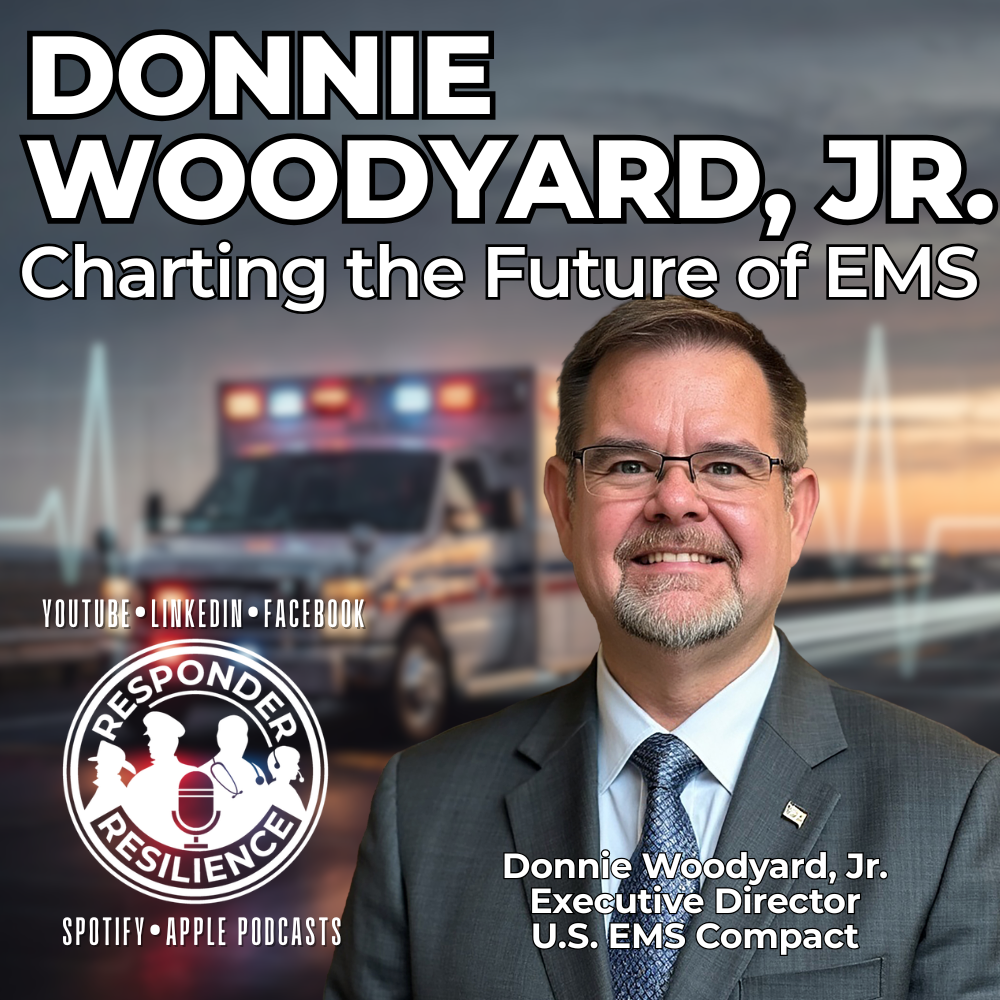
Donnie Woodyard has spent his career believing EMS can be better — and working to prove it. If you've ever held multiple state licenses just to do your job, watched a talented medic leave because relicensing wasn't worth the hassle, or struggled to staff a mutual aid response with people you couldn't legally deploy across a state line — this conversation was made for you.
Donnie Woodyard has spent his career believing EMS can be better — and working to prove it.
If you've ever held multiple state licenses just to do your job, watched a talented medic leave because relicensing wasn't worth the hassle, or struggled to staff a mutual aid response with people you couldn't legally deploy across a state line — this conversation was made for you. And if you're a supervisor trying to keep the lights on while the conversation around you keeps shifting to innovation — you'll want to hear this too.
As Executive Director of the U.S. EMS Compact, Donnie is working to remove the barriers that have quietly cost this profession some of its best people. Licensing walls that make relocation feel like starting over. A system built in 1966 that was never designed to carry the weight EMS carries today.
In this episode, he breaks down what the Compact actually means for your staffing model, your retention strategy, and your people. Then we go further — into AI, cognitive load, and the clinical decision support tools that are already reshaping the landscape. Into why the providers and leaders who are most stretched right now may have the most to gain from what's coming.
The future of EMS is here. The conversation starts now. Donnie Woodyard is ready.
**Resources for Responder Wellness:**
• Book: Helping the Helpers https://a.co/d/dm0VS4Q
• Free App: CRACKYL http://crackyl.respondertv.com
• Fitness: FightCamp (code RR10 for 10% off) https://joinfightcamp.com/shop/
Contact Donnie Woodyard, Jr:
Website: http://www.emscompact.gov/
Website: http://www.ems-history.com/
Facebook: https://www.facebook.com/donnie.woodyard
LinkedIn: https://www.linkedin.com/in/donwoodyard/
Contact Responder Resilience:
Phone: +1 844-344-6655
Email: info@respondertv.com
Our website with past episodes and more: https://www.respondertv.com/
YouTube: https://www.youtube.com/c/ResponderResilience
LinkedIn: https://www.linkedin.com/company/responder-resilience-podcast/
Instagram: https://www.instagram.com/responder.tv/
00:00 - Big Question About EMS Identity
00:45 - Welcome And Guest Introduction
04:19 - How The EMS Compact Works
06:08 - Crossing Borders Disasters Job Exchanges
11:33 - Why EMS Fragmented In The US
17:18 - Why States License Clinicians
19:56 - AI Forces EMS To Choose
26:25 - Public Trust Data Sharing Funding
33:03 - Colorado Mental Health Model For EMS
36:49 - Measuring Burnout With Data And AI
43:41 - Autonomy Tech And Final Takeaways
Big Question About EMS Identity
SPEAKER_01
EMS has to define is EMS healthcare or is EMS transportation to healthcare? Healthcare has embraced AI, but that also means that healthcare has fully embraced all of technology surrounding AI. There's not a one size that fits all. So people wanted to choose their mental health provider and their clinician that aligned with them. And so having that network really opened that up. Autonomous vehicles are a real thing, it's no longer the future. AI is a real thing, it's no longer the future. And every one of these technologies is intersecting with EMS. The EMS of five and ten years from today is going to look dramatically different.
Voiceover
Welcome to Responder Resilience, along with my co-host, Bonnie Rumley, LCSW EMT. I'm David Dashinger. What does the future of EMS actually look like and who's building it right now? Today on the show, we're joined by Donnie Woodyard Jr., best-selling author, keynote speaker, and executive director of the U.S. EMS Compact. Donnie oversees interstate EMS practice across 25 states, designed the first AI-powered EMS charting tool, and is one of the most forward-thinking voices in emergency medicine today. So this one's going to change how you think about where EMS is headed. Get the free app at crackle.responderTV.com. We invite you to like and subscribe, YouTube, Responder Resilience, Facebook, Responder TV, LinkedIn, Apple Podcasts, Spotify, and go to our website, respondertv.com for past episodes and guest information. We'll be right back to speak with Donnie after this. Ask a first responder who they are, and you're likely to hear I am a police officer. I am a firefighter. I am a person. I am a 911 communications operator. I do this work. Ask a clinician why they work with first responders.
Bonnie Rumilly
And they may say, There's no higher following helping help.
Voiceover
Join us in shaping a culture where mental health, wellness, and leadership are priority, not whispering. Support is a sign of strength, not failure, and where no one has to carry the weight alone. Welcome to Responder Resilience. We try to spotlight on the unseen battles of first responder reality. And celebrate the powerful wins that come from the grit of post-traumatic growth. We understand the culture, honor the trust, and bring you conversations from the change makers, passionate about helping first responders come home whole. With your hosts, Retired Lieutenant David Dasinger, Dr. Stacy Raymond, and Bonnie Roomley, LCSW EMT. Our guest today is Donnie R. Woodyard Jr. He's the Executive Director of the United States EMS Compact, the governmental body overseeing interstate EMS practice across 25 states. A former state EMS director in Louisiana and Colorado, and Chief Operating Officer of the National Registry of EMTs, Donnie has spent his career advancing national systems that connect policy, technology, and patient care. A best-selling author and frequent keynote speaker on leadership and innovation in emergency care, Donnie holds a master's degree in management and leadership and a certificate in artificial intelligence from Harvard Medical School. He designed the first AI-powered EMS charting tool and continues to champion innovation in clinical documentation, decision support, and system interoperability. Donnie, a warm welcome to Respond Resilience.
SPEAKER_01
Hey, thank you. Man, it's a joy to be here and really looking forward to this conversation.
Bonnie Rumilly
We're really excited to have you here today. Thanks for joining us from Alaska, nonetheless.
SPEAKER_01
Yeah, I'm on a work trip. So uh up here in the uh frozen north. So, but it's great.
How The EMS Compact Works
Bonnie Rumilly
It's great. Well, we've been following your work, especially in the area of the EMS Compact. So we'd love to delve into that a little bit more in depth today, bring it to our viewers and listeners. So talk to us. What problem does the EMS Compact set out to solve for us?
SPEAKER_01
Yeah, well, hey, I love it. You know, actually, I'm using a different compact today and yesterday, and that is I'm in Alaska, I don't live in Alaska, I have a Colorado driver's license and I have been driving a car. And we don't think about that, but that actually is a complex governmental uh feat that happens because my Colorado license is issued by the state of Colorado, who has sovereignty inside the state of Colorado, but somehow I'm using that government permission in another state. That's done through a compact for EMS. Uh what we found out, man, years ago is that you know EMS clinicians are mobile. Uh EMS is a mobile profession, you have to move between places, but every time you go to move, then you have to relicense and pay new fees and go through the same background process and show your education, and it creates this friction, this hassle. And there's a mechanism in the constitution that allows for states to enter into agreements to actually solve that problem, just like the driver's license. So the EMS compact solves that, and it says one state license and a state that's passed the law and joined the system is immediately valid in other states. So today, across the United States, 25 states have passed the law, eight states are looking at the law, 450,000 EMS clinicians already have this legal privilege to practice, and that is my Colorado license as a paramedic now is valid in 25 states. It really uh changes the way we can do EMS, improves patient safety, uh accountability, etc.
Voiceover
Yeah, I can speak from personal experience how huge that is um having to having had to be certified in two different states and try to do reciprocity every time my license was up for renewal. And then the patient care part, right, where you're transporting uh from I worked in a town when it was right next to New York State. So um, what do you do when you're transporting across those state lines and how does that work? So there's so much to it. Um talk a little bit more, if you would, about the licensure portability and actual practice, like in sort of a you know, nuts and bolts every day. Um, how does this work for someone? Let's say, let's take a paramedic who's working um near a state line and needs to be able to transport across that state line.
SPEAKER_01
Yeah, you know, it it it comes down to a few different types of what I call routine EMS care, and then it opens the door for some uh new uh types of care that uh maybe it wasn't able to happen before. I always use me as an example. I was a lone paramedic um in Virginia 20 some years ago on the state line with West Virginia, and I transported countless people between Virginia and West Virginia, sometimes West Virginia to Virginia. Um, and it was all done under what was mutual aid, which was the right thing for the patient, the right thing for the community. But here's the caveat never in my life was I licensed in West Virginia, and it doesn't matter what locals come up with for mutual aid, you can't supersede state law. And state law says if you're going to practice in West Virginia, you have to have a license. If you're gonna practice in Virginia, you have to have a license. So that's an example of where EMS uh frequently seeks to do the right thing that may not be covered by law in every state. So the EMS Compact solves that. So cross-border issues it solves flight paramedics. You know, I I've met flight paramedics with 15, 20, 25 different state licenses. Um, it solves that issue. One license is valid and it reduces that. But I think, you know, in addition to that, we have things like you know, wildland fire and disaster response. And so you have low notice or no notice type response events. Um, and sometimes those enact the Stafford Act and EMAC, which is by the way, another compact, the emergency management assistance compact. But sometimes disasters are big enough where you need help, but not big enough where you get a national, you know, disaster decoration. And so the EMS Compact helps with that. But then there's another area, and it really ties into things like responder resiliency, and that is you know, we know the average age of the EMS clinician is in the you know low to mid-20s. And we also know that as low to 20 uh year olds, they love to explore and travel. And what we have is this paradox of we know our our profession, the core, um, the the number one age group loves to travel, but yet we keep them locked down and one state license, and we put up these artificial artificial barriers.
SPEAKER_04
Yeah.
SPEAKER_01
And and then we wonder why they are getting burned out and stressed out, and why do we have the one of the largest attrition rates? The MS Compact provides a new opportunity for both clinicians and employers. Say that you are in a high-profile city situation where you have a high unit hour utilization and you're just busy. Well, why not partner with a small town in the middle of choose your state, you know, what Wyoming to go fly fishing or Colorado to do skiing or you know, somewhere else, and do job exchange programs that give opportunities to diversify, and no additional license is required to do that. The compact allows it. Or maybe it's the reverse. Maybe you are in small town USA and you want to experience an inner city. Well, you no longer have to leave your job, get a new state license. Uh, it's as simple as me picking up a rental car here in Alaska and driving. Um, that's how the compact works.
Voiceover
Wow, okay. You're trained to help people heal, but first responders, they carry trauma that's buried under silence, stigma, and stress. Helping the helpers gives you the framework to connect, to speak their language, earn their trust, and actually make an impact. From the experienced team and clinicians behind the Responder Resilience Podcast, this isn't theory. It's real-world support for the ones who need you most. And this book isn't just for clinicians. If you're an agency leader, peer support team, chaplain, EAP, wellness program coordinator, or family member, helping the helpers will equip you with the tools, language, and insight to make a difference. Be the resource they can count on. Order your copy of Helping the Helpers on Amazon today.
Why EMS Fragmented In The US
Bonnie Rumilly
Well, it also seems like a no-brainer from a retention perspective because how many people do we know that when they move, they say, I'm not going to bother to do all that work. And so now you have a great EMT who's moved somewhere else who we've lost from the profession, whether they were paid or volunteered. Um, and since we have we know we have the issues with retention and recruitment and burnout. So that sort of leads me into the next topic that I want you to talk about. Talk about some of the structural challenges that we have in the US with EMS and how you see that interfacing with this compact.
SPEAKER_01
Oh, yeah, definitely. Boy, and I I love that question. So, you know, there's a lot of uh talk going on with uh this year being you know 60 years since the 1966 white paper and kind of the the birth of modern EMS. But I really say, you know, EMS, our our history goes way before that. And we actually have a very rich history in the 1800s of very sophisticated systems, and then what actually happened in the late 1960s and 1970s is an incredible uh momentum to create a true national EMS system. Uh there were over 300 regions that were engineered and designed, and there was federal funding and there were structures in place, and then in 1980, all of that collapsed. We had a significant change in funding, we had political shifts, and we had an entire generation that had put everything in um to build this unified national structured system, and then it literally vanished overnight, and that's where we had what I call the great fragmentation of EMS, but we also had an entire generation of people that said, I'm not gonna trust this federal model, and and by the way, this federal model uh uh harmed me, and now you had locals that had to stand up and create mom and dad's you know, local ambulance service and fill in the gaps that for the funding that never came. And that created this structural problem of EMS um only was categorized as transport to healthcare. It also created problems where you had entire generations that um had a trust issue related to things like national standards or or national licensure um concepts. Um and that got past generation to generation. And by the time we got to the 1990s, we had a fractured system. You know, when I tried to go from Virginia to Ohio, Ohio said, Yeah, great, glad you're an EMT. I need you to go back to class and do an exam again. You know, so that's where we got in those short years. So yeah, we had a structural problem, and that created problems with recruitment and retention, and we didn't even know what an EMT was. We didn't even know what a paramedic was, and you know, we had something like 40 different flavors of EMT.
unknown
Wow.
Voiceover
Yeah, and I'd love to go a little deeper into that um because we're talking about EMS being fractured and recruitment and retention. In some parts of the country, there's small towns that have their own standalone EMS department agency. And you could make the argument that the services are being duplicated across the geography, but because it's a separate entity, um, you know, we're seeing everybody's got their own their own version of it. Is there some way you think that we can start to unify EMS services so you know we can retain more people, um, serve the public, and and maybe do the calls the best possible way, but also not be kind of replicating ourselves unnecessarily?
SPEAKER_01
Yeah, boy, I think it goes back to first understanding well, how did we get here? You know, when we look across other professions, we don't see that same type of fragmentation. And a lot of people don't they don't understand how we got to the fragmentation. So I think one understanding how we got there and and why we got there and acknowledging, yeah, you know, it was a broken promise, and local heroes stood up. And and because those local heroes stood up, there's this incredible sense of ownership within EMS and you know, uh emergency response that we just don't see in other professions. However, and this is the tough point, and and that is that's probably not sustainable, right? And so we have a lot of duplication of services, we have inefficiencies, we have services that are unsustainable, we have services that are closing. So, you know, it probably involves recognizing how we got here, appreciating that, and then looking at how we can do consolidation of models, how can we further uh come together with standards? Um, luckily, um, you know, almost every state, 48 states, have now reunified under the national registry um after the great fragmentation. And so now we have one national exam, and uh that's good, and it's recognized in all 50 states, so that's a step forward. We have the compact in 25 states, so that licensure goes between. We have other states looking at it. So I see micro movements coming together, so that's a positive thing, yeah.
Bonnie Rumilly
Well, and it seems like what you're saying with the compact, and if we can get it in all 50, it will help with some of this fragmentation and cause more unification, right? And we don't work in these silos that that we all know exist, and you know, we've all worked in the silo ourselves, so we can sort of see how you know you could be an EMS in one town, you don't know any of the EMS providers in two towns over. It it's a very bizarre phenomenon, especially in the Northeast that we have.
Why States License Clinicians
SPEAKER_01
You know, it is, and you know, I think I think it's important maybe to just go back to a a little bit more history, and that is well, why do we license anyway? And I mean, apart from the fact that you know it's a nice cool thing to, you know, maybe frame and put on your wall or carry in your wallet, but there's actually a reason for that, and it comes down to public protection. And and the Supreme Court set up two reasons why states license. One is for cognitive, and and so looking at knowledge, skill, and ability. So medicine is a protected profession, and we have a state can define knowledge, skill, and ability to do that. Uh, Supreme Court case didn't v. West Virginia from uh 1800s re resolved that. The second reason and the second pillar of licensing is related to moral protection um of the public, and that relates to is this individual, they might be knowledgeable, they might have skills and have abilities, but they have the morality that is uh consistent with protecting the public in this restricted profession, and that comes under Hawker v. New York, also from the 1800s. So, really, states have two pillars does the person know what they're doing in a restricted profession, and are they trustworthy? And that's where you can look at obviously things like uh morality, but the broad term, but also things like criminal convictions, etc. So when those two elements are resolved, and and through contacts, you can resolve that. You reduce friction in the profession, we have a chance of keeping people in our profession. Uh, you have the ability to overall improve access to care and reduce duplication. So, yeah, lots of opportunities there.
Voiceover
Boxing has the power to change lives, especially for first responders. Fight Camp embraces your journey, whether you're stepping into the ring for the first time, returning after a break, or aiming to elevate your fitness. Harness the strength of boxing to release stress, build resilience, and connect with a supportive community one punch at a time. Use code RR10 for a 10% discount on Fight Camp packages and accessories. Go to joinfightcamp.com slash shop.
Bonnie Rumilly
It's excellent. And you know, I know they're looking at it in my profession as well in social work, and it just makes so much sense. Um, the more people that we can all help when some of this red tape is taken care of. And I think the descriptions that you're giving and and some of what you're sharing has not been heard by a lot of our providers. So I think this is really an important message that you're giving us today.
AI Forces EMS To Choose
Voiceover
Let's shift gears. Um, because you, according to your bio, you designed the first AI-powered EMS charting tool, which is fascinating. Um, I'd love to hear a little more about that, kind of the you know, evolution of it or the origin story of it, and also moving forward, how do we look towards AI as a tool that we can use with confidence and morality and confidentiality and and all the things that we want to see, especially when we're we are providing medical care.
SPEAKER_01
Oh, I I love it. Let's dive into the whole AI thing. You know, um, I I obviously I I've had my fingers in tech for a long time. Um, really, most of my entire uh EMS career, I've been involved with tech in one way or the other. And number one is AI is not new. Access to AI is what's changed in the past couple years. Um but before we talk about the chart tool, you know, I I just want to put a very clear flag out there that says, you know, EMS is at a critical decision point right now, and it EMS has to define is EMS healthcare or is EMS transportation to healthcare? And for at least the past 50 years, EMS has been able to kind of live in both worlds. We've been able to say, well, we are transport to healthcare, but we're also healthcare, so we're gonna do some things that look like healthcare and some things not look like healthcare. And and this is where AI is changing that dynamic very rapidly, and that is healthcare has fully embraced AI. It's it's no longer a question, it's no longer a theory. No, it AI has embraced uh healthcare has embraced AI, and I think AI has probably embraced healthcare too. But uh healthcare's embraced healthcare has embraced AI, but that also means that healthcare has fully embraced all of technology surrounding AI. And and let me explain. That real quick. Um, you know, I you know, I ask my parents um and I see them, they have an iPhone and they bring up the My Chart app. And you know, my parents are able to look and say, Oh, my white blood count, my WBC is this, and my RBC is this. What does that mean? You know, like, well, I see it, or I can see my x-ray report, or what's this medical word here? The point is, healthcare has embraced radical transparency, they've embraced AI that is being used in all aspects of healthcare, and it's only going to increase. So, you know, things like charting is uh yesterday's news. Um, so like, yeah, they're using AI for charting, they're using AI to help with you know diagnostics and for flow processes and for business processes, they're using AI to help better communicate to the patients. Um, so AI is everywhere, but the resort of that is radical transparency. When EMS encounters a patient today, what does EMS and the patient receive after the encounter? Well, the the patient leaves with a bill. You can go and have an entire encounter with EMS where you have advanced medical practice being done and diagnostics, and you can have, you know, uh uh, you know, medication administration, procedures, and even advanced procedures. And at the end of that, it's not in most cases in the US uh part of the transparent chart that the patient already owns. It's not entered into the health exchange information system. And furthermore, the only thing the patient gets back is a bill. And that is transportation to healthcare. It doesn't matter if you do parts of healthcare in the middle of it, that is transport to healthcare because we're not integrated in healthcare. So EMS is at probably the most critical infection point of our past 60 years, and I'd say probably of our entire 100-plus year uh arc of EMS, and that is we have to make a real decision. And um AI has the opportunity to come in and help reduce things like cognitive load and uh make our charting experiences better, and then we're gonna get to adogenic AI, where it's gonna help us with clinical decision support. But we've got core decisions, and and if we resist it, we you'll forever be defined as transportation to healthcare. Um, and I think that's the critical decision. The the clock is no longer waiting for EMS to make that decision, and absence of a decision seals the decision that EMS is going to be limited to transportation to and from healthcare. I think it has to be healthcare. Some agencies are gonna do it. So before we dive into other parts of AI, I think that's the foundation. And that explains why I'm so passionate about it.
Bonnie Rumilly
Donnie, what do you think the resistance is? What is it based in? Is it fear and anxiety based? Is it based in facts and research? Like where are we with that piece of things?
Public Trust Data Sharing Funding
SPEAKER_01
Yeah, you know, I I think one of the core realities of EMS is across the nation, so many of our responders um are, you know, fighting high unit hour utilization and you know, uh, they're fighting against things like burnout and mental health exhaustion. And, you know, they're they're just looking at to get through the end of the day, right? And like they're like, we I just need to finish it and go home. And and then when you look at leadership, well, leadership is stressed in looking at, well, how do I fund this model? Because we have a funding problem. Um, but the funding problem is far more than that. And I hope we can revisit that. Um, I think funding is a symptom. I don't think funding is the problem, but we have a symptom that includes funding. Um, and so you have EMS leaders that are looking at how do I keep the lights on? And we have EMS services closing every day. So when you go to that leader who's trying to figure out how do I put fuel in the ambulance, um, and you're like, hey, I need you to look at this AI model, they're like, you're out of your mind. Like, I just need to keep a light on. So I think when you put all that together, um the reality is that EMS is uh task saturated and not looking at this um thing that is um going to forever change EMS and probably I think bring some new solutions to some old problems.
Voiceover
While you were talking, I was thinking about another aspect of this which is related, and that's the public perception of EMS is probably skewed. Um you talk about at the end of transport in their interaction with EMS, they get a bill. Um they don't really understand, in my opinion, they don't understand what EMS does, the function it serves, and how they integrate into that whole process of the medical system. Do you have thoughts on what EMS could be doing better to enhance public perception and maybe just be better advocates for for the mission itself?
SPEAKER_01
Yeah, you know, I think I think a few things, and um some simple, tangible ones is uh one, we have to figure out the data exchange problem. That's just a foregone conclusion. Uh, we have to make sure, and that can be solved at hyper-local levels, it can be solved at regional or state levels. Um, but we have to make sure that we are radically transparent to our patients in the same way that your family doctor is, their radiologist is, and you know, lab core down the street is. Um, and that is we have to make sure the patient gets it. Now, uh patient gets all of their patient chart and their information and they own it, and that we are doing everything we can to be part of the system. So I think that's number one. Um, but I think in addition to that, you know, we really have to make sure that we are looking at the structure of our system. And, you know, that because our structure has forced us into this broken model. Let me just give this analogy. Uh imagine, and and I hope this doesn't happen to anyone, but imagine that you go home and you you know go to open the door and you realize that the front door of your house has been jimmied open, and you kind of look inside, and your place has been tossed, and you realize hey, burglars came in, and you know, they've they've ransacked your place. You call 911, and the police come and and you're the victim. And you know, they fingerprint and they take pictures and they do all that, and then two weeks down the road, you get a bill for five thousand dollars, and it's itemized on there. Hey, this is for the fingerprint powder, and this is for the photos, and this is for that. You would be outraged. It's no way you would accept that because you are the victim, you were victimized, and em and police is part of this safety net for the community that we all value. EMS, we created a great system, but then compromises in how we funded it results in EMS is funded by the victims that use the system. Now, think about that. What we do is we take the total cost of the system and we don't in most communities share it amongst the whole community because that community benefits from knowing the ambulance is available at 4 a.m. in case you have a heart attack. But what we do is we divide that up amongst those who actually call for help. And when you call for help, you are paying for your care, you're paying for the care of the neighbor who called and couldn't pay, but you're also paying a hundred percent of the readiness cost surrounding your call. And that is how EMS is divided. And so at the end of the day, the people who use EMS feel victimized and they they they they're getting incredibly frustrated when they get the bill for two, three, four, five thousand dollars in some communities for a quote quick ride to the hospital. And then the other thing that EMS is struggling with, you can provide great care. And I have, I hope, as a paramedic, provided great care to my patients. So say that you do that 12 lead EKG and you get to the hospital, and the very first thing the hospital does is they take off your pads and stickers and they put theirs on and they do another EKG. What does that communicate to the patient? That what they got in the ambulance was not quality, it was not medical care, it wasn't appropriate. Now the reality is it's not that your EKG or ECG was not of good quality, it's that the fact we can't exchange the data and and the hospital can't use it, and it's not in the chart. Um, and and our our stickers are not compatible. All of that creates a perception that EMS is something less than healthcare. So we have to look at this through a new lens. We have to look at the way that we do funding. And by the way, funding is um the problem with funding is we haven't communicated the value, the position um of EMS the way it needs to be done. And we can talk about that if you want, but you know, but we have to look at the way we do funding. We have to recognize and acknowledge, yeah, we are kind of dividing the cost of EMS amongst the victims. And uh, and then we wonder why we get pushback from the community. We wonder why we get pushback from CMS, by the way, and insurance uh payers to say, I'm sorry, you're out of your mind. I'm not gonna pay you for readiness for your entire community because I'm an insurance company. I will pay you the fractional cost of taking care of Bob. So these are all things that work together, and um, I think AI gives us new tools, things like autonomous transport's going to give us new tools, lots of opportunity there.
Voiceover
Hey firefighters, let's take a moment to talk about something important. There's a new app built by firefighters for firefighters, and it's not just another wellness tracker or generic resource hub. It's called Crackle. You've probably seen the magazine, but this is the next evolution. The app is about one thing helping firefighters not fail, not just on the job, but in life, in your health, your relationships, your mindset, and your longevity. That's why Crackle is designed to meet firefighters exactly where they are, with resources that make sense, are easy to use, and actually respect your time. You can download the app now for free as a legacy member. That means you get early access to exclusive content tools and updates as they drop. Use the QR code on the screen to download the Crackle app, or you can download it from the App Store or Google Play and stay in the fight, not just at work, but at home and in your own head too. Because your best days shouldn't be behind you, they should be ahead of you.
Bonnie Rumilly
We're hitting a lot of great topics, and I'm nerding out here big time and selfishly wish that we had you for longer than an hour. Um, so let's go to the mental health side of things. Uh that's the other passion of our work, too. Um, talk about Colorado's EMS mental health program and why it's being looked at as a standard. We'd love to hear about it.
SPEAKER_01
Yeah, you know, I was so fortunate. Um, when I went to Colorado um as the state EMS director, there was a uh paramedic who was a senator and he was the president of the Senate at the time, uh, you know, Leroy Garcia, and he was real passionate about mental health. So he championed a bill that made it through and got signed into law that created what's called a it's it's Colorado's mental health program for EMS. And so I was able to inherit a foundation of this concept. And then uh I had a great opportunity to work with some great people to actually take the learnings from the first couple years of the program and then massage it into something new and different. And essentially, what this program does is it allows for every licensed EMT and paramedic to get access to confidential paid mental health services in Colorado. And uh, and we we tried like a single contractor at the beginning, but then what we learned that really worked was we did some rebranding. We called it Pathfree EMS, and then we were able to work with local community um mental health providers, so uh clinicians, uh psychiatrists, psychologists, licensed social workers, et cetera, across the state, and then created like an open PO for billing so you know they could just sign up and direct bill the state for services of qualified um uh EMTs and paramedics. And what we saw was a tremendous uptake. And so we saw that you know people wanted help. If you could remove the friction and the barrier, people would get mental health care. Um, and we saw that people often preferred to get help either in their community or in a neighboring community. Um, and so you know, people didn't want to drive six hours across the state for health care. Um, and then we also learned that um there's not a one size that fits all. So people wanted to choose their mental health provider and their clinician um that aligned with them. And um, and so having that network really opened that up. So um I've been out of that state director role now for three or four years um and doing the compact role, but I see the program continues to grow. In fact, I think they have some funding issues now uh because of high utilization, which is a good problem to have, I think. Um so they're trying to sort that out. But um there was a lot that we learned from that, you know, and even something simple that we learned is um you know, we created like magnets, right? And uh things that you could put on, like, you know, your refrigerator. And we didn't put on this magnet, you know, EMS mental health crisis, call this number. No, it it was you know, simply path for EMS, a very positive thing, you know. And um, so you know, people were fine with putting that magnet on the refrigerator, you know, because it looks like it's part of the trade, but they also know that, hey, I can go to that website or call that number and get the help I need. Right.
Measuring Burnout With Data And AI
Voiceover
That's great. And on a related topic, I've been having this conversation with different people in different roles starting to explore this avenue. And that's kind of getting a beat or measuring the well-being or stress levels of providers, particularly in this case, EMS providers. What are your thoughts? What metrics should we be using or systems should we be using that would help us to measure this and give us useful data so we can proactively start to help people or give people resources who may be struggling or going sort of down towards a you know burnout or or trauma direction?
SPEAKER_01
Yeah, I mean, you know, I I am not a uh uh licensed in mental health and healthcare, and I probably don't know the latest, greatest things to use to test, but you know, I I think whatever we can use that is uh accessible and tangible. Um, and you know, it might be as simple as you know building in um, you know, a um a wellness uh check on you know when you come into work. Um it might be that you know we recognize um our mental health issues, um we have mechanisms to report, you know. I think back to Roger White, who uh Dr. White was one of the first EMAS medical directors in the United States, and he said, if you you know, many others have said it, but if you can't measure it, you know, you're not going to improve it. Um and so I think that tracking that information will be important. And I think that AI is gonna help out with that, by the way. I think that you know we have the opportunity to use AI to um help build a model where EMS clinicians through speech can have a quick speech to AI conversation um that's gonna help gauge their mental health and trend it. And I'm not talking about doing like counseling over AI, but you know, uh capturing these data points in a frictionless, easy way that is confidential and protected.
Voiceover
Do you think um EMS charting would also be able to add to that, perhaps seeing a trend in tragic or super stressful calls, pediatric fatalities, whatever that might look like. But could that be a component in a system like this?
SPEAKER_01
Oh, absolutely. You know, and so you know, our our EMS data, chart data, it really is this paradox. I mean, you know, I talked earlier about how it's you know not connected over, but on the other side, we have one of the most powerful health data systems in the United States. I mean, it's it's 64, 65 million patient records a year go into that, and it's incredibly powerful at you know, local level, region, state, um, and you know, the data, the data's there, and you can query it, get it out, and certainly uh use that data to guide um, you know, hyperlocal interventions, but also like statewide interventions as well.
Bonnie Rumilly
Well, I'm aware of some of local services who are using that and they're flagging the charts so when they get a critical call, it goes to the supervisor so someone can check in. Um, so there are places that are doing some of that kind of data collecting and then using it for intervention-based practices, which I think is great. The other thing that's sad but true, and I can say this with both hats on, truthfully, is that we're not asking these questions in EMS because the infrastructure and the solution to the problem is not there. Your average um EMS director doesn't have the resources to send their people to when there is a mental health issue. And so I think a lot of people put the blinders on and they don't go there because they don't have the solutions. Um, we're very fortunate here in that David and I and Stacy as well are involved in the Fairfield County trauma response team. And we're a nonprofit of therapists that serve first responders. And so locally here where we are, we are able to provide that service to all agencies police, fire, EMS, dispatch corrections. Um, it's phenomenal. But we also realize this isn't available everywhere. And so if there's no infrastructure in good faith, you ask people, are they struggling? Yes, they are. And then where are you going to send them? So it's such a catch. And I know that it provides a lot of anger to our EMS providers that they're not asked or that they're not tended to. And I think some of it is not lack of care, it's just lack of options. So we all need to do, I think, better to get that in a better place.
SPEAKER_01
You know, and that goes back to um the funding situation. And, you know, I uh I read some stats recently. The CDC did an analysis, and you know, over half of state EMS offices um get less than 50 50 cents um per person per year um to run that state infrastructure. I mean, it's the in many states, it's the lowest funded office out there, you know. But there are there are ways um to generate funding. And and one of those, um a lot of states, and Colorado does this as well, um, you know,$2,$3 per license plate. Um, and so when you renew your license plate, a small amount goes into that. But you know, think about, you know, if you have a state with, you know, one, two, three, four, whatever, ten million people, um, one or two dollars actually significant changes um that infrastructure. And again, it comes back to are we going to look at EMS as a public good that benefits everyone if you use it or not? Or are we gonna continue to allow EMS to only be funded by the victims who have to use it? And if we look at EMS as an overall public good and share the cost across the entire state, the entire community, then you can fund programs like this. Um, you can fund programs that ensure that um you get mental health resources for the clinicians who are out there every day seeing things that you know were they were never designed to see. You know, the other thing I saw in the intro to your podcast here is uh, you know, uh um post-traumatic growth. And I think that's an area that's so important to let EMS understand that, hey, yeah, there's also pathways where you grow through this as well. And that's a whole nother conversation, but I was thrilled to see that out there as well.
Voiceover
Donnie, as we wrap up, is there anything we didn't talk about that you want to mention before we close out?
Autonomy Tech And Final Takeaways
SPEAKER_01
You know, I think um what a broad question. You know, we we we didn't touch on some of the other future stuff of VMS. I I'll just put it out there. Like, um, you know, I've lived this world for a long time, and the timeline is moving faster than what even I predicted. Um, just last week, um, one of the first uh fully autonomous Autonomous Blackhawks was delivered and flying. That is a Blackhawk helicopter without a pilot in it. We have others that are out there fully autonomous. So autonomous aircraft are a real thing, it's no longer the future. Autonomous vehicles are a real thing, it's no longer the future. AI is a real thing, it's no longer the future. And every one of these technologies is intersecting with EMS. The EMS of five and ten years from today is going to look dramatically different. The question is, are we as an industry going to lead that change or are we going to be sideswiped and surprised by the change? I hope that you know we all come together and leverage this technology which provides us new tools for things like responder resilience and workforce and how we keep our workforce and how we make sure our workforce is healthy. Um and just to that point, you know, driving an ambulance 35 times more dangerous than you driving a passenger vehicle. So why would we not accept these tools that are being delivered to us right now on a platter? So I think that that's what I'd say. Like the future is exciting, but boy, it's helping fast.
Bonnie Rumilly
Well, I vote for you to come back and do a part two and give us the Star Trek futuristic version of what we're looking at in more detail.
SPEAKER_01
We'd love to.
Voiceover
Yeah, Donnie, this was absolutely fascinating. I know we only scratched the surface on a a number of topics, but um your insights and experience with all these things are so fascinating, and uh we really appreciate you being here to share that with us today. Thank you for the opportunity. Remember, like and subscribe, YouTube, responder resilience, Facebook, responder TV. We're on LinkedIn, Apple Podcasts, Spotify, and go to our website for past episodes and guest information. It's respondertv.com. Till the next time, stay safe, be kind to yourself. Take care of the microphone, you know.
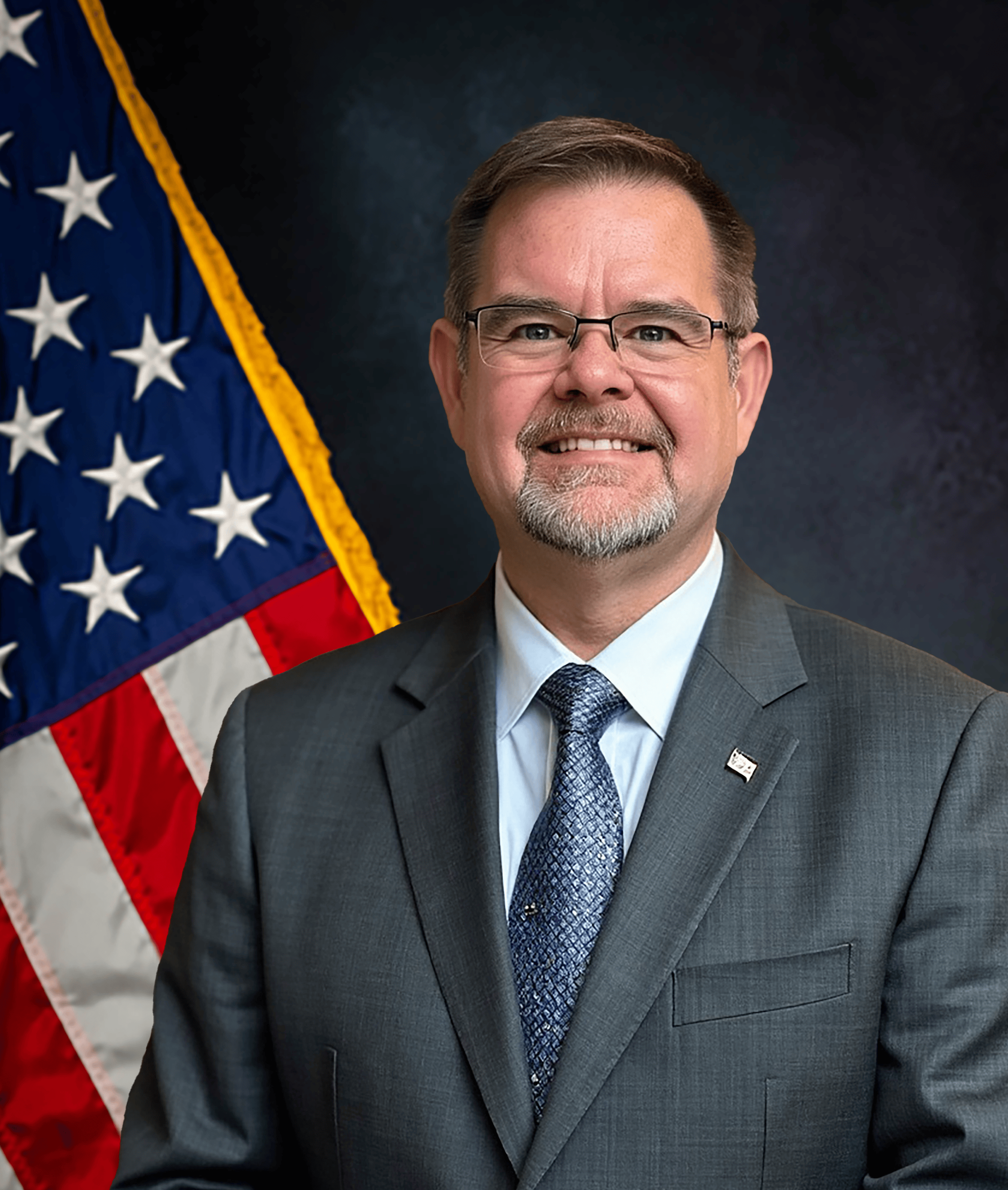
Executive Director of the United States EMS Compact | Author | Speaker
Donnie R. Woodyard Jr. is the Executive Director of the United States EMS Compact, the governmental body responsible for interstate EMS practice across 25 states. A former State EMS Director in Louisiana and Colorado and Chief Operating Officer of the National Registry of EMTs, Donnie has spent his career advancing national systems that connect policy, technology, and patient care.
Internationally, he has led EMS system design and education initiatives in Sri Lanka, Vietnam, and Bangladesh, and has supported disaster response efforts, including the 2010 earthquake in Haiti. A best-selling author and frequent keynote speaker on leadership and innovation in emergency care,
Donnie holds a master’s degree in Management and Leadership and a
certificate in Artificial Intelligence from Harvard Medical School. An advocate for advancing EMS and improving the adoption and integration of technology, he designed the first AI-powered EMS charting tool and continues to champion innovation that enhances clinical documentation, decision support, and system interoperability.