Apple Podcasts
 Spotify
 YouTube
 RSS Feed
 What It Actually Takes to Heal From Trauma and Loss — Christopher Littrell | S6 E18
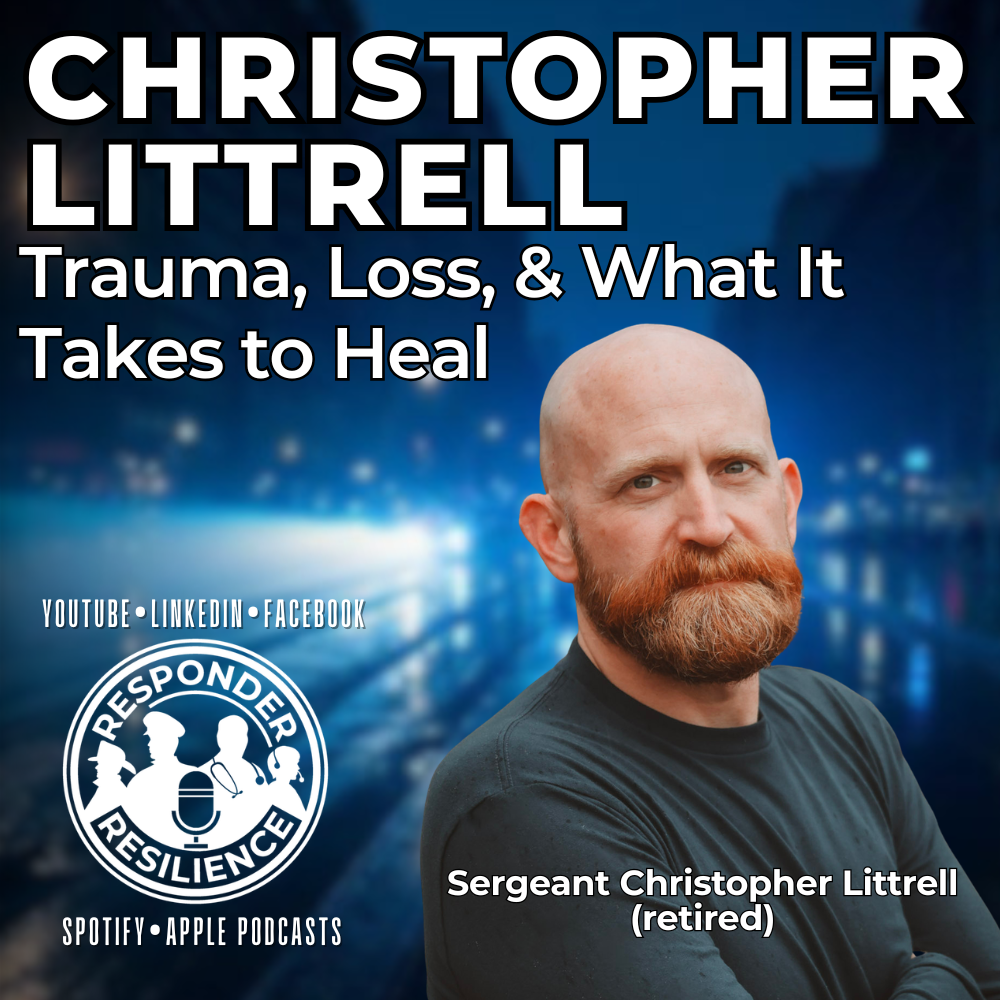
Chris Littrell is a retired police sergeant, Air Force veteran, and the author of Echoes from the Street — a book that required him to walk back through everything he'd spent years trying to outrun.
Every LEO has a version of the glory days. The calls that reminded you why you signed up. The moments where the job felt like exactly what it was supposed to be — meaningful, necessary, alive with purpose.
Chris Littrell had those days.
But the other calls came too. They always do. The ones that don't debrief cleanly. The ones that follow you home in the dark and take up residence somewhere behind your eyes. Twenty years of them. And somewhere in the accumulation — the weight of the badge, the silence of the locker room, the culture that confused suffering with strength — the bottle started making more sense than asking for help.
Chris Littrell is a retired police sergeant, Air Force veteran, and the author of Echoes from the Street — a book that required him to walk back through everything he'd spent years trying to outrun. The trauma calls. The PTSD he didn't name until it had already taken things from him. And then — the loss that broke the framework entirely. The kind of grief that doesn't respond to willpower, rank, or any coping mechanism a twenty-year veteran thinks he has.
In this episode, Chris talks about all of it — the good, the broken, and the long, uncertain road back to himself. Not because it's easy. Because silence has already cost this profession too much.
This one stays with you.
★ Resources for Responder Wellness ★
• Book: Helping the Helpers https://a.co/d/dm0VS4Q
• Fitness: FightCamp (code RR10 for 10% off) http://joinfightcamp.com/rr
• Free App: CRACKYL http://crackyl.respondertv.com
Contact Christopher Littrell:
Website: https://christopherlittrell.com/
Facebook: https://facebook.com/chris.littrell.5
Instagram: https://instagram.com/chris.littrell.5
LinkedIn: https://linkedin.com/in/gravitychris
Contact Responder Resilience:
Phone: +1 844-344-6655
Email: info@respondertv.com
Our website with past episodes and more: https://www.respondertv.com/
YouTube: https://www.youtube.com/c/ResponderResilience
LinkedIn: https://www.linkedin.com/company/responder-resilience-podcast/
Instagram: https://www.instagram.com/responder.tv/
00:00 - Worst Day Calls
00:45 - Meet Christopher Luttrell
04:49 - From Military Policing To Street Work
07:01 - When Service Becomes Personal
11:11 - Self-Care To Stay Professional
13:48 - Macho Culture And Cumulative Trauma
16:53 - Trusted People And Asking For Help
18:03 - Deer Hollow And Rewriting The Rules
20:56 - Rehab After Treatment And Retiring
25:23 - Leadership Work And Endurance Training
31:47 - Grief Fitness And Staying Sober
33:24 - Turning Trauma Notes Into A Book
38:55 - Gravity Podcast And Calming The Noise
41:51 - Links Book Info And Farewell
Worst Day Calls
SPEAKER_04
Nobody calls 9-1-1 because dinner was on time and the kids are getting straight A's. They're calling because they're experiencing their worst day imaginable. That's probably what I'm proudest about is knowing that I did make that difference. And I probably don't even know how many times I made the difference. I think the most I'd ever raced was maybe a 10-kilometer race, and I got on the calendar and signed up for half marathon. If you're gonna go, go big, you know. At least for me, it was a slow fade. I was fine. I wasn't. But pretty much every movie and most novels follow this natural curve of this hero's journey. And my story kind of followed it. You know what I'm saying? And I was like, this could be something.
Voiceover
Welcome to Responder Resilience, along with my co-host Bonnie Romoli, LCSW EMT, I'm David Dashinger. Today we have a deeply impactful conversation lined up with retired police sergeant Christopher Luttrell. Chris embodies the journey of endurance and recovery, and he's here to share his profound insights on responder wellness and the long shadows trauma can cast over our lives. This episode will dive into some of the calls and other experiences that may have contributed to post-traumatic stress, and we'll explore his powerful book, Echoes from the Street. So join us as we peel back the layers of Chris's experience showcasing the struggle, the healing, the post-traumatic growth that come from acknowledging our traumas. This episode is brought to you by Fight Camp, real training on your schedule. Head to joinfightcamp.com/slash RR and use code RR10 for 10% off. There's a new app built by Firefighters for firefighters, and it's called Crackle. Download the app now for free as a legacy member and get early access to exclusive content, tools, and updates as they drop. Get the free app at crackle.responderTV.com. We invite you to like and subscribe, YouTube, Responder Resilience, Facebook, Responder TV. We're on LinkedIn, Apple Podcasts, Spotify, and our website is respondertv.com. We'll be right back to speak with Chris after this. Ask a first responder who they are. And you're likely to hear, I am a police officer. I am a firefighter. I am a 911 communications operator. I do this work. I am still. Ask a clinician why they work with first responders.
Bonnie Rumilly
And they may say, There's no higher quality than helping help.
Voiceover
Join us in shaping a culture where mental health, wellness, and leadership are prioritized, not whisky. Support is a sign of strength, not failure, and where no one has to carry the weight alone. Welcome to Responder Resilience. We shine a spotlight on the unseen panels of first responder reality. And celebrate the powerful wins that come from the grit of post-traumatic growth. We understand the culture, under the trust, and bring you conversations from the change makers, passionate about helping first responders come home whole. With your hosts, Retired Lieutenant David Dashinger, Dr. Stacey Raymond, and Bonnie Roomley, LCSW EMT. So Bonnie and I are real happy to welcome Chris Letrell to the show today. We had the uh the honor and fun privilege of being on his podcast a little while back, so we're happy to reciprocate and share a conversation on our platform with Chris. A little bit about Chris. He's a retired police sergeant, Air Force veteran, leadership consultant, and author of Echoes from the Street, a police officer's journey through trauma, recovery, and redemption. Over a 20-year law enforcement career, he served in leadership roles and helped guide others through high-stress environments. Chris's life was changed forever by the loss of his daughter, Danielle, a tragedy that deepened his commitment to resilience, healing, and purposeful leadership. Today he speaks, writes, and hosts the Gravity Podcast, helping others navigate adversity, lead with authenticity, and live with intention. Chris, welcome to Respond to Resilience. David Bonnie, thanks for having me on the show.
Bonnie Rumilly
You're welcome. It's been fun forging this new friendship together over the last few months. So thank you for the partnership. And uh it was a blast being on your podcast. A little bit different than ours, but I like the different. It throws some spice into our life here and there. So um that was really fun. Thank you for that.
SPEAKER_04
Yeah, oh, and I feel the same way. I love the contrast. I'm really digging since we connected, I've gotten more bits and pieces of your show, kind of like what we were talking about before in reference to the algorithm, right? They like you've been looking at this, so we know you like it. We're gonna give you more.
Bonnie Rumilly
Yes, sorry about that.
SPEAKER_04
No, no, it's neat to see what you all are doing. So thank you.
Bonnie Rumilly
And likewise, well, so shocker here that the therapist wants to ask you about your early policing days and to go back and uh we'd love to hear about that early Officer Latrell and how you kind of formed over the years into who you became.
SPEAKER_04
Yeah, wow. I started my career in the Air Force, but really uh being a cop in the Air Force where you have all the military structure, you really don't get a full taste of law enforcement. In fact, I oftentimes say uh that my six years uh in the Air Force Security Forces career field was summed up in about a week of civilian law enforcement. And um I started my career over in the Seattle area for a municipality uh called Linwood Police Department. Worked there for two years, and my man, my hair was on fire. We had two highways cutting through our cities, all kinds of crime. We had a very supportive command staff in reference to go out and do police work, giving us the tools and the policies to do that. Uh great men and women that I worked with that were eager to go out there and and hold criminals accountable. So foot chases all the time, vehicle chases, um just just a ton of experience. And I was just after six years in the Air Force, and really before that, uh, I was a police explorer when I was growing up as a teen, and I'm a third generation cop. So by by the time I'm at Linwood in 2005, I'm just chomping at the bit to do this work. And uh I was uh honestly, they could have probably stopped paying us and I still would have showed up for work for a while. Eventually, my my my beautiful wife would have looked at me and said, Hey, sweetie, we can't eat food anymore. I need you to get a different job that pays the bills. But I'll tell you what, I probably would have kept reporting to work for a while just because I love the work that much.
When Service Becomes Personal
Voiceover
Yeah, I love that the concept we come up with, right? We're getting paid to do this. Um, and you mentioned foot races. I'd love to circle back to that a little later because uh I know you have some incredible um events you're participating in in terms of running and and uh triathlons. But just coming back to your career, I know we can always look at some of the bad calls, you know, the the worst things that we've experienced. But if you look at your career as a body of work, what part stands out in terms of, you know, let's say the ministry of it, the interactions you had that actually you felt were making a positive difference in someone's life, like the part that's rewarding about doing the law enforcement job.
SPEAKER_04
Yeah, it it came down to the human connection. And whether that be with my partners or with the community that I was that I was serving. And this is what I oftentimes say to people is nobody calls 911 because dinner was on time and the kids are getting straight A's. They're calling because they're experiencing their worst day imaginable, and it is overwhelming their ability to handle the situation, or they're a victim of a crime, and so they need, you know, they you know, this instead of them taking justice in their own hands. And so that's where you're meeting people, and it creates the opportunity. It creates the opportunity for you to, and man, first responders don't like to hear this, but for you to be a hero in someone's life. Uh, when my daughter Danielle died, though the law enforcement officers that investigated that, they were heroes in my life for the way that they professionally did their investigation, for the way that they cared for uh my family and that process. And looking back into my career, I realized that I had a lot of those opportunities. Some of those people have actually reached out to me in retirement. When my book released, uh I had people sending me messages. Hey, Chris, I just want you to know the time that you were a hero in my life. And I'm again, I still kind of step back from that title. I'm like, Well, hold on a second, I'm not a hero. But I just have to stop and sit in it for a little bit and listen to what they're saying and recognize this one woman said, You saved my life. I've been the victim of domestic violence for years. And the way you and this other officer showed up and you cared and you listened and you did your job in a professional manner. It was the beginning of me leaving that person, getting help and healing. And to hear that is just remarkable because that's what I was wanting to do. But you for first responders are dispatchers or police fire EMS, they don't hear that on a day-to-day basis. So it can you you get into the grind of seeing the worst day imaginable going on these death scenes, the stuff that bothered me, death scenes and child abuse cases. And when you don't see the the outcome, you don't see how you shed light into this really dark moment, it it's hard to carry on sometimes. And so um that's probably what I'm proudest about is knowing that I did make that difference. And I probably don't even know how many times I made the difference because not everyone has reached out to me to tell me about it.
Voiceover
Right. Yeah, we'll never know. Um, and we may have had a profound impact on something, it might have been like the most innocuous call that you know to us didn't seem like a big deal, right? It was routine. The person who was called 911 was a huge deal, and we may have impacted them, and like you said, we'll never know. But I love that you're focusing on the kind of the positive part of this body of work that you've you've done because so often we forget to do that. Yeah. This episode is brought to you by Fight Camp. If your job already demands everything from you, your training shouldn't add chaos to your day. It should give you structure. This is for firefighters, EMTs, paramedics, dispatchers, and police officers who still want a way to train with purpose. Fight Camp brings structured boxing and martial arts training into your home. No commute, no waiting, no guessing if your workout actually moved you forward. Every strike is tracked, so progress is visible, not vague. Every session gives you a clear standard to meet and a way to improve the next time you show up. This is training built on consistency, discipline, and measurable work, the kind you can actually stick with. Head to jointfightcamp.com slash RR and use code RR10 for 10% off.
Bonnie Rumilly
I want to thank you, Chris, too, for being open about the passing of your daughter. And we honor her memory with you here. And thank you for talking about her. I want to ask you, in terms of the police work and everything that you just said, can you talk to the listeners and viewers, especially the law enforcement, about how you show up and who you show up as on scene and why that matters so much?
Macho Culture And Cumulative Trauma
SPEAKER_04
Yeah. Wow. Um well, I'm gonna I'm gonna say I guess the ideal of what I aimed for, although I didn't always uh meet this mark. Uh you know, when we show up again on scene, knowing that people are experiencing their worst day imaginable, um showing up in this consistent, emotionally intelligent way that you're you're ready to listen, you're ready to do tough things, whether that be getting in a fist fight, whether that be uh you're solo, no one's there with you yet, and you're doing CPR on someone for 10 or 15 minutes, whatever that requirement might be, uh you're you're showing up. And that takes a lot of investment. That takes a lot of training that that for us to put into it on the front end. I think the gap, I think the missing gap, at least for me, has been caring for myself. I didn't do a good job of caring for myself along that line. And so that's where I think I was sometimes inconsistent. Sometimes I showed up and I was that emotionally intelligent, professional first responder that was that was really bringing calm to the chaos. There were times that I wasn't though, and looking back on it now with with a clearer vision, I see the times that that I wasn't taking care of myself, the stress was high over, you know, accumulating over over a period of time, a period of calls. And and that was not not to blame it on that. I have to own my own behavior, but that was the cause of me not having the capacity, is that I just wasn't, I wasn't fit. It's kind of like you know, if you go to the sports world, a football player, I don't want the running back who has a broken leg currently. Like, I'm sorry, I don't care how how amazing you are, I don't want you in the game right now. I want the backup in. We saw that with the Seattle Seahawks this last year, right? We saw the backup come in and just blow it away because the starter was hurt. And I think it's just a really great visual of as first responders, we we have to get serious about our physical and our mental health, and uh so that we can continue to show up in in a more consistent way.
Bonnie Rumilly
I had one more caveat question to that. Um it it's more like why is it so easy then for some first responders to put that blinder on and to sort of know, like somewhere in there, you know you're not showing up as your best. So how is it easy in a way to put those blinders and just keep doing what you're doing rather than facing the difficulty?
SPEAKER_04
Wow. Um, I think there's a lot of potential layers to that. Part of it is just our macho culture. And uh it's easy for me. I can be angry, I can even lose my tool and scream at people, but no one questions my credentials as a man or as a first responder. And I say it like that uh because I feel like within male culture, that kind of permeates throughout. What I've heard from female first responders is for some of them, it's even amplified more because now they're in this male-dominated career field. And in normal American society, women are allowed to show emotion. But now you're a first responder, you sure as heck better not show any emotion because then we're gonna question your credentials even more than we already were. And so I've heard that from female first responders is yeah, in normal culture I can cry, but in in some of this first responder world, I have to be very mindful of how I show up. So I think that's a piece of it, is is our cultures don't naturally lend towards it. Now, I have seen a lot of first responder agencies working hard at this and getting a lot better to where it is okay to say, hey, I'm kind of struggling a little bit. We've we've come a long way. We have a lot more work to do, but we've come a long way. Um, I think the other thing is for at least for me, it was a slow fade. I was fine until I wasn't. That cumulative effect really like, oh my gosh, that was me. I did not have this one big call. I had a lot of these little calls all mounted up. I was doing fine. Now, if someone like my wife who did do this, was really watching and analyzing and giving me feedback that I was willing to listen to, I would have known of the slow fade, the fact that I wasn't doing well. And it would have empowered me to make some decisions. Unfortunately, I wasn't aware of it. And then when my wife did come to me, for example, and say, Hey, do you think you should give alcohol a break? And I looked at her and said, Do you want to be my wife or do you want to be my mom? Uh, I wasn't open to it, and this is the human I trust most in this world. So I think that's the other piece, is it's not for some people, they do have this one big call, and it's very, very obvious, like, oh my gosh. And I don't want to take away from that because that's real. I I I've heard a lot of stories though of the cumulative effect of trauma and how they just didn't realize it. They went from not drinking alcohol to having a beer a night to having five beers a night to having 15 beers a night. And they, you know, you should see that change, but for some for some of us, including myself, we just didn't realize it until we got to this rock bottom place.
Voiceover
Well, take us through what happened next. Um, how did you climb out of that rock bottom place and what were some of the steps that helped you to move to a different place, hopefully a better place, and also heal from whatever traumas you were carrying.
Deer Hollow And Rewriting The Rules
SPEAKER_04
Yeah, the biggest thing was trusted people in my life. People that I could call and say, I'm not doing well. And I I have a number of different folks. Back in 2010, when I first struggled with some anxiety and depression as a childcare detective, it was my mom. My mom pushed me to my wife, my wife pushed me to my mental health professional. Uh, the second go-around in 2023, uh, it was it was my wife. I started with my wife and then my doc. I had messed messaged her like at two o'clock in the morning just saying, Hey, I need some more help. And so I think that's the the first biggest thing in this world is is you know, we we operate in these professions where we are trained to operate as a team and and we have to to be effective in the things that we do. And so when it comes to us taking care of our mental and physical health, I think that's the first biggest thing is you have to you have to invest in those relationships so that when you get to that spot, or maybe if you get to that spot, you have the people to call. And the the collection of people that I was calling, uh some some brothers and sisters in law enforcement, they push me towards uh Deer Hollow, which is a PTSD recovery center in Draper, Utah. And uh that was a really tough decision because I was the team leader for our peer support team. I had was organizing all the mental health training for our region, like like this, this was my this was my specialty. And um and I just didn't realize where I was at. And so um, yeah, I went to Deer Hollow. That was really tough a work. Uh, but really what they did there, I would consider that that was my surgery. That wasn't even the the rehabilitation, that was just the surgery where we got really deep with things that uh again you don't realize from your life experience. You don't realize the things that have impacted you sometimes, that have created these stuck points and these requirements that you're these rules that your your mind has put in place and that are tripping you up. And until you realize what those things are, you can't address them. And so that was the hard work I did at a PTSD recovery center was was figuring out what all of these things were, uh, all these rules that I had created in my mind. And for a period of time at a point in my life, they were good rules that had good intention to keep me safe, but they weren't they weren't good anymore, or they were starting to spread to other areas of my life that were interfering with with me having good relationships. So uh that was that was the next step was me getting there, doing that hard work, coming out of Deer Hollow, doing some intensive outpatient work, and really contemplating uh can I go back to the job? I did it in 2010 through outpatient therapy. Can I do it again in 2023? Can I go back to the job and continue to be a police officer?
SPEAKER_00
Not everyone is meant to walk this path, and that's okay. But for those who feel the call, for those who read these words and feel not just curiosity but conviction, know this. By the time a first responder sits across from you, they've likely exhausted every internal resource they have. This isn't a routine appointment, it's their 911 call. I don't know how much longer I can do this job. You won't hear sirens, but the urgency is real. If you choose to take that call, understand what it means. To show up, to stay steady, and to carry the weight of someone who spent a career doing the same for others. This is where the work begins. Be the resource they can count on. Order your copy of Helping the Helpers Today on Amazon, and for bulk orders, email us at info at responderTV.com.
Bonnie Rumilly
I love how you use that metaphor of the inpatient facility was the surgery, and then everything after is the rehab. And that's such a good analogy. Um, because it's so true. Some people just need that respite, that space from life to get some distance to really look at what's happening. And I think sometimes you do get a better look at it when you're out of it. So uh thanks for that analogy. I think that's helpful for people just in terms of how you think about recovery, because I think there's sometimes a misperception as well. You're going to go somewhere and come back and you'll be fixed. And that's that's not how this process works. I've never uh lived through it with a client that way. You've never experienced it that way. I I think it's much harder actually when people come back and have to face all these demons head on.
Leadership Work And Endurance Training
SPEAKER_04
It's harder because, you know, when you're inpatient, and there's a lot of great ones. I mentioned the one I went to. There's so many great ones around the country. Uh we we could do a whole podcast just trying to list them all. And um you know I uncovered so much stuff that now I was dealing with that stuff. And it was almost like once I resolved one of the traumas or one of these issues, it's like my mind would open up and then show me three more. And I'm like, holy smokes. Like I hadn't thought about that event happening for for 15 years. And so that's the real challenge we have is when you go to one of these great first-responder-focused centers, you uh you're doing this hard work, and then you get out and you go from granted, keep in mind the programming list probably only seven to eight hours a day. Honestly, though, between the text and the works we did in the house in the evenings with homework and with peers, I I said it was 13 hours of therapy a day. Seven days a week, and you go from that to nothing. You get home, and yes, you have an appointment with your mental health professional that's on the books. You but like I came home and my wife and my kids went off to school a week and a half later. And now I'm sitting at my house going, all right, this is freaking me out. And thankfully, um I had a great psychiatrist that uh that filled the gap there for a little bit because I didn't have an appointment with a counselor for a while. So she stepped in and just said, Hey Chris, this isn't my job usually. My job is to manage your medicine. But for now, I'm gonna meet with you on a weekly basis just to to to to fill that gap, be the transfer of care between inpatient care and you getting into intensive outpatient care and uh uh and uh your your own private counselor. And so um, you know, I I I did that for months before I finally arrived at the point of um I'm not gonna go back on the job. And there was a lot of shame there. Like I'm I was out for a walk with my wife and uh I bust into tears and I'm just like, I am sorry, I am such a freaking failure for this family. And she's like, babe, what do you mean? And I'm like, I am putting our livelihood at risk. I don't know what's gonna happen. I don't know if I'm gonna be able to earn money for us, I don't know if the state's gonna approve my medical retirement. Uh, we may have to sell the house. And my wife looked at me and she goes, I don't give a damn about the house. She goes, You are a better man right now than you were before you went to therapy. You are you are healthier and I can see it in you. I don't care about the stuff, babe. Like I don't want you going back on the job. And at the time, I mean, my psychiatrist hadn't was telling me, Chris, you were not signed off to go back on the job. So it wasn't even a my choice thing quite yet. But that's where it became uh very obvious for me uh that uh that I'm I'm I'm gonna leave the job and and I'm gonna continue to impact the first responder world, but it's just gonna be in a different way. And so I met with my chief, he was amazing. His first words out of his mouth were congratulations, and and like, how do you want your retirement ceremonies to go? Like, what do you do you want the flag that was flown over the station? Do you want your credentials? Do you want the time in front of City Hall where they give you a plaque? And and and I I did it all. I wanted the experiences, and uh I give him a lot of credit too, because that that's a really tough transition. And if you feel like you are being pushed out of the organization that you committed so much of your life to, that can be another injury that our first responders experience. Instead, I really felt like I was embraced and celebrated as I walked out the door. And uh, and I that that was a huge healing piece for me as well.
Voiceover
Wow, that's a wonderful um way to uh wrap up that career. And um I'd love you to talk a little more about what happened next because in our world, talking about retirement and all the challenges that come with it, staying relevant, loss of the mission, loss of the tribe, loss of identity, the grief and the grieving for that career. What did it look like for you? What was your journey like from there to the next phase?
SPEAKER_04
Yeah, well, I and and I don't know where you guys are at with faith, but but I have to sit there and give God credit because there were things that were getting lined up before I retired, and I can't uh take any credit for that, and I have to give credit to God for lining some of that stuff up. So I was already teaching leadership content to uh Washington State uh supervisors, and so I just stepped into that and started doing it more, which was a great uh uh source of income for my family. And then as I did that, I started offering that up to uh to really pretty much my my area, the area where I live uh called the Tri-Cities. Uh and I'm willing to go other places, but that's really where the most of my clients are, is just here in our local area. And along with that, I realized I needed to maintain my health. And uh I always thought I was a pretty disciplined person. Turns out I'm not. Um I signed up for a gym membership so that I could, so that I could maintain fitness and have this good outlet. And I just wasn't consistent in going. And with my training schedule, I really couldn't have like a training partner because I'm all over the board day to day, week to week, on when I'm available to train. And so uh somewhere in there, I re- I just kind of got the idea and I remembered throughout my life, anytime I sign up for a race, I'm disciplined. And so I got on the calendar. I think the most I'd ever raced was maybe a 10-kilometer race. And I got on the calendar and signed up for a half marathon. You know, if you're gonna go, go big, you know. Absolutely. And um and I try I trained a little bit for that race, did that race, and I was hooked. I was like, yep, I'm this is what I'm doing. So then I just started signing up for more races. Somewhere in there, I had a buddy um who was getting ready for an Iron Man 70.3 here in our local area. He had a team, so he was a biker, he had a swimmer, and they had a runner. Their runner got injured like three weeks out from the race. So he calls me up and he's like, Hey Chris, are you uh I know you've been running a lot, are you available? So I stepped into that. Uh really as that was unfolding, um, and I know I already shared this, but my oldest daughter, Danielle, died in a traffic accident uh a couple hours north of where I live in a city called Spokane. And and clearly, I mean I'm a dad of four girls, uh, me and my wife. Um, like I can't put that into words, the tragedy that that's been in our lives. And I don't know that I would be alive today if that would have happened uh two years before when I was abusing alcohol. And I don't know that I would have committed suicide, but I was drinking enough that I could really see that have causing me to plunge off to where I would have just drank myself to death, or I would have been drinking and driving. And you know, there's so many different possibilities. And so I'm just again so thankful that I had this year of healing before her death, uh, to where uh I was in a I I was in a physical and mental spot to where I could shoulder some of this and I could walk with my family through this. And I don't want to say it was really my wife and I really would transfer that burden back and forth, who was leading us at different points. Um but but so so she dies in July. I do that Iron Man 70.3, the run portion in September. And it was funny because the day after I looked at my wife, I'm like, that was a lot. Uh I I don't know that I could do a full, a full one of those. And my wife, she knows me pretty well at this point. And she just sat there silent. About a day or two later, I came to her and said, Hey babe, I want to do a full one of those. She's like, Yeah, I I knew that was coming. Uh, and so that that was 2024, and it just launched into this is kind of what I'm doing now. And I've even included it as a piece of my company to where I've sold sponsorships to companies. Uh and that was not a me thing either. I had a buddy pay for one of my races uh through his company. So I was wearing his brand a little bit, and then uh it was actually the company I'm wearing today, Deliver Fund, reaches out to me, and they're a nonprofit, uses technology to hunt human traffickers. They reach out to me and say, Hey Chris, how can we get our name on your jersey for next year? And like, I hadn't even had the idea that other people would want to, you know, like my buddy's company just did it because he's my buddy, right? And I was like, holy smokes, this would be a way for me to fold this into my business. And it really speaks to everything else I'm doing around mental health, physical health, about grieving the loss of a loved one or grieving the loss of whatever people are experiencing in their lives, whether that's a job, a marriage, you know, a real, you know. And uh, and so it's just been a really, really clean fit for me doing all this triathlon training, having these companies that I believe in uh that uh are sponsoring me and it definitely makes it a little bit easier to sell to the wife when when when I'm paying for all the race race registrations with with the money that's coming into the business. So it's just uh it's been a it's been a fun uh and a mixed emotion couple of years between the PTSD, losing a daughter, and then all this other stuff that's going on. Um but but it's good.
Bonnie Rumilly
More than modalities, EMS clients need a clinician who gets it. Someone who will answer the call when they finally make it, someone who won't flinch, won't freeze, and won't patronize. As one therapist said, if they trust you, they'll spread the word to other EMS providers, and they'll never forget you.
SPEAKER_00
Contact us at info at responderTV.com.
Bonnie Rumilly
Well, and you just keep getting back up. You know, you're one of those people we joked about someone that David and I knew, um Dan Welch, who recently passed. And um, we used to joke that he had nine lives, and you just seem like one of those people that whatever knocks you down, you're gonna find a way back up. And that's so inspiring to people who are listening to your story and the things that you've been through. And I think it's really amazing that you channel some of your pain, but also the positivity in with the exercise. You know, we know that exercise has so many different things that it does for people, but how yours aligned timeline-wise is quite incredible.
SPEAKER_04
Yeah, and I'll tell you what, folks, if you're uh I didn't think I wanted a life without alcohol. Uh, I really didn't think I wanted that uh when I was when I was in it. I'll tell you what, when when you get to a spot of, and I'm not even talking about like serious fitness here. I'm I'm just talking about when you just get to a spot where going for a mile walk or a couple mile jog or getting into the gym and lifting weights for 30 minutes um is is within your capabilities, it feels remarkable. Like the dopamine hit that I get at the end of a solid workout. I sometimes I'll just lay lay down and I'll just enjoy it. I'll just enjoy it like I just had a few shots at tequila, you know, and you're sitting there going, Oh mess feels kind of good. I just let myself enjoy it, and what a great way to do it in a way that's benefiting me uh in so many other ways.
Bonnie Rumilly
So well, it's that natural, healthy high, if you will.
SPEAKER_04
Yeah, yeah, completely.
Voiceover
Chris, let's um segue and talk a little bit about your book. Um, talk about what inspired you to write it and what do you want people to take away from it?
SPEAKER_04
Yeah, um, really it started as a journal. It started as me writing down traumas. And and and in the back of my mind, there was this idea of a book, but it was so overwhelming to think about writing a book. And and in my mind, I needed I needed to go in this linear fashion, and each story needed to tie together almost like the next chapter in a book, and it was overwhelming. And so I I had to lay that down, I had to stop thinking about that. And what I started doing as a part of therapy is just writing about any any trauma that was starting to be an intrusive thought in my mind, I would write it out. Once I had about 10 or 15 of those written out, and I looked at it, I was like, hey, this could be something. Instead of it being this linear book where every every chapter is connected, this is all connected because it's this experience of being an American police officer. And so um I kind of laid it out and put it into a rough timeline, just so that it was kind of in order of how it how it occurred. And um, and then I just saw places where I could fill in the gap. And um, and if you if you're familiar with the hero's journey, and my wife's an English teacher in high school, she she could describe this better. But pretty much every movie and most novels follow this natural curve of this hero's journey, and uh and my story kind of followed it. You know what I'm saying? And I was like, wow, this this could be something. Through that, I also I wanted my daughters to understand. Um, I did not show up as a great dad all the time. And uh, I mean, I did sometimes. I took my wife and my daughters on dates, I took them to the father-daughter ball, I showed up to their events, high-fived, loved them. But then I would also show up inconsistently, kind of like I did on the job sometimes, and I would be big and loud and yelling and raging even in a little girl's face, screaming, you don't disrespect my wife. And um, and I wanted them to understand, again, not not from the point of me making an excuse for my behavior, but I just wanted them to have a better understanding of what I had going on inside of me and the fact that I didn't even realize it. Um and so that was that second motivation. There was the therapeutic, my daughters, and then just as I've interviewed people on on my podcast, or as I've had the privilege of sitting with people as a pure, peer support and listening to their stories, I just realized how common it was for all of our professions to to have these these negative self-thoughts, to have these intrusive thoughts that were extremely unhelpful, that gave us these false perceptions of who we were as men and women. And I thought, you know what, this this could help them too. So as I wrote it, I had that in mind. And then I also had my neighbor in mind, my neighbor who has shared with me some of her issues. Uh, and and she is uh human resources. And so as I was kind of putting the finishing touches on the book, I really wanted the book to relate to anybody that read it. So I ended each chapter with some key takeaways, and I really tried hard to write those key takeaways in ways that anyone reading it could could make that connection of the trauma, the loss in their own lives. Now, not every single one of them are. Some of them are very first responder or even very law enforcement specific takeaways based on that that event. But uh what I've gotten from feedback, I met with my pastor and his wife. We my wife and I were out to dinner with them, and she was telling me, Chris, oh my gosh, like this one chapter, this thing you said, this takeaway, I let me tell you about my experience and how that totally relates to me. And so uh I know, at least for some of the readers, it has connected with them on that level. And and ultimately I want them to fill the hope to know that if if you're having these thoughts, um you you're you're very normal and there are things that you can do to help you unpack that. Primarily reaching out to a professional and getting into a trusted relationship, making connections with your friends and being able to speak this stuff out loud so it's not just in the dark, and and that healing is is really uh is really possible.
Voiceover
What a beautiful gift when a book uh connects with people like that and sparks those conversations. So I want to congratulate you for accomplishing that and please um share where can people find the book and what's the title of it?
SPEAKER_04
Yeah, so yeah, Echoes from the Street. Uh, and then the the subtitle, I'm actually looking here because uh the uh the subtitle escapes me sometimes. Echoes from the street, a police officer's journey through trauma, recovery, and redemption. It's sold on Amazon. Uh, if you're not here in the Tri-City area, there is a local bookstore that sells it. Um, or they can go to my website, which is just my first, my my full name, ChristopherLiteral.com. There's a link on there. They can also sign up for a quarterly newsletter. Uh, some of the early feedback was Chris, we wanted more stories. It was too thin. And so I uh created a quarterly newsletter where I include a new story. Uh a new story, I call it between the pages. Um, and uh and there's additional stories from my law enforcement career that I'm including in that.
Bonnie Rumilly
I have one last question for you. Just being a fellow podcaster, when you started the podcast, what was your goal there? And how do you feel you're doing on your goal?
SPEAKER_04
Yeah, uh, we started it, and I say we because my wife and I were co-hosts uh of it at first uh with a marriage Monday edition one week, and then the next week would be an interview with the guests that I brought on. And we really just felt like there was a lot of noise and chaos going on in the world. I still feel that way. And everything is so divisive. You're either right or you're left, uh, and and that's with all religion to politics to I find myself in the middle of a lot of things. I find myself actually being able to agree with a lot of different people. And so my wife and I were having this conversation of how can we uh bring some calm to the storm and how can we recognize our foundations that keep us grounded instead of getting carried away. And so that's where the the term gravity came from, with the name of both the uh the podcast and my company. How are we doing with that? Um, I don't know. I don't know that I'm making the world any less noisy. Uh I I do hear feedback from folks, uh much like the book. I hear feedback from people who will tell me, hey, that one guest you had on, that thing they said, oh my gosh, that's so helpful for me. I've had a lot of people give me feedback that they want marriage Mondays to come back. Um uh the podcast is a passion of mine, and my wife was willing to jump on the train. Uh after the death of our daughter, it's just a little bit too raw for my wife because we are usually talking about whatever happened yesterday on the podcast. And so um oftentimes where we're at in our in our emotions is uh is impacted by the death of our girl, whether it be conflict her and I are her and I are having, conflict that we're having with our girls, just challenges we're facing in the world. And so she stepped out of it uh a while ago. And um I would love for her to come back, but uh, but for now, I just have to give her that space and and uh and let her let all of us her, me, my daughters, my extended family, let us heal in in our own time. And if there's a time that she's ready to come back, uh I'm excited to for her to join me again.
Bonnie Rumilly
Well, I speak for David, I Stacy, and I in saying that you are very much reaching your goal and probably far surpassing it. Um, I know that you don't necessarily like to think of yourself in that way, but you're very highly regarded and highly respected, and I think you are changing lives all the time. You're gonna change a life today uh when someone listens to this. So we are really grateful for the friendship, the partnership. Thank you for the challenge coin you sent. Um, it's front and center on my shelf here. It's been a nice journey with you, and we hope it continues, Chris.
Links Book Info And Farewell
Voiceover
Thank you, Bunny. Yeah, and before we wrap up, where can people find you, Chris? Anything you want to share? Website, social links, you name it. Go ahead. Yeah.
SPEAKER_04
Um on Facebook and Instagram, I'm Chris.literal.five. On uh LinkedIn, I'm Gravity Chris. Uh, so they can find me on any of those channels, or just go to my website, ChristopherLiteral.com, and and you can uh you can find me through that.
Voiceover
Absolutely. Thank you. Um, Chris, always a pleasure and so glad we had this conversation today. I know, like Bonnie said, this is gonna impact somebody who needed to hear what you have to share. So we appreciate you and everything you're doing, and thanks for being part of this this conversation with us.
SPEAKER_04
Yeah, you're welcome, David. Thank you.
Voiceover
Remember to like and subscribe, YouTube, respond resilience, Facebook, responder TV. Go to LinkedIn, Apple Podcasts, Spotify to hear the podcast, and also our website, respondertv.com. Past episodes and guest information. Till the next time, stay safe, be kind to yourself. Take care of the problem.
Retired LEO | Veteran | Author | Podcast Host | Speaker
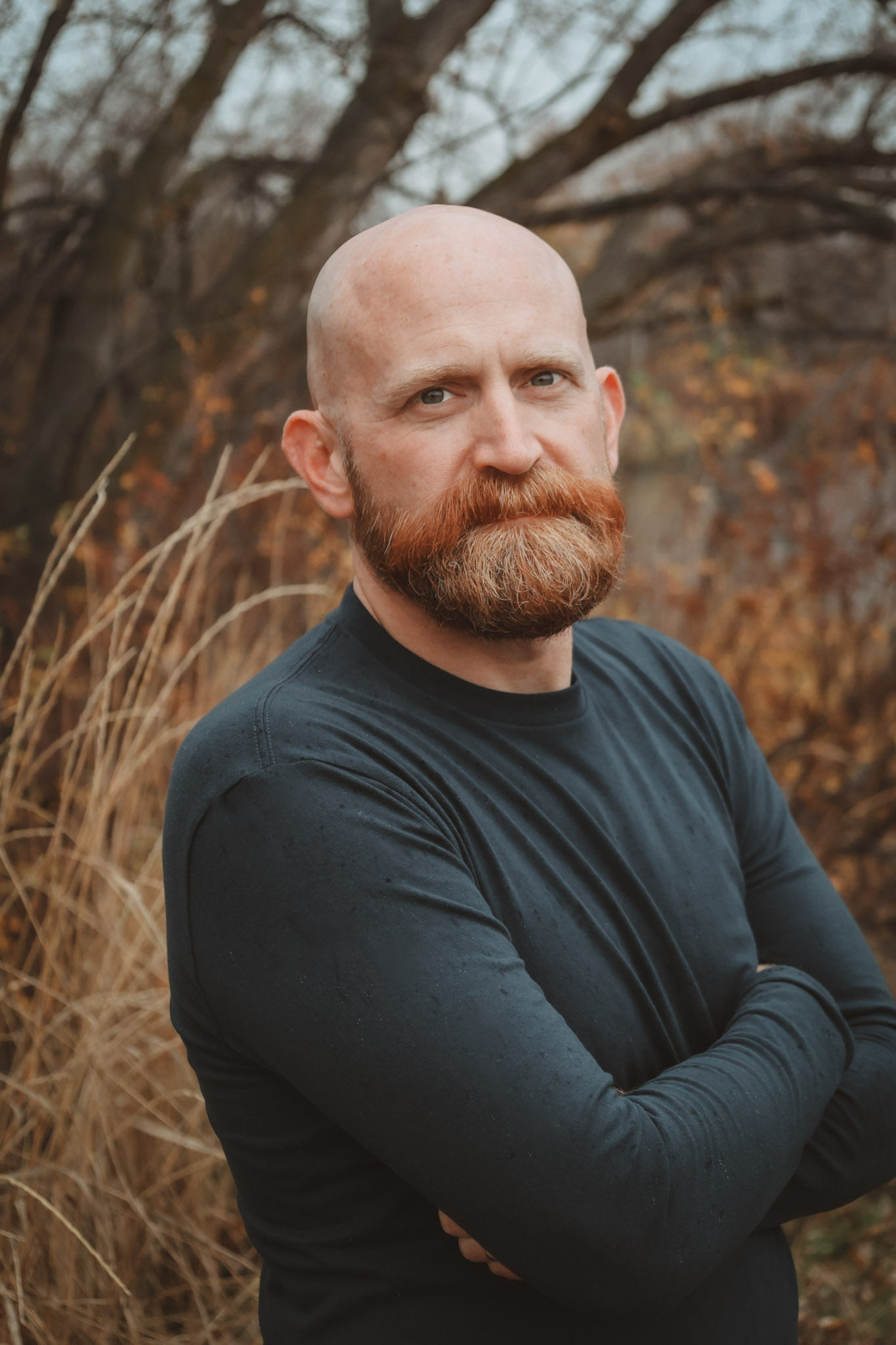
Chris Littrell is a retired police sergeant, Air Force veteran, leadership consultant, and author of Echoes from the Street: A Police Officer’s Journey through Trauma, Recovery, and Redemption. Over a 20-year law enforcement career, he served in leadership roles and helped guide others through high-stress environments. Chris’s life was forever changed by the loss of his daughter, Danielle, a tragedy that deepened his commitment to resilience, healing, and purposeful leadership. Today, he speaks, writes, and hosts the Gravity Podcast, helping others navigate adversity, lead with authenticity, and live with intention.