WEBVTT
00:00:00.640 --> 00:00:03.439
Accountability, leadership, wellness, it all starts with you.
00:00:03.600 --> 00:00:07.200
You can try to do all these things for someone else, but it has to start with you.
00:00:07.440 --> 00:00:10.720
There is a tangible operational need to take care of your people.
00:00:10.800 --> 00:00:12.640
They're your asset, they're your resource.
00:00:12.880 --> 00:00:20.480
In addition to wellness, I think that we have a lot to gain by really highlighting personal, professional, career development.
00:00:20.640 --> 00:00:24.320
I mean, we can't truly be objective just in our own little echo chamber.
00:00:24.399 --> 00:00:27.440
And so are we being effective for our family, for our team?
00:00:27.600 --> 00:00:28.960
Like, how are we showing up?
00:00:29.120 --> 00:00:35.039
But I'm really just trying to help first responders, police, uh, high-drive individuals just live a little bit better.
00:00:35.280 --> 00:00:38.079
Confidence and competence are parallel roads.
00:00:38.240 --> 00:00:42.159
So if you do what you can to be competent, then the confidence will come.
00:00:45.119 --> 00:00:47.280
Welcome to Responder Resilience, along with Dr.
00:00:47.359 --> 00:00:48.159
Stacey Raymond.
00:00:48.240 --> 00:00:49.520
I'm David Dashinger.
00:00:49.679 --> 00:00:58.640
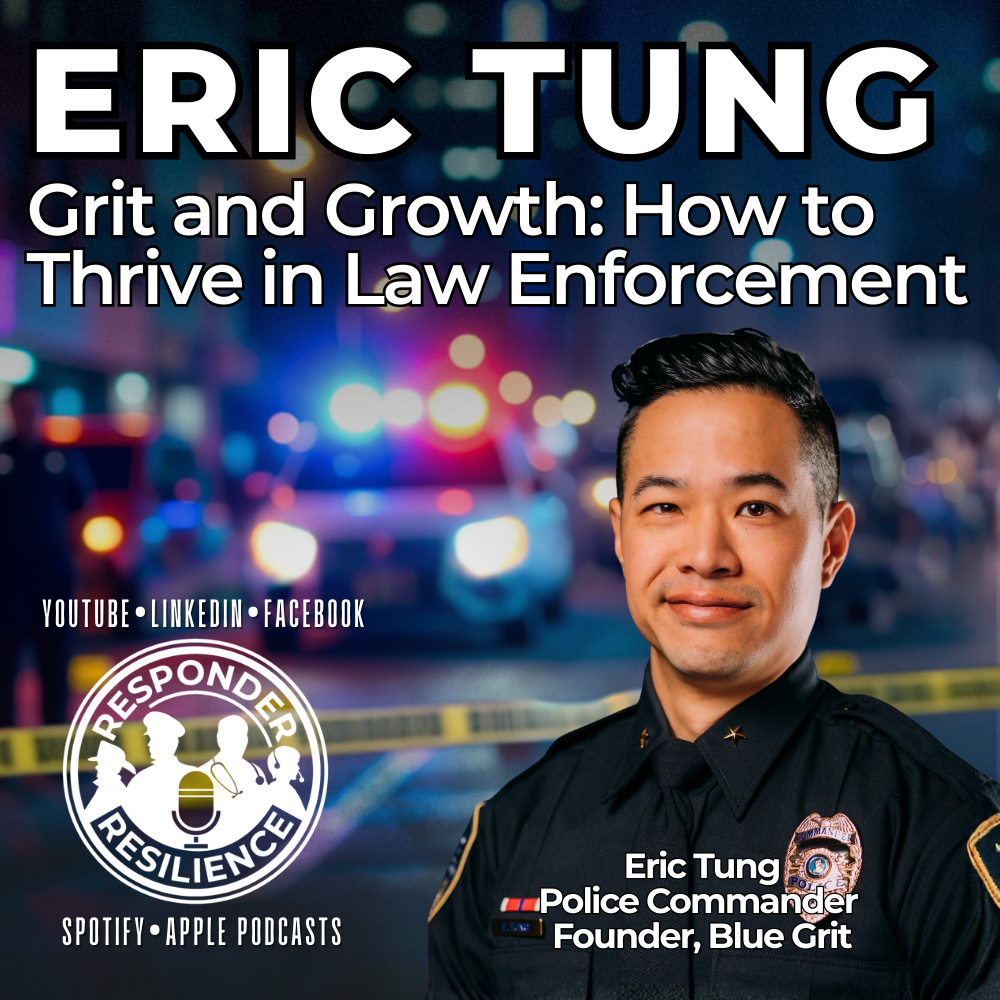
Today we're speaking with Commander Eric Tung, founder of Blue Grit, who's all about helping law enforcement officers perform better and live their best lives.
00:00:58.799 --> 00:01:06.719
We'll explore how to build resilience in ourselves and others and how police leaders can tap into generational traits to boost team communication.
00:01:06.879 --> 00:01:27.599
And for the younger officers out there, we've got key advice on building confidence and earning respect.responderTV.com.
00:01:28.640 --> 00:01:39.680
We invite you to like and subscribe, YouTube, Responder Resilience, Facebook, Responder TV, LinkedIn, Apple Podcasts, Spotify, and our website is respondertv.com for past episodes and guest information.
00:01:39.840 --> 00:01:42.719
We'll be right back to speak with Eric after this.
00:01:43.359 --> 00:01:48.640
Ask a first responder who they are, and you're likely to hear I am a police officer.
00:01:48.799 --> 00:01:50.000
I am a firefighter.
00:01:50.239 --> 00:01:51.359
I am a paramedic.
00:01:51.760 --> 00:01:54.159
I am a 911 communications operator.
00:01:54.400 --> 00:01:57.519
Not I do this work, but I do this job.
00:01:57.920 --> 00:02:00.799
Ask a clinician why they work with first responders.
00:02:00.879 --> 00:02:04.959
And they may say, There's no higher quality than helping helpers.
00:02:05.359 --> 00:02:11.520
Join us in shaping a culture where mental health, wellness, and leadership are prioritized, not whispered about.
00:02:11.759 --> 00:02:17.360
Where support is a sign of strength, not failure, and where no one has to carry the weight alone.
00:02:17.840 --> 00:02:20.000
Welcome to Responder Resilience.
00:02:20.159 --> 00:02:24.080
We shine a spotlight on the unseen battles of first responder reality.
00:02:24.560 --> 00:02:29.120
And celebrate the powerful wins that come from the grit of post-traumatic growth.
00:02:29.280 --> 00:02:37.039
We understand the culture, honor the trust, and bring you conversations from the change makers, passionate about helping first responders come home whole.
00:02:37.280 --> 00:02:40.719
With your hosts, retired Lieutenant David Dashinger, Dr.
00:02:40.879 --> 00:02:45.439
Stacy Raymond, and Bonnie Roomeley, LCSW EMT.
00:02:51.439 --> 00:02:59.039
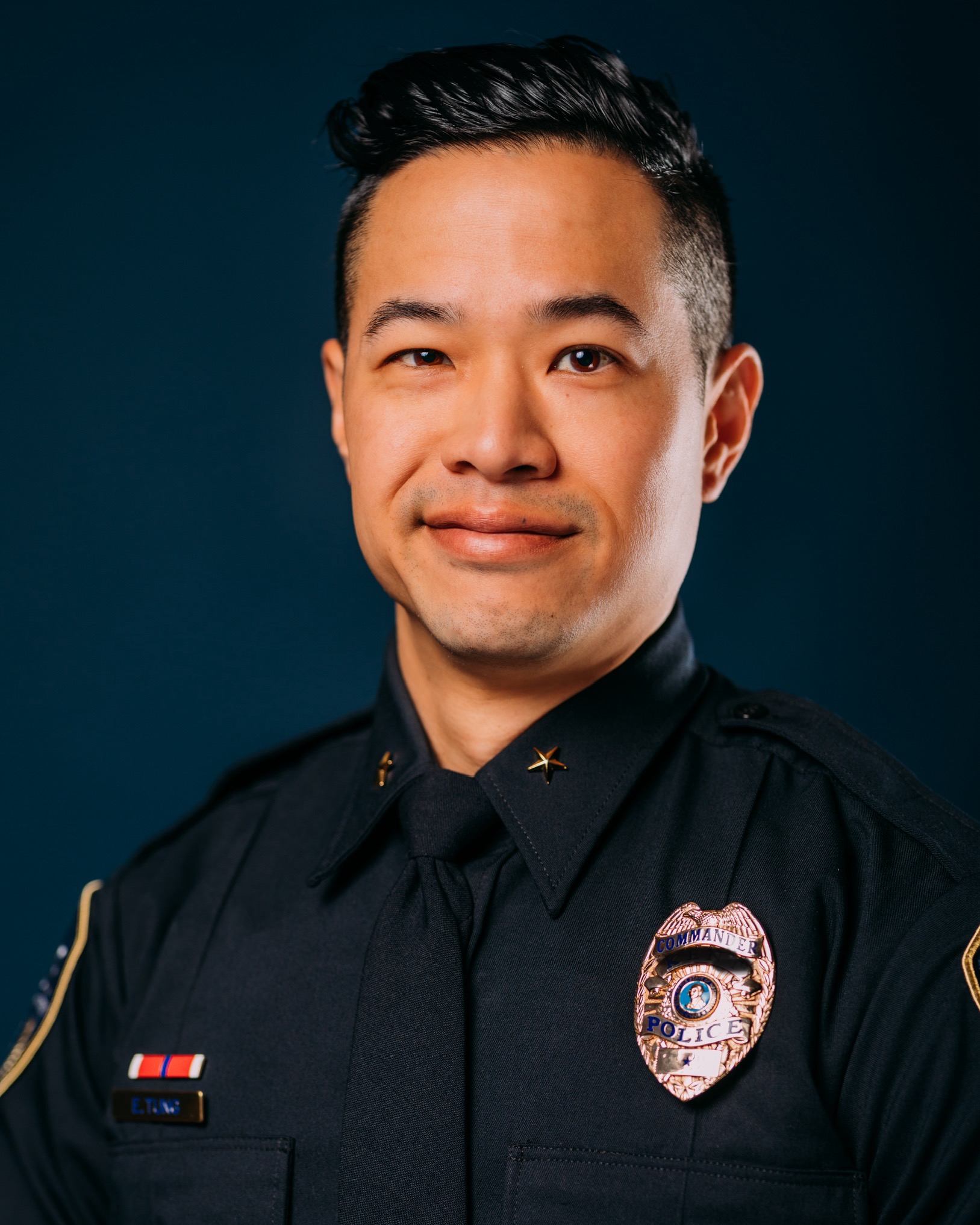
Our guest today is Eric Tung, who created Blue Grit to empower police, first responders, and driven individuals to live and perform better.
00:02:59.199 --> 00:03:07.520
As an active police commander in Washington State, he oversees patrol operations and wellness programs, bringing 18 years of experience to the table.
00:03:07.759 --> 00:03:16.639
Eric draws on intense highs and lows of law enforcement to help others cultivate a grounded mindset, adaptable routines, and a positive organizational culture.
00:03:16.800 --> 00:03:23.280
You can catch his insights on Blue Grit Radio and subscribe to his free newsletter at BluegritWellness.com.
00:03:23.439 --> 00:03:27.840
And you can connect with him on LinkedIn or Instagram at Blue Grit Wellness.
00:03:28.319 --> 00:03:31.039
Eric, warm welcome to Respond Resilience.
00:03:31.280 --> 00:03:32.319
Thank you both so much.
00:03:32.400 --> 00:03:34.000
Yeah, it's an honor to be here.
00:03:34.319 --> 00:03:43.280
So, Eric, I'd like to start out by asking you to tell us about your journey into law enforcement and what inspired you to create Blue Grit.
00:03:43.840 --> 00:03:44.800
Yeah, absolutely.
00:03:45.039 --> 00:03:49.280
So my journey into police work was a little later than many.
00:03:49.360 --> 00:03:51.199
I didn't grow up wanting to be a police officer.
00:03:51.360 --> 00:03:56.400
I grew up a bit more traditional to what my parental and cultural expectations were.
00:03:56.639 --> 00:03:59.439
Go to med school, you know, go to law school, that kind of thing.
00:03:59.520 --> 00:04:03.919
But it was really when I was in college, I saw a lot of crime in the Seattle area.
00:04:04.000 --> 00:04:14.960
And I always had this calling toward and this respect and reverence for those that were in the uniform, whether it was armed services, those that gave back, those that paid it forward, or first responders.
00:04:15.039 --> 00:04:21.839
And so it was really midway through college where I did a huge pivot and I just started throwing myself into whatever material I could find.
00:04:22.160 --> 00:04:30.000
I ordered this huge textbook, this manual on uh fire, the fire service and testing and what the what the job entailed.
00:04:30.079 --> 00:04:34.560
A lot of like the textbook material that you might learn in a fire academy or in a trade school.
00:04:34.720 --> 00:04:37.519
I wasn't really able to find a whole lot in policing back then.
00:04:37.600 --> 00:04:42.720
Um and that does kind of inform a lot of what I try to put out in my content and curriculum.
00:04:42.879 --> 00:04:47.839
Um fast forward, I just jumped right into it the spring when I was about to graduate.
00:04:48.000 --> 00:04:53.519
I got hired by my local police department, Western Washington, been with the same department for 18 years now.
00:04:53.680 --> 00:04:58.639
And a lot of why I picked it was because it was it was busy and there's a lot of crime, a lot of activity.
00:04:58.800 --> 00:05:00.480
I wanted to do the real thing.
00:05:00.639 --> 00:05:16.480
Um but really to give a little bit of an overview of how I got to creating Blue Grit, it was not out of a intense long-term awareness of the impact and importance of different wellness factors.
00:05:17.040 --> 00:05:28.000
Each kind of facet, if you want to call it that, or pillar of wellness that we think about was really acquired through me having to develop and cultivate and learn those things sometimes off the hard mistakes.
00:05:28.319 --> 00:05:47.360
So I dove into fitness and nutrition because although I felt I had a knack for more of like the analytical skills, having an academic you know, strength as a kid, uh I really wanted to do like the the boots on the ground, the high pack the high pace stuff, um, fast-paced stuff when I hit the streets.
00:05:47.519 --> 00:06:01.120
So I wanted to go for canine and I was like, well, I have to be the biggest, strongest, fastest, most nimble, durable guy can be to chase down these guys and keep keep up with the German Shepherd and with that that big fella over fences and all that.
00:06:01.279 --> 00:06:02.879
So I went for that.
00:06:02.959 --> 00:06:06.160
I that's a a part of my career that was definitely a highlight.
00:06:06.480 --> 00:06:12.079
Um, but then sleep, like sleep was terrible for for years and years on and off of graves.
00:06:12.160 --> 00:06:19.759
Um and my emotional awareness and my relationships and the importance of peer support, like these things all came.
00:06:19.839 --> 00:06:23.680
Uh I came to recognize how important they were because I needed them.
00:06:23.839 --> 00:06:32.480
And so I participated in peer support for the long uh the majority of my career truly as a peer support member and then later as a co team coordinator.
00:06:32.639 --> 00:06:40.560
Um one huge piece that really informed like why I even kicked off Blue Grit was the loss of my buddy Diego.
00:06:40.879 --> 00:06:53.439
Um Diego was killed in line of duty, and that really highlighted my my desire to to do more and see more and learn more about wellness as it pertains to first responder cultures.
00:06:53.600 --> 00:07:07.279
Um but it was 2020 that many of us can reconcile with and the impact of that, where I was already I was already putting out stuff a little bit about my reflections on the career and personal um personal reflections.
00:07:07.439 --> 00:07:13.920
I was already sharing fitness and nutrition stuff and peer support stuff just through my own little circles.
00:07:14.079 --> 00:07:16.879
And that's where I just wanted to put out something positive.
00:07:17.040 --> 00:07:21.680
Uh it started with simply an Instagram and a blog, Blue Grit Wellness.
00:07:21.759 --> 00:07:37.519
Um, and then from there it's grown over years and years into a podcast and a newsletter, and it's simply uh I mean it you you put it really well when you describe all the things I'm trying to get at, but I'm really just trying to help first responders, police, uh high drive individuals just live a little bit better.
00:07:38.000 --> 00:07:38.560
Sure.
00:07:38.879 --> 00:07:41.519
Yeah, you described a lot there, Eric.
00:07:41.680 --> 00:08:01.920
And uh what is one thing that's sort of front of mind right now that um you won't you see a need to address with Blue Grid in terms of let's just focus on law enforcement, um, in terms of building resilience and and you know, not just throwing it around as a buzzword, but um you know, actual real-world resilience.
00:08:02.079 --> 00:08:04.639
What what does that represent to you?
00:08:05.120 --> 00:08:13.360
Yeah, uh resilience for me is just being able to roll the punches and keep living toward and in the life the way you want it, right?
00:08:13.519 --> 00:08:21.920
The way that you've always imagined, not to think about our careers of how much it took from us, because we hear that a lot, and it's not to disparage that mindset.
00:08:22.000 --> 00:08:26.000
I think it's fair to recognize like you're gonna take losses, you're gonna take hits.
00:08:26.319 --> 00:08:29.519
But if we're honest with ourselves, we all signed up for that.
00:08:29.680 --> 00:08:31.920
No one thought it was gonna be sunshine rainbows.
00:08:32.159 --> 00:08:37.840
However, I like to acknowledge the hits and then highlight the wins.
00:08:38.000 --> 00:08:48.080
And I feel very fortunate, although I've seen a lot of rough things, and some may argue a lot of really terrible things uh befell me or those around me.
00:08:48.399 --> 00:08:57.519
I try, and I think it's very important that we're intentional about focusing on the good, because if we don't focus on it, we don't you know we don't capture it, we lose it.
00:08:58.159 --> 00:09:10.879
Right, and that helps um feed your pride, you know, because I really think that all first responders should have some sense of pride because not everybody's signing up to do that kind of work.
00:09:11.200 --> 00:09:17.679
And so if you if you focus on the wins, then that feeds your pride, and then now you know why you put the uniform on every day.
00:09:18.080 --> 00:09:20.879
Yeah, I love that you highlight pride as a as a good thing.
00:09:20.960 --> 00:09:23.759
Yeah, it we need we should have some pride in moderation.
00:09:23.840 --> 00:09:28.480
You should be proud of the great things you do, you should be proud, proud of the great people around you.
00:09:28.639 --> 00:09:30.080
Um just like ego.
00:09:30.159 --> 00:09:33.840
Like uh there's a lot of socialization, like ego's the enemy and kill the ego.
00:09:33.919 --> 00:09:36.320
It's like, no, you need a healthy amount of ego.
00:09:36.879 --> 00:09:37.360
Right, right.
00:09:37.440 --> 00:09:39.200
But pride is different than ego.
00:09:39.360 --> 00:09:42.399
Ego is tossed around as being self-centered.
00:09:43.200 --> 00:09:50.000
Pride, in my understanding of it, is like really honoring the work that you do and the sacrifice that you make.
00:09:50.399 --> 00:09:51.759
Yeah, I like that.
00:09:53.360 --> 00:10:00.720
By the time a first responder sits across from you, they've likely exhausted every internal resource they have.
00:10:00.960 --> 00:10:04.799
This isn't a routine appointment, it's their 911 call.
00:10:04.960 --> 00:10:08.159
You won't hear sirens, but the urgency is real.
00:10:08.480 --> 00:10:20.480
If you choose to take that call, understand what it means to show up, to stay steady, and to carry the weight of someone who spent a career doing the same for others.
00:10:21.600 --> 00:10:24.000
Be the resource they can count on.
00:10:24.559 --> 00:10:33.840
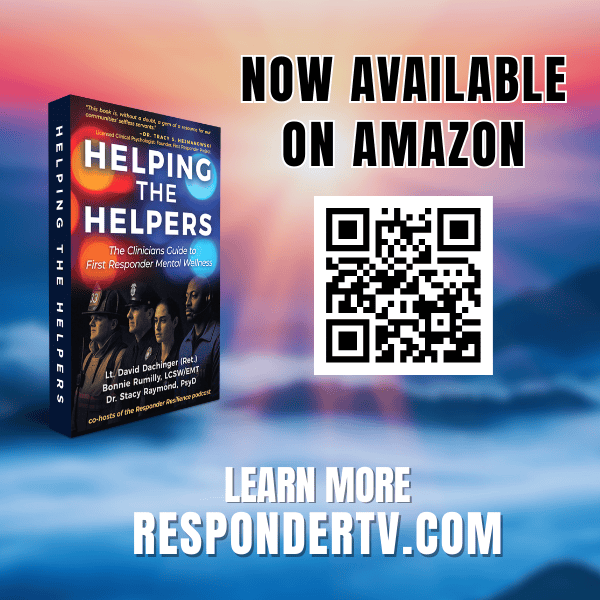
Order your copy of Helping the Helpers Today on Amazon or for bulk book orders, contact us at info at respondertv.com.
00:10:37.120 --> 00:10:45.440
Closing in on two decades doing this job, and um by this point you probably see uh a couple of different generations still on the job.
00:10:45.679 --> 00:10:55.279
Are there ways that police leaders can kind of leverage those generational traits um in a positive sense to enhance team communication?
00:10:55.440 --> 00:11:00.159
Because I know we all like to communicate in different ways depending on kind of when we were brought up.
00:11:00.480 --> 00:11:02.159
Yeah, yeah, I'm fascinated by this.
00:11:02.320 --> 00:11:07.440
I feel like I'm I'm kind of in the in the middle of all this generational talk.
00:11:07.600 --> 00:11:13.840
Uh I just hit 40 last year, so I'm technically an old millennial, and so I I grapple with some of that.
00:11:14.000 --> 00:11:18.000
At the same time, I grew up with dial up internet in like one phone line.
00:11:18.159 --> 00:11:20.639
And so I feel I feel the older generations too.
00:11:20.720 --> 00:11:23.200
Like we didn't have a computer in my house for most of my childhood.
00:11:23.440 --> 00:11:28.080
Um but all to say, like, I think a couple things are to simplify it, the biggest things.
00:11:28.240 --> 00:11:52.320
One is stay curious because we have such a broad audience, and we understand that from internal and external stakeholders community, but even in our departments, like people grew up drastically different, and so just trying to stay curious, I think, invites us to be open about how we communicate, open about how our communication is received, and getting to know people, seeing, you know, making the connections where you can.
00:11:52.480 --> 00:11:58.240
Um the other piece of that is just recognizing it's easy to kind of be curmogeny of like, oh, kids these days.
00:11:58.480 --> 00:12:05.039
But let's be honest, every generation, and I'm pretty sure there are studies and and historical anecdotes that show this.
00:12:05.519 --> 00:12:08.240
Every generation said that, probably since the dawn of time.
00:12:08.320 --> 00:12:09.120
Like kids these days.
00:12:09.759 --> 00:12:10.480
Right, right.
00:12:10.960 --> 00:12:12.480
But there are some real differences.
00:12:12.639 --> 00:12:24.720
Like what I hear from um police leaders is that they don't want to sign up, they don't want to work, they don't want to be ordered in, they have an attitude, um and that you know, they're they're kind of lazy.
00:12:25.279 --> 00:12:27.120
I feel that in in both ways.
00:12:27.279 --> 00:12:28.320
I see it in both respects.
00:12:28.399 --> 00:12:35.200
I see some of these like quote unquote um yeah, let's say younger adults, and I see how the job wears on them.
00:12:35.360 --> 00:12:38.639
I love that they're emotionally intelligent and they're able to take a beat.
00:12:39.120 --> 00:12:47.039
Yeah, and so it's it's kind of like we're having like two ends of the same conversation because we need the work to be done at the same time.
00:12:47.120 --> 00:13:01.279
We are concerned that this generation informed, they're not gonna stay in the careers as long as our their predecessors, no, but if we want them to stay longer, we have to attune to their their wellness needs.
00:13:01.679 --> 00:13:01.840
Correct.
00:13:01.919 --> 00:13:06.960
No, they're all about they're all about peer support, is what I find, right?
00:13:07.039 --> 00:13:08.399
They're really open to it.
00:13:08.559 --> 00:13:27.120
But um, yeah, if if if the tone doesn't change toward promoting officer wellness and you know, um you know supporting what officers go through, then this generation isn't gonna stay in the career as long as uh, you know, the the leadership now.
00:13:27.600 --> 00:13:28.159
Yeah, yeah.
00:13:28.320 --> 00:13:29.519
I love that you bring that up, Stacy.
00:13:29.679 --> 00:13:39.919
And I guess going to the brass tacks that you're kind of highlighting, in addition to wellness, I think that we have a lot to gain by really highlighting personal, professional, career development.
00:13:40.240 --> 00:13:46.799
And so people are able to wear a lot of hats, they're able to cycle through specialties and continue to build themselves and the agency, right?
00:13:46.879 --> 00:13:49.039
Connect that pride in your mission and message.
00:13:49.120 --> 00:13:59.120
Yeah, that's probably one of the most viable strategies, or else they're gonna feel like a number, they're gonna feel like they're replaceable, and they're gonna leave and force us to replace them.
00:13:59.519 --> 00:13:59.919
Right.
00:14:00.559 --> 00:14:05.200
So, this is the kind of piggybacks on this conversation that we're having.
00:14:05.360 --> 00:14:07.919
Um, but work-life balance.
00:14:08.159 --> 00:14:16.559
So um, that's something that's talked about a lot, and it's um, you know, we find a lot of first responders, a lot of us are personally have done this.
00:14:16.720 --> 00:14:28.879
We just take on the job as it's our our full identity, our full, you know, 24-7 mission in life, um, to the exclusion of a lot of other things, and obviously maybe maybe not a healthy balance.
00:14:29.039 --> 00:14:32.080
So, what are your thoughts on kind of restoring that balance?
00:14:32.240 --> 00:14:38.399
Like how realistic is that, and is that gonna have an impact on longevity for the people we're talking about?
00:14:38.720 --> 00:14:40.559
Yeah, I love that conversation.
00:14:40.720 --> 00:14:46.320
Uh the the identity is so encompassing and so um so concentrated.
00:14:46.559 --> 00:14:52.799
And so I've heard a lot of people kind of poo-poo the the even the phrase of work-life balance.
00:14:53.200 --> 00:14:56.080
I like it as a goal and an orientation point, right?
00:14:56.240 --> 00:15:09.679
So that's like that's the intention and recognizing that in this job and these career types, you are going to find yourself in complete and significant imbalance, but the goal should always to rebalance, right, and re-harmonize that.
00:15:10.320 --> 00:15:13.279
So I think in a day, that's probably unrealistic.
00:15:13.440 --> 00:15:40.240
In a week, I think we can do it, and then after a few weeks of really hard times, and maybe that's critical staffing and lots of mandates, maybe that's uh you know, unrest in your region after a few weeks, couple months, then that's where we need to take the bigger steps of taking the time off that you're given, going on vacation or stayation, and then these different things like talking to a clinician, to a pastor, peer support, those things are gonna reorient us, right?
00:15:40.320 --> 00:15:44.799
Like setting up a coffee date with your college buddy I haven't seen in a year, that's gonna reorient you.
00:15:44.879 --> 00:15:47.919
So it's it's not one thing, but everything's personalized.
00:15:48.000 --> 00:15:54.799
But I do think that we ought to think about how we can restore that um balance in a better way through management.
00:15:55.200 --> 00:16:03.200
Well, Eric, it's so important to restore the balance, but what I'm finding is a lot of officers don't realize that they are out of balance.
00:16:03.679 --> 00:16:09.039
So teaching what what are the signs of being out of balance, off balance.
00:16:09.440 --> 00:16:19.120
Um that's one thing that um the group that I belong to, we we voluntarily go into departments and teach, you know, this is these are the symptoms that you need to look for.
00:16:19.279 --> 00:16:25.759
So Fairfield County trauma response team here in Connecticut, you know, this is what we offer.
00:16:26.559 --> 00:16:29.440
Please fire, dispatch, EMS.
00:16:29.519 --> 00:16:38.559
You know, if they want to learn about it, like this is, you know, this we we will just come for free and and present that to you so you know what to look for.
00:16:38.799 --> 00:16:46.559
And it's eye-opening because they're like, oh, I didn't realize that arguments with my spouse could be a sign that things are wearing thin.
00:16:47.600 --> 00:16:48.799
Yeah, I think that's great.
00:16:48.960 --> 00:16:53.759
It's the adage of the the frog in hot water that is you know, gradually boiling.
00:16:54.320 --> 00:16:54.639
Yeah.
00:16:54.960 --> 00:16:56.159
Yeah, you're just in it.
00:16:56.240 --> 00:17:02.000
And I think that there's so many really slippery uh coping mechanisms that aren't super healthy.
00:17:02.080 --> 00:17:05.039
They're kind of innoculous at first, but then they become so overwhelming.
00:17:05.519 --> 00:17:06.079
Alcohol?
00:17:06.400 --> 00:17:10.880
Alcohol, social media, scrolling, doom scrolling, screen time, yeah, yeah.
00:17:11.359 --> 00:17:13.839
Working overtime, for sure, all these.
00:17:14.480 --> 00:17:15.440
Lack of sleep.
00:17:16.240 --> 00:17:20.079
And just saying, well, everyone else has it, like it's not a big deal.
00:17:20.319 --> 00:17:25.200
Yes, even if everyone else is struggling with sleep, that doesn't mean that you look the other way.
00:17:25.599 --> 00:17:25.920
Yeah.
00:17:26.079 --> 00:17:27.119
I yeah, I found it.
00:17:27.200 --> 00:17:30.000
Uh difficulty staying away from work, difficulty taking time off.
00:17:30.160 --> 00:17:31.279
I've grappled with those things.
00:17:31.359 --> 00:17:38.480
And uh a social event with your with your buddies, and you're excited about it two weeks ago, and as it gets closer, you're like, Yeah, I don't really feel it.
00:17:39.039 --> 00:17:42.000
That's that's something that's worth peeling back and asking yourself why.
00:17:42.400 --> 00:17:42.720
Correct.
00:17:42.960 --> 00:17:43.279
Right.
00:17:43.440 --> 00:17:49.599
Isolating isolating is dangerous, especially you know, when we look at the suicide numbers among police.
00:17:50.000 --> 00:18:08.640
So um the next topic really touches upon this idea of um self-awareness, you know, like learning about yourself and being vulnerable enough to admit like I'm this is the job's getting to me, and it's affecting not just me, but you know, um my family.
00:18:09.039 --> 00:18:15.119
So, how how important would you say is vulnerability and self-awareness for a law enforcement officers?
00:18:15.759 --> 00:18:16.480
It's critical.
00:18:16.640 --> 00:18:19.039
I mean, it's of highest importance to answer your question.
00:18:19.440 --> 00:18:28.960
And I'm all in favor of that, but it's really tough to get alpha males and alpha females to bring down the wall or look over the wall.
00:18:29.920 --> 00:18:30.240
Yeah.
00:18:30.480 --> 00:18:36.400
I think uh I think the allegory, you know, like we have these walls, like these really hardened defenses.
00:18:36.559 --> 00:18:36.799
Uh-huh.
00:18:36.960 --> 00:18:50.000
Um, but if we're honest with ourselves, all of these different, again, wellness factors, whether it's emotional, spiritual, financial, physical, like we are just we have this foundation that might be rotting and we're not attending to it.
00:18:50.079 --> 00:18:53.039
So we build up these bigger walls, but we really gotta.
00:18:53.359 --> 00:18:59.839
I mean, the bigger your wall builds up, the m uh technically the the stronger your foundation ought to be, or the whole thing's gonna go down.
00:19:00.000 --> 00:19:01.119
Um, and we see it.
00:19:01.200 --> 00:19:08.160
We and uh even those that want those that might be a little bit more stubborn, we know they exist.
00:19:08.240 --> 00:19:10.079
They're stereotypes for a reason, right?
00:19:10.160 --> 00:19:16.799
These are all archetypes that exist in every single agency organization, regardless of what fire service EMS for sure.
00:19:17.119 --> 00:19:17.519
Yeah.
00:19:18.240 --> 00:19:29.920
There are those that are never gonna seek help, but if we can get the majority, you know, to be open to it and you know, to look at themselves, right?
00:19:30.000 --> 00:19:33.680
There's always gonna be that subset that's uh that's like, nah, I got this, I got this.
00:19:34.240 --> 00:19:44.160
Yeah, what I appreciate is like when you talk about vulnerability, there are a lot of folks that were those types, they absolutely were, until something wasn't working in a significant enough way.
00:19:44.319 --> 00:19:46.000
Yeah, and then so they share their stories.
00:19:46.160 --> 00:19:58.960
So I hope that because everyone is so different and everyone's so unique that continuing to hear these types of stories for those that are willing to put it out, it might be on a podcast, it might be in a one-on-one, like those stories are impactful, right?
00:19:59.039 --> 00:20:03.759
They socialize the the acceptance and the essentially like the okayness of it.
00:20:04.160 --> 00:20:04.400
Right.
00:20:04.559 --> 00:20:15.599
That's why on our podcasts we have a lot of first responders that are admitting, you know, here's where I was, this is where I was, you know, with alcohol or divorce or and chiefs now too.
00:20:15.680 --> 00:20:23.680
We're starting to see more, you know, chief level people um who are totally open and transparent about their struggles and seeking help.
00:20:23.759 --> 00:20:34.079
And uh, and it's that's a big shift too, just to hear someone who's wearing a white shirt say, Hey, I needed help, you know, I'm not ashamed to say it.
00:20:34.640 --> 00:20:38.480
What a way to signal the actual cultural acceptance from the top.
00:20:38.640 --> 00:20:48.240
It's one thing if if a chief and administrator says, an executive says, Yeah, we value wellness, yes, we want you to use the gym, yes, we want you to use our clinician, right?
00:20:48.400 --> 00:20:51.200
But if they don't use any of those things, it's really hard to believe it.
00:20:51.519 --> 00:20:52.480
Correct, right.
00:20:53.200 --> 00:20:57.039
Not everyone is meant to walk this path, and that's okay.
00:20:57.279 --> 00:21:04.720
But for those who feel the call, for those who read these words and feel not just curiosity, but conviction, know this.
00:21:05.039 --> 00:21:11.680
By the time a first responder sits across from you, they've likely exhausted every internal resource they have.
00:21:11.839 --> 00:21:15.680
This isn't a routine appointment, it's their 911 call.
00:21:16.799 --> 00:21:18.880
I don't know how much longer I can do this job.
00:21:19.119 --> 00:21:21.680
You won't hear sirens, but the urgency is real.
00:21:21.839 --> 00:21:25.359
If you choose to take that call, understand what it means.
00:21:25.599 --> 00:21:32.640
To show up, to stay steady, and to carry the weight of someone who spent a career doing the same for others.
00:21:32.960 --> 00:21:34.960
This is where the work begins.
00:21:35.279 --> 00:21:37.519
Be the resource they can count on.
00:21:37.759 --> 00:21:45.839
Order your copy of Helping the Helpers Today on Amazon, and for bulk orders, email us at info at respondertv.com.
00:21:52.079 --> 00:21:59.759
There's a term true accountability, and I'd love to know what you you know how you look at it in terms of the context of law.
00:22:00.240 --> 00:22:04.720
enforcement and does that have a way that it shows up in agencies?
00:22:05.119 --> 00:22:10.799
Yeah, I think with accountability, everything, accountability, leadership, wellness, it all starts with you.
00:22:10.960 --> 00:22:14.720
You can try to do all these things for someone else, but it has to start with you.
00:22:14.880 --> 00:22:22.640
You can you can limp it along, but you know truly if you don't cement that from the start with yourself, then it's all for naught.
00:22:22.720 --> 00:22:26.480
So when I hear accountability, I think very much the same of ownership and integrity.
00:22:26.559 --> 00:22:31.599
It's just doing the best you can with what you have and that might be context and timing dependent.
00:22:31.759 --> 00:22:34.240
Like we'd all we'd all love to show up at a 10.
00:22:34.400 --> 00:22:38.400
Some days all we have is an 8.5 and that's going to be pretty dang good.
00:22:38.880 --> 00:22:43.759
So when it goes to accountability, I think it goes to values and mission, like personal mission.
00:22:43.920 --> 00:22:56.559
And I mean that's one thing that I am so adamant about for those that have not considered what their values are and really written them down and found some process to revisit that, maybe quarterly, maybe yearly, maybe monthly.
00:22:57.039 --> 00:23:00.960
That can be such a game changer in knowing why you're doing the thing you're doing.
00:23:01.279 --> 00:23:01.519
Right.
00:23:01.680 --> 00:23:09.359
In fact that could be a topic in the you know in some uh states they have mandated well wellness visits, right?
00:23:09.440 --> 00:23:13.839
So in Connecticut I think it's like every five years, which I think it should be more frequent than that.
00:23:14.000 --> 00:23:27.200
But um that could be one of the questions that's really not all that difficult to uh hear and address you know at as an officer you know where do you see yourself in five years in this department?
00:23:27.359 --> 00:23:29.279
What would you like to be working on, you know?
00:23:29.599 --> 00:23:54.000
Yeah and there's um I belong to a men's workout group that has an annual suggested activity called the 8 block which um basically you're looking at eight different areas of your life spiritual personal work and and it gives you that opportunity to reflect on it and kind of plan out okay the next 12 months where are my priorities going to be what am I going to focus on?
00:23:54.720 --> 00:24:02.079
Just like you're saying Eric it's like a a reset or a check-in on a regular basis um that can really be a game changer.
00:24:02.400 --> 00:24:20.079
Yeah I love that piece of accountability and even the fact that you bring up this ex this clear example of how you can bring in a group accountability and inviting feedback from your close friends from your from your spouse partner like and then recognizing to pull the defense down and really truly listen because you asked for it.
00:24:20.240 --> 00:24:43.279
I mean we can't truly be objective just in our own little echo chamber and so are we being effective for our family for our team like how are we showing up absolutely so I'd like to ask about fairness and leadership what does that look like um and you know how should it look with both positive and negative feedback from leadership?
00:24:43.759 --> 00:24:45.119
Yeah that's tough.
00:24:45.200 --> 00:25:22.480
It's hard really hard because it's so context dependent and maybe that even highlights this big question of like wait how is fairness context dependent and what I mean by that is like I had all these opinions about how how you should address things how you should coach and counsel and you know discipline even as an officer and then when I went to sergeant as a first line I had a little bit different context right and I'm like well this is a little bit more complicated than I thought as an officer but just to give the listeners a perspective I'm going to look at something differently if it's a one-year officer doing this mistake versus a 10-year officer or a field trainer.
00:25:22.799 --> 00:25:40.079
And right so when I say fairness is contextual that's what I mean by that right has someone made the mistake five times or one time but then I think what's more important in this conversation of resilience and and culture building is what is the goal and a lot of times it's behavior change but I would say how do we make this person better?
00:25:40.240 --> 00:25:44.000
How do we bring them in, make them part of the team connect back to the mission?
00:25:44.160 --> 00:25:47.599
Make sure they're okay right because they're the ones doing the work it's not me.
00:25:47.759 --> 00:26:15.759
I'm sitting in a cubicle most of the day most days but the people that are out there making the tough decisions and facing the true scrutiny like they're out there you know 10 14 hours a day and so to be empathetic and understanding to that again going back to the earlier point stay curious right like remember what it was like to be that but also recognize as leaders we don't know what it's like to be that because they're not doing the same job we did back 10, 18 25 years ago.
00:26:16.000 --> 00:26:35.119
Yeah Eric as a supervisor and yeah having all these people under your you know sort of your watch um how do you stay in touch with whether they may be struggling or they've been on a a few bad calls back to back or within a say a week of each other.
00:26:35.359 --> 00:26:44.640
What kind of um how do you stay in touch with that and then address potential that they may be struggling and need some help what kind of resources do you bring to that situation?
00:26:45.359 --> 00:26:54.240
Yeah directly I I keep tabs on the type of calls and you know of course for operations that's it's effective if you're aware of what's going on.
00:26:54.559 --> 00:27:05.440
But on the wellness side you know even those that I don't supervise like I have a basically half of the patrol division is under my watch but then I I monitor what's going on the days off.
00:27:05.519 --> 00:27:08.960
I monitor what's coming in in the weeklies and kind of some trends of other things.
00:27:09.119 --> 00:27:15.839
And then we have a network like I would say I'm very proud of our culture of peer support that goes beyond our peer support team.
00:27:16.000 --> 00:27:37.920
And so this happened especially as a sergeant where people just peers and command sometimes and officers would just pitch me something like hey these guys went to this kid call and I'm like cool thank you for letting me know I was aware but please don't assume that we're aware and right so that then it became connecting with other peer support members of those shifts right something like that.
00:27:38.640 --> 00:27:48.640
But then more of the context is like being in mid-management now and recognizing that although I can go to roll calls and I interact with people in the lunchroom and break room uh it's just not the same right for everybody.
00:27:48.799 --> 00:28:29.519
Some people are very open and very very uh I guess comfortable and others may not be right so to leverage and connect with my first lines and continually like when I see them and sit down with them at least once a week it's just literally asking them how's how are you how's your crew like how is everyone doing what are they concerned like where they are they complaining about are they upset about something is it leadership is it this is it is it stress how are they how are they dealing with the politics out there with policing and some shifts are a little tenuous and the same day other shifts I don't think my guys are talking or concerned about it at all I'm like cool just be aware and then we have that open communication through the different ranks.
00:28:29.839 --> 00:28:30.240
Right.
00:28:30.559 --> 00:28:40.640
I can't tell you how refreshing it is to hear a leader care and and really go the distance and I'm sure David feels the same way.
00:28:41.200 --> 00:28:51.599
Yeah every time we have a guest like yourself who's you know embracing this new way or a different way of doing it than we've traditionally done it.
00:28:52.160 --> 00:28:58.960
To me it's like so exciting to know that um we're hopefully turning the corner.
00:28:59.119 --> 00:29:20.880
You know we're we're running into a new as the younger generation step into these roles whether it's mid management or um towards the top that um it really is a changing of the guard and the in the mentality and mindset of um you know this may have worked back then but it's there's there's a new way that we can approach this that might be better.
00:29:21.279 --> 00:30:02.480
Yeah I think so and I hope so I I've said it before on my show in other places like those that are coming up maybe they're new recruits now maybe they're first line supervisors maybe they're not even firefighters or EMS or cops but when they are administrators oh my gosh like I I can't I literally can't imagine what they'll come up with that'll be so helpful for the culture and the careers uh but at the same time like I've I've been told subtly I've been told overtly that it appears that I and this might sound like a like a flex or like a humble brag but no I've been told operationally like I think you care too much about what people think and feel and I I do carry it kind of like a brag.
00:30:02.559 --> 00:30:13.200
I'm like okay I I hear what you're saying however I don't unless there's evidence of how that's impacted operations and she's like well no it hasn't it's just something like you know just feedback.
00:30:13.279 --> 00:30:37.759
I'm like okay cool like feedback received and so I try to I don't see it as you you know look this is my take on it as a clinical psychologist I don't think you're too sensitive or you're taking it too seriously I think you're hearing from the old guard that can't imagine in intervening with um subordinates the way that you do just uncomfortable.
00:30:38.079 --> 00:30:50.799
Yeah and a concrete thing was uh you know there was a time when one of the bosses was like hey like I I just noticed you you send people home a lot after calls but like do you ever ask if they're okay you know after a after a traumatic wreck or something like that.
00:30:50.880 --> 00:30:53.599
And I'm like I actually don't send any guys home.
00:30:53.759 --> 00:30:54.720
I sign off on it.
00:30:54.799 --> 00:31:08.240
I empower and I actually support my my sergeants to make the call and I do encourage it like I recognize I encourage it because I socialize it but also it's in policy but also I say after it's done I'm like hey good on you.
00:31:08.400 --> 00:31:25.200
And I tell the officer later hey I heard I heard you went home good on you for taking the time and some of them are like I needed it and I'm like good and then others are like I wasn't sure but I took it and I'm like good because you can't go backwards you can't go back in time and be like you know I was really messed up but I stayed on and my head wasn't in the game.
00:31:25.519 --> 00:31:26.240
Right, right.
00:31:26.319 --> 00:31:30.880
You're giving them permission to take care of themselves and that has to happen from leadership.
00:31:31.200 --> 00:31:48.079
Yeah and when an eight year veteran that everyone respects is just a hard charger does it and everyone is watching right I have I I feel morally obligated to say hey good job but also I know that person is setting a very positive healthy tone for everyone else.
00:31:48.559 --> 00:31:53.519
Absolutely boxing has the power to change lives especially for first responders.
00:31:53.680 --> 00:32:13.039
Fight camp embraces your journey whether you're stepping into the ring for the first time returning after a break or aiming to elevate your fitness harness the strength of boxing to release stress build resilience and connect with a supportive community one punch at a time use code RR10 for a 10% discount on Fight Camp packages and accessories.
00:32:13.200 --> 00:33:22.480
Go to joinfightcamp.com slash shop what advice uh would you give to young officers uh regarding building self-confidence yeah it's uh it's a lot of things but confidence and competence are this kind of uh parallel they're parallel roads so if you do what you can to be competent then the confidence will come and sometimes there's a healthy mix of fake it till you make it like just assert yourself and you know stand up tall especially for well for any any job role but you know we could talk about officer presence and I mean so many times it's just how you carry yourself and then with confidence and competence I think it's very um might be a curveball for some but just to recognize there's a lot you don't know and the more you learn the the less you know kind of thing and just sit comfortably embrace that perpetual student because that's one of the biggest game changers that I found in official leadership was going from thinking that I had to know it all because I didn't want to let people down to recognizing I wasn't going to know it all.
00:33:22.640 --> 00:33:47.839
In fact there's so many things that a lot of my officers are very they're they're so much like above and beyond anything I'll grapple with because the times because of assignment and just to to have those conversations and build that trust um yeah it goes it goes so far just to recognize what you don't know and it be okay saying I don't know let me find out that's huge on the street and it's huge in your in the walls of your department as well.
00:33:48.160 --> 00:34:37.920
Yeah stay curious yeah Eric if you um were addressing a class of um say college students who are considering going into this profession what would you tell them what kind of um guidance would you give them before they uh make that move and make the decision yeah I've uh I haven't always been a journaler but I would invite some sort of reflective process and there's something powerful about writing something down and being able to revisit it so almost like creating your own time capsule like why do you want to do this work and like truly why and I talked a lot about this and I was involved in hiring I've sat on oral boards for a long time but just to say like why specifically this job and then find out what your internal values are like really identify those things because the identity is is so significant.
00:34:38.159 --> 00:34:54.880
However like the job is not you you are not the job it it can be absolutely this accelerant to do the good stuff that you intend to do but so can teaching so can clinical work so can all these other things that a lot of first responders find themselves going to different career paths.
00:34:55.039 --> 00:35:06.239
Maybe they have to maybe they want to but to say like it cannot be you but really like not to disparage you or discourage you but just highlight what those things are true to you that the job will help you do.
00:35:06.400 --> 00:35:18.800
And at some point if the job and those values are not aligning if you're not able to live your best authentic self and serve in the ways that you you really truly uh desire to then maybe it's a time to depart.
00:35:20.000 --> 00:36:11.360
Yeah so critical to uh you know really get real about why why we're choosing this profession um because uh it's it's a huge commitment not only for us but our family and everybody else that uh that's in our our world so um it's it's kind of a group a group ride along if you will absolutely do you have any thoughts about the opposite end of the spectrum retirement uh what you might tell someone who's getting ready to cross that finish line and how they would kind of start to navigate the next phase after law enforcement yeah I've talked about this with some people that work under my supervision which is like hey what are your goals and they're like well I don't have any career goals I'm like no no what are your like life goals because you're you know we talk about how they're kind of rounding the corner I'm like how can I slash we slash the department or your work and dedication like how can we set you up for success?
00:36:11.519 --> 00:37:07.199
Is that going to wellness focused uh training because there's a lot of options these days right is it is it taking time I've challenged one of my sergeants to take more vacation and the moment he did I made a note of it it went in his eval to say like hey he's taking time like because he's he's modeling wellness like these are very tangible work related professional things and so um I would say again in a similar exercise you could do with the recruits or those like looking in college to consider a field like this you could do the same for someone that's coming up on the you know on the the turning point or the tunnel of a retirement which is like hey reflect on your career let's write down like some awesome things you did let's recall like why you came in and think about how how a lot of that aligned and yeah you might remember some of the not so great things but let's be honest with ourselves the little interactions the big wins there's so many if people just take the time and they're and if they're honest about it.
00:37:07.679 --> 00:37:21.280
And if we're not you get any firefighters or cops together of course they start talking about all their like all their fun stories all the really big moments and so it's an invitation to do that if you're having trouble thinking of them because I guarantee you they're there.
00:37:21.679 --> 00:37:22.000
Right.
00:37:22.239 --> 00:38:59.760
And I think one of the my experiences we don't recognize or properly evaluate what our marketable skills are moving into the public sector where we um whether you're a firefighter cop you have developed an incredible skill set that could be transferred maybe not directly but um do you see that as uh a way that people can maybe just take stock of what they're able to do um to be to remain of service but in a different capacity yeah absolutely I I'd consider uh you know what other communities you interact with is it a faith group is it your neighborhood watch like we just deal with this level of vigilance and critical thinking and quick decision making and then also long-term decision making because we can map out all these contingencies and ICS like for those that have been in it for a bit um and that is that is not common in a lot of people's life spheres right and so there are those tangible kind of carryovers but then also if it's more about the job I I know a couple former police officers that never would have thought themselves in a setting like this but they're absolutely loving life teaching they're loving life teaching in like a a community college technical school kind of thing because they're such this mentor role they're coaching something with really positive base of people that want to come in and learn and they're offering whatever they can and it's just really lit them up in this really awesome way and so thinking about things like that coaching right like there's just so many so many opportunities to quote unquote help people which is generally what people say when they want to come into first responder work like helping people looks like a million different ways.
00:39:01.199 --> 00:39:08.960
Eric tell us where people can find you and talk about all the uh the great things you're putting out there in terms of the podcast a newsletter website anything like that.
00:39:09.280 --> 00:39:55.280
Yeah absolutely so the easiest one stop shop is bluegritwellness.com that's where you can subscribe to my free newsletter it'll have little tips uh wellness information little reflection points prompts but also like the weekly summary of the podcast which is blue grit radio that's available on all your all your major players so it's talking about it's talking about things like resilience and really just how do we boost our performance through wellness leadership mindset culture and so the topics really span a lot of professionals healthcare professionals first responders and outside as well um yeah I do trainings I speak um do online training so it's just really trying to meet people where they're at and what I can help with so always love people reaching out and I'm on LinkedIn as well as I think you said so easy to find there.
00:39:55.519 --> 00:40:36.079
Perfect and any uh speaking gigs coming up that you want to share about I'm doing one online for an East Coast uh university so that's pretty cool it's someone that heard like a uh a version of I believe what you heard David um so to be able to speak to like their their field training cadre and do it online so it's a little bit more budget friendly but that's that's been pretty rewarding just to connect because our problems are not unique whether they're cultural or wellness and so to connect more and build more collaboration in this seemingly polarized world uh just to find that commonality and just be positive I mean that's uh that's one of my biggest intentions and I think what we all could could use a little bit more of.
00:40:37.360 --> 00:40:46.239
Well Eric thanks so much for being here and sharing your energy and grit and uh incredible insight into some of the ways that we can change the job for the better.
00:40:46.320 --> 00:40:50.480
So we we totally appreciate you being here and we uh look forward to continued conversations.
00:40:50.719 --> 00:40:52.559
My gosh thank you both so much.
00:40:52.960 --> 00:41:43.039
And I just want to say you know um it's David and I are just so happy to interview somebody in your position that is really just you know pro wellness uh for your constituents it's just it's a you know a breath of fresh air thank you thank you and uh maybe I'll inject this last thing because I don't think it's going to be your listeners but your listeners are interacting with these types but I I can't get how even when people don't get it for people because we value people and that's what the job is that's what life is um there is a tangible operational need to take care of your people they're your asset they're your resource right so if you look at them like equipment in numbers then it still makes sense but I know that your listeners don't feel that way but I wonder I wonder why there's that disconnect and maybe we can help them there.
00:41:43.280 --> 00:41:45.039
Right especially if you don't want to lose them.
00:41:45.360 --> 00:42:17.760
Yes exactly all right well remember to like and subscribe YouTube responder resilience Facebook responder TV we're on LinkedIn Apple Podcasts Spotify and go to our website it's respondertv.com for our past episodes and guest information till the next time stay safe be kind to yourself take care of