Apple Podcasts
 Spotify
 YouTube
 RSS Feed
 Hiding In Plain Sight: A Retired Officer on Post-Career Identity Loss — Doug White | S6 E2
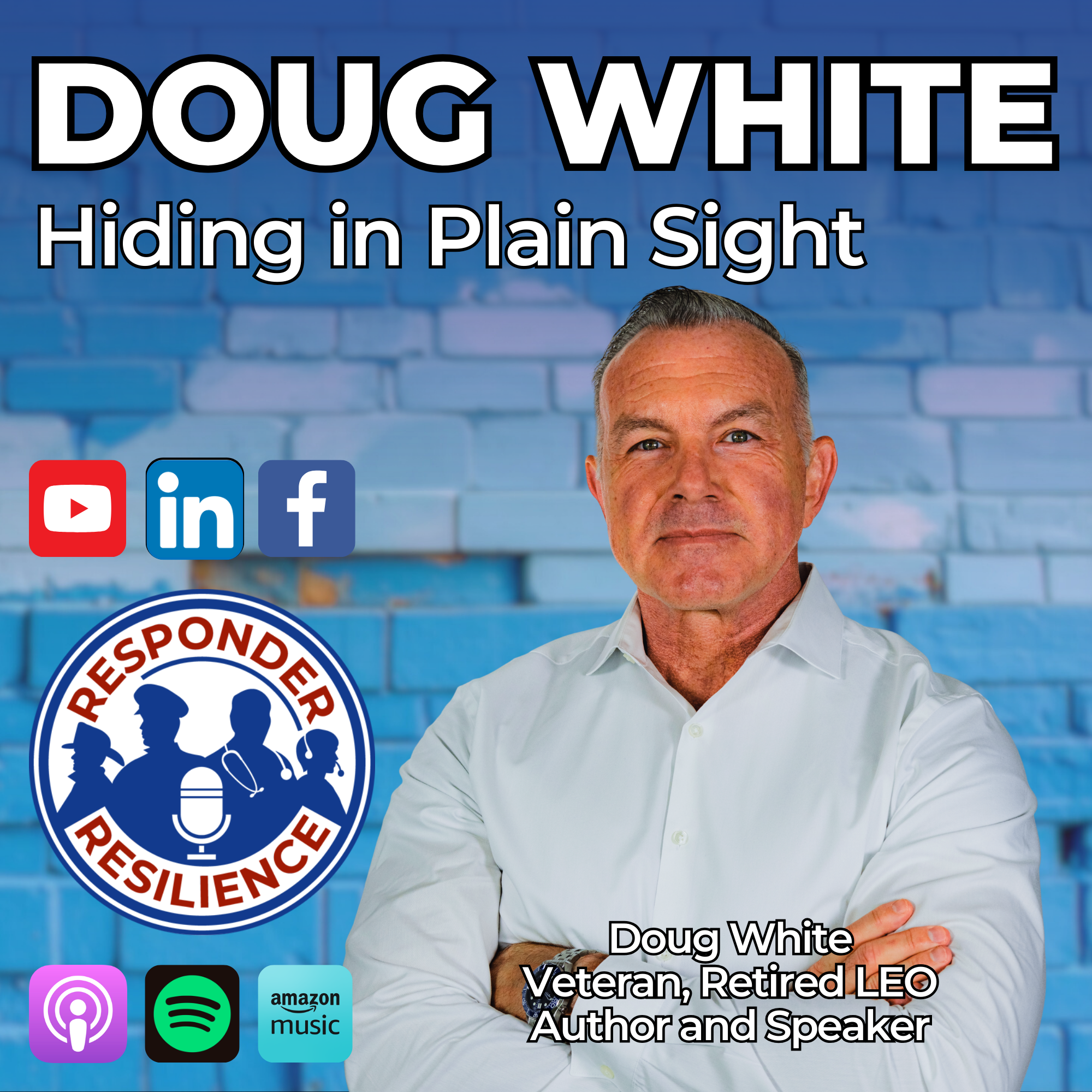
In this raw episode, we speak with Doug White, a veteran and retired law enforcement officer. Doug pulls no punches as he confronts the reality of post-traumatic stress in first responders.
In this raw episode, we speak with Doug White, a veteran and retired law enforcement officer. Doug pulls no punches as he confronts the reality of post-traumatic stress in first responders.
Doug reveals how over-identifying with the uniform can unravel lives, and shares the brutal toll decades of service take on personal identity and relationships, turning the spotlight on the often painful process of transition.
From the wreckage of broken connections to the struggle for resilience, this conversation is a wake-up call. Doug offers hard-hitting strategies for reclaiming your sense of self after the badge is gone. This isn’t just about survival; it’s about stepping into the light after adversity and knowing that the growth continues, both in and out of uniform. Buckle up—this episode is an unvarnished look at the vulnerabilities we all share.
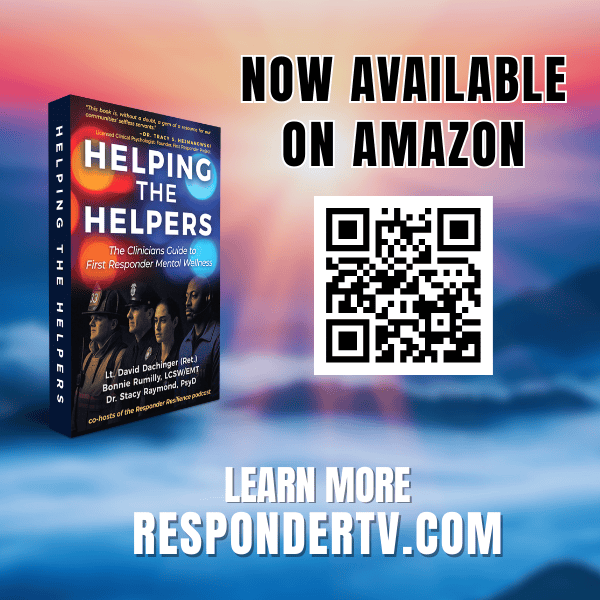
Now available! Helping the Helpers: the book that equips you to support those on the frontlines. https://a.co/d/dm0VS4Q
Thanks to our resource partner, CRACKYL. Download the FREE CRACKYL App: http://crackyl.respondertv.com
FightCamp: build strength, boost confidence, and decrease stress through interactive boxing workouts, streamed to your device on demand. Use code RR10 for a 10% discount on FightCamp packages and accessories. Go to https://joinfightcamp.com/shop/
Contact Doug White:
Website: http://www.dougwhiteofficial.com/
Facebook: https://www.facebook.com/profile.php?id=61567095642264
Instagram: https://www.instagram.com/tell_this_story/
LinkedIn: https://www.linkedin.com/in/dougwhiteofficial/
Contact Responder Resilience:
Phone: +1 844-344-6655
Email: info@respondertv.com
Our website with past episodes and more: https://www.respondertv.com/
YouTube: https://www.youtube.com/c/ResponderResilience
LinkedIn: https://www.linkedin.com/company/responder-resilience-podcast/
Instagram: https://www.instagram.com/responder.tv/
Facebook: https://www.facebook.com/responderTV/
SPEAKER_01
Absolutely a calling, but it's also a job. It's something that you use to provide a life for your family. And one day it will end. Basically, when the music stops, make sure that you have a chair to sit in. No tribe, no purpose, no mission, no focus. I actually got much darker the day after I retired than I did while I was working. To say that I was present at any moment before I started healing, that would be a lie. It'd be an absolute lie. If asked the question, what do I wish I did 10 years ago? Journaling is the answer to that question. There are 800,000 cops working right now, and there are 800,000 different combinations of modalities that will work for you. Just raise your hand and find the one that works and stick with it.
SPEAKER_02
Welcome to Responder Resilience, along with my co-host, Dr. Stacy Raymond. I'm David Dashinger. Today we're talking with Doug White. He's a veteran, retired law enforcement officer, author, and speaker about breaking the silence on post-traumatic stress in first responders. Doug shares insights on the vital roles of leadership, peer support, and family communication. We'll explore the framework of post-traumatic growth and the daily habits that foster resilience. Plus, we'll discuss the challenges of identity beyond the uniform, transitioning, mission replacement, and rebuilding community.
SPEAKER_04
Thanks to our resource partner, First Responder Project, whose no-cost First Responder Retreats offer you a chance to reclaim connection and learn vital skills. This isn't just a retreat, it's a lifeline to keep you mentally strong at work and emotionally present at home. Take a stand for your well-being and the connections that matter most. Sign up now for your FRP retreat. Learn more and register at FirstresponderProject.org.
SPEAKER_00
There's a new app built by Firefighters for Firefighters, and it's called Crackle. Download the app now for free as a legacy member and get early access to exclusive content, tools, and updates as they drop. Get the free app at crackle.responderTV.com.
SPEAKER_02
We invite you to like and subscribe, YouTube Responder Resilience, Facebook, Responder TV, LinkedIn, Apple Podcasts, Spotify. Go to our website, respondertv.com for past episodes and guest information. We'll be right back to speak with you after this. Ask a first responder who they are.
SPEAKER_04
And you're likely to hear I am a police officer.
SPEAKER_07
I am a firefighter.
SPEAKER_04
I am a personal.
SPEAKER_07
I am a 911 communications operator.
SPEAKER_03
I do this work. Ask a clinician why they work with first responders. And they may say, no fire. Join us in shaping a culture where mental health, wellness, and leadership. And we're known as carry the weight. Welcome to Responder Reality. We spend a spotlight on the unseen battles of first responder reality. And celebrate the powerful wins that come from the grit post-traumatic. We understand the culture under the trust and bring you conversations from the change makers, passionate about helping first responders come home home.
SPEAKER_00
With your host, Retired Lieutenant David Dapschinger, Dr. Stacy Raymond, and Bonnie Roomley, LCSW EMT.
SPEAKER_02
On today's episode, we're going to be speaking with Doug White. He's a U.S. Air Force veteran and retired law enforcement officer who turned his near breaking point into purpose. Now retired, he helps veterans, responders, and families return home whole and redefine purpose after service. He's the award-winning author of Hiding in Plain Sight and host of the Tell This Story podcast. Doug speaks plainly about post-traumatic stress, over-identifying with the job, and rebuilding purpose at home. His message, resilience is the base, not the goal. Finding meaning in the struggle, moving forward with intention, and finding growth and purpose make you stronger than before. Doug, welcome to Respond to Resilience.
SPEAKER_01
Thank you both for having me and letting me share some time with uh with your followers. This is this is great. So thank you very much. Big big deal for me.
SPEAKER_05
So Doug, let me start by asking you uh about your uh a little bit about your background and what led you to law enforcement.
SPEAKER_01
Well, um I grew up in and my my father was a veteran, uncles veterans, grandfather's veterans. Uh so I I grew up in a house of service and um involved in the community. My my parents were very involved in uh the Shautoma Club, uh stuff like that growing up. So everything was always about service and volunteering. Um from a personal standpoint, uh I always admired the military. Um my father and I are our quality time of the weekends where he's generally watching old black and white war movies, uh, you know, black sheep squadron, stuff like that. And um, you know, personally I I I despised bullies. Um I mean I was bullied a little bit as as a younger kid uh until I grew up in my adult body and uh you know nothing nothing horrible, but it was enough to to make me feel weak and and to uh realize that I didn't want that done to anyone else uh if it were ever within my power to prevent it. So I I joined the military to serve and um had a couple of ideas of what I wanted to do uh when I went into the Air Force. I could have done anything, and uh but my father said, you know, he was an infantryman, airborne, and uh he said, you know, I've gotten a lot of calls since 1965 for people wanting me to jump out of a plane and and kill folks. And I was like, oh, okay, so I need to do something that translates to the outside world. So law enforcement fit the uh I don't want people getting bullied and my need to serve. And um so I went into security police or security forces as it's now called in the Air Force and served 14 and a half years in the uh active duty and active reserves. And um when I got off of active duty in the the meantime between my active reserve time, I went to work for the Hillsborough County Sheriff's Office here in Tampa, and I did 25 years with the Sheriff's Office to the day and retired in July of 23.
SPEAKER_02
So that is uh that's a blessing to do uh an exactly a 25-year career in something you really uh had a passion for.
SPEAKER_01
So yeah, that was the plan. Um the plan was 30, but uh when I got to the point, is I'm sure we're gonna dive in a little bit more. I just I wanted to make sure I hit that 25 and that was it.
SPEAKER_02
Well, let's look at that journey a little bit. Um I think sometimes we would love to go back in time and maybe wish that someone had told us, given us some pointers or given us some advice before we jumped into this career. What do you wish something, or what are a few things you wish someone had told you before you started in law enforcement? Oh wow, great question.
SPEAKER_01
Um of course, with the benefit of hindsight, I I um I wish somebody had pulled me aside and and told me that this is a job. It it it is a calling. It's a calling, absolutely a calling, but it's also a job. It's something that you use to provide a life for your family, um and that's it. And one day it will end. And you know, uh basically when when the music stops, make sure that you have a chair to sit in. And uh you know, and if if I had had that information um from a true mentor, if I had had a mentor that were to share that with me and and made sure I stayed on that path, I'm sure I would have done things differently. Um But you know, I I had a great career, I valued my career, but uh having that that piece of advice, I think the transition from military service and from law enforcement service back into the civilian world uh would have been uh the ride to would have been easier and the transition from would have been easier, certainly.
SPEAKER_05
Why is that, Doug?
SPEAKER_01
Well, I was overinvested. And uh actually that's that's a short sell. I was completely enmeshed. I over-identified with my professional roles with what I was doing. Um I remember I remember the moment that it happened, I was in basic training, it was 19 years old. It was my first time away from home, and I was I was on firewatch and fire watch, I think, is just a cruel way to keep troops awake overnight uh to make sure the building doesn't burn down. But um so there I was uh middle of the night at Lackland Air Force Base, just inside the dormitory uh door, staring at a mirror. And I didn't recognize the kid I was looking at. Um I stood there and I imagined what I would have to become to to live this life of an airman, uh to live in military service and later into civilian law enforcement. And uh I never looked back. You know, what what I needed to be is what I became to survive what laid ahead of me. And um I was I was all about the organization, all about the job, all about the troops. Uh when I rose to leadership positions later, I was all about their well-being and what I could do to serve them uh and the organization and my community. So I was I was very much a part of the organization, and it was very much a part of me. Um I I never littered. You know, I'd if I had a piece of trash, I waited until I got to a gas station or, you know, at home. And and just doing the right thing was always the right thing because it was it was easy, it was the right thing to do. And um, you know, as far as being the job and it being me, those were the kind of things that I I did. Um my value was tied up in what pro pe what people thought of me professionally and what I could contribute professionally.
SPEAKER_05
And uh sort of an external focus, but wrapped up with selflessness.
SPEAKER_01
It was, and I I would like to um that's still something actually I'm still trying to unravel. You know, why did I why did I go all in like that? And um I know that the profession and well the disciplines of you know, the first responder disciplines almost require that you go all in. You have to be serious about your training. You know, on the law enforcement side, my goal was always to be the hardest person that anyone ever tried to kill. And for that I needed to learn how to fight. I needed to be in shape, I had to make it upstairs, I had to carry people, I had to lift as much weight as I could. I had to be on the range every week, and I had to be first, first through the door, on the shield, always, every time. And um, you know, that that was it. I felt that that's what it required of me, and anything less was putting others in danger, and it was less than. So that's that's what I did. I was all in. Everything else was secondary, even my own health. And actually, secondary, my own health was I don't even know if it was in the the list of the top five things I was concerned about as far as mental health thing, anyway.
SPEAKER_04
You're trained to help people heal, but first responders, they carry trauma that's buried under silence, stigma, and stress. Helping the helpers gives you the framework to connect, to speak their language, earn their trust, and actually make an impact. From the experienced team and clinicians behind the Responder Resilience Podcast, this isn't theory. It's real-world support for the ones who need you most. And this book isn't just for clinicians. If you're an agency leader, peer support team, chaplain, EAP, wellness program coordinator, or family member, helping the helpers will equip you with the tools, language, and insight to make a difference. Be the resource they can count on. Order your copy of Helping the Helpers on Amazon today.
SPEAKER_02
Love that answer, um, relating to, you know, the same thing on the fire side where um we are, you know, we're making life or death decisions, and we have uh our lives and our uh crews' life involved in anything that we do, and uh to be less than you know fully trained and and in good shape and uh able to be in that place to perform the job. Um those, you know, most of us I think are have high expectations of what we need to be in order to fulfill that.
SPEAKER_01
Exactly. You have to be right all every time. Every time there's there's it's unforgiving. So you have to be, you have to be there. You can't depend on luck.
unknown
Right.
SPEAKER_05
There's such uh pressure then uh to to feel the weight of self-criticism. That's where my mind just went.
SPEAKER_01
Yeah, the um the ambition of shame, that's something that drove me for years and years and years. Um outperformed, you have to do, you have to obtain um you know the the next assignment, everything will get better. You know, you just um I don't know, I I don't know what I was running from or running to, but I just I always had to do more. I never said no to the bosses, and and because of that, everything else was um it was wasn't even an afterthought, it wasn't even a thought.
SPEAKER_02
Doug, you started to speak about the transition into retirement, and that's something that we've talked about a lot on this show, and I find it personally uh fascinating. I can see looking at you now, and I'm in a similar position. We've found things that give us a sense of purpose and connection to First Responder World, whether we're writing books or doing podcasts or out there speaking. Um what was that transition like for you? Like, was it take you, you know, did it take you five minutes to figure out your next step or how did that actually evolve?
SPEAKER_01
Well, I've been retired since July 13th of 23, and I'm still trying to sort that out. So I'll let you know, I'll let you know when that happens. But as far as the transition, um you know, coming up to retirement, when I announced my retirement, I was I was asked the you know, what I joke is the the million-dollar question, what's next? I was like, Well, I'm gonna retire. And everybody just shook their head and were like, Yeah, dude, guys like you don't know how to quit. What what's next? So um I decided, you know, I'll teach undergrad. Well, I I don't want to teach kids how to be passionate about what I'm passionate about and teach them how to research and write. Um, so I I actually went and did a teach back at a local college. They said, hey, this is great. Here's what we offer as a as a you know a compensation package. And I felt like I was buying a car. I said, you know what? This doesn't set me on fire. Thank them for the time, and I walked out. Um I was going to contract and and you know go back to doing things for a Department of Defense and support Special Operations Forces. And I thought to myself, you know what, I'm at the time 49 years old. I'm not getting any younger. My days of bombs, bullets, and bad guys were well behind me. Um so while it does fill me and it is worthwhile, I don't think that that's what I need to be doing. So I I went through several things, and on my last day of work, I my leaving my my cake party at the district, and finally somebody said, So what really are you? What are you gonna do? And I said, I'm gonna write a book. And it was a complete joke. Write a book. Like, about what? And I just kind of leered at you know through the audience and said, About all of this. And it, you know, a couple shocked faces, like, uh oh, he's gonna tell the secrets. And uh so anyway, I walked out and um, you know, the next day was tough for me. You know, you're you're this thing for 30 years, you know, combined with Air Force and and law enforcement time, you're this thing, you know, this persona that people have built around you. And um you wake up the next day and you're not this thing anymore. So what does that mean? You know, I I I know I wear black shoes and black socks with green pants with a dark stripe down the side, but how do I match, you know, do I brown shoes go with a black belt in the civilian world? What do I do? You know, does this match that? I you don't even know how to dress yourself or how to act. So I faced a lot of the existential things, not the financial stuff, because I I was I married an accountant 25 years ago. So she has all that stuff sorted out for me. So I wasn't worried about the financial end of it, but it was the the existential what now? My tribe is gone. Um and there were the tribe had left somewhat uh before my actual retirement, but you know, no tribe, no purpose, no mission, no focus. So uh I actually got much darker the day after I retired than I did while I was working. And that's saying quite a bit. Um that that will be the next book if if there is a next book. But um facing all of those things, I started to journal. And um, you know, I'd been told for years to journal, but I was dismissive of it, you know, talking about your feelings that doesn't work, that's silly, yeah, it's it's pointless. Well, no, it does work. And it if asked the question, what do I wish I did 10 years ago? journaling is the answer to that question. Uh, because I was really able to lay out all of the things that that I had never really assigned um feelings to, or um really any any second thought. And when I did that, I'd I'd laid out nearly 77,000 words in this journal and um books everywhere, note pages, notes on my phone, and uh uh typed what came to be a manuscript later, and I started reading what I wrote. And um I had written myself and my hero's journey as a victim or a bystander. I've never been any of those things. So I sat with all of that and tried to decide why I am speaking to myself in a way that I would never allow another human to speak to me. And the lessons I learned from that became hiding in plain sight, the book that uh I published a year ago. Um, so I'm still trying to figure out day to day what this looks like. Who who am I in this space? Why would anybody listen to me? You know, I I I tell myself the same things that we all tell ourselves. You know, you're an imposter. You you you did this, you you failed here, you could have done better there. Why, why are you a voice in any of this? And um so yeah, it's it's been difficult, David. I mean, it's a great question. I wish I had a better answer instead of dancing around with, I don't know yet. It's it's taken some time.
SPEAKER_05
Well it's a work in progress. You're still trying to define that.
SPEAKER_01
Yeah, it it is, and I think every bit of this is everything I'm gonna continue to learn. Um, you know, the the person I was three weeks ago is not who I am today. And and that's a good thing. You know, I I I learn something new every day, and I've I've been adopted by by fantastic mentors uh in in this space and just have made some friendships that have been really wonderful. I've been very blessed.
SPEAKER_03
Boxing has the power to change lives, especially for first responders. Fight Camp embraces your journey, whether you're stepping into the ring for the first time, returning after a break, or aiming to elevate your fitness. Harness the strength of boxing to release stress, build resilience, and connect with a supportive community one punch at a time. Use code RR10 for a 10% discount on Fight Camp packages and accessories. Go to joinfightcamp.com slash shop.
SPEAKER_05
So let me ask you this. Let's go back to your career. What was the biggest challenge in your career and how did that shape who you are today?
SPEAKER_01
Wow. The biggest challenge for me was learning how to. Being learning how to be more collaborative early in my career, uh my military career and my sheriff's office career, because I uh I've had very good leaders and very good mentors along the way, but not in the beginning. I had um some very poor leadership. And uh I think that started me, started me down a line that uh had it not been corrected, I I would not have ascended through the ranks. I would not have been a good leader if I had uh gotten positional authority. So I was lucky to have been course corrected by some fantastic leaders, um mid-military career and and early on in my sheriff's office career. So I think the lessons that I learned there um as far as leadership to be a servant leadership uh leader, knowing that um nothing, you know, it's it's it's not about me, it's about them, what I can do with with my influence, with my leadership and my positional authority to make their lives better. How can I serve them? Um so that was great. Um as far as the the sheriff's office side, what what can I have done? What did I find the hardest? I've found the hardest thing that I found to do was to separate my roles at work with my roles at home. Um and I think before when I realized that that was an issue, I think I was too far gone. Um hypervigilance, um opportunities missed, guilt, shame, depression, anxiety, all of those things showed up in me as anger and rage. Uh I had very little patience for anything when I got home, was completely checked out. Um you know, I was upset that my wife would make decisions for the family without me. Well, in all honesty, I never availed myself to be able to make those decisions. I never weighed in. I was disinterested, I was disconnected. Um goodness, this is a good question because I really have to dive into things that uh that paint me in a bad light. But um the emotional connection to my kids. I was dad, I was present. Um, I was at all of the the chorus things, all of the baseball games and all the soccer games, the the things that you're supposed to do to be there present physically. But uh wow, to say that I was present as the best version of me, of what my wife and my kids deserved. To say that I was present at any moment before I started healing, well, that would be a lie. It'd be an absolute lie. Um yeah, and I and I know that now. So I think that would be the the hardest thing. I was not aware of how bad I was until I got out of it.
SPEAKER_05
Most people don't. Um a lot of first responders are really deep in the rabbit hole. So, what helped you, Doug? Um, heal.
SPEAKER_01
I had no choice. I was I was given no choice. Um so back against the wall ultimatum or no, there was no ultimatum. It was a gentle question asked by my wife. Um without giving too much away. And in and in the book, I I allude to it, um, the the moment where everything shifted, and it's um it's it's casually mentioned and brushed over. If I were to rewrite that page now, that that one sentence that alludes to where I was, yeah, it would be three or four pages long because I've really really pulled that apart. But um, I became a lieutenant and I was on the night shift and um had an entire platoon of deputies working for me, you know, 24 personnel, four supervisors working for me, it was great. They were high performing, everything was wonderful, and they were winning at every turn. I was very blessed to be associated with them. But being back on midnights as an older person, um, with all of the issues that I had carried with me for at this point, about 16 or 17 years that I wasn't aware of. Um, you know, hypervigilance, not sleeping, anxiety, depression, the the whole host of of boogie men that come along with with PTS. And uh I wasn't sleeping. And for about six months, I was sleeping between two and three hours a night, days on and days off. So when you're sleeping, you can manage those things, the boogeyman. But when you're not sleeping, you you can't. And um everything had unraveled. I'd convinced myself that I was unlovable, not worthy of love, that uh one day my wife Michelle would wake up and realize I was the silver medal that she settled for. And the next conversation that we had, she was going to leave and take my kids, take our children. And um I remember sitting behind a school in the middle of our shift, school was closed down, it's three o'clock in the morning, and um, I'm just staring out the the windshield, and I'm I'm looking at this orange traffic cone that was sitting in the middle of the parking lot. It's like, well, why is this thing here? You know, it how why did I not run this over? How did I not hit it when I backed into this space? And I'm staring at this cone, it's just weathered and out of place, and um just thinking of the silliest stuff. Why, why is that here? And then I realized that I'm staring down at the barrel of my pistol. And uh it's uh, you know, this is October 19th of 2019, so here we are six years post that, and it's still um it still hurts to talk about it because it uh while I'd been to scores of deaths by suicide, I I understood the mechanics, I understood the whys and all that, but I never reconciled that as my end. And here I am staring down a pistol. And um it scared me because I didn't want to die, but I just saw no other way. Um everything in my life was dark, I didn't see God working in my life, I didn't see any happiness, and I just needed a win. And it's ironic to say that because on the outside I was winning by every metric, but I just knew on the inside I was I was empty and had been for years. And um I holstered my pistol and and I drove around for the rest of the shift. And um three hours later I got home at 6 a.m. and I walked in, and my wife Michelle was awake. And uh Sunday morning, 6 a.m., she should be sound asleep. She wasn't running or you know, exercising or any of that stuff. So it was it was odd. And walked in the bedroom, she was sitting up, and she had been crying. Come to find out later all night. And um I hadn't taken off the first bit of my uniform, and and she asked a simple question, would you go to marriage counseling with me? And that was it. There was no ultimatum, there was no, you better do this. And it wasn't you need to get help, you're broken. Is she just asked gently, would you go with me? And she knew that I would do anything. She had no idea where I was in my mind, what had happened, and wouldn't know for months later. Um, I know that if she had said it to me on Saturday morning, it wouldn't have landed. And if she had waited till Monday morning, I don't know that I would have been there. So that that was the turning point. I was I was I was given the choice of a bullet or redemption. And she got she uh she offered that redemption as simply as she should she as simply as she could.
SPEAKER_05
You know, I have to without sounding a little too mystical or spiritual, it it makes me think that she was kind of with you in your desperation because she stayed up all night crying, like on some wavelength.
SPEAKER_01
No, she she absolutely was, absolutely, and we we talked about it months later after I started healing, and I got past the here's the surface things, just you know, I'm getting help. Look at me, I'm I'm being brave. I wasn't truthful until after I retired, but um in mentioning those things to her, she knew, and and she was at her wit's end too. That's why she was awake all night. She said she had been praying and looking for a way, and she knew that the only way to to get me to do this was if she did it with me. And that was that's what she came up with. And it's yeah.
SPEAKER_02
Doug, thank you for going so deep with that. Um and I appreciate that vulnerability. I think um the importance of that is that someone is gonna hear that and it's gonna uh impact them in a way that uh they needed to hear it. So I just want to thank you for being willing to do that.
SPEAKER_01
Well, I I thank you, and it um trying to do what I'm doing now demands that, and it's still it I will tell anybody who's doing the same or trying to do the same or wants to do this. It's um it doesn't get any easier to say, as you can as you can see, um, but you do recover quicker. You recover quicker from it. Um saying stuff like that a year or two ago would have put me down for a day or two, would have put me in a bad way. Now I'll I'll recover sometime this evening. But uh it it's something that you still carry. But uh, but but thank you for that. Absolutely.
SPEAKER_00
I am loaded, 32 years of emotion. This job isn't a joke, and it can't for you.
SPEAKER_05
Completely different when we started the people next to you.
SPEAKER_07
Let's raise awareness.
SPEAKER_03
And then we're gonna go.
SPEAKER_02
I'd like to kind of have you move us through or just walk us through the post-traumatic growth piece or the healing piece. Um, what did that look like? You've kind of come to this turning point in your life, a pivotal point, um, starting counseling and starting to hopefully repair the damage uh that was caused by the career and all the things that we take on when we when we become so enmeshed with the career. So, what did the next chapter look like in that story?
SPEAKER_01
Well, I I want to back up a little bit if you if you let me. Um the things that happened to me were mostly self-inflicted. Had had I known that, you know, as going through the first responder disciplines or being a military service member, you are going to experience these things. These are the the normal physiological uh you know endocrine um issues that you're going to have. Basically, this whole host of stuff that's going to happen to you physiologically, these are normal reactions to abnormal stimulus. This is not weakness, this is not you couldn't hack it or you should have done more push-ups. These things are going to happen. Hard stop. If you're aware of that, you can mitigate those by getting help early, staying on top of it, and and making the right choices. So you you can you can do this much easier than I did, but I wasn't aware of that. So getting help, we did uh conjoint cognitive behavioral therapy. Um, so I went to a doctor, um, he was a psy D. Uh he used to work for the sheriff's office, so I knew him as a deputy. He's a former uh soldier, and um he retired and opened his own practice. So I went to go see Doc. That's in the book. He's Doc. And uh he also helped work on the resiliency program for the sheriff's office. And uh I sat with him and and um I knew there was no judgment from him, and he understood me, so there was no need for a background. And I started speaking to him. He was culturally competent and he was a friend. Um, he got me in with the VA who said uh he said they specialize in this stuff, so you need to go speak with them. Yeah, they don't. I I don't want to make any disparaging remarks about the VA, but uh they handed me a bunch of pills and numbed a bunch of stuff for years. Um I was not being completely honest with myself or with the the counselors. I was I was just kind of phoning it in. And um because of that, I didn't heal. I I learned some tools, I learned some tricks um to basically continue to put band-aids on what was going on, but I didn't feel safe until after I retired. Um, even though in March of 20, I became very vocal about what I experienced, and and it's okay not to be okay. And I had been actually for years before that. But um, anybody who would ask me, I'd tell them, hey, I'm getting help, and this is great. You should do the same. It's all right. But I wasn't really, just band-aids. After I retired, I went to go see my counselor and said, Hey, I'm retired now. Let me tell you what's been really been going on during my life. And uh I spent 20 minutes apologizing because uh she was absolutely hysterical. And uh I didn't even talk about calls or anything. She was completely inconsolable. And um, I walked out of the office with a follow-up appointment and never went back, and she hasn't called me since. It's been three years, almost three years. So um I started trying to find out the answers to myself. I started reading books. I read Operator Sender by Dr. Chris Free, um Living Blue, Jason Palomaro and Barbara Bell. Uh goodness, any any any podcast, anything that I could get to find that this was normal and to find an answer and to find the way forward that other people have used. And um so I did all those things, white knuckle, grit. I titrated off all my medication, and by titrating I mean I quit. Don't ever do that. Listen to a doctor, because it it was awful. Yeah, um, and it led me to a point where I got even darker. And um so fast forward through all of the things that I found and tried to do, uh, mindset, yoga, not yoga, but mindset, breathing exercises, all of the things helped. Um, but I had come to a conclusion when I started this, uh, the journaling and putting out the book, that talking about it, being vulnerable and and just telling the truth was powerful. You know, in in my book and in my podcast and the things that I say, I'm I'm outlining everything that can harm me. All of the, you know, my lowest moments as as a military member, as a husband, as a father, as a deputy sheriff, as a man, have been given to the world. And I have found that by doing that, by by being vulnerable and and owning uh my part of my own journey, it's been the most powerful thing that I've ever done. There's there's nothing there that can hurt me. Um and and I I found that that was amazing. It's like, man, here it is. And by doing that, people have been contacting me and saying, hey, I thought this was just me. And I'm like, no, you're not that special. And I thought that too. Um so all of this things, all of these things started building and building, and it really came to a head back in April, uh, where I met you for the first time, David, was at the Second Alarm Foundation. I I went to the pre-conference and did um the Boulder Crest Foundation's struggle well two-day program. And I'm going through the program and I'm looking at things, and I'm like, yeah, I know that. I know that. I know that. And uh, you know, I thought to myself, man, this program has been around like seven years. I wish I had known that this existed so I could have gotten help here. It's like, wait a second, there's there's help available for me. I just need to do one simple thing, uh, two simple things. I need to realize it's just not me and I'm not that damn special. And I also need to understand that the uh the the barrier to entry to get help is this. For those of you who are not watching, it's raising your hand. I want help. I need help. Help me. Any one of those things works. And um, I found that that struggle well, knowing that I was in a room full of people who understood and understood that you know, resilience is one thing, it's it's the baseline. We want to get back to normal. But people like us, we don't get to go back to normal. What is normal? You know, it's so you're just going to continue baseline? No, no, it's you you want to be better than you want to use these experiences, see, see them exactly for what they are. Find the lessons that you're supposed to learn in that, make a plan, move forward with intention, and be better than because of those experiences. And um, that's that's where the growth part came from. You know, I was I was dancing around it and trying to figure it out myself, and then Bouldercrest showed me, like, no, hey, you're you're on the right track, buddy. This this is the word we use for it. And um, you know, I I met you in the lobby uh, you know, on I think it was Wednesday of that week, and I was so starstruck, it was like, man, this guy thinks I'm an idiot. Because it's like, this is David Dashinger. I've heard this guy's name, I need to get in touch with him. Anyway, so yeah, I still I still have my fanboy moments. Um, but um yeah, you you caught me in the middle of a a very big week for my growth. So Second Alarm Foundation, UCF Restores, that that whole thing, struggle well, bull request, every one of those things. So I've given you a very long answer, but the short answer is there are 800,000 cops working right now, and there are 800,000 different combinations of modalities that will work for you. Just raise your hand and find the one that works and stick with it.
SPEAKER_02
You just kind of outlined part of your post-traumatic growth, and I think that's something we like to focus on because it's it's the fuel, right? We've we've found the fuel and the impetus to take us through that next piece. Like, how do we turn that pain into power? How do we transform the adversity into something maybe more of a superpower and how we can face life, how how how we now wire differently because we've done that job for 20, 25, 30 years and gone through all that challenging experiences that we've gone through. Um, I think the key thing is that there is a way to repurpose that adversity. And I think that's what you're touching on, Doug, is that, and we're all we're all, as you said, a work in progress. We're all kind of finding that answer. It it doesn't come all at once in a blinding, you know, lightning bolt. No, it doesn't. It evolves over time.
SPEAKER_01
Um, you know, one of the things with the post-traumatic growth and and specifically from the struggle well program, they talk about the component of service. And uh so you've you've John Kelly has put it this way: you found the answers to the test. You're kind of a jerk if you don't share those answers with your buddies. And um, you know, I I found out that yes, struggle well does exist, the path exists, all of these things exist. Whether I found it the hard way or not, it's out there. So I found the answers to the test. I'm kind of a jerk if I don't share this with other people. And um, you know, I I answer questions, I connect with people. I mean, I've connected with so many people over the last year that I would never be in this circle. I would never have an opportunity to interview or to speak with or call a friend. And to even be on this program is uh is something that if we had talked about two months ago, I'd tell you you're crazy. Um but I think that we we owe it to the people that are still hiding in plain sight. Not really a shameless plug, but I mean almost quite literally hiding. Well, people don't know that they're going through this. I think that if we offer our stories and uh and we're we're worthy of trust, they know that we've been through it and we're on the other side of it. I think that it gives them a path, a lit path for them to say, I can do the same and and follow us, if if not permission just to step out and tell their story and the the safety of of my own story. It's like, hey, these these people get it. There's a whole bunch of people out there that are that are on the other side of this looking to help. So I I think it's important what you're doing, and um, I'm just happy to be on mission and be a part of that.
SPEAKER_05
And it's you know, if you look at it, it you're continuing your service.
SPEAKER_01
Yes.
SPEAKER_05
Um into retirement. You're you're you're continuing to serve.
SPEAKER_01
Well, it's it's a it's a moral obligation. And I I still I still care deeply about the people who are doing what we did and and all of the disciplines, the dispatchers, EMS, uh, all of it. Um because we fight hard enough and we work hard enough that we deserve a better life. And we deserve a better life than what what we've been living, and you know, and and what they tell us we can live. You know, if and and David, you've you you did the job long enough. I'm sure you were told at some point in time by your leadership that there's 10 people waiting to take your job. We got people lined up around the corner to take your job. You're you're lucky to be here. No, no, that's not the way things work nowadays, and I don't really think that that's the way they work then. So you've been lied to.
SPEAKER_02
Yeah. Well, Doug, um, you've kind of segued us into the the book and the podcast. So tell us more about the book. I've had the opportunity to listen to it. You you've also got an audio book version with you narrating, and uh, and it's great because hearing you speak now is taking me back to I was doing driving down to Orlando and listening to the book, and I'm like, in that same state, you have a very calming voice. So talk about the book, talk about the podcast and all the good stuff you're doing.
SPEAKER_01
Well, I I really appreciate that. The the book was uh, as I said earlier, that was the lessons I learned out of the out of the journaling. And um, I know there's some grit in there. I go through some of the scenes that I worked in, and to be honest with you, it it wasn't put in there for for shock value. I learned lessons from some of those things. And there's only really one of those that would have cracked the top 10 of the stuff that I experienced. Um so it's it's there for the lessons and the growth and to show the the the path of growth. The podcast actually, I started to support the book, to tell people I had a book, and the book and the podcast were supposed to support each other, but after like 35 episodes, I realized I did not even mention that I had written a book. So uh it's like it's just a horrible business plan. I'm I'm not good at this, I really am not. Um so uh I was told that I had a uh a calming voice and that I should be a public speaker. And uh, you know, I've got thousands of hours in front of classrooms teaching for the government and teaching in the academies. I said, Okay, I can talk to people, let's tell them my story. And um, I was contacted uh by Brett Meade, who who used to work for UCF Restores, he's taken a chief of police job, and he called me and said, Hey, there's you know, uh Project Lifesaver International. They want me to speak for him in Orlando in August, and I can't do it. I gave him your name. Are you interested? I said, sure, what does that mean? And uh so because he backed out, gave them my name, I I got to speak for them. And um beforehand, I was contract uh contacted by Jesse Watts from the Wounded Blue, uh, Randy Sutton's organization, said, Hey, would you be a speaker? And next thing, you know, I find myself on a flyer with Tom Rizzo, John Kelly, and John Mattingley. Like, how did this happen? I haven't even I haven't even opened my mouth in public and in front of human people yet. You went from the street to the major leagues and won't like it. And um yeah, and and and it was so funny. I again so grateful, so blessed to have so many mentors and people just pouring into me that uh I'm still trying to figure it out. It's like you know, mom major, bring your little brother to the to the to the big party. So that's that's what it was. Um so yeah, I'm just I'm speaking, and um there's probably another book in me just to speak about the growth that I've experienced and the lessons I've learned from uh from this. I've had uh about a dozen people reach out to me asking how to write a book, and I said, Well, I can tell you what I did wrong and I can tell you what I've done right and how to go forward. So um actually I've written a I've written a chapter in my buddy Nick O'Kelly's book, Stigma. I've written uh the four-word for street tales by Tyler Martin. Uh just did an endorsement from Mike Wargan's book. So I mean this this thing is really just kind of growing legs and running in several different directions. And I just I want to be helpful. So if it's helpful telling people how I wrote my book or how they could do theirs, or writing an endorsement, or being on a podcast speaking, if it's something that I've experienced in my life in my 31 years professional, almost 31 years professional life, and in the two and a half years I've been retired, I'll speak about it. I don't care where it's at, I don't care who it's to, if it if it speaks to one person, count me in. That that's it. I'm I'm here to serve, whatever that looks like, and and I don't know any better to to say yes or no. So that's that's really that's what I'm doing now. I'm just here to help wherever I can help.
SPEAKER_02
Great. Um, where can people find you? Social media, website, any other links you want to share?
SPEAKER_01
I am everywhere and I don't understand it, so I will tell everybody to go to dugwhiteofficial.com and all my links are there. I'm on Instagram, um, LinkedIn, Facebook, TikTok, Spotify. Um, I've just kind of thrown everything to the wall and still trying to figure out what's sticking.
unknown
Okay.
SPEAKER_01
Stacy, final votes.
SPEAKER_05
I just really appreciate um how you shared your truth. And, you know, when we have first responders or former first responders or former military come on and just be so brutally honest, it really hits home with our audience. You know, it's gonna hit home more than just myself or Bonnie as therapist. Actually, Bonnie's an EMT, so when she speaks from her EMT perspective, she really gets through. Um, it just hits home so much uh more impactfully, you know, when someone like yourself opens up and is vulnerable. So I always want to thank you for that.
SPEAKER_01
I appreciate that. Thank you. And I I think if leadership in the responder disciplines would stand in front of their people and do the same, I think we would change the culture. Um almost overnight. I I think that would just open up the floodgates. So hopefully, hopefully that happens more often than it is.
SPEAKER_02
Doug, so grateful that we crossed paths in uh Orlando at the Second Alarm Project and um keep doing this incredible work you're doing in several different mediums and uh and sharing your your your story and your message because uh one cannot help but feel connection to it and and the human connection I think is what's so important in all of this. So appreciate all you're doing and keep up that great work. Well, thank you both. Thank you for having me. Remember to like and subscribe, YouTube responder resilience, Facebook, responder TV, LinkedIn, Apple Podcasts, Spotify, and go to our website, respondertv.com for past episodes and guest information. Till next time, stay safe, be kind to yourself. Take care.
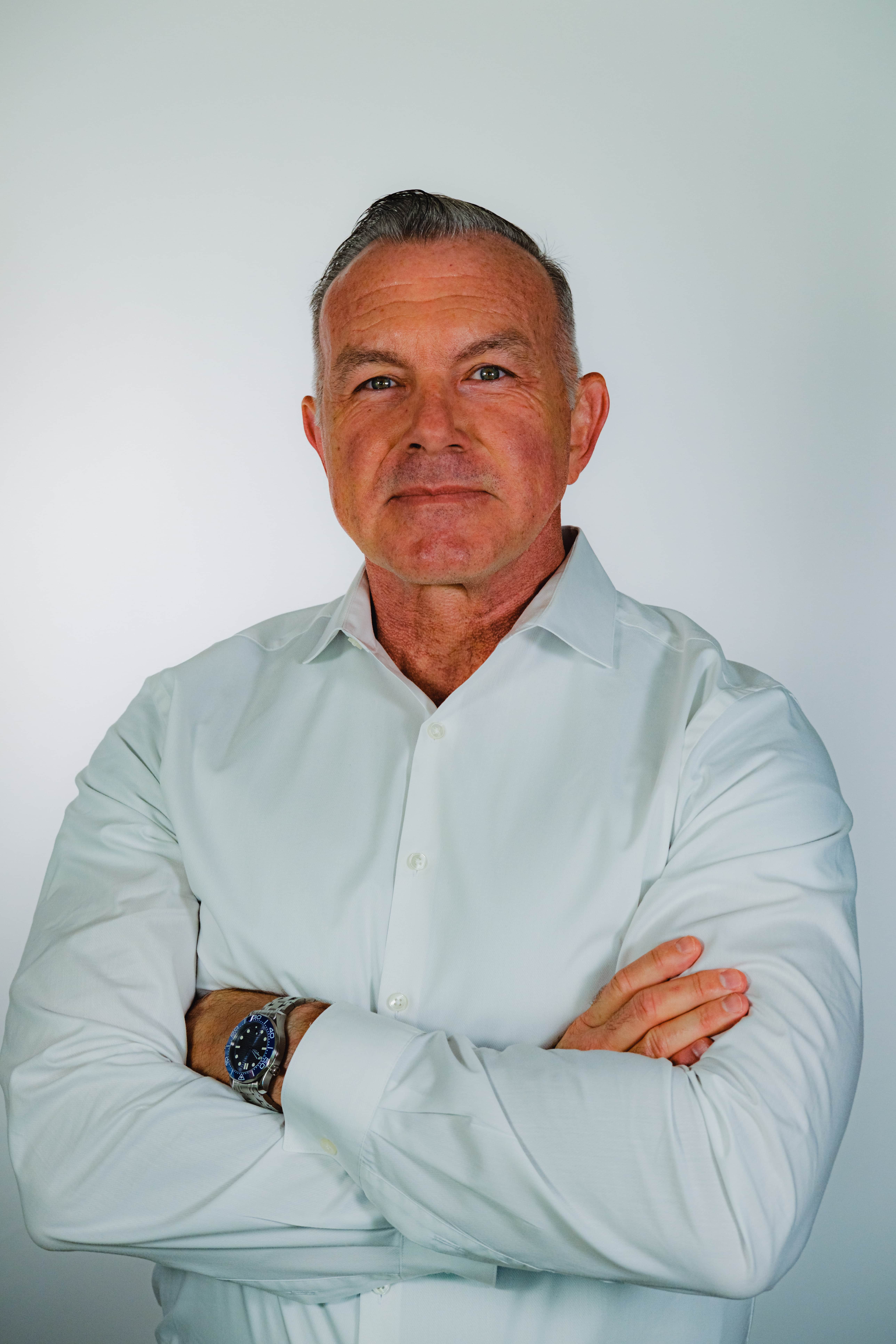
Retired LEO | Veteran | Author | Podcast Host | Speaker
Doug White is a U.S. Air Force veteran and retired law enforcement officer who turned his near-breaking point into purpose. Now retired, he helps veterans, responders, and families return home whole and redefine purpose after service. He’s the award-winning author of Hiding in Plain Sight and host of the Tell This Story podcast. Doug speaks plainly about PTS, over-identifying with the job, and rebuilding purpose at home. His message: resilience is the base, not the goal. Finding meaning in the struggle, moving forward with intention, and finding growth and purpose make you stronger than before.