Apple Podcasts
 Spotify
 YouTube
 RSS Feed
 Post-Traumatic Growth: Turn Your Pain Into Power with Guests Bonnie Rumilly and Jennifer Spirito | S5 E46
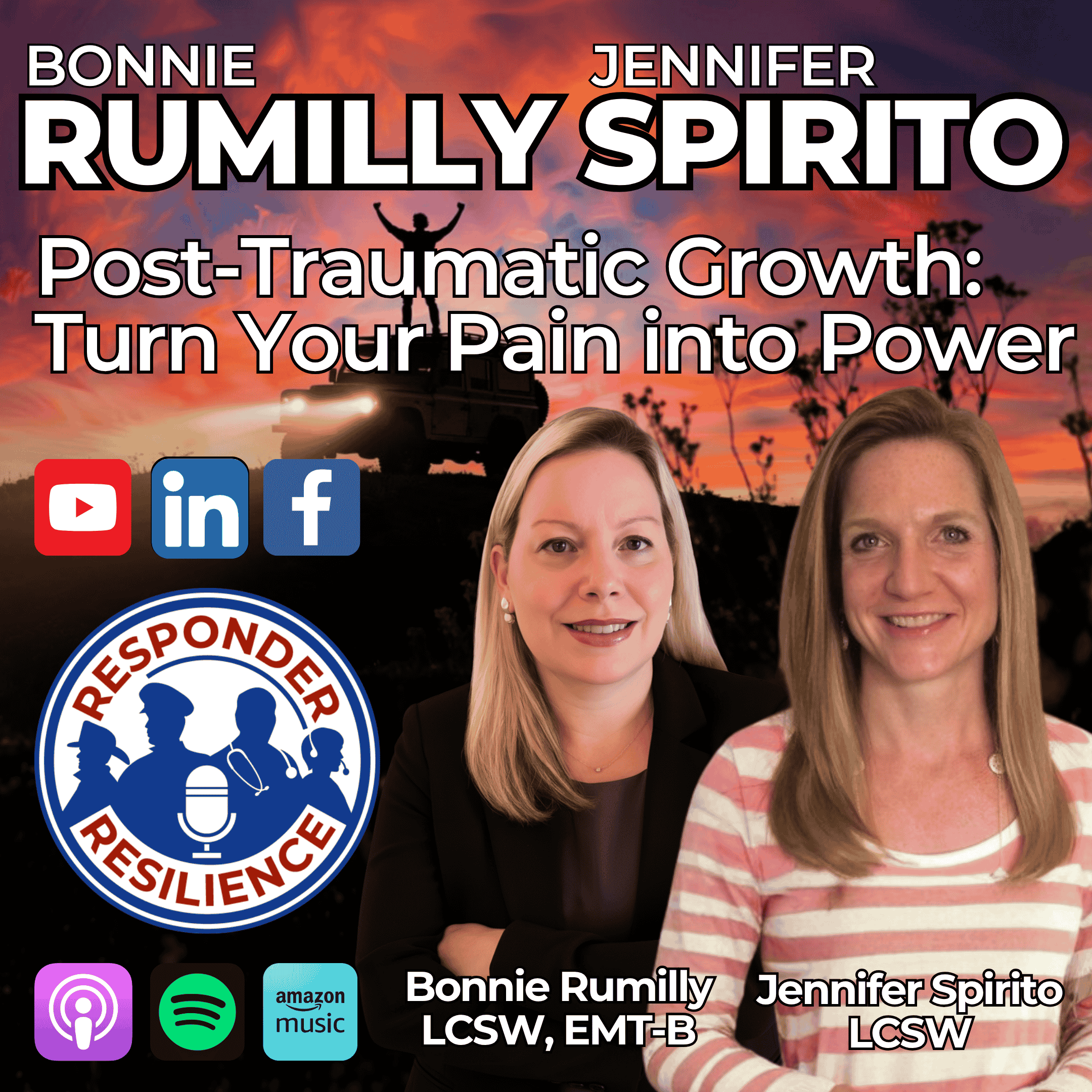
In this compelling episode, we go deep into the transformative journey of trauma with clinical directors Bonnie Rumilly and Jennifer Spirito from the Fairfield County Trauma Response Team.
In this compelling episode, we go deep into the transformative journey of trauma with clinical directors Bonnie Rumilly and Jennifer Spirito from the Fairfield County Trauma Response Team. Get ready to challenge your perceptions as we unravel how trauma isn't just a burden but a catalyst for profound change. Discover the hidden symptoms of trauma, the unexpected triggers, and how these experiences can fuel personal growth. We’ll unpack the concept of Posttraumatic Growth—what it is, how it manifests, and the steps you can take to embark on this empowering journey. Are pain and resilience intertwined? Join us for an eye-opening discussion that redefines strength and sheds light on the powerful potential for transformation following adversity.
Contact Jennifer Spirito, LCSW:
Website: https://www.jenniferspiritolcsw.com/
Instagram: https://www.instagram.com/jennifer_spirito_lcsw
Contact Bonnie Rumilly, LCSW, EMT:
Website: https://fctrt.org/
Instagram: https://www.instagram.com/agmllc2017
LinkedIn: https://www.linkedin.com/in/bonnie-c-rumilly-lcsw-emt-b-certified-emdr-therapist-6a34b1268/
Contact Responder Resilience:
Phone: +1 844-344-6655
Email: info@respondertv.com
Our website with past episodes and more: https://www.respondertv.com/
YouTube: https://www.youtube.com/c/ResponderResilience
LinkedIn: https://www.linkedin.com/company/responder-resilience-podcast/
Instagram: https://www.instagram.com/responder.tv/
Facebook: https://www.facebook.com/responderTV/
In my view, any trauma or crisis is an opportunity for change. When we think about resilience, resilience is about us coming back to baseline.
SPEAKER_04But what we wanted people to walk out of the room with was help. We wanted them to leave feeling like, okay, you've told me all of these things that can happen. You've told me what to look for. But tell me something good.
SPEAKER_05We don't prescribe trauma. We're not looking for trouble. We certainly don't go out looking for the traumatic experience. But when it does present itself, it is giving us an opportunity to learn more about ourselves and to do something really positive with that.
SPEAKER_02Welcome to Respond Resilience. Today we have two special guests from the Fairfield County Trauma Response Team, Bonnie Romoli, LCSW EMT, and Jennifer Spirito, LCSW. We're going to be sitting down with them talking about a powerful topic, transforming pain into power. We're going to explore how trauma impacts the brain, how we can turn failure into fuel, and talk about some of the surprising triggers that might take us by surprise. And we're going to get into a little bit about post-traumatic growth, which is a real journey, not just a buzzword, a journey toward resilience and strength. So if you're ready to break free from the confines of struggles and turn them into strength, this episode is packed with some great inspiration you won't want to miss.
SPEAKER_00Thanks to our resource partner, First Responder Project, whose no-cost First Responder Retreats offer you a chance to reclaim connection and learn vital skills. This isn't just a retreat, it's a lifeline to keep you mentally strong at work and emotionally present at home. Take a stand for your well-being and the connections that matter most. Sign up now for your FRP retreat. Learn more and register at Firstresponder Project.org.
SPEAKER_03There's a new app built by Firefighters for Firefighters, and it's called Crackle. Download the app now for free as a legacy member and get early access to exclusive content, tools, and updates as they drop. Get the free app at crackle.responderTV.com.
SPEAKER_00Thanks also to our resource partner, Fight Camp. For free shipping and a free month of membership. Go to joinfightcamp.com slash shop and use the code R R P O N E.
SPEAKER_02Remember to like and subscribe, YouTube, Responder Resilience, Facebook, Responder TV, LinkedIn, Apple Podcasts, Spotify. Go to our website, respondertv.com for past episodes and guest information. We'll be right back to speak with Bonnie and Jennifer right after this.
SPEAKER_01In this family, more of us die by our own hands than by the hazards of the job. In this family, up to a quarter of 911 telecommunicators have symptoms of post-traumatic stress. In this family, our mental health and wellness are in high stress, while responders are quietly suffering.
SPEAKER_04In this family, many trouble with job-related stress.
SPEAKER_01Welcome to Responder Resilience. We co-host retired Lieutenant David Daschenker, Dr. Stacey Raymond, and Bonnie Rumoli, LCSW EMTV.
SPEAKER_02So this is an interesting episode. We're getting ready to uh talk about turning your pain into power. So with us today is Bonnie Rumoli, one of the co-hosts of Responder Resilience, and Jennifer Spirito, both LCSWs and both clinical directors of the Fairfield County Trauma Response Team. Just as a way of kind of easing into the conversation, Jennifer, talk a little bit about your practice and your role at the FCTRT.
SPEAKER_05So I have a private practice in West Hartford, Connecticut, where I primarily uh focus on my work with first responders. Um it's just been such a passion for me. And meeting the group at Fairfield County Trauma Response Team was just such a blessing to get into a relationship with them. And being one of the clinical directors now as we expand into Hartford County just has been a terrific experience. So I'm really grateful to be here.
SPEAKER_02Bonnie, you're well known to our viewers and listeners. Um, talk a little bit about the presentation you guys made recently at the Connecticut Fire and EMS Pro. I think it was called Turn Your Pain into Power, but there was a powerful slide in there that really caught my attention. Can you talk a little bit about that presentation and why you guys were doing it?
SPEAKER_04Sure. Uh first of all, I want to thank Jen and welcome her as a guest. Um, it really truly is a pleasure to serve with her on the Fairfield County trauma response team. Um, Jen is one of our newer members in the last few years, but we could see very, very quickly her potential. And it's really been a joy to work with her, watch her grow, and to help our mission grow into Hartford County. Jen's been doing a lot of work. Um so it's really, really an honor to have her here, and I'm grateful to her for that. Um, our presentation that we gave at the expo, we wanted to change it up a little. So we wanted to definitely do some psychoeducation, talk about trauma, talk about some symptoms. But what we wanted people to walk out of the room with was hope. We wanted them to leave feeling like, okay, you've told me all of these things that can happen, you've told me what to look for, but tell me something good. Um, and that was something that Jen and I felt very strongly about. And so when we formulated that presentation, along with Susan, who is our head of the board for the team, um, we really wanted to focus on that and have people leave the room with a takeaway that they could apply to their own life, but to also know that it's not doom and gloom and we're not handing out a death sentence. We're giving you information, we're giving you tools on how to help yourself and others. But please know that there's this whole other beautiful side of trauma that people do not talk about.
SPEAKER_02You captured the essence of why that was so impactful. I think anytime we're talking about the, you know, potential sort of negative side effects of doing this job, um, it's so important to give hope and to have tools that can um kind of facilitate um turning that around. So let's dive into that whole topic. Before we kind of get too deep into the post-traumatic growth piece, um, Jen, can you talk a little bit about trauma and how does it impact the brain?
SPEAKER_05Sure. So when we experience a trauma um in our environment, um it impacts the brain directly. It has a way of changing the structure and the function of the brain. So we might be typically able to make good decisions, and a good decision might be um, where where did I leave my keys? And when we experience a trauma, that part of our brain has a more difficult time functioning because the emotional part of our brain is so active. What happens is uh our ability to make decisions decreases while our emotions continue to become higher.
SPEAKER_04What Jen is saying is absolutely right. And what we end up seeing is when someone is in acute stress, shall we say, right after the trauma, um, people present very elevated, activated is another big word that we use a lot. Um, and there are frankly brain scans that prove this. Um, we have brain scans that Dr. Amen, who's one of the leaders in his field, does. And we can see that the brain functions with trauma much like a TBI. Um, so there are sort of those acute stress symptoms that we will see, but then there are the longer term, more PTSI, post-traumatic stress, injury symptoms that we would see, which would also be sleep impact, mood dysregulation, um, numbing behaviors, maybe avoidance, um flashbacks, intrusive thoughts and images, um, very clear triggers that we could usually point to with people. So although there are some nuances between acute stress and long-term stress, I would say that what Jen and I see in terms of the trauma, very similar responses. It's just that one may get integrated and one may get worse.
SPEAKER_02So you segue perfectly into this. Um, in addition to, you know, what we might think of as common signs of trauma or symptoms of trauma like flashbacks or perhaps, you know, bad dreams. What are some of the other ones that people might not be aware of? Some of the symptoms of trauma, Jen?
SPEAKER_05Um, so Bonnie mentioned numbness. And I think a lot of people don't attribute being numb to trauma. Um, I think when it's called out, they may be able to see that numbness is part of trauma. But typically what I hear is, well, I don't feel anything, so I must be okay. And so they're viewing it as a positive, a positive symptom when really what they're doing is disconnecting to it. So that's always one that kind of stands out for me, that surprises people, that it is a trauma symptom. Um, I think people typically realize startling easily, being hyper-vigilant. I think sometimes people like the hypervigilance as well. So while they might see it as a trauma symptom, it's often one they want to hold on to.
SPEAKER_04I think the other thing we see a lot is isolation. So in response to too much stimuli, whether it be internal and external or one or the other, um that's a huge one that we see. Um the sleep disturbance and eating poorly and even interrelationship problems. Um, we will see that quite often. So someone goes through a trauma, whether at work um or in their personal life, and what they're doing is disconnecting from their family. Right. Or they're maybe having an issue with their spouse. They want to be close, they don't want to be close. Um, and these are some of the smaller nuances we might pick up on, and maybe responders themselves don't realize it in the moment. But I would say typically they respond well when we point it out and they say, Oh, okay, I understand maybe I'm doing that. Or my wife said I've been a jerk all week. That makes a lot of sense what you're saying to me. And we're not immune to this, by the way, um, Jen and I. You know, we we have our own lives, and I'm sure we can identify some of those things in ourselves too. Um, but those are some of the main ones that we would see.
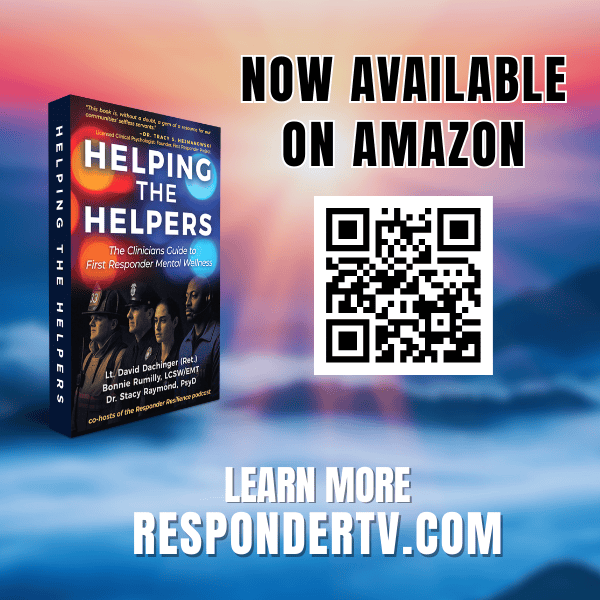
SPEAKER_00You're trained to help people heal, but first responders, they carry trauma that's buried under silence, stigma, and stress. Helping the helpers gives you the framework to connect, to speak their language, earn their trust, and actually make an impact. From the experienced team and clinicians behind the Responder Resilience podcast, this isn't theory. It's real-world support for the ones who need you most. And this book isn't just for clinicians. If you're an agency leader, peer support team, chaplain, EAP, wellness program coordinator, or family member, helping the helpers will equip you with the tools, language, and insight to make a difference. Be the resource they can count on. Order your copy of Helping the Helpers on Amazon today.
SPEAKER_02If we look at uh trauma as a gateway, say, to transformation, in other words, meaning like on the other side of there's maybe something, there's something positive. Um, Jen, how would you explain that? Like trauma could be a disruption that can lead to transformation.
SPEAKER_05I would say that that trauma allows us to pause, it allows us to slow down in life, to reflect, um, and it allows us to look at where do we want to make some shifts? So when we think about resilience, resilience is about us coming back to baseline. So we might be experiencing a trauma. We try to find that resilience coming back to baseline. And from that point, we're trying to build off of it. Are there things that we've learned about our life or the life around us that we want to expand upon? So that's really where I see kind of the growth opportunities.
SPEAKER_02Okay.
SPEAKER_04Well, and I think by no means are we prescribing trauma. Um, we don't wish it on people or ourselves. Um unfortunately, it is a hazard of the job in first responder world that you're going to be exposed to trauma, often multiple at the same time or just pervasive amounts of trauma over time. Um, but what you get to do in that period of trauma is like Jen said, reevaluate your life. So it's an opportunity to look at your priorities, to look at where changes might need to be made to help yourself either build your resilience or to be healthier in these times of trauma so that you can bounce back better. Um, but the other thing that we see is once people do the healing work, and very often for Jen and I, it is doing EMDR therapy, um, when we see people face their trauma head on, get the treatment, get EMDR, what ends up happening is not only does that person become stronger, but they come out on the other side with new goals, a new refreshed sense of purpose and meaning in life. And sometimes we lose something or someone to have to be forced into that situation, which is not necessarily a good thing. We'd I think we'd all like to hope that we could just do it on a day-to-day basis. Um, but human beings are taxed and pushed to the limit when a trauma or a loss happens. And so if someone is willing to face it head on and do that work, they can get to the other side of it where life can have more meaning. And some people go on to also help others. You know, maybe they start a support group or they start a nonprofit, or if it's a parent who's lost a child, they go and seek out meeting other parents who've lost children to see if they can help them with what helped them on their journey. So there are many, many ways in which this could take form.
SPEAKER_02We're kind of on the verge of talking about post-traumatic growth. So, can you talk a little bit about that? What is post-traumatic growth and how does someone achieve that?
SPEAKER_05So, post-traumatic growth is is the learning and um the expansion of the self after experiencing something traumatic. And I love that Bonnie is saying, like, we don't prescribe trauma, we're we're not looking for trauma. We certainly don't go out looking for the traumatic experience. But when when it does present itself, um, it is giving us an opportunity to learn more about ourselves and to do something really positive with that. And I think we see that all the time within our first responder population. We're seeing them come back. I think specifically in some of the work that we do, we see them ask to come talk with other first responders, to give them encouragement, to share their experiences and what they have learned about themselves. Um, and so being able to observe them through that growth opportunity where they're pausing, they're reflecting, and they're making some really healthy choices for themselves is is just great to watch them do that.
SPEAKER_04Well, I think first responders also like regular people get into patterns of behavior and patterns of response. And so, in my view, any trauma or crisis is an opportunity for change. And so, if we can teach a first responder that, okay, the last time a crisis happened, this is what you did. These were your choices, these were your behaviors, how did that work for you? Did it make it better? Did it make it worse? Did it sustain you long term? Um, and we really challenge them to look at that. And so if you look at trauma or time of crisis as an opportunity for change, you can look at the past and what hasn't worked for you in the past, and it's a living, breathing opportunity to do something different. And I could use an example for myself. Um, I was facing a challenge and a crisis time recently, and I wanted nothing more than to eat garbage the entire time. But I actually stopped myself, challenged myself, and said, No, I'm actually going to do the opposite this time. I wanted to reach for candy and chips and whatever was easy, and instead I reached for healthier food. And lo and behold, it gave me a better baseline to face what I had to face. Okay. Um sleep. I think it's easy when you finally have quiet or time at night to stay up and do other things. But again, in that situation, I said to myself, okay, I need sleep. I need to have a good solid base to handle what's happening right now. So what I'm gonna do is go to bed and I'm gonna put my phone downstairs. It's not gonna be near me this time. So I think what I'm trying to do is really practice what I'm preaching to everybody, but telling you that those times where there's a huge trauma going on or it's the accumulation, you really have to have a hard conversation with yourself and challenge what I am doing here, and do I want this to be the time that I decide to be a better person for myself?
SPEAKER_02It sounds like uh embracing self-care.
SPEAKER_05Embracing self-care and maybe sitting in the healthy discomfort. Right? The healthy discomfort of what choice am I gonna make and how can I make that a healthier choice even if I don't want to, or even if it feels uncomfortable for a period of time.
SPEAKER_02Do you find it's common for first responders to struggle with that choice?
SPEAKER_04Yes. Um, yes and yes. I to me, I think that first responders they want the easy fix. You know, um the thing that's always harder to do is always usually the right choice or the healthier choice. It's a heck of a lot harder to get yourself out of bed to go to that gym than it is to lay in bed and watch Netflix. So I I think first responders struggle and I think every human struggles with that to some degree. Um, but in a population where they come really from a lack, I think it's easy to get pulled back into that cycle of lack and depletion than it is to put yourself in a position of addition and the opposite way, the healthier decision, shall we say.
SPEAKER_02Hey firefighters, let's take a moment to talk about something important. There's a new app built by firefighters for firefighters, and it's not just another wellness tracker or generic resource hub. It's called Crackle. You've probably seen the magazine, but this is the next evolution. The app is about one thing helping firefighters not fail. Not just on the job, but in life, in your health, your relationships, your mindset, and your longevity. That's why Crackle is designed to meet firefighters exactly where they are, with resources that make sense, are easy to use, and actually respect your time. You can download the app now for free as a legacy member. That means you get early access to exclusive content tools and updates as they drop. Use the QR code on the screen to download the Crackle app, or you can download it from the App Store or Google Play and stay in the fight. Not just at work, but at home and in your own head too. Because your best days shouldn't be behind you, they should be ahead of you. Because there's so many buzzwords flying around, one of them being resilience, and the one we've been talking about, post-traumatic growth, Jen, is there a difference between resilience and post-traumatic growth?
SPEAKER_05Oh, absolutely. Resilience, I think, is when when we experience some sort of discomfort throughout any day. Any day we're experiencing kind of the ups and the downs of our emotions. And resilience is us coming back to baseline, that consistency and coming back to baseline, knowing that we can we can kind of go with the flow throughout the day, maybe deal with traffic or everyday stressors, um, but come back to baseline. And I think when we're talking about post-traumatic growth, we are seeing ourselves go beyond coming back to baseline. We're building off of baseline, building off of those difficult life experiences and becoming a better version of ourselves. So it's baseline plus more.
SPEAKER_04Well, I would also add that when you get into that post-traumatic growth phase and you truly are growing, I see that the resilience bandwidth and the baseline of the resilience actually goes up to and increases. Um, so the more you grow, the more resilience you can access long-term over time.
SPEAKER_02It must be fascinating to watch that from your perspective. Like how is how does it look from where you sit to see someone go through that process of coming into the office with you know pain and trauma and then starting to work through it and then coming out the other side with some of these um positive um scenarios that you're describing?
SPEAKER_05I I don't think there's anything better than being able to watch someone come in who's feeling like they're struggling with something and watch them grow and flourish. I think if I speak about my own experience in observing that, um, I think being a little kid is probably as close as I can get to that, right? This just kind of giddy feeling of watching some of these uh connections being made in their thoughts, their their ability to believe in in themselves and have the courage to do it different this time. And so I think I get super excited watching them for sure.
SPEAKER_04I I love watching the growth. I love when they come in and they say, you know, I I think I'm gonna go and join peer support because I'm feeling so good and I want to help other people feel good like me. Um, I there's nothing more rewarding. But also in those quiet moments when they're in our office and they say, you know, last week I sat down and I spent an hour with my son being present with him. And I wasn't distracted by all these other things, and I wasn't on my phone. I was just present with him. Or my wife and I went out to a date and I was able to really sit with her and ask her how she's doing. Um, it's to me, it's the big progress, but it's also those small moments that I know are massive victories for them that it's just so inspiring to watch.
SPEAKER_02I think this is a good time. We'll put up this slide that you guys um used in your presentation. Jen, can you talk to any part of it really, but the steps to growth? And then on the right side, we're looking at um some of the, I guess, the fruits of turning that pain into power. Like, can you just give us a little perspective on what that slide is talking about?
SPEAKER_05Sure. I mean, I I think that the turning pain into power piece, that's the goal. All of those wonderful things in that that part of the slide, that's the goal for pretty much everybody who walks into our offices. Um, and that initial struggle, that is often, you know, the the struggle of making the phone call. It is their experiences, the cumulative experiences, um, but not forgetting that the struggle just to make the phone call or the email to us and and how big of a step that that is uh for for all of our folks. And then thinking about that cognitive processing and meaning making. I think this is where this is where we see our work as EMDR therapists come into play. Um, you know, we're building this rapport with these folks and helping them see how beneficial the therapy that we provide can be for them and that they're actually doing all of the healing within their own brain uh and watching that process happen for them. So they're coming in feeling as though uh maybe they've lost control of their lives or that a lot of things at work might be their fault. And we're helping them understand and process that information in a different way so they're feeling more in control of their own lives and have a better relationship with themselves and their own thoughts, which then leads to those behavioral and emotional changes, and then leads to that that turning the pain into power.
SPEAKER_04You know, another term that we could actually coin here would be turn pain into promotion. Um, because I've had a lot, a lot of um men and women in these first responder fields that um have done the work and they faced the trauma and they did the really grueling work of EMDR and therapy and trusting us with everything. And now they're promoting because they're saying, wow, like I feel like I have the strength to go for that. I feel like I have the strength to lead others. And so to me, that's another manifestation of the power, um, which is amazing. And I I think that's something I experienced even in my own life. But the personal strength aspect, we can't even measure. I mean, this is a great slide and there's beautiful little steps there, but I would argue that you couldn't even fit the post-traumatic growth that's possible for a person on a slide. I mean, I think it's absolutely immeasurable because it's takes fact in their own emotions and behaviors, but the ripple into their family and what it means with their family, what it means for the people around them at work. Um, the very interesting one that people come in with sometimes is wow, I am stronger, I'm happier, I feel more powerful, I feel like I'm in such a good place. And some people are threatened by that. Some people actually resent the person for changing or growing or finding their voice. And it's very interesting because as a therapist, you find yourself telling them, you know, the only people that benefited from you are upset that you're growing, are really the people that were benefiting from you being stagnant and in whatever black hole you were in. And so I try to also warn people there could be pushback and there could be people trying to pull you back into that old pattern, uh, which is really interesting. But the possibilities are endless.
SPEAKER_02Well, it's so fantastic that you're seeing that kind of progression from this, you know, post-traumatic growth into promotion, which means that there'll be leaders, the next generation of leaders will have experienced this kind of um, you know, turning pain into power and into into promotion. Um, how great is that as far as the you know the future of uh of our agencies?
SPEAKER_05All units stand by for confirmed structure fire with reported person's traffic.
SPEAKER_03In a world where first responders save lives, this book could help save theirs by preparing you to answer when they call for help. Based on over 200 conversations and the trusted team behind the Responder Resilience podcast, helping the helpers gives you the tools to understand their world, speak their language, and earn their trust. This work is challenging, but deeply needed and profoundly rewarding. Their stories don't start with trauma, but too often they end there. Infused with real-life experiences, this guide reveals the human behind the badge and equips you to build a first responder-centered practice that works. From understanding their culture to the practical realities of working with first responders and chapters across the spectrum of first responder professions, you'll gain insight into the hidden struggles that shape their reality and the steps you can take to help them heal. When trust is shattered, the stakes are high. This book helps you build it before it's too late. Are you ready to make a difference? Be the resource they can count on.
SPEAKER_02Order your copy of Helping the Helpers, the Clinician's Guide to First Responder Mental Wellness, today what would you say to someone who is hearing this and perhaps suffering, um, but just looking for, you know, some extra incentive and inspiration to reach out and reach out for help and to start to work on the pain that they're suffering with. What what would you say, uh, Jen, that would help them make that first step.
SPEAKER_05I would say that making the phone call or making a sending out an email is probably the hardest part of all of this. And if we can just make a phone call, there are so many providers out there, or even peer supports that want to help hold all of this emotional trauma with people. Nobody needs to carry this on on their own. It's a heavy load to carry on your own, and there's lots of supports out there, and there's there's no shame in asking for support, but just to make that initial contact with someone.
SPEAKER_04I agree. I think that initial phone call is the hardest part, and and some people don't get that far. Um, but what we want to see is people get that far. We want to see them make the call, sit with us. You don't have to come in with a cohesive plan or a goal. You don't have to come in and lay it out to us on all the things that you think we want to hear. You can just come in even feeling like you're a mess and that you don't know where to start because that's your reality and that's your truth. And no matter what, we'll be with you in that truth to help you sift through it and figure it out for yourself. And we know there are a lot of great therapists out there who are interested in this population that we're trying to train up and give them the tools they need to be able to be there for you in the way that you need it. Um, so if you are thinking of seeking help, please try to find someone who has first responder experience who can understand your culture and understand some of the barriers that you face internally as a human, but also externally, just in the culture and in the department. Um, just please know that it's there. And we're gonna continue to do the best that we can, all of us behind the scenes and in front of the scenes, to be there to make it easier for that first step to happen. Because Jen is right. Without that first step, we don't have anything.
SPEAKER_02And in terms of the work you all do and any other resources, what how can you steer people towards finding someone that can help them that's a clinician that understands their world?
SPEAKER_05Um, I think so. There are certain websites that folks can go on and it can highlight uh first responder uh specialties. So you certainly want to ask those questions as well when you get in touch with a therapist. You are entitled to ask them those questions of what's your experience, what types of training do you have, so that you know that you're getting somebody that is going to understand where you're at.
SPEAKER_04Yeah, and those websites, Jen is referring to, um, if you are outside of Connecticut or inside of Connecticut, you could go to emdria.org, mdria.org, and you can actually filter therapists based on your location, your insurance, first responder, or veteran population, which is great. Um, if you are inside of Connecticut, our Fairfield County trauma response team is expanding statewide, and people very often put in a confidential request through our website, fcttrt.org. And you can go in there and confidentially ask for a referral. Um, we pride ourselves on our team of taking all the middle work out of everything. So if you reach out, you will get one of us clinical directors, and we place you with someone on our team, again, based on geography, insurance, etc. Um, so those are two very obvious resources. We always point people to MDRIA. That's our governing body for EMDR, and it is the gold standard. We all believe in it 100%. It's the primary modality of our team, and we think that the efficacy and the retention rate with first responders is bar none.
SPEAKER_02What question should a first responder be asking a clinician so that they know they're getting the right person to help them?
SPEAKER_05Well, I think we do want to know what their training looks like. We want to know if they've worked with first responders before. Do they have an ongoing um population of working with first responders? Um, they don't have to necessarily know the specific questions about certifications or anything like that necessarily, but we want to ask some general questions about what their experience has been with first responders.
SPEAKER_04I would add that desire and honesty are also very important. So, look, every clinician needs to start somewhere. You know, ideally, we would want to be able to find droves of therapists who have this experience and are ready to jump right in. Some just don't. But I think that for a therapist to have the desire to gain the knowledge with this population shows a lot and honesty. So even if a first responder did happen to place a call to a therapist who isn't trained or doesn't have the experience, I think if they say to that first responder, look, I've never worked with a police officer before, but I'm willing to do my homework and do everything I can to meet you where you are. And if there's something I don't know, or I will be honest with you about that. And if you can be patient with me and teach me a little bit about your experience, I will meet you where you are. And to me, that would be a sign of a good therapist who wants to work with you, who wants to grow. And hopefully that therapist will go on and find the trainings and everything that they need. But um, the willingness, the respect, and also for a first responder, if you call a therapist and you don't get a call back, that's not a good sign. If you get a call back from the therapist, it means they understand the severity of your call. And to me, that's really, really important. And look out for that. Um, very sadly, Jen and I get a lot of people that come in and say, I made six, eight, ten phone calls. No therapist returned my call. It's not good enough. It's just not good enough. Um, especially with this population. First responders call when they're in crisis. And if we don't return that call, we don't know what that crisis is going to turn into. Um so that's a really important thing to keep in mind.
SPEAKER_02Absolutely. And and we've heard this more than once, and just wanted to speak to this. Um we've heard from folks that have sought out a therapist and the first one did not work out, wasn't a good match, and maybe they had to try a second or third. How important is that to not give up after perhaps the first therapist is not a good uh good fit?
SPEAKER_05Well, that's so important for them not to give up. Um, and you know, we could ask all the questions. A first responder can get in touch with a therapist, ask all the questions. They might be, uh, even if they're not trained, they may have that desire to work with first responders, but they get into the room and they're not feeling a connection with the person. Um, then it's okay to say that it that this person isn't the right fit. It has to feel like the personalities connect in order for any therapy to work. Um, and so it's not a reflection on the person that is looking for therapy, it's a reflection on what's happening between the therapist and the client. And it is absolutely okay to keep looking, and you'll benefit so much more if you keep looking to find that right fit. So not to give up. There's somebody out there who will be a good fit.
SPEAKER_04Yeah, please don't give up. Um, we know that some responders do, they have taken so much courage to make the call to go see this person, to bear their soul, um, to feel either rejected, misunderstood. Uh looked at poorly because they've used some humor that maybe the therapist didn't understand is a coping survival skill ultimately in their field. Um, or we have those stories of responders picking a therapist up off the floor and handing them a tissue. Um please, please don't give up. Um, because there is this quiet army behind the scenes pushing and building and growing, and you will find your person. Just please don't make that first call be the last call if it doesn't work out. The stakes are way too high.
SPEAKER_02Thank absolutely. Thank you both for um for your sh weighing in with your wisdom on that. So as we wrap, um, Jennifer, where can people find you? Any uh website or links you want to share, social media?
SPEAKER_05Um sure. Everything is pretty much based on my name. So you can find me at jenniferspirato lcsw.com. Um that is also where you'll find me on Instagram. Um, so I'm pretty easy to locate.
SPEAKER_02Great.
SPEAKER_05Yeah, thanks for having me.
SPEAKER_02Absolutely. Ronnie, you want to share yours?
SPEAKER_04Yeah, I'm probably too easy to locate, thanks to David. Um, no, it it's been a pleasure and a joy. Um obviously you can find me on any of the responder TV or responder resilience LinkedIn um Instagram pages. I have my own professional Instagram page, which is AGMLC2017. You could also look to follow our trauma team at FCTRT on Instagram or fctrt.org just to see our upcoming trainings and events. Um I'm pretty easy to find, but very, very grateful to David and Stacy, the work that we're doing, the wonderful partnerships with Jen and the other therapists that we've met. Um thank you so much.
SPEAKER_02Thank you both. And uh yeah, it's just a joy to be associated with um the work you're all doing, especially with the Fairfield County trauma response team. Um really starting to see that take off. And um, and when we see people approach us, and we were all three at a booth at that conference in um Connecticut recently, um, really starting to see like how there is a uh recognition of the importance of the work that the team is doing, and people are engaging and seeking out resources and information. So um we've entered into a time that's it's really exciting. So I'm so glad to be part of that with all of you.
SPEAKER_04Thank you. You too. Thank you.
SPEAKER_02Remember, like and subscribe, YouTube, responder resilience, Facebook, responder TV, LinkedIn, Apple Podcasts, Spotify, and go to our website respondertv.com for past episodes and guest information. Till the next time, stay safe, be kind to yourself. Take care.

Bonnie is a Licensed Clinical Social Worker specializing in the treatment of Adults, Adolescents, Children and First Responders. Bonnie worked in Newtown treating Trauma directly after the Sandy Hook School Shootings and is an EMDR therapist. A Board Member of the Fairfield County Trauma Response Team, Inc., which treats First Responders for PTSD and Trauma, Bonnie is also a 21 year Emergency Medical Technician.

Psychotherapist
Jennifer Spirito, LCSW, is a psychotherapist who is committed to helping individuals achieve their goals. With a focus on providing a warm and caring atmosphere, Jennifer uses her expertise in evidence-based therapy to help clients grow and make positive changes. She is dedicated to making sure her clients have a safe and confidential space to discuss anything that is troubling them, and always prioritizes their well-being and growth.