WEBVTT
00:00:00.239 --> 00:00:03.680
The truth is, firefighters aren't struggling because they're weak.
00:00:04.000 --> 00:00:12.240
They're struggling because the system has never given them the same operational framework for mental health that it gives to them for other hazards.
00:00:12.400 --> 00:00:17.280
I wanted to build a model that fits the culture of the fire service.
00:00:17.519 --> 00:00:21.359
If trauma were a chemical, we treat it like an exposure problem.
00:00:22.000 --> 00:00:28.800
It gives departments a way to recognize patterns, track exposures, intervene early, not with punishment, but with support.
00:00:29.120 --> 00:00:33.359
I want the departments to understand that firefighters don't fail mentally.
00:00:33.520 --> 00:00:36.320
I think systems fail to monitor exposure.
00:00:36.560 --> 00:00:42.560
It isn't about fixing firefighters, it's about fixing how we track what the job does to them.
00:00:46.079 --> 00:00:50.079
Welcome to Respond Resilience along with Bonnie Rumoli, LCSW EMT.
00:00:50.159 --> 00:00:51.439
I'm David Dashinger.
00:00:51.600 --> 00:00:53.759
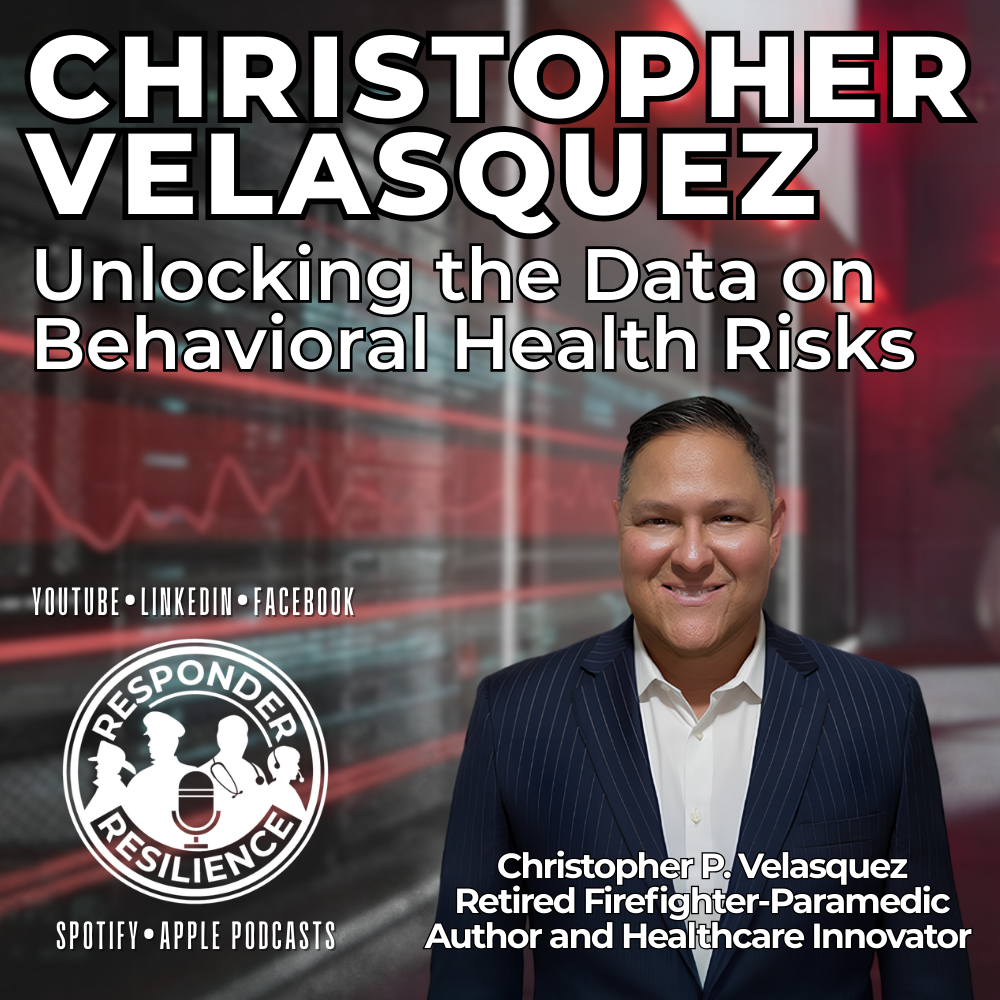
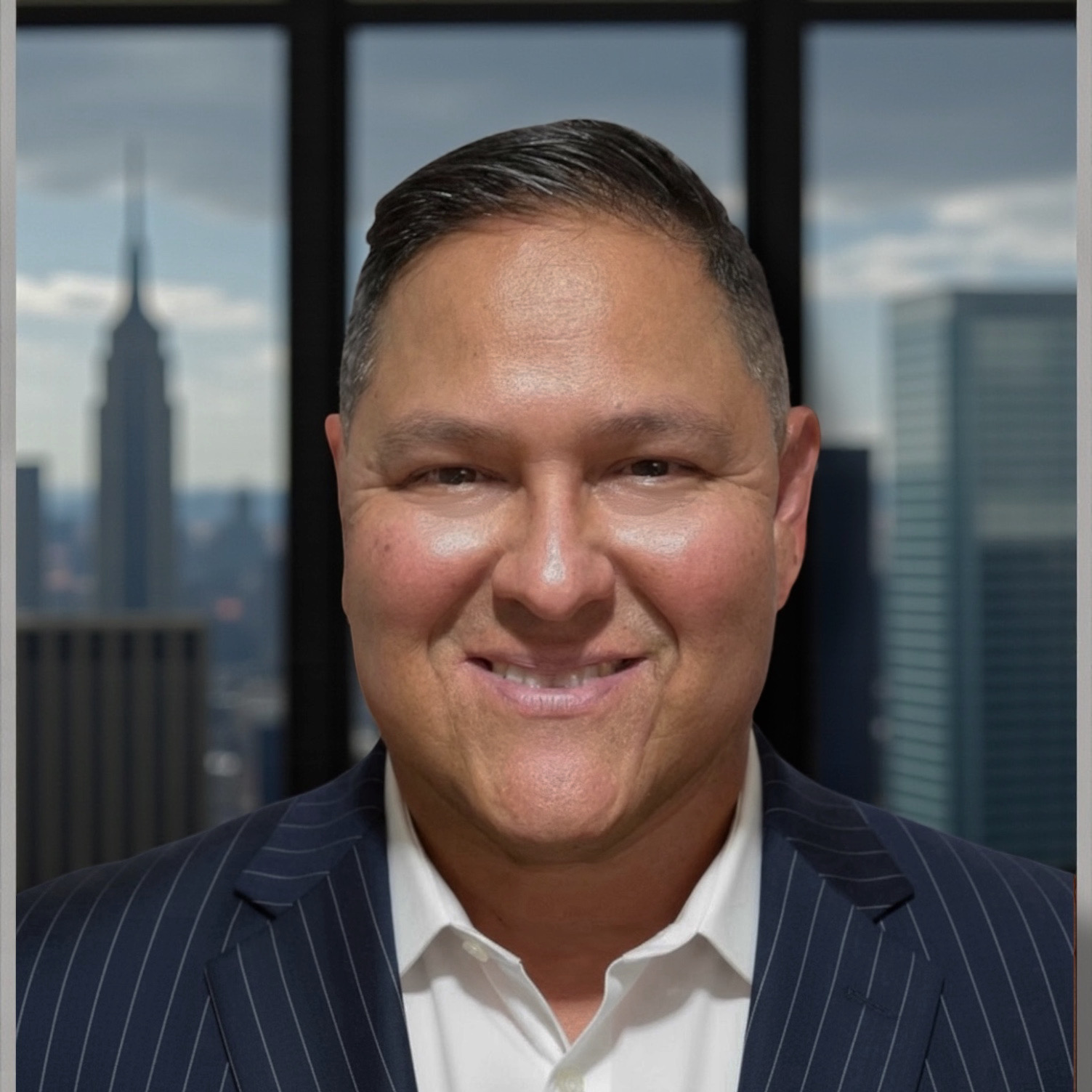
Our guest today is Christopher Velazquez.
00:00:53.920 --> 00:01:00.960
We're going to be talking to him about his book, Firefighter Mental Health Exposure Program, a data-driven framework for wellness and resilience.
00:01:01.119 --> 00:01:15.519
It's going to focus on how repeated exposure to trauma silently affects firefighters and EMS professionals, and it offers a practical, data-driven way for departments to recognize, track, and reduce debt impact before it leads to burnout, injury, and loss.
00:01:22.719 --> 00:01:26.879
Go to our website, respondertv.com for past episodes and get information.
00:01:27.200 --> 00:01:28.799
We'll be right back to speak with Chris.
00:01:30.480 --> 00:01:32.640
Ask the first responder who they are.
00:01:32.719 --> 00:01:35.760
And you're likely to hear I am a police officer.
00:01:35.920 --> 00:01:37.280
I am a firefighter officer.
00:01:37.439 --> 00:01:38.560
I am a police officer.
00:02:38.319 --> 00:02:40.000
Our guest today is Christopher P.
00:02:40.080 --> 00:02:40.800
Velasquez.
00:02:40.960 --> 00:02:53.199
He's a veteran firefighter paramedic, public safety leader, and healthcare innovator with more than 30 years of experience across fire suppression, emergency medical services, training, and mobile integrated health care.
00:02:53.599 --> 00:03:04.479
Throughout his career, Chris has served in operational leadership and advisory roles, responding to high acuity emergencies while helping shape system-level approaches to responder health and resilience.
00:03:04.800 --> 00:03:11.120
Chris is the author of Firefighter Mental Health Exposure Program, a data-driven framework for wellness and resilience.
00:03:11.360 --> 00:03:21.520
It's a book that presents a practical, prevention-focused model for recognizing and managing cumulative mental health exposure among fire and EMS professionals.
00:03:21.680 --> 00:03:26.560
Treating psychological risk with the same operational vigor as physical safety.
00:03:26.800 --> 00:03:29.919
Christopher, a warm welcome to Responder Resilience.
00:03:30.400 --> 00:03:30.879
Thank you.
00:03:31.039 --> 00:03:32.560
Thank you for having me on.
00:03:33.680 --> 00:03:35.120
Chris, it's great to meet you.
00:03:35.199 --> 00:03:39.439
David's told me a lot about you, so thanks for spending some time with us this morning.
00:03:40.240 --> 00:03:41.439
No, thank you.
00:03:42.639 --> 00:03:45.759
I feel like we always start these with almost the same sentence.
00:03:45.840 --> 00:03:47.919
So I try to change it up each time.
00:03:48.719 --> 00:03:55.120
But um we're really excited just to hear about your experience and your background in fire and EMS.
00:03:55.280 --> 00:04:00.080
Can you walk us through the beginning of your career and where are you headed from there?
00:04:00.800 --> 00:04:01.439
Yes, yeah.
00:04:01.840 --> 00:04:03.199
So thanks again for having me on.
00:04:03.280 --> 00:04:05.199
Uh my name is Christopher Velasquez.
00:04:05.280 --> 00:04:08.080
I've spent my career in the Fire and EMS world.
00:04:08.240 --> 00:04:15.439
Uh decades of calls, disasters, long nights, um, and the kind of experiences that don't always leave visible scars.
00:04:15.680 --> 00:04:20.560
Uh that's really why I wrote the Firefighter Mental Health Exposure Manual or program.
00:04:20.959 --> 00:04:23.439
It I I call it a manual because it doesn't really feel like a book.
00:04:23.519 --> 00:04:28.639
It's really 50 pages long, and I kept it short intentionally because I know my audience.
00:04:29.040 --> 00:04:33.120
Um anyway, uh in the fire service, we're trained to measure everything.
00:04:33.360 --> 00:04:39.439
We track air quality, carcinogen exposure, host friction loss, radio traffic, turnout times, you name it.
00:04:39.600 --> 00:04:40.879
There is a metric for it.
00:04:41.040 --> 00:04:53.360
But when it comes to one the one thing that consistently ends careers and takes lives, cumulative trauma exposure, we're never we've never had a structured way to measure it.
00:04:53.439 --> 00:04:59.519
You know, um, we leave it up to chance, personality, or whether someone feels comfortable speaking up.
00:04:59.759 --> 00:05:15.120
And the truth is firefighters aren't struggling because they're weak, uh, they're struggling because the system has never given them the same operational framework for mental health that it gives to them for other hazards, you know, carcinogens and you know, everything of that sort.
00:05:15.360 --> 00:05:19.120
If trauma were a chemical, we'd treat it like an exposure problem.
00:05:19.519 --> 00:05:22.399
If it were a mechanical issue, we'd install safeguards.
00:05:22.720 --> 00:05:32.160
Um but because it's psychological and it's it's uh you know it's our mental health, we often wait until someone is already in crisis before they even act.
00:05:32.720 --> 00:05:34.720
And that's what this book is about.
00:05:34.879 --> 00:05:38.000
It's about changing that that uh paradigm, that response.
00:05:38.079 --> 00:05:43.199
Um I wanted to build a model that fits the culture uh of the fire service.
00:05:43.600 --> 00:05:47.519
Again, this this is applicable to every you know, police, fire, EMS.
00:05:47.600 --> 00:05:52.319
It's it's applicable to all public service and and even beyond that, and we could talk about that a little more.
00:05:52.560 --> 00:05:59.199
But it's it's something that's data driven, it's practical, it's and it's a it's very respectable, respectable of privacy.
00:05:59.519 --> 00:06:05.199
A system that it helps identify early warning signs long before someone hits their breaking point.
00:06:05.519 --> 00:06:12.480
Um, something that even police officers could use, firefighters can trust, and departments can implement without the stigma or judgment.
00:06:12.879 --> 00:06:21.920
At its core, the firefighter mental health exposure program reframes trauma uh as an operational reality rather than a personal flaw.
00:06:22.319 --> 00:06:29.279
It gives departments a way to recognize patterns, track exposures, intervene early, not with punishment, but with support.
00:06:29.680 --> 00:06:32.879
Um firefighters show up for everyone else.
00:06:33.040 --> 00:06:36.399
This framework helps departments finally show up for them.
00:06:36.560 --> 00:06:40.800
And we can change how we understand exposure once we start measuring it.
00:06:40.959 --> 00:06:47.360
And um it and again, it's not just for the fire service, and we can change the trajectory of future public safety.
00:06:48.000 --> 00:06:50.480
That's uh an incredible explanation, Chris.
00:06:50.639 --> 00:06:57.759
And um, I think you you highlighted something that's really important, and that's sort of the recognition of when someone's struggling, right?
00:06:57.839 --> 00:07:07.360
We may have officers that are better at just noticing that someone's off or they're they're struggling, and others maybe not so much, right?
00:07:07.439 --> 00:07:12.800
It's not something we're typically trained on or given like even awareness level training on.
00:07:12.959 --> 00:07:20.079
Um, was there a moment in your career where it was kind of like an aha moment or a pivotal moment when you realized there was a need for this?
00:07:21.519 --> 00:07:22.800
Actually, no, David.
00:07:22.959 --> 00:07:24.879
It was it was when I retired.
00:07:25.199 --> 00:07:32.000
Um, so really the big push, I think, for my retirement was a lot of therapy.
00:07:32.399 --> 00:07:41.439
Um and I don't I couldn't I couldn't I can't really speak for other responders because it's something this is such a bad stigma right now in the fire department.
00:07:41.519 --> 00:07:49.040
And in in the public safety realm, we don't talk uh I mean there's maybe more discussion now than I've seen in the last three years, believe it or not.
00:07:49.279 --> 00:07:56.160
But when when I was in, you know, I I entered the fire service in 1995, uh you didn't you didn't talk about these things, right?
00:07:56.240 --> 00:08:01.600
Um we we we kept it to ourselves, we went had drinks with the guys, and that was it.
00:08:02.240 --> 00:08:09.120
Um but it was probably I went through a few uh and I tell her if I just go to therapy, right?
00:08:09.199 --> 00:08:18.800
I I went to uh PhDs, MDs, uh LPCs, and honestly, the one that I really connected with was a licensed professional counselor.
00:08:19.199 --> 00:08:25.839
Uh he was kind of a very unconventional, uh not not someone that I would clearly identify if you saw him walking on the street.
00:08:26.000 --> 00:08:29.360
And and that's just testament to me, just where I was at the point, you know.
00:08:29.439 --> 00:08:32.080
I was like, I'm willing to talk to anybody at this point.
00:08:32.320 --> 00:08:38.480
Um good thing is I had a really good support structure at home, my wife, uh, my children, my daughters.
00:08:38.559 --> 00:08:45.120
I mean they're they're adults, they were adults at the point, but they're very supportive, and they they knew they knew way before me that something was wrong.
00:08:45.360 --> 00:08:48.399
Of course, again, there's that disconnect with the fire service.
00:08:48.559 --> 00:08:56.080
Had there been some kind of way for my wife to interject to the fire service and say, hey, uh, can't is there any way to give my husband help?
00:08:56.240 --> 00:08:56.960
And there really wasn't.
00:08:57.120 --> 00:09:05.279
There was no there's no dialogue opening, and that that's something I touch on the second book is how how do we involve the family in this care, you know?
00:09:05.440 --> 00:09:12.240
And um, it was after a lot of therapy, David, and I I realized I was broken after I got got fixed, if that makes sense.
00:09:12.399 --> 00:09:13.919
I don't know if that really makes sense.
00:09:14.320 --> 00:09:14.639
Okay.
00:09:15.679 --> 00:09:19.679
It it does make sense because we've been fixed in our own ways too.
00:09:19.919 --> 00:09:21.919
So it absolutely makes sense.
00:09:22.320 --> 00:09:26.080
Not everyone is meant to walk this path, and that's okay.
00:09:26.399 --> 00:09:33.919
But for those who feel the call, for those who read these words and feel not just curiosity, but conviction, know this.
00:09:34.159 --> 00:09:40.720
By the time a first responder sits across from you, they've likely exhausted every internal resource they have.
00:09:40.960 --> 00:09:44.720
This isn't a routine appointment, it's their 911 call.
00:09:45.919 --> 00:09:48.000
I don't know how much longer I can do this job.
00:09:48.159 --> 00:09:50.720
You won't hear sirens, but the urgency is real.
00:09:50.960 --> 00:09:54.480
If you choose to take that call, understand what it means.
00:09:54.639 --> 00:10:01.679
To show up, to stay steady, and to carry the weight of someone who spent a career doing the same for others.
00:10:02.000 --> 00:10:04.000
This is where the work begins.
00:10:04.320 --> 00:10:06.639
Be the resource they can count on.
00:10:06.799 --> 00:10:14.960
Order your copy of Helping the Helpers Today on Amazon, and for bulk orders, email us at info at respondertv.com.
00:10:21.360 --> 00:10:28.080
You said something interesting there that there's no feedback loop with spouses, significant others, family, and the workplace.
00:10:28.159 --> 00:10:29.279
And you're absolutely right.
00:10:29.360 --> 00:10:31.840
You know, we see that in our therapy office all the time.
00:10:32.000 --> 00:10:50.639
And for first responders who work with clinicians, but really more importantly, the clinicians working with first responders should be aware of the fact that you need the spouse, you need the family involved in their treatment because it's technically a lot of the time when the family calls us when something is wrong.
00:10:50.799 --> 00:10:52.799
Um, it's not always the responders.
00:10:53.039 --> 00:10:58.000
So I agree with the point you're making about a feedback loop is really, really important.
00:10:58.480 --> 00:11:04.480
And I think that the reason departments and agencies shy away from that is they're scared of the liability.
00:11:04.720 --> 00:11:12.000
They're scared of when they get a phone call from a wife, they don't know what to do, they don't have the structure in place.
00:11:12.399 --> 00:11:18.960
And how you're describing your manual as an SOP for mental health, it makes complete sense.
00:11:19.120 --> 00:11:23.120
And I was wondering if you have gotten good reception.
00:11:23.360 --> 00:11:31.519
Do you feel like people are more open to using your manual when you frame it in such a way as this is an SOP like everything else would be?
00:11:32.240 --> 00:11:33.200
Yes, Bonnie.
00:11:33.279 --> 00:11:40.960
Um, it's interesting you brought that up because I um when I so I put this out, I write a lot.
00:11:41.039 --> 00:11:43.919
I write a lot, I've always written a lot, even as a young man, right?
00:11:44.000 --> 00:11:44.960
I I just write.
00:11:45.039 --> 00:11:49.679
And and um I'm I I like I told David, I'm not one of the cool kids, right, in the fire department.
00:11:49.759 --> 00:11:50.320
I wasn't.
00:11:50.559 --> 00:11:54.799
I've always been this little chubby, thick glasses, reading books all the time.
00:11:55.039 --> 00:12:01.679
Um I didn't really fit the you know the firefighter kind of calendar kind of guy, right?
00:12:01.919 --> 00:12:17.919
Don't get me wrong, I was in it, I was in the deep of it, I was into stuff, I I loved it, I love the response, I love the hurricanes, everything, but but um yeah, it and and I did when I published this, um, and and of course my wife shared it with her social media, and then it kind of just took off.
00:12:18.080 --> 00:12:24.639
Like it it it was amazing to me, uh especially with the our local firefighters reaching out to me.
00:12:24.799 --> 00:12:30.799
And and I I wanted to make it clear to them that because they were they were private messaging, texting me, calling me.
00:12:30.879 --> 00:12:36.240
I've had the same phone number for 20 years, and they were really like, wow, uh, you know, I I'm I'm struggling.
00:12:36.320 --> 00:12:38.720
Uh does this book help us give direction?
00:12:38.799 --> 00:12:50.799
And and I I felt bad because I was like, Whoa, they really want to know how to fix themselves, and I and I was like, guys, please understand this is not a uh a book that um it's not a self-help book, right?
00:12:50.879 --> 00:12:59.360
Because they see me and I think they think I'm a success story, but but they didn't see me when I was on the bottom, right, on the floor, falling, and my wife picking me up, right?
00:12:59.519 --> 00:13:00.960
Um, but and and that's good.
00:13:01.039 --> 00:13:05.679
I'm glad, but I I reali I didn't realize so many guys or so many fire, and a couple of women, right?
00:13:05.759 --> 00:13:08.480
They're few firefighters, they were they're hurting.
00:13:08.559 --> 00:13:10.399
And I didn't realize it, even young ones.
00:13:10.480 --> 00:13:21.519
Like uh, I had just recently got one of them reached out to me five years in the department, and and with the book, I I intentionally avoid framing mental health as toughness or weakness, right?
00:13:21.600 --> 00:13:31.039
It I want to treat trauma like any other occupational exposure, and it is I in my opinion, again, this is my opinion, I'm not a PhD or anything.
00:13:31.200 --> 00:13:34.399
Um, it's very predictable and it's very manageable.
00:13:34.720 --> 00:13:43.120
We could help direct future assignments, uh, future breaks, future vacations based off these measures, right?
00:13:43.279 --> 00:13:49.039
And I want it, I want the the departments to understand that firefighters don't fail mentally.
00:13:49.279 --> 00:13:52.720
I think systems fail to monitor exposure, you know.
00:13:52.799 --> 00:13:55.759
I think we just treat it like hey, it's just what it is, right?
00:13:55.840 --> 00:13:56.960
And and that's really not.
00:13:57.120 --> 00:13:58.720
It really isn't what it is, right?
00:13:58.879 --> 00:14:08.159
Um I don't think it's you know, it's it isn't about fixing firefighters, it's about fixing how we track what the job does to them.
00:14:09.679 --> 00:14:11.200
Can you get a little deeper into that?
00:14:11.360 --> 00:14:24.080
So, you know, as you mentioned earlier, we we track certain things um you know that are much more uh traditional, I guess, in our work, uh whether it's EMS or fire that are quantifiable.
00:14:24.159 --> 00:14:41.759
Uh or if someone is working in a radiation, you know, suite at a radiologist's office, they have a badge that shows how much exposure they've had to radiation, and we we know that we have to get them you know an intervention when it's getting too high into that, you know, that dosage.
00:14:42.720 --> 00:14:57.120
With what we do with the mental health piece of it, um what are some of the tangible things that can be tracked that would give us some you know useful information so we can give someone help and resources when they need it?
00:14:57.519 --> 00:14:59.440
Yeah, and great, great point, David.
00:14:59.519 --> 00:15:05.360
I'm glad you brought that up because the program introduces structured exposure tracking instead of just subjective check-ins, right?
00:15:05.600 --> 00:15:06.639
I mean, awareness is great.
00:15:06.720 --> 00:15:11.039
Don't get me wrong, I am not slamming any, this is not about this is better or that's failing.
00:15:11.200 --> 00:15:24.159
We we're we're we're starting somewhere, uh, and awareness is great, but without structure, I think, and again, I I hate saying this because I don't want to hurt anybody's feelings, but without structure, awareness is just noise.
00:15:24.559 --> 00:15:37.279
And and I don't know if that's even the right way to phrase that, but you know, I want I want to allow I want to align how the fire departments already think with metrics and thresholds and trends, right?
00:15:37.440 --> 00:15:40.240
They they measure turnout times and everything like that.
00:15:40.480 --> 00:15:49.519
And this and what what this becomes is operational intelligence, and it's this is not a personal, like what I believe, it's it's true, right?
00:15:49.679 --> 00:15:56.320
We know that certain runs carry certain weights and and they prov they present certain traumas, right?
00:15:56.480 --> 00:16:00.240
So let's just say I'm I don't want to use Bonnie and David as examples, right?
00:16:00.320 --> 00:16:07.200
You're two paramedics on an ambulance, and me, uh Chris and and John are on another ambulance, right?
00:16:07.440 --> 00:16:15.600
Um we could have the same run volume, we could have each have ten runs for that shift, but David and Bonnie could have five cardiac arrests.
00:16:15.840 --> 00:16:18.960
Uh Christopher and John could have five cancels.
00:16:19.279 --> 00:16:24.240
So, you know, there therein lies the the truth of the operational intelligence, right?
00:16:25.039 --> 00:16:26.720
Scores it, it's a weighted score.
00:16:26.799 --> 00:16:30.000
So, and again, it's very it can it's really up to the department.
00:16:30.080 --> 00:16:37.679
It's not just about urban departments, it could be rural departments, because you would, you know, you let the department decide what that score would be.
00:16:38.000 --> 00:16:46.159
So your score at the end of a month, say you uh David and Bonnie's EMS score could be you know 100 and Chris and John is five.
00:16:46.399 --> 00:17:00.879
Well, maybe that's a good operational threshold to say, hey, you know what, we're gonna switch the location because it's not fair just because David and Bonnie just got an EMS or gotten to the fire department, that they're they're just gonna stay there and get beat up, you know, constantly.
00:17:01.039 --> 00:17:09.599
Let's switch their location, let's switch their ship, or you know, let's let's uh let's give them a floating vacation day if they if they were if that's something they've you know.
00:17:09.680 --> 00:17:17.440
There's just so many ways that this tangent can can grow into again that operational intelligence as a leader, you can you can decide.
00:17:17.519 --> 00:17:22.079
And and firefighters, if we can quantify the that data, they trust data.
00:17:22.240 --> 00:17:22.960
We do, right?
00:17:23.039 --> 00:17:27.519
We we and I think all public safety responders trust data.
00:17:27.759 --> 00:17:39.519
You know, so I want to build this model to something that caters or speaks to their language, you know, and and that's you know, a leadership responsibility is a big deal though, you know, as far as how this plays out.
00:17:39.920 --> 00:17:43.359
Boxing has the power to change lives, especially for first responders.
00:17:43.599 --> 00:17:50.480
Fight Camp embraces your journey, whether you're stepping into the ring for the first time, returning after a break, or aiming to elevate your fitness.
00:17:50.640 --> 00:17:57.680
Harness the strength of boxing to release stress, build resilience, and connect with a supportive community one punch at a time.
00:17:57.839 --> 00:18:02.960
Use code RR10 for a 10% discount on Fight Camp packages and accessories.
00:18:03.119 --> 00:18:06.960
Go to joinfightcamp.com slash shop.
00:18:12.000 --> 00:18:18.400
I'm wondering what you see as the barriers to this because it sounds simple, right?
00:18:18.559 --> 00:18:29.359
It sounds like okay, we roll out a plan on how we're gonna track the data, we get the data, and then we use it to inform our practices and how we're gonna implement strategies for our people.
00:18:29.759 --> 00:18:31.599
So what are the obstacles there?
00:18:31.759 --> 00:18:32.880
Is it money?
00:18:33.119 --> 00:18:34.079
Is it time?
00:18:34.319 --> 00:18:39.279
Like what are you hearing from people as to why they don't do these things?
00:18:39.759 --> 00:18:44.240
I've had the opportunity to speak with um chiefs from several big departments.
00:18:44.319 --> 00:18:55.519
Um they've reached out to me actually post publication, and then we sat down for lunch and discussions, and um, I you know, one of them was a bit of a drive, but I I I'm really this is very uh it's in my heart.
00:18:55.680 --> 00:18:59.440
I really want this to get out there, I want it to gain momentum.
00:18:59.759 --> 00:19:05.039
And I think some of the barriers are Bonnie is what do we do with this, right?
00:19:05.200 --> 00:19:08.079
As a leader, as an administrator, okay, great.
00:19:08.319 --> 00:19:12.720
Chris is at the threshold of breaking, he's at his score last month was a hundred.
00:19:13.119 --> 00:19:14.079
What do you want me to do with this?
00:19:14.240 --> 00:19:18.240
Put him off, make him go to therapy, and and and again, this is where it gets tricky, right?
00:19:18.319 --> 00:19:24.160
And that's where I'm in in the second book, because there's this is a three-book series, and it was always going to be intentional, right?
00:19:24.240 --> 00:19:28.720
The the first book was just to get you hooked, to get you interested and talking.
00:19:28.960 --> 00:19:32.160
The second book is really really aimed at leadership.
00:19:32.240 --> 00:19:38.799
And in leadership, I don't want pe I don't want just the everyday firefighter police officer to think, uh, oh, this is for my captain.
00:19:38.880 --> 00:19:40.319
I I don't want to be engaged with this.
00:19:40.480 --> 00:19:55.440
No, because it really will hold them accountable because if if you're on the ground floor, if you're uh you know uh you know a paramedic on the ambulance, and if they're making this program applicable to their fire department, then you should know the steps the leadership should be taking.
00:19:55.599 --> 00:20:03.599
And again, it it refri it reframes the mental health as a uh as leadership and a policy issue, not an individual burden.
00:20:03.839 --> 00:20:30.880
And chief officers, you know, they are ready managers, you know, and this just adds one more exposure category that they should be measuring because you know, if my let's just and and let's just take it on the on the flip side, my wife, if she would have had a a way to reach out to someone and and they help intervene, but what if what if I didn't what if my didn't have my wife, or what if my wife didn't know what to do, and let's just say, God forbid, I took my own life.
00:20:31.519 --> 00:20:39.039
Should that be any different than if I was exposed to some carcinogen carcinogen and and they didn't tell her?
00:20:39.200 --> 00:20:49.680
You know, that kind of it just to shift that paradigm and that stigma to get away from just saying, Oh, it's just personal weakness, or you're just we you know, you're you're just whining.
00:20:49.839 --> 00:20:55.920
Um we we gotta we gotta get rid of that that stigma and treat it like a true exposure category.
00:20:56.400 --> 00:20:59.359
And I I to your point, I think it's money, Bonnie, honestly.
00:20:59.599 --> 00:21:02.720
I think money is what happens next, right?
00:21:02.799 --> 00:21:04.480
And it's really not that complicated.
00:21:04.799 --> 00:21:15.519
Well, here's what I'm thinking like, do we get better at trying to cut the head off the snake with these issues in police, fire, EMS in all branches?
00:21:15.680 --> 00:21:38.240
And what I mean by that is do we take this information to the town planners, to the select people, and say, look, if you want to save money on the back end of people being out of work or you paying for exorbitant insurance bills, this is the way to get ahead of that because those people are the ones that are looking at the dollars and cents the most, right?
00:21:38.400 --> 00:21:51.599
So if we could educate them that there actually is a savings of human life, which is obviously the most important to us, but I think we have to be better at speaking those languages of finances.
00:21:52.160 --> 00:21:56.079
Um, could we reduce there's I'm sorry.
00:21:56.160 --> 00:21:59.599
There, yeah, there's gonna be so many untangibles and ripple effects if we start.
00:22:00.160 --> 00:22:02.079
measuring this like a real risk category.
00:22:02.240 --> 00:22:07.440
And what I mean by that is you know I I called in sick all the time.
00:22:07.680 --> 00:22:15.519
So I and if maybe if there was something early in my career, how much could I how much money in overtime could I save the city by not calling off sick?
00:22:15.680 --> 00:22:18.400
And honestly, I never called off sick when I was actually sick.
00:22:19.119 --> 00:22:20.640
When I was sick I went to work.
00:22:21.119 --> 00:22:24.559
When I was well I called in sick to go fishing or whatever.
00:22:24.799 --> 00:22:32.400
And uh yeah you're right there's there's gonna be some tangibles that we can measure it down the road, right?
00:22:32.559 --> 00:22:37.039
Ripple effects if you will for cost effectiveness, cost savings, cost avoidance really.
00:22:37.839 --> 00:22:38.240
Yeah.
00:22:38.400 --> 00:22:41.519
And so let's jump into the tech piece of this.
00:22:42.799 --> 00:22:56.559
What are your thoughts in terms of like monitoring systems, technology out there that can kind of also kind of have a beat on the responder's stress level, cumulative trauma and give us some data that could be relatable and accessible.
00:22:57.119 --> 00:22:58.720
So um good point.
00:22:59.039 --> 00:23:04.799
Yes and it this this fits into real life fire department operations today as it operates.
00:23:04.960 --> 00:23:12.880
So this is not like something that you have to reinvent or you know buy this new CAD system for millions of dollars, right?
00:23:12.960 --> 00:23:17.759
It's designed to integrate with existing reporting, training and other wellness programs.
00:23:17.920 --> 00:23:21.920
It's very scalable from small volunteer departments to large urban departments.
00:23:22.160 --> 00:23:33.839
And and the biggest thing is I want the biggest message I want really the the the responders understand that this is not going to be introduced into forced therapy or mandatory confessions on the scene.
00:23:34.079 --> 00:23:47.039
It's just an early detection right this is just an early detection and that's where it gets real sketchy um how we measure this and and for I and I'll pick on San Antonio Fire Department right because that's where I grew up.
00:23:47.119 --> 00:23:52.240
I mean I I entered as a young man I was 21 years old and I retired when I was 50.
00:23:52.480 --> 00:24:09.279
So when we have a we have a software and it's it's really it's a big software company and they're nationwide and a lot of departments use it fire departments police departments even there's even private equity firms that use this software which is interesting to me right because I thought it was just oh it's just for firefighters.
00:24:09.440 --> 00:24:37.279
It really isn't and I've spoken to the president of this company a CEO he his name is Todd Stout and I've spoken to many members of this team and this is very very doable with an existing infrastructure he he literally said it would be nothing just to true to create a new measure turn on a new switch and what fire what first watch is it's a data analytics software that most fire departments use to measure response.
00:24:37.839 --> 00:25:26.720
And and right now it's very patient driven and and I learned how to use first watch because when I was the program uh director for the mobile integrated healthcare program in the city of San Antonio I used first watch exclusively because it was so intelligent because you can monitor runs on the fly you can literally monitor a run while it's in on the go before the the the case gets closed out and I used it with frequent callers right and I was able to to you to leverage their software in a way that um I could monitor patients that were frequently calling and excuse me what I was able to prove through their software was I was able to res resolve the top 100 EMS call 911 callers and um reduced their call volume by 70 to 80%.
00:25:27.200 --> 00:25:59.440
I think I want to say the number was 78% actually and when I sold the mobile integrated healthcare concept to city council I told them I could reduce the run volume by 10% and and when I looked at the first you know six months I was like whoa I this can't be real I triple checked I quadruple checked the data and it was right and what it would be is is uh so first watch for I'll give you a little quick example David if that's you know um so yes what what it is is Chris Velaskis lives at 123 Park Avenue.
00:25:59.759 --> 00:26:31.039
Anytime Chris Velaskis would call 911 if I I can go into first watch and I can set up a monitoring measure just and it could either send you a text message or an email and this is first watch I could tell first watch uh I or just going I you know you you log in and it says I want to know every time Chris Velaskis calls 911 from to starting from today and and it will it'll send me an email say hey just FY yesterday at 430 a.m Chris Velaskis called 911 like oh okay let me check in on him so that's how we would get ahead of those next calls.
00:26:31.200 --> 00:26:44.480
We wouldn't wait for the next call if if a call happened we'd like to know about it because we want to know where they were transported why they were transported but it would give us an good indicator to say let's not if Chris called 10 times last month let's not wait for 11 times.
00:26:44.559 --> 00:27:33.920
Let's go knock on his door in a not a non-emergent response and let's just figure out what the need is right so when I talked to Todd about this concept and he read the book he goes oh my god I want more he goes let's let's talk and I'm like great I because you know when you write these things there's a lot of self-doubt right and I think everybody has a little bit of a degree of self-doubt and and and I did right and I was like is this just dumb is this just like a dumb idea I don't know so Todd I sent him a copy Crickets right I didn't hear nothing from Todd for a couple of months and I was like I guess it's just not a good idea and then out of the blue he sends he calls me and he's like hey I just read your book we need to get on this like yesterday and I was like wow okay good that's good to know so it gave me that sense of validation then Dave read it and and Tracy and I was like okay good I'm not just like just imagining this is a good thing.
00:27:35.440 --> 00:28:58.640
But so First Watch can do these measures and I talked to Todd and he's like yeah I said so I can we do this for paramedics can we just switch it from the patient to the paramedic and monitor what these runs are and scale it and number it and and and and weight it and he's like absolutely that's that's easy we can do that like yeah we can do that easily and anyone that has a software will be willing to turn it on today and I was like wow that's that's uh I said well how about if it's someone that doesn't have the software he goes get circle back with me and if you find a department that wants to try this like a pilot program he goes let's you know let's try it out and and what Todd was really interested is pairing his software first watch with a wearable with like uh not necessarily an Apple watch but with something you know that we can the the responders can wear for whatever we do a project a pilot program something to that degree so we can see if there's an intersection between real life physical stress and the mental trauma that they're exposed to which we know there is right anecdotally we know that but can we prove it through real you know uh physiological changes she fulfilled a promise that was made to her husband and donated his organs so others could live five lives were saved in the process he always did what was better for other people instead of who's doing I would definitely consider my dad a hero.
00:28:58.960 --> 00:29:06.480
Getting the word out there still saving lives actually their help helped my parents to be able to get me a car so I could definitely get the dialysis.
00:29:06.720 --> 00:29:08.640
I heard about you and I'm gonna help you.
00:29:08.880 --> 00:29:51.200
They saved my life be a forever hero donate life well it's such a neat concept that you're bringing up and we all know the frequent flyer situation and I don't know about you but in my experience the frequent flyers were largely due to psychological issues either anxiety loneliness depression and to your point if you can even get ahead of those things not even just with your people but with the general public and call your social services department and say hey I have somebody who could use a live-in nurse and that goes to kind of the mobile health care and and more of the preventative aspect of EMS which is really incredible.
00:29:51.599 --> 00:30:18.799
I was wondering about using the system for flagging priority one calls because um as you know we there's a lot of cardiac arrests but it would be great if admin or a supervisor or the head of peer support got a heads up hey one in the morning last night there was a pediatric cardiac arrest and that would allow for planning of a CISD and for getting your appropriate resources in play.
00:30:18.960 --> 00:30:23.440
Have you seen it be used for that kind of a thing yet or any thoughts on that?
00:30:23.759 --> 00:30:28.880
In 2019 we heard about COVID right and we didn't think COVID was here but we know now it was here.
00:30:29.119 --> 00:32:46.000
We know COVID was here way before we actually knew it was here but we had COVID alerts so yeah we used it in that and do you remember the Ebola crisis that never happened I do I do yes yes so we had Ebola alerts so anyone that was traveling recently and had a fever the fail point it so it's very the cautionary tell and I'm gonna pick on Ebola alert right and and it was kind of it got comical it really did because I was I knew so we if you if you know the first real case in the US I believe was in Dallas Texas it was someone who recently traveled from East Africa or West Africa Africa which I know they're two totally different but let's just say they it was recently they came in from uh I think it was West Africa and this this person was in an apartment with two people and he was projectile vomiting and so they called he called EMS rightfully so they picked him up they took him to the hospital and the nurse ended up converting and and getting getting the nurse at the facility got COVID or Ebola the two paramedics did not get Ebola right and and I know and I'm not slamming Dallas fire because we're all the same and Dave you were there and I don't know Bonnie if you were ever on an EMS unit we're not exactly aseptic if you will so when the paramedics did not convert I was like I know these guys did not wipe down that ambulance when so I knew then it wasn't as contagious as we believed it to be so when they started a COVID unit of course I raised my hand I was like yeah I'll get on there because I was like this is not going to materialize but I really wanted I was just real curious right of course my wife it drives her nuts she goes we're on the Ebola unit everybody was on everybody has Ebola right um but it we never even actually had a case here in San Antonio but we had a lot of of Ebola responses so anyone that was you know with a fever and it we it elicited and we used first watch for that so it was really good at catching that because then it would it it would alert the administrators to say okay we got crit this patient is you know recently traveled from out of the country but then it came it it started from you know West Africa that then it turned into anyone that recently traveled with a fever.
00:32:46.079 --> 00:32:49.920
That's what the paramedics turned it into right and then it was like where were you recently traveled?
00:32:50.000 --> 00:33:17.839
Oh I was in a you know I went my to my hometown which is 30 miles south of here okay well that's not Ebola right you have the flu anyway um so it was yes so we to your point to your question Bonnie I'm sorry I get off these tangents we used the first watch and we still use it today for stuff like this and they use it for cardiac arrest today even today because they do the QA QI process with the medical director's office to make sure that all the steps were followed and and everything like that.
00:33:17.920 --> 00:33:18.160
Yes.
00:33:18.480 --> 00:34:13.280
I'm gonna have you uh look into your crystal ball and uh let's say you know fast forward a couple of years um what would what would this look like the the vision you have of how this would be changing the game for mental health and emergency services kind of run us through your you know dream scenario of how this would all play out I think the ultimate goal would keep people healthy long enough to finish strong you know uh I I I think the fire services where my heart is always at it's always going to be but I think we can do that for all the responders to create more resilient team members and I I don't think we need tougher responders per se I think we just need smarter systems and and it re it it I we need to shift it from reactive wellness to preventative design if if that's you know the way to phrase it.
00:34:13.599 --> 00:35:36.880
Yeah and and this framework isn't limited like I said it's not limited to firefighters it could be it I trust me I can go on on and on about this stuff but it could be law enforcement healthcare workers nurses uh even LPCs if you want to look at it that way because you can because I mean I I I used to see this this line of people waiting for the next and I used to think about my counselor and I'm like wow he must at the end of the day I can't even imagine what is going on with his head right he's I'm one personality he's got 10 more to deal with and I used to actually feel sorry for my counselor I was like wow this guy he's he's legit like he does this every day you know so again um we we uh we need to start treating it like again I know I want to keep pounding this on but we need to keep it with the same seriousness that we treat physical safety we just we just need to deal with there's not going to be fewer crisis we know that right but um I think earlier conversations earlier interventions it it quantitates to longer careers and healthier careers well you have a great message and I want to tell you that that book was not written for nothing I mean I think that the man that you described having the two month gap was because it probably blew his mind and he was trying to figure out how he could use it and implement it because it was so smart.
00:35:37.280 --> 00:35:46.559
So I hope you keep going and take those risks and put your ideas out there and you never know who's going to be listening or watching this podcast today too.
00:35:46.800 --> 00:35:52.880
You may have sparked something in someone and so for that we're really really grateful and it's been wonderful to meet you.
00:35:53.039 --> 00:35:55.360
Thank you for your time thank you.
00:35:55.519 --> 00:35:56.480
Thank y'all for having me.
00:35:56.719 --> 00:36:04.880
Yeah Chris and um let us know where can people find your book and uh any contacts you want to share social media website all that good stuff.
00:36:05.199 --> 00:36:16.000
Yeah so you can find it on Amazon the Firefighter mental health exposure program and if you just you know if you go to Amazon you type firefighter mental health it's gonna be one of the top ones that pop up there.
00:36:16.239 --> 00:36:19.519
But I I do want people to understand this is not a self-help book.
00:36:19.599 --> 00:36:21.039
Not that I'm knocking those books I love those.
00:36:21.119 --> 00:36:29.679
I've read a few of those this is not if if you're looking for ways to attack therapy and and personal stuff this is not the book for you.
00:36:29.920 --> 00:36:43.920
This is more geared towards if you want to implement this is into your system you know this is what you know you would start with if anyone is out there wanting to to start a conversation I I don't charge for these discussions I love them.
00:36:44.480 --> 00:37:10.400
I'm retired um I'm frequently bored um so I'm always looking for I'll I don't charge I want to help build this out so there's a department out there listening that really wants to get this started please contact me info at mobilehealthconcepts dot com it's just info at mobilehealthconcepts dot com or they can you know reach me through you Dave and I'm sure you could forward me their email and stuff like that.
00:37:10.800 --> 00:37:34.400
My my contact information is on my LinkedIn Christopher Velazquez uh you you know want to connect I'll connect with anyone there as well there I do have a website mobilehealthconcepts.com but again it's it it's in transition from GoDaddy to another server right now so it's not operational but anyway um thank you thank you again both y'all and again the title of the book is the Firefighter Mental Health Exposure Program.
00:37:35.119 --> 00:37:46.400
Yeah well it's absolutely a pleasure to have this conversation with you and uh what you're doing I think is going to be a game changer as it evolves forward and um and I do value you as a a collaborator.
00:37:46.639 --> 00:38:18.800
I think that's really important quality today's uh today's world where um you know it's not about us first of them it's we're all in this together on the same team so uh I appreciate you for all of that and for sharing your time today with us thank you for having us appreciate you remember to like and subscribe youtube responders Facebook respondent we're on LinkedIn Apple Podcasts Spotify and go to our website respondtv.com for test episode bangest information until next time stay safe be kind of yourself take care