Apple Podcasts
 Spotify
 YouTube
 RSS Feed
 Creating A Culture Of Resilience with Dr. Lori Moore-Merrell | S5 E35
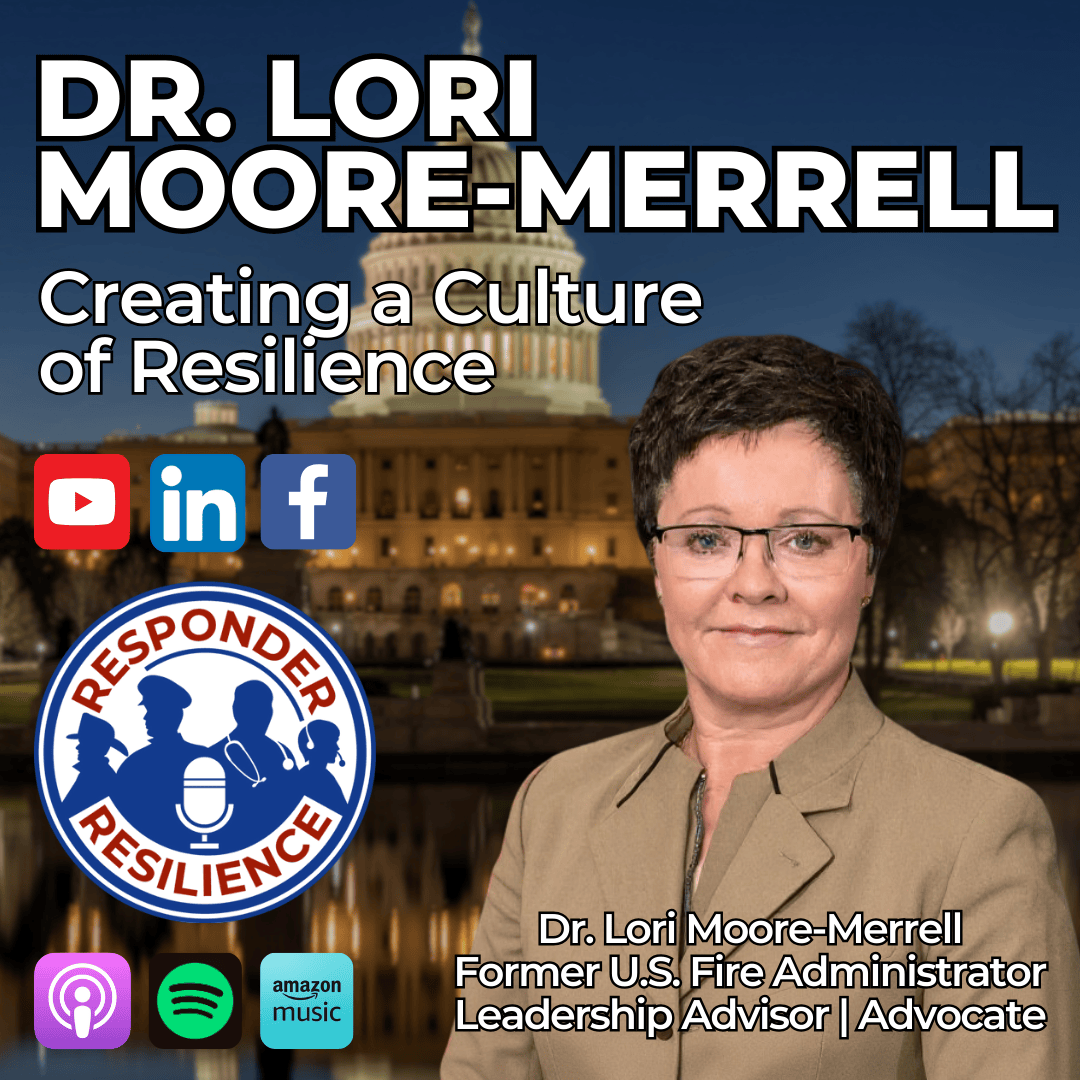
Get ready to embark on the inspiring journey of Dr. Lori Moore-Merrell, the groundbreaking former U.S. Fire Administrator
Get ready to embark on the inspiring journey of Dr. Lori Moore-Merrell, the groundbreaking former U.S. Fire Administrator. Join us as we explore the unique challenges she faced as a woman during her early career as a paramedic, shedding light on the game-changing initiatives she championed at the IAFF that have left a lasting impact on the fire service community.
Dr. Moore-Merrell shares powerful insights on leveraging faith and solid relationships to build mental resilience in the trenches. This episode is packed with raw stories, vital strategies, and a vision to turn crisis into opportunity. This conversation is a must-listen for first responders and mental health pros looking to unlock powerful insights and drive real change.
Coming September 2025!! Helping the Helpers: A Clinician’s Guide to First Responder Mental Wellness, a new book that equips you to build a First Responder-Centered Practice that works. Get a FREE sample Chapter and Book Launch Invite!! Go to helpingthehelpers.me to get Early Access when you sign up!
Thanks to our resource partner, EMS & FIRE PRO EXPO. Join us for the largest gathering of EMS and fire professionals in New England, September 24 - 27, 2025, at the Mohegan Sun in Connecticut! Sign up at https://emspro.org/
Thanks also to our resource partner, FightCamp. Harness the strength of boxing to release stress, build resilience, and connect with a supportive community. For free shipping and a free month of membership, go to https://joinfightcamp.com/shop/ and use the code RRPONE.
Thanks to our resource partner, CRACKYL. Download the FREE CRACKYL App: http://crackyl.respondertv.com
Contact Dr. Lori Moore-Merrell:
LinkedIn: linkedin.com/in/dr-lori-moore-merrell-69a831165
World Fire Congress: https://www.firehero.org/world-fire-congress/
Contact Responder Resilience:
Phone: +1 844-344-6655
Email: info@respondertv.com
Our website with past episodes and more: https://www.respondertv.com/
YouTube: https://www.youtube.com/c/ResponderResilience
LinkedIn: https://www.linkedin.com/company/responder-resilience-podcast/
Instagram: https://www.instagram.com/responder.tv/
Facebook: https://www.facebook.com/responderTV/
My four years as the U.S. Fire Administrator were extremely difficult because I operated very much as a change agent. And being a change agent is not easy. You know change has to take place. It can't be like this. This is not serving the fire service as it's supposed to. The boots on the ground, I mean the people that do this job every day, that's who matters to me. But in LA, it wasn't about my resilience. It was watching the firefighters in that fight. Thousands of them who did everything they could to stop that disaster and they couldn't. If you believe it deeply enough that you are willing to fight every day, even though you keep getting knocked down and get no's, not taking the no is key.
VoiceoverThanks to our resource partner, EMS and Fire Pro Expo, the largest gathering of EMS and fire professionals in New England, September 24th through 27, 2025, at the Mohegan Sun in Connecticut. Sign up at EMSPro.org. There's a new app built by firefighters for firefighters, and it's called Crackle. Download the app now for free as a legacy member and get early access to exclusive content, tools, and updates as they drop. Get the free app at crackle.responderTV.com. This episode is made possible by the First Responder Center for Excellence. Discover more at FirstresponderCenter.org and connect with us on X, Facebook, LinkedIn, Instagram, and YouTube.
SPEAKER_05Remember to like and subscribe, YouTube, Responder Resilience, Facebook, Responder TV, LinkedIn, Apple Podcasts, Spotify. Please go to our website, responderTV.com for past episodes and guest information. We'll be right back to speak with Dr. Lori, FTVS.
SPEAKER_03In this family, more of us die by our own hands and by the hazards of the job.
SPEAKER_08In this family, up to a quarter of 911 telecommunicators have symptoms of post-traumatic stress. In this family, our mental health and wellness are in crisis, while responders are quietly suffering.
SPEAKER_03In this family, many struggle with job-related stress, burnout, injury, sleep disruptions, substance abuse, and relationship problems. In this family, we can help help.
VoiceoverWith vital information and resources, resilience, and success stories of overcoming the obstacles.
SPEAKER_06Welcome to Responder Resilience. We co-host retired Lieutenant David Dashinger, Dr. Stacey Raymond, and Bonnie Rimley, LCSW EMTV.
SPEAKER_05We'd like to welcome Dr. Lori Moore Merrill. She's a distinguished leader in public safety policy development and emergency response innovation. With a career-spanning federal government administration and international non-governmental organizations, she's built a reputation as a transformative change agent in fire service leadership. Her expertise includes strategic planning, big data analysis, community risk assessment, and translating research into actionable policies that enhance public safety operations. Dr. Moore Merrill believes that together we can turn a moment of crisis into an era of opportunity for the fire service and beyond. Dr. Lori, more than welcome to respond to resilience.
SPEAKER_08Thank you so much, David, and thank you for having me for part of this conversation.
SPEAKER_07It's an honor, and I just want to say all the things that you've done are very, very inspiring to us. And so it'll be a pleasurable conversation to have you here to ask about all these things. So thank you.
SPEAKER_08Thank you, Bunny.
SPEAKER_07It's great to be with you guys, and I'm I'm excited about the conversation ahead. And a fellow first responder. So we would love to start with your journey in FIRE and EMS, actually. Um if you could talk a little bit about how you started and it's no secret that you were a female entering a male-dominated career. So really, really curious to get your thoughts on that and what that was like for you in the way beginning.
SPEAKER_08Wow, well, that's a great question. And on coming from another woman, thank you for asking. Uh, because it was at a time when, you know, there were very few of us on the job. And I'm grateful to say that there are so many more today. And and uh, you know, Women in Fire is one of my greatest uh I I love that organization and I just think so highly of them and how they they cut together and and hold each other up. But I uh came on the job in uh 19, uh I don't want to say, uh 87, um, at a time when I was the sixth uh woman who was entering uh the Memphis Fire Department at the time. And um those that had gone before me, um, I had struggled significantly. And uh my my rule was was no less you come on and you have those who are okay with you being there, they want to help you, they want to hold you up and teach you more of a uh, I'll say a father figure kind of thing, uh not to be, you know, disrespectful of their leadership, but it was more of that kind of relationship. And then there are those that are just the the nasty, you know, big brothers who didn't want you there, um, and did everything they could to sort of thwart your success and and put you in situations that they would deem enable and uh untenable. So I I experienced both of those. And uh I'm really, you know, I'm grateful for both because you grow through having people help you and you grow through having this trouble. And so um it wasn't pleasant, but at the end of the day, uh I was able to learn from that and I was able to focus on just doing the job. And so that was what my outcome was. I didn't fight, I didn't file charges, I didn't, you know, wear me a woman uh on my sleeve at the time. It was more, I'm just here to do a good job. I want to be the best at the time. Paramedic, I I did not uh enter the firefighting side. In fact, I was uh part of uh a lawsuit later on with the Fair Labor Standards Act and all of that for deploying EMS and not using us as cross-trained normal role. And so that's a whole other story. But uh being deployed on the EMS side, um, inside a fire department carried its own stigma, and Bonnie are probably well aware of that. But being a woman in that space, uh where, you know, you're often out, not just with a first response career, but with your partner who might not be happy about being deployed with a woman either. And so I had really good partners along the way who, to their credit, saw my ability, not who I was. You know what I mean? And and you know, not being a woman. They saw that I was a good, very good uh paramedic. And so that's what mattered to me is doing the job, gaining the education, gaining a reputation of being good. If, you know, and having somebody, one of your colleagues, say, well, if something happens to me, if I go down, I want her working on me. That's like the highest act, right? And then of course moving over to the IFF. I was on the job for seven years uh in the fire department and then recruited to the International Association of Firefighters where um a whole other uh mill um you know oriented kind of organization at the time and uh had had additional struggles there, but again, you grow from those struggles, you you learn to do the job while you're here, and though it's hard to keep your head down, uh you perform and it people will see what you're bringing to the table. And so that's really I guess in in summary what I experienced and have experienced my entire career.
SPEAKER_07Well, and dare I say going through those challenges is what gives you resilience and fortitude to be able to get to the next level, uh, because not a lot of people are able to also get to the level that you were at with IAF and the government. So it seems to me like those times just further fueled you and propelled you further.
SPEAKER_08Bonnie, I love that because it's spot on. You know, I I look back and uh my years, uh four years uh as the US fire administrator were extremely difficult uh because I operated very much as a change agent. And being a change agent is not not easy. So you can't make everybody happy, but you know change has to take place. It can't be like this. This is not serving the fire service as it's supposed to. And so that's not an easy task. But what prepared me for that and for those fights and just digging in and and uh being, you know, humbling yourself just to go ask for help and even at the highest level, right? What prepared me for that were the struggles that I'd had at the IFF. Honestly, had I not gone through a lot of the struggles that I had there and and just being able to fight through and and gain traction on your message, gain traction on the good you're trying to do, on the changes you're trying to bring to the fire service and to the the boots on the ground, I mean the people that do this job every day, that's who matters to me. And making sure that they have what they need, that they have a good working environment, that they have appropriate benefits, and that they're taken care of is so important. And so, had I not struggled there, I don't think I would have been uh quite as successful as uh the fire administrator without building that resilience. And so, Bonnie, spawn on with what you said.
SPEAKER_02Attention, all first responders. Join us for the largest gathering of EMS and fire professionals in New England. Get ready for the EMS and Fire Pro Expo happening September 24th to 27th, 2025, at the Mohegan Sun in Connecticut. Connect with over 2,500 fellow first responders. Learn from 90 plus world-class speakers, and explore 300 plus continuing education opportunities designed just for you. Dive into hands-on workshops that challenge your skills and elevate your career while enjoying fine dining and entertainment. This is your chance to gain insights that could change lives, yours included. Don't miss out. Register now at emspro.org and be part of this transformational experience. See you there.
SPEAKER_05It's such an amazing uh progression. Um I'm fascinated by the IAF piece because as we all know, um firefighters are a little resistant to change sometimes.
SPEAKER_07And no, never, never, David.
SPEAKER_05Um how how how'd you operate in that um kind of mindset or environment? What um what ways did you find were the most successful to kind of get that change uh accomplished that you were looking to move forward? Wow.
SPEAKER_08Um that's a big question because you're right. I the saying is uh the only thing we hate worse than change is the way things are, right? We all know that. Um, and so change is always a challenge. The tradition of the IFF is not uh greatly different than the tradition of the fire service, right? We live based on what we believe and the camaraderie and the brotherhood, it was always called. Um, so the same operation within the IFF. One of the reasons that I think um I was able to bring change, that I was able to bring forward research, I was able to float new projects that that made a change, whether it was getting in the field for doing cruise size studies or whether it was EMS advancement, uh, whether it was um, you know, health and safety advancement, GIS operations, all of these things that we were able to evolve inside the IFF is out of sheer persistence, drive, determination, um, on and on in something you believe in. If you believe it deeply enough that you are willing to fight every day, even though you keep getting knocked down and get no's, not taking the no is key. And don't have it be personal. Um can it be personal? Yes. But if you get to choose whether or not it's personal, their intent and your perception are two different things. And so getting a no for someone, um, you get to choose whether it was personal or whether it's just a setback, let me keep going. And and I think that's why what helped me through the time is that I didn't take no personal. I'm like, okay, they don't understand what I'm trying to do here. And so I would reason in my own head that it was their lack of understanding. Okay, let me rephrase and let me try again. Let me see if we can branch out, maybe gain a little, bounce it off a few folks around you, whatever the idea might have been, and gain some traction here. See if I can get others to understand. So you bolster your message and then you go back in. And over time, I began to see that if I could get as a woman, and Bonnie, this comes back to the whole woman thing. If I could get a male to agree with what I wanted to do, we would get it through. Now, is that right? No, and is it is it reality? Yes, it is. And so learning that sometimes you have to play within the the arena that you're given, you just have to play in that arena. Don't fight always what it is, because sometimes if you're on a mission, start the mission in spite of what's going on around you and in spite of the attitudes. If I need a mail on board, okay, I'll go get a mail on board to endorse what I'm doing, and then all of a sudden we get it through. What do I care that that's how it happened? Did I get the mission accomplished? Yes. That's what I celebrate. And so these are the kinds of things that I learned along the way.
SPEAKER_07I think it's really great advice for any leader listening on what you just said, and I think it takes an incredibly large amount of confidence to be able to not take those things personally. And we we all know that it's not easy to do that in any profession, but the fact that you were able to put a good boundary for yourself, it's really self-preservation and boundaries. Um, and that's wonderful to hear, and that's also so inspiring for our listeners because I think a lot of people struggle with that part, and that's the wall they bump up against, and then there's the different wall of the constraints of their agency or higher up above them. Um, but this would be a great segue into the next thing that I wanted to ask you about, which is it's really difficult to watch our brothers and sisters of first responder world um in all of the trauma trauma and struggles that they must see in natural and man-made disasters. How have you coped with those things over the years? Because part of being in administrative roles is being entrenched in some of those situations.
SPEAKER_08Yeah. Um, so great question. That is um, that's sort of where our rubber meets the road, isn't it? And the reality of what a job is. And we don't escape that reality. Every day we see things as first responders that we can't unsee. And you go home and you process it, and we may, what if I had done this? What if I'd done something different would have made a different outcome? Um, it's difficult for us to get away from thinking we could have done more because that's that's who we are. We always want to do more. And it's it's hard to let go of that and understand that the circumstances weren't need beyond anything that we could have done. And I'll I'll take you to two examples that are probably more recent, you know, for me. And I'll I'll start with the Lahaina fire. Um, the Lahaina fire that happened in August of 2023 was one of the most devastating things I've ever seen in my entire career. Um I haven't had a lot of uh, you know, just to confess here a bit, I haven't had a lot of struggle with um I'm able to process things. And, you know, God makes us all the way He makes us and and I'm able to process things that I've seen through my career, I think in a healthy way, and understand that I'm never gonna forget them, but I know how to process them in the context. Well, when I got to Lahaina, it was so incredibly overwhelming that my my own processing in my mind failed. I was not able to process what I was seeing uh in the moment. And it's the first time that when I got back from having seen that, and we were boots on the ground 24 hours after the ignition. I mean, this was a short-lived fire, but incredibly devastating. Things were still smoldering. I mean, we're walking through literally the path, they're still gathering um, you know, unfortunately, the the bodies of the uh fatality use in uh and just processing all of this in the moment. And when I got back to my um my hotel room for the evening and I called uh my husband, that's when I understood I was in a safe enough environment that I could let go. And I I lost it. I was crying, I was and I'm like, why is this happening to me? I'm 35 years into a career, and this is the first time I've had that happen. And so this can hit you at any point, I think. It can be early on, it can be 35 years when you finally experience something that's got so completely overwhelming your own capacity to process it in a healthy way. And so that happened to me in Lahaina. And so I spent a good bit of time, you know, talking uh to some folks and and availing myself of those resources that you all talk about, whether it is faith, family, friends, uh, you know, those things that that really hold us um in a in a resilient manner. The other one for me was um the LA fires that we just experienced. And it wasn't for me in this one. That one, uh having gone through Lahaina, I think I built more resilience um and having seen that, and you do over time, you build resilience for next and and uh and you gain that. But in LA, it wasn't about my resilience, it was watching the firefighters in that fight, thousands of them, who did everything they could to stop that disaster, and they couldn't. But the circumstances were so overwhelming. The winds, the fuel load, uh the ignition, I mean, it was just it was unbelievable, and it was an unwinnable fight. And to talk with the firefighters afterwards, who don't want to be in that situation, they're here to fight, they're here to win, they're here to make a difference, right? Give more. And they were in a circumstance that was completely unwinnable, no matter what they brought. And so for me, it was my heart extended to them because I'm thinking, what are they gonna deal with going forward? This is their community that's devastated, and what are they gonna deal with going, well, well, could I I have done more? There was nothing, they could not, and so for me, uh for that one, it's a bit more. Of my uh my my empathy, I suppose, for those who are in that fight, uh, in that moment of unwinnable fight. And I think that's the other side. So I those are the two for me that are most front of mind.
SPEAKER_05Wow, those are such profound examples, and thank you for sharing those. Um we we would love to circle back on some of the things you um just mentioned. We're gonna take a quick break and then we'll be right back to pick up on our conversation.
VoiceoverStand by for an important announcement about our book launch coming September 2025.
SPEAKER_07All units, stand by for a confirmed structure fire with important parts and stream.
VoiceoverIn a world where first responders save lives, this book could help save theirs by preparing you to answer when they call for help. Based on over 200 conversations and the trusted team behind the Responder Resilience podcast, helping the helper gives you the tools to understand their world, speak their language, and earn their trust. This work is challenging, but deeply needed and profoundly rewarding. Their stories don't start with trauma, but too often they end there. Infused with real life experiences, this guide reveals the human behind the badge and equips you to build a first responder-centered practice that works, from understanding their culture to the practical realities of working with first responders and chapters across the spectrum of first responder professions. You'll gain insight into the hidden struggles that shape their reality and the steps you can take to help them heal. When trust is shattered, the stakes are high. This book helps you build it before it's too late. Are you ready to make a difference? Be the resource they can count on. Get early access, including a free sample chapter and book launch invite. Go to helpingthehelpers.me to get your early access when you sign up. Helping the Helpers book launches in September 2025.
SPEAKER_05That's just a trailer for our book that we're launching in September, so we're excited to bring that out to the world. Um, especially as for clinicians, um, there's not enough to go around for first responders really want to support that. Um so super excited.
SPEAKER_08I love that.
SPEAKER_05So, Dr. Lori, um you touched on this, and I I know you've spoken and written about it. Um that's the power of faith and relationships in your life. How have how have these elements played a role in your career, your life, especially in these high stress environments you were describing?
SPEAKER_08Well, um, we could talk forever about those, I suppose. So, yes, I I am a huge believer in the what I call the three Fs. I know at the IFF, we talked about those a lot, and um faith, family, and friends for me is huge. And I'll start with my faith because um I've uh grown up uh in a Southern Baptist church, to be honest, and and uh Christian from you know an early age. And so faith has been a big part of my life um throughout my life, and depending on prayer and um going to you know the scripture to understand life and the things and the the difficulties we're going to experience and how to just depend on uh on God for me and the strength that comes from from Him. And and so that's that's huge for me, and it's a big part of my everyday life. I try to make sure that I um have some quiet um time to reflect and to meditate every day before we start. And there are, you know, in certain parts of the day and the troubles that I've been through through my career where I would stop in the moment and just go, you know, God, I don't know what I'm supposed to do here. Why is this happening? Help me understand, help me to see past. And so prayer for me is uh is a big one. And I believe that um, you know, that's where a lot of my enlightenment uh comes from and just the messages and just this intuitive thought that that comes for you know for me and a passion for other people. Because usually what happens is that it's turned away from me and it's I start to reflect on others. And I think that's a big piece of it, is that in that moment, you know, when we're we're feeling devastated and it's about us or hurting, somehow if we turn and look that we're not alone in that space, uh we're not alone, hurting there are others, and think about what we can do to expand in them, it changes us. It changes the you know, the the hurt that we feel or the pain that we may feel if we can just turn the lens a little bit uh to see other people. So I think that comes from the faith. And and of course, my family has always been great support of what I do. And uh I I have a uh husband who's tremendously supportive, who's from the same field, uh, been uh in the fire service for over 31 years and and uh just grown up and experienced his own, you know, uh traumas along the way, seeing things you can't unsee, all of those things. But just being a strong leader and knowing I have somebody that is a confidant uh who I can say literally anything to, and he'll still love me no matter what. And uh I think that's important. And our our kids are the same. So um I had a strong mother growing up. I don't want to fail to mention I lost my mom about 10 years ago, but growing up, she was that for me. And so I had, and I think Bonnie, coming back to your question about just being a woman in this space, I think my mom prepared me for that. Um I've had some great male mentors, in fact, all my mentors have been male, except for my mother, who really prepared me to be a strong leader and um and understand the mission that's ahead of you and just do a good job uh at every turn. And if you just do the job and perform, then the outcome will will find itself. And so I think those are the kinds of things, Dave, that that I would share in those faces.
SPEAKER_05Thank you so much.
SPEAKER_07Well, I love hearing that your mom was so monumental in your life, and as we know, a lot of first responders didn't get to experience that with either parent or maybe one parent. So hearing that you had that living, breathing example is just incredible. And I'm sure you paved the way for your children to do all the things that they wanted to seek out in their lives by doing that too.
SPEAKER_08Yeah, being supportive and carrying on and into the next generation. I think that's why we have so many in our space, right? Whether it's fire law enforcement uh or NEMS that are legacy. I always ask when I go to speak to a recruit class or uh or do a station visit if you've got young recruits in there. Are you a legacy? How many of you are legacies, right? Because you'll always find them. And I think, Bonnie, what you just said is part of that. We've seen uh go up like parents do this job, and this is what they know, this is what they've been groomed to understand. There's a mission of service, and um, that's it's pretty admirable.
VoiceoverHey, firefighters, let's take a moment to talk about something important. There's a new app built by firefighters for firefighters, and it's not just another wellness tracker or generic resource hub, it's called Crackle. You've probably seen the magazine, but this is the next evolution. The app is about one thing helping firefighters not fail, not just on the job, but in life, in your health, your relationships, your mindset, and your longevity. That's why Crackle is designed to meet firefighters exactly where they are, with resources that make sense, are easy to use, and actually respect your time. You can download the app now for free as a legacy member. That means you get early access to exclusive content tools and updates as they drop. Use the QR code on the screen to download the Crackle app, or you can download it from the App Store or Google Play and stay in the fight, not just at work, but at home and in your own head too. Because your best days shouldn't be behind you, they should be ahead of you.
SPEAKER_07Because you have so many wonderful personal and professional experiences, I wonder if you had some advice for listeners and viewers on different strategies that people could use in leading people from different backgrounds. Because thankfully the fire service and the other first responder branches have become much more diverse over the decades. So, do you have any specific suggestions in that regard?
SPEAKER_08Wow, that is a huge, that's a whole segment on itself, but I just hope I can tell you that um leading people who are not like you is tough. Because as leaders, we all come in with uh a concept that uh, well, everybody should think like like me. And this is where we're gonna do this, and here's what I think we need to do, and here's what how I'm gonna lead us forward, and we get to focus a little bit on the eye with an assumption that everybody's going to just agree and come along. And that's not at all the case. And so, particularly today, because the the diversity uh has been so great. And I want to say diversity just for a second, is we're not always just talking about the diversity of race and ethnicity and gender, right? We're talking about diversity of thought, diversity of generations. And that's one of our greatest right now. It is nothing about race and ethnicity, it's all about generations and the way that the generations are thinking differently. Um, so we have to be aware that diversity in and of itself is a strength and understanding. Um, I think that, you know, leading people who are not like us, what I would say is first of all, realize that there are people in the room that are not like you. Look at the differences in uh the generation, the gender, the race, all of those things, and just assume that they're gonna think differently. I think that's the first thing we need to do. Assume that everybody in here does not think like me. And that means setting aside your own uh ego and taking on a sense of humility. And I try to live by three things humility, hunger, and be the hardest working person in the room. And I think that's the same thing that uh The Rock, I think that's what he proposes, is you know, always be humble, uh be hungry, and be the hardest person, uh hardest working person in the room. And so that was that's one advice. But the other is try to move yourself from judgment, which is our first the thing, the first thing we do. First impression, what are we doing? When we meet someone, what are you doing? You're assessing their physical attributes, the first words out of their mouth, their handshake, you know, anything else that you can see uh around that or hear. So, okay, fine, first impression, but how do we move from first impression for not having that be our overall judgment of an individual, right? So moving from judgment to uh perhaps listening to understand, not to judge. So can we move to understanding? I may not agree with what you're saying, but I'll try to understand it, right? And that's that's different. Understanding does not mean agreement, and so releasing yourself enough to say, okay, I can listen, and there's no threat that because I'm listening, that I somehow perceived to be agreeing. No, listen to understand. And then I think moving on to you know, uh appreciate and respect others who are not like us, so it's almost like a ladder that I've talked about many times in teaching leadership. If you can move on the from the judgment rung on that ladder to an understanding, perhaps to respect and then to appreciate that I can move between okay, I respect you. I really appreciate you and what you bring to the table. So that for me, Bonnie, is is as a leader, maturity takes us up those rungs uh and helps us to understand how to lead people who are not like us and understanding it makes us better. I love working with different generations because not only do they hold me accountable to go learn and continuous learning along the way, but they hold you accountable uh to be inclusive uh of them and their ideas and and it really does make you a better person.
SPEAKER_05Well, that's such such a great uh philosophy and and reframing of um of what we could, you know, look at as uh um things are things are not getting better, you know, with the new generations coming in, but if we reframe it, like what are they bringing to the table? Um what contributions can they make better unique and um exceptional? Um kind of with that in mind, I'd love to segue into talking about uh like I'll call it a meditation that you shared um when I saw you speak in Nashville at the First Responder Center for Excellence uh Suicide and Mental Health Symposium. And I was thinking of it as uh the open seat at the table. Um I'm not sure if that's what it's called, but can you talk about it and perhaps even share it with our listeners?
SPEAKER_08Oh, I'd love to. Um yeah, so at the uh at the conference, I was able to share just as we closed up the conference, just to get everybody thinking of it's it's not always about your resilience, but how can you be a part of someone else's resilience and and really begin to think beyond ourselves? Because as we already said, if we turn and look, there are others, right, who who need me to help them. And I think it changes our own resilience in the moment. So this was a story, it was actually an adaptation from a story that I read uh by Gary Burnson. And if you haven't heard of Gary Bernerson, he's a great uh leadership uh coach, uh career coach. So he will write um a lot of meditations here and there. And so this was one that I adapted for the moment uh with the firefighters and fire service at that conference. And so it really does ask that everybody just close their eyes for a moment.
SPEAKER_05Unless you're driving.
SPEAKER_08Envision. Yes, unless you're driving. Yes, please. Um, and and sitting beside someone you don't trust, which is what we are always doing, right? And so um really just close your eyes for a moment and envision this long table. And at the table are seated people in your life who have had a role. Maybe it's a mentor, maybe it's your your parents, maybe it's a teacher from school, a coach. Who at your table, who has a seat at your table who's made a difference in your life? And if you see these people and you begin to even think and name them, and and they're just filling up your table, and at the end, you know, of your table, there's a there's a couple of empty seats, perhaps. And those seats begin to have you think about who's next, who am I going to encounter that makes a difference in my life? But what I really want you to do in the moment is to think about at whose table can you go fill one of those empty seats? At whose table in whose life do you become one of those people who sit at their table to help them along their path to become the difference maker, for them to perhaps provide something to them that they can never repay, opening a door, giving an advice, just being there to listen, but you fill an empty seat at someone else's table, and that's where I think we've all find our place um to be grateful for those in our lives who are at our table, but look forward to who we can help along our way by sitting and taking an empty seat at their table when they need us the most.
SPEAKER_07That's great, Dr. Lori. Um, what's so interesting is I just did that exercise as you were describing it, and there's almost this internal how many seats do I want to leave empty? And I wonder how many of our responders would feel that. You know?
SPEAKER_08That's yeah. How how many seats? And that goes for for your table or someone else's, right? We want to care and have enough empathy that we want to be that, fill those seats for someone else. But how many seats do I have open and available? Right. Because I need you. Right. Right.
SPEAKER_05It's just a beautiful way to kind of tie together the lineage as you were describing, um, you know, embracing the new generations coming in, mentoring them, helping to shape them so they can shape the fire service uh moving forward. Um so much we'd love to talk about, and just one thing that I wanted to touch on is um some of the work you did uh on a national level with MFERS and upgrading that to the newer system that's uh I think is in place now. Can you talk a little bit about what your goals were, how you accomplished it, and how it's benefiting the fire service?
SPEAKER_08Wow, yeah, thank you for bringing that up. So um, NERIS, the National Emergency Response Information System is our new national data set. Um, it's actually an analytics platform, so it goes far beyond uh a data set as the old uh INFERS or the National Fire Incident Reporting System was. And so for 50 years, this legacy has been around. And so uh we like to think of it, you know, as an old friend, but it's time has come to move on. And so uh it filled its uh its role in the time frame, but no longer is it adequate to really provide us the information we need on the front line. And I think that uh the new MIRIS system has been built by the uh UL Fire Safety Research Institute through a public-private partnership from the U.S. Fire Administration, uh, who still is mandated through legislation in the 1974 Fire Prevention and Control Act to have a national data system. And so MIRIS has be become uh the new national data system or onboarding departments right now, and this this new platform will minimize the data entry from all responders. Now, every responder should cheer right now, right? Because uh the I tell firefighters all the time, you know, medics are pretty good at data because you have to be as the medical, it's the law, right? All the legal implication for fire service data, you know, firefighters have just been, you know, you're the rookie, you go fill in these boxes on this form and uh be careful, don't click that box because it'll open up another window. And it's just a nightmare for data, and they're not very good at it. And so uh they know that I tell them that often. What we've done with the NERO system is minimize that human data entry by leveraging data from multiple sources, fusing that data to really be able to mine it for intelligence. And so we'll have some AI algorithms that'll be able to produce some real intelligence, operational decision making, um, and much, much more along the way. And so it's in a geospatial platform, it is gonna be state of the art and it's dynamic. What means what that means is that not only are we gonna be able to look for the first time at lithium-ion ion battery fires, for example, but if we have, you know, I often say flying saucer fires that happen next year, we're gonna be able to track that too. And so it's dynamic enough that it won't be stale, like our legacy system, uh, which is is going to be closed down uh by December uh this year, latest early of 2026, because we are onboarding. And as soon as departments onboard, they can stop putting data in the old system, be on the new system, and uh and carry on, and as we put the other one to rest very soon.
SPEAKER_05Well, this is some. Who's struggled um as an officer filling out a report of a chimney fire, and there was just no logical way to document it. I applaud you.
SPEAKER_07It's also incredible to think of the use of AI and some of these implications that could really drive where you decide to put efforts and funding into the fire service to make it better and safer for all firefighters.
SPEAKER_08It's incredible. Oh, absolutely. Bonnie spot on because we're going to see things we've not been able to see before. AI finds us, even if we're just looking at some narrow machine learning, uh, you know, even large language models, we're going to find things and patterns that humans would not have seen. And so understanding uh, you know, God forbid another pandemic, but we would see it first because the patterns are gonna be picked up in this new data system. Think about EMS calls and all of them going, okay, we're all responding. There are millions of you know, difficulty breathing calls that are happening right now. What's going on? Right. And so seeing these patterns before uh, you know, we're weeks in and now everybody's exposed. And so I just feel like this is gonna give us some really great power for analytics and intelligence.
SPEAKER_07It's great. I was wondering if there are any other accomplishments or goals that you've really, really set out to see happen that you would love to share with us today.
SPEAKER_08Oh my goodness. Um, yes, yes, yes. So one that I have to tell you about is um, of course, the World Fire Congress. And so I don't know if you all heard much about the World Fire Congress because it was um handled much like a government-to-government congress, not a conference. Uh, though I invited a lot of colleagues from the US to be there, witness it as an observer. At the table, it was set up much like a UN deliberation where every nation that attended, their top fire officials from all the nations were invited, and we had 56 nations to send delegates. And so we had this UN-style meeting um with the top fire officials, and we talked about how fire is an enemy for all of us. Um, it is our great concern, whether it's wildfire structure, fire, firefighter health and safety, uh, emerging technology, all of these things are our challenges that we have in all of our nations. And then we said, all right, are we the ones as the National Fire Service leaders, are we the ones to take this on, these challenges, collaborate and figure out how do we overcome these challenges? And everybody said, yes, we are the ones, right? And so we actually over two days uh had these deliberations. We had our top researchers around the world um come in and talk about each of these challenges. What's the latest science? Where do we need to engage? And then we established communities of practice that are ongoing uh around each of these major challenges, and they meet every month. And you'll have, you know, 35 nations show up on a call to talk about lithium-ion. You'll have 20 nations show up on a call to talk about firefighter health and safety, cancer, mental health. And so it is it's ongoing, it's living, and it is moving toward uh the second World Fire Congress uh in 2026 in London. And so the UK agreed to host the 2026 uh Congress, and then uh the UAE, uh the United Arab Emirates, is going to host in 2028, and so we're looking for a national host in 2030. And so this Congress being uh having the inaugural one, uh, an idea that was I thought was crazy. Uh I went to some of the the national leaders. I said, guys, do you think we can do this? Will you support it if I try to move this forward? And they did, and so the US um was successful in not only having the Congress, but having these nations sign a principle statement that basically says what I said at the beginning, fire is an issue or challenge for us in many fronts, and we are the ones to lead forward. And so it's an exciting, um, exciting opportunity, I think, for our global fire service uh to really come together, share knowledge, um, share information, share um, you know, technology, all of these things that can make us all lift us all up and be better because the fire service is the fire service. Uh no matter what nation you're talking about, you know, we say that often as a firefighter, they're all kind of similar, and that's true. It's true globally. Um firefighters are are similar around the world, and having them all come together was very exciting. So, Bonnie, I would have to say that's the one I would tell you about.
SPEAKER_07Well, I have to give you kudos. That's an incredible thing to listen to, but to be at that table what must have been really special and a culmination of all your career. So great to share that with us. Thank you so much.
SPEAKER_08Thank you. And if you want to see more, if there are uh listeners want to see more, go just Google World Fire Congress, USA, and you should be able to find the website. You can read the proceedings report, you can see the nations who are at the table and experience uh just some of the emotion, uh, just through the pictures that that we experience with all of these nations coming together. So I invite you to visit that.
SPEAKER_05I really salute you for um the evolution of your body of work and building on it and taking it to a global level like that. Um it's gotta be super exciting. So thank you so much for sharing that with us today.
SPEAKER_08My pleasure, thank you.
SPEAKER_05Bonnie, any final thoughts?
SPEAKER_07Dr. Lori, I think your story, I I would love to hear a lot more to be honest with you, but your story is so inspiring and your attitude and your go get it motivation. I I can feel it coming through the screen, and it's phenomenal. And so I know you're gonna do even more in your career, and I hope that this inspires some of our listeners and viewers to go get it for themselves too.
SPEAKER_08Oh, Bonnie, thank you so much. And I'm so grateful for what you all are doing for your mission. And uh, it is exciting, and I love uh seeing people rise up and really drawing others in because you want to make a difference for them, and I think that's where we all should live. That's our service attitude. We want to do it in our communities, but we have to remember to lift up each other as well. And so thank you for what you're doing and for having me be a small part of it today. Thank you.
unknownThank you.
SPEAKER_05We appreciate you and all the uh positive change you're bringing to the profession and to the world and for spending your time uh having this conversation with us. So thank you. Um it's it's an honor.
SPEAKER_08It's been my great honor as well. Thank you.
SPEAKER_05Remember to like and subscribe. YouTube, Responder Resilience, Facebook, Responder TV. We're on LinkedIn, Apple Podcasts, and Spotify. And go to our website, respondertv.com for past episodes and guest information. Till the next time, stay safe. Be kind to yourself. Take care.
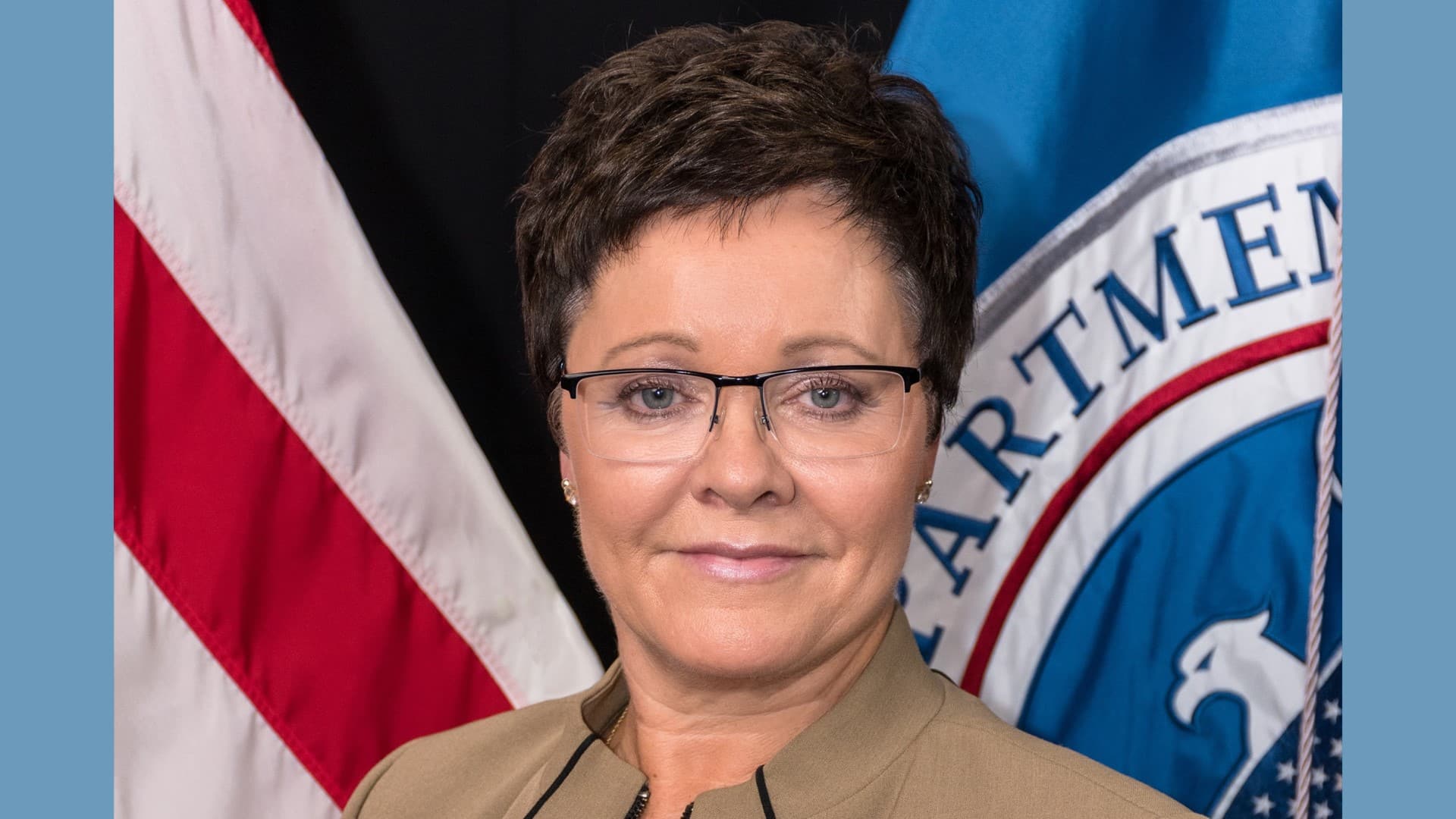
Former US Fire Administrator | Senior Executive IAFF | Visionary, Creator, and Chair of the Inaugural World Fire Congress
Dr. Lori Moore-Merrell is a distinguished leader in public safety, policy development, and emergency response innovation. With a career spanning federal government administration and international non-governmental organizations, she has built a reputation as a transformative change agent in fire service leadership. Her expertise includes strategic planning, big data analysis, community risk assessment, and translating research into actionable policies that enhance public safety operations.
Dr. Moore-Merrell has worked at the highest levels of government, engaging with White House staff, cabinet officials, and industry leaders to drive advancements in firefighter health, wellness, and operational efficiency. She has led large, diverse teams, developed subject matter experts, and fostered international partnerships to shape policy and best practices. She continues to work to improve first responders' safety and well-being and equip firefighters with the resources and knowledge needed to thrive both on and off the job. Dr. Moore-Merrell believes that together, we can turn a moment of crisis into an era of opportunity for the fire service and beyond.