Apple Podcasts
 Spotify
 YouTube
 RSS Feed
 The Truth About American Fire Culture — Dr. Burton Clark, Fire Service Educator | S6 E26
In this episode of Responder Resilience, Dr. Clark gets into the culture behind the casualty. Why America emphasizes suppression over prevention while other countries do the opposite — and why that choice shows up in the death toll.
The United States has one of the highest fire death rates in the industrialized world. Not because the firefighters aren't good enough. Not because the apparatus isn't fast enough. Because of culture.
Dr. Burton Clark has been saying that since 1970. He became a volunteer firefighter that year, a career firefighter two years later, and spent the next fifty-five years working at every level of the fire service — from neighborhood firehouses to the National Fire Academy to the halls of Johns Hopkins University. He has studied more firefighter fatalities than most people have had shifts. And the conclusion he keeps reaching is the same one nobody wants to write in the after-action report.
Something went wrong. It always does. And most of the time, it didn't have to.
In this episode of Responder Resilience, Dr. Clark gets into the culture behind the casualty. Why America emphasizes suppression over prevention while other countries do the opposite — and why that choice shows up in the death toll. Why fire deaths are still treated as inevitable when the data says they aren't. What the social, political, economic, and technological forces shaping fire culture actually look like from the inside. And what it's going to take — at the company level, the chief level, and the community level — for anything to actually change.
This is not a comfortable episode. It's not supposed to be.
If you wear a badge, lead a department, or care about bringing every firefighter home — this conversation is for you
**Resources for Responder Wellness:**
• Book: Helping the Helpers https://a.co/d/dm0VS4Q
• Free App: CRACKYL http://crackyl.respondertv.com
• Fitness: FightCamp (code RR10 for 10% off) http://joinfightcamp.com/rr
Contact Dr. Clark:
americanfireculture.com
Contact Responder Resilience:
Phone: +1 844-344-6655
Email: info@respondertv.com
Our website with past episodes and more: https://www.respondertv.com/
YouTube: https://www.youtube.com/c/ResponderResilience
LinkedIn: https://www.linkedin.com/company/responder-resilience-podcast/
Instagram: https://www.instagram.com/responder.tv/
00:00 - Why Fire Death Is Not Fate
02:08 - Meet Dr. Burton Clark And His Mission
04:25 - From Lifeguard Rules To Firehouse Myths
10:38 - Behavior Beats Culture And Hazmat Proves It
13:24 - The Six Genes Driving Firefighter Risk
18:40 - Why Firefighters Are Not Cops
22:36 - Suicide Benefits And The Missing Autopsy
31:24 - A Fire Safe America And Automatic Protection
39:10 - What To Do Tomorrow Morning
Why Fire Death Is Not Fate
SPEAKER_02
When it comes to firefighter, no one is trying to kill us. It's chemistry and physics. There's no bad guy on the other side of the coin. We started calling every firefighter occupational fatality a line of duty death. Am I special because I die doing my job? I don't think so. And no job performance criteria that say you are expected to die doing this job. You don't change culture, you change behavior. Society needs to change how it thinks and feels about fire death. When a civilian dies, it's not an act of God. And when a firefighter dies, it's not part of the job. Something went wrong.
Voiceover
Welcome to Respond Resilience, along with Dr. Stacy Raymond. I'm David Dashinger. Most people in the fire service understand the job, the calls, the culture, the brotherhood-sisterhood, the cost. But what fewer people understand is the system that produced all of it, and why that system keeps generating the same preventable outcomes decade after decade. Dr. Burton Clark has been asking that question since 1970. So today we're going to get into the culture that makes that truth so hard to act on. From the firehouse to the state house, from the social to the political to the psychological. This episode is brought to you by Fight Camp, real training on your schedule. Head to jointfightcamp.com slash RR and use code RR10 for 10% off. This episode is brought to you by the First Responder Center for Excellence. Because even the best of us face unexpected challenges. They've got the tools, the training, and the resources to keep you strong, safe, and resilient. Equip yourself at FirstresponderCenter.org. We invite you to like and subscribe, YouTube Responder Resilience, Facebook Responder TV, or on LinkedIn, Apple Podcasts, and Spotify, and our website is respondertv.com. We'll be right back to speak with Dr. Clark after this. Ask a first responder who they are, and you're likely to hear I am a police officer. I am a firefighter. I am a perfect.
Meet Dr. Burton Clark And His Mission
Voiceover
I am a 911 communications operator. I do this work. I do this job. Ask a clinician why they work with first responders. And they may say, There's no fire respondents. Join us in shaping a culture where mental health, wellness, and leadership are prioritized. Not waste. Support is the kind of strength, and where no one has to carry the weight alone. Welcome to Responder Resilience. We shine the spotlight on the unseen battles of first responder reality. And celebrate the powerful wins that come from the grit of post-traumatic growth. We understand the culture, honor the trust, and bring you conversations from the change makers, passionate about helping first responders come home whole. With your hosts, retired Lieutenant David Dashinger, Dr. Stacy Raymond, and Bonnie Roomley, LCSW EMT. On this episode, our guest is Dr. Burton A. Clark, EFO, who's dedicated 55 years to the fire service working at the local, county, state, national, and international levels. He served as a firefighter in Washington, D.C., Assistant Fire Chief in Laurel, Maryland, Operations Section Chief for DHS FEMA during national disasters, and management science chair at the National Fire Academy. Dr. Clark has published more than 200 articles, lectured around the world, served on 20 doctoral dissertation committees, and is the co-author of the Firemanship Merit Badge book for the Boy Scouts of America. He's the author of two books, I Can't Save You But I'll Die Trying, and I Can't Save You and Don't Want to Die Trying. We'll get into the distinction there. In 2021, he was inducted into the National Fire Heritage Center's Hall of Legends. 2025, he was named one of the 20 influencers by Fire Safety Journal Americas. Dr. Clark, welcome to Respond to Resilience.
SPEAKER_02
I'm delighted and happy to be here. What a great opportunity. Thanks, Dave.
SPEAKER_08
So, Dr. Clark, uh, you've been in the fire service since 1970. That is a long time. So I'm very impressed. How do you see uh the American fire culture today compared to when um
From Lifeguard Rules To Firehouse Myths
SPEAKER_08
you began? Like where was it and where is it going now?
SPEAKER_02
Well, we are light years away from where we were in 1970. You gotta realize in 1970, we rode on a back step of a fire truck. There was there was no NOMEX, there was uh no uh smoke alarms for the home, there were no women in the fire service. So it was a totally different place than we are now. And that's that's the normal, natural process of change. Everybody has to go through every all human existence goes through that change. Um, my dad was actually a firefighter in the army, in the military, along with being a demolition expert, a cook, and a police officer. Uh, and he was at Pearl Harbor when it was attacked. Wow. So he had a fire service experience from 1941, but that's a different time than when I was in. So that always happens. So we're always evolving and changing. So the question is you know, where does that change come from? What happens to it? And not only was I living being a firefighter, but I brought with me into the fire service another whole set of cultural norms. I started out very young in the YMCA system in our learn to swim program. Mom took me there when I was a little kid and um couldn't swim, but I had an advantage in that I was the tallest kid in my class, and the kids that came after me were even shorter. So the instructors asked me if I would stay over. See, I could stand up in a deep end, in a shallow end, and my head was out of the water. So the kids that came after were even shorter than I was. So they asked me to stay over and help hold up the lower kids so they wouldn't drown. To me, I was just playing, I was having a great time. But that started to shape what I saw about water safety, and I went through the entire water safety program, becoming a lifeguard and an aquatic instructor at a very early age. So not only did I learn the technical stuff, but in a water safety environment, the lifeguard particularly is taught not to exchange their life for the person they're trying to save. You're taught to actually let the person you're trying to save to go unconscious and then pull them in. Because they will try to drown the save the rescuer. And we don't want the rescuers to drown. There's no national monument to lifeguards that drowned. Because lifeguards are not supposed to drown. It's not part of being a lifeguard. Something went wrong when the lifeguard drowns. So I was brainwashed with that, and I taught that for years. Then when I got into the fire service, the fire service about firefighter injury and death was almost the exact opposite. When a firefighter was injured or killed, it was seen as heroic. Something that made us special. Well, to be a school teacher, you had to have a degree and a license. But to be a firefighter or police officer, you only needed a high school diploma. And that's when I realized, oh, they are paying me this amount of money because they expect me to die doing my job. Or risk my life doing my job. My life was always worth more than my paycheck. Because I was taught that as a lifeguard. So when I came into the fire service as a volunteer, as a career, I was always out of the norm. Um, I can remember vividly when they were teaching, when I became a driver, they said I didn't drive the fire truck fast enough. I had officers hit me saying, drive faster, drive safer, we're gonna get beat in. I'd say, no. The rule and regulation says I can do this. You can't make me violate this rule and regulation. I am not driving faster. That just increases our risk for no reason. But they knew I was right, they couldn't, they couldn't get rid of me because I was following the rules and regulations. So from the beginning, that made me an outlier. And what I observed it was when when anybody whenever anybody was injured or hurt, was because they weren't following their rules and regulations, they were justifying doing something incorrect because they thought it was right, even though it wasn't policy. It wasn't policy, right? Right. So that would that I didn't do that. I uh so because the YMCA and the water safety didn't allow that. Right. I remember we wouldn't let kids run around the pool. We'd make them stop, even though kids wanted to run. But running could cause problems and injuries. So so very early on, we wouldn't let them in the in the ship in the deep end. If they couldn't prove they could swim, they couldn't go in a deep end.
Voiceover
Most people work out to look better. You work out because lives depend on it. But the stress doesn't clock out when you do. The calls follow you home, and most workouts weren't built for any of that. Boxing was. Bike camp builds endurance, reaction time, and real-world movement, and tracks every strike so you see progress, not guests at it. Real training in your home on your schedule. You don't just finish workouts, you get better. Head to fightcamp.com slash RR. Use code RR10 for 10% off. Bike Camp, real training on your schedule.
Behavior Beats Culture And Hazmat Proves It
SPEAKER_08
So, Dr. Clark, you being the a rule follower, um, did you see within the fire service um that that improved?
SPEAKER_02
It has. It's gotten much better. It's got it, it's gotten a lot better because we and uh interesting enough, I I was at a at a at a conference with uh former uh fire chief uh uh Alan Brun City one time, and we were standing outside a hotel, and um I said, Chief, you know, how how are we going to get the fire service to change its belief about firefighter fatalities? And I said, Well, Bert, we've already started doing it because it's not heroic to die at a hazmat incident anymore. So we have changed our behavior at hazmat incidents. Nobody rushes in when they see the placard methyl ethyl bad stuff. Right? Because that is not a heroic act. We stand back, we deny entry, surround, call in the hazmat team, and that's okay. So we know how to do things if we choose to do it the right way. But there has to be that that philosophical, psychological, and cultural shift. We do it a lot when it comes to social issues. For example, if if you touch another firefighter inappropriately, they could fire you on the first offense, but you can violate safety rules all day long and nothing happened to you. So why do we understand one violation is unacceptable and yet we allow the other violation? Now, society also understands this. There was a case, uh it was a volunteer fire department, a gay couple moved in next door to the firehouse, and some of the firefighters always harassed this gay couple. Well, finally they had enough and they sued. The fire department had to pay four four point four million dollars in settlement to this gay couple because society says you cannot you know harass gay people, but society has not forced the fire service to put our seatbelt on yet. Right? So, so that's how it's a it's a it's a philosophical, psychological, and cultural issue in almost anything we think about.
Voiceover
Right. And so, yeah, you bring up a great point because some ways the fire service has made huge strides in terms of safety and you know, wellness and all that, but the seatbelt uh example, like why are we so good at changing some things and not good at changing others? What's the where's the difference?
SPEAKER_02
Well,
The Six Genes Driving Firefighter Risk
SPEAKER_02
and and it in my work, I try to answer that question too. So I I base my culture work on Dr. Edgar Schein at an MIT. And Schein talks about when you go into an organization, number one, Sine says you don't change culture, you change behavior. Because culture is this abstract kind of thing. It's it's like it's between your ears and your heart, you know, in the ether. But you can see how all those things impact people's behavior. Behavior is observable. So Schein says organizations have three levels of culture. You talk about the artifacts, those are things you can see and touch. In the fire service, you know, we we have a fire truck. Uh we we it used to be pulled by hand, then it was pulled by horses, now it's pulled by steam and now it's pulled by motorized apparatus. Um so we have that. Then there's the espoused beliefs, those are the things we write down as why we exist and why we do things. That's why we have personal protective equipment. When I first started, our personal protective equipment was a duck coat and a metal helmet and rubber boots. Well, as technology got better, our our gear got better, right? But that doesn't mean we actually use it, so there has to be that other thing, but then shines, those are the easy things in an organization. The hard stuff, he says, are the underlying driving forces. He refers to this as the DNA of an organization, and DNA is made up of genes, and the genes are what tell the entity how it's supposed to behave. So so that's when I tried to figure out okay, what's the underlying genes that drive firefighter behavior and a larger fire culture? And I came up with six genes. And and Shine says these these this DNA is passed down generation after generation after generation. So in my thinking, I went back to Ben Franklin and I said, okay, what was driving Ben Franklin's behavior at that very specific level, that still transitions into today. And I came up with these six genes fast, close, wet, risk, injury, and death. Those six genes account for all of our behavior. Now, most of the time, that behavior is good. Smoke smoke alarms are a perfect example of how society has reduced reduced death from in home fires because we've discovered smoke alarms and got them in people's houses. I was part of that process to get smoke alarms into people's houses. That's great. Um the fact that we haven't closed cabs today as opposed to riding on the back step, that's that's great too. Okay. But at the same time, in that in that period, we started calling every firefighter occupational fatality a line of duty death. So if something's a line of duty death, to me, that says it's part of the job. Industries call them occupational fatalities, right? Because occupational fatality is always 51% the responsibility of the employer, and they are preventable. Because as the employer, I control your behavior. If you die, I did not control you properly. That's a that's a fundamental different construct.
SPEAKER_08
Right now that bumps up against the DNA of the firefighter, right? Because what you described, those six factors seem to be heroic factors, they seem to be warrior-like factors, and so you know, uh it's a different breed you're you're dealing with, you know, with a firefighter.
SPEAKER_02
So and you're right on, doc. I mean, that was my most recent aha moment. Because firefighter, police officer, and soldiers are all three lumped together. Because society said if these people die, they are trying to protect us.
SPEAKER_08
Yeah.
SPEAKER_02
Right.
SPEAKER_08
There's something noble in it. Just but the problem going back to the medieval times. I know. But the problem is that's a fundamental flaw. Right. If you want to see this as a profession, right?
SPEAKER_02
No, not no, I'm not saying that two aren't professions. If if I'm a if I'm a soldier, there is another human being trying to kill the soldier and trying to kill the family members back home. If I'm a police officer, there's a bad person trying to kill the police officer, and
Why Firefighters Are Not Cops
SPEAKER_02
another bad person trying to steal or kill my family members. When it comes to firefighter, no one is trying to kill us. It's chemistry and physics. There's no bad guy on the other side of the coin. Cops and soldiers are a difference in degree when it comes to lethality. Right. Soldiers can kill lots of people. Cops only can kill six, whatever how many bullets they got, right? But firefighters don't kill anybody.
SPEAKER_08
Right, but they save people, and that that's where they can get into trouble if they go in ill-equipped.
SPEAKER_02
It's not saving people from a bad person. Right. It's saving people from chemistry and physics that is created by the culture. Right? Only two states in Washington, D.C. have passed mandatory residential sprinkler ordinances for new construction. The rest of the states have ignored it and not done it. Right. And we know that people are safer in buildings that have sprinklers in them. Sure. Right. Firefighters are safer in buildings that have sprinklers in them. Absolutely, yeah. Those same state legislatures, they will give the fire service presumptive heart and lung bills. If they die of a heart attack or if they die of cancer, we'll pay for their funeral in their services. That's after the fact. Why won't they do stuff to keep it from happening in the first place? Like sprinkler systems. Yeah, that's a good point. You know, that's that's where that fundamental disconnect between police, soldiers, and firefighters exists.
Voiceover
You're trained to help people heal, but first responders, they carry trauma that's buried under silence, stigma, and stress. Helping the helpers gives you the framework to connect, to speak their language, earn their trust, and actually make an impact. From the experienced team and clinicians behind the Responder Resilience podcast, this isn't theory. It's real-world support for the ones who need you most. And this book isn't just for clinicians. If you're an agency leader, peer support team, chaplain, EAP, wellness program coordinator, or family member, helping the helpers will equip you with the tools, language, and insight to make a difference. Be the resource they can count on. Order your copy of Helping the Helpers on Amazon today.
SPEAKER_02
So one of my my my most recent essay in air, it says we're not cops and we're not soldiers. We have to get rid of that notion. Uh, I said one of the first times I said that, it was it was it was the old days, and Twitter just came out and I said, When we when we compare a firefighter death to a soldier's death, we are insulting the soldier. That got cool. That got cool. That was my first quote ever tweeted. But I believe that because a firefighter death is not like a soldier's death. We may want to think it is, but it's not. Okay. It is it's a difference in kind, not a difference in degree. It's a difference in kind. So that's that's how that's how easily it's being lulled into this dysfunctional thinking on almost anything the fire service does because we we're comparing ourselves to somebody else, and that's a that's not a fair comparison, because we're not like that. It's a different, it's a different kind of thing. And then and then just
Suicide Benefits And The Missing Autopsy
SPEAKER_02
recently they declared firefighter suicide as eligible for lie to duty death benefits. And the reason they did that is because when June, when uh January 6th happened, and the police officer died from suicide after that, the police group ran to Congress and said, We want this person's death classified as a lot of duty death so they get death benefits. And the fire meter said we want that too. So they made it retroactive. But they never went to the fire, they never went to the psychiatric, the American Psychiat Psychiatric Association or the American Psychology Association to ask if that would if that was potentially uh a dangerous decision to increase the number of actual suicides. So elected officials, they'll give you money all the time when you die. But are willing to change the system so you don't die? Because that usually type that only takes more money. That takes more rules and regulations.
SPEAKER_08
So as you pointed out in the fire service has advanced uh with regard to physical safety. So, you know, there still is an issue with with suicide and uh post-traumatic stress. So what are your what are your thoughts on that and how to how to remedy that?
SPEAKER_02
Well, you have to realize I am not a psychologist, I don't study that direction. So I have I have no professional knowledge about that, but this is my observation. So one of the things I learned about is that in the field of psychology and and psychiatry, there's such a thing as a psychological autopsy. And that's where they actually go in and do a post-mortem on to look at this person's life, yes, as to see if there's any indicators as to what the issues were leading to that. Yes. Now, I can't find anybody in the fire service doing that. Yeah, they do it in police, and they do it in the military, but we don't do it in fire, yeah. So until until we make the decision that we are going to use these tools on us specifically, we're just guessing. Sure. Now it's it's professional guessing and it's the best we've got, but it's guessing. Uh for example, uh, you you can help me out here, doctor. In in the penal system, when a person is in jail, many states have a requirement that if a that if an inmate can but dies by suicide, they have to do that by law, they are required to do a psychological autopsy. Because as an inmate, the state is in control of your behavior. Sure. So the state is responsible, at least to some level, of you commit dying by suicide from suicide. And and so we're we're not even we're not even getting opening the the the onion a little bit to really get down to what the real causal factors are. Um we're and this this is going to sound terrible. And I, you know, I I hate, I I even hate myself when I say this. But when when and I wrote this in my first article I ever wrote, when the fire service says firefighting is the most hazardous occupation, are we complaining or are we bragging? That goes to that philosophical, psychological, and cultural underpinning. Am I special because I die doing my job? I I I don't think so. That's no in no in no job performance criteria to say you are expected to die doing this job. That's that's something that society has accepted because they feel bad when one of their members passes away.
SPEAKER_08
And we I wonder, I wonder if there's, you know, I don't want to get off too in too much into the weeds, but um, you know, there is within the Bible, it says, uh, and I it's not, you know, this is a paraphrase, but there's no greater sacrifice than than to give that's it, lay down his life for his fellow man. And I won, I wonder if that's in the back of the minds of of um, you know, people that sign up for the military or fire police.
SPEAKER_02
Um absolutely. And at every fireman's funeral, they refer to that in the in the ceremony. But does that make it right? That's what I question. Okay. Especially when you look at the actual conditions where that firefighter died.
SPEAKER_08
Right. Like if if there weren't sprinklers, if there were not um smoke detectors, if the he went in without, you know, all of the uh he or she went in without all of the equipment that they needed. Sure.
SPEAKER_02
You know, they weren't they weren't following their own rules and regulations. If they went to the call without their seatbelt on, the dominoes are already falling over. That that to me, that doesn't seem very heroic.
SPEAKER_08
And so it doesn't seem very you know psychological you know rationale behind that.
SPEAKER_02
Oh yes, right. We we put that into people's heads, right? The firefighter wears their seatbelt going to work. The firefighter would never let their kids be in their car without their without their uh seat on, right? But at the same time, so what happens when they cross onto that fire floor where the bells go off in the firehouse? What where where does that that psychological, philosophical, and cultural disconnect take place that I think is a fundamental challenge? Even in the military, in the military, there's different levels of dead. There's KIA killed, KIA killed in action. On the list, there's a dagger with a with a uh line through it making a heart. That means that the that the soldier died on the battlefield. If if the soldier made it back to a mass unit, they died of wounds. Right? If it's an accident, like he was driving his Humvee and lost control and they rolled over and they were ejected, that's not a that's that's not a line of that's a that's accidental fatality. We don't do that. We we claim everybody that dies somehow somehow connected with the fire service is this line of duty death. What what what what message are we trying to send? Are we trying to and then what we did we after the civil war, that's when a lot of the fire service became career. So for the first time, all these um men knew about pomp and circumstance in the military, and they had the the the parades, you know, the moral thing, and we just transferred that into the fire service. But it's it's not the same, you know. Just because we do it doesn't mean it's right or the same. There's some rationale behind it, and uh I've questioned that since day one. And you know, I I could be completely wrong, but that's how I see things, and we need to get more people asking why do we do it this way? Why is it especially if we want a different outcome?
SPEAKER_01
To survive the career with a sense of longevity, that you don't crawl across the finish line, that you sprint across, you gotta know what you stand for.
SPEAKER_00
Knowing that we have additional objectives, that means we have to take on the responsibility of making ourselves more resilient.
SPEAKER_04
Exposed to gamma radiation, and now you have the super ability because of that all you've experienced.
SPEAKER_05
Before you became a firefighter paramedic in EMT, whatever it is, you were human. Startup was human, that you would gotta take care of, and then we can take care of other people.
A Fire Safe America And Automatic Protection
Voiceover
I'd like to tie all that into your books because um you as we were discussing offline, you started with one book with a title that was I Can't Save You But I'll Die Trying. And then this this was the first book. Okay, and then five years later, I'll die trying.
SPEAKER_02
You changed the title. And you know, as much as I love the fire service, I feel sorry for everybody that's that's name is on there. But when I was at the fire academy, uh one of the things I did, I created the national fall, uh created the national fire academy executive fire officer outstanding research award wall, which was in J building. Because we gave an award to ever to the best research projects. Put your picture and your title on here, and I created that monument or that that that that that plaque, that thing, to counteract this. What what does the fire service hold up as its highest level of achievement or goal? You know, I I I don't think it should I and I I I feel bad when I said it shouldn't be dying on the job. Something went wrong when we died. So when I redid the book, I finally got enough courage to retitle the book, I can't save you and I don't want to die trying. And I put a picture of the Jimmy Carter Memorial Rock that created the Fire Academy back in 1978, I think. Because the the purpose of this rock was to memorialize the purpose of the fire academy, which was to increase the professionalism of the fire service and others engaged in fire prevention control activity. That's what we should be striving for. Nobody ever visits this rock. They visit the National Memorial and they visit the 9-11 Memorial, both very emotional, but is and moments in time, but that's not what we're trying to achieve. We're trying to do better. We're trying not to have firefighters die, we're trying not to have civilians die. It's a mindset. So, Dr.
SPEAKER_08
Clark, what what would you uh how would you describe a truly fire-safe America and also for the firefighters? Like what needs to change?
SPEAKER_02
Well, that's where it comes down to that cultural stuff. On on the back of my book, because if you're ever ever write a book, your your publisher will say you have to get the whole essence of your book down to one paragraph. So basically, the back the cover says society needs to change how it thinks and feels about fire death. When a civilian dies, it's not an act of God. And when a firefighter dies, it's not part of the job. Something went wrong. Even to this day, if if there's a home fire and somebody dies in it, if the community comes to support them, they feel bad. But come to find out, mom and dad didn't make sure the smoke alarms were working. The fire department never came and knocked on the door to make sure they had working smoke alarms. That's a fundamental flaw in our system. You know, we it's it's we're not allowed just to feel bad if we don't do anything up front to fix it from happening, especially when we know how to do it.
unknown
Right.
SPEAKER_02
Right? So that's how we change. And we change that from the top to the bottom. Uh another one, I I wrote a paper, and it's it goes back to that that philosophical, that cultural piece. Um, lithium ion batteries are our big problem today. Well, lithium ion batteries, the the technology for that was started in the night early 1970s, but it kept catching fire and they couldn't figure out how to solve it. Well, in 20 in 2019, they gave the two guys that figured it out the Nobel Prize for Chemistry, because they figured out how to make lithium-ion batteries, which we have today. But still, they they were still fire dangerous, but they get they got made, they got put into society, and the fallback position is when it fails, we can always call the fire department. And that's exactly what we've done. Right? The only two people at risk of lithium-ion batteries are the occupants that live there around it and the firefighters. Everything in society is that way. From high-rise buildings to nightclub fires, the people that create the problem aren't there when it catches fire. It's the occupants and the firefighters. So, so what motivation do the people that create the hazard have in making it safer? Almost none. It's us pulling teeth to get them to change anything. And and the fire service has not come out. If if every fire chief were to go on TV tonight and say, look, if your home does not have working smoke alarms, we can't save you. Don't rely on us to come save you. We'll do everything we can, but people die in fires across the street from the firehouse. But your home can be untenable in three minutes. In the middle of the night, nobody knows you got a fire. We're not mind readers. Then if the community doesn't have sprinklers in them, large parts of the community can burn down because we don't have enough water, we don't have enough firefighters to keep the whole block from burning down most of the time. Right? So the fire service is not willing to say those kinds of things, but that's more real than anything. So, and again, that's so we're all in this together. Basically, we're stuck on this manual fire protection model. That when there's an unwanted fire, somebody has to get on something and go to where the fire is and mitigate it. Well, we know that that doesn't work. We need to we need to have an automatic fire protection model. That when something bad happens, an automatic system notifies, an automatic system notifies people to get out, an automatic system activates to keep the fire from happening, to suppress the fire, we come up there and mop it up. That's much more reality than anything on people on fire trucks will ever be able to do. And and no one is willing to have those conversations.
SPEAKER_08
Yeah, because it's just so expensive, probably.
SPEAKER_02
Well, uh even that even I question that because look at the let look at the devastating cost of the LA fires. How are they ever going to recover from that? And and and cost, there's a difference between cost and profit. The insurance companies aren't writing fire insurance policies in some places in California because they can't make any profit. Profit, you know, profit drives the fire problem. We need to say, look, you need to have a built-in fire protection model here because my life is worth more than your profit. The life of the occupants is worth more than your profit. That's that's that's a difficult conversation to have. Sure. But it's it's at that philosophical, psychological, and cultural level, and and our leadership isn't willing to have those conversations
What To Do Tomorrow Morning
SPEAKER_02
yet.
Voiceover
With all you've just said, what is one thing you'd like a firefighter listening to take away about the culture that they're in, the risks that we were talking about, and the change that's possible?
SPEAKER_02
Put your seatbelt on. I mean, I I hate to bring all this heavy duty stuff down to the basics, but at the individual firefighter level, they make those philosophical, psychological, and cultural decisions every day. Put your gloves on, wear your SCBA doing overhaul, especially when your fellow firefighters around you aren't doing it. That takes courage. If you're the only one in a fire truck that puts their seatbelt on, you are going to be harassed. You need to have lots of courage to do that, but it may change everybody else on a fire truck. When when you send your kids to the neighbor's house to sleep over, check to make sure they've got working smoke detectors next door. If you got grandkids, check to make sure their smoke detectors are working, or check to make sure your grandkids, when they sleep over somebody else's house's smoke alarms are working.
SPEAKER_08
Right.
SPEAKER_02
Right? Every fire chief, when they when they go to the fire and the newspaper says, or newspaper says, Chief, how fast did the fire propagators? Well, that's not the important part. The important part is that these people had working smoke detectors and they got out of the house. How fast we got here was less important than their working smoke alarms. That doesn't cost money. That's that's that's that's under that's the fire chief understanding that what a firefighter can do is only limited to what happens before they get there.
unknown
Right.
SPEAKER_02
And and the message they send from that. And and again, but that's not very heroic saying, yeah, these people these people save themselves because they got work and smoke alarms.
unknown
Right.
Voiceover
Yeah. Well, as we wrap up, um, where can people find your books? Find you, any links you want to share?
SPEAKER_02
It's on Amazon, I'm on LinkedIn. Just type in Dr. Burton Clark, I find it, I show up everywhere.
unknown
Okay.
Voiceover
Stacy, what uh what final thoughts do you have?
SPEAKER_08
Well, uh, Dr. Clark, uh, thank you for having the courage to bring up these topics and talk about things that, you know, I'm sure, you know, can be very controversial, you know. Um it it takes a lot of uh courage to think them through and to be able to back them up. So I appreciate you giving your vantage point on our show.
SPEAKER_02
And and just just a simple recommendation to the psychology community. If you happen to have a first responder as a client, for what whatever reason you're you're counseling with them, just someday in the conversation say, Oh, by the way, do you wear your seatbelt in the patrol car or the fire truck? Right. Depending upon their answer, that can open up a whole new dialogue for the counselor and and and the subject.
Voiceover
Right. Yeah, I think that's that's a whole other podcast right there, the psychology of um, you know, not using your safety equipment and your your gear properly, uh which we see all the time. So, Dr. Clark, um, this was an incredibly eye-opening. I'm so glad we got to hear your perspective on all these uh important topics.
SPEAKER_02
It's been an honor and pleasure to do this for all these years. I'm just so honored that uh here I am, this old guy. I still get to do this. So thank you for giving me a platform.
Voiceover
Well, remember to like and subscribe, YouTube, respond resilience, Facebook, responder TV. We're on LinkedIn, we're on Apple Podcasts, and Spotify, and our website is respondertv.com. Until the next time, stay safe. Be kind to yourself. Take care.
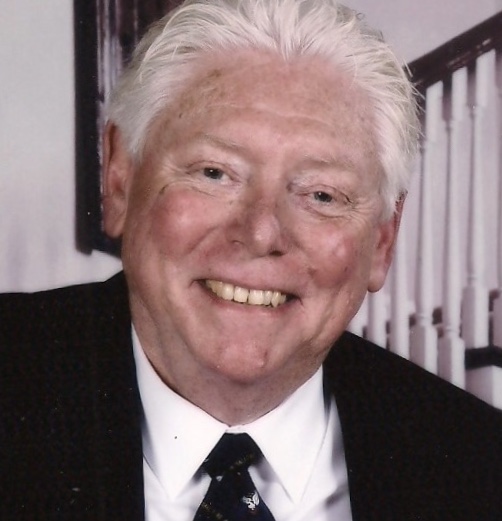
EFO American Fire Culture
Burt Clark became a volunteer fireman in 1970, a career firefighter in 1972, and retired from the National Fire Academy in 2014 as the Management Science Chair. He continues to be a thinker trying to understand fire culture at the micro and macro levels from a social, political, economic, and technological point of view.