Apple Podcasts
 Spotify
 YouTube
 RSS Feed
 Spiritual Survival for Law Enforcement — Chaplain Cary Friedman, FBI Behavioral Science Consultant | S6 E25
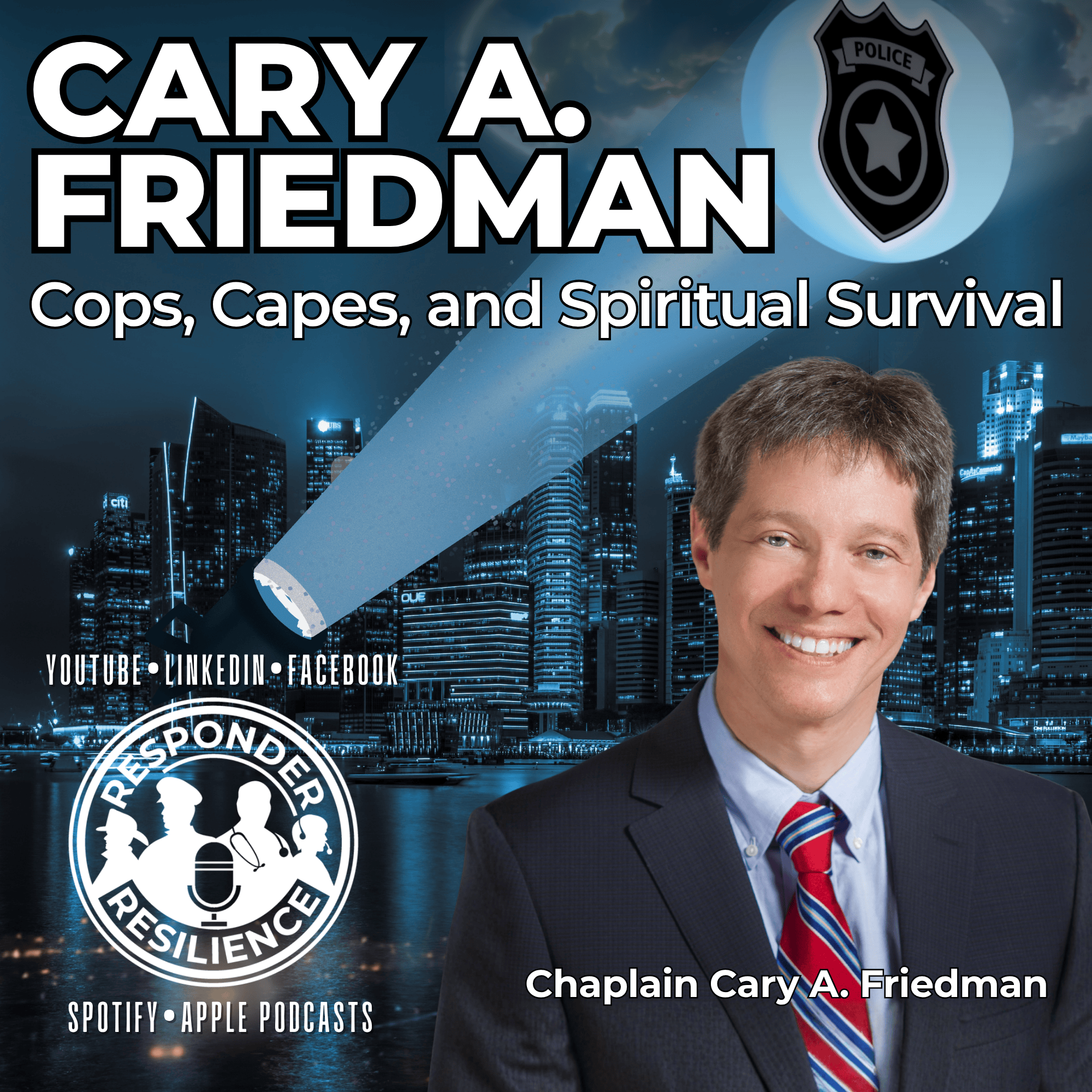
If you wear a badge, work with people who do, or care about what this profession does to the human beings inside it — this episode is for you.
A senior FBI agent heard Chaplain Cary Friedman deliver a eulogy. He was struck by something he couldn't quite name — the message was spiritual, but it wasn't religious. Universal without being hollow. A week later, Chaplain Friedman was at the FBI Academy in Quantico. He's been consulting to the Behavioral Science Unit ever since.
For more than two decades, Chaplain Friedman has been working with law enforcement officers across the country on something the behavioral sciences triad left out: the soul. Not religion. Not doctrine. The deeper thing that gets a person out of bed and into a patrol car every morning, and the thing that quietly erodes when the job takes more than it gives back.
In this episode of Responder Resilience, we get into all of it. The distinction between spirituality and religion, and why it matters more than most cops think. Moral injury. The inner critic that replays every call with the word "should." The nobility of policing and what happens when officers lose sight of it. The interconnectedness principle. The personal mission statement that changes everything when you actually write it down.
And yes, Batman. Chaplain Friedman is the world's foremost authority on the Dark Knight, and he uses that to powerful effect with law enforcement audiences. The adverse childhood experiences. The pain turned into mission. The "What Would Batman Do?" exercise that lands differently than you'd expect in a room full of cops.
If you wear a badge, work with people who do, or care about what this profession does to the human beings inside it — this episode is for you.
**Resources for Responder Wellness:**
• Book: Helping the Helpers https://a.co/d/dm0VS4Q
• Free App: CRACKYL http://crackyl.respondertv.com
• Fitness: FightCamp (code RR10 for 10% off) http://joinfightcamp.com/rr
Contact Chaplain Cary A. Friedman:
Website: http://spiritualsurvivalforlawenforcement.com/
Contact Responder Resilience:
Phone: +1 844-344-6655
Email: info@respondertv.com
Our website with past episodes and more: https://www.respondertv.com/
YouTube: https://www.youtube.com/c/ResponderResilience
LinkedIn: https://www.linkedin.com/company/responder-resilience-podcast/
Instagram: https://www.instagram.com/responder.tv/
00:00 - Living For Something Larger
00:46 - Show Setup And Sponsors
02:59 - Meet Chaplain Cary Friedman
04:02 - Batman, Trauma, And Meaning
11:07 - Spirituality Without Religious Pressure
17:03 - The Missing Piece In Cop Wellness
28:32 - Spiritual Overdraft And Bankruptcy
33:35 - Rebuilding Three Spiritual Accounts
45:23 - Books, Training, And How To Connect
47:59 - Closing Thoughts And Subscribe
Living For Something Larger
SPEAKER_02
A person has a need to live for something larger than him or herself, than his or her own comfort and ease. I call it spiritual bankruptcy, where they're so deep down that the pain is so constant, so unrelenting, it won't let go of them. Becoming a cop, I tell them, gave you all kinds of cool tools, unbelievable tools that regular people don't have. But what you are as a human being who longs to make a difference, who wants to help. Do those four tools, and you can bring those accounts back up to spiritual health. What I was shocked to realize was that I was encountering, I was interacting with the most spiritual people I have ever met.
Voiceover
Welcome
Show Setup And Sponsors
Voiceover
to Responder Resilience Solo with my co-hosts, Bonnie Romoli, LCSWEMT, I'm David Daschinger. Most wellness conversations in law enforcement start with the mind and the body. Chaplin Carrie Friedman starts somewhere else entirely. He starts with the soul. More than two decades, he's been asking law enforcement officers one question nobody else wants to ask. With the idealistic recruit he used to be, recognize the person wearing that badge today. And he also happens to be the world's foremost authority on battery. We're gonna dig into all that and more right after this. This episode is brought to you by Fight Camp, real training on your schedule. Head to joinfightcamp.com slash RR and use code RR10 for 10% off. We'll invite you to like and subscribe YouTube Responder Resilience, Facebook Responder TV, or on LinkedIn, Apple Podcasts, Spotify, all the podcast platforms, and our website is ResponderTV.com. We'll be right back to speak with Carrick Rebecca. We'd like
Meet Chaplain Cary Friedman
Voiceover
to welcome Chaplin Carrie A. Friedman, who's an associate director of the Law Enforcement Survival Institute, and a police trainer specializing in press management and ethical decision making. A police, prison, and hospital chaplain has been a consultant to the FBI's behavioral science unit for more than two decades. Relationship that began when a senior FBI officer heard him deliver a eulogy, and was struck by how spiritual, universal, and not judgmental his message was. He spoke in at the FBI Academy, appeared on the History Channel in Batman Unmasked, The Psychology of the Dark Knight, and is the author of several books, including Spiritual Survival for Law Enforcement, Wisdom from the Bat Cave, and the Superhero Handbook for Cubs. Gary, welcome to Responders.
SPEAKER_02
Thank you so much. It's great to do.
Bonnie Rumilly
It's great to meet you. And we always like to look at a new perspective and a new angle on things. And it sounds like you clearly have that. So I'm pretty excited to talk about this one.
SPEAKER_02
I'm going to try not to disappoint you, thank you, Hannah.
Bonnie Rumilly
I I doubt you will.
Batman, Trauma, And Meaning
Voiceover
One of the things that we talk about a lot on this podcast is adverse childhood experiences. And reading the book, there are a lot of parallels between Batman's origin, his adverse childhood experiences that led him to become the superhero. And let's just pick law enforcement, law enforcement officers who choose this line of work because it speaks to some of the pain and suffering they may have had growing up. And it gives them perhaps superhero skills. So talk to that in terms of the Batman book and law enforcement. Where are the parallels? Where are the connections?
SPEAKER_02
Well, my own uh my own interest with the Batman, I say interest, but really it's my obsession, uh comes from the fact that my my mother, she's living me well, uh, is a Holocaust survivor. And uh she grew up in a city in Europe. Uh when she was eight, the war started. Uh during the course of the next uh five years, a little bit more than five years, she uh she lived in an absolute hell, uh, during which she saw a number of her family members murdered right before her eyes. Uh by the time the war was over, the members of her immediate nuclear family, her parents and her brother, and she survived, thank God. But everybody else, aunts, uncles, cousins, everybody in the family were wiped out. And like I said, she saw a number of them. She actually saw them murdered. Um, how the family found each other uh after the war is uh kind of a miraculous, the whole thing is incredible. But uh I grew up in a home where those shadows uh that that was always there. The trauma and the vicarious trauma, the secondary trauma that I inherited. And we also we had a simulated family. All our aunts and uncles were not really our biological aunts or uncles, or through marriage, they were people who similarly had lost their family. We had a uh a couple, we referred to them as our aunt and uncle. Uh, it was his second marriage. He had had a wife and 10 children, all of whom had been killed during the war. So death was everywhere. It was absolutely everywhere. And for me to deal with that trauma would have been too much for my little, my little psyche, my little uh soul. So I latched onto the Batman early on. And I think for people who like who who like the Batman or who love the Batman, because my appearances on those shows uh the you know on the History Channel or in that documentary Legends of the Night, um, I've gotten hundreds and hundreds and hundreds of communications from people over the years. And a lot of people, as you mentioned, they go through things. Uh, and in order to process through that trauma that I had in the comic books, it was amazing. They could deal with philosophical questions. Uh, in one story, uh, Bruce Wayne is aware that there's a little boy of Bruce Wayne in another dimension. That other dimension lags in time by about 20 years, and his parents are about to be killed. Uh, and he has the opportunity to go there and he can make a difference. He can save that little Bruce Wayne. He can he can save his parents' life and save him from having to deal with all the sadness that he had to confront. Uh in the background is his partner, his friend, Robin, the boy Wonder. And Robin is aware of this whole thing. It's a mystical kind of a story, but Robin thinks to himself, wait a second, if we save that little boy, if we save his parents, won't he grow up to be the lazy, indolent, uh carefree, superficial, surface kind of person, selfish, materialistic, that this universe is boosted, only pretends to be. Well, that's a philosophical idea, it's shocking to think about. Like, what does it, what role does adversity play? Very often, adversity is the invitation for us to dig deep and to find the best versions, like the strength that we don't even realize that we have. If I had thought about that in terms of my own family members or those other people who were actually killed, there'd be something disrespectful or almost monstrous or just overwhelming. But Bruce Wayne and all the characters in those stories are made up of dots from four different colors of ink. And as a little kid, I was contemplating these kind of philosophical issues. What role does adversity play? Is it the springboard for accomplishment? So anyone I've ever met who loves the Batman, and anyone with good taste and discernment does, clearly. Um, people all have things like you said in their childhood. The idea that Bruce Wayne, anything that he becomes, there's no yellow sun, there's no radioactive spider, there's no super soldier serum. All there is is he does a lot of push-ups and he studied chemistry and things like that. So there's something about that, which is, you know, to someone with a healthy amount of self-confidence, uh, that works out just great. And the third element, and in my book, Wisdom from the Batcave, I identify about 20 different themes, but just I'll mention one more, is that this idea of having a strong sense of why, of to want, you know, to have a sense of mission. Sense of mission is uh all important. And I got let me just say one more is that the idea of the limitless potential of a human being. In the story, he's mastered 127 different forms of combat, and he's learned just about everything, and he's trained his body beyond mere you know, Olympic uh perfection and things like that. And if we look and we say, like, what? But there's something within us that senses, we intuit that, you know, that's true. If we exert ourselves, there's no end to what we can become. If you think about that kind of self-confidence, that sense of potential, that strong sense of why, um, and using all of that to respond to trauma and tragedy to want to make a difference perhaps in the lives of others so that they don't have to ever deal with that. And you have a pretty good recipe, a formula for a lot of first responders out there.
Voiceover
There's a new app built by firefighters for firefighters, and it's called Crackle. Download the app now for free as a legacy member and get early access to exclusive content, tools, and updates as they drop. Get the free app at crackle.responderTV.com.
SPEAKER_01
Not everyone is meant to walk this path, and that's okay. But for those who feel the call, for those who read these words and feel not just curiosity but conviction, know this. By the time a first responder sits across from you, they've likely exhausted every internal resource they have. This isn't a routine appointment, it's their 911 call. I don't know how much longer I can do this job. You won't hear sirens, but the urgency is real. If you choose to take that call, understand what it means to show up, to stay steady, and to carry the weight of someone who spent a career doing the same for others. This is where the work begins. Be the resource they can count on. Order your copy of Helping the Helpers Today on Amazon, and for bulk orders, email us at inforespondertv.com.
Bonnie Rumilly
Well, thank
Spirituality Without Religious Pressure
Bonnie Rumilly
you for sharing your own family history, your transgenerational trauma. It's fascinating to me how you've woven the character of Batman and all the things that he stands for and faces, but you've woven it into work with first responders, you've woven it into spirituality. Um I can tell you're just an incredible person to make these connections and the knowledge that you have just exudes and um it's fascinating work that you're doing. I wonder, just practically speaking, you know, when we bring up that word spirituality to law enforcement or other first responders, we often see them either check out of that and leave it alone, don't engage, or they make an assumption that we're asking them about their religion or, you know, do you believe in God? These kinds of questions. But how do you really define it when you're a chaplain and you meet people where they are from many different faiths and belief systems? How do you really define spirituality and how could we define it here for our first responders in a way that they could grasp it, take it, run with it, and not have their guard up about it?
SPEAKER_02
So that that last statement you made is is all important, that they not have their guard up. What I've seen over the years is that sometimes people, you know, they they're looking for help. And if they are brave enough and if they're they're willing to drop their guard and to let someone in, make themselves vulnerable. If a trainer betrays that trust by making them uncomfortable and start saying things with, you know, and then like everything's gone. It's lost. They put those that guard up much stronger than before, and there's no learning that can take place. Step one is it's all important. Um, the people who do this work a lot of times, that they they are clergy of whatever faith system, whatever the faith system is to which they subscribe. They're a member of that, they're an adherent of some religious group. That's very important. That's where their real power comes from. But a person has to be willing to say, I'm going to become a chaplain, not of my religious system from where I come, but of the civic religion of the United States. Some people are willing to do that. If they're not willing to do that, they shouldn't do the job. Because I, in my position with the Law Enforcement Survival Institute, we help agencies create chaplaincy programs. And we make this joke that if you're not willing to close one, you don't have a right to start one. Because a lot of times people abuse that trust. And that's a really sad thing. And what they leave in their wake are a lot of really hurt officers. They've been doubly traumatized. In terms of how I uh define spirituality, I'd say like this within every human being, we have a whole set of the kinds of behaviors, you know, when we eat or appropriate or go to the bathroom or anything like that, all of those things, we share that in common with animals. That doesn't really define us as uniquely human. But what we have that makes us uniquely human, we have the desire, and much more than a desire, we have a need, a fundamental need, a profound need. A need, if we don't satisfy it, a person can't really live. Something within them, something fundamental, withers and dies. A person has a need to live for something larger than him or her uh self, than his or her own comfort and ease. You see, people are willing to sacrifice their very lives to stand for something. Now, whatever that is, whatever the source, like you know, human beings have needs, wants, aspirations, dreams, yearnings, all of those things. Wherever that exists within a human being, if you pop the hood and you look inside at a person, so where would we find that? So you could give it a any number of names. I prefer to call that the human spirit, because that doesn't make anybody uncomfortable. Some people say the human soul, but that might make someone uncomfortable. So let's not call it that. But the human spirit, that indomitable human spirit, is that part within us that says, I'm willing to sacrifice my very life. I will endure unbelievable hardship to stand for something, to leave a legacy of good, to champion the right and the true, and it's unbelievable if you think about it. So what happens is this that human spirit wants to express itself in the world. It wants to express itself. One of the ways, one of the important ways, and it's the way with which most people are familiar, one of the ways that the human spirit expresses itself is through religious involvement. People subscribe to a group, they engage in all kinds of liturgy and all kinds of religious practices, and they say words, they invoke images, and they associate with like-minded people. So that's how the human spirit expresses itself is through religious practice. But there's another way that the human spirit expresses itself. It's when some heroic, noble, extraordinary human being decides to become a first responder. And that's what I say to my audiences. That's how we start the conversation. I say to them, I don't have to talk about religious practice. That's an application. But what you do when you put on the uniform and the badge and you go out there and you subject yourself to all kinds of discomfort and danger and the vilification of the media and the politicians and the ingratitude of the public and all the different difficulties to which you that you experience because you're trying to make a difference and to help people, to protect the innocent from those who would prey on them, to help the people who don't have the resources. When you do that, I say to them, you're being profoundly spiritual. Let's have that conversation.
Voiceover
Well,
The Missing Piece In Cop Wellness
Voiceover
um, I got to admit this that your books are so good. Um, we have a sheriff's agency here where I live that has actually a spiritual library. And I gifted your books to them because uh I thought this if any books belong there, it's these books. And um, so I'm so happy that I know that uh deputies are gonna be reading your books here where I live. And speaking of your books, you have um more than just a Batman book, you have one called Spiritual Survival for Law Enforcement. That's been described as the missing piece of behavioral sciences triad that nobody was talking about. What gap were you trying to fill with that book? And what do you want law enforcement officers to take away from it?
SPEAKER_02
Well, um, what I saw when I began to work with the behavioral science unit, um, and I the first thing I did for the first two years of my association, my involvement, was to be at Quantico and to speak with police officers. People who were attending the National Academy during every break. I shadowed them, I went through some of the coursework, and whenever there was a break in the action, I talked to them and I would say to them, tell me how you got into this line of work, tell me about yourself, what you experience. And I came to appreciate I had entered the career, I'm ashamed to admit this, with a little bit of a bias. I thought police officers, they struck me as being a little coarse or brusque or something. And what I was shocked to realize, shocked to find out, was that I was encountering, I was interacting with the most spiritual people I I had ever met. And over the years I was I was really grateful. Countless police officers have confided to me and they've said to me, you know, I considered going into the into the into clergy work. Uh and then something got in the way. Some for some reason, the the formulation is usually like this I thought about becoming a priest, but I wanted to get married, or I fell in love with someone, or I like girls too much, so I became a cop. Now, I would chuckle also, but over time, in the beginning of my first time, I used to chuckle, and then when I had heard it 200 times, and I've heard it many more times since then, I was shocked. And what I realized was that if you think about it, the career of law enforcement with a capital L and the career of law enforcement with a little L, the parallels are astounding. And what happened was these people thought about going into clergy work. They thought about going to clergy work, they were that spiritual. And had they entered the career the career of the clergy, right? You know what they would do all day long? They would pray, they would engage with religious texts, they would be involved with all kinds of things that would replenish their accounts, their spiritual reservoirs, and they would identify themselves and they would say, you know what? I'm really spiritual. I'm really spiritual. This way, though, that same instinct that brought them into the career brought them into the career of law enforcement where no one ever mentions that. No one ever acknowledges their spirituality. There's never any way to replenish their reservoirs of spirituality. And people look and they say, spiritual, and the cops themselves, they didn't even have clarity why they became why they entered the career. So what I do in my job and what I learned from the behavioral science student, my contribution is to say to them, it's not that the career, one of the dimensions is spiritual, it's the dimension. Everything else is just the mechanics, it's just technical stuff. But the actual because the only question that matters when they're interviewing a prospective cadet is why? Why do you want to enter this career? No one says, because I want to beat people up, because I want to, you know, drive fast or use handcuffs. Nobody, I want to make a difference. I want to help those who are in it. So that is there anything more spiritual? And the cops enter the career oblivious to that dimension. And what I do in my work, and I say this to them right out, I hold up a magic mirror, like out of a Disney movie, and I say to them, look inside, look in this mirror, look at yourself for the first time and see who you are. And when they own that aspect of themselves, and when they can say, and it takes a little bit of, I gotta fight with them a little bit. I look, you guys are talking, and you think, this guy's a cream puff. You're right. But there's another dimension to me, which is when I go into a training session, I spend the first training hour, I have to fight with these people. I have to make them feel comfortable, I have to make it clear to them I'm not here to talk about religion and I'm not gonna make you feel weird, I'm not gonna peddle anything. I want you to see what I see in you. And when they see that, and they start, we you have an exercise where I say to them, I'm handing out spirituality. Eyeglasses, put them on, keep them on for the rest of the training. Let's look at your career where the only thing that can come through these filtered lenses is the spiritual dimension of what's going on. And when they own that, when they realize that about themselves, and they do, they do. If I do my job well, they they get it. So then I explain to them how to preside over their own, the maintaining of their own spiritual health with those tools for intentional spirituality that I've identified over the years.
Voiceover
Most people work out to look better. You work out because lives depend on it. But the stress doesn't clock out when you do. The calls follow you home, and most workouts weren't built for any of that.com or RR or your code RR10, number 100, real training on your control, or this is a fascinating way to really tie it all together.
Bonnie Rumilly
And I think, you know, David Stacy and I talk all the time about people getting into the profession for the right reasons and to save the world, and then they end up with their bucket empty. But I think it hadn't also occurred to me that they're coming to fill other people's buckets. You know, that's not what gets portrayed, depicted, or talked about. But for those of us who have friends or are close to law enforcement like you, we see what big hearts and how it's out of something just so pure. And so to make this kind of connection here is really important for people. And I think the part that we work on with the mental health aspect is they come to fill the world's bucket and leave with theirs being overflowing with all of the trauma they're exposed to in the meantime. So if they can use some of the strategies you come up with to help with the spirituality piece, the mental health strategies, and look at the whole picture, they could be in a better place.
SPEAKER_02
That that's certainly the hope. Um, I have seen, because the no no cop can express it this way. Uh to say, well, I'm entering the career. This is an expression, you know, I I might have been entered the priesthood or the uh I would have become a minister or something, I but I'm becoming a cop instead. And I, well, the thing is though, that what they would have become had they entered clergy work, they would have become the most spiritual version of themselves that they could have been. Imagine a priest who's been in that career for decades, decades and decades. They have a sympathy for the human condition. They have an understanding of the human spirit, but there's a profundity that they gain over, you know, over all those decades, people let them into their lives and they have a sense of like a larger vision of what life is all about, what we're trying to accomplish here. Now, the fact is that it would be a betrayal and it would be such a sadness if someone enters police work and the same instinct drove them there, and they turn out at the end an empty shell, a husk, a bitter caricature of the person that they wanted to become. I've known cops who actually used the career properly. I knew a fellow, he was a retired FBI agent, and he had come up, he didn't start with the FBI, he started with some other agency and ultimately ended up, he ended his career for many years. He was an instructor in Quantico. And this fellow, the dignity, the class, the way he conducted himself, the profundity of the man, his sympathy for the human condition, his understanding, his decency, his language was always so dignified. The way he spoke, the way he conducted himself. I said to him one time, uh after I'd known him for a number, and you know, we we trusted each other. He said to him, John, how did you how did you turn out this kind of this kind of a person? How did you? So he said, I went to mass after every shift. He said, if I had a shift, I went to mass. He said, I never, those two were correlated. And he said, and what I saw, what I did, I had to frame it, to process it, to understand it within the framework, within the context of my spiritual beliefs. Now he metabolized all those things that he did, and he became the most profound version of himself. He used the career the way every comp, the way every first responder wants to. But he didn't, for him, it wasn't up. He didn't live in the shadow of an idea. There's an Irish author, Elizabeth Bowen, she made a comment, she said, it's possible to live in the shadow of an idea without grasping it. If someone lives in the shadow of an idea, they're gonna get themselves clobbered. It's not enough to live in the shadow. A person has to have absolute clarity. So what I do in my training is I define spirituality the way I mentioned to you about that, you know, giving giving expression to those instincts in the human soul to stand for something larger, to leave a legacy, to champion the good, to bypass ease and comfort and selfishness and self-interest for something larger. And then I have to define, define, to distinguish for them the difference between emotional and psychological and spiritual. If I can explain that to them, I have a I have a race car analogy. I talk about when someone maintains the gears, the belts, the timing, everything is at its operating best. You look under the hood and the race car is just it's souped up, it's good to go. That's what the psychological aspect, attending to the emotional component of a person, it makes them efficient, they're able to process properly. But if they turn the car on and they step on the pedal and there's no gas, there's nothing to fuel them to propel themselves forward, that's the spiritual aspect. They need to be refilling their tanks. I don't
Spiritual Overdraft And Bankruptcy
SPEAKER_02
refer to it as a tank. I identified three dimensions to healthy spirituality. Um, there are three dimensions a vertical, a horizontal, and an internal. And each one of those comes with, I use a bank account analogy. Um and if they they enter the career, their those three accounts are overflowing. But every day, what they do, what they see, what they experience, they're presenting gigantic checks against the accounts. They're depleting them. And with their spirituality eyeglasses, I teach them, I say to them, what happened? Like, what do you see in your career? What's draining to you? So they describe things. The death, you know, they encounter the murder of a of an innocent child, abuse of children, the death of a partner, the vilification, but when they interact with the public and they have to maintain their calm. Um, they go through, we've identified over a hundred of these things. My students over the years, they'll say this, this, this. There's always someone who shouts out, it's never what's hundreds, I've done hundreds of trainings, hundreds of trainings, and every single time somebody yells out, I can deal with all of the stuff outside on the streets. It's what goes on in my department. It's a betrayal from the admin. That much so we still have those spirituality eyeglasses on, and we look at each of those, and I say to them, which accounts are being drained? Like I said, we identify three accounts, they've got their spirituality eyeglasses, and they recognize that those accounts are being drained every day. And if they get to the bottom of the accounts, they get to zero, they don't say, Well, I'm going home, I'm done. They go into a state which is called, I call it spiritual overdraft, where they're running, not even on fumes, they're running, they got nothing, their tanks are empty, and there is a mindset, there's a way of being. When cops are in that area, you can tell a cop like that who's in spiritual overdraft, they're angry, they're tired, they're confused, there's a sense of weariness, there's this perception that they've been betrayed. They can't even tell you who betrayed them. They just have this diffused sense. There's a bewilderment, there's an anger, there's a hopelessness. You see them dragging themselves around. You know, they came into the career, become profoundly spiritual. Instead, they're existing in this place of spiritual overdraft. It's painful. And they don't realize, nobody said to them, you're in spiritual overdraft. They say to themselves, I've been betrayed. And you know who betrayed me? My sergeant, my wife. They come up with all kinds of theories. And what they do, one of those accounts is the third account, is the the internal confidence in self, a positive sense of themselves, that they can make a difference in the world, that they're good, that there's something that they have to contribute. So, what happens is when that account, the other accounts are drained, and they say, I've been betrayed by my my spouse. So they come up with they come up with ideas. Like, what are they going to do to ease the pain, to numb the pain?
SPEAKER_03
Right.
SPEAKER_02
A lot of times those behaviors are destructive and they're self-destructive.
SPEAKER_03
Right.
SPEAKER_02
And they behave, they engage in behaviors that further drain those accounts, especially the confidence in self. They look, some part of the inner, the essence of themselves, look at them, look at them and their behavior, and they're just further disgusted. And they go deeper and deeper down into overdraft and they try to numb the pain in ways that drive them down further. There's a point, I call it spiritual bankruptcy, where they're so deep down, the pain is so constant, it's so unrelenting, it's so all pervasive, it won't let go of them. And there's nothing they can do, no matter how many relationships they create outside of their marriage, how many times they hurt the agency, they get back at people, they allow themselves certain luxuries, whatever it is. The pain is so great, there's only one way to numb it once and for all. And that's to put an end to themselves.
Bonnie Rumilly
By the time a first responder sits across from you, they've likely exhausted every internal resource they have. This isn't a routine appointment. You won't force fire once, but the urgency is real.com.
Voiceover
What are
Rebuilding Three Spiritual Accounts
Voiceover
say three practical takeaways that you can offer law enforcement officer who's in that state of bankruptcy that needs to start filling that account back up? Like what are three things that you would offer that they can use um today, starting today? Excellent.
SPEAKER_02
I I'll I'll give you those three. I'll just mention this. My research over the years, both with the BSU and through the Law Enforcement Survival Institute, has convinced me, and other people have done this research, that if that, if an officer or a first responder doesn't bring themselves out of that state of bankruptcy up through spiritual overdraft into a place of a certain amount of health, they can retire, they can retire, they can play golf all they want, they can do anything. They're gonna remain there. And unless they address it, they've got to address it. The three accounts, the first one is I call it faith in God asterisk, because I don't want to be talking about God. For most people, it's God, but the asterisk is some sense of a source of absolute values. Those absolute values have to come from uh right, they have to be external to and higher than the person. It can't come from something subjective within, because we can succor ourselves, we can convince ourselves of anything. So the system, the our sense of right, faith in a connection with a source of absolute values. It could be the constitution, it could be the concept of concept told me, like, you know, I'm not because I say to them, I'm not trying to get if a person's religious and their source is God, terrific. If it's the constitution, I've done a lot of work on this, it'll work. If someone says, I believe in the innocence, the inviolate, the sanctity of human life, of a child's life, you can reconstruct, you can construct a whole worldview. In terms of that first account, imagine how many times people encounter things on a job and that account is dreamed. That account is dreamed. So, how can they uh uh connect themselves? So I would just say this very quickly again, these replenishments, these deposits into the account, those are the tools for intentional spirituality that the Department of Justice wanted. So it would be this reconnect to those values, write your core values, bullet points, or write your mission statement. Your agency has one, borrow it and modify it to yourself, or write your credo. Your credo is an understanding of what the world is all about and what's my place in it. Write your obituary, and the cops always say, Oh, the person, uh you know, he died while having sex at 107 with an airline suit. And I say to them, like, you know, let now moving aside, is that really is that what you want to be remembered for? And they're like, No, I want to be remembered for something larger than that. So write an obituary. What would they say? This person always wore fashionable clothes, they drove a late model car. That would be a tragedy to say I you know, he or she stood for something. So write the write a meditation or a prayer, something, and determine what the frequency is with which you say it, you encounter, you remind yourself to reaffirm those truths. I I know an agency out in the Midwest, I was doing a training and the the training lieutenant at the end of the my day said to me, you know, we do something. I hadn't given this tool. He said, they wrote an essay to join our agency. He says, every year on the anniversary of their joining our department, I have them read the essay. He says, That's pretty good, isn't it? I said, that's terrific. I said, I do something similar. Every year on my birthday, I go to the gym and I work out. And he said to me, Well, which might account, it might account for why I look the way I do. But he said to me, That's not enough to build any. And I said to him, and he was like, Oh, oh, I said, Why once a year? Maybe once a month, maybe every day would be too much. But can you imagine if we were to take time away once in a while to reaffirm what are my core values? Why am I doing this? So, you know, just quickly, because we don't put that that's one to in the book Spiritual Survival and in the superhero handler for cops, I give a number of tools. But like I said, any one of these, the obituary, the prayer, the meditation, the core values, any of those will begin the process. And if you do it, don't become desensitized to it. Don't do it every hour because then it won't work. But do it with the frequency that it will, in fact, replenish that first account. Account number two is regard for people. And you think about people who enter the clergy, faith in God. I won't even put the asterisk for them, faith in God, regard for people, confidence in self, the vertical faith in something larger than ourselves, an absolute sense of values, the horizontal regard for people. People who want to clergy work, they devote themselves to taking care of people. Cops develop a kind of skewed perspective. They spend enough time all first responders, they see and they later on it becomes like it's us, them. The only good people are the people in uniform. So a tool that I would say is this come up with some opportunity to see people behaving decently, non-cops, non-first responders, behaving decently. I I said to one agent, I always tell this story because I said in one agent, uh I was giving some training, and I said, volunteer in a soup kitchen. I had a I had a contract for a year with this agency. I went back six weeks later and they said to me, Chaplain, it was a what a great idea. We volunteered, I volunteered in a soup kitchen, and I brought two of my buddies a few days later. And I said, Oh, really? He said, Yeah, because I saw they were moving stolen electronics through the back. He said, So my two buddies joined. He said, We got commendations, we met it. They had over $250,000 of stolen goods. That exercise was a fail. Right? Cops can do that, they'll take anything, but yeah, come up with a situation where you can see people behaving decently who are not first responders to remind you that there are decent people in the world. I also talked to my cops about creating a transition ritual. Officer safety, right? Cops go like this before they you know they get suited up, they go out and they say to themselves, I'm flipping a switch, I'm flipping a switch, hypervigilance. Hypervigilance is terrific on duty. That's the essence of officer safety. If a cop remains in hypervigilance, right, hyper what's officer safety? It's the working operational principle that any person I meet might be trying to kill me. They might be a bad guy. So that works well on the job, but off the job, it will kill a cop. Because then statistics, cops are about eight times more likely to kill themselves than to die at the hands of someone else. So you can't just say to them, stay in that state of hypervigilance where you look at every human being. It's you know, hyper officer safety is you interact as if they could pose. Not that they do. So I say to them, have a transition ritual at the end where you step down from hyper-vigilance to some level. I don't say drop your guard completely because cops would look at me and say, What are you nuts? But to a level of caution and vigilance that's appropriate for a citizen. If you can like so I like I know people who have rituals, they one guy taps on the mirror, looks and he says, Someone's gonna try to kill you today. Don't let them, don't let them, you're not gonna let them. I like that ritual. It flips a switch. And I said to him, and I and he also I say, at the end, tap on the mirror and say, You're now a member of the human race, you're a member of your community. There are some decent people here. If a person can step down to that lesser degree of vigilance, the lower level of vigilance, and they can catch people behaving decently, they have a chance to fill up that to replenish that account number two. And finally, in the minute that's remaining, account number three is confidence in self. So, so much of what cops do, they walk away and they have the sense like I make no difference. The ink hasn't dried yet, and the bad guys are back on the street. I'm just running through the modes, like, what good? Like so, what I say to them is this remind yourself that this is a job, it's an extension, it's an application of who you are. But long before you put on that uniform and that badge, you were a human being who longed to help, to make a difference in the world. Becoming a cop, I tell them, gave you all kinds of cool tools, unbelievable tools that regular people don't have. But what you are is a human being who longs to make a difference, who wants to help, who wants to leave a legacy, and you've been gifted these additional resources. But the job has to be because research shows that the most dangerous thing for cops, one of the most dangerous factors, phenomena, is the loss of their individual identity. They put on the uniform and the and the hat, and people out there in the world don't see a face. The features become blurred and indistinct. And they, I don't know what this. And when cops lose that sense of their own individuality, they're vulnerable, they're in a lot of danger. So, what I say to them is this in your capacity, in your identity, in your role as a human being, not as a cop, do something, do an act of kindness, do an act of kindness, off-duty part of your life. And I say to them, if you really want to supercharge it, if you want to turbocharge it, do it in private. Don't do it in a way where you'll receive the accolades from some audience, because that might that might confuse you. Like, what are my motivations in doing this? The only motivation you have, it's a private, it's a private act between you and your human spirit. And if you believe in a creator and a God, so that God is watching also. That's the only audience that you need. The only audience you need is your conscience, is to affirm I do this because of who I am. Not as a cop. I'm not a cop. I'm a human being who has the additional ability to function as a cop or as a first responder, that replenishes that account. There are a whole bunch more, and once someone understands the system, they're off and running. You can create your own. But I tell my classes, and I'll finish with this, what I say to my students is every day, do one, use one tool and do something to replenish each of those three accounts and have one floater, a fourth one in any one of them. So every day, one of those accounts is gonna have two. But you have that discretion, gives them a certain amount of choice and power and control. But do those four tools and you can bring those accounts back up, up through spiritual overdraft to spiritual health. So cops, amazingly, as spiritual as they are, spiritual health for them is not a static state where they fill up their accounts and they stay there. Because of what they do, their accounts are always being drained. So spiritual health is not a static state. Once achieved, you just stay there. It's a dynamic process. Depletion, replenishment, depletion replenishment. It's worth the effort to replenish those accounts because they'll enjoy spiritual health and they'll become the people that they really wanted to become, and the reason that they entered the career.
Books, Training, And How To Connect
Voiceover
Well, thank you so much for sharing these actionable tools. And I'm sure there's I know there's much more to that people can find in your books. Speaking of which, where can people find you and your books if they want to learn more?
SPEAKER_02
Okay, well, the uh I've got those books I showed you Spiritual Survival, the superhero handbook for cops, and Wisdom from the Bad Cave, those are all available on Amazon. Um, also, I as Associate Director of the Law Enforcement Survival Institute, we have a number of websites. Um, but I have one which is my own personal one, Spiritual Survival for Law Enforcement.com. The books are available on there. There are additional videos. Um I have all kinds of training videos. I think the way to get a portal to find all those things, um, and a lot of them are just available on the internet for free, um, is through Spiritual Survival for Law Enforcement.com. And I would invite anyone who's listening, if there's any way that I can ever help you, um, what an honor. It would be such a pleasure. Um I, because of who my mom is and what she experienced, I'm patriotic, my family beyond. And I recognize that law enforcement officers in this country, my mom knew a very different kind of law enforcement officer. You people are unbelievable. The heroism, the nobility, the decency with which you do your jobs, even when most of the time, even when you're in spiritual overdraft, there's never enough that I could do to express my to repay my debt of gratitude or express my admiration for you. So if there's anything I can ever do, I invite you to get in touch with me, please.
Bonnie Rumilly
Carrie, it was so incredible to meet you today and to see this lens. Um, I'm really just blown away. It's been very fascinating, and I feel like I could listen to you many, many more times over. Um so I'm really grateful for everything that you shared today. And I hope that someone can come away with a different lens thanks to what you've shared. So thank you so much. Keep doing the wonderful work you're doing out there.
SPEAKER_02
Thank you very much. I really hope so. I hope a whole bunch of people that would be a reward in and of itself. I'll be thrilled. Thank you for giving me this opportunity. I I loved being here. Thank you.
Voiceover
We've covered um some ground here that we've been wanting to talk about for a while, and I so appreciate you bringing us through that. I also just want to reiterate that your books are absolutely great, but also easy to read. And if you read the Batman one, it's not just words. There's a lot of uh excerpts from Batman comics in there, the pictures and the comics themselves. Check them out. Thank you so much for being here. We appreciate you. Keep doing the great work you're doing.
SPEAKER_02
Thank you very much. You guys do keep doing
Closing Thoughts And Subscribe
SPEAKER_02
it.
Voiceover
All the best We invite you to like and subscribe. We're on YouTube, Responder Resilience, or also on Facebook, LinkedIn, Apple Podcasts, and Spotify, and go to our website, and that is respondertv.com. Till the next time, stay safe, be kind to yourself. Take care.
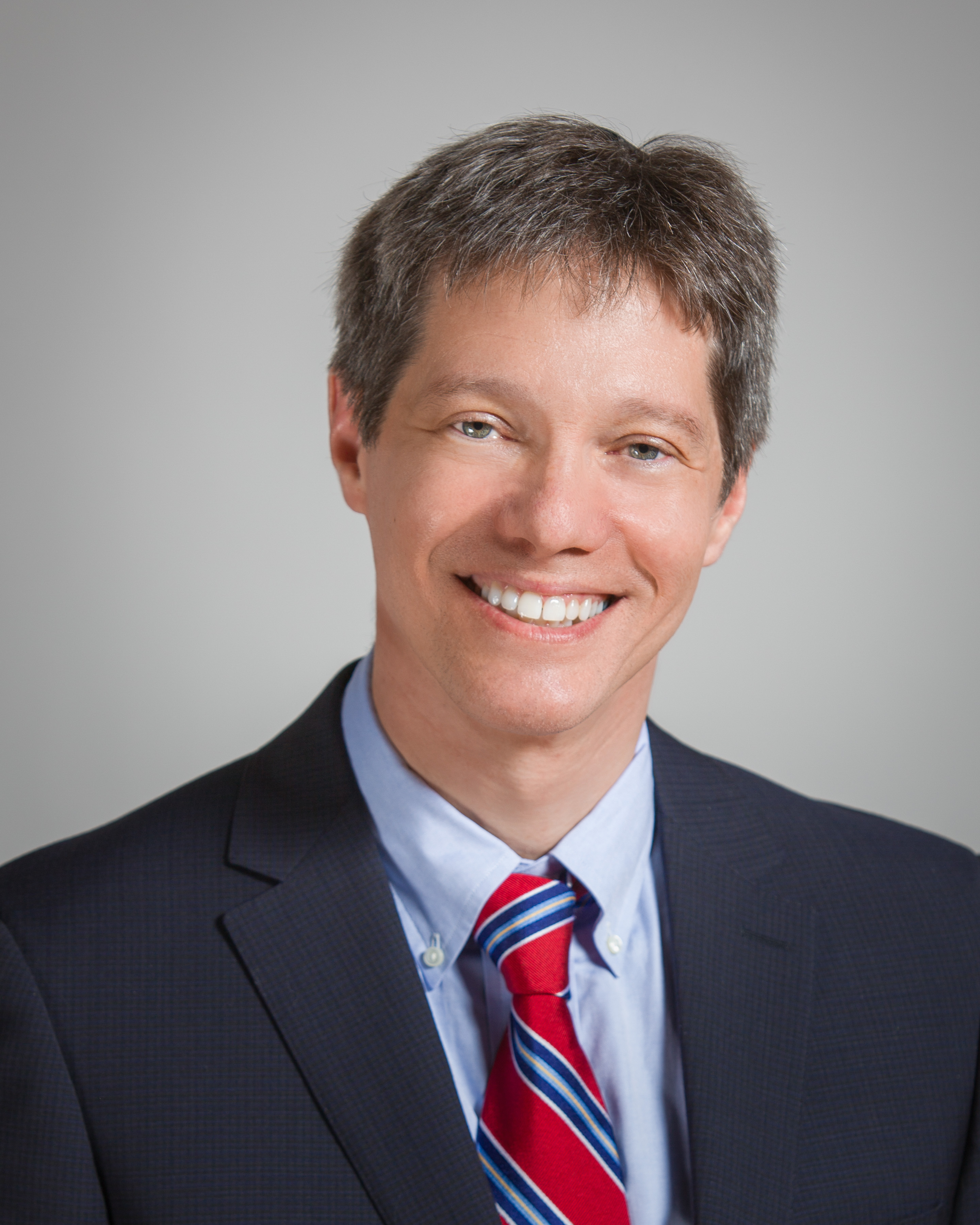
Associate Director Law Enforcement Survival Institute | Author | Trainer | Consultant
Chaplain Cary A. Friedman is Associate Director of the Law Enforcement Survival Institute, and a police trainer specializing in stress management and ethical decision-making. A police, prison, and hospital chaplain, he has been a consultant to the FBI's Behavioral Science Unit for more than two decades — a relationship that began when a senior FBI officer heard him deliver a eulogy and was struck by how spiritual, universal, and nonjudgmental his message was.
He has spoken at the FBI Academy, appeared on the History Channel in Batman Unmasked: The Psychology of the Dark Knight, and is the author of books including Spiritual Survival for Law Enforcement, Wisdom from the Batcave, and The Superhero Handbook for Cops.