Apple Podcasts
 Spotify
 YouTube
 RSS Feed
 Grief and Suicide Loss in Law Enforcement — Dr. Erie Crawford | S6 E28
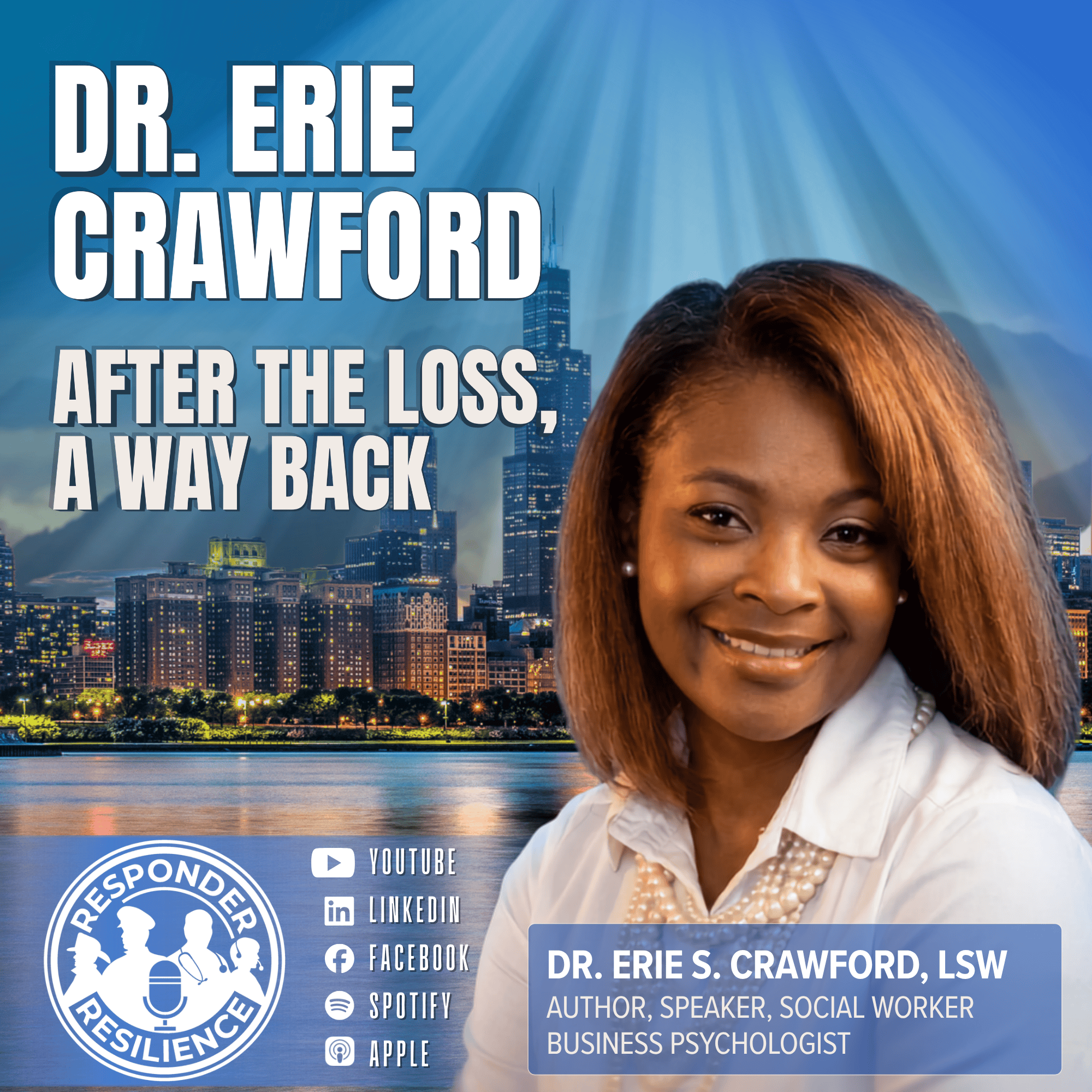
She lost him. Then she found a way through. Lt. James Crawford (Ret.) of the Chicago Police Department was a pastor, a mentor, and the man everyone leaned on. Months after retiring, he died by suicide.
She lost him. Then she found a way through.
Lt. James Crawford (Ret.) of the Chicago Police Department was a pastor, a mentor, and the man everyone leaned on. Months after retiring, he died by suicide. His wife, Erie S. Crawford, LSW, PhD — a licensed social worker who saw the signs — made a decision in her darkest hour: this loss would not take her too.
She buried him on a Saturday. By Monday, she was in therapy, fighting for her own healing. What she built from that fight is now helping suicide-loss families across the country find their way back to life.
In this episode, Dr. Crawford joins hosts Lt. David Dachinger (ret.) and guest co-host Lynette Shaw-Butler for a conversation about loss, love, and the long road back.
In this episode:
▪ Why the "strong ones" carry pain silently — and how families can gently open that door
▪ The warning signs she saw, and what she wants other spouses to know
▪ The retirement transition: why a plan for what's next matters as much as the pension
▪ What suicide-loss families need after the funeral, when the initial support fades
▪ The S.U.N.R.I.S.E. Healing Journey: Surrender, Understand, Nurture, Reconcile, Integrate, Strengthen, Engage
▪ Her guiding truth: when night ends, the sun rises
If you or someone you know is struggling, call or text 988 (Suicide & Crisis Lifeline). Healing is possible — and you don't have to walk it alone.
Watch on YouTube | LinkedIn | Facebook | Listen on Apple Podcasts | Spotify | Full archive: ResponderTV.com
🔔 Subscribe for new episodes every week. https://www.youtube.com/c/ResponderResilience
★ Resources for Responder Wellness ★
• Fitness: FightCamp (code RESILIENCE for 10% off) http://joinfightcamp.com/rr
• Free App: CRACKYL http://crackyl.respondertv.com
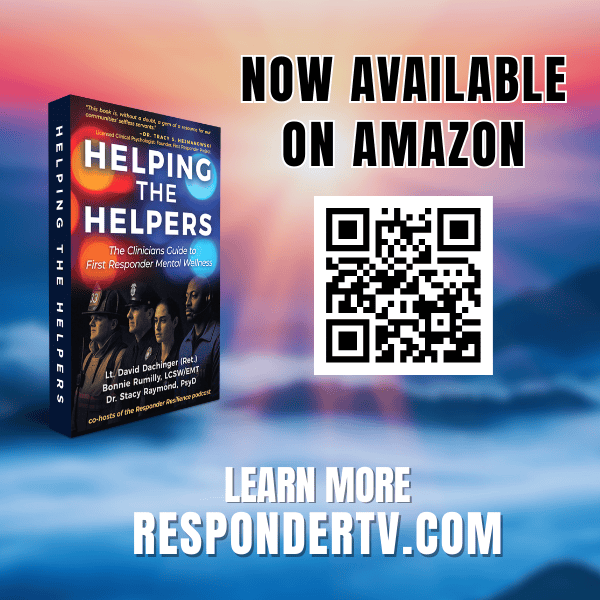
• Book: Helping the Helpers https://a.co/d/dm0VS4Q
00:00 - Cold Open On Hidden Pain
03:04 - Who Dr. Erie Crawford Is
04:50 - The Man Behind The Badge
07:55 - How Struggle Shows Up
13:06 - The First Weeks After Loss
19:47 - When Support Fades Over Time
21:38 - Retirement Shock And Trauma Flooding
33:46 - The SUNRISE Steps For Healing
41:50 - Resources And Staying Connected
Cold Open On Hidden Pain
SPEAKER_05
He was like a pillar of strength for everyone. So for him, it was like, I need to show up. In order to show up, he had to push what he was feeling down, and I would often have conversations with him about it. It was a true struggle trying to navigate and make sense out of it all, especially when he was that pillar for everyone. The whole premises of the book is how can I help someone else heal from this tragic experience that no one should ever have to live through? For me, sunrise means that the next day is a new day, so we can start all over again in our healing.
Voiceover
Welcome to Responder Resilience, along with our guest co-host today, Lynette Shaw Butler. I'm David Dashinger. First responders run into buildings that are burning. They chase down the worst calls, absorb the worst scenes, and then go home and pretend they're fine. But what happens to the family, the ones who are watching, the ones who are riding along when someone they love disappears into a job and doesn't talk about the pain? Our guest today lost her husband James, a Chicago police officer, to suicide. She didn't just survive it, she built a seven-step framework to help others find a way through the same darkness. This is one of the most important conversations we've had on this show, so pull over if you need to. This is Responder Resilience. This episode is brought to you by Fight Camp, real training on your schedule. Head to jointfightcamp.com slash RR. And use code RESILIENTES for 10% off. We invite you to like and subscribe, YouTube Responder Resilience, Facebook, Responder TV, or on LinkedIn, Apple Podcasts, and Spotify. And go to our website, respondertv.com, for past episodes and guest information. We'll be right back to speak with Dr. Crawford after this. Ask a first responder who they are, and you're likely to hear I am a police officer. I am a firefighter. I am a paralytic. I am a 911 communications operator. Not I do this work, but I do this job. Ask a clinician why they work with first responders. And they may say, There's no higher calling than helping helpers. Join us in shaping a culture where mental health, wellness, and leadership are prioritized, not witness, where support is a sign of strength, not failure, and where no one has to carry the weight alone. Welcome to Responder Resilience. We shine a spotlight on the unseen battles of first responder reality. And celebrate the powerful wins that come from the grit of post-traumatic growth. We understand the culture, honor the trust, and bring you conversations from the change makers, passionate about helping first responders come home whole. With your hosts, retired Lieutenant David Dashinger, Dr. Stacy Raymond, and Bonnie Roomoli, LCSW EMT.
Who Dr. Erie Crawford Is
Voiceover
We are so thrilled to invite our guest co-host today, Lynette Shaw Butler, to join us. A little bit about Lynette. She's a past guest on the podcast, but also a retired law enforcement sergeant with a psychology degree in a front row seat to what the job does and to the people who do it. She's a certified crisis intervention specialist, suicide prevention trainer, and national trainer for therapists and clinicians who specialize in first responder mental health. She's trained police, fire, and EMS personnel across the country and co-authored a book on law enforcement retirement planning. And in 2018, she founded the Lynn Shaw Group, a mental health education and consulting firm dedicated to first responders, educators, and underserved communities. And our guest today, Dr. Erie S. Crawford, is a licensed social worker, trauma-informed clinician, author, and business psychologist with more than 20 years of experience helping people rebuild after unthinkable loss. In 2019, Dr. Crawford lost her husband James, a retired Chicago police department lieutenant, and pastor to suicide. And out of that grief, she wrote her memoir, The Other Side of Midnight: A Journey to Healing Spouses and Loved Ones Affected by Suicide. And most recently, she launched the Sunrise Healing Journey for Suicide Survivors. Dr. Crawford holds a PhD in organizational leadership along with a master's and bachelor's degree in social work. Her mission is to help those who've lost a loved one to suicide to move forward while still honoring the one they lost. Dr. Crawford, welcome to Respond Your Resilience.
SPEAKER_05
Thank you. Thank you for having me.
Voiceover
So let's kick it off with uh Lynette. Why don't you ask the first question?
SPEAKER_04
Okay.
The Man Behind The Badge
SPEAKER_04
So before we talk about what happened, um, can you tell us a little bit about your husband? Um, the man he was, the officer he was, the partner to you.
SPEAKER_05
Well, James was a he was like a big teddy bear, right? And so he was this six feet, three tall guy, big booming voice, can command, command any room, was just a pillar of strength. But he was such a gentle soul. And so he he loved what he did within the police department as a pastor, as a husband. It's like he gave his all to everything that he decided to go after or to participate in. He was such a caring man to the point where even today officers are still talking about him and they still um reach out to me about him because the loss of him is still felt so deeply within CPD. And so, even within our church home, everyone still admires him and the things that he have that he done within our community and his family. You know, of course, the family is always talking and rememising about him and just the love that he showed towards everyone. I often tell every everyone that I was grateful to actually have him in my life for those 20 years because he was such a wonderful soul.
Voiceover
Wow, it's beautiful that uh he made such an impression and a lasting impression on his uh his his brothers and law enforcement. Well, as we said earlier, uh he was both a Chicago police officer and a pastor, and that's kind of a remarkable combination. How did those two worlds coexist in him? And and was there any time when either one got in the way of him getting help?
SPEAKER_05
I would say he showed up in both spaces the same way, right? Whoever he was at the church, he also was on the Chicago Police Department to the point where many officers came to the church to support him because they actually believed in him and what he represented. Um, I think I don't so when it comes to him getting the help that was required, I I feel like he thought by him being in leadership and being a pastor and things that to that nature, that he was actually helping himself, right, when he was able to help others, not understanding that sometimes you have to go outside of yourself to get the needed help that can help you manage what you may be going through. But for him, sitting in the sessions with people and have helping them to manage their different concerns and mental health needs that may come up, come up, I think he feels vicariously that he was also helping himself.
How Struggle Shows Up
Voiceover
Lynette, I'd love to get your perspective on from your experience in law enforcement uh and training with law enforcement, but someone in the department struggling, what does that typically look like from the outside looking in?
SPEAKER_04
Well, um Dr. Crawford, you are so right in that we think, you know, we we think that we're we're the helpers, right? So um we get some kind of we we really get a whole lot of joy and and satisfaction from helping other people, but oftentimes we overlook ourselves. And many times, uh as you're asking, David, um it comes in the form, you know, what it looks like is isolation, uh right? Uh and and not wanting to talk like you normally want to talk and kind of be away from people a little bit on the job, and especially when things happen that we have not processed. Uh and and it's hard to go as a police officer, it's very hard to go to somebody for help when everyone looks to you for help, whether it be family, congregation members, or when I they're the ones who call us to get the answers that they need. And so it's an awesome responsibility and burden to carry, but we don't realize it's a burden until most times it's it's too late and we have not, you know, done what we need to do for ourselves. Um, and you know, we carry that and we don't want to give it to our spouses um and let them know everything that's going on with us, uh, because we don't want them to visualize the things that we've seen. And so it's an awesome burden to carry. And so we isolate ourselves and try to, you know, we try to cope in the best way we know how. And oftentimes that's we're helping other people.
SPEAKER_05
I I can totally relate to what Lynette just shared because often I will I will see it, right? As I stated early on, he was like a pillar of strength for everyone. So for him, it was like, I need to show up. And so, in order to show up, he had to push what he was feeling down. And I will often have conversations with him about it. You know, as a social worker, I can see the signs. So it's like, well, what are you doing for yourself? And it really didn't click in until the end when I was able to encourage him to get into some counseling and things like that. But it was already, the cup had already overflowed in a sense, right? And so it was one of those things of how do you manage all these years of the hurt and pain that you have pushed down so that you can show up and be strong for the officers that you were responsible for, for the congruence that you were responsible for, and not wanting to be seen as weak, especially as a male, right? Men don't want to be seen as weak and vulnerable, and so they always push things down until pop goes the whistle, the weasel. Yeah.
Voiceover
Most people work out to look better. You work out because lives depend on it. But the stress doesn't clock out when you do. The calls follow you home. And most workouts weren't built for any of that. Boxing was Fight Camp builds endurance, reaction time, and real-world movement and tracks every punch so you see progress, not guess at it. Real training in your home on your schedule. You don't just finish workouts, you get better. Head to fightcamp.com slash RR and use code RESILIIENS for 10% off. Fight Camp, real training on your schedule.
SPEAKER_04
That is so true. Um, and how we push that down, you know, I I'm sure you're familiar with the book, The Body Keep Score, right? And so it can show up as physical pain, it can show up as depression, it can show up as anxiety, it can show up as anything. But the more that we push down, right, the more and and then we pile on top of it trying to help people. It's it's a big bag of confusion, and we want to lean to where it seems like we're strong. And too often, um, training and police departments, they don't promote um in in any first responder, um EMS, fire, we don't promote uh that strength is getting the help that you need, that bravery and courage is getting the help that we need first, and to fill our cups first, and then then we can give. But if we have nothing to give, you know, we're we're pulling from from a place where we're stripping ourselves of of who we are, and and we become somebody else because we don't know what else to do.
The First Weeks After Loss
Voiceover
Well, Dr. Crawford, you lost James in 2019. Can you take us to the aftermath?
SPEAKER_05
Not the clinical version, but what those first days and weeks actually felt like it felt like I was trapped in a maze of trying to figure out like what in the world just happened, right? Because it's like literally one moment sitting on the couch having a conversation, and then the next moment it was like boom, and I'm like, okay, what was that? And that moment of that boom, I didn't realize like everything that I had known had instantly changed or vanished, and so um it was a true struggle trying to navigate and make sense out of it all, especially when he was that pillar for everyone. Now, of course, me living with him, I did see signs of things and I'm encouraging him to get the help. I just didn't realize how far it had gotten, right? And so for me, I'm knowing something is going on, but also, you know, we're adults, and so you can't really make a person do things. You can try to encourage and to support them in whatever way. But it was it was hard because now me understanding what he was going through in the moment, but also trying to help the family to understand that, to help the friends to understand that, because they did not see the signs that I saw, right? Because everyone just saw him show up as the person that they knew, but not knowing that the person that they knew was in so much pain. So trying to navigate my grief and my pain in that time, and also trying to manage so many others, I was amazed at how many people actually came to me like for the answers or to make sense out of it all from police officers to family. And it's like, okay, y'all, I'm trying to also manage this as well. And so it was like my I tell people at least for a month, I floated outside of my body trying to make sense out of it all.
Voiceover
Wow, wow, thank you for sharing that. Um and our deepest condolences on on your loss. We uh we just so appreciate you being here and being willing to be so uh vulnerable and honest speaking about it.
unknown
Yes.
SPEAKER_04
And that had to be a real difficult position to put yourself in losing your husband, you know, the the man that that you spent all this time with and the one that you really knew to be a pillar of strength, and for people to be pulling on you for some strength, and and you really didn't have any. And you know, I just applaud you for that. And I know that you know, faith has a whole lot to do with it because God will sustain us in those in those times. He said he would, and and he does. Um, you don't know where you pull the strength from, but that's a very difficult position for you to be in as losing your partner, and then everybody else is well well what happens almost that you're supposed to, you know, be the all-knowing of of how to have them navigate it. And and because it's a pillar of strength, right? We expect that you know it there's some superhuman qualities, and and with often with a bunch of first responders, that's how they look at us, you know. You you're superhuman, you should be able to, you know, you you come come through for everybody. Um, and and oftentimes we're suffering. Um, nobody looks at us. Um, my therapist said to me, Um, you know, I'm like, well, why don't they see me? And and my therapist said, Lynette, they don't see your pain, they see your strength.
SPEAKER_05
Yeah. And you're you're you're so correct. And so for me, I didn't want to be the pillar, right? Because I saw what it did to him. And I often tell people, for me, in order to manage everything that was coming my way, I is I instantly got myself into counseling and therapy because for me, it was like, okay, I buried him. Now I need somebody to help me to manage what's going on. So I tell people I buried him on Saturday and I was sitting on the therapist's couch on Monday. And so you're you're correct. It's like I didn't want to end up being a replacement for him. So it's like, how can I help myself in this process? And so when it comes to the faith part of it and praying and trying to be obedient to what God is telling me to do, I had to stay focused on God during that time because I felt like if I didn't stay focused on God in a direction that He wanted me to go in this process, that I probably wouldn't have been able to rise above what had just happened in a manner that I did.
Voiceover
Wow, so powerful. You're trained to help people heal. But first responders, they carry trauma that's buried under silence, stigma, and stress. Helping the helpers gives you the framework to connect, to speak their language, earn their trust, and actually make an impact. From the experienced team and clinicians behind the Responder Resilience podcast, this isn't theory. It's real-world support for the ones who need you most. And this book isn't just for clinicians. If you're an agency leader, peer support team, chaplain, EAP, wellness program coordinator, or family member, helping the helpers will equip you with the tools, language, and insight to make a difference. Be the resource they can count on. Order your copy of Helping the Helpers on Amazon today.
When Support Fades Over Time
Voiceover
Dr. Crawford, what was the response from the first responder community after James passed? What did they get right? Perhaps what did they where did they fall short in that area?
SPEAKER_05
The initial support is overwhelming, right, in a good way. But I know that, you know, um early on in the beginning phase, I didn't have any concerns as far as CPD in regards to CPD, because I can really say they supported me in a in a great manner. Um and so it's just as time has gone on, you know, I I feel like sometimes you feel a little lost within a system because you doesn't you don't feel that same support that was there early on. And I get it, you know, you have to be present and understanding for those who are actively serving our communities right now, and it is a lot that goes on within our police departments and our communities. So I do totally understand, but I do have officers who stay in touch with me and check in on me and still support me. Um so I do have that part of it, but not so much the whole the system part of it, if that makes sense.
Voiceover
Sure, absolutely.
Retirement Shock And Trauma Flooding
Voiceover
Lynette, um, I think this is uh a great time to bring your expertise into the conversation about retirement, because uh Dr. Crawford mentioned that James had recently retired. What do you see about um the whole process of retirement for a first responder and how that puts us at risk for uh mental health and other health issues?
SPEAKER_04
Well, one of the things uh separating from something that you've been a part of for for 29 years, and you know, I work for 27 years, right? You need a plan. You have to have a plan. And and that's why we wrote this retirement book, because oftentimes it's our identity, and when we separate, we lose our identity. Even if we have a whole other life, you know, that that we fall into, like as a pastor, uh, for me, an evangelist, we a whole nother life, right? Um, but what happens is if we don't have a plan, bringing those skills that we have from the police department and bringing it into something that we're passionate about and being able to utilize that, um, is is oftentimes difficult. And then roles change, right? So he's at work all the time, and now he comes home and you're home or you're not home, right? And and he doesn't have access to you and stuff. And these are things we never think about with retirement. We don't think about, you know, how are the roles gonna change, you know, even with kids in the in the home, right? Um, you're used to being there on your own because police officers work different shifts and different hours, right? So now when they are home at those times, they have no idea, we have no idea what to do with ourselves because we haven't planned for it. And it's so important. And and one there's a stat, and I gotta find out where it came from, but and it it is a true stat that it used to be within five years, our first responders, um, many of them that don't have a plan, they they pass away from from different diseases, sometimes from suicide, whatnot. And then after COVID, it became 18 months that they don't survive 18 months after retirement. And that is because they don't plan in their retirement. There's so many different things that we need to address with retirement, especially identity, um, roles that you're gonna have. What are you gonna do afterwards? How are you gonna keep yourself busy and engaged and passionate about the things that you love? And when we don't have that, we sometimes get lost and then depression, or we start watching Netflix or doing things that don't build us up, right? And so, you know, the book that that I co-authored um is really important for law enforcement EMS first responders because it gives you a guide um to what you should be looking at. And you should be looking at this five years before you retire so that you can have something set up and then you discuss it with your family, and now you have the the foundation of how your retirement is going to go and how you're gonna be supported by your loved ones, and how you know you're you're so correct, and often when he started talking about retirement, me not trying to show up in my home as a social worker, right?
SPEAKER_05
But knowing that you need to have a plan. But I also didn't want him to feel like I was trying to be his social worker, and I would say to him, Before you retire, I need you to have a plan, I need to know what it is that you're going to do because I don't want you to be idle at home because I am not retiring with you. And so I did have those conversations trying to encourage him to come up with a plan. And he was working on it because I was because he actually wanted to retire a year earlier. And I was like, nope, can't retire. I need to see a plan. So you're you're it's it's so correct that if they don't have something in place, they do come very dependent on their spouse. And you know, he started checking the clock for my arrival to come home after work and wanting me to be home at a certain time. It's like I have to work a little later today, sweetie. But it was that because he no longer had that to that job to go to any longer, that that thing where he was the most important person on that shift sometimes, you know what I mean? So it was just like, what do you do at the ESPN and the highlights?
SPEAKER_04
Right. And and you know, um, one of the biggest things um is that when when we stop working, and and we know CPD is a really busy urban area where there's a lot going on, and so there's something called trauma flooding, which I know Dr. Crawford, you know, trauma flooding, after we, you know, retire, we have pressed all that stuff down, and now it has the opportunity to come up, rise up, and take over our lives. And and trauma flooding is something that most first responders they don't even think about it. Oh, those things are gone that happened in 1995 or that happened in 2000, and it should be gone, but it's still there. The body does keep score, it does, and and and it takes a toll if you don't manage it. It does.
Voiceover
Hey, firefighters, let's take a moment to talk about something important. There's a new app built by firefighters for firefighters, and it's not just another wellness tracker or generic resource hub, it's called Crackle. You've probably seen the magazine, but this is the next evolution. The app is about one thing helping firefighters not fail. Not just on the job, but in life, in your health, your relationships, your mindset, and your longevity. That's why Crackle is designed to meet firefighters exactly where they are, with resources that make sense, are easy to use, and actually respect your time. You can download the app now for free as a legacy member. That means you get early access to exclusive content tools and updates as they drop. Use the QR code on the screen to download the Crackle app, or you can download it from the App Store or Google Play and stay in the fight. Not just at work, but at home and in your own head too. Because your best days shouldn't be behind you, they should be ahead of you. Dr. Crawford, uh, I want to make sure we touch on your book. Okay. It's called The Other Side of Midnight. So talk about that, kind of what who you wrote it for, and what does the whole book mean to you personally?
SPEAKER_05
So when I wrote the when I was praying about writing a book, my whole thing was I don't just want to bring something else into a crowded space that's not helpful. Right. It has to have meaning. You know, I just didn't want to write another book that I'm just dumping my feelings in the book, but not giving any real solutions. So for me, that's what that's how I came up with the other side of Midnight, you know, a journey to healing, right? Because I wanted to be able to answer questions for the family, for the friends, for all those that the the his colleagues that still had questions. So when I was writing a book, all of that was going through my mind. So I wanted people to understand his struggle, like the things that I saw and what he was going through over the last several years of his life. But I didn't just want to leave, I didn't just want to leave it there. So as I continued on with the book, I wanted to make sure that I can also help individuals who may have been in contact with him or someone who may be experiencing such a loss in their life. And it's like, how do I help? And I didn't want to make it like a general conversation, but each group that I wrote about in that book, each had their own different experience outside of what I experienced, right, as his spouse. And so, with being exposed to all these different groups and having these different conversations with family members, with friends, and hearing what they were going through, I'm like, how can I help? And so the whole premises of the book is how can I help? How can I help someone else heal from this tragic experience that no one should ever have to live through?
Voiceover
Well, I love that. You took it way beyond just telling the story, but looking to share solutions and from the perspective of how can I help? So that is an absolutely wonderful inspiration for writing a book.
SPEAKER_04
Well, I just had a comment um that I I got through your book and I thought it was so inspiring um and and personal and authentic. And I think people are going to be helped um from your book because you're writing with such authenticity authenticity, right? And and you are touching on you know different family members, how you felt, and just be it's it's an honest view of it. And also I I think first responders are going to be helped because I I I think that we expect that police departments or fire departments, first responder different departments um reach out to us. Uh CPD, it was an anomaly because normally they don't reach out to retirees and they don't have those things written in their policies and procedures, and they need those things in their policies and procedures. When you give 29 years of your life, the very least should be the supervisors, reaching out to the families and and staying in touch and offering help. And and I applaud CPD for you know offering you help. And and this is something what that we need to work on as in the first responder community to work on making sure we look after our retirees because they're the the forgotten. As soon as we, you know, do put that retirement, get our retirement badge, we are forgotten. People don't call us anymore. They don't, you know, we're we we are not a part of you know the department anymore, right? But that needs to change with all that we have given and the devoted time and the stress that we've taken on and what we've given to our community, the very least that retirees deserve is to be remembered in in a in a way that is substantial, you know, that you could say, you know, that was my husband, he did this, he changed so many lives. That's important. That he put his mark on things, you know. He he he made his mark, and and you need to see that and feel that.
Voiceover
This episode is brought to you by the First Responder Center for Excellence, because even the best of us face unexpected challenges. They've got the tools, the training, and the resources to keep you strong, safe, and resilient. Equip yourself at firstrespondercenter.org. So,
The SUNRISE Steps For Healing
Voiceover
Dr. Crawford, walk us through walk us through the acronym Sunrise. What does that uh stand for? What does each letter stand for? And how does that journey actually work?
SPEAKER_05
So the Sunrise Healing Journey, the Sunrise Healing Journey is a seven-step framework, and it is surrender, understand, nurture, reconcile, integrate, strengthen, and engage. Right? So as I was going through my process, I felt like I was going through some steps, but I I couldn't quite identify them yet. So when I was writing the book and I, you know, reread it once it was done, and I'm like, oh, this is something that I can actually create to help people. And so I try to tell people for me, sunrise means that the next the next day is a new day, so we can start all over again in our healing. And so sunrise represent not quitting that we're going to continue to fight each day as we go through this journey. Because guess what? When night ends, the sunrise. And so for me, it was like, how do I help people to go through a process in a meaningful way to help them on their healing journey and giving it a name? Because a lot of times people need a name to go along with something so that they can truly work the steps. For some reason, we like steps and processes. So let me give you some steps and processes outside of my book that you can that can be very helpful to you on your healing journey. And it's not like on day one, do this, day two, do that. You can take however long you need to on each of these steps to help you to get to that place where you want to be able to engage in life again and to be able to live without your loved one. Yes, it'll be a struggle. Yes, the memories will flood you out. Yes, there are always be individuals who want to have a conversation about that, your loved one that you lost. But with sunrise, it helped you to get the strength that you need so you can be able to continue to have those conversations with friends and loved ones. So when the memory comes up, you'll be able to smile and not cry because you're on that journey of healing and you're and you're doing the steps to ensure that you get there so you can start living again.
Voiceover
That's so beautiful. That's beautiful.
SPEAKER_04
That is really, really beautiful. Thank you. I love this, and I love the faith perspective in it. I I really do. And you know, with many um tragedies and and things that have happened um to people, especially losing a loved one, um you know, faith is it there, there is nothing better than leaning on faith. And it's it's difficult sometimes when we read some of these scriptures, you know, all things work together for the good of those who love the Lord and are the called according to his purpose. And and when you're in it, it's difficult to think, what do you mean, Lord? All things work together for the good. But I can see um through what you have done and what you have built, um, even to honor your husband after after the fact that all things he is in this, so all things are working for your good. Um, even in in tragedy and in grief, um, it is is just a blessing to see that you have turned your pain in into something that is gonna help so many first responders, so many other people, family members. Um, and it's a beautiful thing that you've done that. And I thank God for you and and all that you're doing and what you will continue to do because oftentimes we think we're done. Right. But but but we're not. Um, he he ain't done with us yet. And so um there's so many things that you have inside of you that are gonna bless people that that really need to hear this message, um, especially first responders and their families, because we don't get conversations like this. And David, I I thank you for you know inviting me to be a part of this because this is an important conversation that most don't hear.
SPEAKER_05
And it and to the faith point, um, you know, early in the book, right? I when I was going through my process and I'm trying to grieve my husband, right? And it was like a gentle voice was like, get up. I'm like, what do you mean get up? Um it I I put it in the book and it's like, get up, and I need you to go to the church so that people can see, see me bring you out on the other side. I'm like, I don't want to go to, I don't want to do that. I want to stay home and mope, right? And but yeah, I was compelled to get up to be obedient to God so that people can see that even in tragedy, he still have you, he can still lift you up in this process to take you over to the other side of midnight. And so it was one of those things where I felt like he was using me in that moment to let people know that it's not only when things are going great in your life that you need to acknowledge me, but when you also feel like life has beat you down, that's one of those times that you really need to rise up to acknowledge me so that people know that despite of whatever you're going through, I am still in control. It don't matter if it's good, it's bad, it's ugly, I'm here for you. And so that's why I'm like, okay, I'll get up.
SPEAKER_04
Obedience is is tough when you're when that grieving process. Um, I wrote something down for your book that I thought was really profound. And you said I had to recognize that grief is a nonlinear journey, and my unwavering support and compassion provided much needed comfort and reassurance, even when it was difficult. And so, you know, I I think that that was, you know, really profound. And you had talked about helping his friends, right? Um, and friends that were trying to rely on you, and you said helping his friends navigate their grief required empathy and a willingness to listen and understand, and you may find healing for yourself as others honor your spouse's memory. So with them memor memorizing things about him, the things that he's done, the person that he was, um sometimes it's hard to hear because somebody's looking to you to to to help them. But in turn, they can help you with things that you didn't even know about. And in that, you know, you just learn another thing about your husband and how amazing that he was, even you know, in all of this. And so I I think this is a story of of hope and and that you can get on the other side. And I I love you know, the other side of midnight, because the other side of midnight is that sunrise. Yes. Um, it is that sunrise, it is the sunrise, yes. It it is, and you know, thank you so much for you know revealing yourself and being vulnerable with us. Um it's just a beautiful thing that you've done.
unknown
Thank you.
Voiceover
Absolutely. Yeah, this is a conversation uh for the ages that um I know it's gonna impact somebody out there who's struggling or has lost someone or really just needs to hear this.
Resources And Staying Connected
Voiceover
So um, before we wrap, Dr. Crawford, uh, where can people find the book, the Sunrise Program, and connect with you?
SPEAKER_05
Um, they can the book can be purchased on Amazon, Barnes and Noble, and Apple Book. It is Kindle version as well as print. The Sunrise Hill and Journey can be found on my website, erieskrawfordphd.org. If you are interested in me coming out in any way to any group or conference, you can also request my presence through my website. Once again, that's Erie SCrawfordph.org.
Voiceover
Great. And do you have any speaking engagements coming up?
SPEAKER_05
I I do not. I have some stuff that's coming, you know, we're working on it, but it's not finalized. So I will also post those things on my website as well.
Voiceover
Yeah, excellent. All right. Well, again, thank you so much. This was uh just an incredible conversation all the way around. Lynette, you were amazing contributions to this work. No one else I don't think could have added what you have added to this. And Dr. Crawford, we so appreciate you being so brave to share all this with the world. Um, and like I said, it's gonna impact people who um absolutely need to hear it. So we appreciate you.
SPEAKER_05
Thank you for having us.
Voiceover
Remember to like and subscribe, YouTube responder resilience, Facebook, responder TV. We're on LinkedIn, Apple Podcasts, and Spotify, and our website is respondertv.com for past episodes of guest information. Till the next time, stay safe, be kind to yourself, take care.

Author | Speaker | Social worker | Business Psychologist
Dr. Crawford is an author, speaker, social worker and business psychologist . She has more than twenty years of experience i fostering resilience and facilitating healing with a trauma-informed approach. Following the loss of her husband, a police officer, to suicide, she penned her memoir, The Other Side of Midnight: A Journey to healing spouses and loved ones affected by suicide. She also recently released the S.U.N.R.I.S.E. Healing Journey for suicide survivors. Dr. Crawford holds a PhD in Organizational Leadership from the Chicago School in addition to a master's and bachelor's degree in Social Work from Loyola University. Her mission is to help those who have suffered a loved ones suicide move forward from grief while honoring and remembering the one who fell.