Apple Podcasts
 Spotify
 YouTube
 RSS Feed
 Training First Responders to Perform Under Pressure — Khalil Zahar, FightCamp | S6 E22
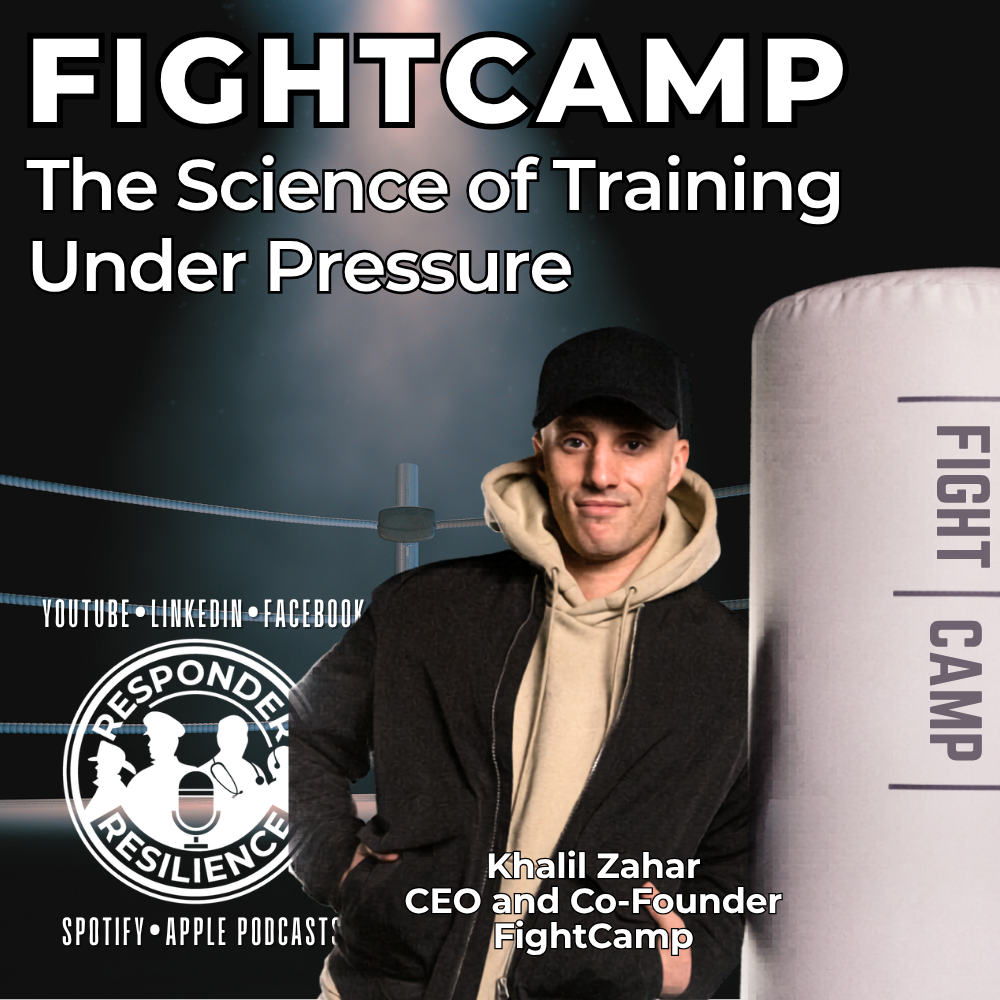
Most fitness products make you a promise. And most of the time, six weeks later, they're collecting dust in a corner. Khalil Zahar built something different. He was finishing his master's degree in Toronto when he walked into a boxing gym and fell completely in love — training four or five times a week, getting into the best shape of his life. Then he noticed something almost absurd: even elite-level boxers were still counting their punches with a clicker.
Most fitness products make you a promise. And most of the time, six weeks later, they're collecting dust in a corner.
Khalil Zahar built something different.
He was finishing his master's degree in Toronto when he walked into a boxing gym and fell completely in love — training four or five times a week, getting into the best shape of his life. Then he noticed something almost absurd: even elite-level boxers were still counting their punches with a clicker.
An engineer saw a problem. FightCamp was born.
What started as punch-tracking technology for Olympic and professional athletes became one of the most talked-about connected fitness platforms in the world. Today FightCamp has raised nearly $100 million in funding, backed by Mike Tyson, Floyd Mayweather, Georges St-Pierre, and Francis Ngannou. Two-thirds of its users had never boxed a day in their life.
But that's not why we called him.
We called him because of the first responders — the firefighters, cops, paramedics, and dispatchers who found something in FightCamp that a gym membership and a treadmill never could give them. Training that doesn't just build a body. Training that prepares the mind for chaos, processes stress instead of storing it, and builds the kind of composure that keeps you steady when everything around you isn't.
In this episode, we hear directly from first responders who train with FightCamp — and we sit down with the man who built it to find out why it works, where it's going, and what it could do for you.
If you know you should be training but haven't found the right thing yet — this one's for you.
Responder Resilience is produced for first responders and mental health professionals. New episodes on YouTube, Apple Podcasts, Spotify, Facebook, and LinkedIn. All past episodes at ResponderTV.com.
★ Resources for Responder Wellness ★
• Fitness: FightCamp (code RR10 for 10% off) http://joinfightcamp.com/rr
• Free App: CRACKYL http://crackyl.respondertv.com
• Book: Helping the Helpers https://a.co/d/dm0VS4QFightCamp:
Contact FightCamp:
Website: https://joinfightcamp.com/shop
Facebook: https://www.facebook.com/groups/joinfightcamp/
Instagram: https://www.instagram.com/fightcamp/
Contact Responder Resilience:
Phone: +1 844-344-6655
Email: info@respondertv.com
Our website with past episodes and more: https://www.respondertv.com/
YouTube: https://www.youtube.com/c/ResponderResilience
LinkedIn: https://www.linkedin.com/company/responder-resilience-podcast/
Instagram: https://www.instagram.com/responder.tv/
00:00 - Punch Tracking Meets Real Life
00:46 - Show Welcome, Sponsors, And Mission
03:27 - Khalil’s Path Into Boxing
13:45 - Why Training Beats Working Out
20:57 - Stress Relief, Presence, And Dopamine
27:22 - How The Trackers And AI Score Punches
32:54 - Functional Confidence For First Responders
41:03 - First Responder Stories And Reactions
48:43 - Where To Find Fight Camp
Punch Tracking Meets Real Life
SPEAKER_07
So originally when we developed this technology it was actually for the US and Canadian Olympic team and professional athletes. Those trackers, those different sensors, and there's one that is angular, the other one is linear, they basically track your hand motion a thousand times per second. But turns out it's an extremely scientific sport where repetition and muscle memory actually gives you straight up matrix tools. This is the transformation of you as a new superhero. You know, the process of really living it on the back leaves you in a very calm zone. I think that there's a visceral connection with developing self-defense skills that are extremely empowering.
Voiceover
Welcome
Show Welcome, Sponsors, And Mission
Voiceover
to Responder Resilience, along with my co-host Bonnie Rumley, LCSW. I'm David Ashinger. Most fitness products make you a promise. Six weeks later, they're collecting dust. Khalil Zahar built something different. He was finishing his master's degree in Toronto when he walked into a boxing gym and got hooked. Going four or five times a week, best shape of his life. And then he noticed something almost absurd. Elite-level boxers were still counting their punches with a clicker. An engineer saw a problem. Fight Camp was born. But what brought us to this conversation isn't Tyson and Mayweather on the investor list. It's the firefighters, cops, paramedics, and dispatchers who found something in Fight Camp that a gym membership never gave them. Training that actually prepares you for the job. We're going to dive into all that and more in a moment. This episode is brought to you by Fight Camp. Real training on your schedule. Head to jointfightcamp.com slash R and use code RR10 for 10% off. There's a new app built by firefighters for firefighters, and it's called Crackle. Download the app now for free as a legacy member and get early access to exclusive content, tools, and updates as they drop. Get the free app at crackle.responderTV.com. We invite you to like and subscribe, YouTube Responder Resilience, Facebook Responder TV, LinkedIn, Apple Podcasts, Spotify. Go to our website responderTV.com for past episodes. Guest information. We'll be right back to speak with Khalil after this. Ask a first responder who they are. And you're likely to hear I am a police officer.
SPEAKER_09
I am a firefighter.
Voiceover
I am a perfect.
SPEAKER_09
I am a 911 communications operator.
Voiceover
I do this work. I am this work. Ask a clinician why they work with first responders.
Bonnie Rumilly
And they may say, no fire spoken.
Voiceover
Join us in shaping a culture where mental health, wellness, and leadership are priorities. Not without it. And where no one has to carry the weight alone. Welcome to Responder Reality. We should get a spotlight on the unseen battles of first responder reality. And celebrate the powerful wins that come from the grit of post-traumatic growth. We understand the culture, under the trust, and bring you conversations from the change makers, passionate about helping first responders come home whole. With your hosts, retired Lieutenant David Dashinger, Dr. Stacey Raymond, and Bonnie Roomeli, LCSW EMT.
Khalil’s Path Into Boxing
Voiceover
We'd like to welcome Khalil Zahar. He's the co-founder and CEO of Fight Camp, the connected boxing platform that took punch tracking technology built for Olympic athletes and brought it into people's homes. Born in Tunisia, raised in Quebec, trained as an engineer, and apparently he's a pretty serious breakdancer. He built Fight Camp from a graduate school observation into a company backed by nearly $100 million and investors named Tyson, Mayweather, St. Pierre, and Naganu. Two-thirds of his customers had never thrown a punch before they found Fight Camp. He's here to talk about the firefighters, cops, paramedics, and dispatchers who found something in Fight Camp that a gym membership in a treadmill never could give them. Training that actually prepares the mind and body for the stress of the job. And today some of them, some of those first responders, will tell us what that means to them. And then we're going to ask Khalil what he thinks is really going on. Khalil, welcome to Respond Resilience.
SPEAKER_07
Thanks, David. That's quite the introduction.
Bonnie Rumilly
Thanks for joining us. It's great to meet you. As I said, when we were kind of warming up together, we've I've heard about the company through David quite a bit, and he sings your praises. So it's great to have you here today for our viewers to be exposed to this and to be able to hear something straighthand from you. So thank you.
SPEAKER_07
Thanks for having me. Sure.
Bonnie Rumilly
All right. So walk me through this. How does a mechanical engineer stumble into boxing and just tell us how this all started? Because that's the most interesting part here.
SPEAKER_07
Yeah, you know, it's um it was a culmination, I think, of a few things combined. Um you know, for me, when I I was raised in Quebec City, which is a very French city, uh compared to Montreal, where like a lot of people are bilingual. So I was looking to get out of uh the nest really um and explore the world a little bit. Um and at the same time, as David mentioned, um I was you know uh heavily uh involved in competing at a uh at a at a fairly high level in in B Boeing, aka breakdancing. And I was looking, I actually wanted to really drop my uh you know, my studies to do this full-time, which actually thank the Lord my dad really uh you know held some reason to me uh because it's an extremely tough career. But uh I decided to move to Toronto as, you know, to kill two birds at one stone. You know, I finished my undergrad in Quebec City where a lot of my friends just started having jobs at like, you know, 23, 22 years old. And for me, I was just really not there on a life standpoint. Like I was like, I'm not ready to just start climbing the corporate ladder and you know, really become an adult at that point. And I was I'm gonna buy myself a little bit more time and I'm gonna pursue a master's degree. And at the same time, I can pursue my passion uh and and try to compete at, you know, maybe try to reach my prime and my peak as you know an athlete or you know an artist, depending who you're speaking to. So I moved to Toronto, which was a very strong b-boeing scene. Um, and at the same time I was like, okay, I'm gonna I'm gonna I'm gonna perfect my English and at the same time I'm gonna train a lot. But and when I got there, I didn't know anybody. So I was as I was looking to kind of take my you know my body to the next level, boxing became a prime, you know, a prime contendant for, you know, something that I would do. And at the beginning, I was really approaching it from a conditioning standpoint. I was like, okay, I'm gonna I'm gonna do boxing. First of all, I'm passionate about the idea of becoming a boxer, but it was never really something that I had considered or for the lack of a better word, had the balls to do, frankly. Um and the main reason is, you know, you think of a boxing gym as quite an intimidating place. Like it's not it's not a place that you think you're gonna walk into and you know, like you basically have to, you don't know exactly what's gonna what's gonna happen during your first time that you're gonna try. You know, maybe you're not gonna fit in and you'll be like, okay, this isn't for me. You know, realistically, boxing gyms are, you know, especially today, like they're they're very welcoming places, and the coaches are, you know, at least in the good boxing gym, will take you by the hand and and show you and make sure you feel comfortable and so forth. But it's still a place where people fight, you know, and you kind of have this picture where there's maybe, you know, maybe there's people sparring as I enter. There's like some blood on the you know, uh, uh in the ring, and and then there's just uh a lot of testosterone being thrown around, and then like the trainer's gonna look at you and be like, great, you're next, you know. So I I was like, listen, I I I I want to start and I want to see, you know, where that's gonna lead me to. So I joined the boxing gym, and in the very classic fashion, through the years, spoke to so many people where they had the similar experience. I just came with my gym bag and I was like, listen, I'm just gonna check it out. I'm not sure if I'm I want to try yet, I just want to see what the training is like. And after an hour of being there, um the the coach that was running the class threw me a pair of gloves and he was like, Come, we'll do like a little bit of a mid-session. And really kicked my ass for like 10 minutes, you know, with mitts, and um ended up really being like, Oh my god, I really thought I was a conditioned athlete.
SPEAKER_06
Yeah.
SPEAKER_07
And this is gonna be taking my conditioning to a whole new level. That's how it got started, with really having physical benefits in mind.
Voiceover
Most people work out to look better. You work out because lives depend on it, but the stress doesn't clock out when you do. The calls follow you home, and most workouts weren't built for any of that. Boxing was. Fight camp builds endurance, reaction time, and real-world movement, and tracks every strike. So you see progress, not guess at it. Real training in your home on your schedule. You don't just finish workouts, you get better. Head to fightcamp.com slash RR. Use code RR10 for 10% off. Fight camp, real training on your schedule.
SPEAKER_07
Fast forward six months, now I'm addicted to technique at that point. Because for me, it used to be boxing and you know, let alone MMA, I used to think of it as like you need to be a little crazy in the head to like be good at this. Like you you need to have kind of this fiber of like uh, you know, ready to get knocked out essentially. Well, it turns out it's an extremely scientific sport where you know repetition in muscle memory actually gives you straight up matrix tools, you know, like you're neo and you're getting uploaded a code in your head, and suddenly you start to see punches before they come to you, and you can position yourself in a position that is advantageous for you to respond. And uh there's really like a noble and a in a in a really like a scientific art form to this. That's why they call it the sweet science. And that became my second accelerator to really fall in love with this form with this sport. And a year after that, now I'm like, man, I actually want to compete in this, and I don't really know if I'm like, I don't know if I'm capped. I you know, by then I'm like 25 years old, and I'm like, I started the sport very late. I don't know if I would even have the capacity to continue to evolve, like maybe I'm starting to hit my plateau. And slowly but surely, this question of how well am I doing and the uncertainty that I was training the right way started to settle in. And this was really the inception of everything. And for me, the solution came through my studies because I was studying um in a field of mechanical engineering called MEMS, which stands for microelectro-mechanical sensors, which is a very fancy word to just you know uh represent sensors such as accelerometers and gyroscope, um, you know, the same sensors, sensors that you have in your phones. Then when you turn your your phone 90 degrees, like the screen changes direction. Right. So, and this was back in 2014. So this was a perfect time where you didn't really have a lot of these devices out there. I think the the most common wearable, which used to be a term that nowadays is not even that much used anymore, was Fitbit at the time. So I was like, hey, I think you know, I can't be the only one having this problem, and I just put two and two together.
Voiceover
I love the fact you use the word training as opposed to working out because I think there's an important distinction, and we'll definitely have to get into that. And also that there's benefits to doing boxing training that I think any first responder can relate to. In my world, um it I think it's definitely improved my reaction time. By example, I was sitting across from somebody in a restaurant, I reached out and accidentally knocked the beer bottle over, and I was able to catch it before it fell over. And I'm like, six months ago, I couldn't have done that. I had to attribute that to the boxing. Um the other is stress relief. Like I know when I was on the job, and even today, when I'm, you know, I'm feeling pissed off or I've got a lot of just aggressive energy in me, there is nothing better than doing six, eight, ten rounds and just letting it out. I think that's a really important benefit that I get from doing it. So, Khalil, tell us a little more about the distinction between training and working out and how Fight Camp addresses that.
Why Training Beats Working Out
SPEAKER_07
Yeah, you know, I think um in our world, when we think about working out as a, you know, uh a maker of a, you know, a both uh I would say a skill development program as well as a workout slash fitness program, most of working out for us represents going to the gym or going to a workout place to get a physical outcome. Right, and that's kind of the main the main driver for people going to that location and and and doing the work. So we believe that this value proposition is actually a limited value proposition compared to something else where people can really feel fulfilled. And if you look at like you know, lifelong healthy and active people, most often you definitely have your fitness buffs who for 60 years are just hitting the gym and they're they're basically passionate about bodybuilding. There is those people, but for it, they're actually a very small segment of everyone who actually does weight training, for example. And the vast majority of people get a this negative relationship with with the gym because they're really just putting the outcome at the end, which is you know the bit the physical benefits, right? And I'm not saying it's necessarily a six-pack, for some people it is, uh, for others it's just you know simply being healthy. But we find that usually whenever someone puts the outcome that they're looking for at the end on the body side, it's very rare that they're able to stick with their routine for for a long time. They'll have a boost of motivation, usually around your year, and you talk to them, usually in June, and it's a little bit the same story over and over again. It's yeah, you know, I started good, but then you know, life happened, and I need to get back into it. I think I'm gonna wait a couple more months before getting back into it, but I will, and then this process drags along until the end of the holiday season, which then everyone feels like they've overeaten, and then you know, start again.
Voiceover
Cycle, yeah.
SPEAKER_07
Yeah, where when people find something they like to do for its own fulfilling benefit, when they develop a skill and they train for a specific it's it's the the training is basically what they're after, where they want to develop this skill, maybe that is part of their identity. And you can think anywhere from you know, people who just like they're just serial hikers all the way to rock climbers and or people that will have the occasional team sport that they do and so forth. These people have just a much higher success rate to stay active for many, many years to come. And for us, in in the world of martial arts, you know, you basically have two lanes. You have the the fitness gyms who disguise themselves as boxing gyms, and you know, there's many of these concepts where they're mostly like they're the flavor of the moment, and they're popular maybe for a while because it's novel and it's great, they put some good music and so forth. But it's rare that you you start to see this communic this community being developed where people just continue to go over and over again. And then you have this other lane, which is really true authentic boxing, uh, and or martial arts, where people actually develop skills and they get you know, they start building an arc to their identity where now that's part of who they are, and those people they can stay for forever. They can stay a lifelong martial artist, will continue to do their drills, they're not gonna do it as intensely as decades go by, but that becomes you know part of who they are, and those people uh we see having the best the best success rate.
Bonnie Rumilly
Well, it sounds like what you're saying is to have an outcome is something we choose mentally, right? We we decide I've been through something really hard, I want to achieve something better, or I want to achieve something great, right? So there's the outcome people are seeking, and then your body is the vehicle to get you to the outcome. And so the training, whatever that training is, is the part that's so important to get the body conditioned to get to the outcome. So is that the idea of marrying what you're looking for kind of mentally and just resiliency-wise along with your body and conditioning it to the place where it can get to do that?
SPEAKER_07
I think so. I think you're summarizing pretty well. Like ultimately, you know, uh the the physical results are so far off that it's gonna run your patience down. And it's just a bad setup for you to really set yourself up in this fashion. If you're going after training, and we use this word because training usually involves some type of ski uh some type of development that you get right away by training that is not just body, yeah, body related, it's part of it, but it's just um today I will work on developing insert X, whatever that is. And it can go from a specific part of boxing all the way to just like whatever surfing, and you're just working on a specific part of it. Usually the like you're very happy about going to develop this skill, and then you leave, and you're happy to have done it. And that that that reward cycle is so much faster that it just keeps you there. And that's why we think we should think of it more so as what can I do that I will like actually like that I will like to train for it.
SPEAKER_00
Not everyone is meant to walk this path, and that's okay. But for those who feel the call, for those who read these words and feel not just curiosity but conviction, know this. By the time a first responder sits across from you, they've likely exhausted every internal resource they have. This isn't a routine appointment, it's their 911 call. I don't know how much longer I can do this job. You won't hear sirens, but the urgency is real. If you choose to take that call, understand what it means. To show up, to stay steady, and to carry the weight of someone who spent a career doing the same for others. This is where the work begins. Be the resource they can count on. Order your copy of Helping the Helpers Today on Amazon, and for bulk orders, email us at info at respondertv.com.
Stress Relief, Presence, And Dopamine
Bonnie Rumilly
The brain part of all this, it's making me think about dopamine and some of the things that we know about in our world of psychology. Um, do you have thoughts on just getting into that positive dopamine cycle as well?
SPEAKER_07
There's multiple things that can really provide this dopamine release. Um I say that, you know, for us when it comes to boxing specifically, I'm trying to think of like outside of again this kind of skill development reward loop, you know, there's micro actions throughout your workouts that will basically develop this uh this dopamine release. And one of them is as stupid as it sounds, it's really like punching the hell out of the bag. Right? Like it's literally like it's a um uh I'm trying to say this word right as a second language speaker. Um Cathartic, yeah. Cathartic.
Voiceover
You know, I want to answer that, Khalil, that um I get such satisfaction out of when my glove hits the bag at the right angle. At the right speed, the right power, you get this incredible snap. And I get a, I think I get a dopamine hit from that. When I get a couple of those like, you know, strikes that just sound great, I feel great about it.
Bonnie Rumilly
Well, I'm gonna throw something in here because I probably don't look like someone who would enjoy boxing, right? We all kind of make judgments or, you know, we think we might know what people would want to do, right? So I had a trainer once where I had walked in and I had had a miscarriage, actually. And it was my first workout after that. And I walked in and the trainer could tell on my face something was wrong, and I said what had happened. And you know what? He didn't say one word to me. He went to the closet, he got the box and gloves out, and he got his pads. And I'll never forget this because we never spoke, but he let me box his hands, and I went until my body couldn't go anymore. And I also went until my body felt like it had released all of this pent-up stress and sadness. And so for me, it was a release of all of those emotions. So maybe to pivot a little bit, I wonder what are your thoughts on using this type of exercise to release emotional stress, but also how that pertains to our first responders.
SPEAKER_07
You know, one thing that came out recently, um Mark Zuckerberg, the CEO of Facebook and the founder, um actually is an avid MMA guy, actually now. And he used to be a runner, and now he's training MMA a lot. And uh this there was an interview when uh the reporter asked him why MMA, like why suddenly you're you know, you're kind of really attracted to to MMA, because I think he started about two years ago. And um if we speaking about like who is probably one of the most stressed out people in the world, I kind of think he's probably a great contendant, you know, for that. Uh given you know everything happening with his platform. And he was saying that running didn't cut it anymore for him because it allowed his mind to wander still. And um the process of meditation, which is also a great stress reliever, is basically to be very present and forget about the future and the past for a moment and just be right here right now. And he was explaining that MMA training for him really kind of like was the only thing that actually hit the mark where you really can't, your mind doesn't have the space to go elsewhere because you know, like you're gonna get you're gonna get kicked in the face otherwise. Uh so you're very much present uh in the moment and applying whatever you're learning, and that provides the a break for the brain. I think that's one aspect. The other aspect, Bonnie, is the one that you spoke about, which is like to just being able to really let the aggression out fully on the bag. And uh, you know, there is something that, you know, if you think about like say 10,000 years ago, 5,000 years ago, how many times probably a human would do that on a regular basis where this aggression would just come out and be left somewhere? Where nowadays you don't really have a lot of outlets to do that anymore. And it has a little bit of a bad connotation into some some people's minds, which like, you know, you know, you're kind of encouraging your brain for violence. But if you speak to martial artists that frequently go to the gym, they'll tell you that uh a lot of martial artists are actually the most peaceful people in you know in the world. Because they actually have this super strong outlet on a daily basis where they don't have this pent-up energy. Uh, as a matter of fact, you know, the the process of really living it on the bag leaves you in a very calm zone afterwards. You actually feel not only the on a dopamine release standpoint, but even your mind is a little bit more at peace. And frankly, it is hard to explain the psychological chain of how that happens, but experiencing it answers all the questions, really.
unknown
Great.
Bonnie Rumilly
Thank you for entertaining that.
Voiceover
I just want to reflect back on something you said. I think it has to do with um present moment awareness and mastering combinations precisely in uh boxing. And that's where you know, if you if you have different punches, different strikes, different, you know, it could be jab, cross, hook, uppercut, and that's put in a particular pattern that you need to replicate. And and the app and the technology that you have will tell you if you've done it correctly or not. Um, to me, that is probably improving neuroplasticity and um and brain function, but also at the same time present moment awareness, because you can't be thinking about something else while you're trying to put together, you know, a combination of punches and do it correctly. Um so I think that's one of the other things I really love about doing this um fight camp.
SPEAKER_07
Yeah.
How The Trackers And AI Score Punches
Voiceover
Let's talk about the technology that makes that possible. So you you referenced um you know micro uh elements like gyroscopes and um ones that are used today in the phones, but you have punch trackers that are very sensitive and able to sense a lot of uh motion information. What what how do they work and how do those relate to the experience of working or doing a uh workout?
SPEAKER_07
Yeah, so our whole philosophy with metrics um is basically twofold. The origin of the metrics was to basically give the truth to athletes. So originally, when we developed this technology, it was actually for the US and Canadian Olympic team and professional athletes. And then we wanted to do something bigger. Um this is actually, there's not a lot of people that actually qualified uh, you know, for that initial product that we had. So we actually developed a fully integrated experience with Fight Camp, which is the one that you tried, David. Um, and basically the approach there is not so much to give you all this super advanced data for you to understand your fighting performance, right? This is not the context that most of our users are are using this product. They they're using it because they want to learn and they want to train boxing and they want to stay motivated. So the metrics, they're basically the best way to get as close to what would happen if you actually would spar, which is where we will will say sparring is where engagement is at your most, right? Because, like literally, someone you have an opponent moving in front of you, and clearly your brain is not going to think of everything else but what's happening right now. When you work out from home, especially, which is kind of like what a lot of people have to do now because of life, you know, and they don't have either the commute time to go to the gym, they maybe don't have a good boxing gym around, or they have kids and so forth, and they need to work out from home. Working out in martial arts from home was actually an extremely hard thing to do. You could have you could go on YouTube and try to follow some instructions, but you really don't have anything to challenge you. So the way the metrics are overlaid in the experience, they're made to make you focus on a specific aspect of your game as you're actually performing the workout, and over time appreciate your progress. Right? So this is kind of like a two-way use is while you work out, you have your data in real time, and this motivates you to focus on one aspect or another. Another aspect is between workouts, you can monitor your progress and make sure that the work you're doing is giving you this reward loop that we were talking about. And like, yes, I am progressing, I can see it here, and I have I set myself the goal to do X amount this month, and I'm gonna keep myself accountable for it.
Bonnie Rumilly
By the time a first responder sits across from you, they've likely exhausted every internal resource they have. This isn't a routine appointment, it's their 911 call. You won't hear sirens, but the urgency is real. If you choose to take that call, understand what it means to show up, to stay steady, and to carry the weight of someone who spent a career doing the same for others.
SPEAKER_00
Be the resource they can count on. Order your copy of Helping the Helpers Today on Amazon or for bulk book orders. Contact us at info at responderTV.com.
Voiceover
This episode is brought to you by Fight Camp, real training on your schedule. Head to joinfightcamp.com slash R R and use code RR10 for 10% off.
SPEAKER_07
Yeah, so basically in in a nutshell, um those trackers, those different sensors, and there's one that is angular, the other one is linear, they basically track your hand motion uh a thousand times per second. Uh so we're basically we're able to know exactly what happened to your hand, at which speed, uh, you know, the exact trace of it. Uh, and we take this data and we put it into a black box, which is a an AI motion algorithm. And we train this algorithm with like hundreds of thousands of punches over the years. Outside of that black box, there's three different data. There is the type of punch that was thrown. So we know if you threw a hook, an uppercut, uh, or a straight punch, like a jab or a cross. We know the speed of that punch, and we know the relative power. And we combine this data to create a score at the end of your round, which is called the out the output score.
Voiceover
Okay.
SPEAKER_07
The more you punch and the harder you punch, the h that that number goes go goes higher and higher.
unknown
Right.
Voiceover
And just to add to that, um, it's not just boxing, but you also have kickboxing, which involves trackers on the feet as well.
SPEAKER_07
Yeah, that's right. We actually just launched that about a year ago, a year and a half ago.
Functional Confidence For First Responders
Bonnie Rumilly
Now we touched on this with the Mark Zuckerberg conversation, but what do you think it is about boxing, boxing movements, the feel of hitting the pads or the bags, you call them? Um, what is it that you think is so different than being on the treadmill or the stairmaster or doing free weights?
SPEAKER_07
I think a lot. You know, I think uh and and obviously, you know, I'm I'm a I'm on I'm a I'm a biased person answering this question, but there is a lot of cardio, right? That's part of the uh as part of a boxing training or a fight camp of a fighter and so forth. Uh whether it's running or, you know, different fighters will use a lot of different cardio cardio exercises. But what I think is different, and and and it's not for everybody. I'm not trying to say that every single person should absolutely do boxing or MMA for what I think it it has a unique offering to the world is I think that that there are some hardwired things in our bodies and our brain that ultimately we do have a survival instinct. And this survival instinct really gets awakened when you do martial arts, along with some other things that, you know, I don't know, some people, for example, they like climbing. And clearly, if you're if you're, you know, I don't know, 200 feet in the air, you're probably not gonna think of anything else and be very much in a state of fight or flight at that moment where you actually have to master this moment. I think martial art is another one like that. And I think that there's a visceral connection with developing self-defense skills that are extremely empowering. You know, and this is not an easy workout. Like, this is actually like on the spectrum of easy to hard boxing and MMA and martial arts training, I believe, is definitely on the higher end of intensity and tough workouts to go through. But the reward is so great that once you touch that reward, it really like you really feel like you're upgrading yourself on a human level a little bit, which is different than if you just do your workout to just lose five pounds or you know look better. This is just a whole new expansion to to you. And you know, this is the transformation of you as a you know, as a new superhero, you know, this is the superhero in becoming of you. And I'm obviously I'm painting a picture, but in the brain, these connections can happen a little bit as you develop skills, and that just becomes extremely addictive to come back and continue to do it because you see the progress from a week-to-week standpoint, you feel the strength, but you know, this isn't just a um lifting iron type strength. Like this is a you're stable on your feet, you feel quick, you feel agile because the hand-to-eye coordination really gets tested a lot.
Voiceover
Yeah.
SPEAKER_07
So it's just an extremely empowering workout.
Voiceover
You're touching on something that um I think is so important for particularly firefighters, but everybody really, and that's that it's a functional kind of training, right? As opposed to just lifting a weight, which you may or may not do on the job. We are um, you know, functionally tactical athletes as firefighters, cops, and sometimes also EMS and other professions. So this adds to that, but it also gives like a component of confidence. Um, what you're alluding to is like completing a workout, knowing that you just progressed to another level, you improved your accuracy, um, your power of your punches. That that imparts a to me like a level of confidence. Um, when I was a firefighter, that's how I wanted to feel going out there and doing a job. Like I don't want to feel like I'm behind, you know, behind the curve in terms of where I need to be uh with fitness. One more thing I'd love to add here is that a lot of workouts, in my experience, are very sort of single plane. Um they all happen kind of in a front plane where boxing is very lateral, uh, involves a lot of uh turning and twisting the torso and coming at different angles. To me, that's super important too, because if we train our body in the front plane, it's only going to be fit or sort of capable in that plane. But we are able to train in more quote of 360, you know, lateral um approach. That gives us a lot more mobility and able ability to to work um, you know, in a in a different way. So I think that's all some of the stuff that I find to be really um important when I'm doing the boxing training.
Bonnie Rumilly
I I also loved how you touched on the fight or flight and the amygdala and what's actually happening in the brain and body with these chemicals, because this is the kind of language that we're trying to talk about with first responders. And so the more that they can apply it in different aspects of their life, because what does the world do? It beats them down. You know, they go on calls, they pick up people who are constantly doing bad things in the world. And to me, it struck me when you're talking, this is a way to build back yourself. And in the face of that world that beats you down, how are you gonna decide to get back up? And it seems like boxing, you mentioned martial arts, a lot of law enforcement, especially like jujitsu, and there's a lot of explanation that sounds very similar to what you're saying. So we're giving people not only a physical tool but a mental one.
SPEAKER_07
100%, you know, and if you if you think of um this is one of the things that we think those those gyms that basically disguise themselves as boxing gyms are lacking a little bit, is this presence of the culture and the ethos around martial arts, and you know, whether it's boxing or any type of other martial arts jujitsu involved, is there is a um there's there's the workout, but then there's the mentality and there's the teachings that come with it. And these um these teachings, the the way they're being taught is is very interesting because it isn't it isn't like uh you're doing a workshop on the culture once, and then you go back to just training and they're completely separate. It's how the the coaches are reminding you as you're suffering through their workouts, and they're helping you guide you on what to focus on here and when to push through and how to think about the last 10 seconds as you're in the middle of it. And all of these things become basically reflexes that you can start applying on a day-to-day basis, and that you don't you you go through it for a while and you don't necessarily think it kind of affects the rest of your life. And at some point you kind of catch yourself using the same language that you're hearing during your workouts, but now suddenly you're applying it to something else. And this is where I think like the first time that I realized okay, my identity is actually starting to shift a little bit where these becomes kind of my own principles. And I think that's uh that's why it's I think it's important to have authentic coaches that really speak the culture because then you then you start to identify more so on a philosophical level with you know what this is preaching and what this is saying to you, and how much getting beaten down is just another challenge that is presented to you. And you know, as warriors, we we take that challenge and we we try to see, like it's it's a discovery of our own ability, like, oh let me see if I can even get through this one, and suddenly the mentality with this changes, right? Like you're approaching it as a curious discovery of a test and seeing, like, okay, well, the last one I was able to get through it. What about this one?
SPEAKER_06
Right.
SPEAKER_07
And um, yeah, so there's a lot of um, there's a lot, I think, of of power into that that culture and mentality.
First Responder Stories And Reactions
Voiceover
Wow, great stuff. Khalil, I'd like to play a couple of clips for you. These are from first responders, and let's take a look at them and afterwards I'd like you to comment, just talk about maybe what you're hearing them saying as far as how the training is, you know, changing the game for them, and maybe even how it shifts a little bit from what you originally um set out to do with Fight Camp. So here's first clip with Nikki.
SPEAKER_09
I'm Nikki Pinardo. I'm a detective at a police department in West Virginia. I handle all types of cases, but mainly I get cases for crimes against children, uh, a lot of the sex cases, essentially everything that adds a bunch of stress to your life. Um just like most people, when you get over stressed, you start overeating, you start eating like crap, you start feeling like crap, you stop moving, you stop everything. I got into flight. Once I got into the groove of it, it made me feel so much better. Lost a lot of weight, I'm able to just walk more flight steps without being out of breath. I feel more confident going out there, serving search warrants, arresting people. I'm not as worried about am I gonna be able to handle myself. The stress level has lowered a bit. I mean, nothing better than being able to take all that aggression up on a bag. And just my overall mental and physical health have improved greatly ever since I've done fight camp. And of course the community boards and everything else like that love chatting with everybody else and just the system itself has helped me greatly.
Voiceover
What'd you take away from that?
SPEAKER_07
So much. I mean, first of all, thanks a lot, Nikki, for the for the shout-out. I mean the I just feel honored, you know, to be able to help someone like that who's like really doing you know the Lord's work on the on the front lines of of of you know some of the worst things that can happen to us. So the the uh the ability to say that you know we are we're helping someone like her, it's just it's all the purpose that we need to just keep going.
Voiceover
Right, yeah. She did she also mentioned confidence that we were referring to earlier, so uh that was that was great to hear. Second clip's gonna be from James. Let's see what he has to say.
SPEAKER_03
Hello, my name is James Fitzgerald. I'm a police officer with the Pellin, Massachusetts Police Department, and Fight Campus helped a great deal in terms of my level of fitness, uh, managing stress, uh, as well as um, you know, being trained to you know keep moving my feet in certain situations. So, in terms of how it affects my work, um that's uh what it absolutely does for me. And I believe anybody that does what I do uh should uh should get the fight camp program. It'll help a great deal in terms of keeping us fit, keeping our stress levels low, and everything. Reminding us to get off that axe. Go fight camp.
Voiceover
I love that he's talking about moving his feet, which kind of relates back to the functional uh fitness part of this. Yeah, what are your thoughts on that?
SPEAKER_07
Yeah, I mean, like it you know, I think he um he focused on like I I I agree. The fact that he said like moving on my moving my feet and and get moving, I feel like he's just gotten uh lighter on his feet, both both on a you know physical level, but also he mentioned stressed a couple times. So uh yeah, again, another clear applications of someone, you know, that probably has to deal with a lot of stress and and uh I would say unpredictable situations. Um so yeah, I think that my two takeaways were we're definitely on the stress side and I would say on the lighter agility side. That's kind of how I I pictured you know the the benefit when he mentioned it.
Voiceover
Cool. Third one, uh this is from Rick, he's a firefighter.
SPEAKER_05
Hello, my name is Rick Alefson. I live in Chandler, Arizona. I'm a firefighter paramedic for the city of Tempe and have been for 18 years. I've been in fight camp for a long time. I love it. It's the only workout that I've been consistent with for most of my life. I do it at home and at work, and I'm actually intriguing a lot of guys to get interested in what fight camp is. So hopefully they look into you. Thank you.
Voiceover
So cool that he's doing it at work. Um I'd love to see what that looks like.
SPEAKER_07
Yeah, same. Same. Well, thanks a lot, Rick. First of all, to uh share it with your with your co-workers and and you know being being uh an avid user. I think probably the thing to celebrate here is when Rick said um it's the only one that I was able to stick to uh my whole life. Um and you know, if I could speak back to him, I would ask, you know, why? And I'd be curious to hear his answer, you know, and like what kind of made this different for him. And I would put my money on, you know, what we spoke about earlier, which is you know, it's not just the like it's probably switching from this outcome-based pursuit instead to this kind of training and you know, development, identity development pursuit. Um but I'd be very curious to hear from you.
Bonnie Rumilly
I am very curious, just as a therapist sitting here, um, I mean, I could psychoanalyze these clips all day and your responses, so it's fun. But how does it feel for you to see these clips and to know that because of what you are doing, you're changing people's lives and you're changing first responders' lives, which is it's hard to do that, I'll tell you. We're in the business of it, and I just want to know how you feel about all this.
SPEAKER_07
You know, that's I feel super grateful, you know, in in in a nutshell. Like we learned uh relatively early that uh we were a popular product with first responders, and uh that definitely hits a different chord, I would say, you know, not to you know uh w we love all of our the people we're helping, but the ability I think that to to be able to say that or to claim that we are a product that has a strong fit with first responders that are, you know, that literally saving our lives on a day-to-day basis, it just feels really empowering to be able to help someone like that. Imagine if one day like this is this is me who's gonna need that person, and you know, maybe that person is actually gonna have been it's got it will make it maybe will make the difference between them being able to save person and themselves versus not. And to to think that we have maybe a a a tiny bit of impact on that is just extremely um it gives us purpose. So that's that's a beautiful thing.
Bonnie Rumilly
No, thank you for answering that, and I'm incredibly grateful to hear about your story, how you formulated the company, and what you're doing. And I'm just so grateful. So thank you for taking time out of your life to be here with us. Uh I know we kept going back to the first responder part. Um, but we always want to bring to them what we know will work, and this just sounds amazing and like a no-brainer. So thank you, Khalil.
SPEAKER_07
It's my pleasure, guys. I really appreciate you guys bringing me on. And uh, you know, we're big fans, so let us know if we can do anything for
Where To Find Fight Camp
SPEAKER_07
you guys.
Voiceover
Thank you so much. And where can people find you, Fight Camp? Any links and channels you want to share?
SPEAKER_07
Yeah, so you you can find us uh uh on our website at www.fycamp.com. Uh you can also follow us on social media uh throughout TikTok, Instagram, Facebook, and YouTube. Uh so just search fight camp. Uh and I am personally, you can connect with me uh on Instagram at Khalil Zahar, uh K-H-A-L-I-L-Z-A-H-A-R.
Voiceover
Beautiful. Well, I know there's a lot of things we didn't have time to get to today, but um maybe we can do it in a future uh interview down the road. In the meantime, I want to thank you so much for spending this time with us and kind of bringing us into the the world uh fight camp and helping us understand it better. So thanks for all you're doing and lots of success moving forward.
SPEAKER_07
Thank you, David. I appreciate that. Thanks for having me.
Voiceover
Remember to like and subscribe, YouTube, Responder Resilience, Facebook, Responder TV, LinkedIn, Apple Podcasts, Spotify, and visit our website. It's respondertv.com. It has our guest information, episodes, and more. Till the next time, stay safe, be kind to yourself. Take care of the
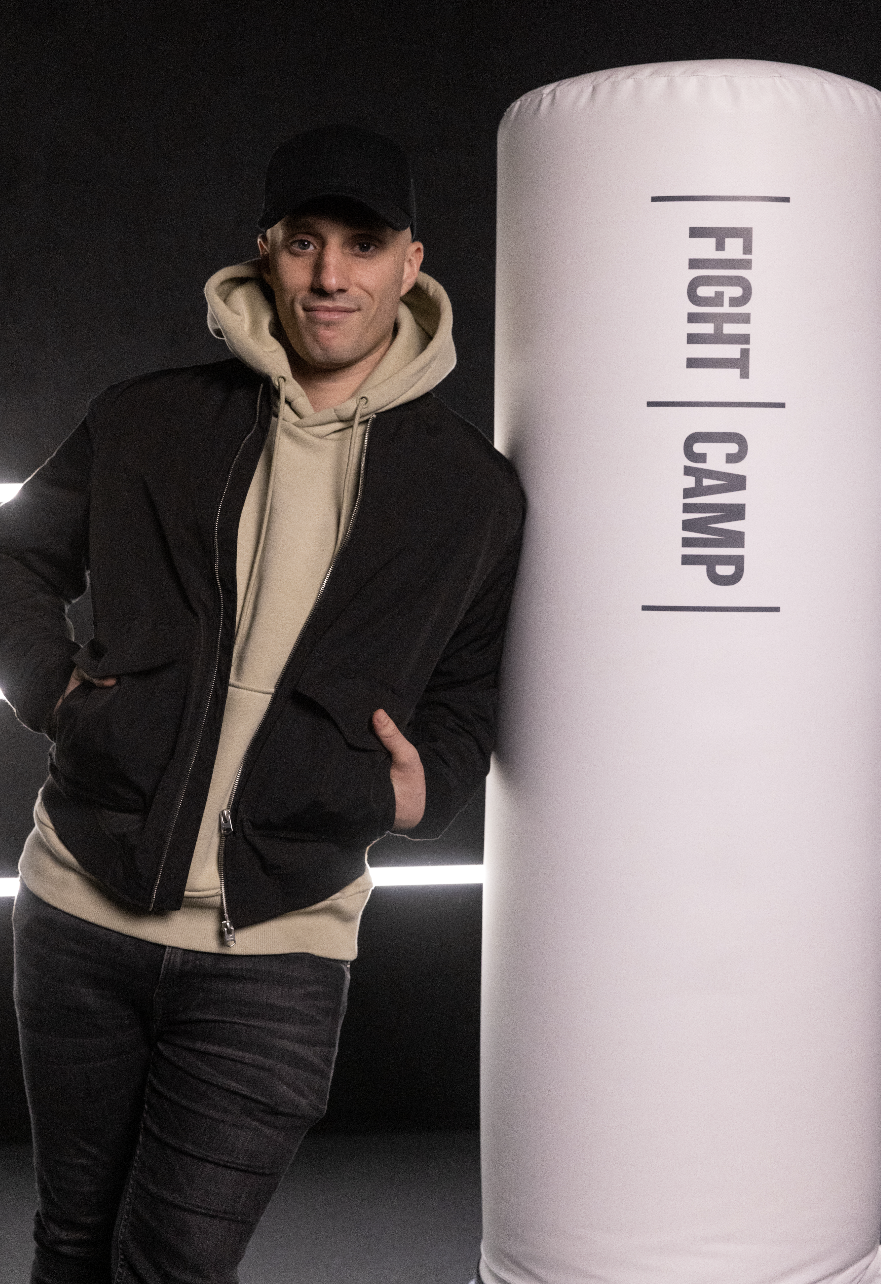
Founder and CEO of FightCamp
Khalil Zahar is the Founder and CEO of FightCamp, the connected boxing platform bringing authentic fight training into people’s homes. Since launching, FightCamp has raised $100 million from investors including Y Combinator, New Enterprise Associates, and Left Lane Capital, along with athletes and cultural icons such as Mike Tyson, Floyd Mayweather Jr., Georges St‑Pierre, and Francis Ngannou.
Under Khalil’s leadership, FightCamp has become one of the most recognized brands in connected fitness, combining hardware, software, and coaching to deliver a fighter-level training experience to consumers around the world.
Khalil is known for building products at the intersection of technology, sport, and culture, and for leading FightCamp through both hyper-growth and disciplined profitability in a challenging consumer hardware market. He’s particularly passionate about the psychology of fighters, brand-led growth, and building companies that blend performance, storytelling, and community.
Beyond his role as CEO, Khalil is also a DJ and electronic music producer, performing in underground scenes and private events while exploring the parallels between entrepreneurship, creativity, and performance.
Born in Tunisia and raised in Quebec, Khalil brings a global perspective to entrepreneurship and often speaks about leadership, resilience, and the mindset required to build meaningful companies