Apple Podcasts
 Spotify
 YouTube
 RSS Feed
 A Retired FBI Agent on Why First Responders Should Tell Their Story — Jerri Williams | S6 E27
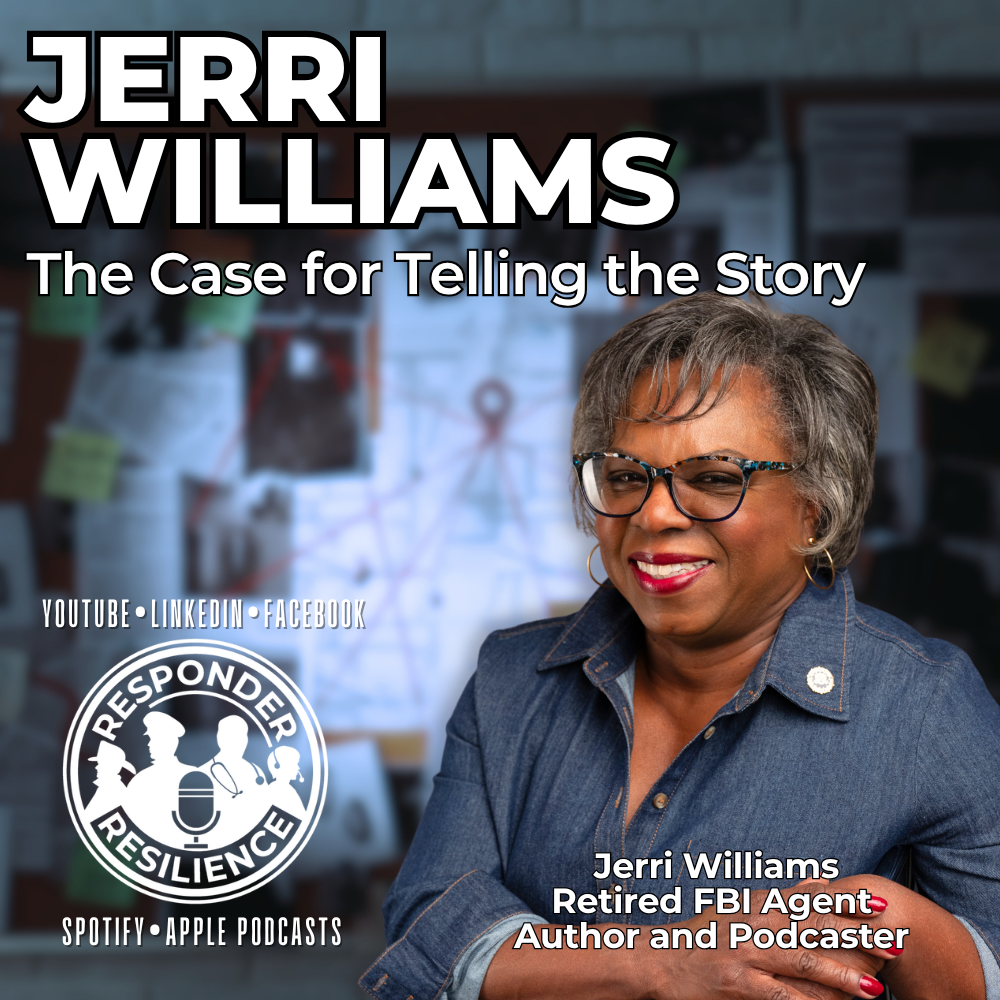
After 26 years as an FBI Special Agent — investigating fraud, corruption, and the schemes that cost people everything — Jerri Williams could have walked away quietly. She didn't.
After 26 years as an FBI Special Agent — investigating fraud, corruption, and the schemes that cost people everything — Jerri Williams could have walked away quietly. She didn't.
She entered the Bureau in 1982 as one of the first Black female agents in FBI history. She worked the cases. She learned the truth. And when Hollywood started telling a different story, she wrote the book to correct it — literally.
Now she hosts FBI Case File Review, a true crime podcast with over 10 million downloads, and she's on a mission to preserve the real stories of the men and women who served.
In this episode, Jerri, David, and Stacy sit down to talk about something every first responder needs to hear: why your story matters, why telling it protects the profession, and why silence is the real threat to your legacy. In this episode:
- Why Jerri has spent 10 years sharing FBI stories — and what she's learned
- How authentic storytelling shapes public trust in law enforcement
- What gets lost when first responders don't preserve their experience
- Why your personal legacy deserves to be told — on your terms
- The cases that changed how she sees the mission of storytelling itself
Watch on YouTube | LinkedIn | Facebook | Listen on Apple Podcasts | Spotify | Full archive: ResponderTV.com
🔔 Subscribe for new episodes every week. https://www.youtube.com/c/ResponderResilience
★ Resources for Responder Wellness ★
• Fitness: FightCamp (code RR10 for 10% off) http://joinfightcamp.com/rr
• Free App: CRACKYL http://crackyl.respondertv.com
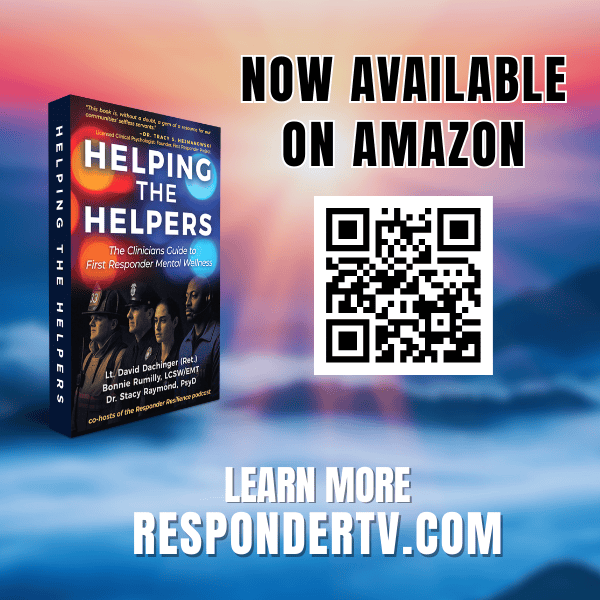
• Book: Helping the Helpers https://a.co/d/dm0VS4Q
Connect with Jerri Williams:
🌐 jerriwilliams.com
📘 facebook.com/JerriWilliamsAuthor
📸 instagram.com/fbicasereview
💼 linkedin.com/in/jerriwilliamsauthor
📚 FBI Myths and Misconceptions: jerriwilliams.com/books
#ResponderResilience #FirstResponders #LawEnforcement #FBI #MentalHealth #Storytelling #FirstResponderWellness #TrueCrime #Leadership #LegacyBuilding
🎙️ Responder Resilience is built for first responders, mental health professionals, and anyone committed to the long-term health of those who serve.
00:00 - TV Fiction Versus Real Service
02:56 - Meet Jerry Williams And Her Why
05:05 - Starting A Podcast For Crime Novels
07:28 - Taking Back Public Trust Narratives
10:05 - The Biggest FBI Cliches Explained
14:02 - When Entertainment Gets It Right
16:55 - Legacy As A Living Archive
20:58 - Vulnerability Behind High Stakes Cases
26:56 - Representation And Recruiting For Trust
30:40 - Retirement And Finding Your Next Chapter
37:25 - Where To Find Jerry And Final Thanks
TV Fiction Versus Real Service
SPEAKER_00
What most people know about law enforcement, about the FBI, about first responders, they get it from TV shows. Most of our families have really no idea what we did on a daily basis. If you had the opportunity to know more about your great grandparent, or maybe even your father or mother, would you like that opportunity? I have been able to have some unbelievable episodes where people share their most vulnerable insights about what it was like to do the job. But sometimes it's just acknowledging that it did a good thing. So I knew about being in front of a camera and behind a microphone. So I started a podcast.
Voiceover
Jerry Williams built her career in an era when the FBI looked very different, and she helped change that one case at a time. Jerry Williams didn't walk away quietly. She picked up the microphone, and now she's changing something else: the narrative. Because the FBI you see on TV is not the FBI she served. Her book, FBI Myths and Misconceptions, is her open invitation to discover the real one. And now her podcast, FBI Case File Review, has surpassed 10 million downloads. That is incredible. And she's just getting started. She also won the FBI's G Man Honors Distinguished Service Award for sharing the FBI stories. And today we're talking about something every first responder needs to hear: why your story matters, why telling it protects the profession, and why silence is a real threat to your legacy. This episode is brought to you by Fight Camp, real training on your schedule. Head to jointfightcamp.com/slash R and use code RR10 for 10% off. This episode is brought to you by the First Responder Center for Excellence. Because even the best of us face unexpected challenges. They've got the tools, the training, and the resources to keep you strong, safe, and resilient. Equip yourself at FirstresponderCenter.org. We invite you to like and subscribe, YouTube Responder Resilience, Facebook Responder TV, LinkedIn, Apple Podcasts, Spotify, and go to our website, respondertv.com for past episodes and guest information. We'll be right back to speak with Jerry after this. Ask a first responder who they are, and you're likely to hear I am a police officer. I am a firefighter. I am a paraletic. I am a 911 communications operator. Not I do this work, but I am this job. Ask a clinician why they work with first responders. And they may say, There's no higher calling than helping the helper. Join us in shaping a culture where mental health, wellness, and leadership are prioritized, not whispered
Meet Jerry Williams And Her Why
Voiceover
about, where support is a sign of strength, not failure, and where no one has to carry the weight alone. Welcome to Responder Resilience. We shine a spotlight on the unseen battles of first responder reality and celebrate the powerful wins that come from the grit of post-traumatic growth. We understand the culture, honor the trust, and bring you conversations from the change makers, passionate about helping first responders come home whole. With your hosts, retired Lieutenant David Dashinger, Dr. Stacy Raymond, and Bonnie Roomley, LCSW EMT. On this episode, our guest is Jerry Williams. She's a retired FBI agent, author, and podcaster who served 26 years in the FBI, specializing in economic fraud and corruption investigations. She's now on a mission to show the public who the FBI is and what the FBI does. January 2026 marked her 10th anniversary hosting and producing FBI Case File Review, a true crime podcast dedicated to real stories told by the agents who live them. Jerry's also authored four books, two FBI police procedurals, and two of them are nonfiction titles that debunk the misconceptions about the Bureau found in books, TV, and movies. You can learn more about that at jerrywilliams.com. Jerry, warm welcome to Respond to Resilience.
SPEAKER_00
Oh, thank you so much for having me.
SPEAKER_05
So, Jerry, I'd like to start out by asking you, you know, this, your podcast goes uh back 10 years. What was the original spark for you to get started with that?
SPEAKER_00
Well, really, the original spark was for me to sell crime novels. I mean, that was my intention when I retired from not just the FBI, but my post-FBI job, which all FBI agents get because you know we get to retire so early. And what I wanted to do was sell crime novels. And so I wanted to build a platform on which I could find potential readers of my books. And so a lot of people were blogging back then,
Starting A Podcast For Crime Novels
SPEAKER_00
and I thought, well, I don't want to write about writing. And I knew a lot of people. My last position at the FBI had been the spokesperson for the Philadelphia division. So I knew about you know being in front of a camera and behind a microphone. So I started a podcast. And so that was the initial reason, but that was in 2016, and my motivations uh slowly begin to change and become more of a I would say community service uh motivation.
Voiceover
That's amazing, Jerry. Like 10 years in podcasting is like, you know, a hundred years and doing anything else, and it's incredible. I I can't um give you enough credit for having that endurance, that longevity. And you've been doing it for so long. What kind of keeps you going now when people other people would have called it done?
SPEAKER_00
Uh because it's well, one of the reasons it's been successful and it's grown every year. And so I feel an obligation to my listeners. But really, the main reason is I get to meet so many fascinating, you know, agents that I didn't have an opportunity to work with. I get to hear about some, you know, fascinating and exciting cases that I never got to work during my career. And so I actually am a listener of my show. I really enjoy uh the case reviews and the stories.
SPEAKER_05
So, Jerry, as you know, the public trust in law enforcement, um, it's under constant scrutiny. Um what is it about telling authentic stories that is um helpful? Why does it matter to um you know, to tell stories regarding the FBI or law enforcement that are that are actual?
SPEAKER_00
Yeah, I think it's because we get to take back the narrative. You know, what most people know about law enforcement, about the FBI, about first responders, they get from TV shows. And that's the reality. You know, we like to think that everybody's watching the news, but they're not. You know, they're looking at TV shows or uh reading books, hopefully, and they're also just scrolling through social media. And so what somebody else is putting out there is
Taking Back Public Trust Narratives
SPEAKER_00
what they're seeing and what they are believing is the reality. And, you know, we need to take that back and make sure that shows like yours and like mine and so many others are giving the true side of what we do and who we are.
Voiceover
There's a new app built by firefighters for firefighters, and it's called Crackle. Download the app now for free as a legacy member and get early access to exclusive content, tools, and updates as they drop. Get the free app at crackle.responderTV.com. All units, stand by for a confirmed structure fire with reported persons trapped. In a world where first responders save lives, this book could help save theirs by preparing you to answer when they call for help. Based on over 200 conversations and the trusted team behind the Responder Resilience podcast, helping the helpers gives you the tools to understand their world, speak their language, and earn their trust. This work is challenging, but deeply needed and profoundly rewarding. Their stories don't start with trauma, but too often they end there. Infused with real-life experiences, this guide reveals the human behind the badge and equips you to build a first responder-centered practice that works, from understanding their culture to the practical realities of working with first responders and chapters across the spectrum of first responder professions. You'll gain insight into the hidden struggles that shape their reality and the steps you can take to help them heal. When trust is shattered, the stakes are high. This book helps you build it before it's too late. Are you ready to make a difference? Be the resource they can count on. Order your copy of Helping the Helpers, the clinician's guide to first responder mental wellness today. Well, you were talking, I'm thinking about, you know, watching so many movies and TV shows as a firefighter. I see things that just irk me because they're so unrealistic, right? You see firefighters running, and every time there's a scene with firefighters on it, and and we never run, right? That's something we would just never do. So, what are some of the things that you see out there that you've really been on a you know mission to kind of educate the public about some of the misconceptions?
SPEAKER_00
Yeah, so I came up with uh 20 cliches that I see in books, TV, and movies about the FBI. And even though it's my number two cliche, it's the one that I
The Biggest FBI Cliches Explained
SPEAKER_00
talk about the most, and that is that the FBI doesn't play well with others. And you know, that came from that diehard movie where the two FBI agents walk into you know the terrorist event, and the police detective comes and says, you know, I'm in charge here, and they say, not anymore. And that happens over and over again in so many TV shows and movies and books and that it just I just want to tear my hair out, or throw a shoe at the TV set, or throw the book across the room whenever I read something like that, because you know it really is just the opposite. Uh you know, you see that every day in the cases where the FBI is working very closely with local law enforcement and you know local um state you know agencies that you know we don't come in and we have no subordinate role over you know local or state agencies and it irritates me so much because it's such a negative view.
Voiceover
Absolutely. And so if you came at it from the opposite angle, are there any shows or movies you've seen that are pretty accurate?
SPEAKER_00
Uh very few. But I would definitely yeah, I would say Mindhunter, I really enjoyed that. Now that's another one of my cliches, which is that, you know, FBI profilers are out hunting down serial killers by running through alleys and dark basements, and you know, profilers are really consultants, you know, helping uh local detectives and FBI agents solve what appears to be an unsolvable case. But I love Mindhunter because they showed profilers, you know, in their true role of trying to gather as much information about what makes a criminal a criminal, and then sharing that information with law enforcement so that they may, you know, uh help them with their investigations.
SPEAKER_05
So I have to ask, what is your number one pet peeve or what is the number one misconception on your list?
SPEAKER_00
Number one is that FBI profilers are chasing serial killers. And yeah, number two, which I went back and forth with, but number two would be um, you know, that we don't play well with others. You know, and I just did one of the things I do every month I take a TV show or movie and I review it, not for whether it's entertaining or good or bad, but for teachable moments about FBI policy procedures and programs. And one of the last ones I did was the Chicago TV shows, Chicago Fire, Chicago PD, and Chicago Med. And I am sure that that's one of your favorite stories, isn't it? Isn't that one of your favorite TV shows? Probably not.
Voiceover
No, it's funny. Um, you know, I I can't watch a lot of those shows, and it's rare that I can. I think the last movie that I saw that was the most accurate was Code 3 uh about EMS. And that one, um, because it shows burnout, it shows you know some of the um just the dynamics of doing that job outside of the calls that was so well done.
SPEAKER_00
Yeah, and and so that's why I feel it's so important because my husband and my daughters love the Chicago shows. And I have only watched one show. Well, I would say three shows because they had a crossover episode maybe a month or two ago, and it involved the FBI, and they told me about it, and so I watched all three episodes and then talked about what I saw and those teachable moments, and the the show was about um um weapons of mass destruction. So I talked about that, but I had to also talk about this, you know, FBI not playing well with others because that was a big scene, several scenes in those
When Entertainment Gets It Right
SPEAKER_00
three crossover episodes where the FBI came in and was treating people poorly and you know as if they were, you know, at um you know, a superior. And you know, we c we can't do our job if that were the way it really happens. We all need each other. And so um, yeah, that's that's why one of the things that I love to do is to push back on that narrative.
SPEAKER_05
That's really important. Um so clearly you're invested in capturing uh stories, you know, especially for the FBI. Um, how does a podcast or a book serve as a as a living archive?
SPEAKER_00
Oh, absolutely it does. And I always say, and yeah, and sometimes when I when I reach out to agents and ask them to be a part of the show, every now and then I'll have an older agent say, you know, I'm not about talking about myself, or you know, I'm done with that, or you know, I I I'm not into self-promotion. And even though I usually don't push back because I have plenty of people who are interested in being on the show, you know, I do send them just a little note talking about personal legacy. And I said something to the effect of if you had the opportunity to know more about your great grandparent or your grandparent or maybe even your father or mother, would you like that opportunity? And it really hit some of them in a way that you know they're they're surprised.
Voiceover
Most people work out to look better. You work out because lives depend on it. But the stress doesn't clock out when you do. The calls follow you home, and most workouts weren't built for any of that. Boxing was. Fight camp builds endurance, reaction time, and real-world movement, and tracks every strike so you see progress, not guess at it. Real training in your home on your schedule. You don't just finish workouts, you get better. Head to fightcamp.com/slash RR. Use code RR10 for 10% off. Fight Camp, real training on your schedule. What about personal legacies? You know, anybody that's a first responder, why would a retiring first responder really want to care and preserve that legacy of all their work?
SPEAKER_00
Well, again, for the same reason that I mentioned, you know, most of our families have really no idea what we did on a daily basis. You know, we we didn't share while we were on the job because we wanted to shield them. You know, we did not want them to be afraid when we walked out the door. But after it's
Legacy As A Living Archive
SPEAKER_00
all over and done, I think we owe it to our families and we owe it to ourselves to acknowledge the the things, the accomplishments that we had. And to keep that inside, I think is one of the reasons that some people have a hard time separating from the job because all of that stuff is inside. And you know, some of them may go out and speak to a counselor if it gets to that point, but sometimes it's just acknowledging that you did a good thing, you know, that you had a job that was important to your community, to your country, you know, to the world, and not try to keep hiding it inside because you're afraid that somebody is going to um be traumatized by what happened when they're fascinated. I mean, we know they're fascinated. You see all these true crime TV shows and true crime books and movies and things that are out there. People are fascinated by these stories. And why should we have somebody doing a podcast? And which is fine, but why should we depend on somebody who's doing a podcast, kind of doing a, I would call a fancy book report, you know, talking about what we do when we can again have shows like this and uh you know yours and and and mine to to share that acknowledgement. And but it doesn't have to be a podcast interview, you know. It could just be a purposeful conversation with your loved one that's recorded. But it also could be a fascinating, you know, wonderful read of a book about one of the cases, one of the complex, you know, investigative uh, you know, journeys that you you went on. Uh, people love that. And I think it's a shame that some of us are are holding all of that that personal legacy, that personal knowledge, that institutional knowledge inside. And I would push back and say maybe it's even a little selfish not to recognize that you have a gift that needs to be, you know, shared.
Voiceover
You know, there's another reason I can think of, and that's when we want to have more mental health professionals who are able to work with our population, the performed they are as to what the job entails, I think the better they can build trust. We wrote a book released last September called Helping the Helpers. There's several chapters where we go into the stories of many first responders. And one that always stood out for me is uh uh with Giovanni Rocco, who was um working with the FBI and infiltrated a Mafia family. And his story for any clinician that wants to work with law enforcement and understand undercover operatives, it is, you know, I think it should be like required reading only because that world is so different than civilian world.
SPEAKER_00
Yeah, I've had him on my on my podcast, you know, talking with uh him and the supervisor of the task force. He was a task force officer with the FBI. And and and that's one of the things that I really like about my show is that I have been able to have some unbelievable episodes where people share their most vulnerable um insights about what it was like to do the job, how they might have concentrated so much on the investigation that they ignored their their marriage and ended up getting a divorce. Or they didn't spend time with their kids, and that's time that they'll they'll never get back. And they do talk about that, and for the most part, not with regret, but with acknowledgement that this is how important that particular assignment or the particular job were to them. These are great stories, and I'm really spending, you know, my time trying to encourage everyone, you know, to share
Vulnerability Behind High Stakes Cases
SPEAKER_00
their story. Again, it doesn't have to be a book, you know, it certainly doesn't have to even be a podcast interview, but some way of making a notation. One of the one of the best things I ever did was, you know, when I won that FBI Agents Association's award, I realized I had never recorded my own father's story. And he was 86 at the time. And so I sat down with him for three hours and learned so much about him that I thought I already knew because he was an Air Force, uh, he was in the Air Force for 21 years, and just some of the stories that he shared were, you know, uh eye-opening and my and I I had no idea, you know, that they had occurred. And, you know, the only regret that I have is that I didn't do that for my mother, who died back in 1989 at 50 at 52. You know, I don't I don't I don't know about her wants and desires and what she, you know, you know, how she felt about being, you know, a Homemaker traveling, you know, around the world with you know her Air Force husband and family. I don't I don't have those stories. And so um I that's what I try to do when I when I try to encourage people to share their stories. If they're not gonna do it for themselves, I I encourage them to do it for their families. You know, maybe you think your kids could care less about what you did, but they will eventually. Exactly. They will eventually. And so I'm a storyteller, you know, I write um, you know, novels and fiction, but I also um am a story collector. I love to use that word instead of podcast host. I'm a story collector. Right. And uh I think it's important.
SPEAKER_04
As firefighters and first responders, we're brilliant at the basics. We master the art of stretching the line and we excel at being there for those who need us most. Yet, even the best of us can be caught off guard. We sometimes face unexpected challenges like injury, cancer, or post-traumatic stress symptoms. But you're not alone. The First Responder Center for Excellence is here to equip you with the tools and resources you need to stay informed and prepared. We help you focus on staying strong, safe, fit, and resilient. Optimize your performance with cutting-edge health, wellness, and science information. From fitness to nutrition, medical evaluation to behavioral health, cancer awareness to cardiac health. We've got you covered. Remember, we're stronger together. Discover more at firstrespondercenter.org and connect with us on X, Facebook, LinkedIn, Instagram, and YouTube. The First Responder Center for Excellence. Equip yourself with excellence for every call.
SPEAKER_05
Jerry, you were among the first black female agents in the FBI, and it was a different era then. So um is part of your drive to document and share stories, you know, linked to the fact that you know that there are changes in the FBI now?
SPEAKER_00
Well, uh, if you had asked me that question two years ago, I would have said yes. But I don't know if if I think we're going backwards right now. Um, I think there is a need to make sure that all law enforcement agencies reflect the communities in which they serve, you know, as far as having more women and minorities and people that speak different languages, you know, on the rank. So when you go out into the community, the people feel hopefully a connection and a trust. Yes, that can be done across racial lines, but it makes people feel comfortable when they see someone that looks like them, you know, coming into their home in one of the most um crisis events of their other lives. And so uh when I came into the FBI, there were less than you know 0.5% you know African American women in the FBI. And today I think it's it's I don't even think I know it's still less than 1%. And and so active um recruitment and reaching out to people and letting them know that this is a job. The FBI is a job like no other, as the as the promotion goes, is very important to me. And a lot of times I don't need to do that actively. I can just be present and show them, you know, who I am, um, which is exactly you know what I'm talking about when the community also sees, you know, somebody that looks like them, you know, knocking on their door or coming up in an emergency vehicle vehicle, you know, when there's been an incident.
Voiceover
We'd love to have you talk a little bit about maybe one or two of the most impactful cases that you've done on the podcast and ones that kind of stick with you that revealed something kind of true, profound about the profession. Yeah.
SPEAKER_00
I would say the one case that um there are several, but the first one I'm gonna talk about, and I think it was episode 43. If it wasn't 43, it was 53. I've I'm gonna be posting episode 398 uh tonight. So sometimes I I get the numbers uh mixed up. But it was the poly class investigation. And if uh if you remember, poly class was a 12-year-old girl in California who was abducted out of her bedroom while she was having a sleepover with friends. And I talked to the case agent who investigated that case. And uh he was like one of the first agents who during the case review, while I was talking to him, he
Representation And Recruiting For Trust
SPEAKER_00
took me back to you know, to that time when he was investigating and talked about how, you know, he never went, he had a daughter the same age as Polly, but during this time period, you know, for two, three weeks of just trying to find her, trying to figure out what happened to her, that he wasn't sleeping, he wasn't eating, he was just constantly working, and he had a panic attack where he couldn't breathe and he couldn't, he couldn't talk, he couldn't sing, and people came into the room and were like, what happened to you? And we both cried on that episode. And I left it in. And after that, I think even more agents became uh vulnerable, felt that they could, you know, talk about, you know, the what happened to themselves. And then I had one more recently, was either this year or early in the fall, where a woman who worked child predator cases, you know, told me that she was absolutely in distress after working these cases for almost 20 some years or over 20 some years. She but whenever she made an approach to maybe getting help, you know, her supervisors would say, The first thing we're gonna do is change your job assignment. We're gonna take you off of this. And so she would immediately no, no, no, no, it's not that bad, because she wanted to continue. This was her life's works. She wanted to continue to work, you know, sex trafficking and child predator cases, but she couldn't find a way to get help. And so what she did is she worked up until her retirement and then immediately retired because she knew she was in a bad place. She was able to get help after retirement. And you know what she does today? The same thing. She's still working, you know, child predator cases, she's still working, you know, for a nonprofit trying to help children and get them in safe places. But now she could do it with the knowledge that she can get help and talk about it and you know, take an opportunity to, you know, express, you know, what her personal feelings are without having to worry about somebody's solution being to take her away from doing what she really loves. And so that case was just so important uh for me to to be able to share. And again, she had no issue whatsoever of crying and sobbing through some of the story because she had retired and she was in a place where she knew how important it was to share those feelings. And so, yeah, those are some of the the cases that um you know are very special to me, along with the ones where you you just had no idea that you know the FBI was involved in such exciting and impactful, you know, cases around the world. So it's it's a good thing, you know. I don't I don't see myself ever stopping uh doing this, even though I'm sure my husband is thinking like, I thought you were retired. Yeah, right.
Voiceover
Yeah, it's not the right word for what we call this, right? This is like chapter, you know, life 2.0, the next chapter. Yeah, absolutely. You're trained to help people heal, but first responders, they carry trauma that's buried under silence, stigma, and stress. Helping the helpers gives you the framework to connect, to speak their language, earn their trust, and actually make an impact. From the experienced team and clinicians behind the Responder Resilience
Retirement And Finding Your Next Chapter
Voiceover
Podcast, this isn't theory. It's real-world support for the ones who need you most. And this book isn't just for clinicians. If you're an agency leader, peer support team, chaplain, EAP, wellness program coordinator, or family member, helping the helpers will equip you with the tools, language, and insight to make a difference. Be the resource they can count on. Order your copy of Helping the Helpers on Amazon today.
SPEAKER_05
What you shared, Jerry, those two cases, it just shows how um, you know, the human nature part of what the FBI deals with in some cases, you know, how the um agents are affected by that and they're deeply affected. And, you know, they're working with some of the most painful, you know, unsolved situations. Um, and you know, I I wonder if the public realizes that.
SPEAKER_00
No, and I that's why I love my show. Um, I concentrate more on cases so that people can get an understanding of what it's like to investigate the case. At the very end of the show, I'll ask the agents a little bit more about, you know, who they are and you know, why they join the FBI. But I like to show what happens during a case. And I love it when the agents feel comfortable enough to give us that their internal thoughts and what's going on at home. When, you know, on Thanksgiving Day they tell their wives and their families, I gotta go out and work a case. Or on Christmas Day, you know, in the middle of opening, you know, their presents with their kids, you know, they have to go and uh and work a case. And and having them share those personal stories in addition to showing us what an an investigation looks like, you know, really just makes these uh case reviews uh so worthwhile to do and for the public to be able to listen to.
Voiceover
Yeah, I think uh that's so important that you're bridging that gap because the families of first responders, like you said earlier, have no idea what we're doing most of the time. And um, you know, they're just riding along with us energetically because we're bringing some of that home, but we're not really talking about it. So you're really uh you're really filling in that that need incredibly well. You've clearly taken your existing skill set from working at that job and found a new purpose and a new mission. What what advice would you give to someone who's looking at retiring or perhaps is retired retired and just trying to find what the next thing is? What what kind of uh advice would you give them?
SPEAKER_00
I would definitely say if you haven't yet retired, you know, spend some time thinking about what your next adventure is and and how that might be able to happen. It may be, you know, during your last years of your job going back to school, you know, and and and taking the time to do that. Uh, it may be, you know, networking and starting to meet people. I mean, while I was still in the FBI, I started attending um Thrillerfest, uh, which is a um uh a big convention in New York every year with people who write thrillers and crime fiction and police procedurals. And so I started networking, you know, as soon as I was aware of, you know, those uh opportunities. But if you can start working on, you know, don't don't work on your next job while you're doing your your current job, but if you can start thinking about it and putting things in place, that makes for a better transition, you know, into your your next adventure. But if that doesn't happen, then you know, taking some time after retirement. So many of us retire uh and then go directly to your post-retirement job, and you know, without having a uh a time to think about what it is I really want to do, what I want to accomplish. Um, and I think again, uh, when we go back to to stories, it's just like looking at your life and and and what's not necessarily missing, but what you can do to enhance it and to create even you know a more um uh beautiful legacy. And one of the things I love to say is it's hard and very difficult to look at your life as a story when you're in the middle of living it. Yeah, but we all have our stories to tell and to share. And so um, you know, taking the time to figure out what it is you want to do, because so many just kind of rely on, well, you know, I was a first responder, a police officer, you know, so maybe I'll go into a security job. But you know, hold on, you know, maybe there's something else, you know, education or writing or acting, you know, or doing something creative that you can still use your life experiences to make you better at this next thing that you want to do. But don't automatically assume that you need to get a job and you know, security because that's what you did, you know, in in in your day job. That's all very sound advice. Thank you for sharing that. Well, that's what I did. I wanted I knew I wanted to be a crime novelist, and so um, you know, I I stuck it out and and you know, very excited to to share that I just recently, you know, got a new two-book deal with source books um to uh to uh you know do a traditional uh crime novel about uh, of course, you can guess, uh black female FBI agent uh investigating you know fraud and corruption in the Philadelphia area.
Voiceover
All right, yeah, so you should have a you should have a pretty good handle on that character.
SPEAKER_00
Yeah, definitely. Yeah, I've I've written a similar character before, but this will be a a new one. And again, when I write these stories, I just don't talk about the case. But one of the things I've learned so much from the podcast is to make sure that there is that internal story, that internal want, uh, those internal desires that we also talk about as we you know look at the investigation that is unfolding, you know, um uh between the pages.
Voiceover
Great. Well, thank you for shedding the light on that in all the ways that you do, because it's so important, as we said earlier, to kind of uh portray this work in an accurate
Where To Find Jerry And Final Thanks
Voiceover
way as opposed to what we see out there sometimes on film and TV. So, Jerry, um speaking of the book, where can people find your books that are out now and find you in the podcast and any other links you want to share?
SPEAKER_00
Yeah, well, the first place I would direct people to go to is my website, which is jerrywillions.com, and that's J-E-R-R-I-Williams.com. And you'll find my books and the podcast and also my blog post about uh reviews of TV shows and movies uh about the FBI and and and how I uh uh find teachable moments. But all my books are available, as they say, wherever books are sold. And so I I hope they'll be interested in and picking up copies of those too.
Voiceover
Fantastic. Yeah, we'll share those links out in our show notes as well. Stacey, any final thoughts?
SPEAKER_05
Well, Jerry, it was so great to meet you and I enjoyed this very it's a little bit different um interview that we had today, but um you know it's you you certainly gave us some insight into you know how the FBI is portrayed and and you know where to find better sources for it. So thank you very much. Thank you for having me.
Voiceover
Yeah, and Jerry, um I've been working on a presentation that really speaks constantly about the culture of silence, which most first responders, you know, we we kind of work in that in that culture, at least we used to changing a little bit now. But the fact that you are really promoting and advocating for telling the stories and putting that out there in the world, um, I can't thank you enough. And I am so impressed with uh 10-year run doing a podcast. That's absolutely incredible. So continued success with everything you're doing.
SPEAKER_00
Same to you. Thank you so much.
Voiceover
Remember to like and subscribe, YouTube, respond resilience, Facebook, responder TV. We're on LinkedIn, Apple Podcasts, Spotify, and our website is respondertv.com. Till the next time, stay safe, be kind to yourself, take care of the event.

Retired FBI Agent | Author | Podcaster
Jerri Williams, a retired FBI agent, author, and podcaster, served 26 years in the FBI, specializing in economic fraud and corruption investigations. She’s now on a mission to show the public who the FBI is and what the FBI does. January 2026 marks her 10th anniversary hosting and producing FBI Case File Review, a true-crime podcast. Jerri has authored four books: two FBI police procedurals and two nonfiction books that debunk misconceptions about the FBI found in books, TV, and movies. Her work helps true crime enthusiasts and aspiring FBI agents learn how the FBI investigates crime. Visit jerriwilliams.com.