Community, Connection, and Burnout in EMS: Pups & Cups | S6 E21
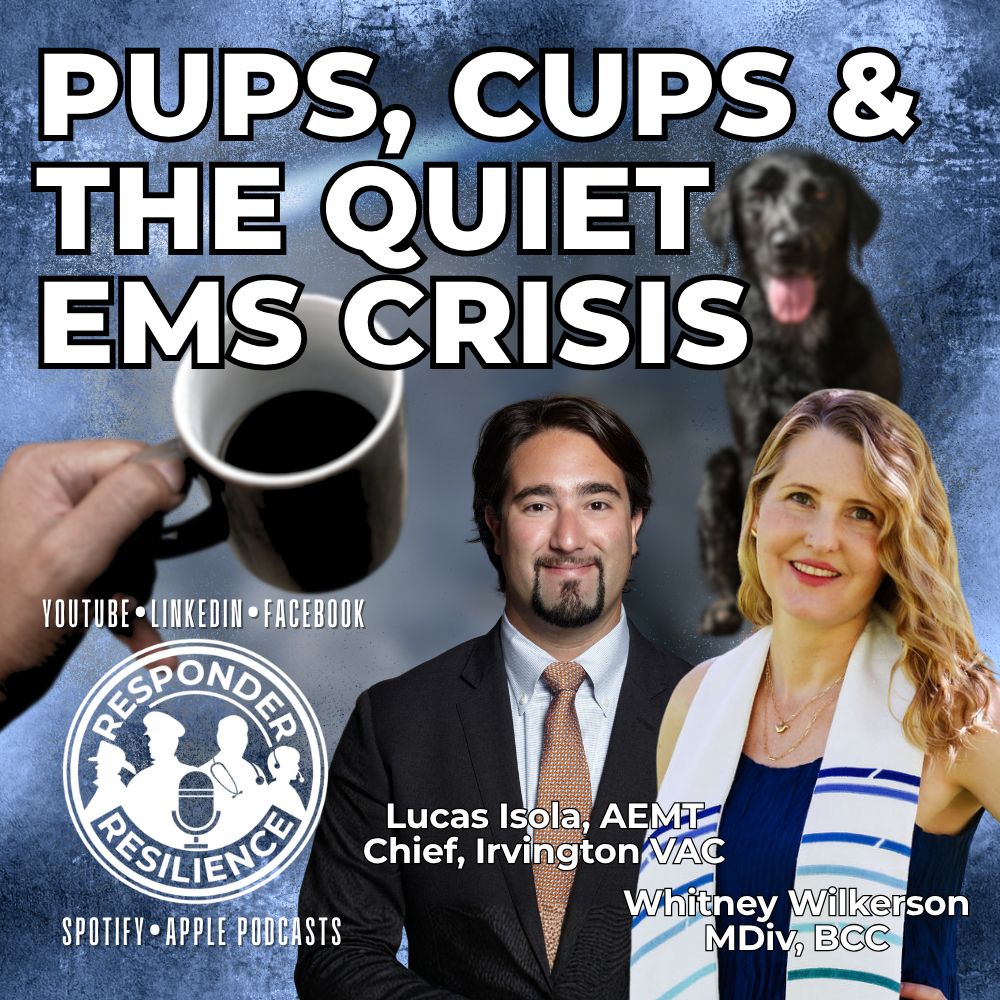
They respond to the worst moments of people's lives — every single shift. Then they clear the call, restock the rig, and do it again. Nobody asks if they're okay. The system just keeps moving. In this episode of Responder Resilience, we sit down with two people who decided that wasn't good enough.


They respond to the worst moments of people's lives — every single shift. Then they clear the call, restock the rig, and do it again. Nobody asks if they're okay. The system just keeps moving.
In this episode of Responder Resilience, we sit down with two people who decided that wasn't good enough.
Whitney Wilkerson (MDiv, BCC, NBC-HWC) is a board-certified chaplain, ordained interfaith minister, and trauma-informed wellness coach with 25+ years of experience supporting people through crisis — from pediatric hospitals to trauma centers to military burnout. Lucas Isola is a 15-year EMS veteran and Chief of the Irvington Volunteer Ambulance Corps in New York, who got tired of waiting for someone else to fix the problem.
Together, they built Pups and Cups — a resilience initiative that brings therapy dogs, coffee, games, and stress-relief tools directly to EMS stations. No pressure. No clinical setting. Just real support, on the crew's terms.
We get into why suburban EMS agencies are more psychologically vulnerable than most people assume, why spiritual care has nothing to do with religion, why the simplest interventions often land the hardest — and what happens to patient care, team culture, and retention when you actually invest in the people doing the job.
This one hits different.
🎙️ Responder Resilience is built for first responders, mental health professionals, and anyone committed to the long-term health of those who serve.
Contact Whitney Wilkerson and Lucas Isola:
Website: https://www.irvingtonvac.org/
Website: http://pupsandcupsproject.com/
Website: https://reverendwhitney.com/
Website: https://whitneywilkerson.com/
Contact Responder Resilience:
Phone: +1 844-344-6655
Email: info@respondertv.com
Our website with past episodes and more: https://www.respondertv.com/
YouTube: https://www.youtube.com/c/ResponderResilience
LinkedIn: https://www.linkedin.com/company/responder-resilience-podcast/
Instagram: https://www.instagram.com/responder.tv/
★ Resources for Responder Wellness ★
• Fitness: FightCamp (code RR10 for 10% off) http://joinfightcamp.com/rr
• Free App: CRACKYL http://crackyl.respondertv.com
• Book: Helping the Helpers https://a.co/d/dm0VS4Q
00:00 - Why Connection Is The Answer
00:45 - Who Shows Up For Responders
01:48 - Sponsors And Where To Follow
03:40 - Meet Whitney And Lucas
04:51 - Whitney’s Origin Story In Crisis Care
06:20 - Resilience Is Not Toughing It Out
08:25 - How They Met Through Volunteerism
12:09 - What Pups And Cups Does
14:54 - Low Call Volume Still Means Stress
16:51 - Families Feel The Pager Too
20:55 - What A Typical Event Looks Like
24:03 - Ripple Effects On Culture And Retention
26:10 - Scaling The Program And Getting Buy In
31:00 - Resources Pathways And The Calm Cart
33:02 - Spirituality As Meaning Purpose Belonging
34:41 - Leadership Takeaways And Operational Performance
39:11 - Closing And Stay Safe
Why Connection Is The Answer
SPEAKER_07
When I look at our emotional and our spiritual well-being, the number one thing that surfaces for me is community and connection.
SPEAKER_03
You know, it involves building a system where people can realize there's a community. You know, we have shared experiences here, we can lean on each other.
SPEAKER_07
It brings first responders together to enjoy the ritual of coffee, to benefit from pet assistant therapy.
SPEAKER_03
If you go in strong and mentally resilient to each new emergency, I think you serve your community, your patients, all the better.
SPEAKER_06
First responders are deeply spiritual beings, and I think one of the primary ways that I see that is that sense of purpose.
Who Shows Up For Responders
Voiceover
Welcome to Responder Resilience, along with my co-host Bonnie Rumley, LCSW EMT, and David Dashinger. Think about what we ask of EMS providers. They show up to the worst moments of people's lives every single shift. Car accidents, cardiac arrests, overdoses, pediatric emergencies. And then what? They clear the call, restock the rig, and do it again. Nobody checks on them. Nobody asks if they're okay. The system just keeps moving. Whitney Wilkerson is a board-certified chaplain and trauma-informed wellness coach who spent 25 years showing up for people in crisis. And she started asking hard questions about who was showing up for first responders. Lucas Estola is a 15-year EMS veteran and chief who got tired of waiting for someone else to answer that question. So they built pups and cups, therapy dogs, coffee, games, real conversation brought directly to the station on the crew's terms, zero pressure. And what they found when they started doing it, well, that's what we're going to
Sponsors And Where To Follow
Voiceover
get into today. This episode is brought to you by Fight Camp, real training on your schedule. Head to jointfightcamp.com/slash RR and use code RR10 for 10% off. There's a new app built by Firefighters for Firefighters, and it's called Crackle. Download the app now for free as a legacy member and get early access to exclusive content, tools, and updates as they drop. Get the free app at crackle.responderTV.com. We invite you to like and subscribe, YouTube Responder Resilience, Facebook, Responder TV, LinkedIn, Apple Podcasts, Spotify, and our website is respondertv.com for past episodes and guest information. We'll be right back to speak with Whitney and Lucas right after this. Ask a first responder who they are, and you're likely to hear I am a police officer.
SPEAKER_06
I am a firefighter.
Voiceover
I am a parallel.
SPEAKER_06
I am a 911 communications operator.
Voiceover
Not I do this work, but I do this job. Ask a clinician why they work with first responders.
SPEAKER_05
And they may say, There's no higher falling than helping helpers.
Voiceover
Join us in shaping a culture where mental health, wellness, and leadership are priorities, not whispered about, where support is a sign of strength, not failure, and where no one has to carry the weight alone. Welcome to Responder Resilience. We shine a spotlight on the unseen battles of first responder reality and celebrate the powerful wins that come from the grit of post-traumatic growth. We understand the culture, honor the trust, and bring you conversations from the change makers, passionate about helping first responders come home whole. With your hosts, retired Lieutenant David Dashinger, Dr. Stacy Raymond, and Bonnie Roomley, LCSW EMT.
Meet Whitney And Lucas
Voiceover
We'd like to welcome Whitney and Lucas to the show. Whitney Wilkerson is a board certified chaplain, ordained interfaith minister, and trauma-informed wellness coach with 25 years of experience sitting with people in their hardest moments. Psychiatric units, trauma centers, pediatric hospitals, military burnout. She's been in the room when things fall apart, and she knows how to hold that space without an agenda, a script, or a religious requirement. Lucas Assola is a 15-year EMS veteran and chief officer of the Irvington Volunteer Ambulance Corps. Together with Whitney, he created pups and cups, therapy dogs, good coffee, and real conversation brought directly to the station. Whitney and Lucas, welcome to Responder Resilience.
SPEAKER_05
Thank you.
Voiceover
Thank you.
SPEAKER_05
It's great to have both of you. And this is a new topic for us, so we can't wait to dive into it. Whitney, I'd love to start with you. So as we know, first responders are such a unique population. What really drew you to start working with this population?
SPEAKER_07
Well, first I would say, David, I'm glad that you mentioned that it's good coffee. That's an important part of some cups. It's not just any old coffee.
Whitney’s Origin Story In Crisis Care
SPEAKER_07
So I was born one of three children. And uh at age 11, my sister was diagnosed with a very rare autoimmune disease. And at that time in the 80s, the choices were the path of hospice uh or to undergo experimental treatment. And my family, in conjunction with my sister, made the decision to pursue experimental treatment. Uh and it took her 28 years to pass away. Um, she way outlived her prognosis. Um and along the way, her illness trajectory increased and increased and increased, and she developed additional um diagnoses and disorders. And so a very complicated case, medically fragile and medically complex. And so my family was no stranger to having first responders in our lives in a very intimate, very personal way, um, both in our home, uh showing up at school unexpectedly, whenever there was a crisis or there was a need. And so I think from an early age, I was very aware of first responders. I received the care of first responders, and I saw that somebody I love dearly uh also benefited and received that care.
SPEAKER_05
Thank you for your vulnerability and for sharing that. And we do this episode in honor of your sister and all of her friends and family who love her.
Voiceover
Thank you.
Resilience Is Not Toughing It Out
Voiceover
So, Lucas, um, I want to just turn the focus a little onto EMS per se. And the word resilience, we use it a lot, we hear it a lot, but why is that a critical issue in EMS, especially when it comes to first responder stress, right? That we kind of maybe are not aware of ourselves or aware of in our uh our crew, the people we work with. So beyond the obvious traumatic calls, what do we need to know about resilience and stress in EMS?
SPEAKER_03
Yeah, well, thank you, David. Thank you, Violet, for having us. Um very excited to be here, really excited to share this program. Um, no, I'm I'm the uh child of two immigrants uh immigrated from Argentina to come here to do medical resiliency, both physicians. Uh, and I got involved in healthcare and in surgery at a really young age. Uh started in EMS at 17 uh in high school and uh became a critical care ET at long out while I'm studying in university. And yeah, when you're younger, it's a little easier to brush this stuff off or maybe ignore its effects. Um and I think younger age thought that resilience was just toughing it out. Um, and I think I've come to learn, and and a lot of us understanding this very carefully have come to learn it's really not um toughing it out. Um you have to you know be able to recover, to reset. Um, and what everyone expects from you externally is that you can wrap up with a call or a shift or a week or a month and come back and continue to serve at a high level. Um if you respond to emergencies, and for many folks, this is their worst day, one of their worst days. Um, they'd expect a crew that walks in the door, that comes into their nursing home, system living facility, wherever they are, and be at their top notch, be at their absolute best, whatever chronic stressors are going on, um, without being normalizing, you know, issues that you're having. Um, and that's that's what got me really excited about this and and interested in helping others learn how to navigate here.
SPEAKER_05
Well, that's great. It makes so much sense
How They Met Through Volunteerism
SPEAKER_05
what you're saying. And before we dump dive deeper into that, what I'd love to do is learn about how the two of you met. How did you get connected? And then how did that relationship evolve into what we're talking about today?
SPEAKER_07
I moved to the Westchester, New York area and was looking for a way to connect with my community and to give back to my community. And of course, my nine to five is a form of give laugh, um, but I was looking to give back in a more personal way. Um, to really uh get to know my neighbors. And so I looked at all of the agencies in the area and reached out to the Irvington Volunteer Innolence Corps, and Lucas immediately responded back with such enthusiasm about volunteerism, and I thought, I have not even met this gentleman, but I'm in. And so um that's how the relationship started, and uh that was about uh I'd say Lucas, about a year, a year and a half ago.
SPEAKER_03
Yeah, yeah, that sounds about right. Um, and and what brought Whitney and I together, um, you know, I talked about my start in EMS being in high school. It was at Irvington Volunteer Ambulance. I was a high school student at Irvington, I joined as a junior member. Um, that's how I got my start in EMS um volunteering, and and I remembered it with such joy. Um, and that goes back to 2003. Um and so, you know, it was it was a different time back then. Uh, you know, there was 50, 60 volunteers on the roll. Um, every night crew might have four people on it every single night. Um, and then I I took a small break from EMS. Um, I went into the tech world. Um, and then I came back and and COVID brought my family and I from uh the city back to the suburbs so we could raise our children. Um and I went to rejoin Irvington Ambulance. And what I found was something different. Um, something that we're all familiar with, or if you're adjacent to the volunteerism world, um, that it had become very difficult to sustain. The calls had become more intense, more frequent, um, population aging. Um, and I said, Hey, you know, I I need to give back here. I I spent a significant amount of time in the professional side of EMS and fodder. Um, and I said, I've learned a lot of lessons that um I really want to bring back to everything to Whitney joined um and super excited to meet her. And a lot of the folks who joined were EMTs already or wanted to drive. Um Whitney came with a really interesting, exciting viewpoint and an interesting way that she wanted to contribute to the organization. Um something I'm excited to share with you all today, because you know, a lot of EMS organizations are focused on you need a driver, an EMT, or a medic, and you have to finish the crew and get the bus out the door. But there's lots of other stuff that you need to focus on to help your crews mentally and support them.
Voiceover
Most people work out to look better. You work out because lives depend on it. But the stress doesn't clock out when you do. The calls follow you home, and most workouts weren't built for any of that. Boxing was.
What Pups And Cups Does
Voiceover
Whitney, um you shared a bunch of pictures, and there's a lot of young people in those pictures, and I have a feeling that has to do with uh what Lucy Lucas is talking about and looking at some of the issues that face EMS, and some of that is recruitment and retention. So um speak to Pups and Cups and who that serves, what it does, and how you do it, um, because then obviously coffee and dogs are an important part of that.
SPEAKER_07
So when I look at our emotional and our spiritual well-being, the number one thing that surfaces for me is community and connection. Right. So I look at it from a what we call relational spirituality lens. How am I connected to myself, to you, to my community, to the other folks at the agency, my town, all the way out to whatever it is that one considers to be transcendent, whether it's looking at the moon on a dark night and saying, wow, this is incredible, or a relationship with a higher power. And so that relationality feeds at all levels of our being, our strength, our health, our well-being. And so Hugs and Cubs takes that ritual of drinking coffee. I myself have beautiful, fond memories of sitting around with people that I care about drinking coffee, how connecting that is. Um, it brings the incredible power of pet assisted therapy, um, how that affects our uh cortisol levels and really soothes us in such a profound way. Uh, and so it brings first responders together to enjoy the ritual of coffee, to benefit from pet assisted therapy. And then because we don't work alone, our volunteers, our first responders have families. We invite their partners, their spouses, their children to join in and make that community even stronger. And hopefully to give them insight into what's the day-to-day life like, uh, so that they can really expand their understanding of what happens when this person goes to work. Uh, what are they experiencing and who are they interacting with?
SPEAKER_05
Well, Lucas, this one's more for you, but I also was homegrown and grew up in a small town in Connecticut doing EMS. So I followed, I think, a similar path to you. Um, and I think a misnomer and something that we always hear on the fringes is oh, you're from a small town, the call volume is low, um, you you're not experiencing the same amount of trauma or psychological distress that other people would who do real EMS. Um I'd love to hear your take on that and how it relates to pups and cups and what you and Whitney are doing.
Low Call Volume Still Means Stress
SPEAKER_03
Thank you, Bonnet. That's uh it's an exciting small world here in the in the Northeast. Um Yeah, that's that's a really interesting question. And um, a lot of folks come at this from different angles, right? There are people who only experience EMS world from volunteering. There are people who only experience, you know, first response from a professional capacity, whether a public safety entry point, fire, police, um, etc. And everybody sort of looks at it through that lens. Um but lowered call volume, um, smaller districts, they don't really mean lower stress. Um, one thing is uh in volunteerism, a lot of these folks are getting back to their community, and we're fortunate in having the low call volume because people can fit EMS volunteerism into their day-to-day lives. Their day-to-day lives also have stress. I have a four-year-old and a nine-year-old kids who've had weeds think they need done it's full. My nine-year-old broke his elbow, and I had to take him to the doctor, and then in the middle of that, or in the middle of dinner in the evening, you run off to attend to somebody's worst day, like we talked about earlier. Um, and the the one point is you know, some people use the term really MS. I've heard that, Bobby, and I've heard it said, and I've been out of there's 15 calls in a 12-hour period, and you don't eat and you don't get to stop at all. Um, and that has its own unique stressors, um, ones that definitely we should not ignore. Um, but having a lower call volume brings other issues with it. You know, New York is one of the you know, couple of dozen states where EMS is not an essential service. We lack the financial support that that we require that we need, and that comes with a lot of challenges. It comes with folks who are, you know, overworked and underpaid and you know, equipment that perhaps hasn't been updated appropriately. Um, and so you know, that lower call volume, those smaller communities, they have their own challenges. Um, and the stress is no less real.
Families Feel The Pager Too
Voiceover
Whitney, um, I want to also circle back to something you said, um, referring to pups and cups and family, when especially in a volunteer EMS or volunteer fire, the volunteers tend to live through their pagers or whatever system they use to get notified that there's a call, right? And so their families have this experience of being anywhere, dinner, out, about, you know, the movies, whatever, and that pager goes off and it's like, sorry, you gotta go. Um, and then they don't see the look their loved one who's the volunteer. They don't know what's going on during the call. So does pups and cups address that to give the families a little more connection into that part of uh of the EMS volunteer world?
SPEAKER_07
And say that's a indirect benefit. It's not something that we are explicitly focused on doing, but I think it's uh it's an ancillary benefit. Um just Saturday we had a pups and cups event at a neighboring VAC, and um a mom said, My daughter has something to say to you. And of course it's a tween. I'm thinking, gosh, she's really going to give me some some tough feedback. So I'm prepared. And she said, I want you to know this is the best event ever. And she said, not only is it cool because the dogs are here, but there's things for us to do as kids. And she was referring to all of the Jenga and Connect 4, um, and uh really being able to connect with other kids who are the children of other first responders. So strengthening those connections for the kids, maybe developing friendships with them so that there's uh and even stronger understanding of community, and then also being in her parents' workplace and being able to say, what is this? What are these over here? Oh, is this the ambulance that you drive? So I think it's uh it's a it's a benefit, but it's not one that we explicitly set out to uh make, but it's definitely happening.
SPEAKER_05
Well, what I love about this model that you've set up is that it is inclusive of the families. You know, we we think about that a lot actually on the podcast, but Stacy and I as therapists, and how do we engage spouses and and children and help them feel like they're a part of that culture too? I think there can be so much resentment, you know, at mom or dad leaving that dinner table to run out, especially volunteers in a small town. Um, the staffing relies on you. And so, yes, your family are the ones that take the hit first. Um, and I think we probably don't do enough in EMS of psychoeducation or providing peer support for those spouses and children. But what you're doing here, it's so obvious and simple at the same time. You don't have to have a ton of handouts, you don't have to hire someone like me to come in and give them the big talk about psychology. What you're doing is helping people get together organically and feel comfortable with that environment. And hopefully, in doing that, the spouses and children build an understanding as well as to why this thing that takes them away is so important and what they're doing.
SPEAKER_03
Very well said.
SPEAKER_07
I can't add anything more than that. Well said. Mic drop right now. Mic drop. Yeah, absolutely.
SPEAKER_05
More than modalities, EMS clients need a clinician who gets it. Someone who will answer the call when they finally make it, someone who won't flinch, won't freeze, and won't patronize. As one therapist said, if they trust you, they'll spread the word to other EMS providers.
SPEAKER_00
And they'll never forget you.com.
What A Typical Event Looks Like
Voiceover
Um, you've talked a little bit about what you do as activities. Give us a little more like the mission statement and also like what would a typical event look like. Uh, Lucas, if you want to start.
SPEAKER_03
Yeah, definitely. Um Pubs and Cubs sort of came together because Whitney had approached me with an idea that I think I I knew and had internalized, but I never really heard out loud. Was that resiliency and supporting our crews, you know, doesn't, you know, it goes past just a 15-minute debrief after the call and checking with people. Are you okay? Um, you know, it involves building a system where people can realize there's a community. You know, we have shared experiences here, we can lean on each other and we can build upon our mental well-being, not just do like individual touch points. Um and the other thing was, you know, EMS, sometimes we can be laser focused, you know, the med protocol eyes, the types of patients that we encounter, especially when you work in a very specific area like we do in you know, more affluent suburb. You know, you have a very typical aging patient with the same couple of medical problems. Whitney had this idea to sort of come at this from a new angle. And the idea was to get together our crews in a situation that was very not EMS. You know, how can we make this feel different than our normal check-ins? And that's what got me really excited about it. Bringing in therapy dogs was such an exciting idea, and one honestly had never thought about before. And the impact was immediate. We started the project really, really small. We said, let's just do an event in our building with our people that we know, and they'll give us honest feedback. And to see everyone, day one, with the pups on the floor petting them. Some of our local police officers who were just across the street from us came over. They were down on the floor petting the dogs, and nobody was talking about calls or responses or shop talk. Um, it was just like tremendously refreshing and really like exciting to see people sort of unwind and release some stress that probably everybody's been holding on to.
SPEAKER_05
Whitney, I'm wondering, do you see people displaying and accessing emotions that maybe you normally don't see from them when you're on a crew or when you're sitting in a meeting together?
SPEAKER_07
I would say I've witnessed a lot of joy. And that's been very heartwarming and a lot of laughter and a lot of connection. And I wouldn't say that we don't witness that uh at IVAC. Uh, of course we do. It's a very close-knit and support of community. Um, and to see it in such a fluid friend-like way uh has been really heartwarming. And to add to something that Lucas said is even people who don't like dogs are showing up with enthusiasm. Um, and one of the beauties of pups and cups is come for the dogs, come for the coffee and the pastries, come for the games, come to just stand in the corner and be more introverted if you want. There's access points for everybody, and that's part of the um success, I think, of it is that there is a place for all.
Ripple Effects On Culture And Retention
Voiceover
Lucas, do you see any tangible ripple effect from pups and cups in terms of day-to-day operations, how your crews are um out there operating and maybe having a little more resilience uh in the course of doing their jobs?
SPEAKER_03
I have actually. Um, I feel like some of these small interventions, these small wins, they matter more than we like realize. Um, we have a significant cohort of younger members, probably under 22. Um, when I took over as chief officer of the organization, those programs had fallen by the wayside. There was no high school members, there was no college members. Um, maintaining that class of volunteers, and it takes a ton of work to keep those folks engaged and trained and excited. Um, and I think we have probably 20 plus folks now who are 22 and younger. Um, and I've noticed a huge change from some of those folks, because of their generation, how they grew up during COVID, um, how their smart devices play such a role in their lives. You know, I don't see phones out at these events. They're talking, they're socializing with people their own age, people who are not their own age, um, sparking conversations that honestly we haven't seen before, especially from some of our younger um high school men or young men. Um sometimes they're not they're not that talkative. And I see them at these events and they're laughing and smiling and conversing. Uh, and it's such a joy to see it's a modern miracle.
SPEAKER_07
I just want to sparkle it back to is um David, you had asked about the catalyst for pups and cubs. And we really dove deep into the research around isolation and loneliness, loneliness uh among first responders. And Lucas really affirmed that research for me, saying, Yes, you're working in a building with one other person, odd shifts, you're missing out on birthday parties and dinners, et cetera, et cetera. And so just to point out that loneliness and isolation among agencies was really one of the primary catalysts for this. And then we set about looking at, well, how do we address it?
Scaling The Program And Getting Buy In
SPEAKER_05
Well, and I I think the other part about this that one of you mentioned was this is not a heavy lift, this is not a big budget item. This is basic. And anyone with any size budget could offer to this to their volunteers or their employees. And so to that end, I was wondering: do you have any plans to grow it further or to allow maybe other towns in Westchester or Connecticut to avail themselves of your program?
SPEAKER_07
Lucas has big vision for it to be rolled out uh across our county. And uh, I have big vision for it to be rolled out across the US to any agency who's interested in this. And we're actually working with some of our teen volunteers on creating a handbook, which is an A to Z guide on how to create it within your own community. That will be up on our website for download. So pupsandcups project.com. Uh and as you can probably talk about your vision for Westchester and how we're creating cohesion in our community.
SPEAKER_03
Yeah, we started this. So day one, we were careful. We wanted to get good feedback, and we started this within our allegiance. Uh, but since then we've taken it to two others in a really short span of a couple of months. Um, and the idea is to sort of go to people where they are. Um, when we talked about, you know, accessing this and having lots of access points into it. But the idea also is that, you know, sometimes for strokes who are really at the far end of the stress scale, the idea of doing something to address that, it's a big lift. And and the cognitive load of, you know, how do I do this? How do I address it? What events can I go to is really tough. So we're trying to get the program to the agencies around us in our county. Um, and I think that's that's something that's like really very exciting for us. Um, and we go, and you know, one of our more recent events, they had never really hosted any outside event in their agency before, and they were hesitant. They were like, Who's gonna set it up and who's gonna bring things? Um, you talked about financially this is not such a big lift, you know, coffee and pastries. We bring some games, some games table games. Um, and I think we'll find, and others will find who maybe want to launch this program. A lot of these therapy dog organizations also rely on volunteerism. You know, a number of times they're happy to come out, cover the cost of their own travel, bring their dogs whom they've covered the cost to train. Uh, it's so exciting to see them because they're really jazzed to be involved at this level. I think it's novel for them as well.
Voiceover
Well, Lucas, um, I came up in EMS as a volunteer in Westchester, and um I know how siloed it can be. Every agency has their own, you know, way of doing things. They tend to be very individualistic. Maybe that's changed over the years since I was a volunteer, but how do you how do you approach getting buy-in across the county under those circumstances? And like what's your what's your vision of how that will work with everyone who's you know got their own their own way of doing EMS?
SPEAKER_03
You're right. It is tough. And um, New York has done its part for sure. Uh, you know, protocols, for example, used to be highly individualized and and you know, bifurcated and split up. Now there's a set of New York State collaborative protocols, which is exciting. Um, but this project has been interesting. First of all, the the Pops and Cups name is so approachable, it's so non-threatening. Uh, we work on other things where we try and collaborate with others on mutual aid programs, and those are, you know, can be difficult, especially for individual EMS agencies or for-profit EMS agencies that rely on call volume to financially sustain themselves. But when we come to them with this project, there's none of that burden, there's none of that thaw. They say, hey, you know, this is something that's gonna improve the mental resiliency of our folks, uh, they're surprisingly adaptable and open to the conversation. I think that's been like really exciting to see because sometimes when you try and collaborate on other things, it's really challenging. Um, and you hit a lot of roadblocks, and this is the way me to start it, uh, kind of thing that we're all familiar with that sentence.
Voiceover
This episode is brought to you by Fight Camp. If your job already demands everything from you, your training shouldn't add chaos to your day. It should give you structure. This is for firefighters, EMTs, paramedics, dispatchers, and police officers who still want a way to train with purpose. Fight Camp brings structured boxing and martial arts training into your home. No commute, no waiting, no guessing if your workout actually moved you forward. Every strike is tracked, so progress is visible, not vague. Every session gives you a clear standard to meet and a way to improve the next time you show up. Head to joinfightcamp.com/slash R R and use code RR10 for 10% off.
Resources Pathways And The Calm Cart
SPEAKER_05
I think it'll be interesting to see as you track your progress going along. You know, do you see more people looking to access mental health resources or do you see more people coming out of their shell and saying, you know, this event really made me look at my life and I'm missing some things and I need some assistance to get things in a better place? I'm wondering if there is some kind of a mechanism built into the program for if someone were to come up to you after and say, you know, this really makes me want to get some help. Do you have any mechanisms that exist for that currently?
SPEAKER_07
We have a list of resources that we've compiled. So if there is a request, we have that. And I think our responsibility is to be listening along the way as the program continues to develop to see is there a need that we don't even know about that's surfacing? Um Lucas had said to me, Whitney, I think one of the biggest contribute contributors to emotional and spiritual well-being is actually what our crew is eating. And I not something I would have thought of, and I absolutely agree. Uh and he said, you know, how can we, as part of this, offer some opportunity for them to make better choices around eating? And so we are learning as we go. And I think every agency that engages with this is going to have their own unique culture and their own unique needs. And so part of it is take the model and then make it your own based on what your population most needs. Um, and then also how do we get the resources into people's hands in a way that feels comfortable? And so we have something that we call the calm cart, and calm stands for caring for all layers of me as sort of a mind, body, spirit cart with stress falls and flashlights and and a bunch of items. And so eventually our goal is to have some items that people can take because, for example, they need a pen, they want a flashlight, and it has a resource in uh inscribed on it. And so it's always with them. And so if they are ever in need, they already have it
Spirituality As Meaning Purpose Belonging
SPEAKER_07
with them.
Voiceover
Since you've um you've touched on the spiritual piece, and I'm really curious to dive a little deeper into it. Um, we found by doing series of interviews and a mini documentary that first responders are many, many of them are deeply spiritual, but we don't really talk about it. Um, just think doing what we do out there in the field can be a ministry of sorts. What have you found in your experience, your journey with DMS, in terms of spirituality and how that comes into play when we go out there and serve the public?
SPEAKER_07
I would say, first of all, everybody is spiritual. Uh, that's my belief. And um, it's based in the understanding that spirituality is rooted in a sense of meaning and purpose and belonging. And so if we look at the word spirituality from that angle, we as humans all have a deeply spiritual nature. And some people have it more cultivated than others or more intentional or aware. I often have conversations with people who walk away and say, I didn't know I was so spiritual until we spoke. Um and so I would say that EMS uh first responders are deeply spiritual beings. And I think one of the primary ways that I see that is that sense of purpose. Really feeling like this is how I contribute to my community, this is where I belong. I need to do this because this work matters. And having a sense of my work matters, my contribution matters in the world is one of the most profound ways to buoy our spiritual well-being.
Leadership Takeaways And Operational Performance
Voiceover
Thank you.
SPEAKER_05
Lucas, I was wondering if you could speak to all the EMS leadership out there who are listening. What are the main take-homes you want them to hear today?
SPEAKER_03
Oh, what a good question. Um First of all, I I think operational leaders, we think about operational performance out there, getting the job done, managing our responses. I think the first thing that I would do is to sort of open the mind is that mental recovery and the mental resilience that follows when you support your personnel, that equals operational performance. Um, it's hard to see until you've tried something or made some efforts on that front. Because it seems like a sentence that's easy to say and for others to dismiss, but it makes a difference. Um, and even the smallest pieces of this program, some of the ideas that Whitney came up with for this program show us that like these small interventions, they matter. The Comcart um even pushed us to carry like fidget toys on the ambulance for folks who are autistic or have other sensory challenges. Um, and you should see how like some of the patients respond. And it actually sort of made it full circle. We have responders who've seen, like, hey, I grabbed something from the Comcart and it brought me a little bit of joy, or folks who don't even like dogs or maybe had never pet one in public, came and saw a therapy dog, and they said, Wow, like I care for others, and like suddenly I can see that I can care for myself and it makes a difference. They leave, you know, the event that maybe is an hour, hour and a half, feeling much better about themselves. Um, and I think the other thing that I would say is culture change and maybe change overall, it's part of resilience. I know maybe that's like not immediately apparent, but if leadership shows that mental resets and focusing on resilience and building up your mental and spiritual health uh makes a difference, the crews will see it, they'll realize it and they'll internalize it. And that'll equal better retention, which is a topic that I'm sure we all talk about with our fellow colleagues, um, and better happiness. And you know, that seems small, but it makes a big difference. Um, if you go in strong and mentally resilient to each new emergency, I think you serve your community, your patience all the better. And for the operational leaders, that's gonna make a big splash.
SPEAKER_05
Well, I'm sitting here just thinking about everything that you've both been doing and talking about. And we spend a lot of time identifying problems, right? And talking about the things that aren't working well. But it strikes me so much that this is working well, and you're doing something just so joyful out of pure service. And I hope that that is contagious and infectious to all the agencies around you. We can't wait to see how you guys grow and how we could help you get into more places to help more people.
Voiceover
We know sometimes doing EMS, especially in a volunteer world, can really be an isolating kind of activity that all we do is EMS calls. There's really nothing outside of that. Maybe the occasional training, refresher course, you know, CEs. But um you guys have brought something really special that seems like a a no-brainer that uh almost everybody would want to go to. And it's a feel-good kind of event to help reset, recalibrate, decompress, and uh and kind of fill the fill their cups up again. So uh literally and figuratively. So um great work and and uh wish you much success moving forward.
SPEAKER_03
Thank you so much. Thank you. I I applaud the work that you're doing here, the topics that you tackle on this uh on this program. Um, you know, we we ask responders to bring calm into chaos in other people's lives. Um, and I think that all the work that we're doing, what we're trying to do with pups and cups is to give responders a space, a place where they can, you know, mentally reset and recover themselves so they can bring that calmness out into the community. So thank you for all the things that you address. I I know it's you know it's easy to talk about shop and you know, the call that we recently had. Um, but sometimes these conversations are tougher, especially for people who maybe don't think about their mental health or talk about it out loud. Um, and so um we're really excited to be involved and to talk with you all today.
Closing And Stay Safe
Voiceover
Thank you both. It's a great conversation. Remember to like and subscribe, YouTube respond resilience, Facebook, responder TV. We're on LinkedIn, Apple Podcasts, Spotify, and go to our website, responder TV.com. It has past episodes, guest information, and more. Till the next time, stay safe, be kind to yourself. Take care.

Board-certified chaplain | Ordained interfaith minister | Spiritual Director
As a board-certified chaplain, ordained interfaith minister, and Spiritual Director, Whitney brings a trauma-informed, evidence-based approach that honors the interconnectedness of mind, body, and spirit. She has provided a compassionate, nonjudgmental presence in diverse settings—psychiatric facilities, trauma centers, community organizations, and a pediatric hospital—supporting individuals through crisis, grief, transformation, and growth. Her 25+ years of experience span chaplaincy, leadership development, education, and entrepreneurship, equipping others with tools for resilience, compassion, and purpose. Whether tending to a child’s spiritual needs at the bedside or coaching military members through burnout, Whitney is dedicated to fostering well-being amid life’s challenges.
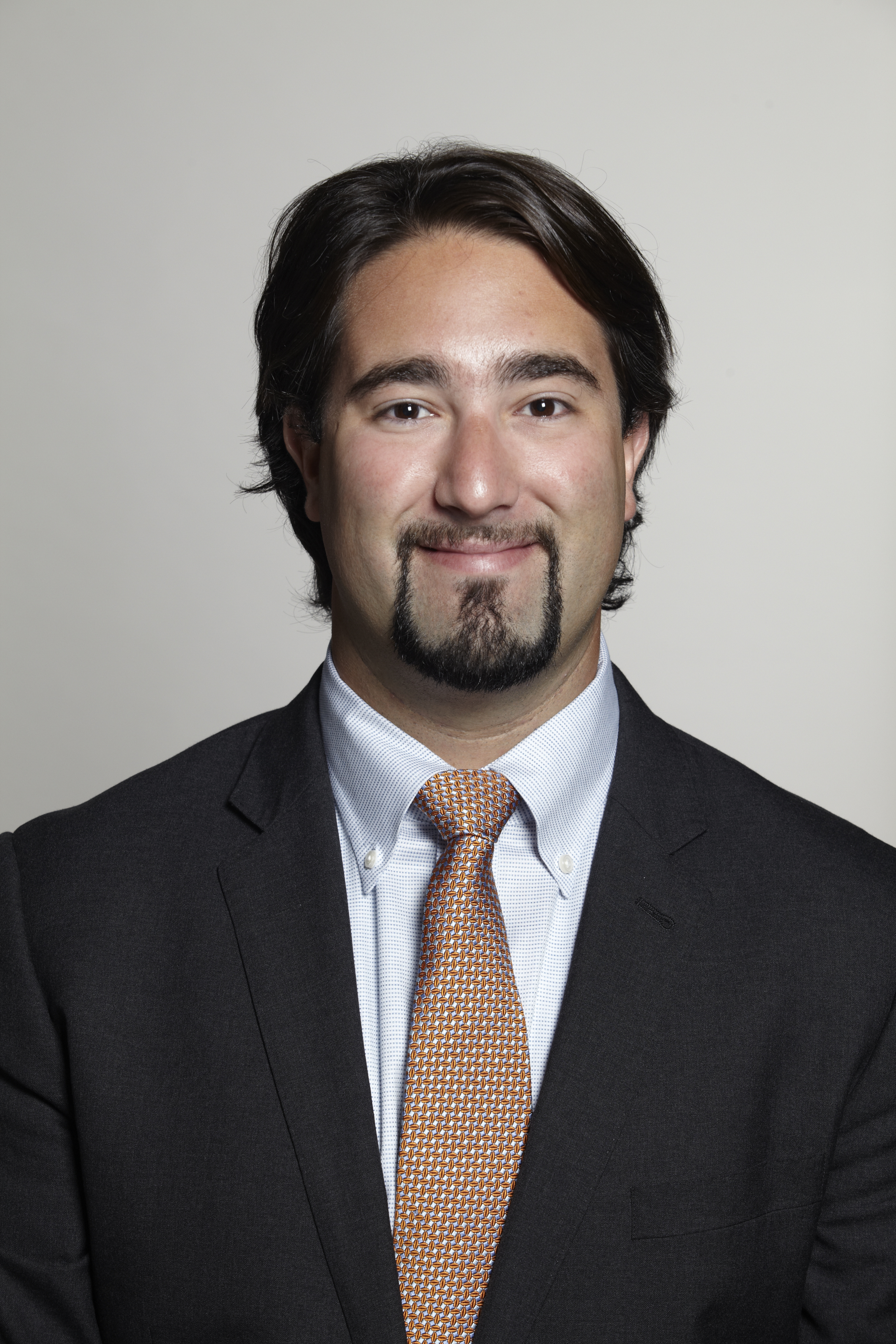
Chief EMS Officer
Lucas Isola is Chief Officer of the Irvington Volunteer Ambulance Corps and an AEMT with 15 years of EMS experience. He has worked to strengthen operations, support responder wellness, and build sustainable community-based EMS systems. In partnership with Whitney Wilkerson, he helped create Pups and Cups, a resilience initiative that brings therapy dogs, coffee, games, and stress-relief tools to local EMS stations. Lucas is passionate about supporting the mental health of first responders and advancing practical, culture-driven approaches that help responders stay healthy, effective, and connected to the mission.