Apple Podcasts
 Spotify
 YouTube
 RSS Feed
 UnStuck: A Retired Firefighter's Framework for Breaking Reactive Patterns — Daniel Sundahl | S6 E23

Daniel Sundahl ran calls for twenty years. As a career firefighter and advanced care paramedic in Alberta, Canada, he saw what the job builds in you — and what it quietly destroys. He didn't leave the profession when it got hard. He went deeper into it, earning credentials as a Registered Counselling Therapist and Trauma Specialist, and then wrote a book about what he learned.
Daniel Sundahl ran calls for twenty years. As a career firefighter and advanced care paramedic in Alberta, Canada, he saw what the job builds in you — and what it quietly destroys. He didn't leave the profession when it got hard. He went deeper into it, earning credentials as a Registered Counselling Therapist and Trauma Specialist, and then wrote a book about what he learned.
UnStuck — now a bestseller — is a roadmap built specifically for people who've been trained to suppress, push through, and move on. In this episode, DanSun breaks down the Emotional Diagnostic Tool (EDT), explains why the Default Mode Network makes boredom dangerous for first responders, and lays out a clinical framework for moving from reaction to response.
This is the conversation the academy never gave you.
Topics covered:
The neuroscience of trauma response · Why suppression isn't strength · The EDT framework · Boredom, the Default Mode Network, and harmful coping · Post-traumatic growth vs. post-traumatic stress · Building a lasting foundation of inner peace
🎙️ Responder Resilience is built for first responders, mental health professionals, and anyone committed to the long-term health of those who serve.
🔔 Subscribe for new episodes every week. https://www.youtube.com/c/ResponderResilience
📩 Sign up for our newsletter: https://ResponderTV.com
★ Resources for Responder Wellness ★
• Fitness: FightCamp (code RR10 for 10% off) http://joinfightcamp.com/rr
• Free App: CRACKYL http://crackyl.respondertv.com
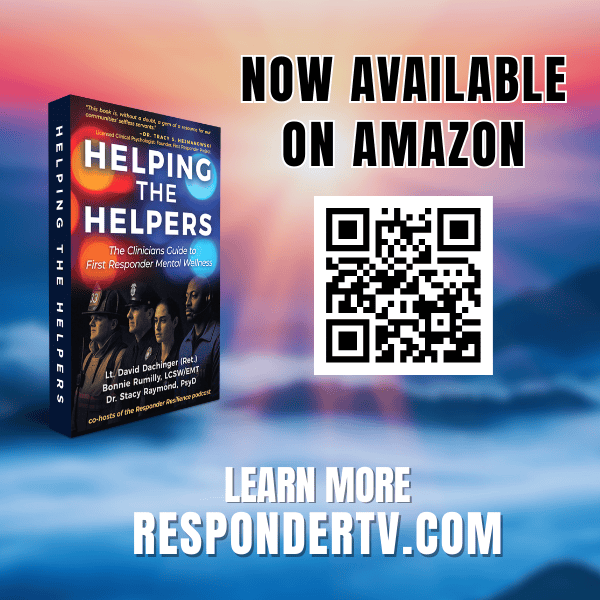
• Book: Helping the Helpers https://a.co/d/dm0VS4Q
Contact Daniel Sundahl:
Art/Main site: dansunphotos.com
Linktree (aggregates all links): linktr.ee/DanSun
UnStuck — amazon.com/dp/B0GX5NVXVL
Instagram: @dansunphotoart
Facebook (art page): facebook.com/DansunPhotos
LinkedIn: linkedin.com/in/dansunphotoart
Contact Responder Resilience:
Phone: +1 844-344-6655
Email: info@respondertv.com
Our website with past episodes and more: https://www.respondertv.com/
YouTube: https://www.youtube.com/c/ResponderResilience
LinkedIn: https://www.linkedin.com/company/responder-resilience-podcast/
Instagram: https://www.instagram.com/responder.tv/
00:00 - The Stress Never Stops
00:45 - Welcome To Responder Resilience
03:16 - Meet Daniel Sundal And His Work
05:25 - The Moment PTSD Clicked
11:36 - Passive Suicidal Thoughts Explained
18:20 - What Being Stuck Really Means
28:45 - Hypervigilance And The Nervous System
33:10 - Control Anxiety And Anger Loops
40:24 - Boredom And The Default Mode Network
50:01 - Where To Find The Book
The Stress Never Stops
SPEAKER_02
What the book helps people do is to do the work internally so that the stresses don't stop coming. The world just keeps happening, but it's how we deal with it. Right? How can you almost inoculate yourself in a way by changing your perspective? And we I do that in the book. When you feel bad about something, it's usually when your core valley is being challenged. Also when you feel great about something, when your core values is being stimulated. But often we will react to try to control what we feel is uncontrollable. I'm now reaping the wards of it. Still the thought of no, I don't want to kill myself. I'm not gonna have a plan. But if it happens, great. But that's a big warning sign.
Welcome To Responder Resilience
Voiceover
Welcome to Responder Resilience, along with Bonnie Rumoli, LCSW EMT. I'm David Dashinger. First responders are trained to run towards chaos, but nobody trains us for what happens when the chaos follows us home and we're sitting still. Our guest today, Daniel Sundal, spent two decades as a paramedic and firefighter before becoming a trauma therapist. And he's written a book that gives you an actual tool, not a pep talk, not a breathing exercise, but a real diagnostic process for figuring out why you're reacting to what you are and what to do about it. So if you've ever blown up at someone you love or shut down when you needed to speak up, or found yourself still grinding on a call three days later, this conversation's for you. This is Responder Resilience. This episode is brought to you by Fight Camp, real training on your schedule. Head to joinfightcamp.com slash R R and use code RR10 for 10% off. There's a new app built by Firefighters for firefighters, and it's called Crackle. Download the app now for free as a legacy member and get early access to exclusive content, tools, and updates as they drop. Get the free app at crackle.responderTV.com. Invite you to like and subscribe, Responder Resilience. We're on Facebook, LinkedIn, Apple Podcasts, and our website is respondertv.com. We'll be right back to speak with Daniel after this. Ask a first responder who they are, and you're likely to hear I am a police officer. I am a firefighter. I am a paralytic. I am a 911 communications operator. Not I do this work, but I do this job. Ask a clinician why they work with first responders.
Bonnie Rumilly
And they may say, There's no fire falling and helping the helper.
Voiceover
Join us in shaping a culture where mental health, wellness, and leadership are prioritized, not whispered about, where support is a sign of strength, not failure, and where no one has to carry the weight alone. Welcome to Responder Resilience. We shine a spotlight on the unseen battles of first responder reality and celebrate the powerful wins that come from the grit of post-traumatic growth. We understand the culture, honor the trust, and bring you conversations from the change makers, passionate about helping first responders come home whole. With your hosts, retired Lieutenant David Dashinger, Dr. Stacy Raymond, and Bonnie Roomily, LCSW EMT.
Meet Daniel Sundal And His Work
Voiceover
We'd like to welcome back Daniel Sundal, who's been with us a few times in the past, and every conversation has been uh absolutely outstanding. So we're gonna build on that body of work right here. A little bit about Daniel. He's a registered counseling therapist, trauma specialist, and internationally recognized artist who spent two decades working as an advanced care paramedic and career firefighter. So he knows what it costs to do the job, not just physically, but in the places nobody talks about. After retiring from emergency services, Daniel pursued rigorous clinical training specializing in trauma, relationships, and addiction. He now travels the world as a speaker and educator, blending neuroscience with real-world storytelling to help first responders and others build what he calls a permanent foundation of peace. And besides his new uh clinical practice, he's got a new book called Unstuck How to Stop Reacting, Start Responding, and Create Lasting Inner Peace. It's out right now. Daniel, welcome back to Responders.
SPEAKER_02
Thank you. Thank you, David and Bonnie. It's great to be here.
Bonnie Rumilly
You know, we're becoming better friends every time we meet, which is a lot lately, and we love it. So keep it coming.
SPEAKER_02
Yeah, I know me too. It's it's uh I know you got I just had you guys on my podcast recently, and we had a great discussion there and um and discussed your book. And yeah, it's uh it's nice. One of the great things I like about the work that I get to do and I get to travel so much is that I get to network and meet, you know, meet lots of people that I probably wouldn't have done uh you know if I wasn't doing the work that I'm doing. I I know as a paramedic firefighter, most of us were kind of siloed into our you know the groups that we work in or you know who we do mutual aid with. And then that's kind of it. But you know, I get to recognize uh I get to travel a lot and see lots of different organizations and and public safety places and there it is a larger community, way larger than I thought, anyways, before I started traveling. So the benefit is to get to meet people like you and go on podcasts like this, which is which is really great.
Bonnie Rumilly
Thank you. Well, we just love picking your brain. Um, we've talked a lot in the past about what you're doing, your artwork, some of the guests speaking. I wanted
The Moment PTSD Clicked
Bonnie Rumilly
to kind of go back to that time when you realized that you needed some help. Can you go back into that time frame and just tell our viewers, listeners, when was it really clear to you that you needed to do something for yourself therapeutically?
SPEAKER_02
You know, that's that's a good question because it wasn't clear to me. And that's something I talk about. Very good. Where sometimes we don't we don't know because how the how trauma works through our brain, it it can alter our capacity to recognize what's even going on, right? So for me, it wasn't although I was having all the symptoms, I didn't recognize them at the time as being symptoms of trauma. I thought I was just having a bad day, and I thought tomorrow would get better to the point where I was even suicidal. So I had lost the capacity to even realize what that meant. So the the event for me that made me realize to go get help was actually by called by fluke. It was I was on shift at a fire department, and that day, just happened to be the day that I was on shift, uh, the city had hired a psychologist to come talk about mental health, not just for the paramedics and firefighters, but for everybody in the city. And he was talking about PTSD. This is back in 2013, so it was it was pretty forward-thinking for the city to do that back then because it wasn't we didn't really talk too much about it. And our captain said, Okay, we're gonna go listen to this psychologist talk about trauma, and we're all like, uh God, trauma, mental health, we don't want to talk about that stuff. Uh, so we I had to go because our whole platoon went, and we sat there and we're listening to this guy talk, and he's going through all these different signs and symptoms of trauma, and I'm like, oh my god, I I really connected with all of them almost. And then we went back to the well, one thing he said that I found really interesting is we we knew about PTSD or post-traumatic stress. I know, I know the disorder thing is still a little bit PTSI, but uh at the time where they were calling it PTSD, and I always thought it was you're normal, and then you have that one call, and after that one call, then you're different. That's how I thought it was. And I never felt that I had that one call. So I never thought that the symptoms I had were because of my work because I never had that one specific call. But then this psychologist said, Well, a lot of his clients will diagnose with PTS, post-traumatic stress, after a long career, lots of several stressors. And I didn't realize that was a thing. A lot of the symptoms he described, I I connected with. Then we went back to the fire hall and we were making dinner. I'm like, hey guys, do you guys what do you guys think about that talk? Did you guys relate to any of that? And they're like, no. And I'm like, yeah, no, me neither, right? But then I phoned, I I called the next day, um, and made an appointment made an appointment and then got diagnosed with PTSD. I was shocked that I had it. And I was I was dishonest. And I didn't when I look back on it now of how neuro and I now that I understand the neurology of how forms in the brain, it's really scary because it really kind of stuck up on me. It's really insidious in a way where I didn't I didn't know how much trouble I was in. You know, and often we hear of people dying from suicide and we're shocked and surprised, and oh god, I had no idea. They didn't show any signs or any symptoms of it at all. Uh they didn't ask for help, you know, they didn't utilize the reAP program. But it's and I recognize now that a lot of people are like that, but because of shows like this and a lot of the work that that's happening now where there's more awareness, I think that's happening less and less. But for me, pointing back to your question, I didn't, it was a mirror came up to my face before I realized that I needed help because I wouldn't have asked for help myself.
Voiceover
Well, it's uh it's so interesting. Um in a parallel universe. Um, so the whole way this podcast was born was really because I was at work at the fire department, and the Fairfield County trauma response team came and did a presentation similar to what you're describing. And I went and I had never heard of PTSD. I didn't know what EMDR was. I didn't know that there were clinicians out there who actually understood our world. It was so eye-opening, and that changed, you know, the trajectory of my life because it led to us connecting uh Bonnie, Stacy, and myself to do this podcast and to start, you know, spreading the information through the podcast and the book. Um, so it's so interesting to see how that can have such a ripple effect downstream, right? And and for you as well, right? It looks like your post-traumatic growth includes writing a book and starting uh um becoming a therapist and and all the other things you do with art.
SPEAKER_02
Yeah, I'm I'm very grateful for my trauma. Like I'm very I'm if I if I could go back, I'm I'm feeling very lucky because it was I recognized what was happening. But yeah, the life I have today, which is very fulfilling, uh, is because of my traumatic experiences. So for for me, it's and that like you said, David, the post-traumatic growth for me, it's a giant gold lining around that dark cloud that I'm now um you know reaping the rewards of it because I've done the work. And because of shows like this, I think more people they may recognize hey, at least go get assessed. You know, yeah, maybe am I, you know, I've been kind of sad lately or more than normal, maybe it's just burnout, or you know, maybe I've depressed. But you know, just go get assessed. You know, just go get it checked out.
Voiceover
Most people work out to look better. You work out because lives depend on it. But the stress doesn't clock out when you do. The calls follow you home, and most workouts weren't built for any of that. Boxing was Fight Camp builds endurance, reaction time, and real-world movement, and tracks every strike so you see progress, not guess at it. Real training in your home on your schedule. You don't just finish workouts, you get better. Head to fightcamp.com slash RR. Use code RR10 for 10% off. Fight Camp, real training on your schedule.
Passive Suicidal Thoughts Explained
Bonnie Rumilly
Well, one more question before we move on, but just putting your therapist brain on now, if you could go back and psychoanalyze yourself. You said something interesting about I'm sure you do it all the time, just like I do. But if you go back in time and you really pick apart, you said something interesting about suicidal ideations creeping up on you and all of a sudden it being there. Can you put your trauma therapist lens on and just pick that apart, dissect it for people that are listening or watching?
SPEAKER_02
Yes. So it happens where uh you know the symptoms of trauma they don't really go away, right? Once they start to come up, and it it's not when you're when you sleep it actually gets worse because you don't have the the cognition to kind of put up your mental defenses. So often, you know, that that shows up as poor sleep habits, you know, nightmares, uh waking up in the middle of the night, difficulty falling asleep, not sleeping long hours, which just makes the whole process worse, right? But it for for me, how it happened was it started off with depression, anxiety, uh thoughts not uh not thoughts of suicide, but thoughts of not wanting to live, which is different, right? So thoughts of you know, if I if I'm in a house fire, I'm probably not gonna practice my self-rescue techniques. Not so much, and I've talked to lots of my many of my clients now, and they had it was a similar process for them, where it's not like they wanted to die, it's they just didn't want to feel this way anymore because it was just constant for well for years for many of us. So it was look, I just need a I need relief. Uh so I I'm not if something happens, I'm just I'm just gonna let myself go. And then that develops over time to oh, you know, the thought of letting go actually feels pretty good. So I think I'm gonna make that happen. And then when you make that realization, then the mood changes, then all of a sudden you're in a really good mood, right? Because you've made you've had your solution. And for people who have a difficult time understanding how that cascade kind of works, it's for people that have difficulty understanding why would someone do that. Uh, I tell them, imagine you know, you're imagine you're in an 86-story building that's on fire, and you don't you can't see an escape, and your options are dying by asphyxiation or jumping out the window. We understand why people jump jump out the window, but that is suicide. But we understand why that happens. So the perspective for people that are suffering from severe trauma that have come to that point, where haven't that haven't asked for help, it's a decision of okay, am I gonna continue suffering or am I gonna jump out the window? Right. And so that that's some that's kind of what it's like for people. It was like that, that's what it was like for me, and that's how it develops uh in the brain. If it isn't the like for me and many other people, it's a little bit different for you know the acute trauma where it's you know, you're normal, and then you had that one call, and then you recognize, hey, that call really messed me up a little bit, and I need to process that one call. That's a little bit more obvious. But for the thoughts of dying, and I've I have many of my clients that are when I do a lot of the crisis intervention, I often hear that you know, I don't want to die, I don't want to leave my family, I just don't want to feel this way anymore. And that's kind of what they're so what we do as therapists, uh, and Bonnie, I'm sure you you understand without, but it's we try to change the perception of, hey, you may feel like you're on an 86 floor of a burning building, but look behind this fallen cabinet. Like just look around the corner, look, here's an exit here. You know, you do have another option. The option isn't suffering or jumping out the window, it's look, here's an exit. And I think that's what we do as trauma therapists is we help them find, hey, there's another exit. And that could be, you know, EMDR, it could be, you know, whatever the therapy is, deep brain reprocessing. We talked about that last time. So it could be, but if people aren't even aware that there's a way out, then they're not gonna and that's what happens when it it changes your perspective, right? Which is really kind of scary.
Bonnie Rumilly
Well, you capture that so well, and I think the important thing you also touched on, which I don't ever remember touching on in any episode we've had, is more of that passel passive suicidal ideation of, well, if I die in a fire, that would be just fine. You know, I think there's a lot more of that passive thought pattern that's passing around with people than they realize. You know, I I think that because those thoughts happen in your own head and people are scared to share them for fear of judgment, fear of being reported, fear of being taken to the hospital, all of the fears that we have, right? Um, I think it's important that you brought that up because people need to recognize that also is a sign. You know, if if that's what you're thinking, or you're going on your motorcycle on a Sunday with no helmet, and you say, Okay, so be it, you know, that's not okay.
SPEAKER_02
Yeah, because that does, it develops. It will, it will develop into so thoughts of death and dying aren't the same as suicidation, but it is a significant warning sign. And I know I can't I can't quote some studies, but I read a lot of research on it. And when there was, I know they did a study when they do the studies on suicide for just general population, but when they do it for first responders, they ask often they ask that question of, you know, what are your have you thought about dying? You know, and the percentages are really high. Like, God, don't quote me. I'm just I think it's around 40%, which is really, really high. I think I can't remember the last study, don't so don't quote me on that. Versus, you know, thoughts of actually having a plan of actually dying. But if people are having the thoughts of, okay, well, you know, if I if I if I fall in a fire, if I'm doing a search in a structure fire and I fall, you know, then so be it. Or you know, if I'm the the risky behavior comes out too, right, Bonnie, where the where you know you stop wearing helmets, or you know, it's like, yeah, because then if it's no seat belts, right? So if I if I die because of something happens, well then it then I'm not making the decision. So there's still the thought of no, I don't want to kill myself, I'm not gonna have a plan, but if it happens, great. Right. But that's a big warning sign. Like, so if anyone's thinking that, like that it's gonna develop further because it's into actually thought. Well, potentially it's gonna develop the further into actually suicidation and thoughts and plans, and and that's high-risk behavior.
Voiceover
Wow,
What Being Stuck Really Means
Voiceover
yeah, remarkable insights. Uh yeah, I'd love to kind of dovetail into talking about unstuck, your book. For firefighter, paramedic, any first responders listening right now, feeling like something's just a little bit off, they can't name it in the book and in your world. What does stuck actually look like?
SPEAKER_02
Yeah, you know, I was thinking about because I know we're gonna talk about it today. I'm like, how am I gonna explain this concept? And I was thinking it's it's a shift in perspective of expecting the world to change so that you feel better, which causes a lot of anxiety, a lot of stress. You know, I do a lot of work with sanctuary trauma and workplace stresses, uh and relationships, of expecting the world or other people, we call it other determined, to make you feel good. Uh, and it seems like God, the world just keeps getting more more and more crazy as the time goes on. What the book helps people do is to do the work internally so that the stresses don't stop coming, the world just keeps happening, but it's how we deal with it, right? How can you God almost inoculate yourself in a way by changing your perspective? And we I do that in the book through core value work, and I do that uh with all my clients of really uh understanding and using your core values as a guide to how you can uh be reach self-actualization of my values are who I am, it's my operating system, and nobody else gets to say what my values are or gets to validate my values, and that's often we call it core bubble, core, uh core belief bubbles of everyone has lives in a domain of what they feel the world should be, which is based on God's stuff that happened to you when you're a kid when all the core beliefs came up, and now as an adult, you're like, oh, okay, well, this is how the world should be. And if other people don't align with what you feel the world should be, then it irks you. But by doing that, you're letting other people validate what's important to you versus you validating it yourself. Uh, it's like um if you think of your core values as your operating system, most people let other people push the buttons of your operating system or like you're a puppet, where like a respect is a good one in first responders, where with workplace trauma or workplace stress, where, and this is my case, where it was important for me, you know, as an advanced care paramedic and officer qualified people that needed to respect me. And if they didn't, I got really angry. Uh, and it really affected me because I perceived it that I was being disrespected. Maybe that wasn't the case, like they didn't perceive it, maybe it wasn't meant that way. But if that's how I perceived it, I was the one that was suffering. So, what I helped my clients do, and what I learned myself, is instead of my core value of respect being validated by somebody else, I have all my clients come up and first identify what their core values are with the goal of self-actualization so that other people don't get a say how your validations are. So I respect my core value of respect is validated by me being respectful and respecting myself. So when I feel that I'm being disrespected, I recognize that I'm upset about something. That's step one. I I developed this thing called the emotional diagnostic tool, which is in the book, and it's like it's a tool that you can utilize. So I feel like I'm upset. Step two is identify the core values that are being challenged, and have my core values on my phone. So I can easily access them. And if it's respect, I'm like, yeah, my core value of respect is being challenged. This is why I'm feeling bad. When you feel bad about something, you can usually, it's usually when your core value is being challenged. Also when you feel great about something, when your core values is being stimulated. But step two is okay, what's the core value? In this case, it's respect. And then is this being challenged by something that I did, meaning that I disrespected myself or I disrespected somebody else? Or is it because of somebody else? Most of the time, it's because someone else is doing something. And then you use like all your sovereign statement, which is I validate my core value by me being respectful. And I'm being respectful in this case. And just making building that pathway, in most cases, it will lower the stress that you're having. And if you do it enough times, and this is what's happening uh with a lot of people, uh, after you say, okay, my core value of respect is being validated, uh, is being challenged, but I my core value of respect is validated by me being respectful to myself and others. I'm okay. And then you say, other people can do what they want. Kind of like the let them theory, the no rubbin's let them theory. Other people can do what they want. And I'm I'm not gonna let you determine my my well, my behavior in some cases.
SPEAKER_04
Right.
SPEAKER_02
Right. So if you do that enough times, then your brain will automatically go to that new pathway that you develop. And how that looks, that looks uh, in most cases, with a lot of my clients, with most first responders, right, when we're driving ambulances and emergency vehicles, like when we're not driving them and we're and we have bad drivers, like I used to be very verbal when I was driving about like ah get out of the way, right? Even when I was just driving my own vehicle, but I was the one that was suffering, like they don't they don't care. So often what happens with my clients and even myself, someone's tailgating you, and you're going like the 10 over the speed limit, and people are still tailgating you. Uh, you know, people will stop getting activated. I used to get really activated by that, right? And I would slow down and I would start to get in, you know, and potential. I have some clients where if it's you know some significant road rage stuff happens. But it's when things like that happen, they just don't, once they get in line with their core values and they've done this work, it just doesn't bother them anymore. Right? They're just like they pull over and they're like, oh, what's going on with that guy today? It doesn't even affect them. So it still happens, like the stresses still happen, but through the the work that I I do with this core value, that's all on the book, is that you can become unstuck, meaning that yeah, the world is still gonna be crazy, but your brain is going to change so it doesn't, it automatically self-validates. And it's like, hey, I'm okay, and it just doesn't bother you. Another example is I worked with uh a prison guard uh at a maximum security place, and he was working with some really, really bad people. And uh it really affected him. Uh, and they knew how to push his buttons, and it was it was taking him home, like it really affected his home life. And we did this work. Uh, we he learned his core values and he really self-validated them and came really in tune with himself and what was important to him. And and now it goes when I go to work, same stuff happens, but it just doesn't bother him. Like he doesn't get activated, and he's like, Yeah, this stuff because his brain automatically goes to no, you're okay, other people could do what you want. So his life has become less stressful because he's not letting other people determine his feelings and behaviors. So, yeah, it's really wonderful work.
SPEAKER_00
Not everyone is meant to walk this path, and that's okay. But for those who feel the call, for those who read these words and feel not just curiosity but conviction, know this. By the time a first responder sits across from you, they've likely exhausted every internal resource they have. This isn't a routine appointment, it's their 911 call. I don't know how much longer I can do this job. You won't hear sirens, but the urgency is real. If you choose to take that call, understand what it means. To show up, to stay steady, and to carry the weight of someone who spent a career doing the same for others. This is where the work begins. Be the resource they can count on. Order your copy of Helping the Helpers Today on Amazon, and for bulk orders, email us at info at respondertv.com.
Bonnie Rumilly
Have you been able to intertwine some of that with EMDR while you're practicing?
SPEAKER_02
Uh I so I'm I'm not an EMDR therapist. Okay. So I don't I don't actually do that, but I am very familiar with it. Um, but it makes a lot of sense how though how those two would connect, right?
Bonnie Rumilly
No, it's so interesting because I'm listening to you talk and you're describing, you know, negative beliefs and positive cognitions, and um, there's so much overlap there. But I like that you've come up with these great tangible tools because first responders like to come in and get tools and training. Yeah, and that's what you're giving them. It sounds like great reframing, it sounds like great boundaries. You know, when you can make that boundary with yourself and the world, the let them thing, there's a reason that everyone um uses that. It just works. You know, we can all understand the concept of it, right? Um, so how you describe that is just beautiful.
SPEAKER_02
Yeah, and it's funny because I'm sure Buenos You know, uh, you know, when we go to school to learn to become therapists, we're supposed to be, we're not supposed to tell people what to do. We're not supposed to, we're all supposed to give them agency of okay, I'm uh we're gonna try to teach you how to fish versus give you fish. But what I've noticed is first responders, and I was the same way when I when I'm to therapy, I'm like, I need answers. Like, I I don't I don't want to talk about I don't even want to talk about my feelings because what good is that? That's just gonna make me more upset, right? And I but that's what we learn in school, right? So that's what we're supposed to do as therapists, right? But I have to do, you know, for first responders, you have to tweak it. And I love that you guys describe a lot of that stuff, even in your book, right? Of a lot of my first responder clients really like this technique because it's almost like a protocol where it's okay. Step one, when I'm upset, what do I do? When you're upset, you do this, and then from here, based on what you say, that it's almost like a decision tree, which we're all kind of used to. So they really like that that part. But what they don't realize is happening, the more they use it, they're actually rewiring their brain and giving themselves agency. Uh, so that eventually you only need to rely on one or two of your core values because those are the only ones that are being affected. Because the stuff that used to bother you before just doesn't bother you anymore. And it's pretty, it's a pretty easy thing to do. Well, it's not easy, it's a simple thing to do, but it it takes it takes a long time for it to take full effect. But yeah, it's it's been very effective for myself and a lot of my clients.
Hypervigilance And The Nervous System
Voiceover
You just um answered a lot of questions, and uh, I got so much out of out of what you just said that I can't wait to you know just go back and dive back into the book to revisit that. Um so our job, first responder job, it builds a certain kind of a nervous system, always scanning, always ready, right? We're doing our size ups, uh situational awareness. How does that hypervigilance show up off the job? And what are some of the tools you're talking about offer to somebody who can't seem to turn that off or stand down?
SPEAKER_02
Yeah, so you know, you're talking about like the window of tolerance, where you know, how much can you handle? Right. And we talk about uh, you know, Stephen Porge's polyvagal theory of being hypervigilant, uh, and you know, which is where we have to be as first responders to do our job. But it's your nervous system just doesn't respond that quickly. And I, you know, I love a lot of a lot of the research coming out now about heart rate variability, which is really a measurement of how fast you can get into the hypervigilant phase down to the parasympathetic, which is the rest and relaxed phase, which is where we want to be. But you can't be there in an emergency because you're not gonna perform, right? It's like you can't be all chill and relaxed and when you're you know you're working on on emergencies. So it's it's really hard for the nervous system to switch back and forth for that. So for many first responders, we stay in that hyper-vigilant state uh for a long, well, for a long time. A lot of us don't ever get into that rest and relax phase. And because of that, God, there's a lot of problems with that, right? So you can't, when you're in the hyper-vigilant phase, you're in the protect mode, right? And it's difficult when you're in the protect mode all the time, it's hard to connect with people because when you're when you need to connect with people on a on a really good, uh deep level, you have to be a little bit vulnerable. But you can't be vulnerable when you're in the protect mode all the time. So for first responders, we're always in in that hypervigilance state, and even when we come home, it's it's hard to go down from that. Uh, and that causes a lot of problems with uh, you know, relationships because we can't open up and be vulnerable in some cases to connect with people. But it's um yeah, it's the window tolerance of being how much you can handle, right? And the window tolerance is okay, how what are the triggers? So when we are in that hyper-vigilant state all the time, then you know, someone cuts you off, you get road rage, right? You get angry, you get, you know, you're God, we're I'm going down rabbit holes here, but you know, we talked about anger. You know, anger in many cases is a fear response, it's a lot as the sense of a loss of control, and you subconscious level, you sense of loss of control, and that loss of control, uh, there's a fear base of losing control, and then that fear as a way to try to regain that control back, often that comes out as aggressive behavior. So, one something I'll uh little tidbit I'll give the listeners is whenever you see somebody that's angry, like if you have a patient that's unless it's like drug-induced, but even at home or when you watch TikTok videos of you know, road rage people banging the windows, which is entertaining, I know. Which, but view that as uh a fear response. See it as you know, a wounded dog in a corner is gonna bite you. You know, a well-cared, happy dog is not gonna bite you, but if it's wounded, it's gonna be aggressive. I'm not saying that we are wounded dogs, but when it's based on on a fear, so that window of tolerance really starts to to shrink as far as how often we get activated when things happen in our life, and all that is signs of trauma, right? And so as therapists, we David. I don't even know what the question was anymore because now I just went down this this it doesn't matter, it was uh it was an amazing rabbit hole.
Voiceover
So what did you even ask me? I even forgot what I'm saying. Yeah, we're talking about turning off the hypervigilance, and you you answered it. I mean, I really think you spoke to it.
SPEAKER_02
I don't remember what you asked me, but yeah, I really I'm interested in the pathology of how that actually all works, right? It's really and if you understand it, then you know I think for many, especially first responders, if we know why we're doing things, then it makes it easier. Right.
Voiceover
And the
Control Anxiety And Anger Loops
Voiceover
thing you bring up, and uh we talk about this, Bonnie and I just talked about it recently on a on a summit is that aspect of control that we are trained, you know, it's ingrained in us as first responders to control things, right? The airway, the C-spine, the you know, whatever it is in that emergency. And then we have to we're operate in a world where we can't control everything. And and we have a, I think generally have a really hard time making that transition.
Bonnie Rumilly
Right.
Voiceover
Yeah.
Bonnie Rumilly
You know, it's interesting. I have a first responder couple that I see, and um, the wife in this case was really having a hard time understanding why her husband gets so upset when he can't control a situation, gets really anxious, really gets worked up, right? So there's work obviously to be done with him in managing that and figuring that out. But it's so interesting because a lot of the work we've ended up doing is psychoeducation for her to understand. So, some of what you just explained, your brain flipping in and out, but his brain is in it more often than other people. He's been in the job a long time. So a lot of it is psychoeducation. Now she understands where he is and why. And but the problem is it was touching her trauma and she was taking on it as her fault. Right. So how that presents itself, not only to ourselves as individuals, but in the relationships we're in in our life, can be experienced by the person or people on the other side is so different. You know, I had someone recently um who has OCD, and they said, you know, I feel misunderstood. People think I want to control because I'm a controlling person, but I'm not a controlling person. I just feel so anxious when I'm not in control. And I thought that was such an interesting insight. So there's so many pieces to all of what we're saying, and I love the rabbit holes too.
SPEAKER_02
Yeah, no, it's great. And if you think of, you know, well, in my book, when I like the subtitle is how to start responding and stop reacting, but often we will we will react to try to control what we feel is uncontrollable.
Bonnie Rumilly
Right.
SPEAKER_02
So we do a lot of work of, you know, what are what are your controllable and uncontrollable stressors? And if we get down to the base of of who we really are, is what we really can only control is who we are. That's really we can't control what other people do, we can't control what their actions. So if you have that realization of, okay, what am I in control of? Stoic philosophy back, you know, 2,000 years ago, they said the best thing any person can do is just be true to who they are. And that's what we do have control of. And that's the work that I do with the core value stuff, is you are in control of who you are, right? If you are, if you can, if you can say, okay, I I can't control other people, um, but the things that are most important, I do have control of, and that's how I respond, how I react. And when you're in situations where you have a sense of loss of control, then we tend to react versus respond, right? Versus, okay, something happens. I mean, the world is can gonna continue to be the world. So instead of reacting to what's happening because it's not aligning with how you think it should be, is understanding, okay, what is controllable and what isn't. Other things are in the scenes, the people, even you know, our partners, our kids, yeah, we can't, you know, we feel we can control them, but the truth is we can, right? And then that when they don't, well, you can to a certain way, but the point is that if if you have the realization of the only thing I'm in control of is of who I am and how I respond, and once that becomes your base, then you you start you you stop reacting to what's happening as a way to regain control, and often that reaction comes out as anger because it's there's a fear of okay, you're not aligning with what's fitting in my world, I need to regain control, versus hey, I'm I'm good with myself. This is the situation that's happening. Check it in with yourself, like, I'm good. Now I'm gonna respond to the situation. And Bonnie, like what you said about of understanding, right? So when there's conflict, is to approach it when you can check in with yourself and realize you're okay. Then you can start approaching it with curiosity versus an understanding. Okay, I understand why my partner is this way. I'm curious why this is happening, even if they're ripping into me. I'm like, okay, well, what you know, what's going on here? Like, why is this why is this happening versus reacting and trying to regain control?
unknown
Right.
Bonnie Rumilly
It's really it also doesn't null the behavior, right? So the spouse still has to own that they were a jerk or they got angry or anxious or whatever it was, right? But you know, that rupture, we can repair it better when everyone understands each other.
SPEAKER_02
Yeah, and that's through approaching it through curiosity instead of just reacting and trying to convince the other person.
SPEAKER_07
Yeah. As firefighters and first responders, we're brilliant at the basics. We master the art of stretching the line and we excel at being there for those who need us most. Yet, even the best of us can be caught off guard. We sometimes face unexpected challenges like injury, cancer, or post-traumatic stress symptoms. But you're not alone. The First Responder Center for Excellence is geared to equip you with the tools and resources you need to stay informed and prepared. We help you focus on staying strong, safe, fit, and resilient. Optimize your performance with cutting-edge health, wellness, and science information, from fitness to nutrition, medical evaluation to behavioral health, cancer awareness to cardiac health. We've got you covered. Remember, we're stronger together. Discover more at firstrespondercenter.org and connect with us on X, Facebook, LinkedIn, Instagram, and YouTube. The First Responder Center for Excellence. Equip yourself with Excellence for every call.
Voiceover
Well, I think a great diagnostic tool for what we're talking about is put a first responder in the passenger seat with their spouse driving and see how they how they behave, right? Oh, I know, right?
SPEAKER_02
Yeah, the you know, it's it's like for me and again, many of my clients, like the the road, like the stress from driving is just gone. Like it's just so amazing. If you can do the work and rewire your brain, that you know, driving just becomes way more peaceful. Where you know, just let people because someone that's telegating you when you're going 100 miles an hour, someone's telegraping you, you know, just pull over and let them go. I know that sounds insane, but they're not they're not purposely, they didn't seek out your car and telegate you to piss you off. You know, who knows? Maybe they're maybe they're kids in the hospital, maybe something is happening, right? But we will get react, we'll react to it versus respond. Yeah, and we're the ones that are suffering. Then you get all mad and yeah, stress out your day. So, anyways, it's yeah, it's it's really incredible stuff that you can do. A lot of the rewiring of your brain, and which widens your window of tolerance and makes you a better person.
SPEAKER_04
And for sure.
Voiceover
Well,
Boredom And The Default Mode Network
Voiceover
here's something that uh here's something that I think is equally interesting, and that's boredom. First responders, uh and I think we don't really I love this topic.
SPEAKER_02
My next book.
Voiceover
We don't embrace sitting around and contemplating life, right? We we need to like always have something uh that's that's getting us uh activated and and and interested and challenging and stimulating. So uh you talk about embracing boredom and the default mode network. Um talk about that. What's actually happening neurologically when we refuse to let our minds rest, and why should that be of concern to us?
SPEAKER_02
Yeah, this is this is really interesting stuff, especially for first responders. Uh, and this is the I'm writing a book on this right now, and it's think of it like the batteries in your I don't know if you use a Life Pack or Zole or you know, they're not gonna run for you. They need you need to recharge them. But we're in a world where we don't, even on our phones, we'll just plug them in and keep using them even when they're plugged in. And when your brain isn't doing anything, then it can recharge, and that it's it enters this mode called the default mode network. And when I do lectures on this topic, you know, it's called embracing boredom. But what it really is is is embracing relaxation and embracing uh recharging. So you're actually recharging your brain. So when you're when you can just sit there and do nothing, which first responders for sure, but anybody that is that is like stimulate stimulus-seeking people, right? They always need some type of stimulation to happen, uh, all the time. And to do nothing, and they're like, Oh, I'm bored, I can't handle it to do to do nothing. But what I'm helping my clients do and people do is when you feel that you're bored, just reframe it as okay, I'm I'm relaxing, I'm putting my default mode network in. When your brain enters the default mode network, so your battery is in the charger, it does a few things. One, it opens up your brain for intuitive connection, and that's why when you know you get great ideas when you're in the shower, right? Because you're kind of you're you're focusing on cleaning yourself. Or, you know, when you're you're looking for, okay, what was the name of that person, right? And you think about it and it doesn't come in. Yeah, when it you turn your brain off, it just pops into your brain. That happens when your brain's a default mode network. The other thing, when you're in default mode network, then you're in a position where you can do lots of introspective thinking of where you can um, you know, think about yourself and you get really good ideas. So for me, when I create the artwork, when I'm thinking of this complex idea of what am I going to, how am I gonna portray this complex idea in this one image, I think about the scene and then I turn my brain off. Then I just sit there, and then the image just pops into my head of what how this is gonna happen. Uh, and then the third part that the default mode network does is it recharges and reconsolidates stuff in your brain. It's it's like when you are when you go to sleep and you have one of those little robot vacuums. The robot vacuum is gonna come out when everyone's asleep, like it's gonna happen. Okay, at nighttime, it's gonna now give you a chance to to to redo. So it's really important to let your brain recharge by letting yourself go into the default mode network. And there's lots of different ways we can do this, which are gonna sound insane when I bring these things up, but bring it on. Here we go. So this is what I tell people is uh, you know, don't bring your phone to the gym.
Bonnie Rumilly
Oh, yeah.
SPEAKER_02
Don't don't listen to anything in your car. Like, shocking. How dare you, right? Um, don't um do uh set a time when you don't use your phone. Now I'm not against technology. Uh I love technology, but only only drug dealers and social media companies use refer to their clients as users, right? So instead of instead of being a UZ, use the technology as a tool for your benefit, right? When you have like put your phones away. And there's some interesting research, and I'm gonna go through this in my book, of of how not utilizing the default mode network or being stimulus seeking all the time, of how that relates to substance abuse and addiction. Whereas, hey, I I don't want to be bored to the point where I'm gonna well, I'm gonna do drugs, I'm gonna serve porn, I'm gonna because I don't I can't stand not doing anything. And they've done a lot of interesting research on this, to the actually to the point where they've had people sit in a room with nothing to do. Like here's a they put them in a room, there's nothing happening, uh, and they want to see how long they can sit there and do nothing. They also say, here's a button. If you push this button, you're gonna get an electric shock. And they actually do get electric shock. But for the men, I think it was 67% of the men push the button. One guy hit it 190 times. He didn't want to sit there and do nothing, and they couldn't sit there for more than six minutes. Women, they're a little bit better. 20, 25 actually went up and hit the button, but which means that they would rather have a negative stimulus than sit there and do nothing. So if we think of how that relates to substance use uh for highly stimulus-seeking individuals, you know, I'm bored, so I'm gonna drink. I'm bored. And I'm not saying that's the case all the time, but it's something that we really don't discuss. And there's research of how we are so adverse and so um we do not want to sit there and do nothing. When I lecture on this, I start by telling everybody, and they just don't like this, but I love doing it. I is put everything on the floor. So a lot of the times when I'm speaking at conferences, you know, people have their laptops, they have notes, they have all this. I say, take everything off the table and put it underneath underneath the table. Close your computers so that there's nothing on the table. And I'm like, I'm gonna set a timer for five minutes. We're gonna sit here for five minutes and do nothing. God, it drives people crazy, drives them nuts. They can't sit there for five minutes and do nothing. And then I challenge someone if I'm doing the next day. I'm like, would anyone here would they uh give their phone to their friend for the rest of the night and then tell the morning? And they're like, Are you? That's not never right. I says if you do that, I'll give you if anyone wants to try it, I'll give you an art book. If in the morning, when we come back, you didn't have it, then I'm gonna I'll sign the art book for you. And then you know, a couple of people do it, but man, it's really, really hard. It's really, really hard. So for the default mode network and embracing boredom, there's a lot of benefits to it. It's uh it's increases creativity, it recharges your batteries, um, you know, you reconnect to the you know, your intuition, and uh is a lot of healthy benefits. There's also things that are a study came out where they did a study on uh stimulus seeking, specific specifically using your hands. So they're talking about using phone work, of how it actually shrinks the cortex around the part of your brain, which uh is a decision component of when you would say no to something, right? So, which also links to the substance abuse and addiction component, where you know use your phone a lot, then you're less likely to say no to things such as substance abuse and addiction. So it's really interesting stuff coming out, which I think is really important uh for everybody, but even in the first responder world, that hey, it's it's okay to sit there and do nothing. So with ways that you can practice your default mode network could even be intentional music listening. So if anyone, God, if anyone has records, you know, sit there and actively listen to your records or sit in a chair and actively listen to music, not just background background music. Um there's a lot of different ways that you can activate your default mode network and embrace doing nothing, but start slow because don't look at that as boredom. And it's different than meditation, but it's it's being I guess like it's being mindful, but letting your brain recharge, just like the batteries in your LP 15 or your soul, right? Or whatever mind.
Bonnie Rumilly
Well, I'm sitting here thinking, Dan, and I'm I'm thinking about how much I love to do nothing on the beach. But you're right. I mean, we try to teach our responders how to do nothing, it's one of the hardest skills for them to accept and to learn how to do. So I love that you have a strategy available for people to use, other therapists also to use and tap into. So I appreciate that.
SPEAKER_02
And when we talk about the window tolerance, by by utilizing or practicing the only reason I call it boredom is because it's a good catch hook for people that are gonna come to the right. If I if if my lecture was on oh, come embracing relaxation, no one's gonna show up. Like, I don't want to do that, but it's like embracing boredom. I'm like, oh, what is that all about? Um, so the benefits of the more you do it, you're actually it widens your window tolerance, right? So you become less reactive to things, your trigger points actually become less often because you're you're you're recharging your brain in many ways. So there's a lot of benefits for it, and potentially less likely to slip into substance abuse and eventually addiction too, if you can manage it.
Voiceover
Right.
Where To Find The Book
Voiceover
Well, um, as we wrap up, Daniel, we've covered a lot, and I know we could keep going for another couple of hours easily. Yeah. Where can people find the book and everything else you're up to that you'd like to share? Social channels, websites.
SPEAKER_02
Yeah, so the book. I just finished recording the audiobook, so the audiobook's gonna be coming out here pretty quick. Uh well most so we're in we're in uh end of May right now, so it will be out beginning of June. Okay. Uh, and that will be on on Spotify and Audible and all those places. The book's available on Amazon. Um, my website for my therapy, I have danceunhealth.com d-a-n-s-u. So first three letters of my first and last name. Uh plus I love the karate kids. So um it's the first and of danceunhealth.com. So Daniel at dance on health.com is my therapist webpage, and then Daniel at dance on photos is my artwork uh webpage where people can find me.
Voiceover
Fantastic.
Bonnie Rumilly
It's always good to be with you, our friend. And um, thank you so much again for sharing more wisdom. And when you come out with the next book, we'll have to have you back again.
SPEAKER_02
No, that's great. Thank God. This time goes by so fast when I chat with you guys. It's it's great. So I really appreciate you having me on your having me on your show.
Voiceover
So thank you very much. Well, thanks for all you're doing and your uh inspiration to anybody who um wants to know what post-traumatic growth looks like. Uh you have really embraced that um and through everything you're doing, artwork, becoming a therapist, and also with your writing in the book and disseminating all you do through the podcast. So um, Daniel, you're making immense contributions, and uh this was an incredible conversation. I made a lot of notes while we were talking. So I'm gonna dive back into the book and and uh and follow up on that. Thank you so much for being with us. Keep up the great work. Yeah, thanks you guys. My pleasure. Remember to like and subscribe, YouTube responder resilience. We're on Facebook, Responder TV, LinkedIn, Apple Podcasts, and Spotify, and go to our website, respondertv.com, for past episodes and guest information. Until the next time, stay safe, be kind to yourself. Take care of the biggest.

Therapist | Published Artist | Writer | Retired Paramedic/Firefighter
Daniel Sundahl (DanSun) is a Registered Counseling Therapist, Trauma Specialist, and internationally recognized artist dedicated to redefining the global conversation around mental health. Drawing on two decades of lived experience as an advanced care paramedic and career firefighter, Daniel bridges the gap between the visceral realities of life’s challenges and the science of clinical recovery.
By synthesizing his background as a global traveler, artist, and clinician, he meticulously blends technical neurobiology with storytelling to help individuals overcome old, fear-based pathways. Daniel now travels the world as a speaker and educator, providing the tools to build a permanent foundation of peace.