Apple Podcasts
 Spotify
 YouTube
 RSS Feed
 Moore to Life: The Blueprint Other Agencies Come To Learn with Guest Dr. Carla Moore | S6 E24
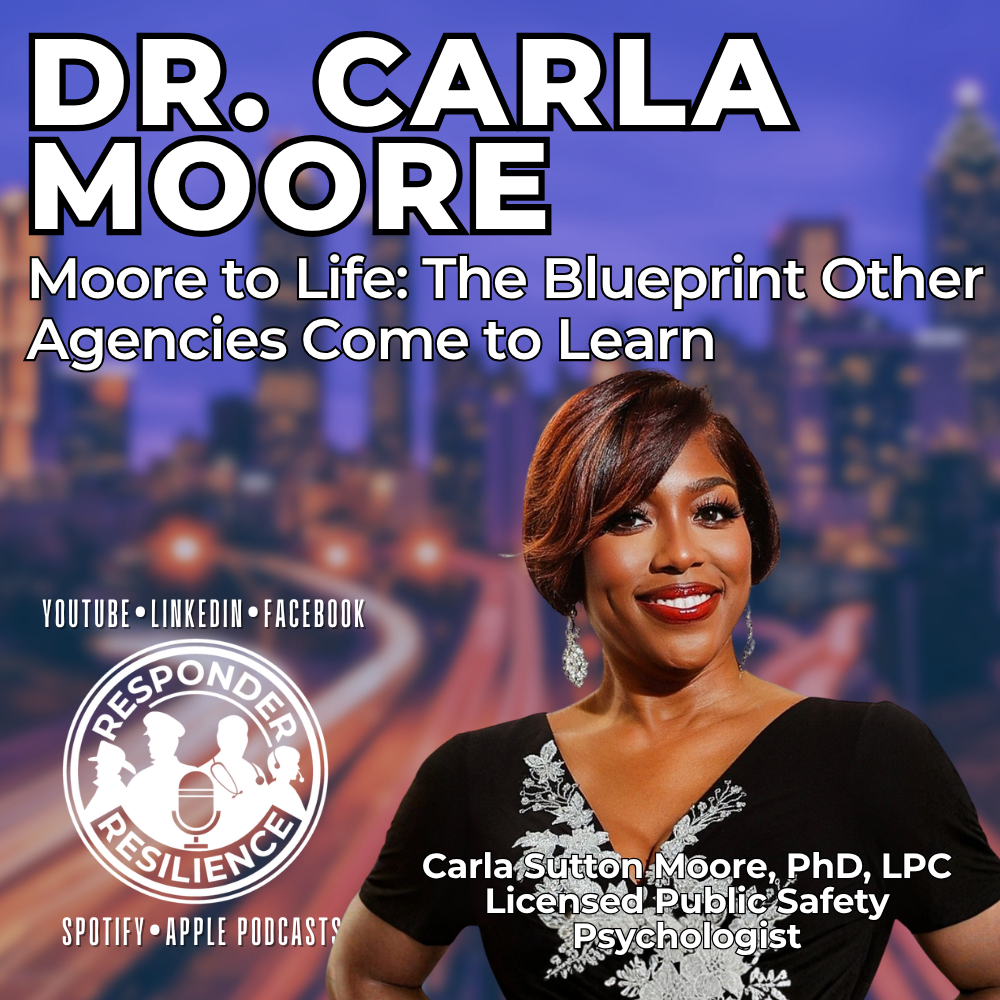
In this episode, Dr. Moore pulls back the curtain on what it actually takes to build wellness programs that change lives — not because a flyer went up in the break room, but because someone did the slow, patient, relationship-driven work of making it real.
Most psychologists who work with first responders come from the outside — and spend years earning trust. Dr. Carla Sutton Moore built her career from the inside out.
Twenty-five years in mental health. Over twenty devoted exclusively to law enforcement, firefighters, corrections officers, and 911 operators. Named Psychologist of the Year by the Fire Service Psychology Association in 2024. Vice-Chair of the IACP Police Psychological Services Section. Recipient of the City of Atlanta's 2025 Woman of Impact Award. And one of the most respected voices in public safety behavioral health working today.
In this episode, Dr. Moore pulls back the curtain on what it actually takes to build wellness programs that change lives — not because a flyer went up in the break room, but because someone did the slow, patient, relationship-driven work of making it real.
We get into how clinicians embed with agencies. How programs are developed from the inside of a major city government. How to earn trust in a culture built to keep outsiders out — and what it costs agencies and the workforce when culturally relevant care doesn't exist.
If you work in public safety, lead a department, provide mental health services to first responders, or are trying to build something that actually lasts — this conversation is for you.
**Resources for Responder Wellness:**
• Book: Helping the Helpers https://a.co/d/dm0VS4Q
• Free App: CRACKYL http://crackyl.respondertv.com
• Fitness: FightCamp (code RR10 for 10% off) http://joinfightcamp.com/rr
Contact Moore to Life Counseling and Consulting:
Website: www.mooretolifecc.com
Contact Responder Resilience:
Phone: +1 844-344-6655
Email: info@respondertv.com
Our website with past episodes and more: https://www.respondertv.com/
YouTube: https://www.youtube.com/c/ResponderResilience
LinkedIn: https://www.linkedin.com/company/responder-resilience-podcast/
Instagram: https://www.instagram.com/responder.tv/
00:00 - Why Embedded Care Changes Everything
03:24 - Meet Dr. Carla Sutton Moore
05:16 - From Youth Trauma Work To Atlanta
08:17 - A Day In The Embedded Role
11:29 - Academy Stress Inoculation Basics
13:49 - Early Intervention Without Punishment
17:27 - Workshops That Reduced Family Red Flags
21:34 - Training Clinicians For First Responder Culture
25:02 - Reaching The Most Resistant Members
29:11 - Building Policy And Programs That Fit Atlanta
34:38 - Return To Work Plans And Fitness For Duty
37:18 - Fire Service Psychology Association Explained
42:27 - Prevention For Decades Of Cumulative Trauma
45:49 - Closing Thoughts And Where To Follow
Why Embedded Care Changes Everything
SPEAKER_05
It was probably the job that changed my life because I started to see this work and mental health so differently. And being creative, because they didn't want it to be boring or cookie cutter or something that some other agency had. So I said, no, this is what would be good for Atlanta. If we're embedded, how can we change a culture from the inside out? It was second nature, right, for them to see us as opposed to, oh my god, something's wrong. We needed to create a stress inoculation model so that even when they're experiencing things inside the academy, that they know how to tap into self-soothing techniques, coping strategies. I started to have conversations with executive command staff about more preventive work. But I think it was just people's hope that there was help.
Voiceover
Welcome to Responder Resilience, along with my co-host, Dr. Stacey Raymond. I'm David Dashinger. Most psychologists who work with first responders come from the outside and spend years earning trust. Dr. Carla Moore built her career from the inside out. 25 years in mental health, over 20 of them devoted exclusively to police officers, firefighters, corrections officers, and 911 operators. She's built one of the most comprehensive public safety wellness models in the country, one that other agencies travel to study. Today we're getting into the work behind the work, how clinicians actually embed with agencies, and how programs get built that genuinely change lives. Not because the flyer went up in the break room, but because someone did the slow patient relationship-driven work of building something real. So we'll dig in right after this. This episode is brought to you by Fight Camp, real training on your schedule. Head to jointfightcamp.com/slash RR and use code RR10 for 10% off. There's a new app built by firefighters for firefighters, and it's called Crackle. Download the app now for free as a legacy member and get early access to exclusive content, tools, and updates as they drop. Get the free app at crackle.responderTV.com.tv.com. We'll be right back to speak with Dr. Moore after this. Ask a first responder who they are, and you're likely to hear I am a police officer. I am a firefighter. I am a parallel. I am a 911 communications operator. Not I do this work, but I am this job. Ask a clinician why they work with first responders. And they may say, There's no fire falling and helping help us. Join us in shaping a culture where mental health, wellness, and leadership are prioritized, not whispered. Where support is a sign of strength, not fail, and where no one has to carry the weight alone. Welcome to Responder Resilience. We shine a spotlight on the unseen battles of first responder reality and celebrate the powerful wins that come from the grit of post-traumatic growth. We understand the culture, honor the trust, and bring you conversations from the change makers, passionate about helping first responders come home whole. With your hosts, retired Lieutenant David Dashinger, Dr. Stacy Raymond, and Bonnie Roomley, LCSW EMT. Our guest
Meet Dr. Carla Sutton Moore
Voiceover
today is Dr. Carla Sutton Moore, a duly licensed psychologist and professional counselor with more than 25 years of experience in mental health, more than 20 of those years dedicated specifically to law enforcement, fire service, and public safety. As Chief Psychological Services Officer for the City of Atlanta, she oversees both the Public Safety Behavioral Health Wellness Unit and the Psychological Services and Employee Assistance Program, one of the nation's premier internal EAP models, with utilizations that are consistently above the national average. She's the founder and clinical director of More to Life Counseling and Consulting and serves on the advisory board for the Fire Service Psychology Association. Her research focuses on trauma, wellness, resilience, and culturally relevant interventions for law enforcement and fire service members, with particular attention to the experiences of those from underrepresented communities. That wasn't enough. She also serves as vice chair of the IACP Police Psychological Services Section and is a member of the Noble Wellness Committee, and was named Psychologist of the Year by the Fire Service Psychology Association in 2024. And one last thing during graduate school, she was a professional cheerleader for both the Georgia Forest and the Atlanta Falcons. Dr. Moore, warm welcome to Respond to Resilience. Thank you so much for having me.
SPEAKER_04
Got some impressive background, very diverse.
SPEAKER_05
I had to have an outlet. I had to have an outlet.
SPEAKER_04
Yeah, oh absolutely. Yeah, and you could just like just scream it and cheer and all of that. There we go. So before we get into the work itself, Dr. Moore, can you take us back to the beginning of you know what got you started working with first responders and then ultimately to become an embedded psychologist?
SPEAKER_05
Well, interestingly
From Youth Trauma Work To Atlanta
SPEAKER_05
enough, um, when I first started in this career of mental health, um, I worked with residential, uh worked at a residential treatment facility with youth. Um so I did a lot of trauma work with the young with young people. So um I think after working there, I felt like I can do anything. I can conquer the world because that was emotionally taxing, but it was really important work. Um trauma work in general, you just it's you gotta have a real niche for building rapport with people, establishing trust really early on, and doing the hard, gritty work that no one really wants to do. Um, given your background background, I'm sure you can't. Yeah, no, I can relate with that. Yeah. So um and then after a while, you know, to the point I made earlier, it's really emotionally taxing. So I was thinking about having children on my own, get you know, getting married, having children of my own. I was like, that's a lot to kind of take in. So I said, well, let me figure out how to still do that important work um and it you know, continue to be as interpersonally savvy as I was. I was like, what population do people have trouble tapping into? Public safety. Our person's founders. Um, so I knew of a coworker uh at the time I was working in managed care, trying to get the business side of it all. Um, but they he told me about a job at the city of Atlanta where you were pretty much on call uh 24-7 for three to four weeks at a time, really kind of responding to um Atlanta fire police corrections, E911, any emergencies supporting those individuals. But also it's a it was an internal EAP, so you also provided support to city employees in general during the regular workday. Um so I I heard of that job and just I applied, and it was probably the job that changed my life because I started to see this work and mental health so differently. Um I actually started really looking into work-life balance and how people, you know, deal with things at work, take it home, vice versa. Um, and so just from that, at the time I was an LPC, just you know, doing work as a master's level clinician. And so I decided to go back and get my doctorate and focus a lot on consultation, trauma work. Um, and so got my doctorate and and the rest is history. But I really was intentional about what my track would look like when I was in my doctorate program and did a lot of kind of work with um crisis response teams, even my postdoc, you know, I spent a lot of time um in a in at Grady in the trauma unit with clinicians there, but also I shadowed um and did a lot of postdoc supervision with a psychologist that worked with public safety. So I was real intentional about making sure I mastered my craft before I just kind of set myself loose.
Voiceover
So we could do a whole episode about that. That's amazing.
A Day In The Embedded Role
Voiceover
Um walk us through like a a day in the life of Dr. Moore. Like what is what does that look like?
SPEAKER_05
What do you I know there's probably no two days are the same, but what if it was sort of a typical day look like well typically um initially my day was more of kind of coming in, figuring out what's going on for the day with uh client appointments, whether it be someone from our public safety division or general employees. Um usually there's a lot of meetings with command staff or um commissioners or executives and supervisors in the departments to figure out what employee needs are. Um but specific to public safety, um what I found was a lot of time, a lot of times we were meeting, we were talking about problem areas and things that we were seeing, we were putting out fires. And so early on, really early on, I was like, these meetings seem really intense. And I found myself asking, well, why didn't we see this before? Or what could we have done ahead of time? So literally within two years of me doing this work, I started to have conversations with executive command staff about more preventive work and about how to we're embedded, right? So if we're embedded, how can we change the culture from the inside out? Like we're embedded. This is an opportunity. We have people at our at our feet right here. So I really tried to get creative and uh get the buy-in about how to focus on prevention and wellness. And this was, like I said, in the early 2000s, so it was kind of like what we're gonna do what?
SPEAKER_04
Right, right, right, because that's that was new then.
Voiceover
Most people work out to look better. You work out because lives depend on it. But the stress doesn't clock out when you do. The calls follow you home, and most workouts weren't built for any of that. Boxing was.com slash RR, use code RR10 for 10% off. Fight camp, real training on your schedule.
SPEAKER_04
So I'm curious, so what if you could pick a few things that really made a difference preventatively? What was it that really worked that that the um command staff supported and that um officers and firefighters, whoever you're you're embedded with police, right?
SPEAKER_05
I'm embedded with all of them. Also the psychological services division, the public safety division here is police fire corrections and e91.
SPEAKER_04
So to go back to that question, can you name a few things that really made the difference as far as prevention that command staff bought into and that uh firefighters officers and EMS personnel latched on to?
Academy Stress Inoculation Basics
SPEAKER_05
So part of it was getting in front of them as soon as they begin working here. So I met a lot with the academy staff, uh both police and fire academy staff. And of course, there's post-certified classes such as um recognizing mental health issues and citizens, so all of the things that were required as far as post mandates and just requirements and training, what I would do is ask if I could supplement by having an additional two hours in those classes to talk about their own mental health. So really I I saw them from the time they were a recruit and then kind of implored that, you know, we needed to create a stress inoculation model so that even when they're experiencing things inside the academy that they know how to tap into to self-soothing techniques, coping strategies. Um they used to have what they call family night after the recruits would graduate. So I would ask them to do that earlier, have like a family education night before they graduate. Right, right. So we started embedding programming in the academy. That's what the has to be.
SPEAKER_04
And I people talk about it, but I just don't see it happening. But you were able to pull it off probably because you are embedded, right? Because you're there, and then they get to see, like, oh, this woman reminds us of our own mental health, right? Even the face of mental health, correct. And they are reminded of that, and they can't help but think about that sometimes. Correct.
SPEAKER_05
It's it's just so easy to forget. Right. And and and literally having clinicians just kind of show up in the workplace. So I would make sure we would do what we called hot spots around during their roll call. We would just show up at the precinct just to check on them, or again, they were familiar with them from seeing them at the academy teaching these classes. So once they would see them in the field, they'd be like, Oh, hey, Dr. Moore, hey, Dr. So and so, president so-and-so. So it it was like part, it was second nature, right, for them to see us as opposed to, oh my God, something's wrong. Uh it took a while though, you know, even trying to, so it became a part of the curriculum. So then this is where my consultation piece came in, like more of an I.O. psychologist, right? So then
Early Intervention Without Punishment
SPEAKER_05
I asked command staff to create a more robust early intervention program where we put it in policy that recognized in certain red flags, they would still have an opportunity to refer them, but not in a putative way. Yes. Right. Right. So the initial what we call early intervention appointment was just as a check-in. And then they could have follow-ups, but the follow-ups weren't mandated. Yeah. Whereas if there's an early warning program and there's a SOP or a standard operating procedure violated, the follow-ups were mandated. So we definitely differentiated the two types of services so that people felt empowered to follow up if they wanted to or needed to.
SPEAKER_04
Right. And leave leave the control up to the client or the, in this case, the first responder. And it's not coming across as punitive. And I think that's a huge problem. You know, I work a lot with police and I wrote a book on police. So that's where my focus is right now. But correcting these symptoms, right? These behaviors that people are acting out, but it's because of, you know, uh unresolved trauma typically. Instead of, you know, creating a connection with them and giving them an avenue to heal, it's you know, there's too many too many times the approach is disciplinary. It's correction versus connection. And I think that has to change.
SPEAKER_05
Correct. Absolutely. Absolutely. I think uh another thing that was helpful was including peer support and tabulancy in our model. Yes. So they saw that where where we all got along, we all responded, and we would all show up at the same time at the academy to, you know, welcome the recruits in. Like it was literally embedding the work in relationships and the culture within police and fire, right? So when they saw that, oh, the peer support person actually trusts the clinicians in EAP or the behavioral health wellness unit, right? Oh, they're the peer support group is promoting that we go there, right? Or Chaplain C came out and prayed with us, but they also told us to go check out the clinician when we go do our wellness visit. Right. So it's day-to-day kind of interactions and the language change, right? So we really talk a lot about wellness as opposed to, oh, these mental health issues or oh, this mental health crisis. We talk a lot about just how to engage in your own physical health and wellness, I mean your mental health and wellness as you would your physical health and wellness. Partnering with our peer fitness team talks about, you know, mud mind, body, you know, the connection. So that's more advanced. That's what more of what we do now. Back then, I think it was hard to kind of get them all on board together. Sure. Right.
SPEAKER_04
Because people don't they don't tend to think that way. But so then by showing up all together, you you automatically vet one another. And so that's sure, that's brilliant. And then coming across as like, let's talk about wellness and not not be a um reactive program, you know, like when someone is skipping work because they're drunk, um, or they get caught with a you know a D a DUI. It's it's being more proactive and sort of let's take care of you so that you don't end up going down that road. I think in most models, it's you know, mental health comes becomes a piece when the person is falling apart.
SPEAKER_05
And that's not for Sun's that's not the right approach. Correct. Correct.
Workshops That Reduced Family Red Flags
SPEAKER_05
And so I I think by reiterating the importance of being more proactive, um, even when we recognize like themes and why people were coming or themes and why command was consulting with us, we would create a workshop around it. So there's a period, I think like in I don't know what was going on with couples, families, children in 2019. Between 2016 and like 2018. Uh-huh. Yeah. It was a lot of we had a lot of referrals around like custody issues and divorce rates and those types of things. It was a lot of early warnings because of DV issues with the member and their significant other or children. Right. So it was more than usual. So what we did was have what we call a you know, relationship, healthy relationship seminar. Right. So we had a lot of seminars for couples to come in or individuals that were trying to figure out how to co-parent. Yes. Then we have like a huge what we call um legal fair, legal consultation fair. So we had divorce attorneys there, um, social workers that had workshops and groups about co-parenting. Um a lot of men didn't know their rights specific to custody. So we had attorneys that educated men on custody battles and things like so. That was like a whole week of how do we manage in difficult relationships and how do we take care of our families and our children without it being so combative, right? Um so because of the feedback we received from that, we would do that quarterly. It it tremendously reduced our our rate specific to early warnings with couples. It was I couldn't even I can't explain like how or what we said that was like the magic trick, but I think it was just people's hope that there was help.
SPEAKER_04
Right. Well, you had your pulse on the you know, what was showing up and you know, the the problems that were surfacing, right? Because who knows what causes that, like if there's a surge of domestic violence and domestic issues or whatever. Right. We we don't always we can't always figure that out, but I think the way to handle that is is to address it right there in the moment and you see if that program takes hole uh because COVID caused other things to come up. And so it's it's kind of like an evolving animal, you know, psychology of of um public safety.
SPEAKER_05
And and I I talk a lot about tertiary prevention. I mean, people we think a lot about primary prevention, but tertiary prevention, like once we see it's almost like at risk, um, once we see certain things happening, you still create prevention models to address things that have happened before. So um educating people on the importance of tertiary prevention. So I think they kind of get it now. But at first they were like, So why are we doing this again? Well, we see it's been a recurring problem. So yeah, right.
SPEAKER_00
Not everyone is meant to walk this path, and that's okay. But for those who feel the call, for those who read these words and feel not just curiosity, but conviction, know this. By the time a first responder sits across from you, they've likely exhausted every internal resource they have. This isn't a routine appointment, it's their 911 call. I don't know how much longer I can do this job. You won't hear sirens, but the urgency is real. If you choose to take that call, understand what it means. To show up, to stay steady, and to carry the weight of someone who spent a career doing the same for others. This is where the work begins. Be the resource they can count on. Order your copy of Helping the Helpers Today on Amazon, and for bulk orders, email us at info at respondertv.com.
Voiceover
I
Training Clinicians For First Responder Culture
Voiceover
love the way you're building trust and collaboration from from early on. And uh, I wanted to touch a little bit further into the clinicians that are working with your agency and how do you build that cultural confidence? We know there's a lot of courses out there, classes, but what do you find is the most effective way to guide to get a clinician who wants to get into this work up to speed to work with the first responder? Community.
SPEAKER_05
So just part of our unf well we don't hire green clinicians. I would that's I know a lot of times people are like, oh well you gotta give them a chance. Well, yes, but we need them to get that work before they come internally, right? So um I'm usually looking for clinicians that have some type of work with military or some trauma-focused work, pretty seasoned clinicians, so that even in the event they necess they may not have necessarily worked with police fire correctors or E911, they're seasoned enough to kind of understand the implications of that type of work. Um But even to your point, once they get here, it's still different once you get here, right? So then we have to talk to them about the culture, what it means to work in Atlanta PDE versus, you know, other agencies, um, the culture of the city, right? So it's a lot of ride-alongs, it's a lot of attending meetings, shadowing clinicians that are already here, starting out at the academy and seeing what they're learning there. Um, when they, you know, witnessing what it means for recruits to kind of go through the, you know, shoot, don't shoot modules. And so we're educating them and allowing them to see training from start to finish, um, assigning them again to command staff uh to go to certain meetings and learn about special ops, you know, what's mounted patrol, what's, you know, what are guys that are on um on the motorcycles or our cycling units. So we want to make sure they understand um everything about the culture of the agency and the specificity of that particular unit or job. Uh we have them go sit in the fire station at Muster to learn what happens during those conversations, to see those dynamics because they're living together, right? Um so all of that is just kind of part of the training. They're the clinician usually shadow every the clinician that's on call usually will have the new person with them the entire time they're working a call. And so the new clinician essentially will be on call for almost a month before they're um kind of winging it on their own. So it's real intense training, but it's necessary. Yes, absolutely. Agree with all that. I have them also tap into like read through a lot of the policy and procedure um because we know that you know litigation is real, and you know, if we provide the wrong feedback or consultative information to command or even a member, um, it could come back and bite us in the butt. So really kind of being intentional about what you what your directions are or your instructions are when you're talking with command staff about how to manage a case, so the case consultation piece is huge as well.
Reaching The Most Resistant Members
SPEAKER_04
How do you handle resistant um first responders? You know, ones that you know they're you're getting indication that they are struggling, but they and even though you've been there with them from the start, they they still may not want to talk to anybody. Like, how do you handle those individuals?
SPEAKER_05
So typically we end up circling back and having run into them on some incident or something that may not necessarily be related to what to what command is concerned about, right? So sometimes we haphazardly will have to have some type of interaction with them. But for the most part, I always remind clinicians that because of the population we deal with, you'll get that a lot. And so you can't be sensitive or wear your feelings on your sleeves. You just have to kind of push through it. Um, remind them of just the importance of their own self-care, letting them know that you care, finding things that they can relate to. So again, rapport building, you have to be really good at rapport building and quickly, right? Because they're always suspicious, they're always watching you, they're always wanting to make sure you're honest, open, and consistent in what you say and do. So try to find something that you can relate to them about. Um I find that when you show up often in their space, yeah, just out of mirror you know familiarity here in the poor building, yeah, yeah, that they respect, they respect that because they see that as you that is you wanting to learn more about them. Yes. But if they only see you when something's wrong or if you're a disciplinary meeting or something like that, they have no respect for you. They really don't. Right. Um so I I think it's just um I've I've actually found it a little bit challenging now that I'm uh in a more, I guess, not administrative capacity, but now that I'm higher up in the ranks, I've really tried to be intentional about making sure they understand that my um alliance still lies with them, although they see me with white shirts often.
SPEAKER_04
Oh. Yeah.
SPEAKER_05
That's what they call them, white shirts, right? So white shirts. I mean that's white shirts. You're with white shirts. And I'm like, I do have me. So I find myself trying to reassure them that this is still the same Doctor Carla that you met 15 years ago. And my alliance is in making sure that you're okay. Yes, I do have a responsibility to the agency as a whole, just because I'm also a risk manager. Yes. But at the end of the day, they want to know whose side you're alive. It's about our your wellness and well-being.
SPEAKER_04
Yeah. Yeah. Do they ever judge you because you're on the top of the you're at the top of the pecking order? Uh if if Dr. Moore has to be called, then I must really messed up. Or that really got me in the spotlight because now I I'm dealing with Dr. Moore. No, directly they'll say that.
SPEAKER_05
I see that as Oh yeah, they'll say, okay, what do I do now? Right.
unknown
Yeah.
SPEAKER_05
Like, why why are you here? That's usually why are you? Right. Right. And so I'll say, I'm just, I mean, my clinician was, you know, helping just find, but because I know you, you know, officer David or you know, firefighter Raymond, uh, because I know you and I just I care too. So yeah, my clinician is handling it just fine, but I care also. And and yes, I do have a higher order job to do, but you are my higher order. Like I really care because I've been here. So I just kind of just make it real plain and minimize my role from a hierarchy standpoint. But yes, uh, yeah, I just think I've just established that relationship with most of them. Some of the newer folks are still like kind of like, mm, Dr. Moore's here, but it's a work in progress. It's a work in progress.
Building Policy And Programs That Fit Atlanta
Voiceover
But speaking of your work, um, in terms of policies and developing wellness programs, what does that look like? How do you collaborate in what's the process look like from your experience to develop these policies and programs within a large agency?
SPEAKER_05
So I'm I'm pretty actively involved in most of my professional organizations for that reason. Anytime there's a new guideline, um, something new coming out from our Division 18, uh, something new coming out just amongst our professional organizations. I'm usually trying to dig deep to figure out what's going on from, you know, I know with Fire Service Psychological Association, we're trying to have more involvement with NFPA because they're writing guidelines specifically to mental health because some of the wording and things that they had in there was kind of antiquated or just from like the DSM for or, you know, so we, you know, our connection in professional organizations and dealing with the actual profession itself, I do a lot of reading. So the minute I find myself not growing professionally is the minute that someone will need to call me in to check because because I'm constantly trying to hear from my colleagues about what's out there, attending case consultations, going to conferences. Um, but also making sure that the black and white print does not get in the way of tailor-making programming, right? So I also inundate myself in the culture of the agency because, you know, outside of Atlanta, I do consult with other agencies about program development. Sure. So because it's important to really kind of understand the policy and procedure, but understand the needs of the organization, gel that together to figure out how to build something that works for them. So I I've I've been really intentional about doing it here in Atlanta because you know, Atlanta has an employee assistance program that's internal, which is that's like a dinosaur. People don't really do that anymore. You have hydrant programs, but you don't have a fully embedded internal program. Atlanta has a very robust one that started in the 80s as a result of the Atlanta child murders. So they had clinicians uh responding to help the police officers and firefighters that were finding missing and dead children. So um out of that became the full employee assistance program that serviced all city employees. Um because that's there and it serves all employees over time. We realized that there was an additional layer that was needed for prevention, wellness, and specifically for public safety. So we were trying to do it out of the employee systems program unit, but because of the stigma, um it was just always hard to get our public safety members to voluntarily go there, right? So they go for the mandated referrals, which was managed in that unit, but they wouldn't go for preventive reasons. So that's how the public safety wellness unit was birthed out of the fact that some of them would go, but we needed to make it more robust. So um, and then you know, having leadership that bought into that because we have a fire chief and a police chief and a corrections chief and a you know one director that truly believes in that. I think that was like my golden ticket. I was like, hey, let's do this. Right. And so that was it.
SPEAKER_04
Exact buy-in, but also trust.
SPEAKER_05
Absolutely. And and being creative because they didn't want it to be boring, a cookie cutter or something that some other agency had. So I said, no, this is what would be good for Atlanta, right? And so we just had to figure out uh and getting their input, right? Getting members input. We did some feedback surveys about before. So uh I think when we first started before it was an actual individualized unit, we used to have something called yoga in the bay for firefighters, right? Yeah, right in the bay. Yeah, and they laughed and clowned at first. No, but they just money kit. They loved it. They loved it. Um, and so every Friday we'd have a yoga instructor go to different fire stations and do yoga in the bay. They would call out a service for that hour and we'd rotate around those cities. And that it was a thing, yoga in the bay.
SPEAKER_06
Uh-huh.
SPEAKER_05
I mean, we gave it a name, we would have refreshments after. Yeah. And we used to like, you know, make sure we'd take the mats, clean them. Stations started to buy their own yoga mats. That's when we knew they had it. We'd be like, oh, we got them. That's it. Yeah, that's it.
SPEAKER_04
That's it. They're hooked. They're hooked. They're hooked.
Voiceover
This episode is brought to you by Fight Camp. If your job already demands everything from you, your training shouldn't add chaos to your day. It should give you structure. This is for firefighters, EMTs, paramedics, dispatchers, and police officers who still want a way to train with purpose. Fight Camp brings structured boxing and martial arts training into your home. No commute, no waiting, no guessing if your workout actually moves you forward. Every strike is tracked, so progress is visible, not vague. Every session gives you a clear standard to meet and a way to improve the next time you show up. Head to joinfightcamp.com slash R R and use code RR10 for 10% off.
Return To Work Plans And Fitness For Duty
SPEAKER_04
How do you handle situations like you have a uh first responder who has an anxiety disorder or you know they're depressed and they're on leave because they need treatment and they need to kind of get those symptoms under control? Is there like how do you handle fit for duty? Is that something that someone else comes in and determines if they're fit for duty? Or who makes that decision that it's okay to go back to work? Because chiefs don't want somebody who's unstable, right? Who might crack, you know, under the pressure. Um, the liability of that, um, it's also bad for the first responder to go through that if they're not ready to return to work. So, how do you address that?
SPEAKER_05
So, fortunately, we are housed uh in the Department of Human Resources. So, although I I kind of serve four gods, I answer to them, but I also answer to the HR commissioner. So that's my boss as well. Yes, that means that I actually have full access to the HR director for public safety. That's the person I coordinate with to make sure that when the employee transition back, we have a ROI in place, a reintegration plan so that the member receives the necessary support and accommodations needed. And we trust the external provider to give us kind of a reintegration recommendation, like this person may experience this as they return. So in the event they need intermittent FMLA or need to be out as a result of being triggered. So we work out a real robust reintegration plan. But the communication is usually HR consulting with my unit to figure out how to do that. And command is not really involved in that at all. They just trust what we say. They do, they trust you. All right. In addition to that, we try to, so the word fitness for duty is used so loosely. Like somebody can be out and they come back and they're like, oh, they need a fitness for duty. No, they don't. They haven't had any behaviors at work that would call their performance at work in question. They literally went out on leave, you just so happen to know it was mental health related, they don't need a fitness for duty. If they're released to come back and work, we're handling it on our end. Right. So we just, you know. Well, trust your expertise. They have expertise. And normally, normally what happens when I get pushback, like, no, I heard that this happened while they were out. Well, that happened while they were out. So when I get pushback, I remind them of like case law specific to fitness for duty litigation. And then they'll calm down a little bit.
Fire Service Psychology Association Explained
Voiceover
I want to circle back to uh Fire Service Psychological Association or Psychology Association that you touched on earlier. Some people in the first responder world perhaps haven't heard of it. Um that's how you and I met, which was great at uh FDIC. At the at the conference, yes.
SPEAKER_04
Yeah.
Voiceover
Yeah, that's cool. Yeah. Yes. I was so excited. Yeah, they had a great little um well, they had an amazing suite that overlooked Lucas Oil Stadium. So you were looking out from the end zone. Um, imagine that for a Colts game, it's just the best place to watch the game. I had this huge suite and a great spread and a great panel, great discussion. And Dr. Moore was leading that uh along with one of her colleagues. And um, but I think for anybody that doesn't really know much about FSPA, can you give us a little bit of background what it does, some of the work it's doing, and what you're involved with in terms of FSPA?
SPEAKER_05
Right. So FSPA Fire Service Psychology Association, it was established uh in 2017. Um I was actually introduced to it by uh one of my chiefs who kind of heard about it on LinkedIn. And so he said, I think you should be a part of this organization. Um so I actually reached out to Dr. Weldon, who was the founder at the time, and loved the idea of bridging the gap between fire service members and psychologists and even master's level clinicians, because interestingly enough, it's a little bit harder to tap into fire service because they have such robust peer support programs. And while peer support is, you know, really trusting, like a trusting kind of resource for fire service members, when there are any clinical concerns, it gets a little foggy and great, right? So we wanted to make sure there was a consultation piece there, um, and that they didn't see us as the enemy and that we weren't just the person that you come see on the couch whenever there's a problem. We wanted them to understand the whole gamut of what comes from being or tapping into mental health services and resources. Because I think the only thing that they see us as is, oh, I'm going to see a shrink. So the Fire Service Psychology Association was like, no, we're more than that. Let's bridge this gap. Let's have these talks. So we started to have FSPA started to have like consultation groups where we'd invite fire chiefs and fire service members to come and just kind of talk about things that they're seeing from a mental health perspective that they would love advice on or help with. Um, so it kind of grew out of that. I think our very first conference was in California where you had Cal Fire and their peer support team is huge and robust. So really partnering with them to put on the initial conference was a great, was a grand idea. It was really, really nice to kind of have fire service members that understood our initiative and our mission. So from that, you know, you it just kind of grew. We had conferences at the uh National Fire Academy in Maryland. Um we've been here in Atlanta. I was actually the conference chair here. It almost took me out. It was so massive.
SPEAKER_04
You can imagine, right?
SPEAKER_05
So manage. Oh yeah. But it was it was great because what we try to do is also train clinicians during that week. So we'll have CEUs who are clinicians exactly. Of course, like our culture. Yeah. We have live burns, uh, education on sprinkler systems. So Atlanta, we had like a trailer burn. It was it was awesome. And so of course firecrackers get into that part when you say, Oh, we're gonna have a live burn, they're like, Oh, yeah. Live burns or food? Live burns and exactly. We're both so you gotta have both. So, so it just, you know, I became involved, and then I think after the second or third year, they asked me to be on the advisory board. And um, I've really kind of taken that by the reins and recruited other psychologists. Um, so what I did was kind of tap into my police psychology group to say, hey, I know some of you all do work for fire. Can how about joining your organization? And so um of course it's not as robust or heard of as is the police psychology section through IECP, which is why I'm really trying to get um IFC to embrace FSPA so that we can actually be a part of their health and safety committee the way police psychology is with IECB. So yeah.
Voiceover
Yeah, and there's a lot of work going on, I know, just to move that whole platform forward. Uh one I was directly involved with, uh, which is sending out a questionnaire to fire departments across the country, really, to get a handle on what they have, what their needs are for mental wellness and what programs they have existing now, so we can start to get a feel for you know what's out there because it's so different in every area of the country. There's no two places that are the same. For sure. It'll help uh at least bring some understanding of what's out there and what's needed. So for sure.
SPEAKER_05
And even the uniqueness with volunteer for our services. So that's a whole nother that's a you have to tap that's right. Tapping into that a different way.
Prevention For Decades Of Cumulative Trauma
Voiceover
So, Dr. Moore, anything we didn't cover that you want to talk about?
SPEAKER_05
I think I I've covered, you know, um quite a bit. I I appreciate the questions. I hope I answered them uh thoroughly. And as you can see, I'm really passionate about this work. I love what I do. I love building programs, I love building clinicians to be a part of this this group and this culture. Um, I do think it's interestingly enough, an underserved population when it comes to mental mental health. Yes. I think we focused uh, you know, it was a lot of work around how we deal with our veterans, but um, I think hindsight is 2021 to say all the all this time we have neglected individuals that go out and serve our country all day, every day on our regular on our soil, right? Um in addition to the fact that they don't get tours of duty, they work for 10, 15, 20, 30 years and then realize that they have all of these problems, right? So I I my passion is to really get in front of that and focus a lot on wellness and prevention, but also be a a vessel so that agencies can understand the importance of creating a culture, policy, and procedure that take care of our members. Absolutely.
SPEAKER_04
Well, I'm impressed that you've you've really pioneered by bringing in, you said in like in the early 2000s when people were looking at like you like you had two heads, you know, to to to to have wellness programs and do things proactively as opposed to like putting out fires, you know, somebody's really uh crashing and burning and and what do we do about this first responder? But but getting ahead of it and and so that we can prevent them from falling apart because of their exposure to trauma, you know, um the amount that they're exposed to. It's it's cumulatively more than what uh you know our veterans have, you know, if it's a tour for four years, you know, it's over in four years. But like you said, it could be decades that they're experiencing trauma and and that creates different problems. So for sure, for sure.
SPEAKER_05
Thank you, thank you. And and back then I did a little research. I would use some some grad students to kind of help with things and partner with some institutions, but I think my only regret is that I didn't, you know, get more research done then or or you know, over like right now, I would have had 20 years of just kind of watching things, right? But then it wasn't as much of a topic for academia to be interested in back then. So I didn't get a lot of buy-in for people to pick up on these projects that I was trying to um No, but the proof is in the what you've put in place, right?
SPEAKER_04
And the fact that you have buy-in from top and bottom. So that I think is is the proof. Well, thank you.
Voiceover
That's really sure, right? Yeah, this was this was absolutely a great conversation. Uh so impressed with everything you're doing on a proactive basis and collaborative basis with first responders and the leadership of the organization. Um, keep up the great work. I think it's gonna it's gonna be an inspiration to anybody who hears this. So thanks. Thanks so much for being with us.
SPEAKER_05
Thank you so much for having me. It's been great.
Voiceover
Please
Closing Thoughts And Where To Follow
Voiceover
like and subscribe. You took Responder Resilience. We're on Facebook, Responder TV, we're on LinkedIn, Apple Podcasts, and Spotify. Go to our website, respondertv.com for past episodes and our guest information. Till the next time, stay safe, be kind to yourself, take care of the
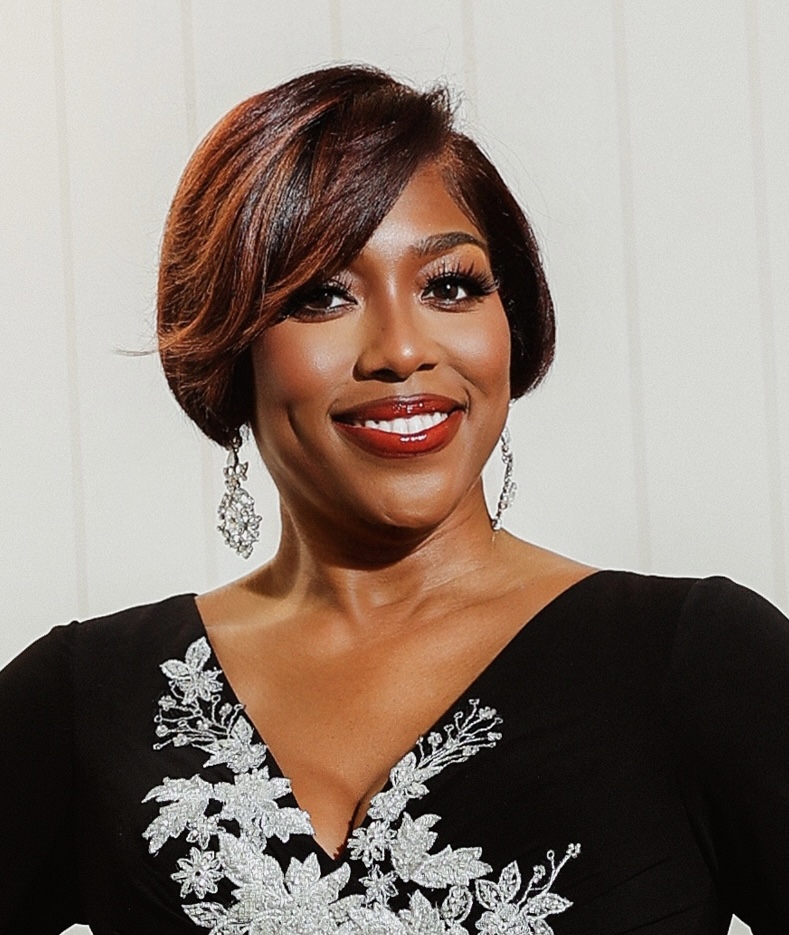
Psychologist | Professional Counselor | Chief Psychological Services Officer
Dr. Carla Sutton Moore is a dually licensed psychologist and professional counselor, with more than 25 years of experience in mental health, and more than 20 of those years dedicated specifically to law enforcement, fire service, and public safety.
As Chief Psychological Services Officer, for the City of Atlanta, she oversees both the Public Safety Behavioral Health Wellness Unit and the Psychological Services and Employee Assistance Program — one of the nation's premier internal EAP models, with utilization rates that are consistently above the national average.
She is the Founder and Clinical Director of Moore to Life Counseling and Consulting, and serves on the Advisory Board of the Fire Service Psychology Association. Her research focuses on trauma, wellness, resilience, and culturally relevant interventions for law enforcement and fire service members — with particular attention to the experiences of those from underrepresented communities.
She serves as Vice-Chair of the IACP Police Psychological Services Section, is a member of the NOBLE Wellness Committee, and was named Psychologist of the Year by the Fire Service Psychology Association in 2024.