Apple Podcasts
 Spotify
 YouTube
 RSS Feed
 Redefining Law Enforcement Leadership with Sheriff Michelle Cook | S5 E41
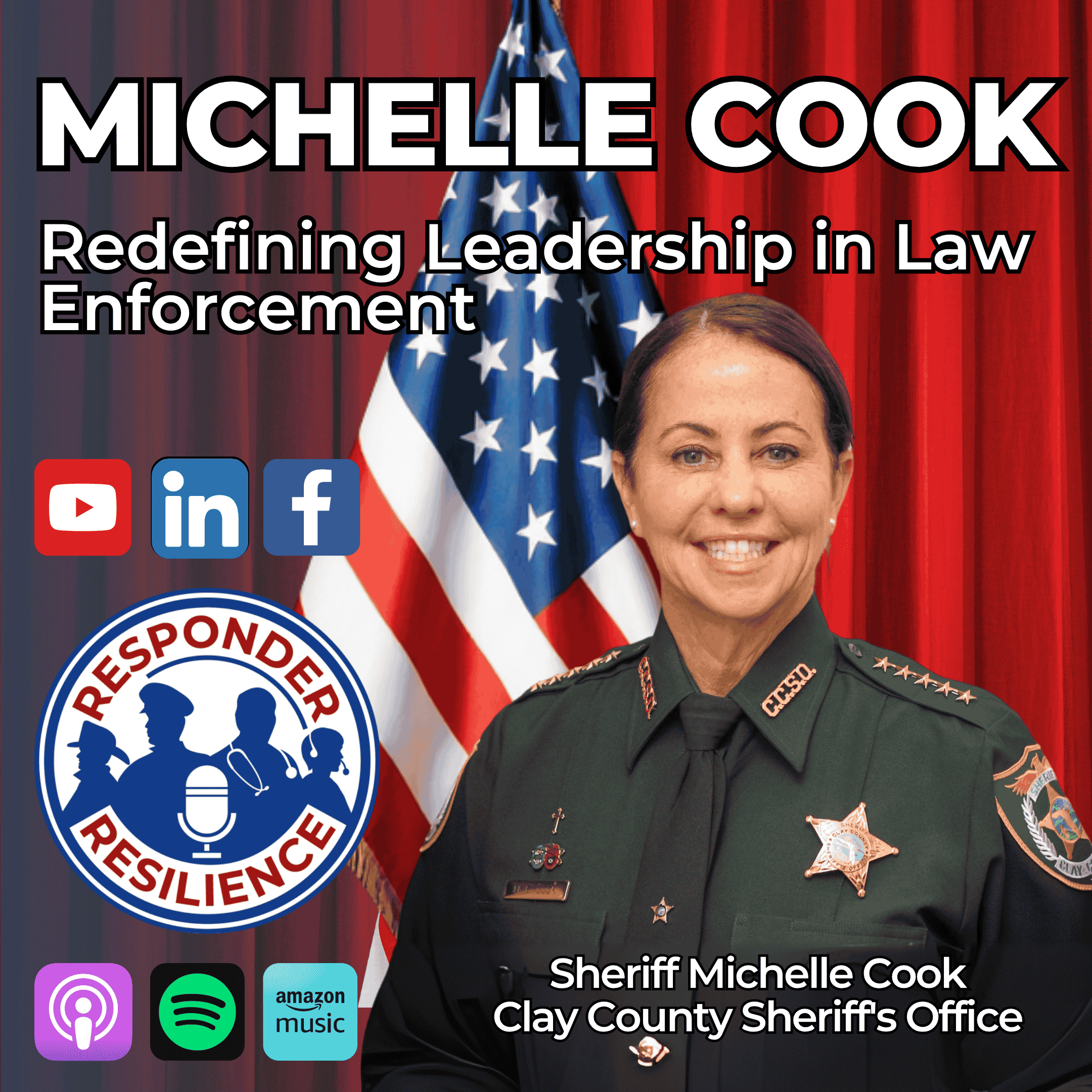
In this episode, we sit down with Sheriff Michelle Cook from the Clay County, Florida, Sheriff's Office for an eye-opening discussion about the ever-evolving landscape of law enforcement. Sheriff Cook shares her insights on the crucial topics of recruitment and retention within the force, diving deep into the challenges and opportunities that face law enforcement agencies today.
In this episode, we sit down with Sheriff Michelle Cook from the Clay County, Florida, Sheriff's Office for an eye-opening discussion about the ever-evolving landscape of law enforcement. Sheriff Cook shares her insights on the crucial topics of recruitment and retention within the force, diving deep into the challenges and opportunities that face law enforcement agencies today.
Sheriff Cook’s journey as a leader—known for her integrity and compassionate approach—offers a unique perspective on striking a balance between firm leadership and genuine community connection. We also explore the profound impact of technology on policing and how it's reshaping community engagement. Get ready to hear about the impressive CCSO Wellness initiatives and the dynamic growth of Clay County. How does CCSO plan to continue its legacy of outstanding service amidst these changes? This episode promises to be both enlightening and thought-provoking as we explore inward-facing and outward-facing leadership in today’s policing world. Don't miss it!
Now available! Helping the Helpers: A Clinician’s Guide to First Responder Mental Wellness, our new book that equips you to build a First Responder-Centered Practice that works. Get your copy here: https://www.amazon.com/dp/1969267003
Go to https://www.respondertv.com/p/helpingthehelpers/ for more book info.
Thanks to our resource partner, First Responder Project, whose no-cost first responder retreats offer you a chance to reclaim connection and learn vital skills. Take a stand for your well-being and the connections that matter most. Learn more and register at FirstResponderProject.org
Thanks also to our resource partner, FightCamp. Harness the strength of boxing to release stress, build resilience, and connect with a supportive community. For free shipping and a free month of membership, go to https://joinfightcamp.com/shop/ and use the code RRPONE.
Contact SHERIFF COOK:
Website: https://www.claysheriff.com/
Facebook: https://www.facebook.com/ccsofl/
Instagram: https://www.instagram.com/ccsofl/
Contact Responder Resilience:
Phone: +1 844-344-6655
Email: info@respondertv.com
Our website with past episodes and more: https://www.respondertv.com/
YouTube: https://www.youtube.com/c/ResponderResilience
LinkedIn: https://www.linkedin.com/company/responder-resilience-podcast/
Instagram: https://www.instagram.com/responder.tv/
Facebook: https://www.facebook.com/responderTV/
We have an obligation, but it's also a blessing to be able to help somebody when they're at the lowest point of their life. Sometimes I lead from the front, and then sometimes I lead from the back and let the team do their thing as a part of their growth and as a part of their learning experience. People today coming into this career, they want to know that they're changing the world to make it a better place. Our attrition rate is really low, and our vacancy rate right now is single digits. But I truly believe that some doors open and some doors close. And although you should advocate for yourself, you also should be self-aware enough to know when the door has closed. Don't waste your energy kicking a closed door. Find another door. Welcome to Respond Resilience, along with my co-host Bonnie Rumoli, LCSW EMT. I'm David Dashniger. And welcome to today's episode. We're joined by Sheriff Michelle Cook from the Clay County, Florida Sheriff's Office. I'm going to dive into some key topics like the evolving role of law enforcement. Plus, we'll tackle law enforcement recruitment and retention, the impact of technology and community engagement programs. Stay tuned for an insightful conversation. Thanks to our resource partner, First Responder Project, whose no-cost First Responder Retreats offer you a chance to reclaim connection and learn vital skills. This isn't just a retreat, it's a lifeline to keep you mentally strong at work and emotionally present at home. Take a stand for your well-being and the connections that matter most. Sign up now for your FRP retreat. Learn more and register at firstresponderproject.org. Thanks also to our resource partner, Fight Camp. For free shipping and a free month of membership, go to joinfightcamp.com/slash shop and use the code R R P O N E.
DavidWe invite you to like and subscribe, YouTube, Responder Resilience, Facebook, Responder TV. We're on LinkedIn, Apple Podcasts, Spotify, and go to our website, respondertv.com. Past episodes and guest information. We'll be right back to speak with Sheriff Cook after this. In this family, more of us die by our own hands and by the hazards of the job.
VoiceoverIn this family, up to a quarter of 911 telecommunicators have symptoms of post-traumatic stress. In this family, our mental health and wellness are in high risk, while responders are quietly suffering. In this family, many struggle with job-related stress, burnout, or injury, sleep disruptions, substance abuse, and relationship problems. In this family, we can't help the helpers.
BonnieWith vital information and resources, resilience strategies, and success stories of overcoming the obstacle.
VoiceoverWelcome to Responder Resilience with co-hosts retired Lieutenant David Dashinger, Dr. Stacey Raymond, and Bonnie Rimley, LCSW EMTV.
DavidWe'd like to welcome Sheriff Michelle Cook, who began her law enforcement career in 1992 as a patrol officer and rose to become a three-star director at the Jacksonville Sheriff's Office, which is the 3,300-person agency. And after leading significant initiatives and overseeing a budget of over $100 million, she became chief of police in Atlantic Beach, Florida. Under her leadership, crime rates dropped and community morale improved. In 2020, Michelle was elected Clay County Sheriff, and she was sworn in early at the request of Governor Ron DeSantis. In 2024, she was overwhelmingly re-elected with an 80% of the vote. Recognized for her extensive experience, leadership in law enforcement, Sheriff Cook has built a reputation as a firm yet compassionate leader whose integrity and genuine management style earn respect, not only from her work family, but also from the community she serves. She holds a master's degree in criminal justice and is a graduate of the FBI Law Enforcement Executives Development Seminar, Leeds, and that was session 80, and a member of the Florida Sheriff's Association. Sheriff Cook, welcome to Respond to Resilience.
Sheriff Michelle CookThank you. I appreciate this opportunity. Looking forward to this conversation.
BonnieWelcome. You know, David's been talking to me about you, Sheriff, and just saying how excited he was about this interview and how excited he was for me to meet you. So just hearing all of your accomplishments is so inspiring, and I really can't wait. Thank you.
Sheriff Michelle CookI I appreciate that. It makes me sound old though. So we may have to uh let the audience know that I started when I was seven years old. How about that?
BonnieSo tell us, how did you get into law enforcement? We're always curious to go back to the beginning and where it all started.
Sheriff Michelle CookSure. So when I um came out of high school, I actually was very interested in the Navy, but I have asthma, and at that point the Navy would not take me in. So I entered into local college here and started taking classes, had some different ideas about maybe what I wanted to do, but was not really set in stone exactly what uh what I wanted to do as I got older. So I'm I was taking an elective class with a professor, and he said to the class, if you go and do a police ride-along, I'll give you extra credit. So I was all about extra credit in college and did the police ride-along. And and, you know, quite honestly, and I tell people this, the moment I sat down in that passenger seat of that car, I knew in my heart that that's where I belonged. And uh, we had a fantastic uh night when I rode with that JSO officer. Uh we got to go the wrong way down a one-way street with our blue lights on. We broke up a fight at the bar. I mean, it was everything that I could have asked for. And I remember getting home from the ride along, and I called my parents and I woke them up uh because it was later in the evening, and I said, I know what I'm gonna do. I'm gonna be a cop. And my mom started crying, and my dad's like, What? You know, because back in the early 1990s, law enforcement just wasn't a career path that young women were were taking. Uh, but uh the moment I sat down on the seat, I knew it was for me.
DavidWe were talking offline about some of the statistics that pertain to Clay County Sheriff's Office, and there are quite a few of them, and some of them are pretty impressive. Can you give us a little overview of the size and staffing and equipment and even the number of locations that you have within your agency?
Sheriff Michelle CookYeah, I I love to tell people that we are a kind of a larger mid-size agency. So um the Clay County uh as the county, we are the 25th largest county in the state of Florida out of 67 counties. So uh the Clay County Sheriff's Office, we cover, we have jurisdiction over about 644 square miles. We answer about 275,000 calls for service uh each year. I have a staff of over 900 people. Uh we have a full, we are a full service agency. So I also run the jail, which um holds up to about 500 people daily in our jail, uh sitting just at just over 400 deputies. Uh and that does include, we are um the primary law enforcement at the at all the schools in Clay County. So uh we stay pretty busy. We average about 80,000 911 calls a year that come in. So we are a busy uh, you know, larger mid-size agency. I you know, I tell people, you know, Clay County is very safe, uh, but we have just enough interesting things to keep our deputies and our staff motivated uh and excited about coming to work every day.
BonnieWow, that is such a big system that you're describing. And I'm wondering how Clay County is growing even more. Do you see that call volume increasing? Do you see the population increasing?
Sheriff Michelle CookOh, yeah, absolutely. You know, I was born in here in Clay County and uh the population was about 20,000 at that point. And so we're we're pushing 240,000 residents in the county now with m more neighborhoods that have been permitted and the lands being cleared for development. So we are growing very fast. People are realizing, you know, what a gem our our community is. We uh we're just south of Jacksonville and um just to the to the west of um St. John's County. So we're you know, you're close to the big city of Jacksonville, you're still close to the beach, but we have, you know, obviously very, very safe here. We have great schools, low taxes, and I think our uh our hidden gem has now been discovered and we have lots of people moving in.
BonnieThis is more of a personal question, but what is it like for you to see your county grow from 20,000 to 200 and some? What is it like to absorb that kind of change?
Sheriff Michelle CookYou know, from a personal perspective, you know, it's interesting because you know, as a kid, we played in the woods around here. And I remember, you know, as a teenager always saying, Man, I wish there was more to do. I wish there was more to do. And now it's here. Now I'm saying, man, I wish we had more trees. I wish we had more trees. You know, it's it's it's progress. And it's it's it's progress, it's bringing people in. You know, I don't think it's a bad thing, it's just something new. And we, you know, we have a uh a good county commission that um, you know, we're smart and and proactive about uh saving rural areas of the county. So, you know, we're I think we're gonna strike a nice balance here of having the rural area uh with the the trees and the farmland, but still have a little bit of the the the services and fun events that being in a bigger community provides.
VoiceoverBoxing has the power to change lives, especially for first responders. Fight Camp embraces your journey, whether you're stepping into the ring for the first time, returning after a break, or aiming to elevate your fitness. Harness the strength of boxing to release stress, build resilience, and connect with a supportive community one punch at a time. For free shipping and a free month of membership, go to joinfightcamp.com slash shop and use the code R R P One. That's R-R-P-O-N-E.
DavidIn terms of your agency, uh I've kind of witnessed firsthand the I would call job satisfaction, professionalism, pride that kind of exudes from everyone I've come in contact with within the agency. At the same time, you're out there with the community and very visible, very much uh on social media and communicating, whether there's a high profile event or just something more, you know, uh daily activities. Um Fridays, you have a um bolo uh bulletin that comes out.
BonnieYes, exactly.
DavidSo yes, there's no shortage of seeing you out there, and I think that's a really positive thing for the community to really understand what you and the the agency is up to. Can you speak to uh why that's important to you to be able to be uh we call it inward-facing and outward-facing leader?
Sheriff Michelle CookYeah, and uh it's really interesting that you recognize that. And I remember having a conversation with uh a leader that I worked for probably about 15 years ago, and he commented to me that I was probably the best person uh that he'd ever met that could both face inward and then outward. And I never knew what that meant uh until I got full further up in leadership positions and and you know, just to kind of explain to the audience what that means is you know, there's a lot of leaders who are good at leading the agency or the group. And then there's a lot, but they don't realize that there's a there's an exterior community component to it. And then there's a lot of leaders who are really good at engaging the community, but um aren't so good at engaging their own staff. And you know, again, I didn't know what that meant when I was younger, but as I've gotten uh further along in my career, I I I know exactly what it means. And and for me, you know, I am the biggest supporter who holds the team accountable person. I um sometimes I lead from the front and then sometimes I lead from the back and let the team do their thing as a part of their growth and as a part of their learning experience. But I'm very much engaged in who works here, even though we have over 900 employees. I I try to make it a point to go see people uh where they work on the shifts that they work and talk to them about, you know, what's important to them, how is their family, what do they need, and remind them, you know, and I tell people this, you know, law enforcement is just such an honorable profession. I mean, peacemakers are are written about in the Bible. And whether you're on the street or you're the person behind the counter taking telephone calls or or helping people that are walking in, people typically interact with law enforcement when they've had the worst day of their life. And we have an obligation, uh, but it's also a blessing to be able to help somebody when they're at the lowest point of their life. And so I remind my staff that, you know, yes, it's an obligation, but how blessed are we to be able to be be there when somebody's having their worst possible day and make it just a little bit better for them? Yeah. So that's the philosophy that we carry throughout the agency is that no matter where you at, you have an opportunity to be a blessing to somebody. And I take that very seriously.
DavidI love that reframe um of you know the job itself, right? That it can be so easy to fall into complacency of, oh, it's another call for service, another DV, another lift assist. Um, but I think those are the moments that we don't understand. We have to appreciate that for the people that are calling 911, it is a very profound uh experience for them and we can make a difference.
Sheriff Michelle CookYeah, it's the it's potentially the worst day of their life. And and we have to remember that that interaction can change the trajectory of that incident, the the person's life. Um, so you know, see see our job as as a blessing. And I and I um I preach that to my staff. I care about my staff. We we um really work hard to support each other. I've implemented a wellness program in the agency, and we have different layers of of wellness that our our our members can take advantage of and just remind them of how important they are, uh, that their job has purpose and meaning. Um, but I'm gonna hold them accountable. And if if they mess up, you know, uh if there's not malicious intent, it's a training issue, we're gonna treat it as a training issue and move on. And if it's malicious intent or it's an egregious, you know, um act, then and then I have to let you go. I have to separate from the agency. And the good workers want that. They want the bad workers separated from the agency so they can continue the mission. So, you know, I really um uh, you know, I'm I'm very deliberate about being engaged internally. Uh and then externally, it's kind of easy for me because this is the community that I grew up in. And and so I'm, you know, I'm on the job going and visiting all the places that I did growing up here. I'm on the job and going and visiting with all the friends that I grew up with. And and so the the ex the external is um is comes pretty naturally for me because I'm so familiar with with the community. And um, you know, just uh trying to find that balance of of keeping the community informed about what's going on and and you know, meeting their expectations and then also educating the community about how they can help us and how they can keep you know themselves safe.
BonnieI love what you're saying, and you know, for David and I, we hear on a day-to-day basis that leaders and chiefs are not doing some of the things that you're talking about here, and I think there's a lot of people out there in our first responder world who feel like they're working for a leader who doesn't care about them, who doesn't value them, who kind of hides out in their office sometimes they describe and you know is disconnected from what's happening on the street day to day. So what would you say to some of those people who are listening who say, Well, wow, this curve is amazing. I wish I had that, but how can they make the best of their day-to-day life working in a different kind of an environment?
Sheriff Michelle CookYou know, I um well, first of all, thank you. But you know, I tell people you're in charge of your own morale. And if you're relying on somebody else to make your life better, you have one of two choices. You can either leave and go somewhere else, or you can choose to, you know, improve your own morale and do the things that bring you happiness within your job. I, you know, I've worked for bosses that um I didn't like them at all. I, you know, whether I thought they were incompetent or just, you know, jerks or or whatever, but I but I never let that bother me. That was them, right? That still wasn't gonna prevent me from providing the best possible service that I could. And then there's, you know, there's at least one occasion where I transferred um within the agency to another assignment because I, you know, I said to myself, I'm gonna give this boss six months to a year because this is not working for me. The the way um the interaction that I'm having with my boss is just it's oil and water. So I I said, um, I'm gonna give it six months to a year. I'm gonna try everything I can. I'm still gonna come in and do the best job that I can. And, you know, if if that time lapses and I'm still not feeling it, then I'm gonna change. And, you know, sometimes you it's you that has to move. You're not gonna force anybody else to move, nor can you force a person to change. So uh after about eight months, I asked for another assignment. And when I was asked why I was leaving, I didn't badmouth anybody. I just said I'm I'm ready for my next adventure. And and in the back of my mind, I always thought, okay, I'm not going to act like that. I'm I'm gonna learn from the good and the bad of how I want to act um and how I want to treat people, but also how I don't want to treat people. And I just it was kind of a mental note for me.
DavidYeah, so important and to use that to fuel like how to be a better leader, right? Like to know what what you don't want to do moving forward. Well, that segues into what I'd love to ask you about and that staffing challenges. Um how is it for Clay County Sheriff's Office in terms of recruitment and retention? I know you have ongoing recruitment fairs going on, and um and as I observed, seems like people are pretty happy working in the agency. So, what's the kind of what scenario are you looking at in terms of uh recruitment for filling spots as the county grows and then re keeping the people that you have already?
Sheriff Michelle CookSo we're actually doing pretty good. Um I'm gonna brag here a little bit. So the the two years prior to me coming in office, and then into my first year here, 163 people quit the agency. And uh, you know, you talk about a toxic culture within the agency, and there was a lot going on. So when I first came in, I had to I had to stop that bleed. I you know I called it a stop the bleed of people walking out the door and and really pivoting and moving the culture of the organization 180 degrees to an organization where people believed in themselves. They understood what was expected, they understood the mission, they understood the the blessing of being a part of law enforcement. And uh within that first year, we were able to really slow down the the people that were leaving the organization. And, you know, then we had to fill those spots and then start adding spots because we were already understaffed as as a law as the law enforcement agency in the county. We were already understaffed, then we had lost all those people. So we have been on a hiring frenzy without lowering standards, uh, a hiring frenzy. I tasked my team uh at the beginning of this year to hire 75 green uniforms in 2025. It was called the 75 and 2025 initiative. And of last week, we'd already hired over a hundred. So yeah, it it is. And and I tell you, and I tell the team this because you know, people say, Well, you're not the highest paid. Nope, we're not, and we will never be. If you're going into law enforcement to be rich, go do something else. But there's two things that'll bring somebody to your organization and keep them there. The one is competitive pay. We have to be competitive, right? We're never gonna be the highest, but we gotta be in the competitive. People have to, you know, when I came into office five years ago, our our deputies were making $38,000 a year. You can't live off of that. So I got their pay moved up. We're competitive. We're, you know, we um people can join us and and live on our salary. So competitive pay, but just as important and sometimes more important, is a positive work culture. You can pay somebody $200,000, but if they're miserable, they're gonna quit. So we really lean on the supervisors in the organization to make this a positive work culture. People today coming into this career want to know, you know, they want to know that they're changing the world to make it a better place. They want to know what's expected of them. They want to be able to have a conversation with their supervisor. Now, back 35 years ago when I got hired, you didn't make eye contact with your supervisor. You didn't speak unless spoken to, right? Um that's not how it is today. And that's you know that that's okay. So we really work hard for the positive um work culture. Uh, that goes back to our our wellness program. We do mental mental wellness, we have mental, physical, spiritual, family, and um uh did I say financial? No, not sure if I said financial. So we have a five-tier wellness program that if your family is struggling to make ends meet, we have some resources in place and we'll have somebody sit down with you and help you learn how to do a budget. Um, if you have a mental health challenge, you're your family. We have people that'll help you. If you need family counseling, we have people that'll help you. And so uh employees today, especially in our line of work, they need it. They they just need to know that their organization supports them and and has resources to help them when they when they find they need help.
VoiceoverAll units stand by for a confirmed structure fire with important person's track. In a world where first responders save lives, this book could help save theirs by preparing you to answer when they call for help. Based on over 200 conversations and the trusted team behind the Responder Resilience podcast, helping the helpers gives you the tools to understand their world, speak their language, and earn their trust. This work is challenging, but deeply needed and profoundly rewarding. Their stories don't start with trauma, but too often they end there. Infused with real-life experiences, this guide reveals the human behind the badge and equips you to build a first responder-centered practice that works, from understanding their culture to the practical realities of working with first responders and chapters across the spectrum of first responder professions. You'll gain insight into the hidden struggles that shape their reality and the steps you can take to help them heal. When trust is shattered, the stakes are high. This book helps you build it before it's too late. Are you ready to make a difference? Be the resource they can count on. Order your copy of Helping the Helpers, the Clinician's Guide to First Responder Mental Wellness today.
BonnieWell, we really like what we're hearing, and you touched on the wellness program before, which I would surmise some of these things are under, but could you go a little bit more in depth with your wellness program? How did you create it? Because that's one of the number one questions we get. David and I did a Connecticut Fire EMS expo last week together. Um, and people were asking us, how do I start a peer team? How do I get more wellness? So I would love to hear it um from someone of your stature, what you did.
Sheriff Michelle CookSo we made our um wellness um program a broad program, the the pillars of the wellness program. And on our mental health side, I'll just use what we did here. So you uh on on your mental health side, every agency has access to the EAP and the employee assistance program. But for me, that's a that's a you know, everything's on fire and that's a top-tier response. Right. But there are there are steps along the way where somebody may not need EAP, but they do need some help. So we have um a peer support group. Uh, they are a group of people who've done some additional training. And if you're just having a low time or trouble with your kid and you just need somebody to bounce some ideas off of, that's a person they can go and talk to in confidence. And I have no idea who's talking to who. Nobody reports to me about what they're hearing. So if if the, you know, so you have your peer support group. I also have um a chaplain on staff who um is part of that peer support team. So if you prefer to go to somebody of faith to talk to, uh, you can talk to our chaplain. Then above that, we have our critical incident stress management team. Now, some of these people can hold multiple roles. Um uh, but our critical incident stress management team, any critical incident that we have, they go to the scene and they just start talking to the people that are involved. And it's like, hey, if you need somebody to talk to tonight, tomorrow, next week, call me. Um, and again, it's all confidential. Uh, and then we have a psychiatrist that we have a contract with. Um, and she's um she, you know, if it's again a little bit more critical, you can you can reach out to our psychiatrist. And then if you just want to stay totally confidential and not let anybody know that you're talking to anybody, we have the EAP, which you can access through a 1-800 number and get the EAP services. So it is a multi-level um program. And I and I think that's you know, when I'm when I talk to somebody about wellness, it doesn't have to to be all high-end. Wellness can be the the 10 most trusted people in your agency that uh others lean on uh when they're just having a rough time. So we also partnered with local gyms. We have a gym uh and uh you know, discounts for any sort of wellness programs. We have local spas that offer discounts, big, big discounts to our employees a couple of times a year, and we advertise it out. So, you know, we may have it's pretty cool some of the ladies taking off the day to go to the spa, then they go to the movies. And and the other thing that we do, and this is part of wellness as well, is uh a couple of times a year. I allow, I allow staff, as long as we're meeting staffing levels, right? If they want to pull together and go volunteer at the food pantry while uh while they're while you know, while they're working for me, I I let them go for four hours and they volunteer at the food pantry. There's a Christmas party um that we we work every year at Christmas, and I probably have you know 20 volunteers from my agency out there. And I, you know what, I let them go on duty. Yes, I do, because it that's part of our community, right? And and how we earn trust in the community is that we're involved in the community. And that's not just me, that's the employees. But to me, that's all part of wellness is getting out into the community and seeing what other people are doing and kind of hanging out with your friends from work and doing something beneficial, uh, is all a part of that wellness program. So that's the mental health wellness. And then, you know, we have the physical wellness. Um, we have uh you can work out in the gym, we have the gym memberships, you can do all that. We have um uh health coaches that'll come in and talk about, you know, food and all kinds of stuff. Uh, we have the spiritual wellness, we have a uh a men's um Bible study group uh from our agency that meet regularly. You can also, and this is all volunteer, you can you can volunteer to get on a um an email string and and our chaplain sends out encouraging messages uh most every day. Uh and then we have churches that um that uh open their doors just for us to come in. And so, you know, that that that spiritual wellness and the family wellness that we talked about. So just all kinds of things. And does it cost a little bit of money? Sure it does, but if you leverage your community right as an agency, you can keep your costs to a minimum but still provide great uh services to your to your employees.
BonnieWell, and this is feel-good and retention, but you know the suicide rates that we're all facing. And when you implement these kinds of programs, it lets people know that they are cared for and that support is available. And truthfully, everything you just discussed is not available everywhere, and it should be. Um, and I think you're doing a phenomenal job with this, but I can also tell by how you speak that wellness for you is just saying hi to your officer in the hallway and asking them how they and their family are doing, and that's more than a lot of people really do. And so I'm really grateful to hear all of this. The wonderful programming, but also how you treat people one-on-one.
Sheriff Michelle CookOh, thank you. I appreciate that. You know, as a leader, you have to do it. You know, there's um as a leader, you you have to do that, but it it can be exhausting. You know, most of my days are 10 to 14 hour days. But I chose this, right? And so as a leader, you have it it, yes, yes, you're tired. Yes, you've worked a lot. You know what? You chose it, keep working, go out there and and talk to your people. Um, but I would agree with you, a lot of chiefs and sheriffs don't always spend the time talking to their people, and I don't think they're bad people. I think they just get so busy in the work of being a chief or being a sheriff that you know it's one more thing I gotta do, right? Um, and but for me it's a recruiting tool. So a recruit, retain. We our attrition rate is really low, and our vacancy rate right now is in single digits, which you you really don't find in a lot of uh law enforcement agencies across the country.
DavidFrom recruit to retiree, we're wired for readiness. Always ready to respond. The grind can be relentless. Every season first responder knows eventually the weight of horror and heartbreak becomes heavier than we expected. The weight is not just carried by first responders, our loved ones who step up, hold down the fort, and fill the gaps. They are the underappreciated support system, keeping it all together through the chaos. In reality, those who stand by the first responder are living their own right along. The traumas their first responder absorbs reverberate through their relationships, sometimes leaving partners feeling reactive or even resentful, struggling under the weight of what their loved one brings home. First responders don't get the clock out, so finding a way to decompress isn't just a luxury, it's a necessity. That's why First Responder Project No Cost Retreats are crucial. They are tailored specifically for you, the public safety professional, and your spouse, partner, family member, or close friend. We provide you and your support person with a chance to reset, regroup, and recalibrate, and finally reclaim the quality of life you deserve. Wrestled in the heart of North Florida. This 520-acre camp isn't just a nature-based getaway. It's a battlefield reset, an escape from the temple of work and home, to soak in the calm of nature, a chance to reclaim connection and learn vital skills, all while enjoying great food, private accommodations, and camaraderie around nightly bonfires. Recalibrate and restore team building activities, decompression strategies, expert instruction, and all the materials and resources you need. This isn't just a retreat, it's a lifeline. To keep you mentally strong at work and emotionally present at home. Take a stand for your well-being and the connections that matter most. Spaces are limited. Sign up now for your no-cost First Responder Project retreat. Your resiliency strengthens here. Learn more and register at firstresponderproject.org. You also mentioned community engagement. Now, I have observed so many programs going on. Um, been fortunate enough to participate in a couple of them. A day as a deputy and uh citizens academy, um, but there's much more than that. Talk a little bit about community engagement, how your agency is um proactive that way and what you have going on in that area.
Sheriff Michelle CookYeah, in fact, I'm making a couple of notes while we talk because I think this is important. Um so community engagement, again, does not have to be difficult. And I think what people have to remember is that different people communicate or engage in different ways. So we use multiple platforms uh to engage the community. To include, uh, we have all of our social medias. We partnered with a local radio station and we go on once a week. Sometimes I'll go on or I'll send a member of the agency. We just talk about what we're doing because here's the thing: I know that 70% of the people that live in Clay County go to another county to work. So if I can get them to listen to my radio program, that's another way to communicate. We also have a podcast called Never Off Duty. Um, it our podcast has been on hold for six months uh because we're we moved the podcast studio. Uh, but we're getting ready to kick that back off. So for people that like podcasts, they can listen to us. We bring guests on and and uh talk about different things. And then one of my favorite things that anybody could do, uh I love this, is um, I'll tell you the backstory. I was I was talking to some senior citizens one day, and we were talking about scams and and all kinds of stuff. And I said, Well, just follow us on social media. And the lady raised her hand and said, Sheriff Cook, we don't do social media. And I said, You know what? You're right, but I've I have to figure out a way to communicate with you. So we created what's called the Cook's Corner newsletter. It is a 11 by 17 or 14 by 17 newsletter that is in large font. And about every six or eight weeks, we put a story on there and we deliver these to our senior center homes and our libraries and any place where seniors like to hang out because they like having that piece of paper and we put it in the large font for that so it's easy for them to read. And I get so much good feedback. In fact, when my newsletter is running late, we get phone calls asking, where's the next newsletter? Uh, they keep us on our toes. So, you know, as a leader, the social medias are great, but there's there's a whole group of of people that that don't do social media. And we have to, you know, whether it's radio, podcast, cook's corner newsletter, um, we have to at least make the effort to reach out to our community. And I tell you what, I crack up when I when I hear somebody say, you don't do enough in the community, we never hear from you. I'm like, well, obviously you're not listening. Get your listeners fixed because there is no excuse not to engage with the Clay County Sheriff's Office or to accuse us of not engaging the community because we have it all. And you know, all of that that we do, everything that I just mentioned is less than a couple thousand dollars a year. And and it it is um, you know, wildly uh successful and and uh allows us to engage from and and I'll tell you another thing that we do too. We have our station dog JP um and we take him out to the elementary schools, and then we do Valentine's Day cards and Christmas cards with JPs, and we drop them off to the kindergarten classes. You know, again, a little yeah, so um it's all about finding ways to um engage the uh the community. So we have a we have a good time with it.
BonnieWell, a little bit goes a long way, yeah, as you're saying. You know, I want to pivot again if you don't mind. Um, and we can make fun of me because I'm the token therapist here, always bringing it back to feelings and sentimental things. But I was wondering if you could go back and talk to that college self of yours who sat in that cruiser for the first time, knowing what you know now and having all this experience that you have now. What would you say to her?
Sheriff Michelle CookDo the exact same thing. I you know, I I um were there bad days? Yeah, of course. Were there bad experiences? Absolutely. You know, maybe I would give a little bit of advice of uh not everybody needs to hear your opinion, so be more uh more thoughtful about giving it, but you know that that that comes with maturity, right? So, you know, I I've been so fortunate that you know, my my pathway, my journey has brought me full circle back to the community that I grew up in. And uh, you know, every experience, every experience along the way is leading you to your destiny. If and as cliche as that sounds, uh, you know, I I I tell this story that when I got out of the police academy, I wanted to come work for the Clay County Sheriff's Office. And I was told by the recruiter that they already had enough women and I needed to go somewhere else. And I could have fought it, I could have called the media, I could have, I could have sued, I could have done all that. But I truly believe that some doors open and some doors close. And although you should advocate for yourself, you also should you also should be self-aware enough to know when the door has closed. Don't waste your energy kicking a closed door. Find another door. So, you know, I go from the agency that 35 years ago wouldn't hire me to now running the agency. But during that journey at the Jacksonville Sheriff's Office and then the um Atlantic Beach Police Department as the chief out there, everything that I could have experienced, I experienced. And you know, coming back here now to run this agency with the exception of the COVID issue, everything that's been put on my desk, put in front of me, every personnel issue, every critical incident, everything I've dealt with before. So that door closing 35 years ago, and then me going, okay, I'll just go to another door and ending up in Jacksonville was really my path to come back here to be fully prepared to run this agency. And and you know, I see and I see in in our profession quite a few times when when a door closes, people waste a whole lot of energy kicking a closed door instead of looking for another door. Thank you for that.
DavidYeah, appreciate you sharing that. Um and for being with us today. And before we close, where can people find you? Links you want to share, social media projects you're working on, websites, all that good stuff.
Sheriff Michelle CookAll right. So we have uh the Clay County Sheriff's Office does have Facebook and Instagram. Uh I have my Sheriff Michelle cook page, which I'm super active on. Our website is claysheriff.com. Uh we also have the Never Off Duty Podcast, which can be found on all the podcast platforms. And we are on Clay Radio if you're local to the Northeast Florida area. We have uh off the cuff is our radio program. So we are we air Mondays and Wednesdays uh on Clay Radio. So all kinds of ways that people can interact. And if anybody specifically has a question uh that they would like to reach out, they can email me at sheriff at claysheriff.com.
DavidExcellent.
BonnieThank you so much, Sheriff. I feel really it was a pleasure to have you here with us, and I really appreciate your candor and your vulnerability with us here too.
Sheriff Michelle CookThank you. I appreciate the opportunity.
DavidThank you for all you do. And um, I was impressed before now hearing you speak about some of the other initiatives that I didn't know about. I'm even more impressed, and I feel blessed to live in this county and uh to have your agency as part of the uh services that uh serve and protect us. So we appreciate you.
Sheriff Michelle CookThank you.
DavidRemember to like and subscribe, YouTube, responder resilience, Facebook, responder TV, LinkedIn, Apple Podcasts, Spotify, and go to our website, respondertv.com, for the past episodes and guest information. Till the next time, stay safe, be kind to yourself. Take care, you can't do it.
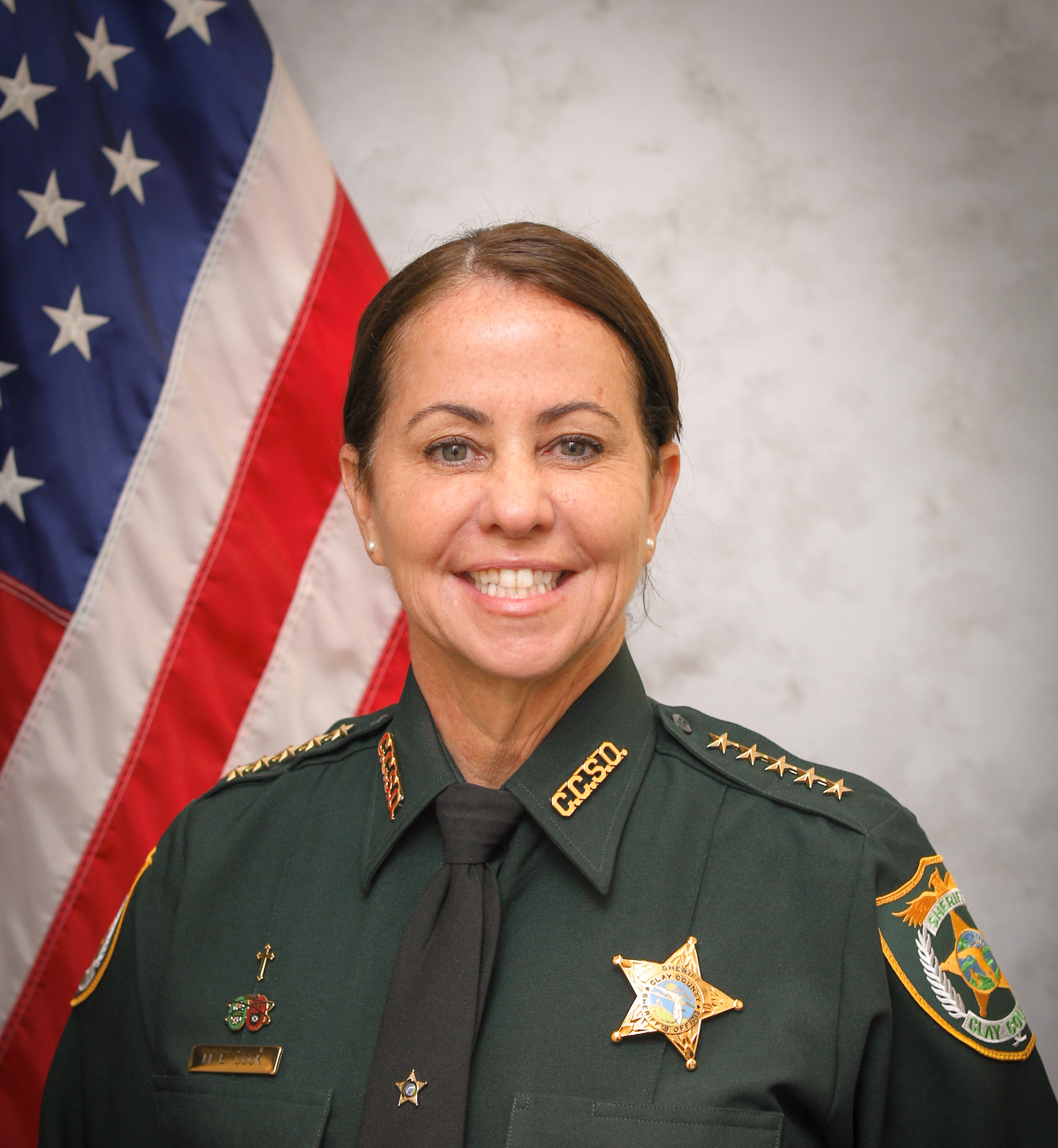
Sheriff of Clay County Florida
Michelle Cook began her law enforcement career in 1992 as a Patrol Officer and rose to become a 3-star Director at the Jacksonville Sheriff’s Office, a 3,300-person agency. After leading significant initiatives and overseeing a budget of over $100 million, she became the Chief of Police in Atlantic Beach, Florida. Under her leadership, crime rates dropped, and community morale improved.
In 2020, Michelle was elected Clay County Sheriff, and she was sworn in early at the request of Governor Ron DeSantis. In 2024, she was overwhelmingly reelected with 80% of the vote.
Recognized for her extensive experience and leadership in law enforcement, Sheriff Cook has built a reputation as a firm yet compassionate leader, whose integrity and genuine management style earn respect not only from her work family but also from the community she serves.
She holds a master’s degree in Criminal Justice and is a graduate of the FBI Law Enforcement Executives Development Seminar (LEEDS – Session 80) and a member of the Florida Sheriff’s Association.