Apple Podcasts
 Spotify
 YouTube
 RSS Feed
 How New York Built First Responder Wellness Policy — Terry Hastings | S6 E33
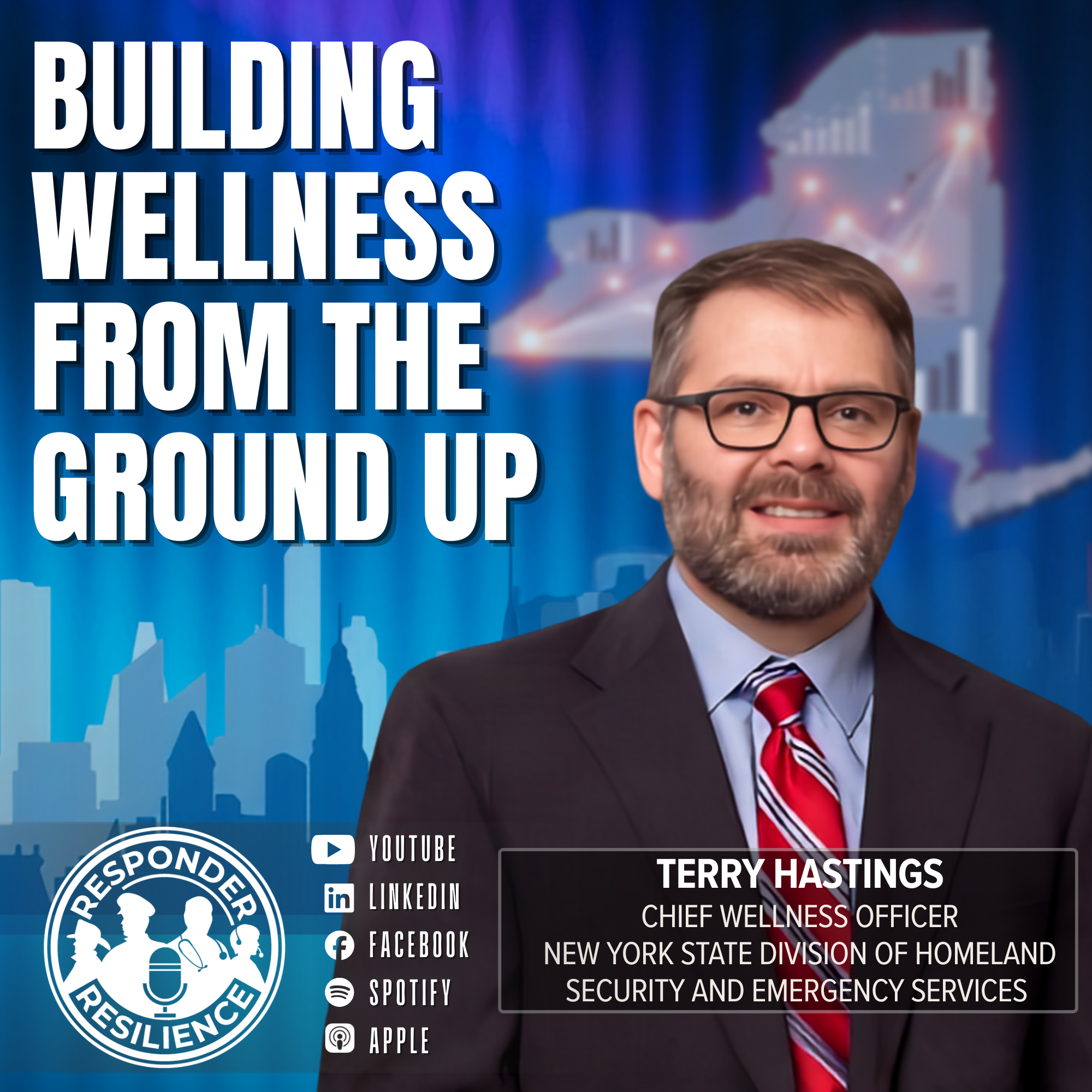
Terry Hastings didn't set out to become New York State's first Chief Wellness Officer. He built the case for the role one needs assessment, one training module, one hard conversation at a time.
Terry Hastings didn't set out to become New York State's first Chief Wellness Officer. He built the case for the role one needs assessment, one training module, one hard conversation at a time.
He partnered with the Institute for Disaster Mental Health and the Benjamin Center at SUNY New Paltz to survey over 6,000 first responders statewide, the first assessment of its kind in New York. What they found: 16% reported suicidal ideation, four times the general population. Among dispatchers, it was 21%.
Now Terry's leveraging that data to lead the largest state-level wellness effort in the country.
In this episode, Terry breaks down:
- Why dispatchers reported the highest rates of suicidal ideation at 21%
- The gap in culturally competent mental health care and what New York is doing to close it
- Why Brazilian jiu-jitsu became central to his own wellness practice, and the new course he's launching for public safety professionals
- What a Wellness Officer Roundtable actually accomplishes
Guest: Terry Hastings, Chief Wellness Officer, New York State Division of Homeland Security and Emergency Services
Hosted by Lt. David Dachinger (Ret.), Dr. Stacy Raymond, and Bonnie Rumilly, LCSW/EMT
**Resources for Responder Wellness:**
• Book: Helping the Helpers https://a.co/d/dm0VS4Q
• Free App: CRACKYL http://crackyl.respondertv.com
• Fitness: FightCamp (code RESILIENCE for 10% off) http://joinfightcamp.com/rr
Contact Terry Hastings:
Website: https://www.dhses.ny.gov/
Facebook: https://www.facebook.com/terry.hastings.12
LinkedIn: https://www.linkedin.com/in/terry-hastings-8686b215/
Contact Responder Resilience:
Phone: +1 844-344-6655
Email: info@respondertv.com
Our website with past episodes and more: https://www.respondertv.com/
YouTube: https://www.youtube.com/c/ResponderResilience
LinkedIn: https://www.linkedin.com/company/responder-resilience-podcast/
Instagram: https://www.instagram.com/responder.tv/
00:00 - Why Data Comes First
03:45 - Building A Statewide Needs Assessment
07:05 - Suicide Risk Burnout And Stigma
13:35 - Volunteer Versus Career Support Gaps
15:12 - Defining The Wellness Officer Role
18:10 - Personal Wellness Through Jiu Jitsu
25:18 - Training Clinicians For Responder Culture
31:20 - Micro Credentials Scholarships And Access
34:50 - Final Takeaways And Where To Learn More
Why Data Comes First
SPEAKER_02
And one of the first things we do is try to get good data so that we can make informed decisions and evidence-based decisions. 21% of all the 9-1 dispatchers that filled out the survey reported suicidal ideation. You can't get 10 people to agree on a pizza, but you can get, you know, over 90% of these respondents saying that things like therapy would be helpful. That's kind of the centerpiece of my personal wellness, is saying in jujitsu, but also being active. Last year we were successful in getting an initiative into our state of the state and budget that will create a scholarship program for current or retired first responders to go back and get their counseling degree. It's tough to make that decision to go get help. It shouldn't be tough to figure out how to get help after that.
Voiceover
Welcome to Responder Resilience, along with Bonnie Rumeli, LCSW, EMT. I'm David Dashinger. Terry Hastings didn't set out to become New York State's first chief wellness officer. He built the case for the role, one needs assessment, one training module, one hard conversation with agency leadership at a time. Now he's leading the largest state-level effort in the country to figure out what first responder wellness actually requires, not the buzzword version, the real one. 6,000 responders told him what's broken. This is what he's doing about it. This episode is brought to you by Fight Camp, real training on your schedule. Head to jointfightcamp.com/slash RR and use code RESILIIENS for 10% off. This episode is brought to you by the First Responder Center for Excellence. Because even the best of us face unexpected challenges. They've got the tools, the training, and the resources to keep you strong, safe, and resilient. Equip yourself at FirstresponderCenter.org. We invite you to like and subscribe, YouTube Responder Resilience. We're on Facebook, Responder TV, LinkedIn, Apple Podcasts, Spotify, and our website is respondertv.com. We'll be right back to speak with Terry after this. Ask a first responder who they are. And you're likely to hear: I am a police officer. I am a firefighter. I am a firewater. I am a 911 communications operator. I do this work. Ask a clinician why they work with first responders.
Bonnie Rumilly
And they may say, There's no high-comply and helping help them.
Voiceover
Join us in shaping a culture where mental health, wellness, and leadership are priority, not whispering, where support is a sign of strength and failure, and where no one has to carry the weight alone. Welcome to Responder Resilience, which means a spotlight on the unseen panels of first responder reality. And celebrate the powerful wins that come from the grit of post-traumatic growth. We understand the culture under the trust and bring you conversations from the change makers, passionate about helping first responders come home home. With your hosts, Retired Lieutenant David Dempsinger, Dr. Stacey Raymond, and Bonnie Roomley, LCSW EMT. Our guest today is Terry Hastings. He's the Chief Wellness Officer for the New York State Division of Homeland Security and Emergency Services. He's the first person that ever hold that title in the agency's history. He leads the state's wellness program, identifying and advancing evidence-based practices for DHSES employees and for the broader public safety community across New York. Terry brings more than 20 years of public safety experience to the role, and before stepping into this position, he served as the agency's senior policy advisor, where he led New York's first ever statewide first responder mental health needs assessment, the foundation for the work he's building today. Terry, welcome to Responder Resilience. Thank you for
Building A Statewide Needs Assessment
Voiceover
having me.
Bonnie Rumilly
It's great to have you, neighbor. We're up here in Connecticut. I have to tell you, I have watched what New York has done, and it's very, very impressive. So I'm looking forward to seeing one of the faces behind the scenes who is making that. So talk to us. What is a chief wellness officer and how did this all come about for you?
SPEAKER_02
Yeah, well, again, thanks for having me. Thanks for the work that you guys are doing. Uh, your book in particular, helping the helpers, is required reading at this point for myself and my team. We it's been super helpful as we've been developing some training for clinicians, for example. Uh yeah, so chief wellness officer, uh, it is new, the first person to ever have this role. Um, I'm excited by that. I'm humbled by that. Um, but essentially it's it's all about identifying and advancing evidence-based wellness practices, again, for our agency and the and the larger public safety community. Now, what does that mean? Uh frankly, it's it's to really trying to understand what works, what the needs are uh here, certainly in New York State. And one of the ways that we did that was through this mental health, first responder mental health needs assessment. The first time we've ever done anything like that in New York. You know, we knew anecdotally that first responders were struggling. I mean, it's pretty obvious if you spend any time working in with this community that there's a lot of issues out there. But we didn't have good data, and I sort of come at this a little different from a more of a public policy perspective. You know, I'm not a first responder. I spent my career supporting the needs of first responders working for New York State Homeland Security. Um, but I I do have a lot of experience kind of tackling public policy issues. And one of the first things we do is try to get good data and good information so that we can make informed decisions and evidence-based decisions. So we set out uh actually our partners with the State University of New York at uh New Polts. Um they have an Institute of Disaster Mental Health, they're an excellent partner of ours. Um we we worked with them and they were really integral in doing the work. Uh that we sort of commissioned the study and they did the work. Uh so SUNY Newpolts IDMH and the Benjamin Center, which is a public policy research arm, uh they're actually the ones that did the work. We it was a collaborative effort, but they did the uh the survey for us, they did the focus groups. Um we ultimately uh, you know, over 6,000 first responders completed an anonymous survey, which blew me away, frankly. Uh I knew that we'd have some interest, but the fact that that many people uh took the time to fill out this survey, um, as we were, you know, as you know, first responders can be pretty skeptical about that kind of thing. Um, but that that right there spoke volumes. People are ready to have this conversation, and um and we got a lot of good insight from that, and it's really created a roadmap for us on what we're gonna do here in New York State to address some of these issues and give us a lot of really good actionable information.
Voiceover
That's great, Terry. And I've I've looked over that document. Uh it's so impressive what you were able to distill from the response from that survey. I wanted to get a little deeper into it. Walk us through that needs assessment. Um, you kind of gave us a little background on what prompted it, but what did you learn and what's what's actually in the results from that that you found were unexpected or you know compelling?
SPEAKER_02
You know, I think first of all, we we did a pretty good job of creating uh uh questions that would really resonate um with the first responder community. We worked with first responders
Suicide Risk Burnout And Stigma
SPEAKER_02
to come up with the questions, frankly. I think that's important whenever you're engaging this population to truly engage them and not cook up ideas in Albany, but really engage the frontline responders. So we worked with them to come up with the questions. Um, and when we we had an ability to break it down by disciplines, so fire, EMS, law enforcement, you know, corrections, and some other disciplines, uh, 9-1 dispatchers. Uh we made sure that we had good uh geographic coverage, so we've got an ability to kind of slice and dice the data by different parts of the state, um by different disciplines, by career versus volunteer. So we have just a treasure trove of data and information, and it really validated some things that we thought we knew, right? We knew first responders are struggling. Um I think in some cases it's even more severe than we had thought, particularly when you look at issues of like suicidal ideation, which is unfortunately pretty common in the first responder world. Um so I think 16% of all of our respondents noted suicidal ideation, which is about four times higher than the general population here in New York State. Um and then when you drill in a little deeper, you look at the different disciplines, 911 dispatchers were the highest. So 21% of all the 91 dispatchers that filled out the survey reported suicidal ideation. And you can, when you think about it, understand why and how challenging that job in particular is. So it gives us really good granular insights that we can then use to create some training, some outreach, um, some other uh assistance for the different disciplines. Um as far as surprises, I think the big one was so many people were willing to talk to us and give us good insight. Um, this community can be a little skeptical and sometimes hard to reach, but in this case they were very forthcoming. Um, and I think the just the holistic impact that the work has on first responders. So we ask them about, you know, how does it impact you? Impacts their their home life, their social life, their family, their friendships. I mean, it this this work, as you guys know, it just sort of impacts every aspect of your life, and it really permeates everything they do, and it's and it, you know, if it's things are not going well, it quickly can erode a lot of different aspects of a first responder's life. So just understanding this the scope and scale of the impacts uh was pretty uh insightful. And then one of the big takeaways, because we asked what would help, right? What services would be helpful, and over 90% said individual uh couple therapy, for example, uh would be helpful if free and easily uh to easy to access. That's the other caveat. Um but that's huge, right? You can't get uh 10 people to agree on a pizza, but you can get you know over 90% of these respondents saying that things like uh therapy would be helpful, uh wellness activities. Again, as chief wellness officer, that really resonates with me. So understanding what spot what specifically they're interested in was important. And then, you know, unfortunately, uh stigma is still alive and well. We are making progress without a doubt, but 80% of the respondents cited stigma as a major barrier to seeking assistance. Another major barrier, and I know this is what will resonate with you, Bonnie, um, is a lack of culturally competent mental health professionals. I mean, we hear the stories all the time. First responders finally make the leap to get help and they have a bad experience with a clinician and then they don't go back, right? So you really we have to make sure that we have culturally competent professionals, people that understand the unique culture and issues within the first responder community. So that's really set us down that path to help to build more culturally competent uh clinicians here in New York State.
Voiceover
Most people work out to look better. You work out because lives depend on it, but the stress doesn't clock out when you do. The calls follow you home. And most workouts weren't built for any of that. Boxing was Fight Camp builds endurance, reaction time, and real-world movement and tracks every punch so you see progress, not guess at it. Real training in your home on your schedule. You don't just finish workouts, you get better. Head to fightcamp.com slash RR and use code RESILIIENTS for 10% off.
Bonnie Rumilly
Well, just to mirror what you said, um, the results of your survey are not surprising to us in terms of the suicidal ideations, because with the suicidal ideations and substance use, misuse, abuse, um, the numbers are, I think, much higher than what any of us can truly capture even in the surveys. I I think that if you sit in the room with responders and ask that question, it is much higher. And so the good thing is you have that data point and you can show the people on the outside that are skeptical that no, that doesn't exist. Well, yes, it does. And here is our proof. So I really applaud you for doing that work and that effort to get the data because in order to get funding, in order to get changes made on a higher up level, you need the data. Um, you know, telling stories or us sharing how difficult it is, it's not enough sometimes to make those kinds of policy changes. So I think the work you're doing is really critical and needs to be done everywhere. I was wondering if there were any other data points that were particularly surprising to you, either on the whole or between the branches themselves.
SPEAKER_02
Um Yeah, I mean, I think the public perception of the profession as a stressor, again, these things make sense when you think about it, but law enforcement at very high rates. You know, the law enforcement community is it's law enforcement's a tough job on the best of days. But, you know, lately with everything going on in the media and you know, it makes it even more difficult to be a law enforcement officer particular. So those rates were really high when you asked that question about stressors. Uh so the public perception of the of the work they they do. Um, that was kind of uh interesting. Um yeah, I guess it's just the profound impacts. I mean, we had something like 59% of the respondents' report feeling burnt out. Over half, right? Feeling burnt out in some ways, anxiety rates, 52% reported anxiety, um, 30 uh 29% reported PTSD, again, self-reported. So you can't, but I think some of the stuff is often underreported. But those are high rates, right? And even higher in some cases than some other studies that we've seen. So I guess it's just the the the issues are even more severe uh
Volunteer Versus Career Support Gaps
SPEAKER_02
in some cases than we maybe even thought.
Voiceover
Yeah, Terry, uh I'd love to explore this with you a little bit because it's interesting to me, and we've you know we've covered this a little bit, but I think it still needs a little more depth. That is the distinction or delineation between volunteer and career firefighters and probably EMS as well, because they are in some ways two different animals. Do you see any differences in the data between those two groups?
SPEAKER_02
Yeah, so the rates are a little higher for the career uh official, uh, the career professionals, because I think they see more of it, frankly. Um, it's sort of every day. You know, if you're a volunteer, you have other things, perhaps you're not dealing with it every day. Uh so the rates were a little higher with the career ranks across the board. So, but that's but but they were still pretty high even in the volunteer uh ranks. And and I think that's an issue because volunteer organizations often don't have the resources uh for wellness, for example. Whereas you see more career departments across the board invest in wellness. But volunteer I think volunteer groups are uh tend to be a little behind because they don't necessarily have the same amount of resources to dedicate to that kind of stuff.
Voiceover
Are you seeing any new initiatives in terms of volunteer organizations and deploying mental health resources like clinicians or peer support teams?
SPEAKER_02
Yeah, peer support teams for sure. We're seeing a lot more teams being created, um, which is great. Peer support, I think, as you guys would agree, is is a critical part of this. I mean, first responders in particular are generally more comfortable, oftentimes engaging with their peers. So having good trained peers out there uh is really important. And we are seeing more of those teams develop even in the volunteer ranks.
Voiceover
Well,
Defining The Wellness Officer Role
Voiceover
Terry, let's shift gears a little bit. We were talking offline, you were discussing um something coming up shortly, uh, at least from this recording. Maybe by the time this episode airs, it will have happened. But it's um a wellness officer roundtable. Sounds like an amazing type of event. Talk about that. What's it about and what's the mission?
SPEAKER_02
Yeah, so again, my perspective on all this is to really engage the people that are doing the work on the front lines uh and get their perspectives and get their insights and build that into what we're doing, not just assume we know the answers. Um, so that's how I've tackled all the sort of policy issues that I've worked on. And it's no different when it comes to this when I want to really talk to the people that are doing the work. So we did this last year, the first time we brought together wellness officers from around the state, public safety uh agency wellness officers. It's a growing group, right? You're seeing more agencies identify wellness officers. Um, it's not always a full-time or paid position, but you're seeing more of that. So I wanted to get the people that are doing my job, you know, locally and with other state agencies in a room and have a conversation about what's working, what are your challenges, what are our issues and needs that we need to focus on. Um, and out of that, and one of the things we've we discovered early on, and I discovered, is there is no real definitive guidance on what it means to be a wellness officer, right? It means different things to different people, it's interpreted differently, even wellness means different things to different people. So we created uh, you know, we had our first round table and we agreed that we should come up with some just general guidance and good practices. So if you wanted to start a wellness program, you'd have a place to start. So we developed uh one of the um outputs of that meeting first meeting last year was a wellness program primer, which is on our website. Uh it's been super helpful and super useful to agencies that want to start wellness programs. It's been helpful to me as I build our wellness program out. Um so, but the the notion is just to get the people that are doing the work in the room to share ideas and best practices. Uh, and that's what we're doing. We're gonna we have a two-day round table event next week. And you know, we're talking about what's working for you, what do you see uh really uh resonating with your employees, what challenges are you having? Maybe we can have some shared challenges and shared solutions. Uh it's really just information sharing and building a network of people that are doing the work.
Voiceover
You're trained to help people heal, but first responders, they carry trauma that's buried under silence, stigma, and stress. Helping the helpers gives you the framework to connect, to speak their language, earn their trust, and actually make an impact. From the experienced team and clinicians behind the Responder Resilience Podcast, this isn't theory. It's real-world support for the ones who need you most. And this book isn't just for clinicians. If you're an agency leader, peer support team, chaplain, EAP, wellness program coordinator, or family member, helping the helpers will equip
Personal Wellness Through Jiu Jitsu
Voiceover
you with the tools, language, and insight to make a difference. Be the resource they can count on. Order your copy of Helping the Helpers on Amazon Today.
Bonnie Rumilly
So being the resident therapist on today, I love to kind of drill into that individual personal aspect. And you've been in public safety a long time dealing with these things. You did the needs assessment, you had a lot of great information that came out of it, data points, informed decision making. How does that impact you on a personal level? What are you able to do for your wellness?
SPEAKER_02
Yeah, well, it certainly it's inspired me to lean even more into wellness. Uh, you know, it's something that I've been passionate about in my own life for a while. Um, you know, I again I find that people that are doing this work almost always have some sort of personal motivation, whether it's someone that uh, you know, themselves or they've dealt with these issues in their agencies. For me, um, you know, about 10 years ago, I was just in a spot where I just wasn't super happy with, you know, I had young kids and I just invested everything and uh, you know, kind of everybody that's a parent sort of knows those years when you're just sort of running a million miles an hour and you just don't really focus on yourself too much. And then I just kind of realized I kind of let myself go a little bit. Um, and I was like, you know what, I gotta I for me, I've uh uh Brazilian jiu-jitsu is my thing. Um and I started doing that uh you know years ago, and then I stopped because I had kids and I kind of that was my priority. And then he said, you know what, I gotta I'm gonna come back to that. And uh I've been doing it pretty steadily for almost 10 years now. And it's just I and I'm I'm a real advocate of it as a wellness activity for first responders and frankly anybody. So for my own personal wellness, that's my primary focus is uh is Brazilian jiu-jitsu, but that's led me to make you know do other things like have a healthier diet and lifestyle and um you know build a sense of community with my uh folks I practice jujitsu with. So that's kind of the centerpiece of my personal wellness is is Brazilian jiu-jitsu, but also being active, right? I uh just walking every day, getting outside, spending time with friends and family, you know, prioritizing those things and trying to think positive, you know, trying to be a positive person and and you know, life throws things at you every day that you have to kind of uh make a choice, how I'm gonna react to it. And just you know, really uh subscribe to the theory that you can only control the things that you can control. Um but you know, having positive and healthy outlets like Brazilian jiu-jitsu are are really big for me personally.
Voiceover
That's great. Um, we we see that come up in this podcast in a couple of different ways. And one way is our friend Jason Harney did a documentary film called Rist Lock about Brazilian jiu-jitsu, but also uh how it affects um police police work and use of force. Terry, in your world, um, how do you see jujitsu benefiting other first responders?
SPEAKER_02
Oh man, how much time do we have? I can I can do a whole other podcast on this topic. Um, it it's huge. You know, I trained a lot of uh first responders, and we talk about it a lot, that it it's it's such a positive um practice. I mean, it hits all the eight dimensions of wellness, right? It it's sort of great physical exercise, great mental um uh exercise. Uh it just takes you away from your problems for a while. You literally cannot think about your problems when you're trying to you know prevent somebody from strangling you in a positive way. Um it just it it you practice mindfulness, it's a great social connection, you build strong bonds with these folks, intellectually stimulating, you're constantly learning. Um, you know, you get humbled on a regular basis. So it just uh you know, and from an occupational standpoint, especially if you're in law enforcement or corrections, what an important skill to have is to be able to, you know, subdue somebody with the least amount of uh effort possible. You've folks that have trained jiu-jitsu, I mean the studies show that you know, if if you're encountering someone that doesn't know jujitsu and you do, it's it's just a different game. You you don't really have to try as hard and you don't have to use, you know, you can use lathemical force and and even sort of de-escalate situations better if you know how to uh do jujitsu and control situations. And, you know, we say, you know, making decisions under stress, right? If you practice these skills, you become better at them. So if you do have to encounter a situation that's stressful, it's just you know another day for you because you do it all the time. Um so Brazilian Jiu-Jitsu, I can't say enough about it. We actually have a course that we're about to launch. I'm super excited about this. My worlds, my professional and process for worlds are colliding a bit. We're gonna be launching an intro to uh jujitsu for public safety professionals where we speak about the importance of jujitsu from a wellness perspective, but also practical perspective. Uh we are partnering with our Sheriff's Institute here in New York State, our Sheriff's Association, to do a jiu-jitsu retreat for first responders. Um, because there is, you know, there's a growing body of research that shows that it is an effective wellness practice and effective, particularly for mental health and PTSD symptomology and other things, that there's, you know, this stuff works. This is not just uh, you know, me saying it. This there's a, like I said, a growing body of research that shows this is a beneficial service for anybody, but particularly first responders that deal with stress and trauma on a regular basis.
Bonnie Rumilly
Well, at the urging of some of my cop buddies, I did it for a little while and I I found it just incredibly powerful in so many different ways. Um a lot of my clients that come in here do it. There's a phenomenal book about trauma and jujitsu that I purchased uh so that I could share with some clients. It's a great book. You know, as a therapist, when I think about why it works, there's so many good things about it, but I think it teaches first responders how to be in control of their amygdala and their response rather than their amygdala being in control of them.
SPEAKER_02
Yeah, absolutely. Again, if you get exposed to that, if you practice that, you can you can be developed a skill set and you become comfortable being uncomfortable.
Bonnie Rumilly
Thank you for sharing that personal aspect of yourself, because I think one thing people look to us for not only information and what are the programs going on there, but they love to hear stories like yours and what's working for people. And for you, it could be jujitsu. For Stacey, it's yoga, for David, it's running. You know, whatever that thing is, the more you're exposed to and the more you think about your options, it's like a menu, right? Um, so I love the fact that you're gonna put that on the menu for some people with these other endeavors that you have going.
SPEAKER_02
Yeah, we're very excited about it. It's uh uh it and the other thing that I have going for me here, and it anybody that's doing well in this will tell you, you need leadership support, right? You you have to have buy-in at the top and they have to take it seriously. And I'm so lucky that my commissioner is supportive of this. Our governor is very supportive of this. It makes life so much easier when you have the leaders buying into what we're doing and supporting what we're doing. Um, so I'm super lucky when it comes to that.
Training Clinicians For Responder Culture
Voiceover
Let's shift gears into another topic that is uh near and dear to all of our hearts, and that is uh what we might call clinician cultural competence, cultural fluency. I know you got some training around that that you're developing. Talk about it. What's the gap? Um, what do you see in that in that world where we're maybe falling short that we need to address um how do we prepare clinicians to be able to work with the first responder community?
SPEAKER_02
Yeah, sure. It's something that uh obviously was highlighted in our needs assessment, and uh yeah, I think you're well aware of the issues, but there's first of all, there's not enough mental health professionals out there currently, just broadly speaking, and there's even fewer that as specialize or have experience working with this unique community, right? So there's just not enough out there. So the problem with scale, like we just don't have enough people doing the work. Um, so we are developing some training. Uh right now we have some awareness level courses. Again, your book and other resources have been super helpful to us, uh, just to uh folks that want to do the right thing, want to do the work, the first responders, to give them you know some guidance on what the unique issues and challenges are working with this community, which again tends to be pretty skeptical. Um so we have an awareness level training. We worked with our Office of Mental Health and our Suicide Prevention Center of New York partners to develop some training. Again, awareness level, just introduced the concept. Uh, we're working on another training now that talks about first responder suicide and some of the unique issues and challenges in that regard that clinicians need to know. Um, we are working with our State University of New York partners to develop some even more in-depth training, potentially some like a micro-credential that that uh clinicians could potentially pursue. And something I'm I'm really excited about, and you know, it's still taking shape, but last year we were successful in getting uh an initiative into our state of the state and budget that will create a scholarship program for first responders, current or retired first responders, to go back and get their counseling degree. So, because who better to do the work than the people that have done the work, right? So again, these are we're not gonna solve this problem overnight, but we have many things in flight that will hopefully increase the number of culturally competent mental health professionals here in New York State. And then again, develop a network of these folks, right? Now we we're what I find is locally, right, the agencies develop a pretty good network, but statewide, we don't quite have that network in place. So if you're lucky enough to be in a part of the state or an agency that's done you know this work and has developed these relationships, that's that's awesome, but not everybody is. So we need to make sure at the state level that we have kind of statewide coverage and approach here so that anybody that needs assistance can get it. You know, it's tough to make that decision to go get help. It shouldn't be tough to figure out uh how to get help after that, right? We should we have to create an easy pathway for folks that need assistance. Um, you know, reducing stigma is critical, obviously, but also making it easy to obtain the help that you need.
Voiceover
Hey, firefighters, let's take a moment to talk about something important. There's a new app built by firefighters for firefighters, and it's not just another wellness tracker or generic resource hub. It's called Crackle. You've probably seen the magazine, but this is the next evolution. The app is about one thing, helping firefighters not fail, not just on the job, but in life, in your health, your relationships, your mindset, and your longevity. That's why Crackle is designed to meet firefighters exactly where they are with resources that make sense, are easy to use, and actually respect your time. You can download the app now for free as a legacy member. That means you get early access to exclusive content tools and updates as they drop. Use the QR code on the screen to download the Crackle app, or you can download it from the App Store or Google Play and stay in the fight. Not just at work, but at home and in your own head too. Because your best days shouldn't be behind you, they should be ahead of you.
Bonnie Rumilly
Well, I thank you for bringing that term, cultural competency, to the first responders. You know, we shout it from the rooftops all the time, but I think it's great for them to hear it from someone like you who recognizes this is a huge gap that we all need to fix and fill in somehow. Um, the other thing that I wanted to say, and and maybe you're seeing this too, but a message that I give all the time is if you are a therapist who says, you know what, I respect what they do, but I don't want to be a therapist to a first responder, that's totally fine. And there's no shame or guilt in that. But please, please get them to someone because typically what we see with our first responders is they're calling in crisis and they're calling when they've exhausted all of their own resources. And if you compare a first responder to a civilian, the amount of resources they typically have internally is quite deep. So if they have utilized all of those and are calling for help, it's their 911 call. And so it's really, really upsetting because I hear this almost every week of first responders calling 10, 15 therapists and never getting a call back. And exactly that is not good enough. These people show up for everyone in their darkest hour. It's just not good enough. So I would ask if anyone is listening, please, please, even if this isn't your cup of tea, please make sure that you return the call, tell the person the truth, I'm full, or this isn't my skill set, and get them somewhere where they can get the help that they need.
SPEAKER_02
Couldn't agree more. I I mean it's it's so critical that we make uh uh it easy for first responders to get help once they make that hard decision. You're absolutely right. Oftentimes, yeah when they're making that call, they're in crisis. So the time is of the essence. And we can't say, you know, call these numbers and maybe somebody will get back to you. That's not good enough. We have to make an immediate handoff to a trained and culturally competent clinician. That just has to happen. We gotta, you know, we're not there yet, but we gotta work to get there.
Micro Credentials Scholarships And Access
Voiceover
Terry, you mentioned something in passing that uh love to hear more about because we know there are all kinds of ways you could take a class, an awareness level class. Um, you could do a you know, ride along, you could go do a civilian academy. And you mentioned something about a micro-credential. What do you, in your perfect world, what would you like to see in terms of clinicians being certified to do this work in a way that there's like a uniform standardization to saying I am culturally competent?
SPEAKER_02
Yeah, I think that is the gold standard if we can get there. Um, and I know there's uh different states have been doing some some work on this. Um, but I think in New York State it would be great to have, you know, if if you say, raise your hand and say, I want to do this work, that everybody gets some degree of standardized training, right? So awareness training is great, but that's the tip of the iceberg, right? So the micro credential, and again, it's still taking shape, but I uh hopefully we can get to a spot where we can agree on what what are the topics that clinicians need to really understand when it comes to first responder community. Again, the unique culture uh that first responders are up against the trauma exposure that they deal with, right? Trauma-informed care. I mean, the amount of trauma first responders see over their careers is really something, you know, well above what any you know traditional uh profession or or individual might see. So I think it's understanding trauma and trauma exposure and what that does to the body, uh, understanding stress and the impacts that stress have, understanding some of the um, you know, negative health, physical and mental health outcomes that exist in the responder community. So really understanding that stuff with granularity, I think uh would be important. So having some credentialing around that so that uh they everybody can get consistent training so that when they are ready to work with first responders, they have a pretty good foundation understanding. But beyond just the classroom stuff, I think you mentioned before, ride-alongs, spending time with first responders, going to the firehouse, going to the roll call, becoming part of the community. You know, we certainly have some agencies in New York State that have done a great job with embedded clinicians, for example. I think that's an awesome model to look at. So just making it just part of the business, part of what we do. You know, the job is a risk factor, right? We know that. We know the people that do this work, by virtue of doing the work, they're exposing themselves to stress and trauma. So we have to make sure that we have resources in the work environment for these individuals.
Bonnie Rumilly
We couldn't agree more. Um, thank you, thank you for everything you're doing. And I hope that other states tune in and hear what you've done here and use this model because I really love and value, as David does, uh, that top-down approach too. We're we're all trying to swim upstream and get the information to where it needs to be, but it's so great to see this embrace at the top coming down. So thank you for that.
SPEAKER_02
Yeah, and that's the really cool thing is there there are really good resources out there. There's there's a lot of people that want to help, that are, that want to do the right thing. Certainly not even here just here in New York, but you know, I I love to talk to people from other states that are doing the work. I love to talk to you know different departments uh that are that are seemingly have got some of this stuff figured out uh to learn from from them and understand what works and how can we scale that here in New York State.
Voiceover
Absolutely. Well, Terry, it's always a pleasure to speak with you. Thank you so much for all you're doing for the first responders in New York State. Um, it is truly an impressive
Final Takeaways And Where To Learn More
Voiceover
program. Makes me proud to call myself a New Yorker and uh continued success with all this. I can't wait to hear what's coming next.
SPEAKER_02
Yeah, thank you so much. Thanks for having me. Um I'm a big fan of the podcast, big fan of the work that you guys are doing, and I'm just humbled to be a part of it.
Voiceover
Thank you. Remember to like and subscribe. Our YouTube channel is Responder Resilience. We're on Facebook, Responder TV, we're on LinkedIn, Apple Podcasts, and Spotify, and you can check out our website. It's respondertv.com for past episodes and the guest information. Until the next time, stay safe, be kind to yourself. Take care of the city.
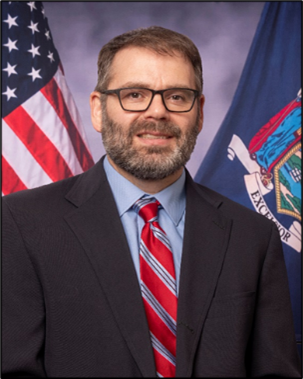
Chief Wellness Officer for the New York State Division of Homeland Security and Emergency Services
Terry Hastings is the Chief Wellness Officer for the New York State Division of Homeland Security and Emergency Services (DHSES). In this capacity, Terry is responsible for leading the agency’s wellness program, including the identification and advancement of evidence-based wellness practices for DHSES employees and the larger public safety community in New York State. Terry has more than twenty years of public safety experience and has developed numerous homeland security programs and initiatives.