Apple Podcasts
 Spotify
 YouTube
 RSS Feed
 Clinician's Guide to Cultural Fluency and Moral Injury — Dr. Brooke Bartlett | S6 E30
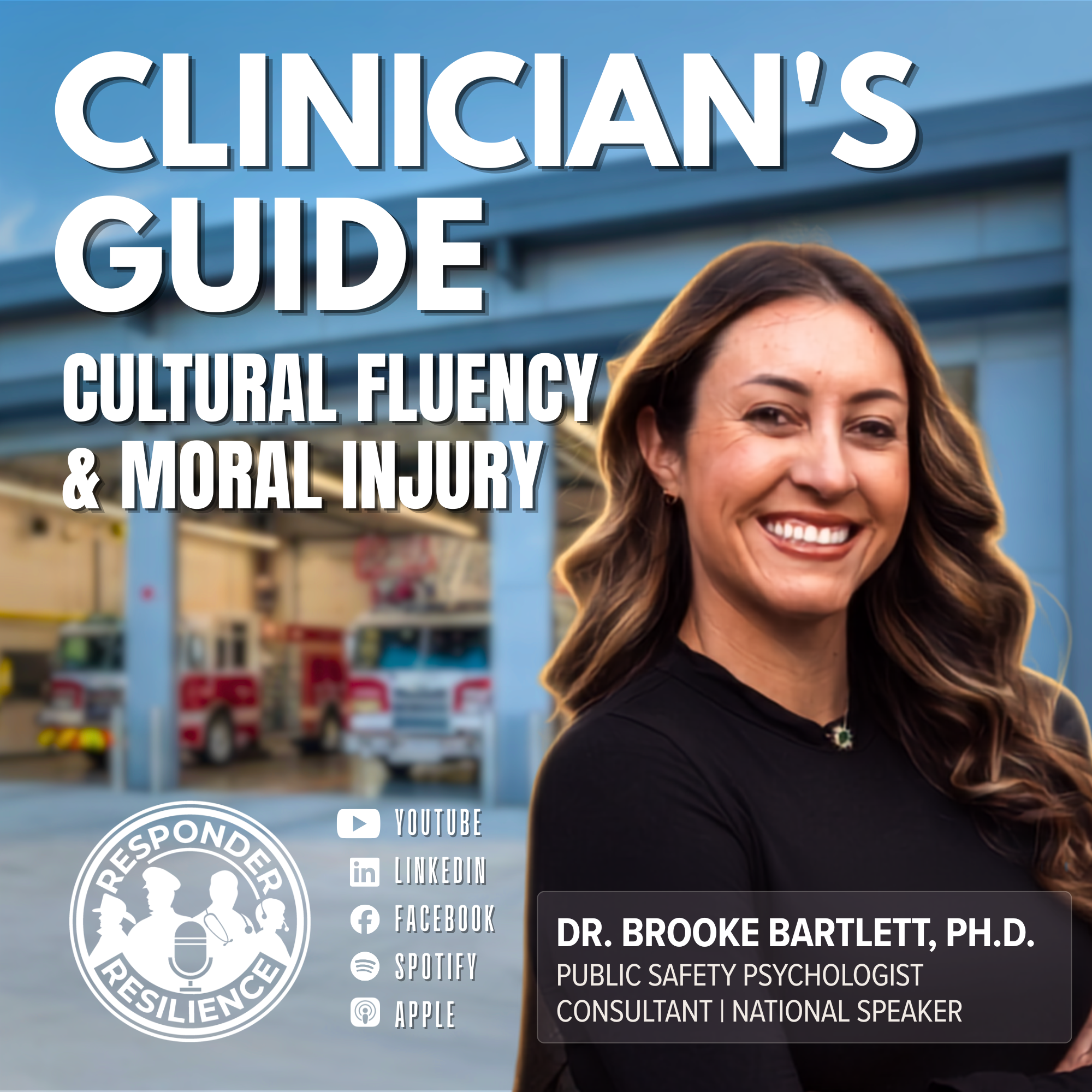
"Cultural competence" gets thrown around a lot in mental health circles. Dr. Brooke Bartlett has a harder definition: specialized, ongoing training paired with hands-on experience- not a one-hour class, not having an uncle who's a firefighter, not a personality trait you either have or don't.
"Cultural competence" gets thrown around a lot in mental health circles. Dr. Brooke Bartlett has a harder definition: specialized, ongoing training paired with hands-on experience- not a one-hour class, not having an uncle who's a firefighter, not a personality trait you either have or don't. Bartlett, licensed clinical psychologist and founder of the Center for Trauma, Anxiety, and Stress, joins Responder Resilience to unpack what it actually takes for a clinician to earn - not perform - fluency with the first responder population. She breaks down the fastest ways clinicians lose trust in a first session, why overcompensating with jargon backfires faster than admitting what you don't know, and why leading with curiosity beats leading with credentials every time.
To ground the conversation, she uses moral injury as the case study - walking through its three pathways (acts of commission, omission, and institutional betrayal), the neuroscience that separates it from PTSD, and why "should have, could have" is the phrase she hears most from first responders. It's a clear example of why cultural fluency isn't optional: you can't treat what you don't understand.
Dr. Bartlett offers live and on-demand continuing education courses for clinicians on cultural competency for first responders and on assessing and treating moral injury - details at centertas.com/events.
Subscribe for more conversations with the people building a stronger, more resilient first responder culture.
🚒 YouTube: Responder Resilience
📱 Facebook: ResponderTV
💼 LinkedIn, Apple Podcasts, Spotify
🌐 respondertv.com
Connect with us:
📘 Facebook | LinkedIn | Instagram
★ Resources for Responder Wellness ★
• Fitness: FightCamp (code RESILIENCE for 10% off) http://joinfightcamp.com/rr
• Free App: CRACKYL http://crackyl.respondertv.com
• Book: Helping the Helpers https://a.co/d/dm0VS4Q
CONNECT WITH RESPONDER RESILIENCE
Phone: +1 844-344-6655
Email: info@respondertv.com
🔔 Subscribe for new episodes every week. https://www.youtube.com/c/ResponderResilience
📩 Sign up for our newsletter: https://ResponderTV.com
Instagram: https://www.instagram.com/responder.tv/
Facebook: https://www.facebook.com/responderTV/
LinkedIn: https://www.linkedin.com/company/responder-resilience-podcast/
DR. BROOKE BARTLETT
🔹 Website: centertas.com
🔹 Instagram: @doctorbrookephd
00:00 - Moral Injury And The Hidden Wound
03:18 - Meet Dr. Brooke Bartlett
04:17 - Defining Moral Injury Through Perception
06:04 - Commission And Omission Pathways
08:01 - Moral Injury Versus PTSD In The Brain
12:42 - Wildland Fire Culture And Reintegration
16:04 - Burnout And Compassion Fatigue Defined
19:51 - Leadership Loneliness And Moral Burden
27:19 - Cultural Competence Beyond A Checkbox
31:18 - How Clinicians Lose Trust Fast
35:25 - How To Start Working With Responders
37:57 - TRiGGER Therapy And Moral Injury Treatment
39:10 - Where To Find Brooke And Closing
Moral Injury And The Hidden Wound
SPEAKER_06
There's typically three pathways that can lead to moral injury. PTSD and moral injury can overlap, and they often do, but they are distinct. I work with a lot of folks in positions of leadership who are still struggling with all these things that we're talking about today. Because it doesn't just go away when you move up the ladder. Cultural competence to me means that you have specialized training, meaning ongoing training, and within that, hands-on experience kind of integrated with that training. Be genuinely curious and wanting to learn more so that you can better serve them. That goes a long way.
Voiceover
Every first responder has a moment they can't explain to civilians, not the call that haunted them, the call that changed what they believe about themselves. They follow a protocol, they did their job, but there was a moment of shame or perhaps guilt. Something in them still hasn't forgiven that. It's not PTSD, it's not burnout. Dr. Brooke Bartlett calls it moral injury, and she spent her career teaching clinicians how to actually see it, name it, and treat it. Today we're gonna go inside the wound most first responders carry alone. What it really takes for a clinician to earn cultural fluency, not just check the box on it. And we'll be talking about a whole lot more. This episode is brought to you by Fight Camp, real training on your schedule. Head to jointfightcamp.com slash RR and use code RESILIENTES for 10% off. This episode is brought to you by the First Responder Center for Excellence. Because even the best of us face unexpected challenges. They've got the tools, the training, and the resources to keep you strong, safe, and resilient. Equip yourself at firstrespondercenter.org. Remind you to like and subscribe, YouTube Responder Resilience, Facebook Responder TV. We're on LinkedIn, Apple Podcasts, Spotify, and our website is respondertv.com. We'll be right back to speak with Brooke Bartlett after this. Ask a first responder who they are, and you're likely to hear I am a police officer.
SPEAKER_06
I am a firefighter.
Voiceover
I am a parable.
SPEAKER_06
I am a 911 communications operator.
Voiceover
Not I do this work, but I am this job. Ask a clinician why they work with first responders.
Bonnie Rumilly
And they may say, There's no higher quality than helping helpers.
Voiceover
Join us in shaping a culture where mental health, wellness, and leadership are prioritized, not whispered. Where support is a sign of strength, not failure, and where no one has to carry the weight alone. Welcome to Responder Resilience. We shine a spotlight on the unseen battles of first responder reality. And celebrate the powerful wins that come from the grit of post-traumatic growth. We understand the culture, honor the trust, and bring you conversations from the change makers, passionate about helping first responders come home whole. With your hosts, retired Lieutenant David Dashinger, Dr. Stacy Raymond, and Bonnie Roomley, LCSW EMT.
Meet Dr. Brooke Bartlett
Voiceover
We're excited to welcome Dr. Brooke Bartlett to show she's a licensed clinical psychologist and the founder of the Center for Trauma, Anxiety, and Stress. She spent over a decade embedded inside one of the largest public safety agencies in the country, and she also trained at the VA's top trauma programs along the way. Her research, which includes more than 20 peer-reviewed publications, sits at the intersection of trauma, guilt, and the psychology of high-stress professions. She's also trained thousands of clinicians and first responders nationwide. She's one of the few doctoral-level psychologists in the country who understands both the clinical and organizational sides of public safety wellness. Her focus today, among other things, is moral injury and what it actually takes for a clinician to earn a first responders trust. Brooke, welcome to Responder Resilience.
Bonnie Rumilly
Thanks for having me. What a wonderful background. We can't wait to dive in with you on all of this.
SPEAKER_06
Yeah, I'm excited to get into it as well.
Defining Moral Injury Through Perception
Bonnie Rumilly
So moral injury is something that we talk about, I think, pretty regularly on our podcast. We've had a lot of people look at it in different angles and we talk about it behind the scenes. But I'd love to hear, in your words, how you see moral injury and how you see it developing in our first responders and veterans. And then what are sort of those internal pieces that are happening when you see it?
SPEAKER_06
Yeah. So um just kind of as a baseline when we're thinking of what moral injury is, it's when someone perceives that they have violated some kind of moral or value system that they hold. And one thing I really emphasize is the word perceive. I use that intentionally because someone can suffer from moral injury sometimes in cases where they objectively did not engage in any wrongdoing and they objectively did not have any control over the outcome, and yet they still suffer from pretty debilitating and impairing guilt related to it. So I like to make sure that that is known off the front, uh, on the front end so that people understand it doesn't always mean that someone actually did something morally wrong. Right.
unknown
Yeah.
Bonnie Rumilly
No, I think it's an important distinction, especially with this population, um, because they're very, very, as you know, heightened about doing something wrong or not following a procedure or even some of the betrayals, right? So thank you for distincting that for our listeners and viewers.
SPEAKER_06
Yeah, absolutely. Um, and then in terms of how I see moral injury developing, the pathways I call them to moral injury, um, there's typically three pathways that can lead to moral injury.
Commission And Omission Pathways
SPEAKER_06
The first is someone perceives that they have directly done something that goes against their morals, their value system. Um we call this acts of commission, um, that pathway. Um, so it could an example could be um a military veteran was they were ambushed, they were fired uh firing back and killed a civilian or killed a child. Um they themselves did that. Now, you know, asterisk here, of course, they didn't have the intent to do that at the time, but that would be an example of moral injury through act of commission where I directly did something that violated my moral code. Um, I'd say the second and third pathways are more often what I see uh moral injury in our first responders. So the second pathway is when someone perceives that uh they didn't do enough, or someone perceives that they didn't do enough, or that they should have done something different, that they didn't prevent something bad from happening. Um, this is probably the most common pathway that I see in first responders. We call it acts of omission. Um, and it's again that idea of should have, could have, I just gotten there sooner, I should have known this, I should have triaged different. If I had just done XYZ, then maybe they'd still be alive. And maybe this would be different. Um, I'd say I see that all the time in my first responders from something like uh, you know, I should a paramedic thinking that they should have provided a different uh medical procedure in the moment, uh, to a law enforcement officer saying I should have ran to the back gate instead of through tried to go through the front door if I had done that, then maybe the kid would still be alive instead of drowning, right? So I I hear all of the should have and could haves. I hear that a lot.
Moral Injury Versus PTSD In The Brain
Voiceover
For the clinician that you might be speaking to in terms of moral injury and recognizing it and understanding it, what what would you tell them? What are some some of the nuances that they should be aware of so they can just make a distinction between, say, post-traumatic stress versus moral injury versus burnout?
SPEAKER_06
Yeah, that's a really great question. So uh PTSD and moral injury can overlap, and they often do, but they are distinct. And the primary distinction between the two is when we say post-traumatic stress disorder, PTSD, post-traumatic stress, one very key feature of post-traumatic stress is what we call the hyper-arousal symptoms, right? So being on guard, being extra jumpy, constantly scanning, right? Being up, sympathetic nervous system activation because their fear center is going off as if they're in danger, even when they're objectively not in danger. We do not see that with moral injury. In fact, there's neuroscience, it's very um emerging neuroscience. So I'm sure we'll learn a lot more in the next 10 years, but initial neuroscience imaging on moral injury is really interesting. We do not see activation in that fear center and the amygdala like we do in PTSD. We actually see activation in a different part of our brain called a procuneus, uh, which is associated with self-referential processing, which basically is like making sense of me, making sense of things. Um, that's where we see more of that activation with moral injury. So we're starting to actually see it at the neurobiological level as well.
Voiceover
This episode is brought to you by Fight Camp. If your job already demands everything from you, your training shouldn't add chaos to your day. It should give you structure. This is for firefighters, EMTs, paramedics, dispatchers, and police officers who still want a way to train with purpose. Fight Camp brings structured boxing and martial arts training into your home. No commute, no waiting, no guessing if your workout actually move you forward. Every strike is tracked so progress is visible, not vague. Every session gives you a clear standard to meet and a way to improve the next time you show up. Head to jointbikecamp.com slash RR and use code RESILIIENS for 10% off.
Bonnie Rumilly
That's so fascinating. I the neurobiology is driving more of our work, I think, every day and every week. Um, you may not know the answer to this, but are there any scans or neurobiology pointing to being able to delineate the two at the same time? Um, could they capture both of those things at the same time if someone had PTSI from a separate incident and moral injury from a different from another?
SPEAKER_06
Yeah, so I believe in the research that's been published thus far is they if someone has co-occurring post-traumatic stress and moral injury, um, they see it kind of lighting up in both areas to the best of my knowledge when when reading that research. Um, you know, I'm not sure, and I don't know if it'll ever get to the point where that in and of itself is a um, you know, main differentiator between the two. But I do know that they have seen that for someone with only post-traumatic stress or severe post-traumatic stress injury, they see that amygdala lighting up versus none of those classic hyper-arousal symptoms in someone, they see uh that precuneus or that self-referential uh area of the brain lighting up for moral injury.
Bonnie Rumilly
It's fascinating. And what you're saying, the neurobiology is really informing the work. But the other point that you made before is really listening to the distinctions and what the client is saying to you as the therapist. Are what kind of language are they using? What kind of symptoms are they saying verbally out loud too? That seems to be the best diagnostic information for us, but it's so neat to know that the neurobiology is finally here to support what we've all been working on and looking at and doing for these years.
SPEAKER_06
Yeah, and I know, you know, David uh saw one of my recent um talks at a conference, but I I like to go into the science, especially with my first responders, because we know, you know, mental health is this amorphous thing and blah, blah. No, it is quite literally physical health. And now, thanks to the advancement in technology, we can now say, see, like this isn't just in your head in the sense of like it's just there, right? It actually has a physical foundation.
Voiceover
Well, that was an amazing talk. I'm so glad it was there to witness it and to um take some great notes. Um, and that led us to being able to invite you here to speak with us today. So it was a great time.
SPEAKER_00
Yeah.
Wildland Fire Culture And Reintegration
Voiceover
I want to drill down into something that's really fascinating. Is there a difference between how moral injury shows up with structural firefighters versus wildland firefighters?
SPEAKER_06
That's a great question. Um, at its core, no, meaning that uh, you know, those three pathways, I didn't mention the third one, but that's more so um like institutional betrayal. So like an institution or an organization um that leads me to go against my moral code, whether it be that I'm getting orders to do something that I don't think is right, or whether you know the organization is consistently preventing me from living in line with my values. But I'd say at its core, like the same three pathways exist, but um structure versus wildland fire is very different culturally. Um, and I've really learned that because I've done a lot of work with wildland over the last five years, and of course there's overlapping similarities, but it is very different than structure fire. So I would say that the um scenarios that uh structure fire might be faced with more commonly is different than what wildland fire might be faced with more commonly. Um, for example, structure fire has more consistently um exposure to the public, human beings, uh, you know, uh medical calls, medical emergencies, things like that. And of course, that can be the case in wildland fire if there, you know, there's a community that is at risk, you know, uh, you know, due to fire. And there's I've worked with a lot of wildland firefighters who have moral injury tied to massive scenarios like that. Um, but I think that I found with wildland fire, there's a lot of moral injury tied to one, um, you know, uh their crew getting injured, hurt, and or killed uh in the line of duty, and or two, related to family. Um, you know, wildland fire, they get sent off on assignment, you know, for two, three, four weeks at a time, they're gone, they come back for a few days and they're gone again. Um, and that kind of can cause ongoing kind of ruptures. And, you know, I'm supposed to be the father, the the wife, the mother, but like what kind of person am I? Because I'm always gone and I get home and I actually just kind of want to go back.
Bonnie Rumilly
Yeah. Well, and what you're describing is micro deployments. Correct. Right. So you'd probably see some crossover with the veterans and then these micro deployments.
SPEAKER_06
Yeah. And uh I get the question a lot of, you know, what do you think are is like the biggest differences in working with veterans versus first responders? Um, and that would that's always the first thing I say is kind of like the reintegration process is different, let's say.
SPEAKER_00
Yeah.
SPEAKER_06
Um, for like a in the military being gone for six, nine, twelve months, and then coming back and reintegrating versus, you know, some first responders are on 48s or, you know, 72s, and then they go home for two days and they're back. You know, wildland fires longer periods of time, and so the reintegration is a little bit different. I don't think one is better or worse than the other. They're both difficult in their own ways, but I do think it is unique. The reintegration uh process is unique when there's longer stretches in between.
Burnout And Compassion Fatigue Defined
Bonnie Rumilly
We're throwing around a lot of great terms, right? The jargon that we love to use in this profession. Um, talked about moral injury, talking about PTSI. How do you see burnout and compassion fatigue working in with these other topics? Just to throw a couple of more sexy names in there.
SPEAKER_06
Yeah, bring them all. Um, yeah, no, I think it's important to talk about because I do see moral injury, burnout, compassion fatigue kind of being used um interchangeably, uh, but they are also distinct. Again, they can occur together, but they are uh distinct. So we talked about moral injury. Burnout is very much related to um, think about like the demands, the logistical demands of the workplace or the work setting, right? It could be things like uh like the shift schedule, for example, um understaffing at the department. So now I'm doing mandos all the time, right? Um I don't like my leadership. My leadership doesn't really do right, all the you know, we're not getting funding from the city, right? All those types of things that can wear and tear. Fundamentally, it is a depletion of that energy due to the the wear, the chipping away wear and tear of the unique occupational factors. Um compassion fatigue is unique to professions that are chronically exposed to let's just call it suffering. Um first responders, even therapists, right? You know, kind of chronically being exposed to that. But when you're chronically exposed to suffering, whether it be physical suffering, emotional suffering, um, it can just kind of wear and tear and lead to almost a decrease in that empathy tank, where it just feels like my tank is getting lower and lower and lower. Um, and can kind of lead to apathy in a way, of just like, I just don't even have the room. I don't even, I don't even have anything left in this tank here to even care. So family members and loved ones can be like they're just cold or they don't care or whatever it is. And it's just I don't have I don't have anything left to care. So again, they can co-occur a lot, um, but fundamentally, moral injury, burnout, and passion fatigue are a little bit different from one another.
Bonnie Rumilly
Thanks again for parsing that out because you know, jokes aside, we do throw out these terms a lot. But let's say someone was listening for the first time today, I think they would have a really clear understanding of what each thing means and how they cross over, but how they're separate. So I really, really appreciate your approach and how you explain these things. Yeah, absolutely.
Voiceover
You're trained to help people heal, but first responders, they carry trauma that's buried under silence, stigma, and stress. Helping the helpers gives you the framework to connect, to speak their language, earn their trust, and actually make an impact. From the experienced team and clinicians behind the Responder Resilience Podcast, this isn't theory. It's real-world support for the ones who need you most. And this book isn't just for clinicians. If you're an agency leader, peer support team, chaplain, EAP, wellness program coordinator, or family member, helping the helpers will equip you with the tools, language, and insight to make a difference. Be the resource they can count on. Order your copy of Helping the Helpers on Amazon today.
Leadership Loneliness And Moral Burden
Voiceover
So before we shift gears into the cultural competency conversation, I want to cover one more group that probably is underserved. You know, we try to include them and bring them into the mix, but I think they're part of this uh this profession can be very lonely, and that's the fire service leaders who are you know up in that ivory tower. But they are sometimes carrying some of these same things because they were first responders, or maybe they are incurring moral injury from doing their job as a chief or whatever their role is. Speak about that. How do we care for them? How do they how do they fall under all this this umbrella of um of care for first responders?
SPEAKER_06
Yeah, it's a great question. It's something I'm actually uh speaking about at a Fire Chiefs conference here in in Idaho in September. Um I find that it gets real lonely at the top. Um, and I think one very important thing is that it takes intentional investment, intentional uh it has to be intentional prioritizing the mental health in leadership. I find that leadership, you know, is always wanting to look out for their people. Okay, we have this for them, but you know, that's for them. We know we don't include me, right? And so I'm saying this in a way to say the um, you know, there's some kind of self-accountability from a leadership perspective to be like, hey, we need to include ourselves in this picture too, um, to make sure we take care of ourselves. Uh as you were saying, David, you know, one thing that I like to make clear is just because someone uh is no longer on the front line, so to speak, doesn't mean that all that time that they spent on the front line is just gone and now they're just in a leadership position. And that's that. I work with a lot of folks in positions of leadership who are still struggling with all these things that we're talking about today. Um, because it doesn't just go away when you move up the ladder, right? Um and so again, just kind of highlighting that leadership is it's just as important. Important for them to have these resources and to have these um, you know, have the intention to prioritize mental health up at the top as well. Um, I also think that's something that I see very, very commonly that impacts mental health and just overall functioning and well-being for my folks in leadership is it can be a massive identity shift that can be pretty sharp and be really difficult to navigate, even if I'm still in the job, like I'm not retired, but it can shift a lot of uh you know, my role, how I interact with those around me, my new duties, my new responsibilities. It can be really tough. And I find that I come across that a lot in my folks in positions of leadership.
Voiceover
I know Bonnie must be thinking the same thing I am. We did an interview, uh, which I think was one of uh just an amazing interview with uh Chief Nick Morrisan from Westport Fire Department, who really described that part of the journey for him going from being a line officer to becoming the chief of the department. And um, Bonnie, you can definitely tag team on this, but he described it so eloquently, uh, kind of like the grief process of leaving that part of his career behind and and transitioning into this new phase.
Bonnie Rumilly
Yeah. For sure. And I I think I could draw on my own leadership experience or just sitting in the therapy office with leaders of police fire and EMS and dispatch, if you think about it. Um, what they're coming in with is unique in that they're not just worried about themselves or their shift. They are worried about 40, 50, 60, 100 people. I mean, think about some of the departments and the sizes. So I think they have a unique pressure on them to worry about so many people. The other thing that I keep seeing with the leaders is that the people they can actually trust to talk to or to show their vulnerability to goes down considerably because let's face it, some of the people in leadership are not good people. And they will use other leaders' weaknesses if it helps them advance themselves in some manner. And so I think some leaders are keenly aware of that and they clamp down and lock down on themselves even more because they want to protect themselves, their people, their department. And you know, the other maybe you're seeing this too, but I think the other part of that is not only can they not trust others, but being able to show that vulnerability to anyone and fearing that in that vulnerability someone will think that you're too soft to do the job, that it was the wrong choice, that oh, like, you know, maybe this guy really isn't a leader after all because he's worrying too much about these people. You have to be more business. Um, something I think they're this is phenomenal, but the Connecticut EMS Advisory Board recently started a group for EMS leaders as a peer support to talk about their feelings and their struggles. And I've been fortunate to be a part of that with them. And it's such a phenomenal thing. It should be happening everywhere because we can't expect leaders to go to the same peer groups that their people are going to. That's not going to work on either side.
SPEAKER_06
Sure not. No, absolutely. Uh, so I do a lot of work with agencies across the country and around peer support programming, but also leadership, peer support programming, because I completely agree, and I tell agencies this is that, you know, in order to prioritize leadership as well, it's not realistic in most cases that someone in a position of leadership is going to utilize peer support, you know, and be right talking to, you know, it's just not, it's that's just not understandably. We don't want them doing that, right? So we create leadership-specific peer support programs and we do it in a co-agency way, where we can get agencies uh, let's say in the area, or now there's uh state programs doing this at the state level, but get uh leadership-specific peer support programming. That way, when we do need to talk to someone, you know, you're not talking to the chief in the neighboring department that again knows everyone, knows you, etc. You can talk to someone where there's a few lines of removal that you feel a little bit more comfortable doing that because it is that is a real thing, everything that you're saying. And the other thing I'll say too, um, to what you're saying, Bonnie, is you know, like you said, you know, now there's 50, 40, 50, 60 people that they feel like they're responsible for. So going back to our talk on moral injury, there's a lot of people in positions of leadership who have moral injury stemming from, you know, someone in their department gets severely injured on the job, dies on the job, whatever, and they blame themselves. Um, you know, what could I have done differently? What should I have done here? Um, so they kind of their their perception of responsibility widens. Like I am now, I am now responsible for all of this. So if something goes wrong in all of this, that's me.
Voiceover
Yep. Yeah, that's a massive responsibility.
Cultural Competence Beyond A Checkbox
Voiceover
Let's do the cultural competency conversation. And I'd love to start because that word is getting thrown around a lot. It could mean a lot of things to a lot of different people. What does it actually mean in your world when it comes to treating a firefighter, a medic, an officer? Beyond the jargon, like what does cultural competence mean to you?
SPEAKER_06
Cultural competence to me means that you have specialized training, meaning ongoing, more than you know, just one-hour class, ongoing training and within that hands-on experience kind of integrated with that training, with whatever you're saying that you're competent to do. So that's what I mean with first responders. But honestly, in the mental health field, and I'm sure Bonnie can can relate to this, you know, there's people thrown out that they specialize in this or do that. And it's like that, that's a real word, right? Like cultural competency within the first responder world mean means something. Um, it doesn't mean that someone only, you know, they have an uncle that's a firefighter. So now I'm culturally competent. That's great. And maybe that's giving you some insight into this, but that in and of itself isn't enough to be culturally competent. So that's what it means to me.
Voiceover
Thanks. That's great.
Bonnie Rumilly
Yeah. It's an important distinction because you're right. I do think it's being used a lot by a lot of people. And, you know, everyone has to start somewhere, right? So we have to know, okay, this is a newer therapist with this population, but they're making efforts. You know, there's so many great ways that we're seeing therapists make these efforts. So attending the trainings, like you said, some of them are doing um the citizen police academies, you know, where they sit in on the course at the PD to learn what the police are doing. That's another great way to do it. Um, you know, there's so much literature there. I think people like us were constantly churning out information and and having people be able to access it. The way we started our clinician's masterclass series is really for that reason. So that a therapist interested in this could tune in. I think a lot of the work you're doing, the journals, you know, the more that all of us do together, the more body of work that will be there for people to access, because we know it didn't exist when any of us really started this. Um, it was very few and far between. But I think what we can do in pioneering all of this is give as much material as we can to help those therapists get to where we need them to be.
SPEAKER_06
100%. And I think something that you mentioned that is exactly how, you know, how I view this as well is like it's just ongoing, right? Um, where it's like not I take one thing and then that's it. And now I say I do this, and I'll took one class on eating disorders, and now I say I specialize in it, and that's that, right? It's just the ongoing. I'm continuing to learn, I'm continuing to pursue opportunities to learn, I'm continuing to immerse myself in this as much as possible, associate myself with other clinicians that do this, um, so on and so forth. Like it's like for me, like I'm not like I made it, I'm just fully like, you know, constantly still learning, right? As as I will continue to do my entire career. Um, so yeah, I think that ongoing aspect is is really is really an important part.
Voiceover
Most people work out to look better. You work out because lives depend on it, but the stress doesn't clock out when you do. The calls follow you home. And most workouts weren't built for any of that. Boxing was fight camp builds endurance, reaction time, and real-world movement. It tracks every punch so you see progress, not get that. Real training in your home on your schedule. You don't just finish workouts, you get better. Head to fightcamp.com slash RR and use code Resilience for 10% off. Fight Camp, real training on your schedule.
How Clinicians Lose Trust Fast
Voiceover
Let's touch on uh this precious commodity called trust that really is the whole crux of being able to work with this population. How do you see clinicians possibly losing that trust, say in a clinical setting, that um you know that is concerning because um you can sometimes only have one shot to build that trust. What what would you say to the clinicians that want to make sure that they're doing the right thing and building, maintaining trust?
SPEAKER_06
Yeah, a couple things come to mind. Um, one, in relation to what we were just saying, I think one way that clinicians lose trust really quickly is to over or to overinflate what they do or their background. Um, instead of kind of coming in genuine, coming in like this is what I know, this is what I don't know. Um, and along with that, kind of like overcompensating in ways. Um, that doesn't necessarily need to happen, right? You could have someone who could be a potentially a good clinician, a good fit, but coming in in a way that is trying to fill in too many gaps that maybe don't need to be filled in. I feel like that is a pretty common thing I hear from my first responders that just like very quickly they sniff that out, um, you know, trying to use too much of the jargon and the acronyms and this and that. I've had first responders say like they were like swearing, like I swear, but like, you know, but they were like, it was clear that like they were trying too hard to feel like they, you know, act like they they get me or they fit in with my culture.
Bonnie Rumilly
Right. That's so interesting. You say that we see that too. The other one that I would add in is a therapist assuming that a first responder is coming in for first responder issues. That's a bit tone-deaf. You know, they're normal people, yeah, questionable, but normal people with this profession. And we can't let that cloud our judgment and treat them as though they're really just here for the profession. Because some of some of our responders are coming in for a true family issue or something that's completely unrelated. And I think therapists are so excited to use all of their modalities and all of their fancy training, right? Because we spend a lot of time on it and commitment on it and mental space. But sometimes first responders come in and they just need to talk, they need guidance, they're going through tumultuous times in a marriage, or they don't have housing and they need to come in and they need somebody that can meet them where they're at. So I think if any clinician is listening, just to not make that assumption that it's job related or that there's something subconscious going on here, um, sometimes it really just is Maslow's hierarchy that they need us for. And I just think not to assume all of these other things is also a sign that you are culturally competent.
SPEAKER_06
100%. And I'm glad you brought that up too. I love the Maslow's hierarchy. That's a that's a good way to put it. But uh in one of the courses, the trainings that I give to clinicians on just an introduction to working with first responders, I talk about that a lot. I emphasize it over and over and over again. I say there's many cases in which a first responder might come in needing help related to something having nothing to do with the job, or maybe that the job compounds for them, but it's not related to a call or this or that. I'd say there's a lot of cases where that is. And I also point out to my folks too, is that there's a lot of first responders who have trauma before even joining the service. And there's a lot of work that needs to be done there, as opposed to thinking that every first responder that comes in is going to be, you know, we're gonna be talking about, you know, the the thick of it on the job. There's a lot of folks with trauma before even going into the service. So yeah.
Bonnie Rumilly
I mean, that's what brings most people here, right? Yeah. All of us, probably included. 100%.
How To Start Working With Responders
Voiceover
To take that a step further, Brooke, um say you're speaking with a clinician who wants to get into this specialty, into this niche. Um, they don't know where to start. What would you tell them? What is what guidance do you give someone who wants to get into this incredible specialty?
SPEAKER_06
I'd say two things. One is for clinicians, I think it's very important to reach out to, network with, and build uh build professional relationships with other clinicians who are established in that. I mean, that's a huge part of it, I think, is learning from and with other people who are are doing what you want to do. Um, and then the second part of it is that again, kind of immersing yourself that uh in in it as much as you can, right? Reaching out to departments, doing right-alums, going to uh fundraisers that local agencies are are putting on, talking to them. Um, you know, I I think that again, kind of going to what we were talking about just a couple minutes ago is, you know, I I don't know if I've ever come across a responder that I've I've worked with or that I've known that like expects the clinician to know everything, right? So just kind of showing up and being like, I'd love to learn, like leading with curiosity is what I call it in my trainings, but like leading with curiosity. You don't need to know everything, you know, but being curious and and being genuinely curious and wanting to learn more so that you can better serve them, that goes a long way.
Bonnie Rumilly
They also respect the humility. They respect when you can look at them and say, look, I don't know everything you're talking about, but if you're willing to throw me a bone here or there and let me know, you know, what an MVA is or an SOP is or a Yep, yep, exactly.
SPEAKER_06
The humility 100% goes goes a long way. It's it's just like, can you can you tell me what that means? I I mean I still do I do it all the time, like in my sessions, you know, acronym. There's never I don't think I'll ever know all the acronyms. So like I do a little I learn a new one every week.
Bonnie Rumilly
So and different agencies also have their own variations of acronyms, so that's another nuance. Um very interesting stuff. Are there any other treatment options that you wanted to highlight here with us today, just given all of the different ground we've covered and the different buckets? Any specific treatment modalities you'd like people to look into or hear about?
TRiGGER Therapy And Moral Injury Treatment
SPEAKER_06
Yeah. So given that we started this conversation off talking about moral injury, I think a treatment modality that a lot of clinicians and first responders don't know about yet, uh, is an evidence-based treatment that was specifically designed to treat moral injury. It's called trauma-informed guilt reduction therapy. Trigger is the acronym for it. Um, but it's a pretty short protocol, um, six-ish give or take uh sessions, depending. Um, but that was specifically designed to address moral injury. And um, I do a lot of trainings uh with clinicians on understanding and assessing moral injury and then treating moral injury with trigger. But what I like to say, and this is what the research shows as well, is that um sometimes moral injury can be resolved from some of our gold standards like EMDR, cognitive processing therapy, prolonged exposure. Um, but sometimes it it's still we can have post-traumatic stress injury symptoms go down, but moral injury persists. And that's again where we want to target it specifically with something like trigger.
Bonnie Rumilly
Thank you.
Where To Find Brooke And Closing
Voiceover
Wonderful. Where can people find you? Social media, website, and let us know if there's any events coming up where you're out there teaching, training, speaking, all of that good stuff.
SPEAKER_06
Yeah, so uh you can find me at my website, www.centertas.com, centertos.com. I'm also on Instagram, that's drbrookph, so doctor spelled out, brook B-R-O-O-K-E-P-H-D. Um, and then on my website for clinicians who are listening, um, I give uh CE trainings, pretty low cost too, uh, every month. Um, I have a bunch of on-demand CE courses on moral injury, understanding it, assessing it, uh, trauma-informed guilt reduction therapy, both an intro and uh intensive there, and also just kind of an intro to working with first responders so you can see everything that's coming up there. Um, I have uh you know lots of courses coming up the rest of the year. So uh you can find that and keep up with that as well.
Bonnie Rumilly
Excellent. That's great. You're doing such wonderful work. Thank you for everything you're doing. And um, it's been a real pleasure to talk to you about all of this, and we hope we can have you on again in the future for something else.
SPEAKER_06
Well, thank you so much. I do really appreciate it. It's an honor to be on here, and uh, it's been a great conversation.
Voiceover
Absolutely. So great speaking with you. It's great to see you in Iowa and uh look forward to future collaborations.
SPEAKER_06
Likewise.
Voiceover
Remember to like and subscribe, YouTube responder resilience. We're on Facebook, LinkedIn, Apple Podcasts, and Spotify. Our website is respondertv.com. Till the next time. Be safe, be kind to yourself. Take care.
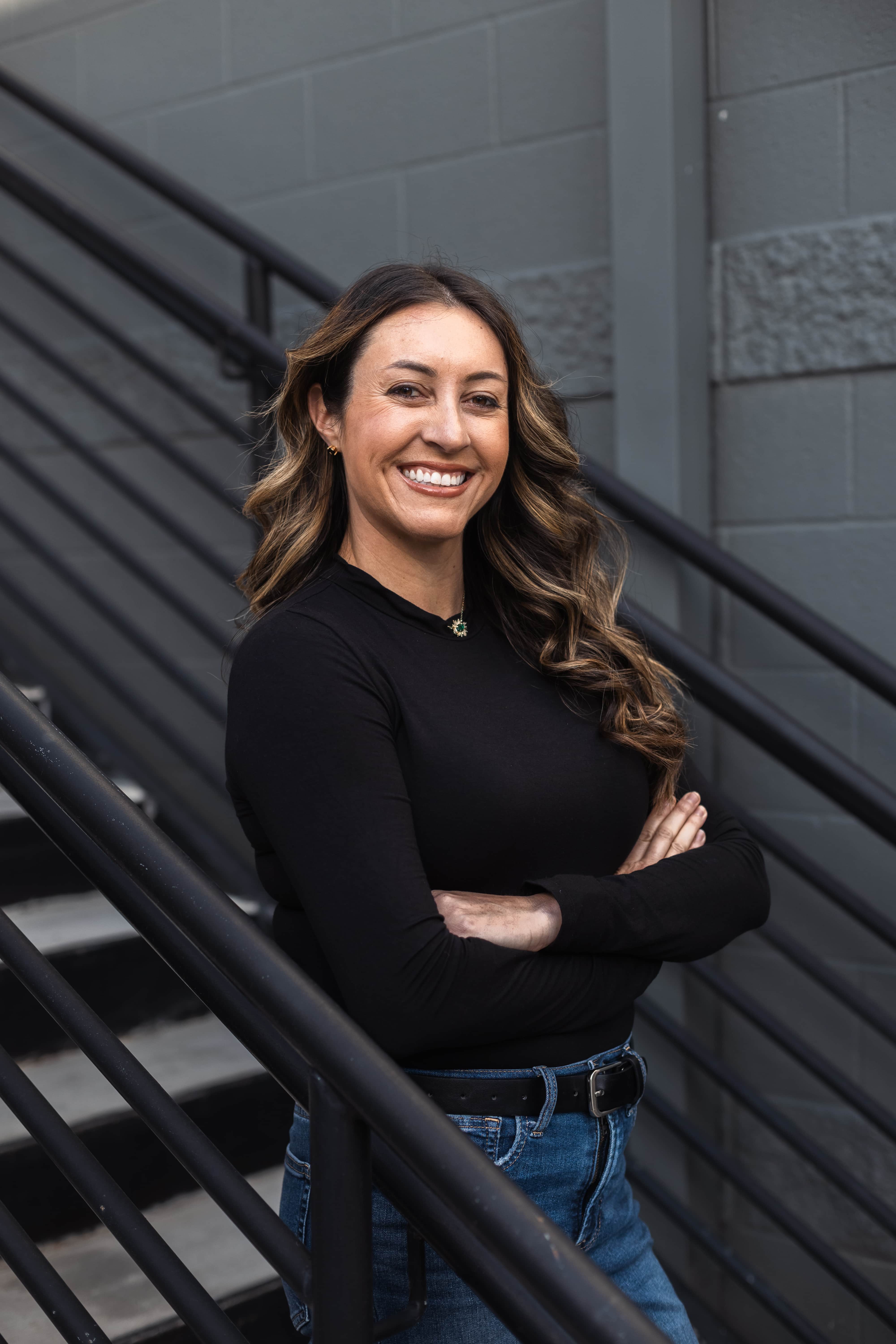
Public Safety Psychologist | Consultant | National Speaker
Dr. Brooke Bartlett, Ph.D., is a licensed clinical psychologist, national speaker, consultant, and owner of Center for Trauma, Anxiety, and Stress (CTAS). She has deep expertise and specialization in trauma and the psychological health of first responders, military personnel, and civilians in high-stress professions. Her work spans peer support program development, organizational wellness consulting, training and psychoeducational programming, and critical incident response. Dr. Bartlett has authored more than 20 peer-reviewed scientific publications and trained thousands of clinicians, first responders, and leaders nationwide. She is one of few doctoral-level psychologists in the country with deep specialization in both the clinical and organizational dimensions of public safety wellness.