Apple Podcasts
 Spotify
 YouTube
 RSS Feed
 AI Leadership Coaching For Fire Officers: Dr. Johnny Torgeson | S6 E35
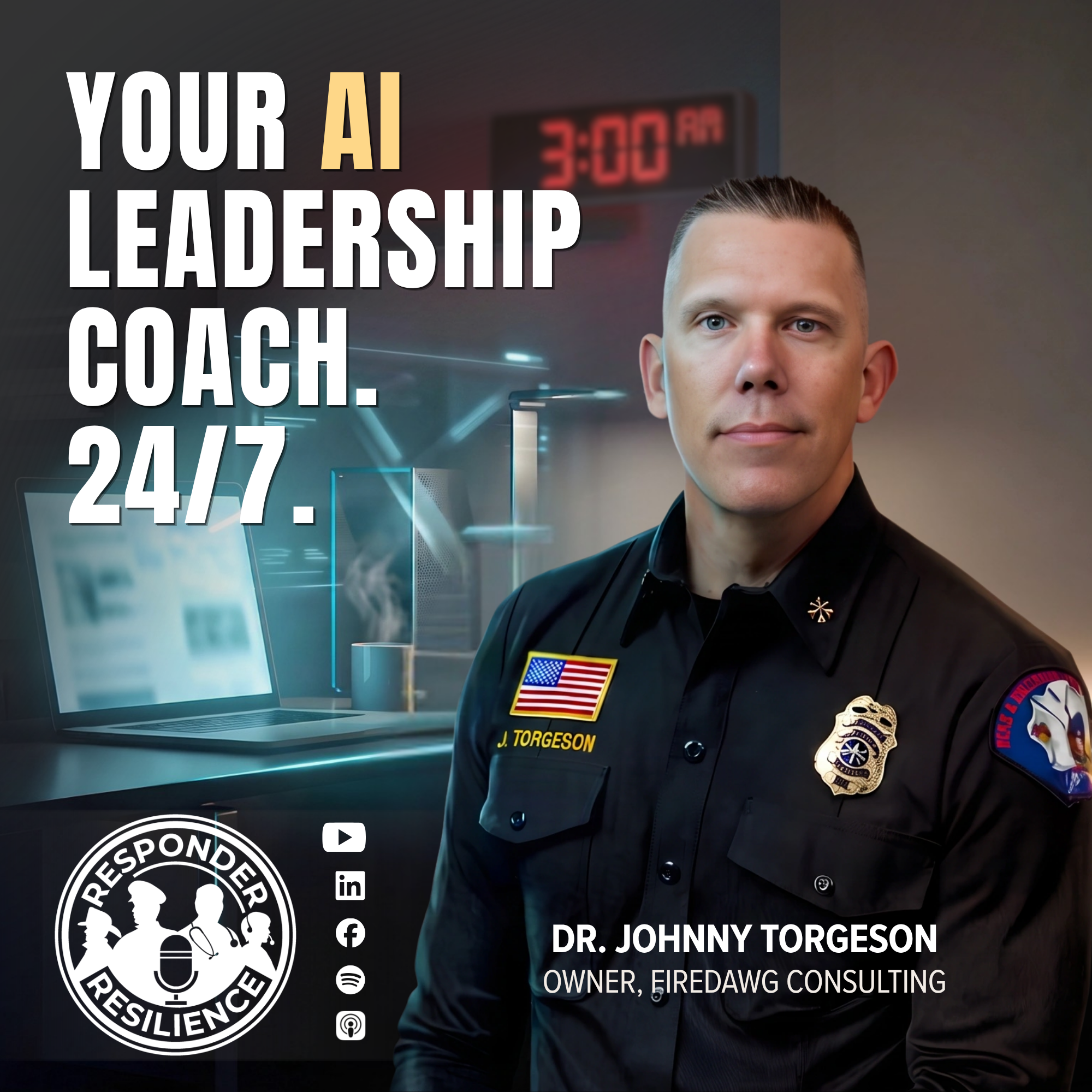
Dr. Johnny Torgeson opened a top-grossing fitness franchise at 25, served as an Army sergeant, and now commands operations at a federal fire department. Along the way he identified a gap most fire officers never get taught: how to actually build a team, not just staff one.
Dr. Johnny Torgeson opened a top-grossing fitness franchise at 25, served as an Army sergeant, and now commands operations at a federal fire department. Along the way he identified a gap most fire officers never get taught: how to actually build a team, not just staff one.
He wrote Forging Your Team: Demystifying Team Development for First Responders. Then he built Forging Teams AI, a 24/7 leadership coaching agent trained on his own research and experience, designed to help officers diagnose team dysfunction, low morale, and stalled performance in real time, without the cost of traditional executive coaching.
In this conversation, Johnny explains how the tool works, what it catches that emotional decision-making misses, and why he believes the fire service needs to move past outdated 1990s leadership models.
Learn more: forgingteams.com
Responder Resilience is produced by Mind Health Media, LLC, hosted by Lt. David Dachinger (Ret.), Dr. Stacy Raymond, and Bonnie Rumilly, LCSW/EMT.
Subscribe for more conversations with the people building a stronger, more resilient first responder culture.
**Resources for Responder Wellness:**
• Book: Helping the Helpers https://a.co/d/dm0VS4Q
• Free App: CRACKYL http://crackyl.respondertv.com
• Fitness: FightCamp (code RESILIENCE for 10% off) http://joinfightcamp.com/rr
Contact Johnny Torgeson:
Website: forgingteams.com
Contact Responder Resilience:
Phone: +1 844-344-6655
Email: info@respondertv.com
Our website with past episodes and more: https://www.respondertv.com/
YouTube: https://www.youtube.com/c/ResponderResilience
LinkedIn: https://www.linkedin.com/company/responder-resilience-podcast/
Instagram: https://www.instagram.com/responder.tv/
This show is for educational purposes only and does not provide medical, psychological, or professional treatment. Views expressed are those of the individuals, not any affiliated agency or organization.
In an emergency, call 911. For mental health support, call or text 988 (Suicide & Crisis Lifeline).
SPEAKER_04
You know, the fire service is very much a team sport. If you could teach leadership, everyone would be amazing leaders. I built an agent that had online intellectual property from all the articles and podcasts and books and notes. And then what I did is I spent six months training it. Nonetheless, this gives an economical solution for coaching. What we say really does matter. It has impact on how we behave. And what I just found out is there's much more depth to this thing that we call a team. Everyone should have a mentor and everyone should be mentoring. It's how you grow and it's how you build a legacy. You need to be doing both.
Voiceover
Welcome to Responder Resilience, along with Bonnie Rumoli, LCSW EMT. I'm David Dashinger. Our guest today opened a health club at age 25 and made it a top 100 grossing franchise. He led troops as an Army sergeant and he's commanding operations at a federal fire department right now. Somewhere in all of that, Dr. Johnny Torgeson figured out the thing most fire officers never get taught. How to actually build a team, not just staff one. So he wrote the book on it. Then he built something most of the fire service hasn't seen yet: an AI 24-7 leadership coaching tool that helps officers diagnose the real problem behind low morale, weak accountability, or stalled performance. Before it becomes a bigger one. Not after the crew's broken, before. This is the blueprint. This is responder resilience. This episode is brought to you by Fight Camp. Real training on your schedule. Head to jointfightcamp.com slash RR and use code RESILIENTES for 10% off. This episode is brought to you by the First Responder Center for Excellence. Because even the best of us face unexpected challenges. They've got the tools, the training, and the resources to keep you strong, safe, and resilient. Equip yourself at FirstresponderCenter.org. We invite you to like and subscribe to YouTube Responder Resilience or on Facebook Responder TV, LinkedIn, Apple Podcasts, Spotify, and go to our website, respondertv.com for past episodes and guest information. We'll be right back to speak with Chief Torgenson right after this. Ask a first responder who they are, and you're likely to hear I am a police officer. I am a firefighter. I am a pro product. I am a 911 communications operator. Not I do this work. Ask a clinician why they work with first responders. And they may say, there's no fire spot, join us in shaping a culture where mental health, wellness, and leadership are prioritized, not whisper. Where support is the sign of strength, not faith, and where no one has to carry the weight alone. Welcome to Responder Resilience. We try to spotlight on the unseen battles of first responder reality and celebrate the powerful wins that come from the grit of post-traumatic growth. We understand the culture, honor the trust, and bring you conversations from the change makers passionate about helping first responders come home home. With your hosts, Retired Lieutenant David Daffinger, Dr. Stacey Raymond, and Bonnie Roomley, LCSW EMT.
unknown
Dr.
Voiceover
Johnny Torgeston is Assistant Chief of Operations at a Marine Corps Logistics Base Barstow Fire and Emergency Services. He's also the owner of Fire Dog Consulting and the author of Forging Your Team, Demystifying Team Development in the Fire Service. An Army veteran, a franchise CEO by age 25, and a doctorate in strategic leadership. He spent a career learning how teams actually get built and now teaches it nationwide. Chief Doctor, welcome to Respond Resilience. Yeah, thank you.
SPEAKER_04
Thank you for having me on.
Bonnie Rumilly
It's amazing all of the things that you've done, and thank you for your service first and foremost.
SPEAKER_04
Yeah, no, I appreciate that, Bonnie. It's it's weird hearing that stuff because you know, those are all the wave tops. It uh it skips over all the shadow work, you know, all the tears, all the struggle, all the failure, all the doubts, you know, but that you know, like, yeah, there's highlights of like whatever five or six things, but there's millions of things that you just uh all the failures, you know. Like that's that's what I hear when I hear that. So I'm like, oh I remember how hard that was.
Bonnie Rumilly
Well, the failures drive the ship too, right? Not just the perseverance.
SPEAKER_04
Right.
Bonnie Rumilly
So we can't wait to dive in here today. So tell us about this. You were running a top-grossing franchise at 25 years old. Tell us about that, and then tell us how that led you into the fire service.
SPEAKER_04
Yeah. So I was actually already in the fire service um when I opened up uh that uh it was a health club. It's uh it's called Anytime Fitness. You guys may have heard of it. It's uh it's actually the the world's largest 24-hour health club, just uh on the mass size of the amount of clubs that they have around the world and all the different countries. And I was able to actually like get into it like when it was first starting to franchise out. It started in um Minneapolis, Minnesota, and um I just happened to cross it through like a Google search. Like, what is I actually wanted to open up a sandwich shop. I um uh it was my realtor who like we had just become friends, and uh and my wife and I had moved to this new city, and they're like in and I was telling her, like, hey, you know, I was thinking about you know opening up like a quiz nose or something, you know. And um she's like, Oh, we already have like four or five sandwich shops in the city. I was like, but you know, you don't have like a health club. Why don't you we think about opening a health club? And I already had a passion for that stuff and lifting my entire life. And I'm like, really? Okay. So I just literally just started kind of like googling and uh came across this um franchise opportunity. And what I found out really fast, it was it was purely a miracle, is you have to like be worth money to like make money in America, like people don't just get loans, you know. Like I was actually 24 when I started the journey, but I it didn't open until I was 25. Um, and so yeah, I'm 24 years old. Um, don't have you know uh a pot to pee in. And uh I'm asking people like, hey, give me money, and everyone's looking at me, like the banks, SBA, everyone's like, no, we're not giving any money. That is not happening. And uh, you know, so there's a lot of prayer involved and uh a lot of stress, and uh man, like I I still I look back and I still can't believe it happened. Um, yeah, um from an idea to actually opening up the doors. It was um about seven months. And uh and then once we opened that that's when the real challenge began because you know you gotta like have money to sustain a business that's not making any money, right? And you know, my ignorance was like, oh, we'll just start making money right away, like no problem, you know. Uh so I I had to be in the black my first month, and then uh I had no nothing to turn back on. And luckily, fortunately, I um was dumb enough to not understand the implications of it because if I really did, I don't know. Right. And uh, but I was I I I went to the black my first month and um uh kind of never looked back, and so we became so successful that uh you know, within a couple years we were the top grossing anytime fitness in the world, and um they were having me do you know the um kind of like coaching sessions and stuff like that, where I just kind of speak of how we're doing business and what we're doing that's making a successful country. So yeah, I was able to experience that at a real young age.
Voiceover
What are some of the things that you got even from business that helped you in fire service leadership?
SPEAKER_04
Yeah, um I think one, just the military background uh helped me even with my business. I was going to school to get my marketing degree at the same time. So I'm like going to school full-time, opening up these health clubs, and and then I'm still a firefighter, uh, and then you know, wife and family. So all that stuff combined. Um uh, you know, I mean, your your show is called Responder Resilience. So we can imagine the amount of resilience you would need to like each one of those things comes with its own stress, its own struggles. And so uh I think it was really just the culmination of all that stuff, right? Um not very it's not really just one thing, but if I were to you know pick something out of the business, it's really uh you know, taking care of people, you know, like you you feel that weight of responsibility like when you have employees, like people, like their livelihood is dependent upon your ability to succeed, you know. So that's like a heavy weight on your shoulders. And then so me at 25, 26, 27, I just it's like, man, I gotta it's gotta do well, it's gotta do well. Like, and the more you hire people and the more kind of like if this thing grows, it's the more pressure to make sure you're putting bread on the plate for everybody.
Voiceover
Most people work out to look better. You work out because lives depend on it. But the stress doesn't clock out when you do, the calls follow you home, and most workouts weren't built for any of that. Boxing was Bike Camp builds endurance, reaction time, and real-world movement, and tracks every strike so you see progress, not guests at it. Real training in your home, on your schedule. You don't just finish workouts, you get better. Head to fightcamp.com slash RR. Use code RR10 for 10% off. Fight camp, real training on your schedule.
Bonnie Rumilly
How did you deal with the pressure at that time of knowing these people are relying on you for income and to put food on the table?
SPEAKER_04
Yeah. Well, I put my faith in Jesus Christ. I think that's the biggest thing is a lot of times, you know, I just get overwhelmed and I try and carry it all myself, and then eventually I'm just like, you know what, Lord, like it's all you, I can't even do this anymore. And so me having that uh that safety net is really what helped me. And, you know, that can be anything for other people. Um, but for me, uh, that was my safety net was uh to know that uh I can always count on Jesus Christ to have my back. And and you really did. And it created just as much problems as it did help as far as like my leadership and stuff like that, because one of the biggest lessons I learned in it is at least for myself, I can't speak for everyone, but for myself, I learned that you can't like serve two masters, you can't pour all your passion into multiple things because there's only so much of these, so you're just dividing yourself. You can think that you can give everything 100%, but that's just not accurate. It's not accurate, and especially when it comes to energy and passion, because something is always going to make you more passionate about something at the um in any particular time. And it's typically what's like feeding the ego, it's what's feeding you as a your identity and you as a person. You just kind of naturally gravitate to that more because it feels good. You know, you get the oxytocin and the serotonin and the endorphins. And so at the time, why it started you know hindering me was I started focusing all my attention to the business and less attention to the fire service. And so um at uh for a a window of my career, I turn into the prototypical paycheck firefighter. And so uh, you know, it's not a good thing. And so, you know, the people that work with me then, you know, that you know, the fire service or really any organization, like you stay in one place, it doesn't matter if you did it 20 years ago, that that's yours. You own it for however long you're in that organization, and so so yeah, um uh I didn't understand the repercussions of um pouring so much time and energy into something and then something else getting the back button.
Bonnie Rumilly
So before David pivots into the book, if you could go back to that 24, 25-year-old, what would that wise advice be then? We we just heard what you said, but if you could go back, what would you say?
SPEAKER_04
Um not to change a thing. Uh because uh, and I don't mean I know a lot of people say that. Um it would because we say that to give ourselves the easier road is really the reason why we say that. And obviously I wouldn't want to go through all the tears and the struggles that you know that representation like costed me with some people. Um, but really I wouldn't even own the I wouldn't even have written the book. The book wouldn't have been a thing if I didn't um have those challenges. It made me to a completely different person.
Voiceover
Yeah, and that's a perfect segue into talking about the book. Um, because you've identified a problem, a gap in terms of leadership and using the word teams, and just because you have a crew doesn't mean that's a team, you know, even though we call it a team, maybe that's just a name. So what's the difference? Like, what's the gap you identified, and what's the difference between calling a crew a team and actually being a team?
SPEAKER_04
Yeah, uh, I think we we use words and we just kind of toss them around, but words are very significant, they they truly need something, and so as we use these terms kind of ubiquitously and we do it like haphazardly, it uh it creates behaviors and and so like you know, fire service is very much a team sport, and um we we say we're on teams, and so it's kind of just taken for granted, like, oh, we're on an engine company together, we're in a truck company together, whatever. Um, we're an admin together, you know, the management team. Yeah, so we're on a team just because we we work in proximity, we kind of have this shared values and shared goals of where we want to go. And so what I learned is because at the same time I'm going through you know my master's and my doctorate and specifically studying leadership, and they're feeding all of the same information. Like, hey, this is what a team is, it's trust and it's shared vision. So you're gonna hear many different definitions on what makes a team. And what I just found out is that it's just not it's not accurate. There's much more, there's so many more layers and much more depth uh to this thing that we call a team. And it led me to this path of uh understanding that it truly is when we talk about leading, not leadership, but leading, it truly is the entire point of it. Because when it comes to leadership, that's that's more of like rank, right? That's a position. And and when you say leadership, that's why people say, Oh, you need to be a manager and you can just well they're not wrong, but like they usually conflate the the word leading with leadership, and they're just two different things. And so once again, what we say really does matter and has an impact on how we behave because you'll have people in leadership positions and they they think they're leading firefighters, and like the firefighters, they're leading firefighters, but you're not leading up.
Bonnie Rumilly
I think it's quite unique to have a doctorate in the fire service. Uh, wondering if you think that has added just so many different layers. Even just hearing you talk about leadership, I can hear different layers. But from your point of view, having the doctorate, how does that feed into and help to support what you're doing?
SPEAKER_04
What it really did is it allowed me to experiment on what I thought I should be doing. And that is I wanted to truly apply. I didn't want to like take all these courses and do all this stuff for the sake of having a degree.
SPEAKER_05
Right.
SPEAKER_04
People do that, like that's the finish line. It's like, okay, I got my degree, and it's so I can move up in rank or so I can get this opportunity or whatever. The the degree is is not for the sake of what you're learning, it's for the sake of what it can provide for you. Right. And um, though that's always there, uh, you know, uh to say that's not an aspect of it, you know, would be lying, but I didn't I I truly wanted to learn how to be a great leader, and whatever that meant. And so um that was the journey. And so because of that, it it made it to where I experimented with every single person um that uh I was in charge of. And uh through that experimentation, I just found that what was being taught in academia and what was actually like ground level application that worked, there was a big gap. And so, and it doesn't mean that I executed flawlessly because you you know I'm a variable as well, right? Um, but uh I did see that uh I wasn't the only one. Like there's so many people like getting doctorates and masters and all kinds of different certifications and fire officer certifications and all this stuff, right? And uh it's not working for them as well. So it wasn't just me, you know? So um uh and it's because they're it's all regurgitation. It's so whatever happens in academia just finds its way into the fire officer books and research. And um, and so yeah, and so we're all just kind of practicing the same stuff, doing the same stuff, and I'm and it's like, man, this this isn't really practical, it's not really working. And uh yeah, so I'd say that's what the degree did for me um as as it relates to the fire service was it gave me kind of a baseline of what to experiment and practice with, so somewhere to start from.
Voiceover
Since the last time you and I spoke, uh you've got something new brewing, and that's uh the tool, which is uh the forging teams AI. Um, it sounds amazing. I can think of um so many circumstances where someone gets promoted and all of a sudden they need to have all the answers, but we're never, you know, we can't possibly have them. So talk about in general, what does it do? What does this forging teams AI do? And then how does it specifically help leaders in their in their service?
SPEAKER_04
Yeah, I think you nailed it on the the head, David, is that it it is a tool. Um, it's not gonna, you still gotta do the the work, right? So, like you know, you're told to ventilate and you need a saw to do that, but you still gotta you know your know your foot sequence, know where the fire is, know where you're cutting, understand building construction, and then you still gotta be able to use the tool, right? So it's just a tool. Uh it's not gonna fix all your problems because you have to actually go through the motions. Okay, um, so that's like my little disclaimer. Here's one thing I learned uh about the fire service is and and really just anything. I work with all kinds of organizations now, is uh we try and teach leadership. And you can't teach leadership. If you could teach leadership, everyone would be amazing leaders. And so like you can't. Uh it's not a thing. It's it's kind of like uh if if I were to like put it in firefighting terms, it's like trying to teach someone to throw a ladder um through a slide deck. Like uh yeah, you can sum all the slides in the world, but like when the firefighter goes out there, you just got to get out there, feel the halyard and feel the beams, and feel the weight, and feel the balance points, and understand, you know, uh where you're throwing it as far as leeward side and windward side, and what that means, you know, as far as raking it across a window and just all the things, it's it's very very tactile thing. Leadership is is no different because you're dealing with humans and humans are messy, humans are sloppy. Well, we're all just trying to work through this thing called life, you know, and figure it out. And um you can't teach that stuff on a um a slide deck. And yet, you know, we send people to conferences. I'm I'm one of them. I go to conferences all the time. Uh, but people, you know, they they they leave with these inspirational things of what they want to do, you know, just like the fireman can leave that slide deck on how to throw a ladder, but then you get out there and you're just you're fumbling and you're you're messing up. Except it's even worse because we'll go out there with the firefighter and be with them, helping them throw the ladder for those, you know, whatever, six months or year, however long they're in the fire academy, right? Right. That's not a thing, you know. Like it you want it to be, and there's been actually um surveys and studies on it. In fact, one says uh that 70% of all CEOs of you know large corporations uh fail uh within their first 18 months without coaching. And so that's a that's a huge number. And it shows you the importance of someone throwing the ladder with you, right? Someone there helping you learn how to do this thing called leading. And so that's where this this uh tool comes across is like or come along, is understanding that it's all about coaching. Well, then there's another problem. People can't afford coaching, especially in the public service. Like coaching is very, very expensive. Um, and so uh that's why I mean if it wasn't, more people would be like more departments would be adding that. Now I think it's cheaper to do coaching than it is to send people to conferences. I've been trying to ring that bell, like cost you 10 grand to someone someone through a conference that probably won't make a much uh big of a dent on your organization. But if you use that 10 grand to pay a coach to help a couple of your chief officers or um, you know, the county chiefs or whatever, uh, that's you're gonna get some um ROI. But nonetheless, this gives an economical solution um for coaching.
Bonnie Rumilly
As clinicians working with first responders, we are not just providing therapy. We are stepping into an ecosystem of relationships, values, and unspoken codes. To be effective, we must understand that healing in this world rarely happens in isolation. It happens when a responder feels that the people around them are all speaking the same language and pulling in the same direction.
SPEAKER_04
So what I did is because instead of just using ChatGPT, where I don't know if you guys know this, but Chat GPT they it pulls a lot of its stuff from social media, like Reddit and stuff like that. If you ever a lot of it is uh from social proof, uh and so you get some really generic answers, some wrong answers. It even has a disclaimer, you're gonna get a wrong answer here, just so you know. Right. It'll even tell you, like, here's an answer just so you know it's probably wrong. Um and so what I did is um I I built an agent that had all my um intellectual property in it. So um from all the articles and podcasts and books and notes, and then what I did is I spent six months training it. Um gave it uh a bunch of scenarios, and I did this with a developer um uh of hey, here's here's the issue. This is how I want you to tackle it, and this is where you should go with it. Um, except it's now out it's outsmarted me. I use my own AI agent at work. In fact, my fire chief the other day he's like, Hey, put it through simply shoes, you know, per usual with people. And uh he's like, Hey, have you run that through the AI agent? I'm like, gosh dang it, my own product. And I copied to use my own agent, and and when I I plugged in the scenario, it was brilliant. And guess what? It freaking worked well too. Like, because I didn't just like put it in there and be like, Oh, okay, that's cool. Um, he was even like, hey, do it, don't just like put it in there and like you know, massage the ego, like actually do the things. And I was like, that's sound accepted, you know. And uh man, it was awesome, it was awesome. So uh so yeah, so it's just it's it's a 24-7 tool where you plug in any type of uh scenario, it's gonna give you a very fire service specific answer on how to feed yourself out of that situation.
Bonnie Rumilly
It's really incredible, and it's amazing the things that people are doing with AI, but I never would have thought of this. So being the resident therapist in the room, it always brings me back to you and these questions about you, but you have such an entrepreneurial way about you. Where does that come from?
SPEAKER_04
Yeah, you know it's you know it's funny you say that. Um one, I don't know. I don't know. I I'm a Neanderthal at the end of the day, and uh uh for whatever reason, um even uh being uh someone who's very limited in his IQ, uh you know, I guess there's an aspect of me that uh can strategize, I guess, I think is what it comes down to. Um there's been a few uh companies I've I've worked with uh where it seemed like really easy to me on where they should be going and what they should be doing. And uh so I I usually start off the conversations like, I'm not here to insult your intelligence, you're probably already moving in this direction. Uh and uh like, no, we're actually not moving in that direction. And I'm like, that's that's really strange. And it happens quite often. So really what it is is when you're actually you're not floating through life, you're very intentional, I think, to answer you and your question. Uh and this is probably a rhetorical question, Bonnie, because you you are a therapist and you understand this stuff. But when you're when you're intentional about stuff, you think about things well enough. You're not like it's it's not a reactive state where you're just you're trying to figure it out as you go along. But when you are proactive and intentional, it puts you in a different mindset, you know, uh a strategic mindset. And so these things just kind of happen naturally.
Bonnie Rumilly
Well, and I think for our viewers and listeners to see that you have such a growth mindset, it seems to me that the growth mindset helps that entrepreneurial brain turn on because you are paying attention and you're present. And when you do those things, it leads to the world opening up.
Voiceover
Right. Exactly. Hey firefighters, let's take a moment to talk about something important. There's a new app built by firefighters for firefighters, and it's not just another wellness tracker or generic resource hub, it's called Crackle. You've probably seen the magazine, but this is the next evolution. The app is about one thing helping firefighters not fail. Not just on the job, but in life, in your health, your relationships, your mindset, and your longevity. That's why Crackle is designed to meet firefighters exactly where they are, with resources that make sense, are easy to use, and actually respect your time. You can download the app now for free as a legacy member. That means you get early access to exclusive content tools and updates as they drop. Use the QR code on the screen to download the Crackle app, or you can download it from the App Store or Google Play and stay in the fight. Not just at work, but at home and in your own head too. Because your best days shouldn't be behind you, they should be ahead of you. With the AI agent that you built, Johnny, um is there a diagnosis that most chief officers might have missed without using it? Like something, you know, maybe a scenario that we tend to run into as officers that your AI tool will give them a different perspective or give them a different way of looking at it?
SPEAKER_04
Yeah, I think it's a great question. What I would say is the mental sovereignty part of it. I think we we get tied into uh emotional aspects um towards the things that uh we're dealing with. And it kind of locks up the mind, uh, whether you know we're taking things personal or we're feeling down about ourselves and saying, like, this is happening because I did this. Um, what's cool about AI is it doesn't have the emotion, it takes things very matter-of-fact of like, hey, here's the facts, and this is what you should be doing, versus us. Now, don't get me wrong, you need emotion, obviously. Uh, but when it comes to dealing with issues that you need to think through logically without the kind of our emotional swings, it's it provides a very clear uh diagnosis versus one that has to go through a filter of emotions.
Bonnie Rumilly
So it's cleaner, if you will.
SPEAKER_04
Yeah, I think um it's cleaner in the sense of um not just the emotional part, but I would say its ability to synthesize a lot of information. You know, for us, we can synthesize a couple different variables, right? But as you're giving it um your issue, it's not synthesizing a couple different variables, it's synthesizing millions of variables, which we just don't have that uh capacity to do. And so that's why you know, for me, it's it's outgrown me. Um, and I'm the one who freaking taught it, which is just a really weird thing to say. You know, it's like Terminator 2.
SPEAKER_05
What the heck?
Voiceover
This is wild. Yeah, that is wild. That's gotta be, you know, it's like your your creation and watching it, uh watching it grow beyond where you gave it your input. Uh that's like having a child.
SPEAKER_04
I was gonna say the same thing exactly, but you pray and hope that your children, you know, um uh do better than you and go beyond your state and don't make the same mistakes you do, all those things.
Bonnie Rumilly
Exactly.
SPEAKER_04
And uh yeah, it's like having a perfect time of does it have a name, like a like a you know, a bad name? Yeah, uh I call it I I labeled or branded at Forging Teams AI. I'm actually um I I won't disclose the company because it may not um come to fruition, but I am looking to license it because um I don't have the marketing and branding power that large companies do. And uh once again, this is a company that wasn't even going in this direction. And my hope is um for companies um to build a library of this stuff, and that is um, it shouldn't just be me, it should be anybody that has all this intellectual property and and really it's the the models and frameworks that we have um that uh uh companies can use this for the fire service. Like, David, you have a book out, right? And so, like it's feeding an AI agent, and so it's like, hey, here's a mental health coach that is all of your proprietary information. And so when fire fire officers, fire captains, they can go to this library and just have a host of AI agents that can help coach them. I mean, in the same sense, they're training you because it's coaching you, so you can't help but to learn, and so that's why it's an all-in-one thing. And so, yeah, we need to kind of move past the 1990s and early 2000s uh in the fire service and really use this technology uh to fill some gaps that we've had for a very long time.
Bonnie Rumilly
Well, all units stand by for confirmed structure fire with report of person.
Voiceover
In a world where first responders save lives, this book could help save theirs by preparing you to answer when they call for help. Based on over 200 conversations and the trusted team behind the Responder Resilience podcast, helping the helpers give you the tools to understand their world, speak their language, and earn their trust. This work is challenging, but deeply needed and profoundly rewarding. Their stories don't start with trauma, but too often they end there. Infused with real-life experiences, this guide reveals the human behind the badge and equips you to build a first responder-centered practice that works from understanding their culture to the practical realities of working with first responders and chapters across the spectrum of first responder professions. You'll gain insight into the hidden struggles that shape their reality and the steps you can take to help them heal. When trust is shattered, the stakes are high. This book helps you build it before it's too late. Are you ready to make a difference? Be the resource they can count on. Order your copy of Helping the Helpers, the clinician's guide to first responder mental wellness today.
Bonnie Rumilly
Okay, Johnny, so let's say you get to meet a company officer the day before their shift happens. You know, they come in, they're doing paperwork, they're getting their uniform, and you catch some time with them in the hallway before they leave. What are the things you would say to that person, brand spanking new?
SPEAKER_04
Yeah, brand spanking new, I would say uh um one, welcome to the team. Uh two, that uh I'm super excited that you're in this leadership position. We wouldn't have put you in this position if uh we didn't think that uh you were the leader that we needed for the future of the department. So I'd start with some encouragement. And then uh I would tell them that uh uh what my expectations are. And uh my expectations um is very much what we've been talking about all day today. That is uh I don't need you to be a leader, I need you to be a team builder. And uh and then and then from that, when you do that, the team will lead itself. And uh you don't have to carry all that weight. And so yeah, I would uh just kind of encourage them. If I'm just it's a quick hallway thing, and I would uh kind of at least plant a seed of um what a goalpost would look like for them, at least in my vision, especially with a company officer. And their entire world needs to be wrapped around making sure this whatever five or six myth misfits that they're in charge of comes into an actual seat, I would give them that's the job right there.
Bonnie Rumilly
That's great.
Voiceover
Um, this is a little bit of a different approach, but let's kind of shift the gears into chief officer talk again. Um in your in that strata that you're operating on, do you have peers that you can turn to to you know bounce ideas off or scenarios where you're trying to you know solve a problem or you know deal with a situation? Do you have that kind of support, like kind of lateral uh peer level support, or is that something that we need more of?
SPEAKER_04
Uh I would say that the fire service as a whole needs more of. And my uh my current situation, uh no, um, because the uh like I just said, we I work for the federal government, and so there's this thing called DRP, um, which is deferred resignation program. So a bunch of people uh got paid to retire, and so that included my counterpart because I'm an operations chief, so there's only one other peer to me in my department. Gotcha. And uh that that position's been vacated for a year and a half. So um, but here's the beautiful thing is I have the best boss in the world, proud to say. Uh he's the fire chief, and uh him and I have an outstanding working relationship. And so yeah, when I'm when I'm having rough patches, you know, he's his doors always open, he always gives me sound advice or at least has an ear for me. And uh yeah, man, it it's so incredibly um um important to have that just and I wouldn't know what I would do without it. So the people that don't have it, um, I feel for them, and and I do talk to those people. So I no one to talk to, no one to take an emotional breath with. And um, and so yeah, I do have that, and it just so happens to be my boss. But yeah, the peer-to-peer is towards that.
Bonnie Rumilly
Do you think if someone doesn't have that in their boss, which we know does happen, do you think it behooves the person to look themselves outside of the department, even in a neighboring town, to find somebody that they can do this bouncing off of ideas, get support, someone who understands what it's like to be in their shoes?
SPEAKER_04
Yeah, um, most definitely. Um, I would say even if your boss is like that, you need to have that outside. So I would double down. Um, I have um uh everyone should have a mentor and everyone should be mentoring. Uh it's it's how you grow and it's how you build a legacy. You need to be doing both. And um, and then and then both, you know, obviously our synergistic can help you grow regardless, right? Um, but yeah, uh I would say even like when you're you're meant like you're a mentor, you're probably growing more than the person you're mentee. I mean, it's just like preaching to the choir, you know, you're telling them things that you should be doing yourself, you know. So it's like, you know, there's all that. Um, but I would say it needs to be an active process though, too. I think people wait for people to ask them like to be their mentor, kind of thing. And uh I think people would be surprised on how willing people are to be a mentor to someone. And um, and so uh I did that. I I reached out and I'll even call him out by name. Um, it's the um uh fire chief um of San Bordino County Fire. Um uh his name is uh Chief Munsey. And uh I reach out to him, and and he he is the fire chief of the largest county in America. So the the man is busy. So uh and you know he's he's got a big department to run, and you know, he's got a family and he's doing his own thing, but he still makes time to go hiking with me or have coffee with me and ask him questions and stuff like that. So yeah, I would say it's very important.
Bonnie Rumilly
Great answers, really. I mean, thank you so much.
Voiceover
Yeah, uh, this is something that we're we're starting to try to shed more light on because it seems like it's uh a real uh real need for this in the fire service, particularly at the top. So thank you for sharing that, Johnny. Um so as we wrap up, where can people find you, the book, the AI agent, anything you want to share about you and your work?
SPEAKER_04
Yeah, um, so I've I uh have a website, it's uh www.forging teams.com. And uh yeah, you can get all the information there. It's click of uh click of the finger or drag of the mouse. And uh so there's workshops uh that I provide. There's speaking, there's the agent, there's the book. I'm writing, um I'm I'm about finished with the second book. It's it's been a really a project of love and it's on self-leadership. So I'm doing that right now. And um, so hopefully that'll be done soon. And uh and then yeah, um, I'm also working on a uh an angentic system now uh when it comes to executive uh coaching for the fire service. So hopefully that project will be done by the end of the year, and you know, just keep moving forward and just trying to make a difference as much as possible.
Voiceover
I heard you speak um just a year. Uh it was a great presentation. I encourage anybody who sees that you're gonna be presenting to go check it out because um you really expand on a lot of concepts from your book that we didn't get into too much today, but um all important stuff team building and um and the pillars, and you've shown a spotlight on things that are not talked about that much in the fire service. So uh kudos for all that that you're doing and keep up your work.
SPEAKER_04
Yeah, thank you, David. Thanks for supporting too, man. It was nice running into you at FDIC, brother. It really was, yeah.
Bonnie Rumilly
We're really grateful for your time and your wisdom, and it's always amazing to me that each guest puts their own spin, and you certainly did that today. So thanks so much, and looking forward to seeing what's next in your future.
SPEAKER_04
Yeah, thank you, Bonnie. Appreciate that. Very nice meeting you too. Uh, you said wisdom. I don't know if I got a lot of that, but I do have a I do have a formula for that actually. There's a mathematical formula, in my opinion, of what wisdom is.
SPEAKER_05
Okay.
SPEAKER_04
Um, and really it's a combination of uh um of Emmanuel Kant and um John Dewey, uh, because they both talk about it. And so uh in my personal opinion, it's uh knowledge, so the amount of stuff you learn times that by experience, the amount of times you apply it. And then you times that, and I think this is the missing piece for a lot of people when it comes to wisdom, is reflection, the amount of the amount of time you spend thinking about that knowledge and experience and the application of it. Uh and then you know, at the end of that, I think the um the equation, what you equal there is then then you get some wisdom. But you need that reflection piece.
Bonnie Rumilly
What better way to finish out today? Thank you.
SPEAKER_04
You're welcome.
Voiceover
All right, keep up that great work. I appreciate you guys. Remember to like and subscribe, YouTube, responder resilience, Facebook, responder TV, LinkedIn, Apple Podcasts, and Spotify, and our website respondertv.com. Until the next time, stay safe, be kind to yourself. Take care of the colour.
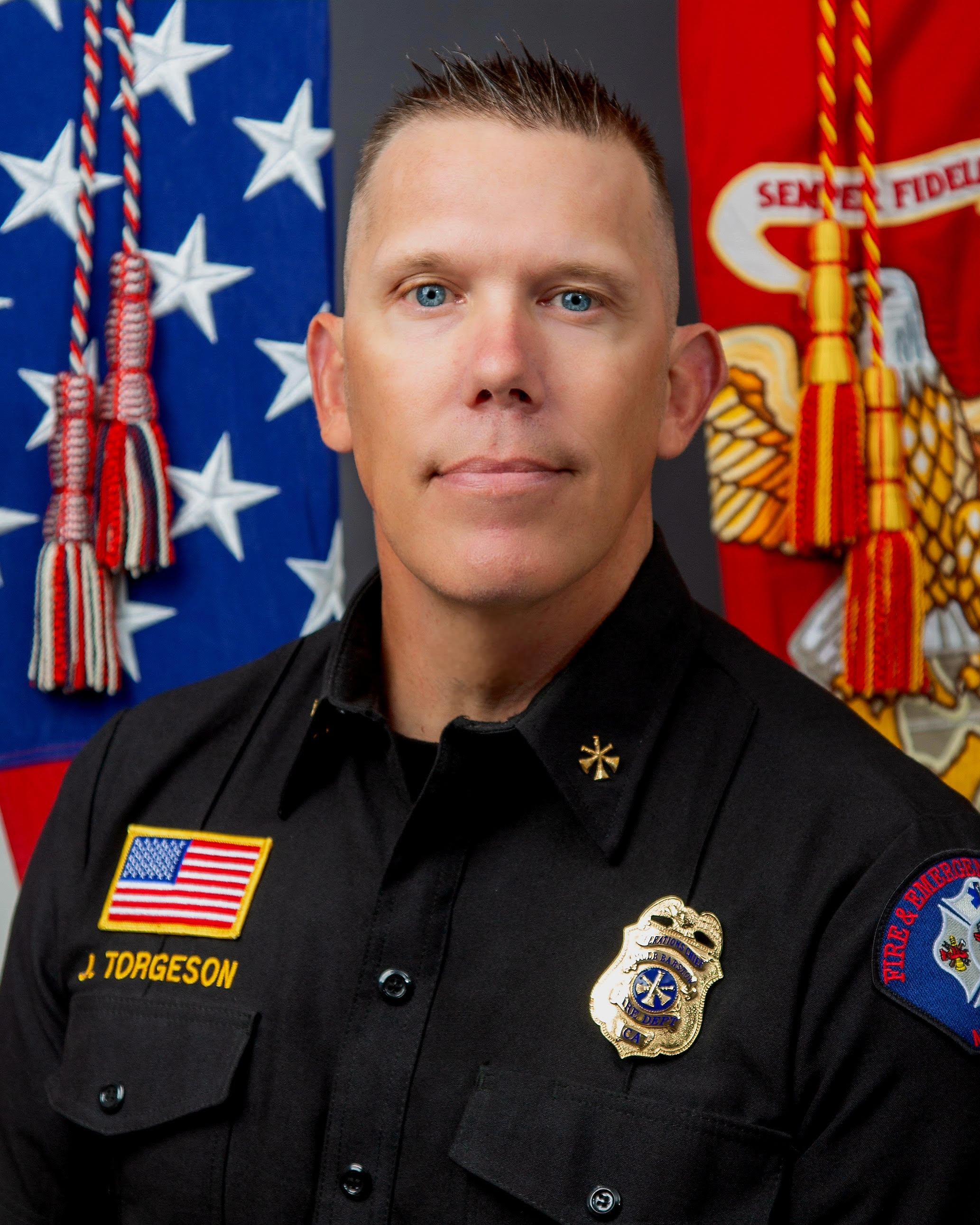
Assistant Chief | Author | Speaker | Coach
Dr. JT started his career as a U.S. Army Firefighter. Currently, he works as an Assistant Chief of Operations at Barstow Federal Fire Department. He's led as an Army Sergeant, business owner, and Fire Officer. At the age of 25, he opened a 24-hour health club and became a top 100-grossing franchisee. He's obtained a doctorate in strategic leadership and is credentialed through CPSE as a CFO. Dr. JT is an instructor for two colleges and runs a consulting company, where he conducts workshops, Coaches executives, and speaks on leadership and team development around the nation. Moreover, he has authored a book titled Forging Your Team: Demystifying Team Development in the Fire Service and writes for multiple publications.