Apple Podcasts
 Spotify
 YouTube
 RSS Feed
 Rising From Ground Zero: FDNY's 9/11 Path To Transformation | S6 E34
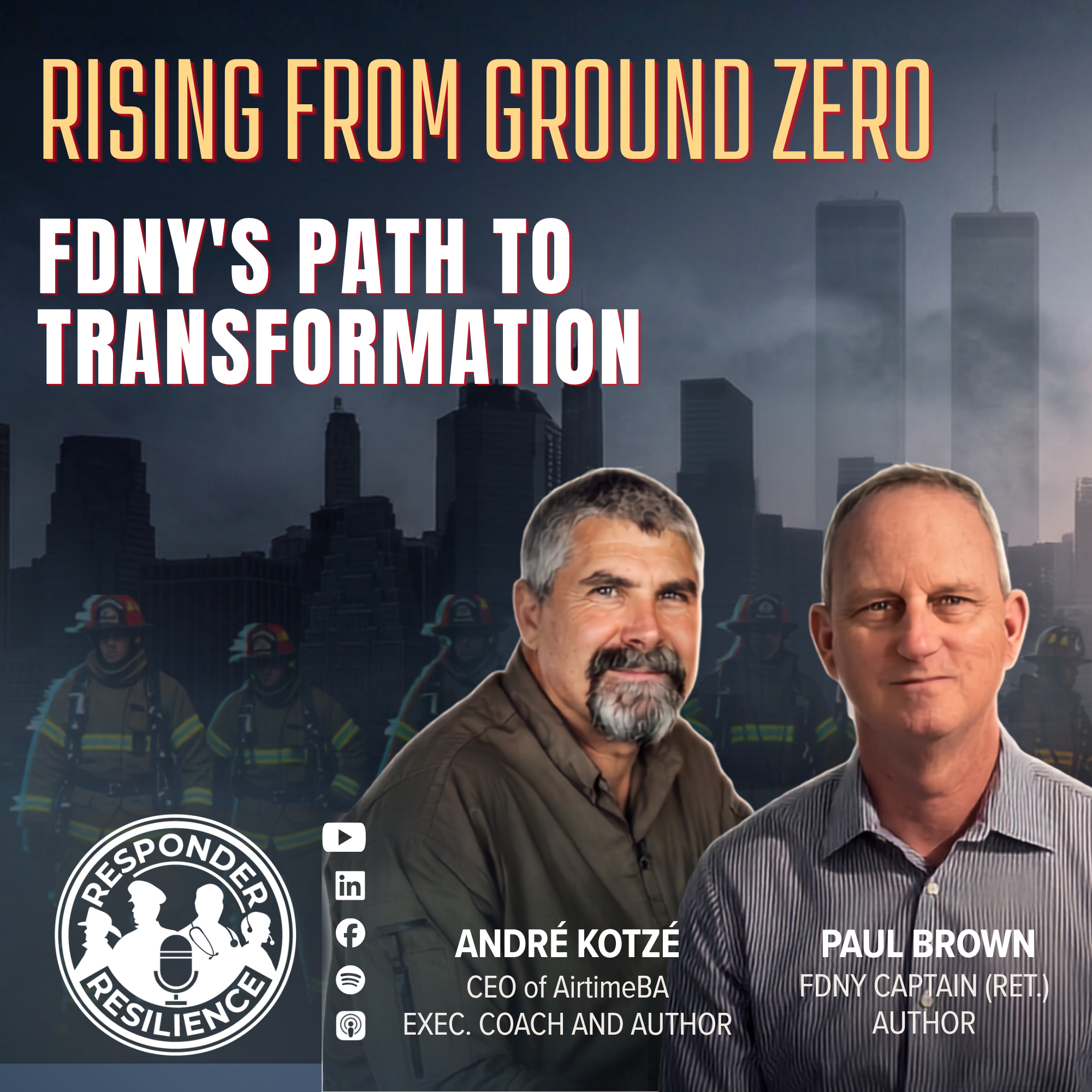
The response to Ground Zero didn't end in 2001. For the FDNY, it became a 25 year path through recovery, transformation, and choices most agencies will never have to make.5 Fewer than 600 of the 11,500 FDNY firefighters who were at the World Trade Center on September 11 remain on the job.
The response to Ground Zero didn't end in 2001. For the FDNY, it became a 25 year path through recovery, transformation, and choices most agencies will never have to make.5 Fewer than 600 of the 11,500 FDNY firefighters who were at the World Trade Center on September 11 remain on the job. In addition to the 343 members lost on 9/11, more than 400 additional members have since died from World Trade Center related illnesses.
In this episode of Responder Resilience, retired FDNY Captain Paul Brown and executive coach Andre Kotzé join hosts Lt. David Dachinger (Ret.) to discuss their new book, Rising from Ground Zero: 9/11 and the FDNY's Path Through Crisis and Transformation. Built from 90 hours of raw testimony, the book documents the day of the collapse, the recovery, and the institutional transformation that followed, co-authored with Dr. Gregory P. Shea and Lauren Starkey.
Paul, a third-generation FDNY firefighter, and Andre, a former mountain rescue operator and organizational development expert, discuss what it took to rebuild command, culture, and mental health support inside the busiest fire department in the world, and why they believe institutions can experience their own version of post-traumatic growth.
The authors have committed 51% of the book's net profits to charities supporting FDNY members and their families.
**Resources for Responder Wellness:**
• Book: Helping the Helpers https://a.co/d/dm0VS4Q
• Free App: CRACKYL http://crackyl.respondertv.com
• Fitness: FightCamp (code RESILIENCE for 10% off) http://joinfightcamp.com/rr
Learn more about the book: https://www.risingfromgroundzero.org/
André Kotzé: https://www.linkedin.com/in/andre-kotze-b38a3617b/
Paul Brown: https://www.linkedin.com/in/paul-brown-54079b124/
Contact Responder Resilience:
Phone: +1 844-344-6655
Email: info@respondertv.com
Our website with past episodes and more: https://www.respondertv.com/
YouTube: https://www.youtube.com/c/ResponderResilience
LinkedIn: https://www.linkedin.com/company/responder-resilience-podcast/
Instagram: https://www.instagram.com/responder.tv/
SPEAKER_07
It wasn't a day. It wasn't a single day. For the FDNY on scene, it was 261 days.
SPEAKER_03
Talking to these men and women, probably one of the most humbling experiences I've had in my life.
SPEAKER_07
It's like, well, what's being done to preserve the lessons learned? I'm like, well, very little actually.
SPEAKER_03
For people who do this work, it's not just what they do, it is who they are. And that's a profound starting place.
SPEAKER_07
The 25th anniversary coming up, and I am informed that out of over 11,000 FDNY firefighters, less than 600 remain on the job from 9-11.
Voiceover
Welcome to Responder Resilience. I'm David Dashinger. The response to Ground Zero didn't end in 2001. For the FDNY, it became a 25-year path. Recovery, transformation, choices most agencies will never have to make. The new book, Rising from Ground Zero, 9-11, and the FDNY's Path Through Crisis and Transformation, drops August 31st, 2026. 90 hours of raw testimony, the day of the collapse, the recovery, and the department FDNY chose to become. Today we're speaking with two of the men who built that record: retired FDNY captain Paul Brown, third-generation firefighter who lived it, and Andre Kotze, executive coach and former mountain rescue operator, the man who first asked the question that started it all, then spent nearly a decade helping build the answer. The stories, the transformation, the lessons that will outlive the men who live them. This is Responder Resilience. This episode is brought to you by Fight Camp, real training on your schedule. Head to jointfightcamp.com slash RR and use code RESILIENTES for 10% off. We invite you to like and subscribe. YouTube responder resilience. We're on Facebook ResponderTV. Also on LinkedIn, Apple Podcasts, and Spotify, and our website is respondertv.com. We'll be right back to speak with Paul and Andre after this. Ask a first responder who they are, and you're likely to hear I am a police officer.
SPEAKER_00
I am a firefighter.
Voiceover
I am a paralytic.
SPEAKER_00
I am a 911 communications operator.
Voiceover
Not I do this work, but I do this work. Ask a clinician why they work with first responders.
SPEAKER_01
And they may say, There's no higher calling than helping the helper.
Voiceover
Join us in shaping a culture where mental health, wellness, and leadership are prioritized, not whispered about it, where support is a sign of strength, not failure, and where no one has to carry the weight alone. Welcome to Responder Resilience. We shine a spotlight on the unseen battles of first responder reality and celebrate the powerful wins that come from the grit of post-traumatic growth. We understand the culture, honor the trust, and bring you conversations from the change makers, passionate about helping first responders come home whole.
SPEAKER_00
With your host, retired Lieutenant David Dashinger, Dr. Stacy Raymond, and Bonnie Roomley, LCSW EMT.
Voiceover
So our guests today are the authors of the book that's coming out shortly, Rising from Ground Zero 9-11 and the FDNY's Path Through Crisis and Transformation. It drops on August 31st, 2026. A quick word about the bios of our guests. Paul Brown is a retired FDNY captain and educator. He's a third-generation firefighter and spent over 30 years as a first responder. While a member of the FDNY incident management team, he deployed to numerous disasters and wildfires throughout the nation. He speaks regularly on managing crises, high-stakes decision-making, and organizational change. Andre Kotse is a CEO of Airtime BA and an executive coach with more than three decades of experience in organizational development and crisis leadership. A South African Defense Force veteran and former mountain rescue operator, he works globally with institutions including the World Economic Forum and the Warden School. Paul Andre, welcome to Respond to Resilience.
SPEAKER_03
Thank you for having us, David.
Voiceover
I want to just kind of set the stage for our conversation by reading a couple of excerpts from a review of the book written by our friend Frank Leib. And I think they'll just help the audience to understand the scope of this book. Frank says these are not secondhand accounts. These are the voices of the FDNY, the men and women who were there on September 11th and in the difficult years that followed. What makes this book compelling is its authenticity. Dozens of interviews with the people who lived it, telling their story in their own words. What sets the FDNY apart is culture, training, teamwork, mentorship, and commitment to one another. Mission first, people always, this is the FDNY way. Bottom-up leadership meeting top-down leadership at every rank with no playbook and no easy answers. Rising from Ground Zero is a story of tragedy, recovery, and resilience. It's the story of the FDNY, told by the FDNY. Frank Lieb, retired FDNY Deputy Assistant Chief, Firefighter, FDNY Squad 270 on 9-11, 2001. With that, uh, let's dive in. We'll talk about the fact that it's the 25th anniversary of 9-11 coming up. What led you to write it? Your interest in FDNY history, your exposure to executive leadership education, or was it both meeting at once? Uh Paul, we'll start with you.
SPEAKER_07
It was actually both meeting at once. Um, you know, having such a long family history, uh, I'm I'm also a bit of a prolific reader. So I'd always read about the history of the job, read about the experiences, uh hearing the stories from uh my dad, my older brothers, my my uncles. Um so I had that deep interest. But I realized after I was on the job for a while that I really didn't hear a lot of the details, a lot of the real tough parts of the things that that my family had experienced on the job. I mean, I kind of knew that they were there. Uh, for example, I I my dad, I thought for years he responded in after the fact to the the 23rd Street collapse where we lost 12 firefighters. Uh I only found out within the last 10 years that he was actually there when it happened. Um so that connection with my family, and then in addition, uh my friend Andre getting me involved in uh organizational development, learning about that there's this whole academic world with leadership, and uh becoming interested in that. And I do have to say that prior to the World Trade Center, that it it's I would liken it to uh the book Originals, where they say there's a timing for things, and this world was out there, but the FDNY wasn't ready to hear it. And it took an event like the World Trade Center to open up our eyes and to open up our minds to so many different areas involving academics, training, and mental health, particularly.
Voiceover
We'll definitely dive deeper into all of that, the uh the changes that were instituted by virtue of this event, uh, this catastrophic large-scale event. Andre, um, from your perspective, you spent three decades in organizational development and crisis leadership across various industries. When you uh approach the concept of writing this book, what what did you have in mind? What did you see as a potential story here that could um that fill out a book of this magnitude?
SPEAKER_03
Oh, that's probably the most important question you could ask us right now, David. Um before answering it, though, I just want to create space for two people. Uh, one is Dr. Greg Shea, um, who uh uh frankly, without him, this book would not exist, this body of work would not exist. And Lawrence Starkey, uh, who was a very strong partner for us in the editing of the work. Uh Paul and I both have a unique perspective on this, um, but it is uh really Greg's work uh that was able to help us bring it together in the form that you've got it now. Um I would say that we each have our own reasons uh for wanting to see this uh this work uh uh out in public. Uh for me personally, I've been on uh the edge of uh disasters like this, um, or events like this, I should say. Uh participated in uh some obviously of a much smaller scale. Um I note about 9-11 is um it was massive. Um it's experienced as uh um a New York event, but really it was global. Um I was living in Cape Town in the time at the time uh that it occurred. I'd known Paul a number of years. Uh there is so much um heartache uh that comes with events like this. And um studying them for me is uh moral imperative. Uh they uh the lessons we can take from them are painful um and um profound, uh, but they need to be studied. Uh we can't afford to see events like this go unstudied because whatever we learn from them uh can and should be passed on uh to others who come after us, which is why I say there's a moral imperative behind the work, David.
Voiceover
This episode is brought to you by Fight Camp. If your job already demands everything from you, your training shouldn't add chaos to your day. It should give you structure. This is for firefighters, EMTs, paramedics, dispatchers, and police officers who still want a way to train with purpose. Fight Camp brings structured boxing and martial arts training into your home. No commute, no waiting, no guessing if your workout actually moved you forward. Every strike is tracked so progress is visible, not vague. Every session gives you a clear standard to meet and a way to improve the next time you show up. Head to jointfightcamp.com slash RR and use code RESILIIENS for 10% off. Paul, how important it is to preserve these stories from the firefighters who are there, especially to reach the new generation. Because now we're looking at probably a generation of firefighters on the job at FDMY who weren't maybe they were, you know, elementary school, maybe they weren't even born yet. But why is that so important? How do we keep their awareness of this um at a level where you know it's still it's still important, it's still valid, it's still relevant?
SPEAKER_07
Well, initially it was just such a raw issue that any conversation about uh what happened or people's actions was viewed as criticism or being critical. It was almost uh a taboo. Um as time went by uh you know, after the 10th anniversary, I remember speaking to Andre about it. He's like, well, what's being done to preserve the lessons learned? I'm like, well, very little actually. Um there may be some behind-the-scene reports, uh, but it's really not getting down to the rank and file. And then now we find ourselves the 25th anniversary coming up, and I am informed that out of over 11,000 FDNY firefighters, less than 600 remain on the job uh from 9-11. So that is a uh you know tremendous loss of experience, but it's also a tremendous loss of firsthand knowledge. And then particularly in an institution that is based heavily on the passing down of generational and institutional knowledge.
Voiceover
Andre, from your perspective, having done Defense Force Mountain Rescue, you sat across from FDNY responders, perhaps read their accounts. What did you recognize in their accounts from your own experience under pressure in critical incidents?
SPEAKER_03
Well, big question. How much time do we have? Um maybe I I can uh reflect on the introduction to this podcast because something stood out there and it was the word identity. Um for uh people who do this work, it's not just what they do, it is who they are. Um and uh that's a profound starting place. Uh it really is, and it also has uh profound implications because um what they experience uh it layers onto their identity and they carry that with them for the rest of their lives. And um I thank you and your colleagues for shining a light on this aspect of what they carry, um, the part of their experience that maybe they couldn't make sense of while they were going through it and needed to compartmentalize and put aside so that they could get on with uh what they needed to do. But unfortunately, you know, the um many of these things uh follow us. So I'd say uh that's a strong area of intersection. I will say the major difference between uh soldiering and uh being a first responder is the nature of the job. Um as a first responder, uh your job is to save lives, and that is an aspect of um the responder identity, which is I think uh special and uh can also help um uh many who uh carry things um you know after uh such events. Um it's lots to say there, David, but uh perhaps I take a pause there.
Voiceover
I think one important aspect of the book for someone who has not read it yet is the fact that you went into such incredible detail. Um not only are there quotes throughout the book from responders, FDMY members who are directly involved, but there's like a detailed timeline of the days, the radio traffic quotes, minute by minute, um, plus incident action plans and a whole host of other stuff. Paul, why build a narrative around a timeline instead of just telling the story pro style? What does a reader get from seeing it laid out like that?
SPEAKER_07
One thing I I speak to people uh fairly often about, they'll ask me, what do people just not get about the World Trade Center? And one of the things is you will seldom hear me refer to it as 9-11. It wasn't a day, it wasn't a single date. You know, for the FDNY on scene, it was 261 days. But in addition to that, it's still going on, it's still happening, we're still losing people, we're still suffering, we're suffering loss. Everybody who was there has to be very proactive about uh you know their mental health, their met their medical health. But as far as on-scene operations go, I could spend days trying to explain how large and complex the incident was. So, what I like to say is that like our book, it is not comprehensive, it is not the full FDNY story, it's really just it's a slice of a slice, and it's just simply what was told to us by the folks that we interviewed. Um that and just how connected firefighters are in general, but how connected FDNY firefighters are. We all know each other, we know the people in the other firehouses, friends and relatives on the job, we all know the people they work with, we play softball together, we play football together, we go to events together. We all know each other, we all are interconnected and connected, and that is representative of even those of us who got to the scene after the collapse. We didn't suffer the trauma of the collapse, but we still suffered the trauma of the loss. And that's something that we've had to live with. And those are the those are the things I think that most people uh say on the outside don't get it, may never fully understand.
SPEAKER_03
David, if if if I may, um there's another uh key reason um uh uh and that is that the the lessons actually change with the chronology. Um, you know, if you think of uh FDNY on September 10, it was an extremely capable organization, right? Um and uh what it needed on September 11 or what it experienced on September 11 required something different. Um and uh Paul can certainly tell you more about that. And then what it needed 14 days later was different again, and what it needed uh 90 days later was different again. Uh so uh again, uh looking at the scale of the event, it was so big. Um, you know, not just the debris pile, but uh the hundred days that the fire was burning. Um uh and still to this day, if you look in the back of the book, we have a role call where we honor the fallen. Um, but there's still um now actually uh very sadly um where the fallen due to illness are uh the list is now longer than the fallen due to the day. Um so every step um in this chronology brings with it its own set of lessons. And uh I would just add that to uh Paul's lived experience.
Voiceover
Yes, um, and I'd love to kind of go a little further with you on the leadership aspect of this. The book covers it incredibly well, goes into a lot of depth. There's sections that occur regularly called Lessons for Leaders, which I thought was a great feature. Umre, what is the story, especially on the institutional level, the leadership level, what is the story of this event offer that say a boardroom case study can't when you're when you're speaking at economic forums or um to people who are coming from outside of the world of first responders?
SPEAKER_03
Yeah, well, it's uh firstly it's not hypothetical. Um it's uh it's real. Um uh uh secondly, uh the people who were there we could talk to. Um and um one thing I'd like to underline here is uh we we didn't in some way produce a manual uh for how to um make it through events of this scale. Um what we have tried to do faithfully is to describe what FDNY did, what uh leaders in FDNY did, what individual responders in FDNY did, and um what they did that helped them through and allowed them to be successful, because ultimately um uh they were uh they did prevail. So it's by no means a blueprint, and I wouldn't want anyone to see it that way. But for each of these um uh periods uh as uh we have uh chunked the book up, um like I said, they offer different insights. And um I think uh if I had to um uh just reflect on one aspect of it, and this is true for both um uh the work that the trauma counseling unit did, and it's true for um uh I think any institution. Uh you need to build the capability before you need it. Um and uh uh to be exposed to risk uh like your jobs carry, and not to have a plan uh for what happens uh should the worst day arrive. Um, I think is probably the most important um institutional lesson that um uh I certainly take away. Um you know by nature of the event, you muddle your way through it. Um But if you don't have the right people, if you don't have the right general training, if they don't have the right mindset, if you don't have the right foundation, your chance of being successful when the day comes, it's a lot lower.
SPEAKER_01
The chapters of helping the helpers build intentionally, layering cultural understanding, trauma insight, therapeutic strategy, and professional sustainability into a coherent whole. Each section is designed to deepen the clinician's ability to show up with skill, respect, and lasting impact in a field where the stakes could not be higher. This is not easy work. It will test your skill, your boundaries, and your ability to carry without absorbing. But for those who choose it with intention and integrity, it can become the most meaningful work of a clinical career.
Voiceover
Just to build on what Andre was talking about, and these numbers were mind-blowing. Six days after the towers fell on September 17th, the book documents the FDNY promoting 166 members, 29 battalion chiefs, 61 captains, 70 lieutenants. What does it mean to promote people into command six days into the worst week in the department's history?
SPEAKER_07
What the department did is most of those folks that they didn't have the ability to train everybody. So you didn't get sent to the first line supervisor school. So to prevent them from being in the field, they were sent down to the site and then brought in later on. Also, a lot of people may not realize there was a probationary firefighter class. They were out on field training. They graduated uh, I believe a month later with six empty chairs. If you imagine that being a new person coming on the job and you're graduating the academy uh with empty chairs representing folks that you lost. And you know what? Gotta give them credit because they all stayed. They all came on the job. Two days later, another class was sworn in. Another just it just speaks for the for the people who choose to come into the fire service. Um a lot of that training uh back then it was thought of that you don't get your training in the academy. You can be taught how to use a tool, but you can't really be taught how to apply the tool to the work. And it's that happens on the scene in the firehouse and with the people who had the experience doing it. And following the World Trade Center, we actually learn that there is so much more that can be taught, uh, and actually taught in a unified manner so that anybody getting on a job is receiving a higher level of training than if somebody goes to a different house, they're trained differently by different people with different experience levels, different activity levels. Um, and I think that it has brought the overall competence of the department to a much higher level, and that has occurred not just uh tactically, not just uh in response capabilities. Um the the way the department looks after us, uh taking care of our families, taking care of uh the firefighters, and the way the department takes care of the medicals, the mental health. Uh everything changed, everything improved.
Voiceover
Yeah, we're gonna get into more about the mental health aspect of this. Um, and in a way, this is this question is related uh to that. We talk on this show very often about post-traumatic growth, but it's in the individual first responders. We almost never talk about it at the organizational level. So, Andre, can an institution experience its own version of post-traumatic growth similar to the way a person does?
SPEAKER_03
Oh, absolutely. Um in fact, the note I was just writing was there's uh uh very powerful um equivalency. Um and uh interestingly enough, uh the pathways um to uh healing are uh not dissimilar. Um and uh in the case of FDNY, uh we saw very early on um it needed to ask for help. And asking for help is uh a profound step in an individual's uh healing as well. Um FDNY, if you think of it, um had almost no equivalent. Uh there are other big departments around the world, Tokyo, London, you know, many others uh come to mind, uh, but certainly none uh with buildings the size of uh um Manhattan and uh with the storied history of FDNY. Uh when it needed to figure out how to do its job, it had few people that could teach it. Um and it became uh the de facto expert for dealing with large large structural fires. So what do you do when uh the premier fire department in the world uh gets tired? And um uh to a person, those we interviewed um spoke about uh the long periods of time where they were at the site, initially uh almost in desperation looking for their brothers and sisters. Um as you know, there's a window of time where uh we can expect uh people in uh collapses like that to still be found alive. And um the longer that uh uh goes, the less likely uh we can expect to uh pull people out that are alive. And it drove people to work 24 hours. Um you know, they'd show up for the job, do their day job, and then they'd go to the pile at the end of the day, and they'd be looking for, in some cases, their family members. Um so uh people get tired, organizations get tired, people need help, organizations need help. And I would say um uh uh asking for help is important both at an organizational level and individual level. Um in FDNY's case, um, it turns out the help existed. Uh what I was saying earlier, uh you need the you've got to build the capability before you need it. And it just so happens um in the US, we've got the incident management teams. Um and uh certainly uh FDNY had the relationships to connect them to the incident management teams, even if it was not fully aware of what the incident management teams were and what they did. And Paul can tell you more about how that connection happened. Um but um uh uh help was asked and help came. And um and then help was uh was received because that's another challenge. Um for a proud individual, for a proud institution, um, how do you accept help? And um yeah, that that's it's that's its own challenge. Um uh without carrying on too long, um, I just mentioned some other uh analogues grieving. Uh there's a very powerful moment in uh in the book uh where uh Chief Hayden uh has the opportunity to uh call people to uh attention, a moment of silence. Um uh he was uh up on one of those um wrecked fire trucks that you see in the almost gray and white and black images, even though they fall color. Um and uh he got a bullhorn, uh called for silence, and um uh the first thing he did was uh acknowledge the fallen and uh held a moment of silence. Uh it it was important both for to acknowledge the human being um that was responding, but from an organizational perspective, uh that moment was also considered uh the moment at which uh FDNY began to exert command and control once more over the site. And um uh uh certainly uh no one was lost on the site after that. Um so uh organizationally uh we need to be able to create space space for grieving. Uh we we are we are peopled by people, uh by human beings. And uh as much as we uh take pride in our systems and processes and standing our standard operating procedures procedures, it takes people to run them. And um there's a uh uh a very uh high need uh in moments like uh like that, uh not just to uh you know smash the organizational accelerator, but also to understand how uh being able to respond is very much dependent on people and how uh people are being treated in the moment. Um and uh thanks to uh the leadership, uh uh the senior leadership of FDNY uh on the day, having that insight, um uh those those two recovery needs, if we can think of it that way, were able to uh advance abreast of each other. And um, and then of course we get into the the grieving and the rebuilding and uh all of those other uh aspects of being able to uh return to service.
Voiceover
Hey firefighters, let's take a moment to talk about something important. There's a new app built by firefighters for firefighters, and it's not just another wellness tracker or generic resource hub, it's called Crackle. You've probably seen the magazine, but this is the next evolution. The app is about one thing, helping firefighters not fail. Not just on the job, but in life, in your health, your relationships, your mindset, and your longevity. That's why Crackle is designed to meet firefighters exactly where they are, with resources that make sense, are easy to use, and actually respect your time. You can download the app now for free as a legacy member. That means you get early access to exclusive content tools and updates as they drop. Use the QR code on the screen to download the Crackle app, or you can download it from the App Store or Google Play and stay in the fight. Not just at work, but at home and in your own head too. Because your best days shouldn't be behind you, they should be ahead of you. Certainly all of us were human beings before we took on the role of first responders, and um sometimes we forget to address the fact that the human, you know, there's a human behind the badge. And um, so I'd love that you focused on that. Um, Paul, one of the things I wanted to bring up, and um I think it's so critical to discuss it, is um in the today section of the book, talk about the counseling services unit and the legacy of mental health work that's reaching beyond New York City. There's all these other organizations and units, um, family assistance unit, ceremonial unit. How far have these come since that event, since that time when it was um really called into service on a massive scale?
SPEAKER_07
The the way it's worked out within the FDNY is that traditionally we'd always taken care of each other. Uh someone's spouse uh becomes ill, they're hospitalized, we we would cover their shifts, not expect a payback. Uh we did it ourselves. Uh you know, this we would go shovel their walk, cut, you know, cut their lawn, things like that, uh, you know, to help light lighten their load. Um after the World Trade Center, the department took that on in official capacity. They formed the uh family assistance unit. And the family assistance unit uh will take somebody off of the work off of the work chart. They'll just free them from their duties, they're not penalized in any way, they can take care of their family member, um, take care of what they have to. We also have the Fire Family Transport Foundation, which is privately funded, but works through the family assistance unit, and it's marked department vans that will transport somebody for their medical care, take uh, you know, drive somebody's kids to school. They will take uh a firefighter from your firehouse, assign them to your family full-time to take care of you. Uh, in addition, the counseling services unit they just expanded greatly. I mean, I mean, some people say it it wasn't necessarily so. What my experience was is that prior to 2001, it was all about uh alcohol and substance abuse. Um you never heard of anybody getting help for anything else through the counseling unit. And then they expanded where they're actually just helping us deal with the trauma, deal with the things that we see, see it, deal with the things that we do. And and uh to this day, it's it's it's very robust. They have satellite locations uh outside of the city. Um you can get counseling, you can get counseling for uh members in your of your family, you can get marital counseling through them. And they brought in um a lot of professionals from different areas initially. And I think that was one of the things we actually addressed in the book. A little bit of a mismatch initially. We were, you know, take our counseling from a bottle, we're tough, we don't talk about it. And then all of a sudden we're supposed to sit down with somebody 20 years younger than us that has no experience at all with emergency scenes or some of the graphic, uh graphic things we see. And then they started to bring in uh retirees who had you know followed that route, gone uh trained in counseling. Uh, my dad was one of them, retired from the fire department, became a counselor, got hired by the counseling unit, and uh, I'll tell you, right from day one, his calendar was full because he had his time on a job, he had been through it. People could spend their time talking about what they were experiencing and not having to explain the job uh to someone. And another part of that addressed in the book is that um the folks in charge of the counseling unit, when they initially witnessed that mismatch, they realized that they still needed to make the connection, they needed to take another step, they needed to shift. They didn't just say, hey, this thing's available for you. If you want to show up, show up. They didn't leave it at that. They actually uh they shifted gears, they brought in peer counselors. Now we call them counselors, they're really not. What they are is they're like air traffic controllers. They're generally they're senior people, retirees, they come in, they know somebody, or they worked with your dad. Uh they come in and they sit in the kitchen in a firehouse with you, and they just, you know, uh shoot the breeze, but then they let you know what's available, what services are available. Well, sometimes what they'll say is, hey, listen, this happened, and here's what you're going to be experiencing. And when that happens, if you feel like you need help, call off. There's always someone to speak to.
SPEAKER_02
As firefighters and first responders, we're brilliant at the basics. We master the art of stretching the line and we excel at being there for those who need us most. Yet even the best of us can be caught off guard. We sometimes face unexpected challenges like injury, cancer, or post-traumatic stress symptoms. But you're not alone. The First Responder Center for Excellence is geared to equip you with the tools and resources you need to stay informed and prepared. We help you focus on staying strong, safe, fit, and resilient. Optimize your performance with cutting-edge health, wellness, and science information, from fitness to nutrition, medical evaluation to behavioral health, cancer awareness to cardiac health. We've got you covered. Remember, we're stronger together. Discover more at firstrespondercenter.org and connect with us on X, Facebook, LinkedIn, Instagram, and YouTube. The First Responder Center for Excellence. Equip yourself with Excellence for every call.
Voiceover
Frank Leto, who was head of the Counseling Services Unit at that time, his his quote, and I love it, is um the magic is us, that uh they discovered uh after bringing in people from the outside that truly from the inside of FDNY was where this healing could begin. And uh I love that you you brought that up, Paul. When you write a book, you sometimes have to make some really difficult editorial calls, right? What to leave out, um, how to trim things down. Andre, in in your experience as a author and contributor, what was the hardest editorial call you had to make together or individually?
SPEAKER_03
Um happy to answer that. Um I I do uh just related to the last question, uh, want to call out three remarkable human beings. Uh you mentioned one of them, Frank Lido, uh Maliki Corrigan uh is another one, and Dr. Kelly, um uh who's who actually um was there for both collapses um on a day off. And uh without uh those exceptional people, uh I think the story um uh would have turned out uh quite differently. Um so uh from an editorial standpoint, um I uh uh I have to say uh um none of this would have turned out the way it did from our perspective without uh our co-author Greg Shea, Dr. Greg Shea. Uh uh this was not his um first rodeo. Uh he's written a lot and he brought all of that experience. Um I'm I'm pretty confident he's got many more books in him, but I I don't think he's gonna be writing a book as another book as important as this. And um uh he certainly brought all of his skill, expertise, and relationships to the work. Um two people there, the one uh Lauren Lauren Starkey. Um uh she did our uh line editing, and McCool Panda, who um is another legend at the Wharton School, um helped us with the macro editing. Uh so for the most part, um uh Paul Gregg and I had an understanding of uh where we wanted to take the book. And uh then uh thankfully uh we had real professionals uh who could help us from an editorial standpoint. So I can't say that I experienced any pain from an editorial standpoint. Um and uh it was largely uh uh to the quality of the team that we had um uh working with us, partnering with us on the book. Um and then the other thing um is perhaps where the where the book really starts, what it's what we might consider the soul of the book, and that's the stories of the individuals. Um uh if I can use a um you know a photographic uh metaphor, if if if you're standing out in the Grand Canyon, um it doesn't matter where you point your camera, every photograph is spectacular. Um talking to these men and women, um probably one of the most humbling. Experiences I've had in my life. And I was privileged enough to listen to almost all of them and to read every single one of them. And we did not add anything that we were not told. And certainly we have them to thank for uh the compelling nature of the content.
Voiceover
Yeah, and I'll add to that that you uh really did a great job of um breaking them into bite-sized chunks, all the quotes. It's not like you're reading pages and pages of narrative, but uh there really are much more succinct and profound um you know sound bites, which makes it even more readable. Um I know we covered a lot, and I'm sure there's a ton more, but Paul, anything we didn't talk about that you would like to cover now?
SPEAKER_07
To backtrack uh a little bit regarding the editorial uh decisions, a few of the folks we interviewed tell the story of uh recovery of remains, in particular a couple where they recovered friends and family members. Um every time there is a mention of someone under those circumstances, I contacted the family and I said, I can tell the story without the name, we we can make it anonymous. Uh some people may figure it out, and without exception, every family said people need to know the story, they need to learn about what happened absolutely positively. Please use their name. There is one instance where someone is mentioned, and I knew from speaking to people that the family uh was not doing well, that the the the widow wasn't doing well, and probably not a good idea to bring it up. So the story was just kind of anonymously given, where you can't particularly say who it is. Um there's also another story actually involves my brother and an unsuccessful rescue inside the Marriott Hotel. I spoke to the families of the individuals they were attempting to rescue, and all three families said, please, people need to know this story. So that's the level we went to editorially to show respect for for the people, and that these are these are not our stories, they're they're theirs, and they're the stories of and the experiences of the people who told it to us.
Voiceover
Thank you, Paul. Um, like I said, there is so much more to this book that we haven't even scratched the surface of. Um as we wrap up, please share where people can find it. Um, again, when it's going to launch, and any other websites, social media channels, and information you would like to share.
SPEAKER_07
Sure. The book is available on uh Amazon. It is available at barnesandnoble.com and DeGroider Brill, our publisher's website. It's risingfromgroundzero.org is our web page. You can connect with us there. You get more information about the book and the process there. Also, we want to mention that uh 51% of any proceeds from the book are going to be donated to FDNY affiliated charities.
Voiceover
Andre, um, final thoughts?
SPEAKER_03
Uh well, firstly, thank you, David. Um, and um I think uh uh my my ask would be uh if you are uh in the responder world, um treat your own story with respect and um don't be afraid to ask for help if you need it. Um and uh uh there are many, many, many people uh who have walked a uh a similar road and uh helpers uh get closer than you might think.
Voiceover
Thank you very much. And uh Paul, as we wrap up, what are your final thoughts? Um anything you want the listener to take away.
SPEAKER_07
Um I think one of the greatest single things with the fire service is how well we take care of each other. And for example, the FDNY taking on a lot of that role. The um what that brings to somebody as far as an employee with loyalty, and that if anybody needs help, you should absolutely get it. As far as I'm concerned, the stigma is gone. Uh, in our acknowledgments for the book, I thank my FDNY counseling service unit counselor by name. Uh, I sought out counseling and have gone all through the process in this book uh to make sure that I maintained my mental health. Uh after the event, I I went as well. And a great example of that is initially when my dad started working at the counseling unit, guys would take me off to the side and go, Hey, say hi to your dad for me. And uh I'd go, Okay, I will. And then a couple of years later, in the middle of the kitchen in front of people, they'd be like, Hey, say hi to your dad for me. I'll have an appointment with him on Wednesday. So there is no stigma, there is no fear, we're all dealing with it and we're all in it together.
Voiceover
Andre Paul, words can't really do justice to what this book is, uh what it covers, how it covers it, the depth it goes into, and the the heart and soul that's in it. Um, I was moved reading it, and um I think it should be required reading for anybody who really needs to stay in touch with what this event was like on an organizational and individual level. So I want to thank you for being here, sharing this with us, and um continued success with the book and everything connected with it.
SPEAKER_07
Thank you, Dick. Thanks for having us.
Voiceover
Remember to like and subscribe, YouTube Responder Resilience. We're on Facebook, Responder TV, we're on LinkedIn, Apple Podcasts, and Spotify, and our website is respondertv.com. Till next time, stay safe, be kind to yourself. Take care.
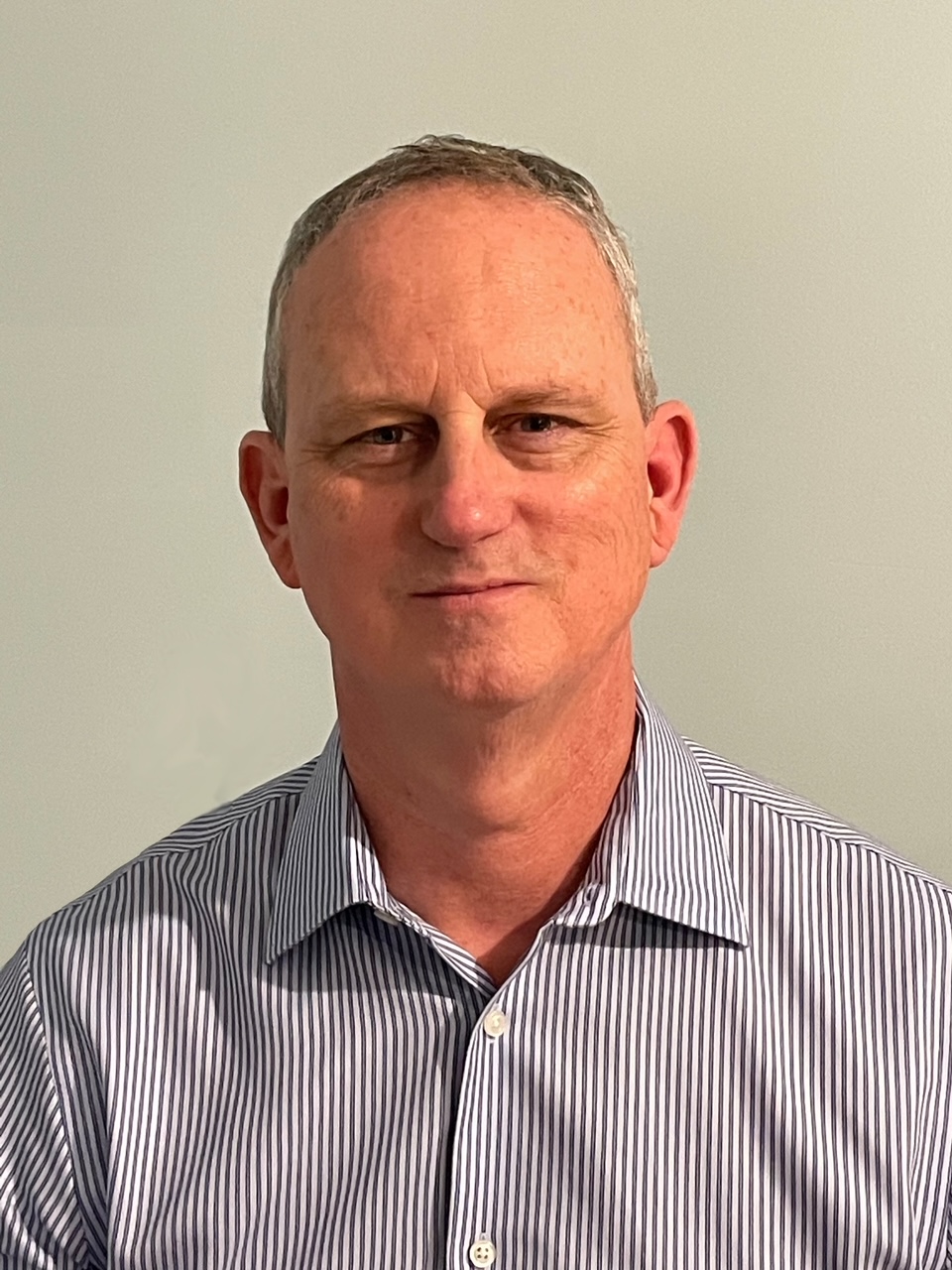
Retired New York City Fire Captain | Educator | Author
Paul Brown is a retired New York City Fire captain and educator. A third-generation firefighter, Brown spent over thirty years as a first responder. While a member of the FDNY Incident Management Team, he deployed to numerous disasters and wildfires throughout the nation. He speaks regularly on managing crises, high-stakes decision making, and organizational change.
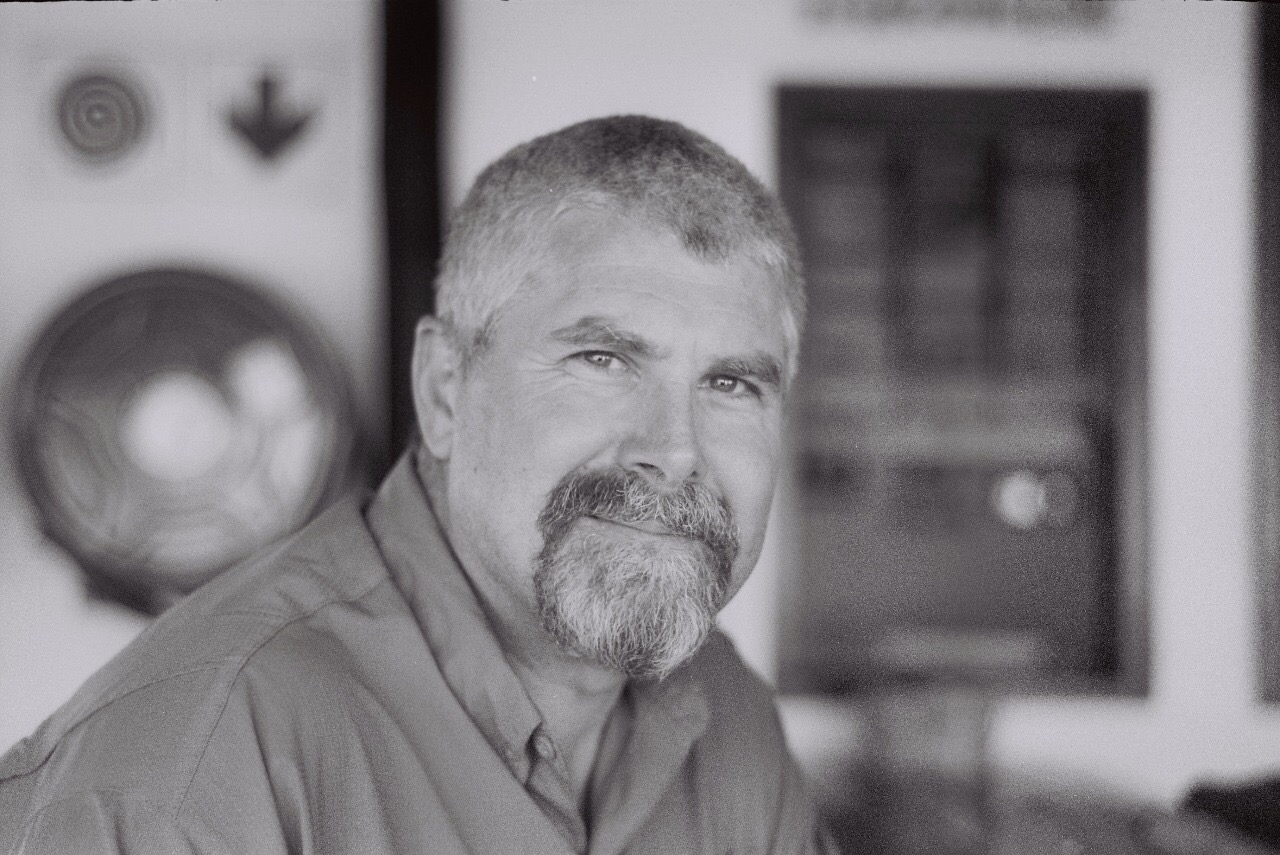
CEO | Author | Coach
André Kotzé is the CEO of AirtimeBA and an executive coach with more than three decades of experience in organizational development and crisis leadership. A South African Defense Force veteran, and former mountain-rescue operator, he works globally, with institutions including the World Economic Forum and the Wharton School.