Apple Podcasts
 Spotify
 YouTube
 RSS Feed
 S6 E36 600+ FDNY Illness Deaths From 9/11 with Guest Ret. Deputy Chief Richard Alles
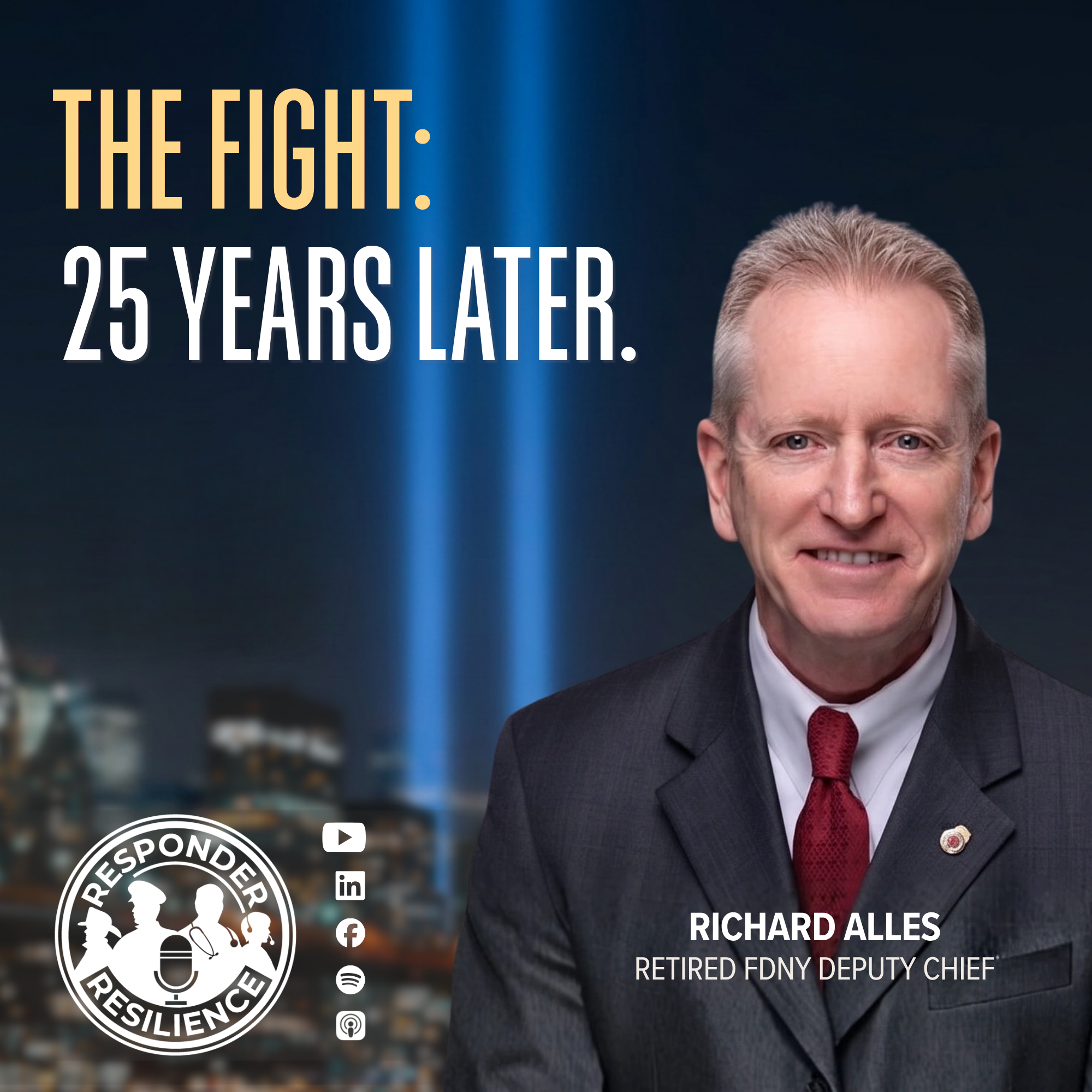
Twenty-five years after 9/11, more than 600 FDNY members have died from Ground Zero-related illness, nearly double the number lost in the collapse itself.
Twenty-five years after 9/11, more than 600 FDNY members have died from Ground Zero-related illness, nearly double the number lost in the collapse itself. Retired FDNY Deputy Chief Richard Alles arrived 20 minutes after the second tower fell and spent nine months on-site. Today, as Director of 9/11 Community Affairs for Barasch & McGarry, he works full-time helping first responders and survivors access the WTC Health Program and Victim Compensation Fund.
In this conversation, Chief Alles covers:
- What leadership looked like in the chaos of Ground Zero's first hours
- How detective James Zadroga's autopsy became the forensic evidence that passed the Zadroga Act
- The current FDNY and nationwide illness death toll, now surpassing 9,000 across all WTC-related illness
- Who qualifies for WTC Health Program and VCF benefits, and the exposure-hour requirements by date
- Why skin cancer, not respiratory illness, is the most common Ground Zero-linked condition
- His own two cancer diagnoses, and why he tells everyone with 9/11 exposure "it's not if you'll get sick, it's when"
Subscribe for more conversations on first responder mental health, leadership, and culture.
YouTube: Responder Resilience
Facebook: ResponderTV
LinkedIn, Apple Podcasts, Spotify: Responder Resilience
Full archive: ResponderTV.com
Contact Richard Alles:
Website: https://www.post911attorneys.com/
Facebook: https://www.facebook.com/BaraschMcGarry/
Instagram: https://www.instagram.com/baraschmcgarry/
LinkedIn: https://www.linkedin.com/company/barasch-mcgarry/
Contact Responder Resilience:
Phone: +1 844-344-6655
Email: info@respondertv.com
Our website with past episodes and more: https://www.respondertv.com/
YouTube: https://www.youtube.com/c/ResponderResilience
LinkedIn: https://www.linkedin.com/company/responder-resilience-podcast/
Instagram: https://www.instagram.com/responder.tv/
This show is for educational purposes only and does not provide medical, psychological, or professional treatment. Views expressed are those of the individuals, not any affiliated agency or organization.
In an emergency, call 911. For mental health support, call or text 988 (Suicide & Crisis Lifeline).
SPEAKER_05
I think about 9-11, I just think about the most difficult, physically taxing period of my life having been there so long. You know, we were fighting with the city, fighting with the federal government about what we were claiming was in the air. And this went on for a couple of years. In the lungs of detectives of drugs who was ground glass, heavy metal, benzene, chromium, silica, asbestos, a perfect toxic brew. And that was the forensic evidence that we used to fight to get the legislation passed. Next thing I know, I'm part of this lobby team with the New York State AFL CIO. Skin cancer is the number one cancer in the 9-11 community. Tell everyone it's not a question of if you're gonna get sick, it's when.
Voiceover
Welcome to Responder Resilience, along with Dr. Stacy Raymond. I'm David Dashinger. 25 years, that's how long it's been since the world watched Two Towers Fall and the City hold its breath. A quarter century since 343 responding firefighters went up those stairs and didn't come back down. Most people think they know that story. They don't know this one. The dust from Ground Zero never really settled, not for the people who worked it. It got into lungs, into bloodstreams, into cells that wouldn't show their damage for years. And today, more firefighters have died from what they breathed at Ground Zero than were lost in the collapse itself. 69 cancers officially linked to those toxins, and the federal program built to treat the survivors is still fighting bureaucratic battles while its patients fight for their lives. Today we have retired FDNY Deputy Chief Richard Allies, who was 20 minutes behind the second tower when it came down. He went in anyway, he stayed for months, and when he retired, he made a vow that he'd spend whatever time he had, making sure every responder who ran toward that smoke understood what it cost them and what the law says they're owed. Twenty five years later, he's still at it, and that's this conversation. This episode is brought to you by Fight Camp, real training on your schedule. Head to jointfightcamp.com/slash RR. And use code RESILIIENTE for 10% off. We invite you to like and subscribe, YouTube, Responder Resilience, Facebook, Responder TV, or on LinkedIn, Apple Podcasts, and Spotify, and our website is respondertv.com. We'll be right back to speak with Chief Allies after this. Ask a first responder who they are, and you're likely to hear I am a police officer. I am a firefighter. I am a parallel. I am a 911 communications operator. Not I do this work, but I do this work. Ask a clinician why they work with first responders. And they may say, There's no fire following helping out. Join us in shaping a culture where mental health, wellness, and leadership are prioritized, not whispered about it. Where support is a sign of strength, not failure, and where no one has to carry the weight alone. Welcome to Responder Resilience. We shine a spotlight on the unseen battles of first responder reality and celebrate the powerful wins that come from the grit of post-traumatic growth. We understand the culture, honor the trust, and bring you conversations from the change makers, passionate about helping first responders come home whole. With your host, retired Lieutenant David Dachinger, Dr. Stacy Raymond, and Bonnie Roomley, LCSW EMT. We'd like to welcome retired FDNY Deputy Chief Richard Allies, who spent 38 years in the fire service, including months at ground zero after the September 11th attacks. A 9-11 cancer survivor and tireless federal advocate, he now serves as director of 9-11 Community Affairs for Barrish and McGarry, traveling the country to make sure first responders know their rights and how to access the benefits they've earned. Chief, welcome to Respond Resilience. Thank you for having me, David.
SPEAKER_02
So, Chief, I'd like to um just start by setting the scene. Let's go back to 9-11. Um, you arrived at ground zero about 20 minutes after the second tower fell. Can you help us understand it what you were facing that day? What did you drive into, walk into?
SPEAKER_05
Well, my day, the day before, I had worked a 24-hour shift. I was a Tang chief at the time. My uh office was in a firehouse in RC, Brooklyn. So I had worked on uh Monday, September 10th from 9 a.m. Got off duty 9 a.m. on September 11th. The night tour of Monday night, September 10th was very busy. We had had a couple of five in this very active area. And then in the morning, um, I could have done a couple of things, could have just put the paperwork aside, you know, went home. Uh I wasn't in a rush. My wife was working, we had a daughter uh nine years old at the time uh in school. So uh cup of coffee in my office. I decided to do the paperwork and I get the news on I'm gonna use junkie and the events of the day, you know, begin to unfold. Commuter plane, and you know, so I'll segue, you know, forward while I'm there that the New York City Fire Department had instituted a total recall. And when I do that, everyone is to respond, active members are to respond to their division. So I was already in Brooklyn, my division was the 15th Division. So we get over there, and the 15th Division is in Brownsville, Brooklyn. And you as you can imagine, it it takes a while to get staffing together, transportation, the city was providing buses, buses we were on sea, tools and equipment and all of that. And while there, obviously we were in communication with the uh command post. So while we were there before we even left, we were made aware of the first collapse. Which is very important, you know, information to have because had we been totally out of the loop, I mean, I don't know how I would have dealt with you know arriving on the scene. But anyway, um, as we're getting uh onto the uh the buses on the way down, we're made aware of the second collapse. So I mean it was speechless. I mean, really, what could you what could you even think of until you got there? So we arrive on scene, and even though you know you have this knowledge beforehand, it's it's almost like your mind doesn't catch up to what your eyes are seeing because we arrive on scene. And now what I'm looking at is uh the only thing I compare it to is maybe the scene of the London bombings during World War II, the devastation, this huge area. Um it's it's it's probably very loud and all, but I don't remember hearing any noise. It's almost like like uh in the midst of a snowstorm because there's paper and debris in the area, and this like this quiet kind of trauma noise is like in in the background. And it wasn't a lot of time to even you know process any of this because we got to get to work. What I expected, I was a search and rescue uh specialist. What I expected was now to be involved in the largest search and rescue operation in our nation's history. So there was no time to dwell on anything, get to work, and and and that's what we did, and that's how our day started. And that was you know, 20 minutes after the the second collapse. Yeah.
Voiceover
Thank you for that description. Um I was there the day after 9-11 uh to help out, and you know, in my mind, it was like walking into a Hollywood movie, like there's the only way I could equate it, the things I was seeing that did not compute with what my daily experience was as a New Yorker. Um just there's no there's no precedent for it. Um I would love to move into a little bit of the leadership piece of this, because the ground zero was a scene that really, as you said, had no precedent. Um no playbook and command structure was probably not functioning as it normally would. So what did leadership look like on the ground in those first hours and days you were there?
SPEAKER_05
Well, the the the commanding chiefs that were still, you know, on scene were able to to to break it down and take over. So we lost many, you know, strategic uh chiefs at at the start after the collapse. And they broke everyone up into teams. You know, they kind of you know, chiefs know who chiefs are, and chiefs were grabbing, you know, uh members, captains, lieutenants, and firefighters, and we were designated uh, you know, grids, so they they had gridded out the area, which is basically almost like four square blocks, but you had an area where you had to begin to search. And it was difficult just using the hand tools and stuff that we had because of the nature of the collapse. You know, it was uh what they call a pancake collapse, it was the perfect collapse. If you could probably put all of this information into a computer and and and design the most perfect collapse that you could have, this is what happened. It just pancake down. So, you know, difficult to get into the voids in all of these areas where you know we needed to get to. And it wasn't really until that evening when the mechanical marines, that's what I call them, the the city had contracted with all of the construction vendors in the area to bring heavy equipment. And when the heavy equipment came in and things started to move at a at a at a quicker pace because you yeah, I had to move I beams and heavy concrete and and all of that. And even with that, I mean I I I fully expected to to to come across treasure troves of of of voids where we could possibly find people, and it was there was there was nothing, none of that, you know, and and this was on this went on for days and very frustrating. But, you know, then like as I realized, you know, a couple of days into this, I realized that you know the nature of the collapse really kind of pulverized everything. And even though we were getting down in their what voids, there wasn't anything that we were, you know, finding as far as finding uh uh humanity. It's difficult to come to grips with that.
Voiceover
Most people work out to look better. You work out because lives depend on it. But the stress doesn't clock out when you do, the calls follow you home, and most workouts weren't built for any of that. Boxing was.com slash RR. Use code RR10 for 10% off. Fight camp, real training on your schedule.
SPEAKER_02
Since then, how has uh dealing with 9-11 shaped your leadership? Like how has it affected you?
SPEAKER_05
Yeah, I mean, you know, when when when uh I think about 9-11, I just think about the most difficult, physically taxing period of my life, having been there so long. There was no glory or honor in in the work aside from you know being there and delivering what we could for the families. Families were always there, keeping the vigil and that kind of, you know, I I I drew energy from that, you know, people uh were waiting to find something, you know, from their from their loved ones. But it was really just nine months of grueling, grueling work. So after that, um, I mean, if I can segue slightly uh to the to the future, when you know, we were, and I was pretty outspoken in the fire department, it was you know well known and and barking about, you know, we were fighting with the city, fighting with the federal government about what we were claiming was in the air. And this went on for a couple of years. And in 2006, something significant happened. Uh NYPD detective James of Droga dies of pulmonary fibrosis. He was a 9-11 uh responder. Pulmonary fibrosis is a very insidious disease that basically suffocates you. But he was a client of my boss now, Michael Parrish. And uh Michael convinced the family to do an autopsy on detectives of droga, which is a difficult thing for a family, you know, to do because of uh the desecration of the body and stuff. And really you get an autopsy when you don't know the cause of that. They knew the cause of that, but they agreed to the autopsy because they knew the significance of it. Now other people were were sick and and and coming behind their loved one. So when they did the autopsy, uh what it uncovered was uh in the lungs of detective Zadroga was ground glass, heavy metal, benzene, chromium, silica, asbestos, a perfect toxic brew. And that was forensic evidence that we used to uh to fight to get the legislation passed. So the year after that, uh a position in my uh union, the Uniformed Fire Warfare Association was opening up. And, you know, it was one of those moments where I was being urged through my. But, you know, I got a big mouth and it's uh put your money where your mouth is. So it was kind of like pushed into doing this. So I ran for election, got elected, and then the then president uh of the union threw me into the deep end of the pool. And the next thing I know, I'm part of this lobby team with the New York State AFL CIO. And uh three days later, I mean, I'm on the west lawn of the White House with uh 100,000 cameras in front of me, you know, even giving a speech. And this is as this is the beginning of the fight. So you know, 2007 until 2010 when we got the law passed for the for the first time. Uh and uh, you know, uh they continued with that. You know, we wanted 10 years and $10 billion. We were able to get five years and five billion dollars. So in 2015, uh still in the union, so still working for the fire department, had to go back to to Washington to fight to get the law extended. In 2015, they extended made the World Trade Center Health Program uh permanent, we're very important, and then they extended the victim compensation fund for compensation another five years. So now I leave the fire department in 2016, and again, uh I had a couple of uh job opportunities uh that I was going to pursue, so a change. And then Michael Barris calls me up and and we have a conversation and you know I went home and talked to my wife about it, and she thought, you know, maybe you might want to give this a chance first because you're so passionate about the 9-11, maybe this is you know your destiny. And I figured, okay, I'll give it six months, and you know, if it doesn't work out, I'll move on to other ventures. And it was it was the right fit. I mean, I I knew right away this was a place that I wanted to work. I was able to kind of basically continue my you know my work in 9-11 advocacy. So then in in uh 2018, the victim compensation fund, which was gonna run out in 2020, was starting to run out of money early. So we had to go back to Washington and was successful yet again. I thought I'd gotten away from this, yes, you know, but it was in Washington again, uh fighting for this uh for this uh law, and they extended the victim compensation fund and made that permanent. So that was it. That was like drop the mic moment program, the fund permanently funded and uh take the stress out of that for people because what I realize now, you know, working at the law firm is the financial stress that that families deal with as a result of the illness of their loved one, and now so many people dying, uh 9-11-related cancers and respiratory issues when they lose their loved one. Again, a financial impact. It's not about the money, but it is about the money because it's how we live. So that's the work continues.
Voiceover
Absolutely. Uh, and just to jump back a step, um, you know, we talk a lot about retirement on this podcast and how you can repurpose your skill set. And you have uh quite an unique skill set which you have been able to successfully repurpose and carry on um you know being of service to firefighters and their families in in this next chapter.
SPEAKER_05
So I get teased by the FDMI buddies, you know, who uh retired and joined their retirement by asking me when I'm gonna retire. And I call this my my St. Peter's account. I said I made a lot of debits uh uh along the way. So if I continue to work, that maybe St. Peter will uh interview me favorably. And uh, you know, as per my wife, my wife says, Well, you're nowhere near close. So they um I'm gonna be working until uh until I get called to the hereafter.
Voiceover
So that's it's all for a good purpose there. So that's that's incredible. Um to Chief, I want to just dive into this a little more um finely, and that's uh I want to talk about some of the numbers. So, you know, the number we always hear is 343 firefighters were killed in 9-11, but as of 2023, that number um who've died from 9-11 related illness has surpassed to 343. And as of when we're recording this in June 2026, where are we at today and where might it be in September?
SPEAKER_05
Well, we're at 446 for the FD and Y. The NYPD is about close to the similar number. So we figure we're close to uh a thousand. And if you just take New York State with uh law enforcement agencies throughout the state, the fire departments throughout the state, that number just for New York is upwards of uh 1,500. Nationwide, you know, it's in the it's in it's in the thousands. Yeah, it's in the thousands. It's hard to get those statistics so much from across the country because when people die, we're not necessarily, I don't know if there's a main database anywhere. You know, so I do what I can uh because I'm always out, people are always asking me. You know, the the federal government has the national numbers where people are actually enrolled in the health program or filed a claim with the victim compensation fund. But I know that there's so many people falling through the cracks, people that don't even know uh, because people responded from all 50 states, uh every congressional district came to New York, and then when it was over, went back and lived their lives. And it's not like any public service announcements are made. So unless and really you're talking about like the survivor community, because with first responders, because you know we have union representation and and we have a cohesive uh network. Uh first responders are in the loop. But for all of these, and and in the survivor community is basically the innocent civilians that were urged to go back to uh to lower Manhattan to to where they lived or where they were. So that's probably 300,000 people. Those people eventually, you know, go other places, and when they die, I mean, if they're not in the program or they didn't know about it, and we don't know about them either.
Voiceover
This episode is brought to you by the First Responder Center for Excellence. Because even the best of us face unexpected challenges. They've got the tools, the training, and the resources to keep you strong, safe, and resilient. Equip yourself at firstrespondercenter.org.
SPEAKER_01
Not everyone is meant to walk this path, and that's okay. But for those who feel the call, for those who read these words and feel not just curiosity, but conviction, know this. By the time a first responder sits across from you, they've likely exhausted every internal resource they have. This isn't a routine appointment, it's their 911 call. I don't know how much longer I can do this job. You won't hear sirens, but the urgency is real. If you choose to take that call, understand what it means. To show up, to stay steady, and to carry the weight of someone who spent a career doing the same for others. This is where the work begins. Be the resource they can count on. Order your copy of Helping the Helpers Today on Amazon, and for bulk orders, email us at info at respondertv.com.
SPEAKER_02
In the intro, I was astounded to hear the number um 69 cancers and counting. So I would like you to comment on that. And um, you know, so for in responders and their families that were that have been affected or suspect that they were affected, what benefits are available to them? If you could just um ferment on both of those.
SPEAKER_05
As they built into the law, uh new conditions get added. There's a steering committee that evaluates statistics and stuff. So when the law first passed in 2010, cancer wasn't even included. So in 2012, they started answering and cancers. And fortunately, it was the work of uh Drs. Kelly and and Brazant at the FDMY because they were able to use the FDMY members as as a uh set point because we all received the full medical examination before getting on a department. Each year we're tracked. So they were able to accelerate because you know you have latency period with cancers, and and the medical experts were telling us we could expect to see cancers in 10 or 20 years uh after after 9-11. And we started seeing cancers uh immediately. Uh leukemia, all of these, you know, crazy cancers. And even though you know they they made 69 cancers technically uh covered by the law, there is a category of rare cancer. And I can assure you that we have never had a cancer from from from my law from representing a client that has a cancer that also had proven 9-11 exposure that was denied by the federal government. So that's critical because people think, oh my god, what it is my cancer covered. If you can prove your uh your your your exposure, then yes. And and that's the requirement, and that's why we're always you know urging people. We started a few years, uh it's almost five years ago now. There was a time. Uh that you could not file with the victim compensation fund to get legal paperwork. And by that, you have to prove your presence. So whether that's with work documents or uh affidavits from eyewitnesses, you know, people that that volunteered to come down. Well, if we were there with people that know you were there, uh and you know, you weren't there in an employment capacity, you just there with a volunteer, you have to get these, you know, eyewitnesses. Well, as time goes on, if these people uh pass away and aren't there and you're not sick, what can you do? So Michael Barris and I were able to convince the special master of the victim compensation fund to timestamp affidavits and legal proof of people for their 9-11 related exposure. So they're not sick now, but they have all of their paperwork in place. So God forbid if they come down with an illness, it's already, it's already there. You know, the time to do that. I mean, it's a shame. And I know people we probably, some people probably did, you know, lose out on benefits. They they got a cancer and they couldn't prove that they were there. Well, it's it's unfortunate. But the benefits that are there, the health program provides uh complete free medical care for their 9-11 related conditions. So it's not health insurance, like knowing, but 9-11 is basically everything in the respiratory family and all of those cancers. So if a person is in the program, they get full uh full treatment. Then on the other side of it is the victim compensation fund. Then a person can file a claim with the victim compensation fund for monetary compensation. And if that condition has disabled them, if they're working and they can no longer work, then there's an additional component to that for financial uh support for the for the family, which is instrumental. And then there is a uh a death benefit. So again, even if a person has received uh an award for a financial settlement for uh a cancer or a respiratory illness, and then they later die of that same condition, then their family is awarded a death benefit. So the the federal government, even though you know they were wrong and telling us that the air was safe to breathe, I never had any doubts, but they contaminated everybody else by telling her that at least this fund was was created and and families, you know, can avoid bankruptcy and destitution by having this fund in place when they lose their loved ones.
Voiceover
Yeah, thank you for walking us through that. And uh, you know, to your point, I I ran into a guy um on 912 down at ground zero who I knew from the music business who happened to be there, I think he had an EMT search, so he showed up to help out, just you know, saw him, shook hands and said, you know, a few words. A couple years later he contacted me because he needed to have an affidavit that he was down there, and I did a you know statement for on his behalf. But yeah, to your point, um, you know, if if you didn't have that ability to find someone who could verify your uh your being there, uh would speak to it, then uh it sounds like it was not not an easy process to get uh get the benefits, which oh yeah, and we're always preaching this to people like you know with 25 years removed, you know, you if you were there and you don't have and paperwork, right?
SPEAKER_05
We need you need to do it now because you can't account on people that can prove that you were there to be there when you need absolutely.
Voiceover
So, Chief, walk us through a little more of this, like um terms of the program and the victim compensation fund. When people want to look into this, like how do they know if they qualified and how do they get enrolled?
SPEAKER_05
Well, if they qualify, I mean, uh, so there's exposure requirements. So person that was present on the scene and can prove that on 9-11. Uh it's it's it's that's that's good enough. So they were people that you know were working, that were in the area, even if they never returned, if they were there on 9-11, they're covered. Exposure hours from September 12th to September 15th of 2001 is four hours. If a person was there from between September 15th to September 30th, there's a 24-hour exposure requirement. And then from October 1st of 2001 till May 30th of 2002, when the site officially closed, that person would have to prove 80 hours. Which seems like an extraordinary number of hours, but it's not. That was put in for people that lived or worked in the downtown area. When people went back to work, as they did with later, you know, 40-hour work week. So there's the uh four hours. Right. So those affidavits that people have, that's when, you know, a person say I was there at such and such a time, and whoever their eyewitnesses are will document that they are. And all this is investigated by the Department of Justice, you know, it doesn't, and there's zero fraud if not in this, you know, for a federal program that's kind of extraordinary when you think about fraud and social security fraud and all of that stuff. Yeah, uh, there's uh there's nothing. So once a person is able to prove that, then they get an enrollment in the World Trade Center Health Program, which uh the federal government in in uh all the states outside of New York uses a uh an insurance company that contracts with various medical clinics and hospitals in all of those states and designates them as a World Trade Center Health Program site. So that person would be assigned to a clinic nearest their home and they can go for an annual medical exam. Now, if they come down with a condition, they don't have to necessarily be diagnosed by a World Trade Center Health Program doctor with a condition. But if they are diagnosed with a 9-11 related health condition, let's say someone comes down with uh with a cancer or they get diagnosed with asthma and it's not from the World Trade Center, they just have to supply the World Trade Center Health Program with that medical documentation in order to get certified. And what being certified by the health program, which is a requirement by the victim compensation fund, what that does, it entitles the person to be able to file a claim with the victim compensation fund, and then that's the work that we do with the law firm. And then also, if there's any prescriptions or any medication that's required to treat that person of their illness, then that certification allows them to get that prescription fill 100% uh free of charge, which is kind of extraordinary because you know most people legal with prescription coverage and the health insurance plan does do not have uh full coverage and and is annual cap and and all of that. So it's important. Some of these medications can be uh very, very uh pricey.
SPEAKER_02
That's extraordinary. So really I'm impressed with how much um you know your input has brought you know both of these programs along.
Voiceover
Hey, firefighters, let's take a moment to talk about something important. There's a new app built by firefighters for firefighters, and it's not just another wellness tracker or generic resource hub. It's called Crackle. You've probably seen the magazine, but this is the next evolution. The app is about one thing helping firefighters not fail. Not just on the job, but in life, in your health, your relationships, your mindset, and your longevity. That's why Crackle is designed to meet firefighters exactly where they are, with resources that make sense, are easy to use, and actually respect your time. You can download the app now for free as a legacy member. That means you get early access to exclusive content tools and updates as they drop. Use the QR code on the screen to download the Crackle app, or you can download it from the App Store or Google Play and stay in the fight. Not just at work, but at home and in your own head too. Because your best days shouldn't be behind you, they should be ahead of you.
SPEAKER_02
How is the um the World Trade Center program doing now? Is it still thriving? Is it struggling? What's what's happening there?
SPEAKER_05
Yeah, you probably saw in the news. It it it seemed like it was a struggling. So what happened when they when they made, let's go back, victim compensation fund. So in 2020, when they made that permanent, it was backed by the federal treasury. So it could never run out of money. Unfortunately, with the World Trade Center Health Program, what they did, it comes up in the federal government budget. And it's budgeted by the consumer price index. And unfortunately, the cost of health care rises higher and faster than consumer pricing. So each year it was operating at a deficit. So it recently did, and in the last six months at the federal level, they were able to budget the money to bring the uh World Trade Center Health Program back up to full funding. So, you know, bringing up the stress factor, people were worried because had this not been resolved, then the health program would have been frozen until it was resolved, and anybody new would not be able to get into the program. Anybody who was already in the program and newly diagnosed wouldn't be able to get authorization for medical treatment itself because the program was you know frozen, and that's all that's all been resolved. So again, I wasn't part of that. That's strictly, you know, our elected leaders that uh, you know, especially the ones in New York that that knew this was going on. It took a it took a little longer than I expected it to, but that's all been resolved. So that's it, that's in good shape.
Voiceover
Okay, thank you. And uh, so we're 25 years out. Um I would invite you to speak about your cancer journey. We were talking uh offline about um, you know, I've had my cancer journey as you have. So, what's one thing every first responder who is anywhere near those sites, or anyone who loves someone who was near those sites, what do they need to hear today?
SPEAKER_05
Okay, I mean, oddly enough, uh skin cancer is the number one uh cancer in the 9-11 community. Turns out that the pH of the toxic dust was the well on adrenal. Wow. So so many people. And you know, we all think we've been conditioned that it's sun exposure, skin tone, all of that has nothing to do with it. So I urge everyone, any first responder out there that has 9-11 exposure. If you've never had a full vitamin skin check, you need to go to a dermatologist and get yourself checked out. The World Trade Center Health Program does not screen for that, but the Victim Compensation Fund compensates for non-melanoma skin cancer and skin cancer. I've had uh two conditions of non-melanoma skin cancer uh as a result of my exposure. And what I tell first responders all the time is uh, you know, I lead a healthy lifestyle, exercise, eat right. But I tell everyone, you know, you can live a healthy lifestyle, and I'm sure that's very helpful, and that's the way you should be living. But because of your exposure, you can't prevent yourself from getting sick. And I tell everyone it's not a question of if you're gonna get sick, it's when. So, not to sound like a hypochondriac, but you need to be stay on top of your health and go to the doctor. If something's bothering you, don't poo-poo, especially first responders. You know, we're very good at taking care of other people, not so good about taking care of ourselves. So, you know, don't put something off. Don't be afraid. Go, find out it's nothing. Okay, great. So in 2020, in the end of 2023, um, I got picked up on a on a blood test for an elevated uh PSA reading, which is an indication of uh of a problem with the prostate. We were sent for an MRI. The MRI came back, highly likely for uh prostate cancer, which is the it for men now after skin cancer is the number one uh cancer. So then I was scheduled for a biopsy, and the biopsy confirmed that um that I had that I had prostate cancer. But it was found very early, and the significance of that, I mean, I could sit here and be a drama queen and say, oh my God, it saved my life. I mean, in a way it did, but truly what it saved me was a lot of grief. I was able to go for consultations, you know, with the various forms of treatment with my wife, not with a gun to my head because I hadn't been diagnosed with a late-stage cancer, and I wasn't even treated uh until nine months after my uh official uh confirmation of cancer. Scheduled it when, you know, it was a good point in my life at home and at work. And, you know, the doctors assured me, no hurry, we're okay. And uh and the rest is history. I mean, I got through that and uh I use it as a as a as a talking point when uh when I meet with first responder groups, I you know, listen to me. I mean, that's you have to be on top of your of your health. And after that, I mean, uh, I mean, I have a lot of horror stories I could share. I know this isn't the platform for that of people that weren't on top of getting uh themselves uh checked out. Colon cancer is another one. Uh and uh, you know, I had a uh last year had a uh New York City police officer retired, a man in his 50s, got diagnosed with stage four prostate cancer. And in our conversation, uh he admitted that he hadn't had a PSA test in 10 years. Well, uh he's now deceased, and his widow is uh is our client for uh a wonderful death. A death that should he had cancer several years before it was foul. And it goes on and on with that. I mean, I have a lot of great stories like mine. Sure. I'll find me something early, but it's the it's the bad ones that I use to kind of scare people a little bit and just push them into action.
Voiceover
Yeah, yeah. I mean my case I was uh walking around with stage four cancer. I had no idea until I went to get a haircut, and the barber noticed a lump on my neck, and I was completely unaware of so that it led me to get some diagnoses, which was like you're on the fast track, like you will gotta get into chemo radiation and eventually surgery, like now, like within days. So yeah, it's serious um when when it gets that far along. Right, right, right. Scary time for you for sure. So, Chief, anything we didn't touch on that you want to speak to?
SPEAKER_05
No, good. I'm glad that the the doctor didn't analyze me and no, not at all.
SPEAKER_02
I'm very impressed with you and and your advocacy for anybody that's been exposed, you know, to 9-11.
SPEAKER_05
So Yeah, it's uh I just I don't know. I I didn't know I had it in me, and it's just something that uh just you know resonated at the time. And then I just I just went. So I guess, you know, God found you know that the path for me, you know, make a plan and God laughs. I had alternate plans, and no, everything kept returning to 9-11, and I live 9-11 every day, and I'm uh a resource and sounding board for uh, you know, for everyone. Oh, yeah. Uh and that's that's my that's my code. I live by it, and whether they're you know, first responder or not, right? Because there's many innocent victims out there, but yeah, so I'm the first responder community, and and I give first responders no quarter when they tell me they're not in the program when I first talk to them and get a lecture. So they'll get that. And then okay, once that's done, you know, my chief's helmet is off, and then we move on to getting uh set up for the help program and the victim helped. Thank you for you know doing what you're doing because uh every little bit helps. Uh many people will say this, and and someone it will click with someone that thinks that you know that has to get themselves eaten.
Voiceover
Right. That's why we do it, you know, and it's also building on the lineage. Um, we've had Danny Newton on the show speaking about New York telephone fire, frankly, and um get into uh when he it was uh owner of the uh suspenders downtown.
SPEAKER_05
It was a firefighter hangout back in the day when I was a young uh firefighter and an ongoing joke with with Danny Newton. They told him that you know when the Mark Flow had an outstanding bar tap. And in the last year of his life, he gave me an official at uh Sloan Kettery to see him, and he let me off the hook on the on the bartender. Released me from my debt. I was like, thank God. That's a beautiful, that's a beautiful big. And yes, he was an extraordinary advocate for that telephone company fire because when I was a young firefighter at the fire department um medical office, when you went down, there were in those days, everything wasn't electronic. You actually got a physical file and you would hold it. There was a stamp on the file of the phone company fire, uh, first respondent, you know, firefighters that were there. And if you saw someone with that foliar on your lap, they were considered dead men walking. You know, it was traumatizing. And Danny, you know, spoke of that. It's terrific. And the fire department seemed to run away from it for a long time. And thanks to Danny, it came back and it was was not a shameful thing. No one understood the dangers at that time. And now, if you go to the fire department training academy, in the trophy cases, all of this memorabilia dealing with the telephone company fire. So thanks to Danny's advocacy, it came back on the horizon because everybody needs to learn. There's new generations of firefighters coming into the fire department that need to know about the phone company fire, uh history, 9-11, all of these firefighters that we have now that weren't even born on 9-11, you know.
Voiceover
So Absolutely. Yeah, and there's uh there's a couple of books um either haven't been released or have been released or are coming out shortly, which um also talk about that fire in terms of uh one of them's one of them's called 30 Fires You Must Know by uh Billy Goldfetter and Frank Leib. And uh the other one, um, it's like part two of The Mouth of the Dragon is coming out shortly, and that's also talking about these fires with toxic um toxic materials that um basically killing firefighters.
SPEAKER_05
So um just great to see you know being able to build on the legacy of Danny Newton and all the um all the work that he's done to advocate for firefighters and like say one more thing about Danny, one of the handsome best guys ever to wear the uniform, the FDNY, Danny Newton, handsome, and even though I'm a man, I can I can see beauty in a man if he was a handsome guy. I wish I had that mustache.
Voiceover
It was the classic truly an exceptional human being. Um thank you all for all you do. Thank you for being here and sharing this, and we can't wait to share it out. I know it's gonna impact people that need to hear this information. Thank you both. Appreciate it. Remember to like and subscribe, YouTube respond resilience, Facebook, responder TV, LinkedIn, Apple Podcasts, Spotify, and our website is respondertv.com. Till the next time, stay safe, be kind to yourself. Take care of the colour.
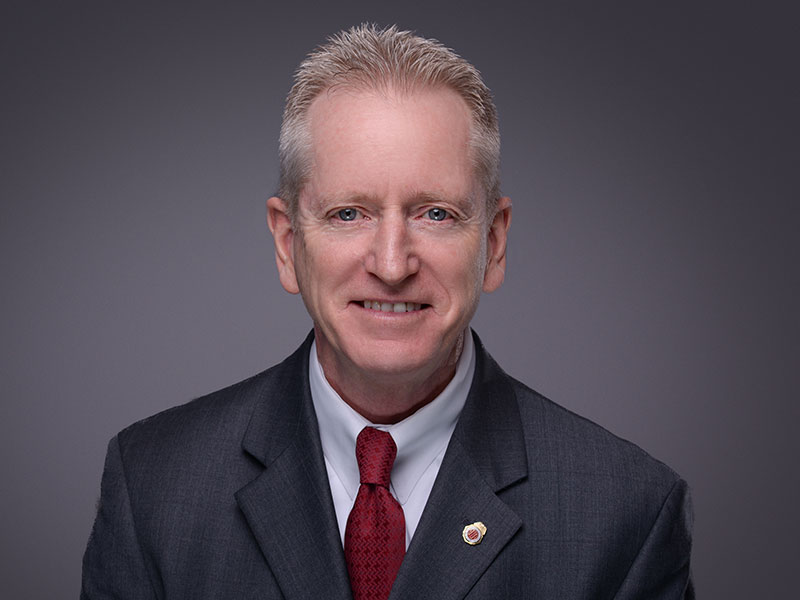
Retired FDNY Deputy Chief | Director of 9/11 Community Affairs for Barasch & McGarry
Retired FDNY Deputy Chief Richard Alles joined the New York Fire Department in 1979, rising to Lieutenant in 1987, Captain in 1993, and Battalion Chief in 1999. On 9/11, he responded to the World Trade Center and was part of the team supervising rescue and recovery efforts for months after. He was promoted to Deputy Chief in 2007 and, that same year, was elected to the Uniformed Fire Officers Association Executive Board. He retired in 2016 and as a 9/11 cancer survivor, today serves as Director of 9/11 Community Affairs for Barasch & McGarry, traveling the country to educate and support first responders facing 9/11 illness.