Apple Podcasts
 Spotify
 YouTube
 RSS Feed
 Condition Critical: The Crisis Within EMS with Guest Anthony Almojera | S5 E48
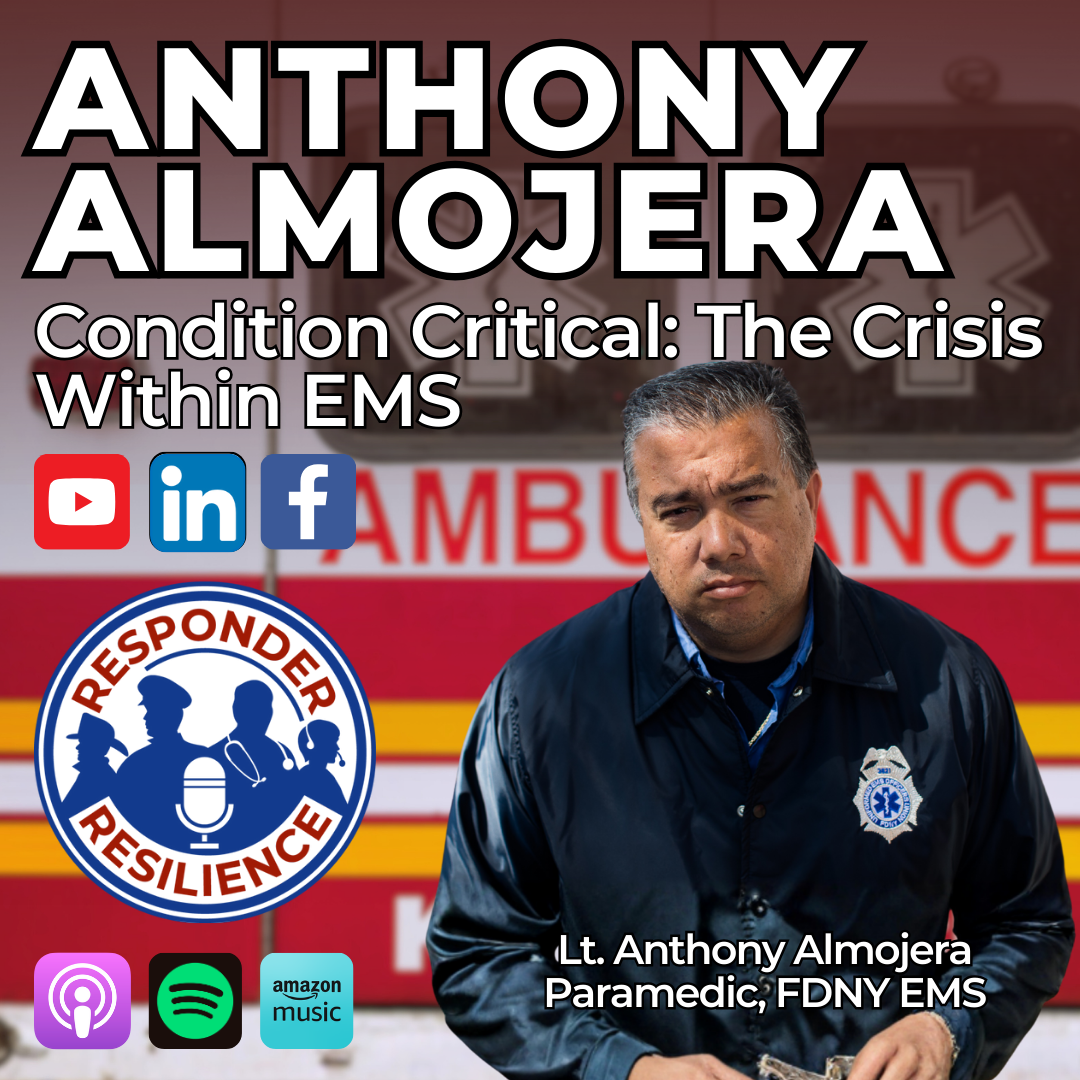
Join us for an eye-opening conversation with Anthony Almojera, a 20-year veteran Lieutenant and passionate advocate for EMS, as he sheds light on the harsh realities of a profession that battles for recognition alongside firefighters and police, exploring the mental health toll and alarming turnover rates that have surged in the wake of the pandemic.
In this episode, we pull back the curtain on the often-overlooked world of New York City’s Emergency Medical Services. Join us for an eye-opening conversation with Anthony Almojera, a 20-year veteran Lieutenant and passionate advocate for EMS, as he sheds light on the harsh realities of a profession that battles for recognition alongside firefighters and police, exploring the mental health toll and alarming turnover rates that have surged in the wake of the pandemic.
Anthony shares his firsthand experiences, revealing the challenging call volumes and the dire consequences of a system in crisis. With his candid insights and powerful stories, get ready for an unfiltered look at life on the front lines of EMS.
Contact Anthony Almojera:
Facebook: @anthonyalmojera
Instagram: @anthonyalmojera
Contact Responder Resilience:
Phone: +1 844-344-6655
Email: info@respondertv.com
Our website with past episodes and more: https://www.respondertv.com/
YouTube: https://www.youtube.com/c/ResponderResilience
LinkedIn: https://www.linkedin.com/company/responder-resilience-podcast/
Instagram: https://www.instagram.com/responder.tv/
Facebook: https://www.facebook.com/responderTV/
When I first came on the job in 2004, we averaged between 2,500 and 3,000 calls a day in a 24-hour period. The pandemic comes, we were doing six to seven thousand calls a day. I'm losing 10 to 15 people a week, according to the fire department's numbers, not five. But we do 80% of the call market that have to pay for a fraction of the benefits. So it's created a revolving door and a exodus crisis to the point where roughly 70% of my current workforce has five years of less experience. And we have to find enough to help the strength to reach out to the people who understand us and acknowledge this function for the first time.
SPEAKER_09Welcome to Respond Resilience. I'm David Dashinger. Join us as we dive into the world of New York City EMS with Anthony Almojera, a 20-year lieutenant and advocate for change in a system often overshadowed by fire and police. We'll uncover why EMS isn't given the same respect, the staggering mental health toll on first responders, and some of the shocking turnover rates post-pandemic.
SPEAKER_06Thanks to our resource partner, First Responder Project, whose no-cost First Responder Retreats offer you a chance to reclaim connection and learn vital skills. This isn't just a retreat, it's a lifeline to keep you mentally strong at work and emotionally present at home. Take a stand for your well-being and the connections that matter most. Sign up now for your FRP retreat. Learn more and register at firstresponderproject.org.
SPEAKER_10There's a new app built by Firefighters for Firefighters, and it's called Crackle. Download the app now for free as a legacy member and get early access to exclusive content, tools, and updates as they drop. Get the free app at crackle.responderTV.com.
SPEAKER_06Thanks also to our resource partner Fight Camp for free shipping and a free monthly membership. Go to joinfightcamp.com slash shop and use the code R R P O N E.
SPEAKER_09Remember to like and subscribe, YouTube, Responder Resilience or Facebook, Responder TV, LinkedIn, Apple Podcasts, Spotify, and go to our website responderTV.com for past episodes and guest information. We'll be right back to speak with Anthony after this.
SPEAKER_07In this family, more of us died by our own hands and by the hazards of the job.
SPEAKER_00In this family.
SPEAKER_07In this family, in this family, I'm still resilient.
SPEAKER_08Co-host retirement David Hatchinger, Dr. D. T. Raven, and buddy, LCSW, EMTB.
SPEAKER_09Our guest today is Anthony Amlogera. He's an EMS lieutenant and he's also the vice president of Local 3621, the New York Fire Department EMS Officers Union. With 20 years in the New York City EMS system, he authored a book, Riding the Lightning: A Year in the Life of a New York City Paramedic, which was published by Harper Collins in 2022. He's a Brooklyn native and an avid traveler. He's also a practicing Buddhist and a board member of the EMS FDNY Health Fund, which supports EMTs and paramedics facing financial and emotional challenges. His experiences during the COVID-19 pandemic fueled his writing and advocacy, leading to features in major media outlets, including the New York Times and CNN, which highlighted the disparities faced by FDNY EMS compared to firefighters and the NYPD. Lieutenant, warm welcome to respond to resilience.
SPEAKER_03Thank you for having me. I'm so glad to be here.
SPEAKER_02We're grateful for the time you carved out to be with us today. Thanks so much.
SPEAKER_03Thank you.
SPEAKER_02So we always like to go back a little bit and ask people how they got into their field. So for you, uh, where was your start with EMS and how did you get to be where you are today?
SPEAKER_03Yeah, I wish it was something, you know, crazy, like I saw a crazy call and I watched the the medics go underneath the truck and they, you know, were putting body parts together. And or like, you know, I have a lot of people I work with. Oh, I had an ambulance call for my family. And no, for me, I was a cook. And I was sitting there in a bagel shop working, making bagels, and these EMTs used to come in in the morning real early, so the store was still quiet, and I'd listen to them talk about what they did the day before, you know. And at the time I wanted to be an actor, and that's what I was studying and trying to uh attain. And I just had this organic thought that that would be a good job for an actor. You know, I go into homes, I see people in the raw emotionally, I see how people live, I see how people dress, I see, you know, just being observational. And I was solely looking at that. I didn't know what it would take to be an EMT. You know, I figured there would be a a band-aid at some point. But it was just me just like, you know, trying to see if I can pull from all those experiences. And so this guy, I asked one of them, they said they had a school in Queens uh out of a volunteer company, and I went. And uh I went started December 2001. I came out in May 2002. I got hired by a transport company. I wasn't really liking it, it wasn't what I thought it would be, just taking people from the hospital home. I enjoyed dealing with people, but it wasn't what I was looking for. And then uh I had applied to the fire department and they called me, and I was in February. I said, all right, I'll give it a try. February 2004 I got hired, and I've been like a fish in water ever since. Now I just act like I know what I'm doing here.
SPEAKER_09It's it's so great how these things uh, you know, we don't know until we get into it how how much of a good fit it is. So I love that story. Um, to give you a little perspective, I lived in Manhattan from 1981 until 1999, and I have a recollection of every hospital, probably back in the 80s, every hospital had its own ambulance service. Um give us a little perspective on EMS in New York City. When did medics actually hit the street and what did EMS look like at that time?
SPEAKER_03So uh uh most of the audience, I imagine, will know that EMS came around in the late 60s, right? The white paper, they said, Hey, what if we did something pre-hospital to make sure that they survive and get to the hospital? So the Department of Traffic started these studies and they said, let's let's do this, let's create a curriculum. And what I always found fascinating that EMS was the genesis of the trauma centers and specialty centers, you know, because I worked with a medic when I first came on the job who started in New York City EMS in 1970 as a motor vehicle operator, not even medically trained. And he said they would go in this bread box uh truck where you know it looked like they were delivering bread and transporting patients, and they would go with a nurse or a technician and they would go to a shooting and they'd throw this guy in the back of the ambulance, and then they would ring the doorbell and the podiatrist would answer. And we'd say, Hey, we got this guy shot five times, and the podiatrist is looking at his feet. So, you know, it the the the the amazing things that have come out of EMS, such as trauma and specialty centers, and so the first medics in the country, I mean I'm sorry, the first medics in New York City rolled out out of Einstein uh college up there in the Bronx, and they rolled out in the early 70s. And that was when EMS was under Health and Hospitals Corporation. We called them the Green and White Days because they wore these, in my opinion, not good looking uniforms, but they were, you know, why would anybody wear a white shirt in a job where you can get extremely bloody? I don't understand. Uh that's what they wore, and you know, there was a certain flair, you knew who they were on scene, and so EMS in New York City, as we know it, is about a little over 50 years old. Medics are about 50 years old right now, and uh just to give you a little side note, I have a lieutenant who I work with, he's in the Bronx, his name's Roy David, he's in his 52nd year.
SPEAKER_04Wow.
SPEAKER_03That's insane to me, but he's as old as he's almost as old as New York City EMS. So, and to say that I've been a part of it for 22 years now is special, you know? It's really something, it's been a wonderful experience.
SPEAKER_02It's pretty incredible. And you know, you referred to the hospital-based uh services, you know, like Vinny's and some of the others. Um fast forward a little bit, so present day 2025, um, some of these hospitals have closed, some of those services were um taken over by others. Can you give us an idea of the landscape now, 50 years later?
SPEAKER_03Yeah, so back in the day you had city EMS, and then you it was augmented with hospital-based EMS services, and roughly with some variations, it's been a 60-40 split either way, right? Uh in the early 2000s, as people may remember, Medicaid, Medicare changes came in, hospitals were starting to go belly up. Uh, in my career, I think there's been 12 hospitals that have closed in New York City, and that took a lot of those hospital-based systems out. Some of the hospitals that used to run ambulances figured they would go with a third-party provider. So there's private transport companies that are working for them, and it has swung the other way. It's about a 65-35 split with the municipal units being the dominant ones now. And as of last week, Lennox Hill and the Northwell system is pulling out. So they took their ambulances out of the certain out of the system in Manhattan and Staten Island. We expect they'll probably take it out of Queens. And it's not a profitable business. Medicine, emergency medicine shouldn't be for profit, in my opinion. Obviously, you want to be able to pay some bills, but that should be funded by the government. And so, what these systems are learning is that it's not profitable if you can't drive everybody back to your uh hospital, you know, patient steering is frowned upon, etc. And they're starting to pull out, they won't be the last.
SPEAKER_06You're trained to help people heal, but first responders, they carry trauma that's buried under silence, stigma, and stress. Helping the helpers gives you the framework to connect, to speak their language, earn their trust, and actually make an impact. From the experienced team and clinicians behind the Responder Resilience podcast, this isn't theory. It's real-world support for the ones who need you most. And this book isn't just for clinicians. If you're an agency leader, peer support team, chaplain, EAP, wellness program coordinator, or family member, helping the helpers will equip you with the tools, language, and insight to make a difference. Be the resource they can count on. Order your copy of Helping the Helpers on Amazon today.
SPEAKER_09Anthony, I'd love to dive into this piece with you because um we talked about it offline recently, and that's um the public perception of EMS versus fire and and PD. Um, why do people not regard EMS the same, kind of in the same way as they do with fire and and police? And and also is that the media play any role in that perception?
SPEAKER_03Sure, the media plays a huge role. I mean, there's a there's one hitch to EMS that PD and FIRE doesn't really fall, they don't really fall under, which is HIPAA. So sometimes I'm a little hamstrung about telling you what I did because there's a person involved. Whereas FIRE can say, look, I was on that 10-story building and we knocked it out, and PD can they love doing a perp walk. I can't do a patient walk, you know, that would be kind of cool. Like here's the patient I had that was dead 10 minutes ago. But you I I think in just doing this for so many years and talking with people, there's a stigma around health care and people's own personal health that can be exploited. So if your house caught on fire the next day, you would be at work saying, you know, my house went on fire and these firefighters came and they pulled me out and they put the fire out, or if you walk out of your house and you were attacked and there happened to be a cop around and you were saved by you would tell that story. And so that story gets told, and that story gets told by media and it gets picked up. But if you had a heart attack at home and you call 901 for the ambulance and we come and we save you, I'm going to bet dollars to donuts that you would not tell that story, or you would be hesitant to tell the full story. Because if you go to work and you say, you know, I had a heart attack, you know, last night, and these medics saved me, while somebody they would go, Oh, are you okay? Somebody may say, you know, Dave and Bonnie, they had a heart attack. They can't do the job anymore. Your boss may sit there and say, Hey, you know, we gotta lighten your load. You and all of a sudden you may it may it in this country illness is deemed weakness, and then it can be exploited. And so people are quick to share what we do. And the media it doesn't feel heroic what we do. It's precision, it's not smashing a window, it's not chasing somebody on foot who robbed a store. It's me going in there as a clinician, it's in the title as a clinician. I'm very clinical and sitting there saying ABC, let's go and find out what's going on with you. So it doesn't feel sexy to media, and it's crazy to me because I always I deal with a lot of media and I always have this running beef with them. You always show the firefighter with the baby, but you never show the picture, me in the picture, who they're handing the kid to, or who's the cop handing the kid to. So I think because technology MS is to acknowledge mortality, it's to acknowledge human frailty, and we as a society, especially in America, do not like to do that. And so most people have an unrealistic expectation that the house can spontaneously combust or that they're gonna be invaded by somebody and robbed and chained up. That's very, very, very low possibility. But what is a high probability is you having a stroke or you having a heart attack, or you falling down your stairs, or you getting hit by a car. Those numbers go through the roof, and the data supports that. And we just don't, for some reason, we just don't sit here and want to celebrate the people who are dealing with that.
unknownRight.
SPEAKER_02Well, those are interesting points, and I I think it's great that you're shedding light on that here. Um it's very interesting the dichotomies that exist, right, in all of these branches, um, and as many similarities as there are. There are so many differences going on, too, behind the scenes. Um, can you talk a little bit about the call volume pre and post-COVID? Um, because we know that's part of it too.
SPEAKER_03Yeah, that's uh that's huge. When I first came on the job in 2004, we averaged between 2,500 and 3,000 calls a day in a 24-hour period. Uh there would be spikes, you know. Everybody knew New Year's was gonna be a spike, and a heat wave or uh the blackout, you know, but uh abnormalities or anomalies. Your average was 2,500, 3,000. The pandemic comes, we were doing six to seven thousand calls a day, uh treating six to seven thousand patients a day. And I'll give I always like to use as a during 9-11, there was about 6,400 calls, but there weren't 6,400 patients. That was you and me calling for dad in the trade center, you know. We were just repetitive in call volume. But during the pandemic, there were 6,400 patients. And I think two things happened. The pandemic showed the house of cards that the American healthcare system is built on, it collapsed. Um and it's only degraded since then. So when you don't have preventative medicine, you start to have an uptick in uh reactive medicine, which is the emergency rooms and EMS. And you know, we're a service industry, right? We don't like to think of ourselves copsifier EMS, but we are, we're a demand service. And I think what happened was during the pandemic, you had so many people call 911 for the first time, now they know it's a service. So instead of like in the old days, you know, I remember coming home when I was a kid, I I thought I had a broken ankle. My ankle looked like I was smuggling a softball in it. And I went, I lipped home. My mother said, go lay on the couch, we'll put ice on it, and it wasn't getting better. And she's like, Alright, I'll call a cab. So my brother-in-law and my mother trying to lift me into a taxi. But why do that nowadays? Because during the pandemic, somebody called 911 for the first time, and now they know, hey, we'll call 911 for that. And those two nice people, they'll come, they'll take out blood pressure, they'll help me get into the back of the ambulance, I don't have to worry, I can get medicines. And I think that's the biggest surprise. You know, as people who are in the business, and we go to someone's house and they go, What are you doing? Why aren't you just taking me to the hospital? And I go, Well, I have these 60 medications to sit here and play with and figure out what I want to give you. And I have this cool thing where I can take a look at your heart, the EKG, and they go, But you're not a doctor. And I said, I know, I brought the emergency room to you. Maybe I get to leave you home. Which is always really, you know. So I think that's where it is. I think that since the pandemic, people have learned 911 is a service, and you have a crumbling healthcare system. And so that's a recipe for disaster because there's no if you're gonna have 911 explode, then you know, it's economics one on one. You should I've doubled my call volume, I should double my workforce. I'm losing my workforce.
SPEAKER_09Right. Right. And just to dovetail into that, um, Anthony, what what are you seeing in terms of mental health and suicide tolls that are being um experienced by EMS? Um the people that you work with. Than people you see out there, what's the effect that you're noticing?
SPEAKER_03So studies have shown for years that EMS providers have high rates of suicides to begin with. There was a study done by um uh one of the colleges, and I'm sorry, but the name of the paper just went out of my head. But uh there's been numerous studies shown that EMS has high rates of suicide, and we have the highest rates of suicides amongst non-worth providers per capita. There's more cops that commit suicide, but there's tremendous, a tremendous amount more police officers in this country than EMS providers. Uh so I there's been suicides throughout the years of my career, but since the pandemic had spiked. Uh, I've had 14 members since 2020 commit suicide. I've had uh I personally am monitoring 39 members who have called me saying, hey, I feel I have suicidal ideations. And that's only the people that have reached out. There's been many others, including myself. In 2021, uh the end of 2021. Um I had lost hope in 2021, and I started to feel really down. I saw the direction this country was taking. Um we had a second wave in the end of 2020, and the 2022, I mean 2021, and and uh I sat in the tub and prepared myself to commit suicide. Um I had given up hope. I felt I couldn't connect, I felt I was isolated to a certain degree. Um and being in the role of vice president, I was taking on so much responsibility, which I freely accepted, but it it you know it started to wear on me, and I, you know, I it's it's strange because having dealt with people who have committed suicide, I felt like I had this unique perspective, and so I made sure I was in the tub so I wouldn't make a mess. I made sure I had underwear on, so because I figured somebody would know me who was coming and they wouldn't see me, you know, make them more uncomfortable than they would be. And I was leaving a note on the door to say, hey, this is Anthony Almajero on the other side. If you if you know me, don't come in. Um and I sat there and I remember thinking that feeling of hopelessness, it and it's it's a black hole, and it just keeps pulling you in. And no matter what you're trying to do to escape, you just can't. And the thing that pulled me out, which I'm fortunate for, but unfortunately, 14 of my co-workers could not see that, is there were people in my life, and their names popped into my head for that brief moment. And I said, wait a minute, I I never gave them the chance to hear me. I haven't really expressed how I'm feeling to them, and they deserve that, and I deserve to have them hear me, and that little spark of realizing that I was loved enough that I knew I had people to listen to me took me out of that, took me out of that, and I got out of the tub, and the next day I had a complete breakdown. I called two of my closest friends over, and I was a blithering mess, but I needed that, I needed to crash because one thing the pandemic did to EMS people is for years, and this was the basis of the book, we've always tried to be resilient, we can deal with anything, and we bring so much trauma and drama from our personal lives into this to begin with, right? And we think we're comfortable in this job because of our skill set. We're comfortable in this job because we we were training for it our whole lives, and we cope with all the isms, right? We have the higher we have high rates of alcoholism and substance abuse and spousal abuse. We cope with violence, we cope with um lack of resources. The fire department alone provides hardly any mental health services. So, what the pandemic did was isolate all of us, where we can no longer cope with the isms we've all developed, and that's when everybody started going off the cliff.
SPEAKER_07Right.
SPEAKER_01Announcing new on our website, over 400 new tools and resources. First responder grants, discounts, support, and mental health links. Over 400 national and state resources. Find helpful tools and resources today. Go to respondertv.com slash resources to connect.
SPEAKER_02Thank you so much for your vulnerability and your honesty. That's a really difficult thing to share. Um, we're grateful that you were able to get out of that situation and get the help that you needed. And of course, our thoughts and hearts are with those lost. Um, because we know we know that the numbers are high, um, and we're seeing that everywhere. But the thing that we focus on, and it sounds like you do too, is that advocacy piece and what can we do to make things better? And we see that that's what you're doing in your job. You're trying to make things better for people, and that's what all of us can do collectively as a whole, so that no one has to feel alone.
SPEAKER_03Yeah, I it so one of the things that's happening in FB and Y EMS that I know it's happening across the country, is the crisis of EMS is if you were coming up as um looking to get into the job market, and you didn't want to sit in office and you're thinking, no, first responder, that might be fun, that might be rewarding. And you sit there and you say, Well, uh, Trump just introduced 50-year mortgages, something's wrong. I gotta be able to survive, and you look at the jobs and you see firefighters in New York City making $109,000 after five years, and you see EMTs making sixty thousand dollars after five years, you're not going to come here. No matter how much you want to help people. And if you really want to help people medically, you go to nursing or you go into things like that. So we're not coping because we there's there's some hitch in this system, and meaning system, meaning the cities and municipalities and the and the and the companies we work for where they don't value us. And so I have I'm losing 10 to 15 people a week according to the fire department's numbers, not mine. They just we testified on Thursday. I don't know if you guys had a chance to see it about wanting to separate from the fire department. The city stated that out of the fire department's over billion-dollar budget, EMS is only allocated 17%. But we do 80% of the call volume for half the pay, for a fraction of the benefits. So it's created a revolving door and a exodus crisis to the point where roughly 70% of my current workforce has five years or less experience. And when I first came on, the age of the average time on the job was around 18 years. It is now down to seven.
SPEAKER_08Wow.
SPEAKER_03So when we look at the exacerbation of the mental health crisis in EMS, it's not like the kid that's struggling is sitting next to somebody like me, who, if they have the moment, or because of my experience with my own struggles or the job, I can look at you and say, Hey Dave, what's going on? And you know, you have a moment to talk to me. They're sitting next to each other. You have somebody who's three years in the job, training somebody who's one year in the job, who is probably 25 years age and younger, with no life experience, trying to make sense of this, and they can't. And then they quit, or they self-harm, or they start to get into addictions. And then this is with the crisis, you know, wash, rinse, repeat.
SPEAKER_02Well, the other thing I think that people don't really realize is those shifts have to be filled. So when those 12, 15, 20 employees go out the door this week or this month, who is left to fill those shifts but the people that are left? And so they're gonna get held, they're gonna get mandated, they're gonna get ordered in. And so when you're working 90, 100, 110-hour work weeks, who could possibly be doing that? It's you can't sustain that. And to me, that's a whole separate crisis of trying to fill in all these gaps that you're talking about exist.
SPEAKER_03Yeah, there's tremendous burnout. Just to show that the city acknowledges that it's a hard-to-fill title, most overtime cap percentages with the before they stop you from doing overtime in the other agencies is 15%. In EMS, it's 50. That means they know that people are leaving and they're letting people work because it's a catch, it's this thing where you have to work. If I'm only making 60 grand a year as a top pay empty, which is the bulk of the workforce, in New York City, you have to work, especially if you have a family, you're not living at home. Um, you want to make something, so you're working, and like you said, if you don't let's say you do live at home, you don't have expenses, and this is just you're okay with a bi-weekly paycheck of roughly $700 after after taxes and pension and stuff like that, which is insane, but okay, you know, you just got a phone bill to pay for. You're not staying. So either you're getting written up, or you're being forced to stay, or you're working too much overtime, and a little caveat, I'm on overtime right now. So, or you're working too much overtime, and then you start to burn. And so it's just it's a it's a I mean, uh it's a vicious cycle, and it's eating, it's cannibalizing.
SPEAKER_09It's cannibalizing. Yeah, yeah, it's a snake eating its its own tail, right? Yeah, that kind of thing.
SPEAKER_10All units stand by for a confirmed structure fire with reporting person's crazy. In a world where first responders save life, this book could help save livers by preparing you to answer when they call for help. Based on over 200 conversations in the trusted team behind the responder resilience podcast, helping the helpers give you the tools to understand their world, speak their language, and earn their trauma. This work is challenging, but deeply needed and profoundly rewarding. Their stories don't start with trauma, but too often they end there. Infused with real life experiences, this guide reveals the human behind the back and equips you to build a first responder-centered practice that works, from understanding their culture to the practical realities of working with first responders and chapters across the spectrum of first responder professions. You'll gain insight into the hidden struggles that shape their reality and the steps you can take to help them heal. When trust is shattered, the stakes are high. This book helps you build it before it's too late. Are you ready to make a difference? Be the resource they can count on. Order your copy of Helping the Helpers, the clinician's guide to first responder mental wellness today.
SPEAKER_09Well, Anthony, I'd love to shift gears a little bit and maybe look a little bit on the brighter side. Um, talk a little bit about the FDNY EMS Help Fund. We know a little bit about it, but we'd love to learn more and see how that is um helping to support um some of these challenges that you're facing.
SPEAKER_03Yeah, no, that it's a great organization. Like many organizations, sometimes they're born out of tragedy. And back in 2017, we had an EMT who was pulled out of her ambulance and run over by a crazy person. Um, her name was Yadira Arroyo, and some members on the service had the idea, hey, you know, the pension, she had four kids, I believe, at the time. And um we can only they can only pay for so much, there's only so many benefits. What if we had this other thing that would augment in times of crisis? And so the thought of the EMS help fund came along, it started small, and now you know, we ask members to contribute at least two dollars a check through an automatic draft, they can contribute between two and ten. But here's the catch. Whereas we have the FDNY Honor Emergency Fund, which almost has a hundred percent of the firefighters contributing, but firefighters stay on the job. I hover with the help fund between eight and a thousand out of the four thousand of us. So many people leave that when they leave, those donations go out the window. So, what happens is the director of the help fund, which is her name is Danielle Gustafson, she's a civilian, she does a great job in raising funds from external donations. So we do what we can, and then we externally go and raise funds. And then since 2018, we've been able to help so many people, you know, and it's one of the things that was unexpected and was born out of the pandemic, we had a lot of members who needed psychiatric help. And the fire department has a counseling service unit which was turning members away during the pandemic. And when I spoke to the director at the time, and I'll give you his quote we were set up for firefighters after 9-11. We were not set up for EMS, we cannot handle EMS. End quote. So I went and found outside organizations. One of one, one of them was EMDR, one of them was uh NIP, the National Institute of Psychotherapy, and I found them to help people, and we referred people to those two, uh, the trauma recovery network. Uh we referred people to that. I was lucky enough with all the media I was doing at the time. They reached out, we connected, and now we found a group called Hands on Health, where members don't have to pay, it's independent of the fire department. The help fund covers the co-pays of the insurance that they they charge the insurance, the members' insurance, and they provide substance abuse as well as therapeutic services. So it's been really great, and we have a lot of people using that, but that's also another expense. The help fund really wasn't born for that, you know, it wasn't set up for that, so it it increases the pressure of continually having to raise money for it, right? Right.
SPEAKER_02So, what are some of the other things that the help fund can do? So it can fund psychological support if needed. What are some of the other uses of it?
SPEAKER_03It provides funds for members who are in trouble. So uh we've had members' houses burned down, or uh and not too long ago we had the hurricane where there was members' houses that were flooded. We can provide temporary housing for them, we can help them pay bills. Unfortunately, we have a lot of people who fall behind because we're not making enough money, so they get eviction notices or they can't feed the kids, so they reach out to the help fund, which is also tragic in and of itself, you know. Um here's one that it really uh that it gets me upset to no end. We have a paramedic program the fire department provides. So you're on the job after four years, or it may be down to two years now. Um you can apply to go to paramedic school through the fire department. They pay you to go to school, that's your job. You're going, they do everything, it's a great program. But the problem is you're making base pay when you go into that program. No overtime, no differentials. So we had students reaching out to the health fund to help pay their bills while they're in school to become a paramedic. That's crazy. If you want to know the very essence of this function and understand uh under underpaid, underfunded. Uh I can't think of any more uh terms to use. That's it right there. You you're you're paying you're I'm paid to go to school, but I'm not paid enough. And so I have to use this independent fund to try and help. So they they've helped members, you know, with their bills while they're in medical school. So it's used for many things. Um I would love for it to not have to be in existence. That means we're doing well. Um what it needs though is more donations.
SPEAKER_02Well, thank you for sharing that. And perhaps at the end of the podcast, we can put a little ticker up with um the information for making donations there. Um and the other the other thing I wanted to ask you is what do you think are some real tangible things that could be done to help the retention and some of the the things that you're highlighting here today?
SPEAKER_03Uh I know it seems like a heavy lift, but it's it's in the grand scheme of a city that has a $114 billion budget to add an additional $50 million to it to achieve pay parity with the other 911 services, is not a lot of money. That's very tangible to add that to the budget, and the mayor can fix that tomorrow. So it's always been up to the mayor's office. Adams let us down. We have some hope for Mondani. We will see. We are willing to work with him to fix this. Uh other tangible things is better equipment. We have ambulances that break down all the time. That's very disheartening. You know, you're sitting here, uh, your truck is stranded. Uh, get us off the street corners. I don't know if the viewers and and listeners are aware. In New York City, when they merged, when the fire department and uh EMS merged, there was a grand plan to build 60 to 70 EMS stations throughout the city. Just for some context, there's over 200 firehouses throughout the city. Uh they never did that. We have 38 EMS stations. Often they're overcrowded. Coney Island has 140 members assigned to it. The Jacoby and the Bronx, over 100. There's that they're on top of each other. Some of them have to share lockers. And because there's not enough stations or facilities, we sit on street corners. And numerous issues with that. It's environmentally unhealthy. I have to leave the truck running. I'm cold in the winter, I'm hot in the summer. You have to leave the truck running. Uh, so I'm belching out diesel fumes. Studies have shown sitting for a prolonged period of time, which we're busy, so we're not always sitting, but we have no place to stretch, but there's no facilities to work out, there's no facilities to sit and have a meal. So studies have shown that when you're in that position for extended periods of time, your health negatively is impacted. Uh it is not shortening the distance or time or response time to calls right now for priorities one through three, which is your major calls in New York City. 12 minutes. That's crazy. 20 minutes for all the other calls, above 20 minutes for all the other calls. So one of the things that could be have an instant impact is to get us off the street corners, right? Uh pardon my uh little off-color humor, but I've always said we are like the hookers of 911. We sit on street corners and we go, hey baby, you want to go to the hospital? And we run around and we'll run ragged and get us off the street corners, get us back in the stations, let us stretch, let us be able to move, let us be able to heat up food when we need it. That would have an immediate impact. Uh, equipment, like I mentioned. I want to leave the fire department. This is a failed marriage, and I don't we can jump into that as a separate question if you want, because there's a little expansion that needs to happen there.
SPEAKER_02Well, I think you're segueing into it, so we we'd love to hear your opinion on that part of things.
SPEAKER_03In my opinion, fire-based EMS systems do not work, it's in the name, fire-based. We do the same exact job as firefighters and cops. We respond to nine won't calls, we work together often. But when you have a system that is so fire dominant where people are just looking to leave, uh I don't know if you're aware, it's a backdoor to becoming a firefighter through EMS. So they have an exam, they call a quote unquote promotional exam, and I can get a 70, and you can take the open competitive exam and get a hundred, but I will be hired first. So they funnel in here to leave, and so you get this group of people who are capable, but they don't want to be here, let's be honest. You know, they and so it really puts this pressure on this middle here. So they didn't do their grand plan of building out an EMS stations, they didn't get us better equipment in the long run. We're still far behind with that. We like I mentioned before, out of out of the budget, they only allocate 70 per 17 percent for EMS. Um we when you have a uh an entity that is essentially colonized, another entity, you lose your culture. I don't know what EMS culture is anymore. I had a little glimpse, the old timers I started working with when I came in here. You know, Anthony, this is what we do, this is how you do this. You pick up the jobs in your area. Here's the EKG, come in the back of Yambus. Let me show you how we do IVs. You train your replacement. There's a culture there, it's not there anymore. And that's the real shame of it is that um I think getting out of the fire department, creating an independent third service, where you are not beholden to Health and Hospitals Corporation, where you're not beholden to the fire department, where you have an EMS agency dedicated solely to making the job of responding to 9-1 calls, 9-1-1 medical calls. It's it's only priority with a commissioner who will advocate for you, not against you. Last week was an eye-opener for a lot of the people on the job who were so young. They heard their commissioner advocate against them in the city council meeting. This marriage between us and fire is failed, it needs to be annulled, and it's not anything against firefighters. I wish make a million dollars. I wish you all the best. Don't close firehouses. Because I think that's their big worry. You know, uh no, don't close it. There could be a fire, you need them. I need to work with them, I need to work with them on the calls, but I need my own thing. Let me fail on my own. Let me fail on my own instead of you know you all the this entity always in the way. But if they want to keep me, I have they have to stop gaslighting me. Because that's what they're doing. They tell me they love me. They have an EMS week, which is crazy because there's no fire week, there's no PD week. There's no EMS week. So 51 weeks a year, they beat me up, and then one week a year they tell me they love me. They tell me they love me, they say that they need me, and then every chance I turn around, they're punching me in the face. And uh I I'm tired of it. And the members are tired of it, they want to stay here. You know, let me let me be on my own. If you want to keep me, then you gotta you gotta fix it.
SPEAKER_02Well, Anthony, thank you for sharing your opinion. Um, and we can tell it comes from your heart and from lived experience, and and we really respect that and appreciate it. Um, and I think a lot of our viewers and listeners, we have people from all over the country and North America, and not everybody knows what's happening necessarily in New York City. So thanks for just shedding a light on your thoughts on that topic.
SPEAKER_03No, thank you. It's um it's something that I wish it would work. You know, it'd be nice to be all, you know, but uh I can't do the same job where I'm responding to the same calls. I have similar or more advanced training and keep getting paid half the salary and keep having a workforce where its sole intention is to leave. It's it it the morale in the fire department EMS and by proxy X the EMS system surrounding it is bottomed out. And you know, the voluntary systems, which are the hospital-based EMS systems in New York, for years you would never see them run down a truck. And you saw people who stayed there for their careers. You you now you're seeing them run down trucks. And when I do calls with them, I'm seeing different faces all the time. They're suffering from the same thing we are suffering from.
SPEAKER_09From recruit to retiree, we're wired for readiness. Always ready to respond. The grind can be relentless. Every season first responder knows eventually the weight of horror and heartbreak becomes heavier than we expected. The weight is not just carried by first responders, our loved ones who step up, hold down the fork, and fill the gaps, they are the underappreciated support system, keeping it all together through the chaos. In the reality, those who stand by the first responder are living their own. Sometimes leaving partners feeling reactive or even resentful, struggling under the weight of what they're looking for. First responders don't get the clock out. So finding a way to decompress isn't just a luxury, it's a necessity. That's why first responder project no-cost retreats are crucial. They are tailored specifically for you, the public safety professional, and your spouse, partner, family member, or close friend. We provide you and your support person with a chance to reset, regroup, and recalibrate, and finally reclaim the quality of life you deserve. Nestled in the heart of North Florida, this 520-acre camp isn't just a nature-based getaway. It's a battlefield reset, an escape from the temple of work and home, soak in the calm of nature, a chance to reclaim connections and learn vital skills, all while enjoying great food, private accommodations, and camaraderie around highly bonfires. We calibrate and restore with team building activities, decompression strategies, expert instructions, and all the materials and resources you need. This isn't just a retreat, it's a lifeline. To keep you mentally strong at work and emotionally present at home. Take a stand for your well-being and the connections that matter most. Spaces are limited. Sign up now for your no-cost First Responder Project retreat. Your resiliency strengthens here. Learn more and register at firstresponderproject.org. I just want to touch back on something you said earlier that you had aspirations to be an actor, and I know you've written a book. Talk a little bit about your creative endeavors, Anthony, um, especially the book and where people can find it and what uh what's important about it.
SPEAKER_03I so yeah, you know, I wanted to be an actor. That means telling a story, right? Interpreting a story, you know. Um and so when I started working here, I started noticing a lot of the people I would work I was working with had these similar backgrounds to me. You know, I'm a child of divorce, you know, my parents uh separated when I was 14, my brother was shot and killed. Um there was all types of things going on. And, you know, I get it, that happens in life. But uh I was sitting next to people who had wait, that's a little weird that you lost a brother tragically as well. Oh, most of the people I'm with come from single family homes. Right? And I was like, there's gotta be a connection. So I started to ask questions, I started get people's stories down. I started seeing the patients that we took care of who reflected us, right? Who reflected us, a lot of them, you know. Usually people who have a lot of resources tend not to call 911. Right? So it's more you're dealing with people who are struggling and in the poverty uh areas, they tend to be busier. And so I started seeing this mirror held up to us, and I was thinking, wouldn't it be cool to tell a story and paint the thread of going back and forth? Like, how do we all get here? Because a lot of the writings and stories that I heard about EMS until then, until this thought I had, they always focused on somebody burning out, right? The craziness of the job. And yes, there's plenty of craziness of the job to tell make good stories. But it it who are the humans that are doing it, and I wanted to give those people context and feelings and paint them in a light where you see that the people coming through your door are human beings, but I didn't know how to put it together, right? Otherwise, it would just be this compendium of people. The pandemic gave me that. The pandemic gave me uh the way to float the story in and back with flashbacks and introduce these humans that I work with. Everybody in there is a real person, all I did was change names of the patients. So, you know, I get I was able to show people that oh, there's these complex human beings that come into my house who always ask me my name, but I never asked them theirs. I never say, Oh, what's your name? You just ask me my name. And so I I wanted to show that during the pandemic, all these things, like I mentioned earlier, we figured out ways to cope, a lot of it unhealthy. We brought a lot of unhealthy behaviors with us. This job compounded it, and as long as we were able to have this false sense of coping, we were gonna be okay to some degree, right? We we may not live long, we're gonna be overweight, we're gonna be in multiple relationships, but we're alive, right? We're gonna we're gonna we have each other, and then the pandemic, we didn't have any of that. And so now you're face looking in the looking at yourself, and when you're doing that, and you have a country that's collapsing and not supporting us, a department and a city not supporting us, where do you get the support from? And that's what I touch on in the book, right? We have to find in ourselves the strength to reach out to the dysfunctional people who understand us and acknowledge the dysfunction for the first time. Oh, I I see you now, and I think that's big, and I think that could be the beginning of EMS culture, right? A rebuilding of I see you, you're just as messed up as I am, and that's not a judgment. That's not a judgment. That's just me seeing that you're complex and we can relate, and there's it's not an accident we go on a call where there's a body over there and a head over there, and I go, Bonnie, what are we having for lunch? Right, we're able to cope that way because of what we bring in. And and and then let's build on that, right? Let's what does it mean to be an EMS provider who's healthy? Not muscle healthy, that too, but all around healthy where I can sit at a table now and not fear if somebody's gonna ask me what's the worst thing you've ever seen in your life. No, let me tell you, you know, and let me tell you about what else I'm interested in, because I'm able to express that now. And that's what I wanted to touch on in the book to show, to show all of us in a light that yes, we're riding the lightning, which that term came from an old medic that Bill Simon I mentioned, who started in 1970, and I got a chance to work with him. I come in the next day and I go, hey Bill, what happened yesterday? He goes, I had three patients riding the lightning, it was shocking him. So I was like, Oh, I never heard that before, that just stuck. Um, so while we're riding the lightning, it doesn't mean at the end that the explosion is destructive. Maybe we needed to blow it up so you have something new grow out of it. Okay. Thanks so much.
SPEAKER_02You know, sharing about that book is amazing. It's in my Amazon cart, so I'm looking forward to reading it. If there's anything we can do to support you with getting your book out there, we're happy to also do that.
SPEAKER_03Uh, yes, you can purchase the book in all major booksellers, uh Amazon, your local bookstore, um Barnes and Noble, etc. The uh audiobook read by US Truly. So if you happen to like my voice and you're you have a fantasy of listening to somebody from Brooklyn tell you a story, by all means, download the audiobook. I'm not into audiobooks, but I didn't realize how many people were. Yeah, I've gotten so many people saying, Hey, uh, a little quick, quick, quick story. When the book came out and the audiobook came out, one of the best messages I got, and I got so many from people. Uh, a trucker, a cross-country trucker was in Oklahoma, and he sent me found me on social media, and he's he uh he said, you know, I was listening to your audiobook. I do that because it takes up the time of driving, and I had to pull over, and I was crying because when you talked about how you grew up, I thought I was the only one who ever grew up that way. And it's not EMS, he was talking about like the life experiences, and that really touched me. That means okay, I did this right. Yeah, right, yeah, where you can reach the people outside EMS, and I've gotten so many people outside of EMS. So if you like the audiobook, you can download it. The digital books are on Apple Books, etc., etc., Amazon. Um also in the back of the book, if I can just sure show you in the back of the book the information for the EMS help fund. Okay, very so if you'd like to make a donation, any of the listeners, even if you don't buy the book, to the FDNY, I'm sorry, the EMS FDNY helpfund.com. You can make a donation that helps all the EMS FDNY people. One of the goals of it is to make it a more citywide organization where helps all the EMS providers, and I mean, in our dreams to make it a national one. That would be that would be something. So um by all means, if you if you are inclined, you could find the book anywhere. You could also reach out to me on all social media. It's my name, Anthony Almajara, if you have any questions. I'm very open. I respond to everything, and that's uh wonderful exchange way to exchange.
SPEAKER_09Perfect. Well, Anthony, we have now come to the end of a wide-ranging and very, very uh profound conversation. I want to thank you so much for taking the time out of your busy day to spend this time with us and to and to share you know your world, uh, which is uh pretty powerful. So uh I'm sure this is going to impact people and especially people who need to hear um what you're talking about and why it's so important. So thank you again.
SPEAKER_03No, thank you. Um, it's always wonderful to do these, especially with uh programs that cater and specifically focus and target first responders. Because, you know, one of the things I would like the people who hear this to remember is you're never as alone as you think you are. You have people, even strangers, people you consider strangers, you could reach out. You'd be surprised how many people will just sit and listen to you. Yeah. So, you know, thank you for having me on. Thank you for giving me the uh providing this outlet for not only me but other first responders to tell their stories.
SPEAKER_02Well, we're grateful for your time, and I'm always happy to see a fellow EMS brother or sister be able to have a moment to be heard.
SPEAKER_09We'd like to invite you to like and subscribe, YouTube Responder Resilience, Facebook, Responder TV, LinkedIn, Apple Podcasts, Spotify, and check out our website, respondertv.com for past episodes and guest information. Till the next time, stay safe, be kind to yourself. Take care.
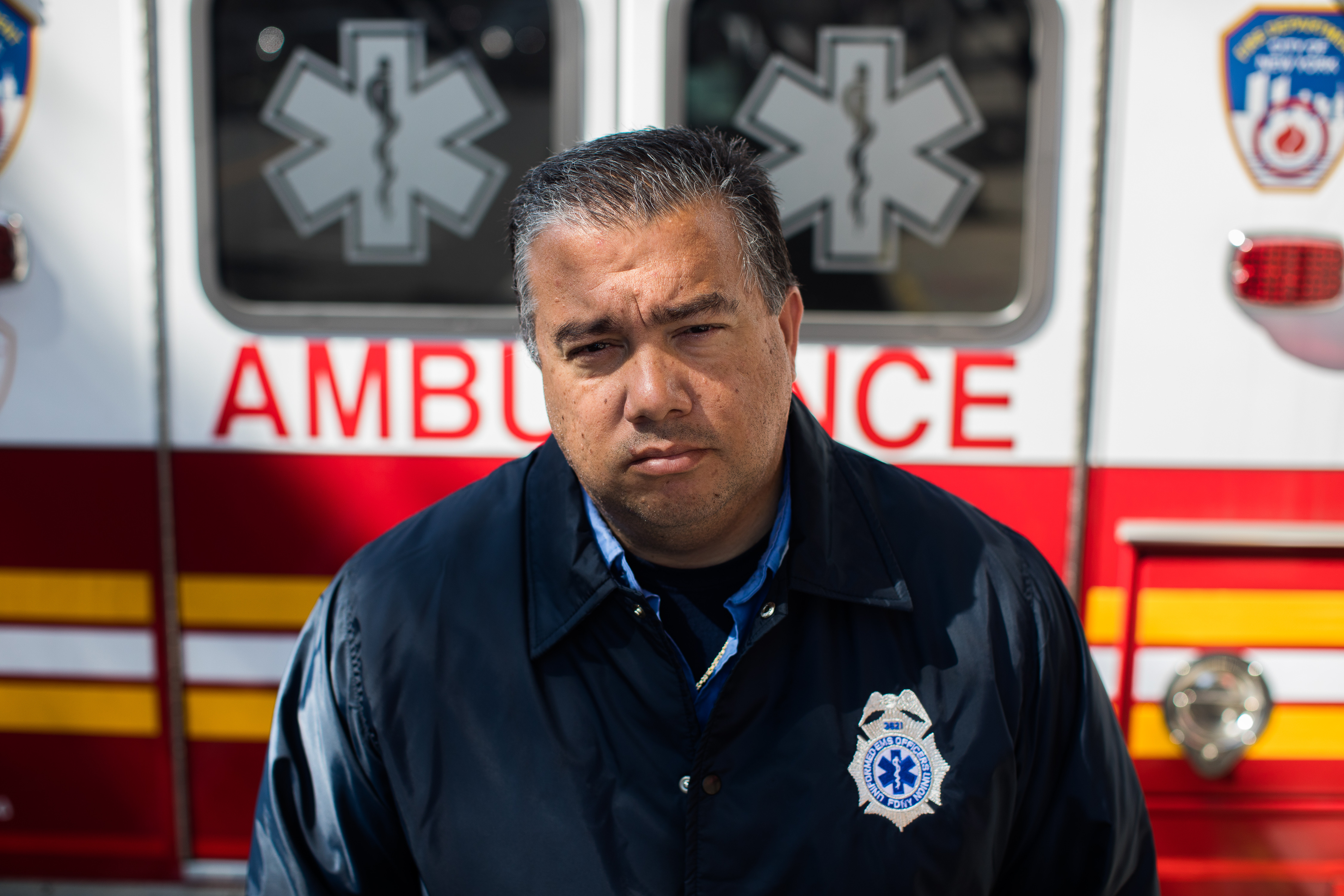
Paramedic | Union VP | Author
Anthony Almojera is an EMS Lieutenant and Vice President of Local 3621, the New York Fire Department EMS Officers’ Union. With 20 years in the NYC EMS system, he authored *Riding The Lightning: A Year in the Life of a New York City Paramedic*, published by Harper Collins in 2022. A Brooklyn native and avid traveler, Anthony is a practicing Buddhist and a board member of the EMS FDNY Help Fund, which supports EMTs and Paramedics facing financial and emotional challenges. His experiences during the COVID-19 pandemic fueled his writing and advocacy, leading to features in major media outlets, including The New York Times and CNN, highlighting the disparities faced by FDNY EMS compared to firefighters and the NYPD.