Apple Podcasts
 Spotify
 YouTube
 RSS Feed
 Ibogaine Treatment for First Responder Addiction — Carmine Fiore & Candace Maisel, LCSW | S6 E29
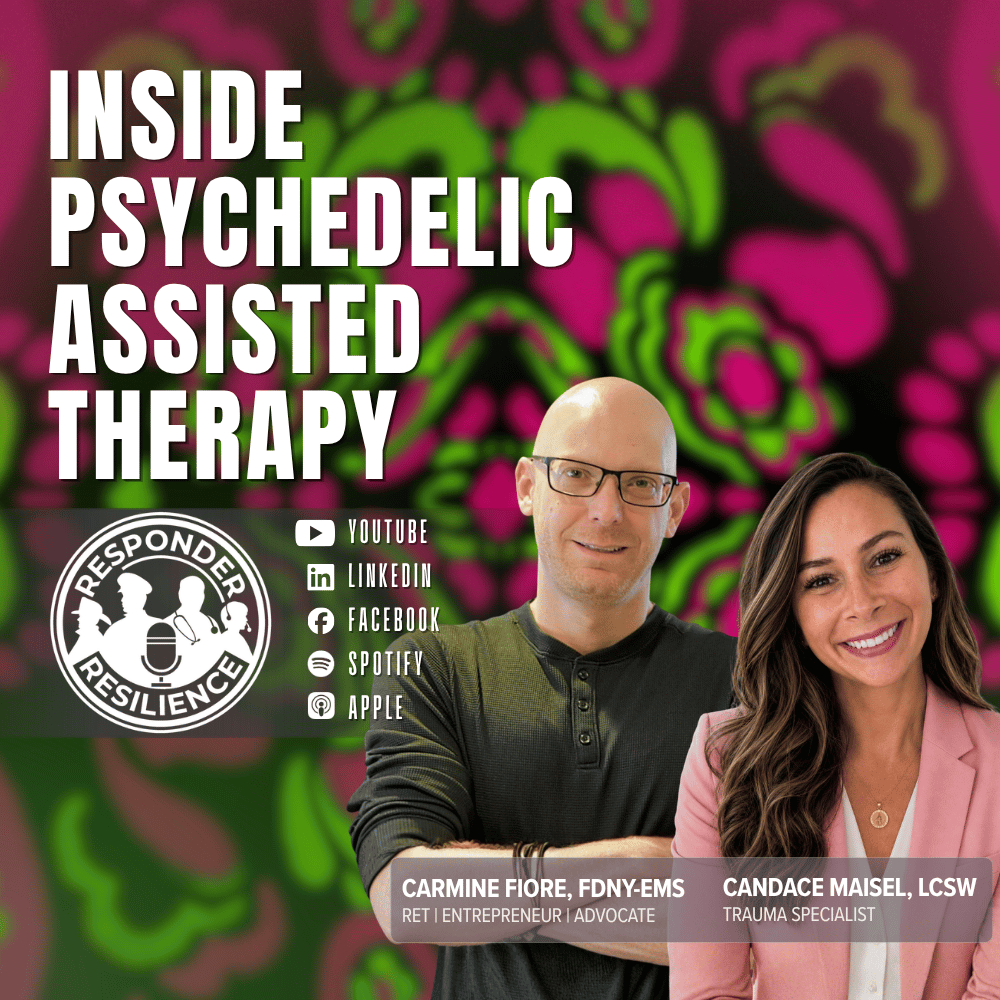
What happens when every traditional treatment fails — and a first responder is still drowning? Retired FDNY-EMS paramedic and Army combat medic Carmine Fiore survived 30 treatment centers and 15 heroin overdoses before trying something the first responder world rarely talks about: Ibogaine-assisted treatment at Ambio Life Sciences in Tijuana, Mexico.
What happens when every traditional treatment fails — and a first responder is still drowning?
Retired FDNY-EMS paramedic and Army combat medic Carmine Fiore survived 30 treatment centers and 15 heroin overdoses before trying something the first responder world rarely talks about: Ibogaine-assisted treatment at Ambio Life Sciences in Tijuana, Mexico.
In this episode, Carmine joins host David Dachinger and psychedelic-assisted therapy provider Candace Maisel, LCSW, for a candid, deeply personal conversation about what it took to finally heal — and what that healing actually looks like.
In this episode:
- What cumulative trauma looks like when it's been suppressed for years — and why it doesn't just disappear
- Carmine's Ibogaine journey: the childhood memories, the generational trauma, and the moment Ibogaine delivered a message about his late father
- The neuroscience behind psychedelic healing — BDNF, GDNF, neuroplasticity, and why the brain's post-treatment window matters
- Why psilocybin's 6-8 hour duration gives it an edge over ketamine for deep trauma work
- What integration really looks like — and why the medicine is only the beginning
- What Carmine would say to the first responder white-knuckling it right now, afraid to ask for help
- The Casey Skudin 343 Fund — and how it's helping first responders access treatment they couldn't otherwise afford
Responder Resilience is an informational podcast. The experiences and perspectives shared in this episode are not a substitute for professional medical or mental health advice, diagnosis, or treatment. Psychedelic-assisted therapies carry real risks and are not appropriate for everyone. Please consult your physician or a licensed mental health professional before pursuing any treatment options discussed here.
Subscribe to Responder Resilience:
🎧 Apple Podcasts | Spotify | YouTube
Connect with us:
🌐 ResponderTV.com
📘 Facebook | LinkedIn | Instagram
★ Resources for Responder Wellness ★
• Fitness: FightCamp (code RESILIENCE for 10% off) http://joinfightcamp.com/rr
• Free App: CRACKYL http://crackyl.respondertv.com
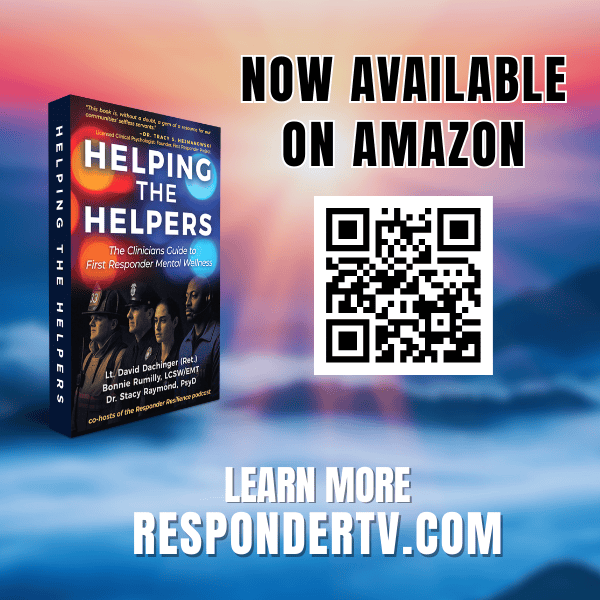
• Book: Helping the Helpers https://a.co/d/dm0VS4Q
Contact Candace Maisel, LCSW
https://ct-psych.com/candace-maisel-lcsw
https://www.linkedin.com/in/candacemaisellcsw
Contact Carmine Fiore
https://www.linkedin.com/in/carmine-fiore-241a701a8/
https://www.instagram.com/carmine12285
https://www.thetravelagency.co/
Contact Responder Resilience:
Phone: +1 844-344-6655
Email: info@respondertv.com
Our website with past episodes and more: https://www.respondertv.com/
YouTube: https://www.youtube.com/c/ResponderResilience
LinkedIn: https://www.linkedin.com/company/responder-resilience-podcast/
Instagram: https://www.instagram.com/responder.tv/
00:00 - When Nothing Else Works
02:46 - Why Identity Makes Help Hard
04:22 - Early PTSD Signs On The Job
08:47 - Addiction, Relapse, And Lost Hope
11:06 - Learning Plant Medicine With Intention
14:46 - Why Talk Therapy Can Hit A Wall
18:12 - Inside An Ibogaine Journey In Tijuana
31:21 - Ibogaine Science And Cardiac Safety
35:50 - Psilocybin, Oneness, And Neuroplasticity
41:10 - Integration: Turning Insight Into Change
49:27 - A Message For The One White Knuckling
52:57 - How To Reach Carmine And Candace
When Nothing Else Works
SPEAKER_01
I've tried everything to get sober. Everything from religion to psychiatry to psychology to medication, EMDR treatment. I've tried everything and nothing worked.
SPEAKER_05
What I mean, particularly with a first responder, is there's a massive mind-body disconnect. And I think that's the result of years and years of suppression and repression.
SPEAKER_01
The medicine allows you to go through the deepest, darkest caves in your brain.
SPEAKER_05
So I think it's important to be very open-minded to kind of zoom out. When so many things haven't worked, we have to get creative here and we have to think outside the box. There's no one way to heal. You have options, and there is always hope.
Voiceover
He carried the weight of serving as an army combat medic. And a childhood nobody should have to survive. And for a long time, none of the conventional tools touched it. Then he flew to Tijuana and did something most of his colleagues would call crazy. Candace Mazell spent her career helping people access the wounds that talk therapy can't reach using psilocybin, EMDR, brain spotting, and a neuroscience-informed approach that starts where traditional therapy stops. Together, they're going to talk about what most people in the first responder world won't say out loud that psychedelic-assisted therapy isn't fringe anymore. The research is serious, the outcomes are real, and for community that's losing more people to suicide than line of duty deaths, the question isn't whether to have this conversation. It's why we waited this long. This episode is brought to you by Fight Camp, real training on your schedule. Head to joinfightcamp.com/slash RR and use code RESILIENTES for 10% off. We invite you to like and subscribe, YouTube Responder Resilience, Facebook, Responder TV, we're on LinkedIn, Apple Podcasts, and Spotify, and our website is respondertv.com. We'll be right back to speak with Candace and Carmine right after this. Ask a first responder who they are, and you're likely to hear I am a police officer.
SPEAKER_06
I am a firefighter.
Voiceover
I am a paralytic.
SPEAKER_06
I am a 911 communications operator.
Voiceover
Not I do this work, but I do this job. Ask a clinician why they work with first responders.
SPEAKER_06
And they may say, There's no fire falling and helping the helper.
Voiceover
Join us in shaping a culture where mental health, wellness, and leadership are prioritized, not whisper. Where support is a sign of strength, not failure, and where no one has to carry the weight alone. Welcome to Responder Resilience.
Why Identity Makes Help Hard
Voiceover
We try to spotlight on the unseen battles of first responder reality and celebrate the powerful wins that come from the grit of post-traumatic growth. We understand the culture, honor the trust, and bring you conversations from the change makers, passionate about helping first responders come home whole.
SPEAKER_06
With your host, retired Lieutenant David Dachinger, Dr. Stacy Raymond, and Bonnie Roomeli, LCSW EMT.
Voiceover
Kennis Mazel, LCSW, is a certified trauma therapist, EMDR therapist, brain spotting practitioner, and psychedelic assisted therapy provider with dual graduate certification in disaster mental health and trauma studies from Tulane University. She works with adolescents and adults in private practice in Westport and Milford, Connecticut, combining plant medicine with neuroscience-based modalities to help clients access and heal trauma at its root. Carmine and Cadness, welcome to Respond to Resilience.
SPEAKER_05
Thank you for having me.
Voiceover
Well, I told you before I'm excited to have this conversation, and uh the two of you are going to bring a lot of uh depth to it. So let's get into
Early PTSD Signs On The Job
Voiceover
it. Um, Carmine, let's go kind of rewind before the treatment that we're gonna be talking about. Take us back to the job. Give us a little overview of the calls, the moments, things you were carrying that you now recognize as early signs of PTSD. What is that, what did that weight feel like before you even had a name for it?
SPEAKER_01
Yeah, um, I kept on my entire career, you know, I always thought I was going through a phase in my life, whether um my phase at that time would be my anger phase or my depression phase or my anxiety phase. I would always have these symptoms and I never related it to PTS at all. Um to me, that term was, you know, reserved for the heroes in Iraq and Afghanistan. It wasn't really reserved for first responders at that time. And, you know, I would go on countless calls, you know, throughout my year throughout my career of shootings, stabbings, um, children, rapes, um, and these are just normal 911 calls that everyday 911 operators and first responders deal with every day. And I just thought it was part of the job. I didn't think it affected me at all, one bit. I didn't have dreams, I didn't have recurring um thoughts. Um, so I didn't really I discounted myself way early on um when I really shouldn't have, because I was really was carrying so many of the symptoms of PTS that if I hopefully caught it sooner, maybe I wouldn't had to suffer all everything that I had to go through. Um but yeah, um I I honestly never thought it was PTSD, PTS, I didn't think it was any of that. I thought I was just an angry person, I needed to calm down. Um, and I found ways in which I could cope. Um, and those ways were unhealthy ways, unfortunately. You know, um drink drinking and drugs were my savior, especially after a few injuries from the job. Um things start becoming acceptable in your life that was never acceptable before. Um, you know, when I first took my first painkiller in a hospital room, um, that was acceptable. When I took that painkiller at home, that was acceptable. And then somewhere throughout that line, that line of what was and what was wasn't acceptable started getting blurred. And um then again, I didn't think it was PTSD. I thought it I just had a drug addiction problem. I just thought I was dependent, a dependency problem, I called it at that time. And um, I never accounted for PTS or PTSD. Um yeah. Maybe I'm speaking in circles now, I don't know.
Voiceover
That was a great answer. Um Candace, I'd love to bring your clinical perspective into this. So, what do you typically see when a first responder finally walks through the door knowing that we wait probably way too long to do that? And what does cumulative trauma look like when it's been suppressed for years?
SPEAKER_05
Sure. So I think the the first thing that really stands out to me when I meet particularly with a first responder is there's a uh a massive mind-body disconnect. And I think that's the result of years and years of suppression and repression, right? Having to compartmentalize emotions so I can think logically, do my job, save lives, remedy the situation. And so, you know, that's a natural inclination. It's an important part of the job. So I don't think we're trying to um trying to take that away or negate that. What I do think is missing is that there's not a point of coming back to the emotion to process it later on, right? When those things are ignored, when they're compartmentalized, when we're dissociated, those things will build up cumulatively over time. Um, and emotions don't just poof disappear because we choose them to deal with them. Emotions are energy. And if they're not tended to at a later date, um, they will manifest physically, often in our um cardiovascular system, our respiratory system, our autoimmune system. So um I think that's really important to acknowledge that emotions don't just disappear, they will impact you and come to fruition in some way if they're not dealt with.
Voiceover
Yeah, so important that we think if we ignore it, it'll it'll go away, like you said, and um the opposite happens, right? So um we'll get more
Addiction, Relapse, And Lost Hope
Voiceover
into that for sure. And Carmine, you know, you're you're a repeat guest, you were on several months ago. We went into a lot of depth about this, but give us a little bit of overview on this piece. You went through 30 treatment centers, it looks like, and survived 15 overdoses. Uh walk us through what walk us through that, what the road looked like, and then kind of what led you to the decision to fly to Tijuana and try it. I begin.
SPEAKER_01
Yeah, um, I before we get to that, I tried everything to get sober. Um, everything from religion to psychiatry to psychology to medication to religion to um EMDR treatment to um that TPMS thing where they put that thing on your jaw. Um I've tried everything. Um, and nothing worked. I tried AA, I tried NA, I tried the 12 steps meetings, and those worked temporarily. You know, I would get a year sober and then relapse, I would get six months and then relapse. Um nothing really stuck. Um, and I was starting to believe I was I was one of those lost causes. You know, I was a lost hope. I didn't think anything was gonna work for me. You know, the medications turned me into a zombie. Um, AA, you know, um that worked until it didn't work. Um, religion, that never really worked until, you know, that only worked for a month or two, a couple months, and then I would relapse. Um, and I would always find myself back in a detox wing, back in a rehab, away from society. I had to be removed from society in order for me not to use, and it was really getting to me. It started affecting me as the type of person I am in society. I can't even function in society without abusing, without getting high, you know, and this is not who I was. I was a first responder, I was a veteran, you know. Like how what has happened to me for me to not even be able to sit in a room with my family and not want to use. Um so it made me look into everything and become as open-minded as I possibly could because I was grasping at straws at this point. I just wanted to stay sober, I wanted to live a good and happy life. Um, and it seemed like it was becoming a bigger and bigger battle every day just to have that type of life.
Learning Plant Medicine With Intention
SPEAKER_01
Um finally I started looking into plant medicine. Um and words came about me, you know, that were really scary, like cannabis, psilocybin, ibogaine, fibemiomed, VMT, psychedelics. Um so I was I started getting confused. I'm like, I'm trying to get off drugs, and now I'm getting I'm hearing all these other names that I relate to drugs because I'm a skeptic at this point. Like, why am I gonna do more drugs to get off the drugs? I did it didn't make sense to me because I came from an AA background. I came from religion, I came from rehabs where they taught you abstinence is key. And but then I started listening with an open mind and I started doing my own research and really figuring out what these chemicals and what these plant medications can do, and what what have what they've done for other people in the world. Um so I gave cannabis a shot because it to me that was a path the least resistance. I was more comfortable smoking a joint than I was with any anything else at that time, and then slowly throughout my intentional cannabis use, and I say that word intentional so importantly because it is I had to use the cannabis intentionally, um, not just to get high, just to smoke a joint. Um and then life started becoming better. I started staying sober, I started becoming happier, I started becoming the person that I thought I could become. Um and that led me down a windy road and a rabbit hole of looking into plant medicine and what they could do. And then um chemicals like psilocybin, ibogaine, five Meod, these are chemicals that I was learning about that helped thousands of people across the world that suffer with addiction and PTSD. And I was still using cannabis, but I was still at the time still not my hundred percent. I wasn't the best carmine I could be, and I knew it. Um I still had depressive episodes, I still had anxiety episodes, um, I still had um anger that was just unresolved. And you know, I just lost my father um about a year and a half ago, um, prior to me um doing any ibegaine or five MEO DMT psychedelic treatments, lost my father. So that brought on a whole nother wave of anxiety, depression, and um sadness and grief that I never experienced before. And typically my go-to when I experience things that I don't like is drugs and alcohol. So me experiencing grief and not immediately going to a bottle, um I knew that this plant medicine was working and there was more to it. Um, and I started doing a lot more research into plant medicine.
Voiceover
Most people work out to look better. You work out because lives depend on it. But the stress doesn't clock out when you do. The calls follow you home. And most workouts weren't built for any of that. Boxing was.com slash RR and use code RESILIIENTE for 10% off. Fight Camp, real training on your schedule.
Why Talk Therapy Can Hit A Wall
Voiceover
Candace, I'd love to have you help us unpack some of what Carmine just said, especially from the clinical perspective when the traditional therapies don't work and when you kind of make that um transition into plant medicine. So, yeah, talk about any and all of that.
SPEAKER_05
Absolutely. So I think it's such an important point to discuss, right? And I I do think there's, you know, some misunderstandings and out there about the judgment of, you know, if you're trying to get off using substances, why would you try another substance? Right. But at the same time, if we zoom out and just look at psychopharmacology, often many of us are trying different SS and SMRIs as we're trying to maybe um, you know, explore sobriety and taper off of certain substances. Um, so I think it's important to uh be very open-minded to kind of zoom out to um, right, when so many things haven't worked, we have to get creative here and we have to think outside the box. Um, and so when we're exploring plant medicines, the intention is not to get high. Um, it's not even necessarily to feel good in that moment. The the goal of using these plant medicines is to kind of clear out the psyche to create some permeable, um, some permeability in the ego so that we can get past blockages, defense mechanisms, and access where those wounds that could benefit from healing, right? Like as I'm hearing Carmine's resilience and his story, I'm thinking about how many walls were up for him to maybe access his authentic emotions, to access the pain, access the grief, right? And it was just covered, it sounds like for a long time with band-aids, with um, whether it was drugs or alcohol or, you know, any other unhelpful coping mechanisms. What we want to explore with plant medicine is how can we um get past those ego defense mechanisms, those barriers, those unhelpful behaviors so we can actually access vulnerability and those wounds so they can heal. And that's why sometimes talk therapy only gets us so far, right? Promoting understanding, under um, understanding why we do things, um, our perspective, understanding our emotions are great, but that understanding does not heal core wounds. It does not heal trauma. Trauma is stored in that nervous system. And we often, you know, when I think about psychedelics, I like to picture Indiana Jones like with the hat and the whip, and he's peeling back those spider webs. And I think of it as the peeling back the layers of the psyche to get to those deep, intrinsic wounds. And so psychedelics help us to want first and foremost access those wounds and also to think differently, to break unhelpful thought patterns that may have been stuck. I like to think of it as you know, in the medicine, we have the opportunity to see our current situation with childlike wonder as if it's for the first time. So imagine if you could view your life through a perspective where all the old associations, all the old unhelpful thought patterns can just fall away and you can have this clean, slate, and clear perspective. What would you choose for yourself if you could neutralize that perspective?
Voiceover
Wow, so incredible. And uh yeah, I know there's um a sense of connectedness that we may not experience on a daily basis that we can experience in plant medicine too. And Karmite, I'd love for you to take us take us on a
Inside An Ibogaine Journey In Tijuana
Voiceover
journey with you, right? What was Ibogain like? What was it actually like emotionally, spiritually, physically? Don't sanitize it. Let people understand exactly what you went through.
SPEAKER_01
All right, this is the fun part. Buckle up. All right, so I am going to preface this with saying that Ibogaine is not recreational whatsoever. It was not fun. It was not a great time that I would like to write home about, but it was something well needed for me. Um so I went, I contacted this group of for uh that helps first responders um to access psychedelic treatments. This group is called the 343 fund, uh the Casey Scudin Fund. Um, this widow created this organization after her uh firefighter husband passed away tragically. Um and she has helped hundreds of first responders go down to Tijuana, Mexico to this locate to this um place called Ambiel Life Sciences. And here at Ambio Life Sciences, uh they conduct ibogain psychedelic treatment, followed by five MEO DMT treatment. And it was very professional. There was a lot of medical workup that had to be done prior to me arriving and doing these treatments. I had to get blood work, I had to get my EKG done, and all the results had to be sent down because there is a cardiac risk uh component to this medicine. So uh not everyone can just go and take it. Um, I was monitored throughout my entire journey. You're gonna hear me say the word journey. Um, that is another term people use for the experience that you you receive while on this Ivy gate. So I went down, I reached out to the Casey Scooting Fund, and I was like, listen, I've had 15 heroin overdoses, I've been in rehab over 30 times, and I'm still getting these depressive episodes. I'm still I'm still not right in the head. You know, I'm I was still looking at every avenue to get out of myself because I wasn't comfortable with myself, you know? And um, I looked up Ibegain and how it goes and what you do on IBegain when when you take it, the medicine allows you to go through the deepest, darkest caves in your brain, the deepest, darkest caves in your memory. And for me, I was getting worried when I went down there because I was like, what am I going to uncover? What is in this head that is am I going to uncover? Am I not going to like it? Is this gonna make me worse? Is it gonna make me scared? Is this gonna permanently make me paranoid? Because I had a lot of thoughts in my head. As a first responder with New York City for 15 years, I've seen people's worst days every day before my before breakfast sometimes. So I was worried. So I went down there and I met a bunch of a group of first responders of eight men, and those eight men are like my brothers today. You know, we went through that trauma bond together, and I love those men. I met them and it was amazing, you know. And these are some of the strongest and best first responders I've ever met in my life. And um, they were amazing guys. So we went down there and we got comfortable, we got settled in our in our rooms. Uh, I'm there in Ambio Life Sciences, and no caffeine was the first thing they said. I was like, okay, this is different. I'm from New York where I have six cups of coffee before 9 a.m., you know. Right, this is serious. Serious work now. I'm like, okay, the blood work, the EKG, you're taking a urine, cool. But no coffee? Come on, let's talk about this. But no. So they've said no coffee. So you change your diet because you really want to clear all the negativity out of your body. You want to be as whole as possible when you Come into this medicine. Um, they gave you these capsules um in red pill form, and they do that specifically, you know, as a little, you know, nod to the matrix when you're taking the red pill. And um we take the medicine and I'm fast forwarding through it. You know, there was a lot of bonding, there was a sweat, uh, a sweat lodge that we did to do bonding. So I'm fast forwarding it straight to the medicine. We take the medicine, and a half hour later we go in and lay down on our mattress on her bed. Um all of a sudden, I close my eyes, I put a blindfold on, and I lean back and boom, I'm in the medicine. I see geometric shapes and colors, and it was just super fast. And I'm in. I'm in the medicine. And all of a sudden, I'm in a childhood, I'm in one of my I'm in my childhood bedroom. I'm in a hallucination. I'm in my childhood bedroom at the scariest point of my life. Um this was a memory. Alright, I'll I'll go into the memory. I'll I'll be a little bit more vulnerable with everyone here and go into my personal trauma.
SPEAKER_05
Safe space.
SPEAKER_01
Yeah. So I was in my bedroom and I was there reliving the first time that uh my father laid hands on my mother. I was around six or seven years old, and in during that in my in during that time, my father laid hands on my mother, and I was so scared I wasn't able to leave my my bedroom. And that's one of the guilt that I was I held throughout my entire life. But in a hallucination, I was able to control that hallucination, and I was able to beat her for my mother and helped her in that hallucination. So I was able to rewrite my own history through that through that hallucination, which was so powerful for me, you know, integrating back into society afterwards. Um and I was back in there, I was back in my childhood dreams, I was back in my childhood memories, and I was there and I was able to see and help my mom, and it was amazing. Um I again I mentioned how I lost my father and how I was dealing with grief at that time. And um I saw I got to see my father's trauma as a child when he was a child. I mean, I don't wanna I don't I this is crazy to me because I don't believe in woo-woo nothing. All right, I am the opposite of woo-woo. But I saw my father get his ass beat by his father in front of his sisters. And when I spoke, when I said and I told recounted this to my mother, my mom stopped me and she's like, How did you know that happened to your father? He never told anyone about that but me. And I'm like, What are you talking about? That was my hallucination. She's like, No, no, no, no, that was an actual memory of your father. So I was able to literally see my father's trauma, and I even saw my grandfather's trauma, my father's father's trauma in this hallucination as well. And it just showed me how trauma is passed down and how trauma stays with you, and how generational trauma is a real thing and not just a woo-woo phrase that people like to throw throw around. Um, and that blew my mind for me to be able to witness the trauma my father endured and help him through his trauma is unlike anything else. And then I was able to see my father with his grandfather, and my father was happy, and they were looking at a TV, and on that TV, they were smiling so happy, and I was like, What are they smiling about? And I go look on the TV and they were looking at my life, and they were so happy that they were watching my life. I was making my father and grandfather proud. You know, and um, it was so amazing to witness.
Voiceover
You're trained to help people heal, but first responders, they carry trauma that's buried under silence, stigma, and stress. Helping the helpers gives you the framework to connect, to speak their language, earn their trust, and actually make an impact. From the experienced team and clinicians behind the Responder Resilience podcast, this isn't theory. It's real-world support for the ones who need you most. And this book isn't just for clinicians. If you're an agency leader, peer support team, chaplain, EAP, wellness program coordinator, or family member, helping the helpers will equip you with the tools, language, and insight to make a difference. Be the resource they can count on. Order your copy of Helping the Helpers on Amazon today.
SPEAKER_01
What are you bringing to Ibegain? And I brought anger. I wanted to get rid of my anger. And um Ibigain told me very clearly, in words, I don't know how to explain it. It said, You're not passing down anger, you're passing up pride to your father. And that was such a powerful moment in this medication. Um, it was unbelievable. And me and my father, we you know, my father was a tough man from Italy. He was off the boat, he was an immigrant, he was he believed in strong family values and had a hard work ethic. And to have a different relationship with your father now, after he's passed, is so powerful. Like my relationship with my father today is unlike anything else, and it's so amazing, and it's so powerful. Um, that was the Iba game wrapped up in a nutshell. I could go on and explain to this and ad nauseum about my my journey, but it was so amazing. And I thought I was gonna go into this journey and see dead babies. I thought I was gonna see lights and sirens, I thought I was gonna see fire, burnt babies, I thought I was gonna see drowning victims because that's what I was engulfed in for the past 20 years of my life. You know, eight years with the Army National Guard, 15 years with the fire department. I thought I was gonna see strictly trauma from my career. And there was none of that. Absolutely was all childhood trauma. And it really makes me wonder and believe like, would we even have a first responder service if it wasn't for childhood trauma? Because ever I guarantee every person that I've worked with has had some childhood trauma that they're not speaking about. That childhood trauma that pointed them to make them want to become a first responder, make them want to feel useful, useful in life and society, make them feel like they were worth it. And and I strongly believe that childhood trauma is the root cause of why we are who the way we are. And I never thought about that before. Before Hibergane, trust me, I I was not like I was not that guy. I was like, oh, I did not need an extra hug from daddy to become this way. No, I I was that type of arrogance. And another thing, speaking of the arrogance, is that ibergate allowed me to dissolve my ego and really zoom out and look at life and how I'm acting. And to zoom out on your day-to-day life is such a powerful tool. Um, I can't talk about it enough. But I'm gonna rambly, I'm gonna stop. And this go.
SPEAKER_05
Beautiful. Thank you, thank you so much for your generosity in sharing that. Um wow. And so just to hold together your uh your strength and your toughness, right? And this, you know, Italian New Yorker vibe with also this beautiful inner healing experience of your childhood trauma, right? Like both can coexist, right? Um, and I think that's important to acknowledge. And so just to kind of um tie in, you know, what I was saying earlier, is you beautifully illustrated that experience of kind of knocking through those walls, those defense mechanisms to access where the healing needs to happen. And, you know, when I was talking about how psychedelics give you the opportunity to kind of clear the slate, um, and you get to choose your narrative. And that's exactly what you did in that moment by kind of rewriting the storyline with your father, with your mother around that memory. And although we always know obviously what's happened in our past, we know the truth. Rewriting those narratives in our nervous system, it's almost like having a pleasant dream. And you now get to carry those feelings with you instead of those core wounds, right? So acknowledging we'll always know the trauma, we'll always know what happened in our experience, but we can shift the feeling, the emotions, the sensations in our body that are lingering, maybe from that experience. And that's what you did. And how beautiful is that.
Ibogaine Science And Cardiac Safety
SPEAKER_05
Um, and so Ibegaine is really interesting. I'd love to just talk about Ibegean and itself for a moment. So, for those who who maybe are unfamiliar, Ibigaine comes from the um roof mark of the Tabernanthi Aboga plant, which is found in Central Africa, um, you know, uh in the Congo, in Cameroon. Um, there's been a lot of research. Um, it's niche, but there's been a lot of research in 2025 and even as recent as January of 2026, particularly in um in Stanford, at Stanford University. Um, they have some interesting studies using veterans. Um, I think the takeaway from a lot of that research is noticing that there's a correlation between an experience of mysticism. So ego dissolution, as Carmine was saying, a sense of uh connecting with something greater than yourself, a sense of spirituality. So there's a correlation between mysticism and a decrease in PTS symptoms. So just, you know, acknowledging that for a moment. Um, and then in terms of what's going on neurologically, if we have any neuroscience nerds out there like me, um I find this very interesting. So Ibegaine in particular supports two proteins in the brain, um, GDNF, which is glial cell line derived neurotropic factor, and BDNF, brain-derived neurotropic factor. These are proteins in the brain that you can kind of conceptualize as the best fertilizer. So think of like miracle grow for your neurons. So they can, these proteins can protect the neurons and they can also help you grow new neurons. That's a really important piece here for kind of broadening and shifting perspective. So um glial cell line derived neurotropic factor specifically works on dopaminergic neurons. Um, and it's been linked to spinod spinogenesis, which is the dendritic spines of the neurons. It helps to it helps them to grow. Why that's important is because those spines receive information from other parts of the brain. So think about um increasing your comprehension skills, right? So that's one aspect. And then if we look at BDNF, the brain-derived neurotropic factor, um, it targets the serotonergic neuron. So it works differently. It works on a different set of neurons, and it's linked to synaptogenesis. So um growing the synapses within the neurons, which is responsible for communicating to the rest of the brain. So again, enhancing that communication so you can see how new insights, fresh perspective would be available when you have that um drastic growth going on from one session. Um, and so just to note, uh, Carmine brought up an important part about uh the uh risk of the cardiac, any cardiac issues. So I always like to highlight any safety issues, the safety profiles of different psychedelics. So just noting specifically with Ibegaine, you want to be mindful of cardiac complications specifically, arrhythmias. Um, they've identified that it can prolong the recovery time between heartbeats. So definitely just something to keep an eye on and chat with your, you know, with your doc, your team with if you do choose to explore ibogaine.
SPEAKER_01
For the medical people out there, it prolonges your QR intervals in your EKE. Correct. So that's why you have to watch.
Voiceover
You've probably seen the magazine, but this is the next evolution. The app is about one thing helping firefighters not fail, not just on the job, but in life, in your health, your relationships, your mindset, and your longevity. That's why Crackle is designed to meet firefighters exactly where they are, with resources that make sense, are easy to use, and actually respect your time. You can download the app now for free as a legacy member. That means you get early access to exclusive content tools and updates as they drop. Use the QR code on the screen to download the Crackle app, or you can download it from the App Store or Google Play and stay in the fight. Not just at work, but at home and in your own head too. Because your best days shouldn't be behind you, they should be ahead of you. That was like five podcasts worth of amazing information right there.
Psilocybin, Oneness, And Neuroplasticity
Voiceover
Yeah. Well, yeah, and I want to I want to also have um Candace talk about her work with psilocybin because um sounds like that's maybe your um plant medicine of choice. So in terms of that, maybe compare it to Ibegain, and then how do you prepare a client for that journey?
SPEAKER_05
Absolutely. So what I like about psilocybin is that it tends to have a very um, it has a very safe profile. Um, you know, and what I like about it compared to other things that are available right now, like ketamine, you know, ketamine is this widely available here, um, is that you in ketamine sessions, you're usually in the medicine for 45 to 90 minutes. Um, with psilocybin, it's it's like a six to eight hour session. I mean, you're in the medicine for a long time. So when we talk about um those changes in the brain, when we talk about that neuroplasticity, um, you know, and that ego disillusion that Carmine was talking about in terms of getting through defensive walls to access those vulnerable wounds, um, having more time in the medicine can be helpful. Um in particular, you know, a common experience amongst all psychedelics, including psilocybin, is a sense of oneness with the world. And when we think about PTS, it's often associated with a sense of, you know, loneliness, a sense of feeling like you're alone and disconnection. That disconnection is really important, right? It leads to depression, uh, further isolation, suicidality, things like that. So, what's really beautiful about plant medicine is that it often fosters a sense of interconnectedness, um, you know, a sense of uh kind of connecting with your own in IFS, we'd call it internal family systems, we'd call it self-energy, kind of um your own inner healer. Um, and so often what I'll see when people are engaging in the medicine, and again, these are people with very complex PTSD, whether, you know, first responders who often see the parade of faces that night, the people they maybe have saved, and maybe other people who they were unable to save. Um, there's often a sense of this is the most at peace I've ever felt, this is the safest I've ever felt, this is the most joyful I've ever felt. And for people who maybe haven't experienced that for a very long time or ever, um, even though that feeling may taper as the medicine tapers, we can utilize that experience as almost like a remembered wellness meditation. And you know you can access it. And that can be a real game changer. Um, so not only is you know being in the medicine profound and powerful for that journey experience, but there's also research. This is uh Robin Carhart Harris. Um there's also research in the preceding 72 hours, there's increased neuroplasticity. So perhaps interventions that only took you so far, whether it was EMDR, brain sputting, IFS, what have you, um, you can go even further and really utilize that neuroplasticity, the malleability of the brain. Um, and so what we've seen is that through utilizing those interventions and taking advantage of that neuroplasticity, it leads to neurogenesis. We can see lasting changes um, you know, in neurons in the brain, which again is indicative of a shift of perspective, a shifted wellness. Um, you know, perspective is everything here. Um so, you know, I think it's important that we're, you know, Carmine also used the word zoom out, that we're broadening our perspective of what's helpful and being open to what's out there. Um the word treatment resistant comes up a lot these days. And I truly take issue with it because just because we don't have a treatment, a mainstream treatment that works for someone, I don't think it's fair to label them as treatment resistant. What's really going on is that we haven't yet found what's going to be helpful for that issue, right? That's on the field. That's on us to get more creative, to explore, to think outside the box. You know, and even when we're looking at substance abuse, it's important to stay open-minded, right? We look at as early as when um AA was, you know, first being established, we can see Bill W had his spiritual awakening in 1940s in Manhattan in the hospital when he was hospitalized for his alcoholism. You know, his spiritual awakening um that's been you know documented and passed on um in the steps uh was a result of Belladonna, right? Uh uh a plant, a hallucinogenic psychedelic plant medicine. Um, so I just think it's important to stay open-minded. And I've seen these medicines help people taper off substances, access these deeper wounds. Um, you know, it's it's it's a really beautiful experience when it's um when it's used intentionally, as Carmine said. I think that's a key word. Um and, you know, I like to tell people when you're in the medicine, as Carmine said, he thought, you know, maybe these scary experiences from work might come up, the childhood stuff. You know, whatever comes up, nothing's gonna arise that is not organically in your psyche. And just to be very open-minded and to remind yourself, whatever arises, you've already been through the worst parts.
Voiceover
Thank you so much, Candace, for shedding the light on all of that, including the neuroplasticity and all the brain science behind this. Um, it's so, so important.
Integration: Turning Insight Into Change
Voiceover
Carmine, um, so you shared your profound journey doing the medicine. Take us through the post-journey, like the reintegration into real life, and what does what did that look like for you?
SPEAKER_01
Well, part of uh the post-journey, um that amazing um organization, the Casey Scudin 343 Fund, they also offer post-integration um meetings weekly. Uh twice a week. We would do, we would get together on Zoom call similar to this, and we would speak about how life is going post-Ibegain and post-DMT. Um and it would be just, you know, and it would be just you know, 10 first responders talking about how they're dealing with life now that they've had this experience, and how this experience is uh changing their behaviors and attitudes during the daily life. And it's so profound. Um, because you know, we spoke about neurogenesis and neuroplasticity. Um, now that I'm retired, um I am an entrepreneur, I uh own a few I own a business. Here comes my plug. Uh I own the travel agency, it's a cannabis dispensary out in New York City in Soho, 598 Broadway. Now that I've had such profound experiences with plant medicine, I'm able to give back to the New York City community and actually be able to sell cannabis um legally. Um and but regarding neurogenesis and neuroplasticity, I'm able to now think clearly and think differently. And it's helped me out such in such profound ways, having that ability to uh clear those cobwebs out. Um but the post-integration was so critical in me understanding what I went through and understanding where how that affects me today. Um but the post-integration I would say is really important, you know, because uh it really allows you to frame your life and how you now see it. You know, um my whole life I grew up you know with such low self-esteem and low self-confidence just because of what happened in my childhood. Uh, but after the integration and after my treatment, my self-confidence and self image has changed tremendously. So I had to work on that. How does that look like today? That doesn't mean I'm arrogant or cocky, but it does mean I'm able to identify what I'm capable of today. So that's what uh why I really think the post integration is so important. Um and there is this you know, the first week after the psychedelic treatment, there's that key window of immense neuroplasticity. Um, whether you're taking psilocybin or ibogaine or DMT, there is this window afterwards that your brain is healing and growing. And um it's pretty amazing to witness to witness that in your daily life, to ex really change your behaviors and attitudes because of that.
SPEAKER_00
At the core of every community, beats the heart of the first responders ever present on the front line, making the impossible look routine. Through the relentless pressure and the unseen scars, our frontline warriors silently battle the stress of the job. It's crucial they armor up mentally and emotionally, not just for the community they safeguard, but for the families they return to. Supporting the wellness and mental health of first responders is priority number one. By championing their well-being, we're ensuring they're unstoppable, both in the line of duty and in life. Step up for the Titans to protect us. Because when they're firing on all cylinders, they're not just first responders, they're game changers. Join us. Visit respondertv.com to be the difference.
Voiceover
Candace, I'd love to hear your perspective on what it looks like in your practice, um, sort of the post-integration part of this. How does it, how do you see people changed by doing the plant medicine?
SPEAKER_05
Absolutely. So, you know, going back to that kind of analogy of wiping a slate clean, I think it gives everyone, it gives people the opportunity to be more intentional about their lifestyle and who they want to be and how they want to live their life. Um, right, if we didn't have these certain storylines, right? Whether it's about how we engage our role in our family, right? Or if it's, you know, our role at work or how we conceptualize ourselves in terms of relationships, if we didn't have these particular storylines about, you know, maybe I feel like I'm the scapegoat in my family, or I'm the um, you know, I'm the peacemaker in my family. If we didn't have these roles and storylines, what would we choose for ourselves, right? How are those old storylines maybe holding us back in different ways or creating self-fulfilling prophecies that are unhelpful? So integration gives us an opportunity to be really intentional with the work, right? Whatever the intention, the goal is, right? Carmen identified, you know, letting go of anger. And so I imagine your integration work was, you know, how do I, how do I kind of process my emotions and work through them and stay in a place of gratitude? And when I am angry, how do I how do I process that? How do I express it? How do I um how do I manage my own emotions? Um, and so often in integration, a common theme I see is immense gratitude. Carmen, it's I don't know if you had an experience of that. Um it's it's a it's massive. It's on this macro level of kind of, you know, that oneness, that connectedness with the world and kind of having gratitude for that. But it's also on a micro level of the day-to-day of like, oh my gosh, I hear the birds chirping and I see the beautiful color of the trees and the sky. And there's just such a connection with almost just nature and gratitude and what's around you. And um, when you're coming from a grace of a place of gratitude, I think there's more of an opportunity to say, what do I get to do with my life versus what do I have to do with my life? So um, so integration, I think helpful we helpful forms of integration are often things that engage bilateral stimuli, right? So something as simple as a walk, a swimming, just engaging right and left sides of the body. Um, and also creativity, you know, for those who are inclined or are not inclined, like exploring any kind of um any kind of artwork can be really helpful just to reinforce um what was learned, what was experienced in the journey. I also really recommend that people journal, whether it's during this experience, if that's available. Sometimes it is, sometimes it's not, um, or immediately afterwards. And then we kind of get to track progress and track your perspective and kind of see where you are. And looking back on that can be really helpful to reinforce whatever positives you were you were trying to explore, whether it was boundary setting or saying yes more, or um or you know, leaning away from addictions and exploring a balanced lifestyle. So integration can look very differently for different people, but I think the common themes are an immense sense of gratitude and just reinforcing whatever positives you set in your intention. And um integration is something that can create beautiful fruits over the course of not only weeks, months, and years. Integration can go on for a very long time. So just being open to that and letting that organic process arise while being intentional about your goals. Um it's a it's a beautiful process to witness. And I think that a lot of people have a lot of fun in the integration aspect. I think there's a very distinct before and after for those who have experienced a profound journey like Carmine.
A Message For The One White Knuckling
Voiceover
Oh, yeah. That's great. Yeah, I love that it's just an ongoing process that um it's not like you just drop a pill and your life is changed forever. There's a little more, a little more intention behind it than that. Um, Carmine, what would you say there's a firefighter EMT cop listening right now? They're white knuckling it, thinking asking for help means losing everything, identity, career, respect. What do you say to that person?
SPEAKER_01
Oh man. This is such a big question. I mean, because I've been that person so many times in my career. Asking for help is not going to change, is not going to ruin your life. Not asking your help can. That's a that's a definite and that's a standalone known. Not asking for help can definitely change your life in a bad way. Um what would I say to that guy that's white knuckling it right now? I think open-mindedness is gonna be the key to to survival. Um, because we are at a point in life and in humanity where we are now finally able to look at plant medicine as what it is, a medicine. So that person hanging on uh reach out to the to the person that you know that has gone through it, all right, and made it on the other side, become open-minded and really give yourself an opportunity. Um, and you know, in terms of this episode and this plant medicine topic, I would say give plant medicine an opportunity um in your armory of weapons against mental health. All right, we have an armory whether it's taking a walk, dancing, you know, ha includes plant medicine in that armory. Um, it may not have to be Ibegain, you know, which is an 18-hour journey. It doesn't have to be psilocybin, a six-hour journey. It could be something as a cup of tea with somebody. Um, it could be uh smoking a joint with somebody and talking about what's going on. But um give yourself every opportunity for success. Just like we gave our crew every opportunity on the job for ultimate success. We have to give each other, and that includes having the right tools. And we have to include psychedelics in that toolbox, and we finally have to start having this conversation because it's saving lives, and straight up it saves lives, and nobody wants to talk about it because it's scary to talk about, but having a conversation saves lives, and we need to get this conversation louder.
SPEAKER_05
Everything Carmine said, I absolutely second. Thank you so much for being so generous with us today, Carmine. I think it's so important to hear directly from the first responder population. Um, I think that we are just scratching the surface on what psychedelics can do. Um, and I think it is time to get weird. I think it is time to push outside the boxes. I think everyone deserves healing and there's no one way to heal. Um, we need options for healing, especially from PTS, that are as unique as the individual. So, you know, if you've tried all the mainstream things and you're still not finding relief, please know you're not alone. And, you know, reach out to any of the resources Carmine's mentioned, reach out to me, reach out to anyone in the psychedelic community. Um, there's no one way to heal. You have options, um, and there is always hope.
How To Reach Carmine And Candace
Voiceover
So, as we wrap up for today, Carmine, where can people find you? Any other links you want to share, social websites, stuff like that?
SPEAKER_01
Absolutely. First off, anyone could always call me day or night. Um, my mission today is helping other first responders and veterans just stay alive. Um, reach out to me on Instagram, Facebook, LinkedIn. Um, you could always reach out to me, and I am always available. You can reach out to me at my store at the TravelAgency at Cannabis Store dot com. Reach out to me. Or I'm sorry, the travelagency.co or the travel agency at cannabis store on Instagram.
Voiceover
Fantastic. And we'll share links in the show notes as well. And Candace, where can people find you? What links do you want to share?
SPEAKER_05
Um, perfect. Yeah, I have a website, I have a LinkedIn, I have an email, um, my office number. Please reach out, even if you just want to have a conversation, even if you have questions. Um, you know, I by no means have to be providing a service. I'm definitely here just to have conversations and engage with people who are seeking alternative ways of healing. So happy to chat anytime.
Voiceover
Okay. And then does your practice extend beyond the borders of Connecticut?
SPEAKER_05
Yeah, absolutely. So um, there's also options available, you know, down in Colorado where psilocybin is legal. Um, you know, here in Connecticut, obviously there's uh ketamine is what's widely used. Um, but again, my jam is kind of mixing uh different neuroscience-based modalities, different somatic modalities, including yoga, emotional transformation therapy, somatic experiencing, um, and then sometimes sprinkling some psychedelics. So if you know that sounds interesting to you, or if you have any questions, I'm I'm all about um here.
Voiceover
Thank you both. Words cannot express the service that you are doing for someone out there that really needs to hear this information and you've shared it from the heart of both of you, and um, that is going to touch people out there. Um, sometimes we never know who's impacted by these episodes, but uh, we know for sure that it is having that impact. And you both have kind of broken some new ground with us uh on the podcast on this topic. So thank you for being so willing to be part of this conversation. Thank you, Dave.
SPEAKER_06
Such a blast to be here.
SPEAKER_01
Yeah, thank you for starting this, allowing us to start this conversation for the first responder community. A lot of podcasters aren't having this conversation and don't want to. So I really want to commend you for opening this conversation up for the entirety of this community. So thank you, Dave.
SPEAKER_05
Absolutely. Thank you. Thank you both.
Voiceover
Remember to like and subscribe, YouTube responder resilience, Facebook, responder TV. We're on LinkedIn, Apple Podcasts, and Spotify. And please check out our website, responder TV.com. We have our past episodes and guest information there. Till the next time, stay safe, be kind to yourself. Take care, you can't get a lot of money.
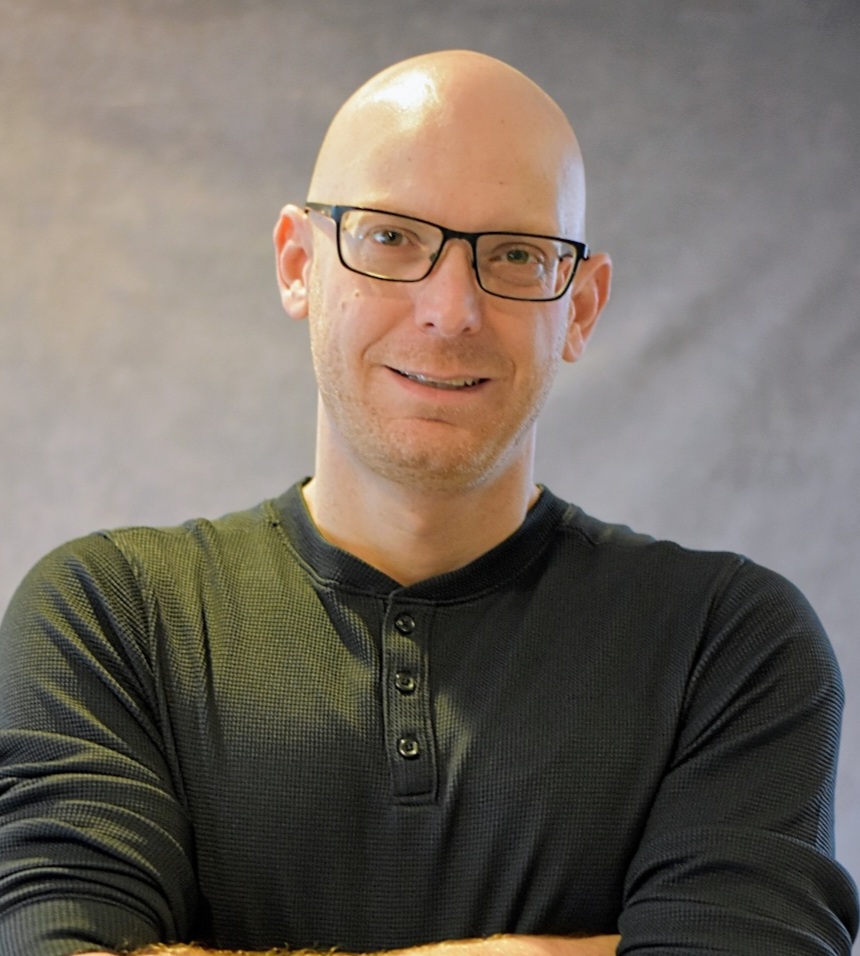
Retired EMT | Veteran | Speaker | Entrepreneur
Carmine Fiore is a retired FDNY-EMS first responder and U.S. Army National Guard combat medic with over a decade of frontline experience. After years of exposure to trauma, Carmine confronted PTSD and addiction while navigating the culture and pressures of emergency services. Today, he speaks openly about recovery, accountability, and the realities first responders face, both on and off the job. His work focuses on honest conversations that reduce stigma, encourage early intervention, and remind first responders that they don’t have to suffer in silence.
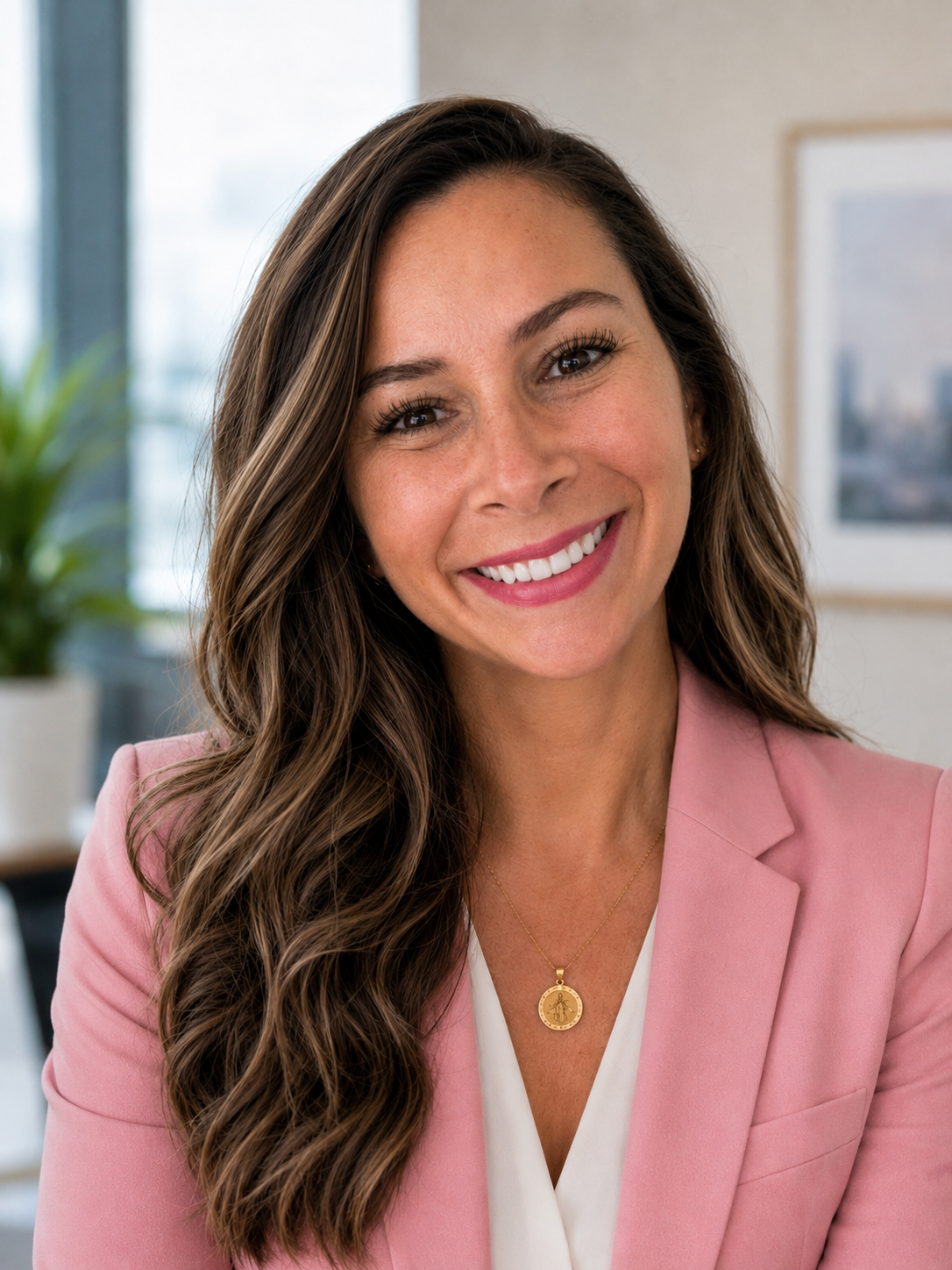
Certified Clinical Trauma Professional | Member Fairfield County’s Trauma Response Team
Candace Maisel received her BSW from Sacred Heart University, MSW from Tulane University with a dual certification in Disaster Mental Health & Trauma Studies. She is a Certified Clinical Trauma Professional and a proud member of Fairfield County’s Trauma Response Team. She is a Certified EMDRIA Therapist, Certified Psychedelic Assisted Therapy Provider, Certified Brainspotting Practitioner, Certified ART (Accelerated Resolution Therapy) Therapist; skilled in DBT, CBT, TRM, Yin Yoga, and breathwork. Candace firmly believes there is no one size fits all in mental health. She has made it her mission to offer multiple routes to healing that are as unique as the individual themselves.
She works with adolescents and adults at her private practice in Westport and Milford, CT.