Apple Podcasts
 Spotify
 YouTube
 RSS Feed
 Inside the 343-Mile Ride for 9/11 First Responders — Suzanne Stone, Livestrong CEO | S6 E31
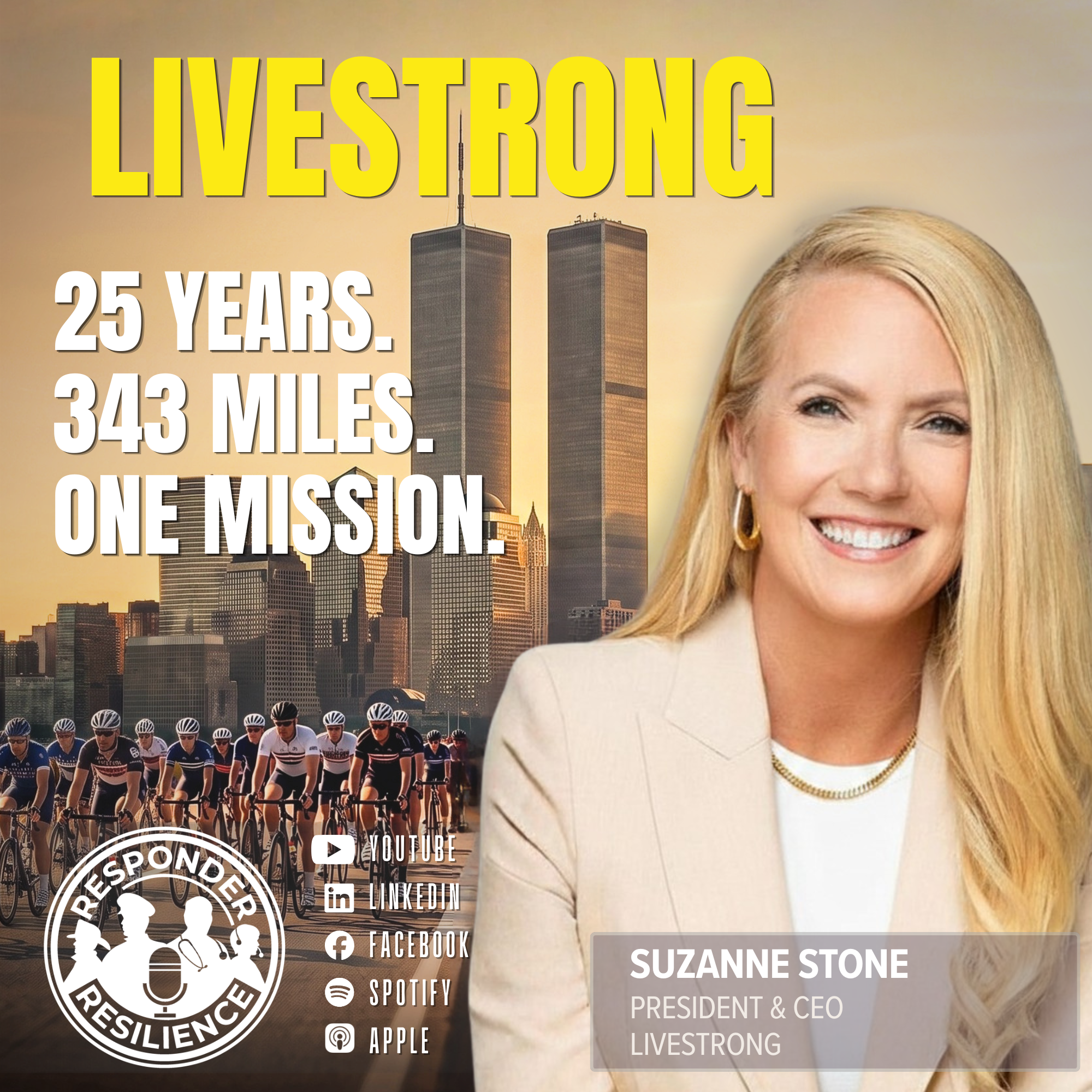
Suzanne Stone, President and CEO of Livestrong, joins Responder Resilience to talk about the First Responder Ride for Resilience: why it exists, who's riding, and what it means for a first responder community still absorbing the cost of that day, and every day since.
Twenty-five years later, 343 still means something. It's the number of FDNY members lost on 9/11. Now it's also the number of miles a five-day ride will cover, from Boston to the 9/11 Memorial in New York City.
Suzanne Stone, President and CEO of Livestrong, joins Responder Resilience to talk about the First Responder Ride for Resilience: why it exists, who's riding, and what it means for a first responder community still absorbing the cost of that day, and every day since.
Livestrong has spent almost 30 years working the "soft side" of survivorship, the part that isn't clinical. For first responders, that means occupational cancer risk baked into the job itself, families left without a playbook, and a culture that doesn't always know how to ask for help. Suzanne breaks down what Livestrong is building specifically for fire, police, and EMS. That includes a culturally competent survivor's guide, Ellis (their AI-powered survivorship companion), and a fertility preservation discount network covering 150+ clinics nationwide.
The ride itself runs September 6 to 10, 2026, gathering in Boston and finishing at the 9/11 Memorial and Battery Park in New York. It arrives September 10 so active-duty riders can be back at their firehouses on the anniversary itself.
**Resources for Responder Wellness:**
• Book: Helping the Helpers https://a.co/d/dm0VS4Q
• Free App: CRACKYL http://crackyl.respondertv.com
• Fitness: FightCamp (code RESILIENCE for 10% off) http://joinfightcamp.com/rr
Contact Responder Resilience:
Phone: +1 844-344-6655
Email: info@respondertv.com
Our website with past episodes and more: https://www.respondertv.com/
YouTube: https://www.youtube.com/c/ResponderResilience
LinkedIn: https://www.linkedin.com/company/responder-resilience-podcast/
Instagram: https://www.instagram.com/responder.tv/
LIVESTRONG:
🔗 Ride details & registration: https://911ride.org
🔗 Learn more about Livestrong's work: https://livestrong.org
📫 Questions or want to get involved: 911Ride@livestrong.org
00:00 - The Rising Cancer Toll After 9/11
04:00 - Suzanne Stone And Live Strong’s Mission
10:40 - The Survivorship Gaps First Responders Face
18:20 - Why A 343-Mile Cycling Ride
26:10 - Tools That Help After The Diagnosis
33:50 - Boston To NYC Route And Ceremony Plans
38:00 - Volunteering, Donations, And Where To Find Live Strong
43:10 - Fertility Support And Exercise Oncology
46:10 - Final Reflections And Closing
The Rising Cancer Toll After 9/11
SPEAKER_05
Riding and cycling is something that is deep within the Live Strong culture. The 25th anniversary is a really unique opportunity for us as a country to come back and remind these young generations what first responders do, but more importantly, who they are. We are starting at Boston because that's where it all began. But they're also writing for something. They're writing to heal, they're writing to help others. We've also created Ellis, which is the first AI-powered cancer survivorship companion. We're continuing to learn, we're continuing to be better, we're continuing to help. And that's what we're really excited about being able to bring to the first responder community.
Voiceover
Welcome to Responder Resilience, along with my co-host Bonnie Romoli, LCSW, EMTB. I'm David Dashinger. Firefighter cancer deaths from 9-11 exposure have already surpassed the casualty count of the attack itself. Leukemia, prostate, and thyroid cancers are up among first responders, and the trauma, the PTSD, the substance abuse, none of that stopped either. 25 years later, the toll is still climbing. Today we're talking with Suzanne Stone, president and CEO of Live Strong, about a cycling ride that refuses to let the country forget. 343 miles from Boston to the World Trade Center Memorial. One mile for every firefighter lost that day. This episode is brought to you by Fight Camp, real training on your schedule. Head to jointfightcamp.com slash RR and use code RESILIENTES for 10% off. This episode is brought to you by the First Responder Center for Excellence. Because even the best of us face unexpected challenges. They've got the tools, the training, and the resources to keep you strong, safe, and resilient. Equip yourself at firstrespondercenter.org. We invite you to like and subscribe, YouTube Responder Resilience, Facebook, Responder TV, LinkedIn, Apple Podcasts, Spotify, and our website is respondertv.com. We'll be right back to speak with Tuesday after this. Ask a first responder who they are, and you're likely to hear I am a police officer. I am a firefighter. I am a parallel. I am a 911 communications operator. Not I do this work, but I am this job. Ask a clinician why they work with first responders.
Bonnie Rumilly
And they may say, There's no fire falling and helping help us.
Voiceover
Join us in shaping a culture where mental health, wellness, and leadership are prioritized, not whispered. Where support is designed to strength, not fit, and where no one has to carry the weight alone. Welcome to Responder Resilience. We try to spotlight on the unseen battles of first responder reality and celebrate the powerful wins that come from the grit of post-traumatic growth. We understand the culture, honor the trust, and bring you conversations from the change makers, passionate about helping first responders come home whole. With your hosts, retired Lieutenant David Dashing, Dr. Stacey Raymond, and Bonnie Roomley, LCSW EMT. Suzanne Stone didn't start in cancer care. She started in television, winning a regional Emmy in Dallas before spending years running public access stations and coaching a college women's basketball team in New York. What ties it all together is this she's always been in the business of giving people a platform and fighting for communities that don't have one. In 2019, she joined Lip Strong to drive its mission, and in November 2023, she was named president and CEO. Today, Lip Strong has supported more than 10 million cancer survivors, and under Suzanne's leadership, the organization is expanding its reach, including into the first responder community, with a five-day 343-mile cycling event commemorating the 25th anniversary of 9-11, honoring the fallen and the standing with survivors who still
Suzanne Stone And Live Strong’s Mission
Voiceover
face cancer trauma and the toll of years spent in service. Suzanne, warm welcome to Responder Resilience.
SPEAKER_05
David, Bonnie, it's really an honor to be here. Thanks for having me on today.
Bonnie Rumilly
We feel the same way about you. And before meeting you, I didn't realize you were expanding into the first responder community. So I think it's just such a wonderful extension of the great work you're already doing.
SPEAKER_05
Thanks. One of the things that we've been doing for almost 30 years, which it's hard to believe that Live Strong has been around for almost 30 years, but um next year, 2027, will be the 30th anniversary of Live Strong. The thing that we have always been focused on is looking for that gap, right? What is the gap in what we call cancer care or survivorship care? So it's not the clinical side, it's the soft side of survivorship. So you may have rung that bell and come out of chemotherapy, but your ecosystem has been shattered. And the community of first responders is a great example of a community that is so quiet that it's easy to miss. Um, it's easy to miss for people who are outside of the community, what is really happening on the inside. And recognizing, having recognized that there's a significant gap there and an opportunity for us as a community to give more and do more for those who do everything literally for us. Um, that's an opportunity we couldn't pass out.
Voiceover
I'd love to hear a little more about that because I've experienced firsthand as a cancer patient having to stop work as a firefighter. Um, and my union, my co-workers, my brothers and sisters, they came through. Like we show up for our own and we never let them, you know, we want to make sure we're there for them. But what does it look like for an organization like yours to deliver support from the outside?
SPEAKER_05
Experiencing cancer like you did, and kind of thinking about that ecosystem of all the people you just talked about who were affected also, um, that's that's our focus from the outside to say, well, we want to come in and help. But what we cannot do is presume to know how you need to be helped. And so a lot of what we have been doing since we we recognized what this gap was is partnering with organizations, firefighters, police, EMT that are already here, learning from you, the community. What is what are some of the barriers that you're experiencing? Because when we talk about survivorship and how we can how we can help, it's not about building a better meal train, right? We've we've solved for that. Everybody can figure out to you know how to how to feed you and how to feed your family or support them. But there are these uns unspoken things, right? You you all talk about that whisper piece that we don't want to whisper anymore. And I know that you have this incredible supportive community. Live Strong is coming in and saying, we want to, we we fully respect the culture that's here. We're doing everything we can to learn about it, and we're bringing people from fire service, all first responders, inside to our community to inform us of what we can do to provide more support so people don't have to whisper anymore, so that you don't have to be afraid to go to your lieutenant and say, I've got to come off the truck, and feeling that you're gonna lose your job because you've said that. Being afraid to tell people that you're having symptoms because you don't want, you don't want to know the answer that is that is nagging at you in the back of the head, right? And and that delay in care changes the outcome for so many. For us, we're we're really coming in and we're learning from you what is what are the gaps, where are the friction points, and then we're gonna come in with culturally competent resources to deliver to our goal is to every single firehouse and police station in the country a culturally competent guide that sits on top of our of our guidebook that's built on 30 years of knowledge on what do I do, and but it's gonna be very specific to the community that we're looking to serve in.
Voiceover
You're trained to help people heal, but first responders, they carry trauma that's buried under silence, stigma, and stress. Helping the helpers gives you the framework to connect, to speak their language, earn their trust, and actually make an impact. From the experienced team and clinicians behind the Responder Resilience Podcast, this isn't theory. It's real-world support for the ones who need you most. And this book isn't just for clinicians. If you're an agency leader, peer support team, chaplain, EAP, wellness program coordinator, or family member, helping the helpers will equip you with the tools, language, and insight to make a difference. Be the resource they can count on.
Bonnie Rumilly
Order your copy of Helping the Helpers on Amazon today, I'm sitting listening to you talk, and it sounds like such an amazing thing to join organizations and to also supplement what's already existing in the first responder community. And hopefully you can expand that into EMS and dispatch and some of the other branches as well in your manual. Um it's amazing work you're doing. It leads me also to my next question for you why did you want to create the ride? We want to hear about the ride, but tell us the why first.
SPEAKER_05
So it began because the wife of a firefighter emailed me, actually DM'd me um on LinkedIn. And I am absolutely guilty of saying yes to as many meetings as I can, even when that may not be well advised. So um, you know, sometimes I'm I I'm definitely in in calls or on meetings, and I'm thinking, what was I what was I doing here? Um but I said yes to her and I wanted to hear. She said, you know, we're really challenged. Uh we're we have a lot of um for her firefighters, fellow firefighters that are diagnosed, and it's not just them, but they were diagnosed
The Survivorship Gaps First Responders Face
SPEAKER_05
so late, their families are suffering. My, you know, my husband and his colleagues, they don't understand how to support and what could we could we do something? Um so fast forward, after talking with her and others, we ended up going right, like I said earlier, to the community and to Friends of Firefighters. Friends of Firefighters is a small New York-based nonprofit that supports the FDNY with mental health needs and it born out of the 9-11 um uh uh experience and the the PTSD and the challenges that that those firefighters face. So, in an effort to understand better what's happening in the community, we've partnered with them. And one of the ways that Live Strong, from a historical standpoint, has found that people heal is through action. And one of those activities, those action points, is is exercise, which I could go, I could do a whole podcast on why you need to move. Um but riding and cycling is something that is deep within the the the live strong culture and something that our community is well versed in. And we have a great community of cyclists who who ride not for any other reason, but also for their own health, but they're also riding for something. They're riding to heal, they're riding to help others. So it was a a kind of a natural fit. Um, friends of firefighters had done a ride in Ireland supporting the um in in remembrance of 9-11. And they but they'd done that ride in Ireland with Irish firefighters there. And the idea was, well, let's let's bring it here. Let's let's do this for the 25th, because we can't believe it's been 25 years. So that's the evolution um of how the ride started and why we're doing a cycling event. And in fact, speaking of Ireland, we've got 29 riders coming over from Ireland, 29 Irish firefighters who are coming over to be a part of the ride.
Voiceover
Wow, incredible. And um part of what you're talking about is reminding me that now that we're at the 25th anniversary, that there are people who are actually adults today who were maybe just in first grade or or younger when 9-11 happened. Um how do you how do you speak to them, the the generation that wasn't really part of experiencing 9-11 as an adult? And what what do you think the what do you think the impact of this 25th anniversary is for someone like that?
SPEAKER_05
You know, I use my son as an example of things all the time, and I have his entire life, um, much to his dismay. But he he's 26. And on 9-11, I was in New York holding my son, my newborn son, watching the Today Show, um at that at that moment in time. And my father was in Washington, DC, um in just a block away from the Capitol. And I think about my son growing up, right? He's he he was there, but he wasn't there, and that context is fully lost over time. I think that what's really important for the greater community and the country to remember those generations that maybe were just born or were not alive at all. Um, you know, when when this happened, it's to remember it's it's it's like a highlight of the incredible bravery of people and the resilient spirit of our country. When the worst thing that we could have ever imagined occurred, there were more people who were running toward it than running from it. And that's something that you can't predict happens. Um, I hope that our younger generation hears the stories, they'll see the videos if they haven't seen them already, and recognize what intense bravery and commitment really looks like. That's something that um few people I think can understand. Most most house fires are not fatal, and most of the time we only we don't want to see firemen. We don't want to see the EMT. We don't want to see you. Um this is the 25th anniversary, is a really unique opportunity for us as a country to come back and remind these young generations of people who are coming up what first responders do and who, but more importantly, who they are. It's who they are. And so I think that this is an opportunity for us to not just teach but show who they are and what it means to be a first responder, truly.
Bonnie Rumilly
It sounds like commemorating the 343, but also highlighting the amount of illness. Those of us who work with first responders and are, you know, have our toes in the 9-11 community, we know day to day how many people are struggling with this. And I think for a lot of the population, it's something they think about once a year now around the anniversary when the names are read. Um, and it's it's very, very interesting, I think, for those of us who think about it a lot more or who still get clients in our therapy office for trauma related to 9-11. So it's very, very important the way that you're highlighting the 343, but also everyone who's been sick since. And that's where you probably just have such a strategic way of integrating those two things with something positive like a cycle ride.
SPEAKER_05
Absolutely. The the fact that occupational cancer is something that every first responder has to think about. Right. I don't have to think about that. There's not an occupational risk to to the work that I do. And in fact, there's not an occupational cancer risk to 99% of the jobs that are out there. But every single, every single first responder is signing off when they sign up and saying, I'm increasing my risk significantly to get cancer, occupational cancer. And and it's so much so that I mean, you know this, I'm not telling you anything you don't know, but it's it's literally a part of your state insurance. It's a part of the insurance. They are predicting that because of your service, this is going to physically happen to you. What they're also not telling you, though, is what is going to emotionally happen to you. And that's the piece that I think is also really important. And that's really where Livestrom feels like we have an opportunity to step in and help. I'm not going to be able to change the physical reality for you. The fact that you have chosen to do this is stunning and overwhelming when you really think about people raising their hand. It's like people who, you know, World War II happened or 9-11 happened, and they raised their hand and enlisted in service because they said, I'm not going to stand to the side. So it is that level of commitment that they're saying, my personal physical safety is not as important as my emotional desire to help others and be there for
Why A 343-Mile Cycling Ride
SPEAKER_05
people. It's that soft side that we need to be sure to help with. You may get cancer from an occupational risk that has nothing to do with 9-11. You are a 30-year-old who lives in Ohio and you're in a volunteer fire department, right? And you're diagnosed with prostate cancer or esophageal cancer or or any lung cancer, whatever, melanoma, that's another one. Please check your, please wear sunscreen. Um, please wear sunscreen. But whatever, whatever the cancer risk is, it's the emotional piece now that they're having to deal with. And their colleagues. And and your your whole family has to figure out can I continue to work? Um, what if I'm the sole breadwinner of for my family? What if this type of cancer isn't covered? What if it's say, what if my state agency is saying that that this isn't an occupational cancer? What do I do then? Um, and then for people next, you know, next to them saying, how do I help besides bring you lasagna? Um, we want to provide information, trusted resources that are um appropriate for this group of people. And um and we're really honored and excited to be able to have identified this as someplace where we can really add um add support.
Voiceover
Most people work out to look better. You work out because lives depend on it, but the stress doesn't clock out when you do. The calls follow you home. And most workouts weren't built for any of that. Boxing was fight camp builds endurance, reaction time, and real-world movement. It tracks every punch so you see progress, not gets at it. Real training in your home on your schedule. You don't just finish workouts, you get better. Head to fightcamp.com slash RR and use code RESILIIENTE for 10% off. Fight Camp, real training on your schedule. Something you mentioned earlier, Suzanne was exactly what I lived through. Um sort of that I may or may not have taken my time to get diagnosed. And um when the time came when it was a definitive diagnosis, I did have to go to my shift commander and say, I've got to go fast track into treatment. You know, I can't work anymore for the next several months, and stand in the kitchen with my shift and address all them and tell them I'm sorry guys, I uh I have to tap out for for this cancer treatment. And that was difficult in itself. But as you as you mentioned, there's all these other factors when you're so focused on just uh trying to get better and deal with the medical piece of this, so many other pieces of the puzzle that come into play. What are some of the resources that you bring uh bring to first responders to help them cope?
SPEAKER_05
I'm so sorry that you had to go through that, David. And that experience is exactly the one that we want to support people during. I think the first piece is fact-based information. And I I say that because trust today is not something that is given lightly, and it is we have information is everywhere, quite literally at every fingertip around the corner. You can ask Claude and chat and anybody, Google, whatever, Facebook, and everybody will have an opinion and an extra. Expert view on something. One of the things that's really important to us is that when we go back to what our mission is, improving the quality of life, I always put an asterisk or parentheses there and say, whatever that means to you, we are here to provide you information that I can promise you I would provide to my own mother. It's not prescriptive, it's fact-based. That means it's peer-reviewed, science-based information on your disease state, if that's what you're looking for, or anything to do with cancer. So the first is trusted knowledge. We've got, we've been doing this for 30 years. So we've seen every question. I don't know that we've been stumped in a while, but you can try. So we've created resources, physical guidebook you can pick up. And I was looking to see if I had one at my desk, but you can pick it up and read it. Old school, lots of people like that tactile thing, right? Um, where you can read all the way from how do I tell my colleagues, how do I tell my boss, to how do I talk to my insurance company? And here's a here's a form to fill out for to keep my medications in check. And oh, here's an envelope in the guidebook for me to keep all my papers in, things like that. Um uh so it can be as basic as that. We've also created Ellis, which is the the first AI-powered cancer survivorship companion. Ellis is with you 24-7, 3 a.m. when you're like, I cannot sleep. I'm freaking out. And Ellis is there as a compassionate listener and to provide you information again, you can trust, and then you get to decide what to do with that information. And I think that's the piece that makes me so proud of the resources that we provide and what I believe is different from other sources of information. I'm not going to tell you what to do. We would never do that. Instead, I'm going to make sure that the decision that you make is based on facts and truth and what is best for you. And then we'll help you, we'll help you from there. It's like choose your own adventure, you know, uh, if you remember those books.
Bonnie Rumilly
So it's interesting because in the work we do with first responders, we recognize how important their spouse, significant other children are in all of the mental health things that we talk about, and certainly as important in this situation. So, how can you shape the information that you have to offer the support for spouses and children and tailor it, just knowing that first responder culture is already different? Spouses already spend a lot of time alone managing everything. And I could imagine a spouse being very scared about, oh my gosh, I already handle everything. I don't even know how I can handle one more thing. What would you say in that situation?
SPEAKER_05
So this is exactly one of the reasons why we're creating this in partnership with um with this community, because we can't anticipate those things by ourselves. So one of the things that I would say is yes, you need to lean on the support around you. So your firefighter spouses, other spouses, right? Those colleague spouses. So you've got to lean on that house. But I would also encourage that person to have a very specific list of things that they need help with. And when I what I mean by that is it's not just about making food. I keep saying that because that's where everybody goes first, right? But instead, how about things like this? Hey, David, when you had to share with your colleagues, um, your fellow firefighters, that you were gonna be out for a bit. One of the questions you probably got was, what can we do for you, man? Or we're gonna do everything. You just let us know what you need. And you have no idea what to say to that, right? So my suggestions and our suggestions are things like this Hey, I've got kids. They've got here's their baseball schedule. Could you guys show up at the games for me? Could you just make sure
Tools That Help After The Diagnosis
SPEAKER_05
that somebody's there? Hey, my daughter has a school play. Could could you guys come to the school play for them? How about some play dates? Like talking, thinking about kids, right? Could you just I need some play dates? Could you do a sleepover like two times a week just because I need time? Those are things that when I say them sound really obvious, but people don't know how to support. They just they don't because nobody there's not a there are books for that, but who reads a book like that? Nobody's we knew right, nobody's anticipating wanting to need that book. So that's just one example. Hey, if you have pets, hey, can I I'm gonna come over every day, every afternoon, and let's let's take your dog for a walk together. I'm gonna walk with you to walk your dog together. I'm not gonna, we're not gonna talk about cancer. We're gonna talk about you know, Joe down the street who painted his house green and how awful it is, or whatever. Um so it's things like that. Hey, I'm headed to the grocery store. Can I if you'll place if you want to grab it, you know, let me know what you need, give me your list and I'll grab it for you.
Voiceover
You're so right on with that, Suzanne. And and you're kind of reminding me of some of the things that were the most profound interactions I had with friends and and colleagues from the fire department. Something as simple as a friend coming over to go for a walk with me was huge. It was uh it was so great to get out of the house and just talk to somebody and get my mind off of uh what uh you know what you would normally be thinking about, which is you know, when's my next appointment and how am I doing? Is it getting better or worse? Especially you're not feeling well. So that's that's huge to uh to really look for those human connection uh options that uh so easy in a sense, not really that hard, but they're just not obvious. And so I love that you're uh you're uh offering those uh those you know, those ideas and options to to friends and and co-workers and people that want to support, especially when it comes to the kids, um, because they uh can tend to uh kind of get left out of the equation. Your spouse are so focused on all of the cancer journey, and the kids can just kind of be, you know, unfortunately kind of lose a little bit of that uh quality time that we give them. So that's all great stuff. And I'd like to shift to make sure we cover the ride and give us some more details. Obviously, 343 is a very important number in all of this. Um, talk about that. Where does it start? Where does it end, who's involved, and anything else you want people to know?
SPEAKER_05
Absolutely. Before we shift, I'm gonna show you. I happen to have this sitting next to me. When we talk about kiddos, especially little ones, they have a hard time understanding what cancer is and what it isn't. So last year we wrote a book called My Brave Friend, and it teaches kids K through two what cancer is, what it isn't, that they can still hug their friend and that their friend is the same no matter what. But what this really is, is a tool for parents and teachers to really have those discussions. That's another type of tool and a thing that we want to provide. So cool. Yeah, absolutely. So this will be a part of that um that pack that that arrives um at first responder locations. The ride. We we are so excited. In fact, right before um we started talking today, I was just on a call with 30 of our riders, really excited about that. So we are starting in Boston because that's where it all began. So we are starting in Boston on September the 5th. Everybody will gather, we'll have a program that night, and then we leave the next morning, September the 6th, and we head to we head to New York. Along the way, every water stop and lunch break is at a firehouse, all along the way. Um, obviously that's intentional, obviously that's on purpose, but we're doing it to make sure that we're always remembering while we're why we're writing as we as we move through. We're staying at hotels, not campsites, because I wasn't gonna, I'm done sleeping in a tent.
Voiceover
It gets old after a while.
SPEAKER_05
Really does, it really does. Um I I was like, no, we're we're doing hotels. So we're we're doing the 343 miles, one mile for every person who ran in and did not run out that day. But obviously, like we've mentioned before, the ride is is about more than just the 343. So every day when we finish, every night we'll have a short program and um remind everybody who's on the ride, why we're writing and what's happened that day and what's getting ready to happen the next one. The final day, um, well, as we ride through, we're like I said, we're riding, it's a rural route because obviously you can go from Boston to New York much faster than 343 miles. At the very beginning, as we began planning it, um, someone said to me, it doesn't take 343 miles. Why does it take five days? Okay, let's let's reverse. We're I'm not riding a bike. Um in I'm not I'm not gonna go that distance in a very short period of time. But it's really important that that 343 remains there even quietly every single day that we're out on the road. And when we our last stop is in Stanford, Connecticut. So the last day on September 10th, we will leave from Stanford. The uh the mayor is joining us at uh the Woodfield Fire Department number five. They have actually a um the fire, the the uh firemen and women there built a memorial to 9-11, actual um replica of the World Trade Center. They lost 11 people from that community on that day, not just first responders that day, but they they've lost 11. So they built that memorial, we'll be there, the mayor will send us off, the fire riders will be there to take us all the way to New York City, and we'll head out. So we're arriving in New York on the 10th. And the reason that we're doing it on the 10th and not the 11th is because so many of our riders, over a hundred of our riders are active duty fire in fire service, which means they need to be at their firehouses on 9-11. And that is why we're riding in on the 10th, so that we can they can do the ride and be there on on that very important day. So we will ride into Manhattan, we will pass the firemen's memorial and then head right into Manhattan. No more hills after that of New England. And um we will we will ride into the 9-11 memorial. We will um we will unclip, get off our bikes, and walk up through the glade to the survivor tree and wrap around where those 343 names are written um sequentially around that corner. If you're familiar with where that sits in the memorial, we'll wrap there, we'll have a short ceremony, uh, take a moment to pause and really reflect on the sacrifice that these men and women made. And to your point, at the beginning um of our time together, so many that we've lost since because of that. We will um after that's over, we'll get back on our bikes and we'll head to Battery Park. And that is where we will officially
Boston To NYC Route And Ceremony Plans
SPEAKER_05
close our ride and have an opportunity to um really have that moment of uh commemoration, of honoring um everybody who's ridden and why we rode. So we'll we will close out that ride in the afternoon of the 10th. That will be open to the public. We're gonna invite everybody there to everybody come to um really cheer on the people who signed up, raised their hand, and said, I'm not only gonna ride in memory, I'm gonna fundraise because we're gonna change the way first responders have to live with cancer in their life. And so we're gonna we're gonna really be able to honor those. So that's the ride in a nutshell. It is a beautiful rural route. We will be near the water every chance we get. And um people that even if you don't ride, um, you'll be able to track us. So every rider will have a tracker that you'll be able to follow along with as well.
SPEAKER_07
As firefighters and first responders, we're brilliant at the basics. We master the art of stretching the line and we excel at being there for those who need us most. Yet, even the best of us can be caught off guard. We sometimes face unexpected challenges like injury, cancer, or post-traumatic stress attacks. But you're not alone. Remember, first of all together. Discover more at firstrespondercenter.org and connect with us on app, Facebook, LinkedIn, Instagram, and YouTube. The First Responder Center for Exploits. Equip yourself with experts for every call.
Bonnie Rumilly
I feel like that's a mic drop moment there for you. I mean, what you just described sounds amazing. And um our team, our Fairfield County Trauma Response team, exists partly due to Stanford Fire Department. They they're incredible. So that was nice to hear that you're making a little stop over there, but this is so incredible, and we can feel the passion and the excitement behind doing this project. And we know that first responders need more spotlight on them. Um, they need more help with their mental health, but their physical health. And this is really exciting. I know just knowing what David lived through, it's something that's really important to him, but also to us as his friends. So thanks for everything that you're doing.
SPEAKER_05
Oh, well, you're you're very welcome. And it's really important to us that we do everything that we can to make sure that this next generation of those first responders have it a little easier than the ones who came before. I think that's the that's the legacy, right? Is to always plant a seed. And while you may not be there to, we may not be around to watch the tree grow or sit in its shade, we know that it will be there and it will impact others in the future. And that's that's really the hope is that we use the the terrible events of that day as an opportunity for us to make sure that those those men and women who have who we lost that day and since um don't have to don't have to struggle in vain, right? We didn't lose them and and forget them. We're continuing to learn, we're continuing to be better, we're continuing to help. And and that's what we're really excited about being able to bring to the first responder community.
Voiceover
You have another event coming up in August in New York City, and I'd love for you to share about that and anything else you want to, um, any other events or yeah.
unknown
Sure.
Voiceover
And also just let us know where people can find you, website, social links, and all that good stuff.
SPEAKER_05
Absolutely. If you are looking for the ride specifically, you can go to 911ride.org.
Volunteering, Donations, And Where To Find Live Strong
SPEAKER_05
Um, and if you forget that, you can just go to livestrock.org and go to events, you'll see it right there. You can just Google it, you'll also find it there. There are certainly events that are happening across the country that other organizations are doing, but we are the only one going from Boston to New York uh on those days. So I think you'll be able to track us down. We're pretty easy to find. So that's definitely one place to find us. And if you happen to live in New York, we are going to be at Bryant Park on August the 13th, 2026. Um, one of our partners is iHeartMedia. We're really excited to partner with them. And they are bringing us to Bryant Park on Broadway and on the on the final Broadway and Bryant Park event for 2026 on the 13th. So at that lunch hour, if you are in New York City and you want to um come and watch a free Broadway show, you can come and you can also find us there. So we're gonna be there really supporting supporting New York. You're gonna be able to see the stories of the firemen and women and first responders from New York who are riding in the event and fundraising uh for it. We're gonna tell their stories through images and um at our activation there. You'll be able to come. I'll be there so you can come say hi. We'll have uh thousands and thousands of wristbands to give away along with other events. So we would we would love to see you there, but it'll uh we'll we'll have some of the fire service there as well, but it'll be a great opportunity for people to come learn more about the event and how they can help. They can volunteer. They, you know, it's it's it's always time and treasure, right? It's not just about donating. And when we say donate, it's it's a dollar, it's five dollars. It doesn't have to be um, you know, a six-figure gift. We're we're looking for people who just say, hey, I'm I'm with you, I'm standing with you. We need volunteers to help at water stops all along the route from Boston to New York. We'll need people to help that day in Battery Park. So if uh if you want to help in a different way, please reach out. We're we're always looking for more people to come and help us out that day and and throughout the ride. So um that's you can definitely find us there. We do lots of things also in New York and and across the entire country. We help with something that is probably unpredictable and people don't think about, and that's fertility. So we have we know that people diagnosed with are being diagnosed with cancer younger and younger. There's a re a couple of reasons for that. One is because we're actually looking and paying attention and we're we're doing a better job of getting screened, which is amazing. So they're getting diagnosed more often, but it's also earlier, right? So sometimes those disease states are found at stage one instead of stage four. So their quality of life is changing, which is great. Um, and then then there are environmental factors that are also increasing the number of people that we have that we see diagnosed in certain levels, certain types of cancer in that in that young community. And if you are of childbearing age and you get diagnosed, you have a finite amount of time before treatment starts, and the potential to impact your fertility happens. So as soon as you start with chemo irradiation, it could impact your ability to have children in the future. So one of the other things that we do is we work, we have a fertility discount program where we have a network of over 150 clinics all around the country, a lot in New York actually, and where we provide those clinics provide a very deep discount on those services. If you don't have a discount, the average cost for a woman going through fertility preservation is $14,000. And insurance does not cover it. So uh suddenly you're diagnosed with with cancer. Imagine you being a primary breadwinner and suddenly you you're stuck, you have to do $14,000, you've got to come up with $14,000 or more, depending on where you live, um, to preserve the chance to maybe have a kid one day. And you, you know, if you're 23, you haven't thought about that, probably. Um, so that's one of the great programs we have as well. And then also sitting alongside is the exercise piece, um, another reason why we ride. So exercise oncology has been proven time and time again. Studies continue to come out to show you that if you do not move, and I'm not talking about running marathons, right? Moving means, David, just like what you did, walk, walk around the block, just standing up and down from the couch, whatever it is you can physically do. For those who do not move post-treatment, we find they will their chance of not being around those next five years increases five times.
SPEAKER_04
Right.
SPEAKER_05
So all that you have to do is move. Now that's not all, but if you move, you significantly decrease your mortality risk. And so uh again, another reason why
Fertility Support And Exercise Oncology
SPEAKER_05
exercise and events like this are important to us is to make sure that people understand that they don't have to be able to ride 343 miles. But we do want you to, we do want you to move. So we've got great exercise oncology programs across the board accessible in lots of ways through our programs.
Voiceover
Hey firefighters, let's take a moment to talk about something important. There's a new app built by firefighters for firefighters, and it's not just another wellness tracker or generic resource hub. It's called Crackle. You've probably seen the magazine, but this is the next evolution. The app is about one thing helping firefighters not fail. Not just on the job, but in life, in your health, your relationships, your mindset, and your longevity. That's why Crackle is designed to meet firefighters exactly where they are, with resources that make sense. Are easy to use and actually respect your time. You can download the app now for free as a legacy member. That means you get early access to exclusive content tools and updates as they drop. Use the QR code on the screen to download the Crackle app, or you can download it from the App Store or Google Play and stay in the fight. Not just at work, but at home and in your own head too. Because your best days shouldn't be behind you, they should be ahead of you. All that you're doing is um absolutely incredible, especially for our community, which, you know, cancer is a big part of it, mental health is a big part of it, and we still don't have enough um ways to navigate that. So you have um yeah, you've just come through with some incredible, incredible resources, and we're so happy we have the opportunity to share it on our platform.
SPEAKER_05
Oh, thanks so much. I'm excited to meet as many first responders as we can, and we're we're actively talking to as many as we can to make sure that the resources we deliver are appropriate and that they do make sense for this community. So I encourage anybody who's listening to email me. Um email us. You can find us, livestrom.org, really easy to track us down, and uh email us, tell us your story. Let us know what's happening in your life, what you've experienced, and what would have benefited you or what would benefit you right now that you didn't have. We want to make sure that we can get you those those tools, those resources, your family, that ecosystem that is now shattered. Let's help you put those pieces back together. We can do it. And and I think overall, I just want to make sure that everybody realizes, especially in this community, that you are not alone. And there are people outside of the of your first responder family that care deeply about you and and they want to help. So there are a lot of resources here, and we're here for you.
Bonnie Rumilly
Thank you, Suzanne. It's been a pleasure to meet you and to learn more about what Live Strong is doing in the society, but especially for our first responders. Be well.
SPEAKER_05
Thanks so much, Bonnie. Thanks,
Final Reflections And Closing
SPEAKER_05
David.
Voiceover
Thank you, Suzanne. Um, this is gonna be, I think, an incredible episode, an incredible resource for anybody who across the board wants to know more about 9-11, wants to have some part in recognizing and memorializing the 25th anniversary and somebody who's um living with cancer or navigating it or loves somebody who's going through it. Um you've just given us a treasure trove of incredible information. So we appreciate you and we wish you nothing but great success with the ride.
SPEAKER_05
Thanks so much. Can't wait to see you out there. We'll see you in New York.
Voiceover
Remember to like and subscribe, YouTube responder resilience. We're on Facebook, Responder TV, we're on LinkedIn, Apple Podcasts, and Spotify, and our website is respondertv.com. Till the next time, stay safe, be kind to yourself. Take care, but it's a very good idea.
President & CEO Livestrong
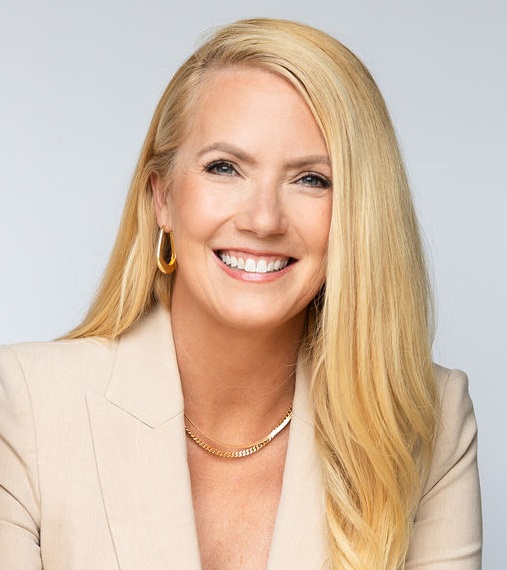
Suzanne Stone is a Texas Christian University graduate and Louisiana native whose career began in television, earning a regional Emmy Award for her work in Dallas. In 1998, she
transitioned from producing television to teaching it in the nonprofit sector, leading public access television initiatives in Naperville, Illinois, and later in upstate New York.
Beyond media, Suzanne spent four years as Head Coach of a New York community college women’s basketball team while simultaneously managing a local TV station. Her passion
for impact-driven work led her back to Texas, where she has since dedicated her career to leading nonprofit organizations across the state, including Court Appointed Special
Advocates (CASA), Children’s Miracle Network, Lake Travis Education Foundation, and Susan G. Komen Greater Central and East Texas.
In 2019, she joined Livestrong to spearhead its mission initiatives, and in November 2023, she was named President & CEO. Today, she leads the organization in its commitment to
ensuring that anyone affected by cancer has the resources and support they need to truly
Livestrong.