


 Apple Podcasts
 Spotify
 YouTube
 RSS Feed
 Cracking the Code: Force Science Explained | S4 E49
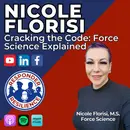
In this insightful episode, we engage with Nicole Florisi, M.S., Director of Content and Curriculum at Force Science, to explore the intricacies of human performance and force science in law enforcement. We discuss the nuances of optimizing responder resilience through practical, cutting-edge research on human factors and use-of-force incidents.
In this insightful episode, we engage with Nicole Florisi, M.S., Director of Content and Curriculum at Force Science, to explore the intricacies of human performance and force science in law enforcement. We discuss the nuances of optimizing responder resilience through practical, cutting-edge research on human factors and use-of-force incidents.
How can first responders enhance their performance in critical moments? What are the latest strategies for managing human factors under pressure? Join us as we dissect these pivotal questions that revolutionize response effectiveness in demanding scenarios. This episode is essential listening for anyone aiming to enhance their understanding of resilience in high-pressure environments.
This Episode is made possible by Strobes N’ More:
Visit: https://www.strobesnmore.com/ to sign up for special offers and receive 10% off your next order.
This episode is also made possible by the First Responder Center for Excellence: Equip Yourself with Excellence for Every Call.
Discover more at: https://firstrespondercenter.org/
Contact Nicole Florisi:
Website: https://www.forcescience.com/
Contact Responder Resilience:
Phone: +1 844-344-6655
Email: info@respondertv.com
Our website with past episodes and more: https://www.respondertv.com/
YouTube: https://www.youtube.com/c/ResponderResilience
LinkedIn: https://www.linkedin.com/company/responder-resilience-podcast/
Instagram: https://www.instagram.com/respondertv/
Facebook: https://www.facebook.com/responderTV/
There should always be an accounting abuse of force, but the accounting needs to come actually in the realm of standards of human performance that are achievable. They don't understand why there's X number of rounds in somebody's back. Even if they want to help a first responder, like sometimes that shows through, and sometimes we do harm when we don't mean to because we just don't understand. I see officers getting out to dry because their memory of an event doesn't match the video. So I help train trainers of where to deploy the skills. How do we put it in the FTO program? Where do we put it in role player training? How do we get them to breathe? And then to normalize doing it together. It bogs my mind that you're a criminal by proxy of doing your job.
VoiceoverWelcome to another edition of Responder Resilience, along with my co-hosts, Dr. Stacy Raymond and Bonnie Rumoli, LCSW EMT. I'm David Dashinger. This episode we'll be speaking with Nicole Florici, MS. She's a director of content and curriculum at Force Science. And we'll be talking about human performance across high-stakes professions and optimizing responder resilience through practical cutting-edge research surrounding human factors and the use of force incidents. We invite you to like and subscribe. YouTube responder resilience, Facebook, Responder Wellness Inc., and Responder TV. We're on LinkedIn, Apple Podcasts, Spotify, and check out our website, respondertv.com, for past episodes and guest information. This episode is made possible by the First Responder Center for Excellence. Discover more at FirstresponderCenter.org and connect with us on X, Facebook, LinkedIn, Instagram, and YouTube. This episode is made possible by Strobes and More, a New England-based leading distributor, installer, and servicer of emergency vehicle equipment. Visit Strobesandmore.com to sign up for special offers and receive 10% off your next order. We'll be right back to speak with Nicole after this. In this family, more of us die by our own hands than by the hazards of the job.
SPEAKER_05In this family, up to a quarter of 911 telecommunicators have symptoms of post-traumatic stress. In this family, our mental health and wellness are in crisis. Our responders are quietly suffering.
VoiceoverIn this family, many struggle with copulated stress, burnout, trauma, disruption, and relationship problems.
SPEAKER_06In this family, we can help the government.
SPEAKER_00With vital information and resources, resilience strategies, and success stories of overcoming the obstacles.
VoiceoverIn this family, welcome to Respond to Resilience. We co-host retired Lieutenant David Dashinger, Dr. Stacy Raymond, and Bonnie Kimley, LCSW EMTV. Our guest today is Nicole Florisi. She's the director of content and curriculum at Forced Science. She instructs in realistic de-escalation and forced encounters investigations, and her passion is brain fitness and first responder wellness. Nicole holds an MS in professional counseling. She has two postmaster certifications. One is in trauma counseling and one is in human factor psychology. She's currently pursuing her Psy D in clinical psychology. Nicole, welcome to Responder Resilience.
SPEAKER_03And thank you for having me. Much appreciated.
SPEAKER_06So, Nicole, I'd like to start out by asking you what is Force Science with regard to law enforcement?
SPEAKER_03So, uh the company I work for, Force Science, we are a host of things, to be honest. We uh do uh many different types of training. So we have a training division, uh, we have a research component to what we do. Uh, Dr. Bill Lewinsky, uh the co-founder of Force Science, him and Patricia Steam, they were the original founders. Um, Doc is a uh police psychologist, basically. Uh back in the day, he started looking at the biomechanics of human movement, basically, and realized we were holding officers uh basically to an untenable standard. Uh, we had unreasonable expectations on their performance. So uh we've done a lot of research in the past about speed of assault, you know, holster speeds, trigger pulls, how fast people can cover ground, things like that. Uh, because over time, what we were seeing is uh, especially in court, when an officer involved in a critical incident, officers were being held to a standard outside the window of human performance. But you have to have science to back that up. So it's paralleled with honestly sports psychology, performance psychology, other types of human movement. Uh, we do that. We have a legal consulting division run by Von Kleem. Uh, if there's a high-profile case in the nation, I can assure you we're probably attached to it uh one way or another. Um, so so we do a lot of that. And so basically, we are across the country, training across the country. I'm really blessed. I work primarily in the training division. Um, and I'm traveling all the time, uh, just all over. I meet so many fantastic people. Uh, you know, I get to go across country. I jokingly say I'm like a poverty jet setter um because I get to go everywhere, but I don't have time to see anything. Uh so uh that's kind of what we do basically, and the foundation is what we consider under a lens of what we call honest accountability. There should always be an accounting abuse of force, but the accounting needs to come actually in the realm of standards of human performance that are achievable. So we talked a lot about that uh when it comes to our training uh and how we need to hold officers, quote unquote, accountable and what that looks like. Uh kind of different from what you would consider some of the newer language that's popped up more recently and what you call the social justice lens of everything, um, just holding people accountable to hold them accountable because they had to do their job. So, what is actually realistic foundation? So that's primarily what we do uh in general with a whole host, a cadre of absolutely fantastic people, and I feel very lucky and blessed just to be among them, to be honest.
Bonnie RumillyIt sounds like a great body of work that is fascinating, and I'd love to know more about it. How did you get interested in this kind of work in force science?
SPEAKER_03So I've been a police officer for 23 years. I'm still currently a police officer. Obviously, I work full-time for forced science, so I cover the street. My chief is very flexible, like once a month. You know what I mean? It's not like I'm out there every day like I used to be. Um he's really flexible with my schedule. Um so what originally got me into force science is actually not the path most people take. They were usually in internal affairs, they were already doing force encounters investigations. But what got me down the road is actually I went to their de-escalation class, and I've been a SWAT negotiator for 17 years. And I went to the class and I said to myself, where has this been all my life? Where has this type of conversation been? Because it's talking not just about the communication pieces, it talks about the tactics that you can't have safe de-escalation for anybody, whether it's the subject you're dealing with, the public or ourselves, without a foundational safe response. And so that's kind of what got me down the road. And then one of our other instructors, who's a forensic psychologist, Dr. John Azar Dickens, he developed this uh basically this assessment piece of the matrix. And basically what it does is it focuses on so officers can read behavior very quickly, like it looks at thought, emotion, and behavior, and it says based on this cluster, what is the most likely communication or persuasion style that's going to work with that person? And I said, Wow, where has this been? Because I don't as much as some people think officers are these horrible communicators and stuff like that, I don't really believe that. I I really don't. I think there's a couple weaknesses that we have. One thing tends to be uh we're very logic-based creatures. You know, we go from A to B to C to D, and we get a little bit more uncomfortable with emotion. So if all we know how to introduce, you know, a conversation is logic, that's gonna backfire when we have somebody in crisis. So what this did is it helped officers recognize they go to emotionally based communication when you're dealing with people in crisis or crisis like behavior, don't meet them with logic, meeting where they're at, but not with logic. And that seems simple probably to all of us sitting here, uh, but sometimes in the heat of the moment, you just kind of go back to what you know, and that's it tends to be very logic-based. So I found that very fascinating. And I said, holy cow, how can I be a part of this? And so I've been very vested in communication and de-escalation for a long time because I think communication is the second best tool we have, second only to decision-making components in our job. And I'm I'm always like, How can we be better? How can we be more professional? How can we add tools? And so I went a totally different route than most people coming in on the force investigation side. Um, and then I did travel down that path because I got put into internal affairs, and I said, Who am I to be able to judge a use of force? I don't have any at the time, I didn't have any background in that. How can I say a shooting is quote unquote justified or not? How can I determine uh uh the decision points or anything when it comes to use of force when I have zero background? And I I took that responsibility very seriously because I thought I could end somebody's career by a stuff with perception or my own lack of knowledge. And then I traveled down not just the de-escalation path, I went down the force investigations and force encounters path. And sometimes I'll be honest, I don't know how I got right here, uh, but I did, and I'm I just feel very blessed to be here.
VoiceoverWell, that's that's wonderful, and um, I love your enthusiasm about what your work is.
SPEAKER_01As firefighters and first responders, we're brilliant at the basics. We master the art of stretching the line and we excel at being there for those who need us most. Yet even the best of us can be caught off guard. We sometimes face unexpected challenges like injury, cancer, or post-traumatic stress symptoms. But you're not alone. The First Responder Center for Excellence is here to equip you with the tools and resources you need to stay informed and prepared. We help you focus on staying strong, safe, fit, and resilient. Optimize your performance with cutting-edge health, wellness, and science information. From fitness to nutrition, medical evaluation to behavioral health, cancer awareness to cardiac health. We've got you covered. Remember, we're stronger together. Discover more at firstrespondercenter.org and connect with us on X, Facebook, LinkedIn, Instagram, and YouTube. The First Responder Center for Excellence. Equip yourself with excellence for every call.
VoiceoverI wanted to rewind a little bit because you touched on the split second decisions and the human factors. Can you get a little uh more specific about how those four science helped understand those split second decisions? And do you have any examples of uh how this understanding has been crucial in resolving an incident?
SPEAKER_03So I have to speak a little aggregate here because I can't really talk about like specific cases, for example. But one thing that I that we commonly see, and I I see this uh for myself outside of work for forced science cases, is people imagine a much different reality. And for example, let's let's say we have just I'll say uh a quote unquote officer-involved shooting and a number of rounds have been fired. Okay, let's just I'm just gonna pick a random number right now. I'm just gonna say six rounds have been fired. There's a big disconnect in that people imagine that in between those rounds are individual decision-making points. And when you have bam, bam, bam, bam, bam, bam, I don't really know if that was six, to be honest with you. Um, people think like you are actually making individual decision points. They're also not taking in consideration the time it takes to perceive a threat, to process that threat. And then once you deal with the threat, you actually have to recognize that person is no longer a threat. So what I'm seeing, unfortunately, is what I call uh frame-by-frame analysis of use of force. With somebody is taking your pausing, right? This shot's good, this shot's good, this shot's good, but these last three, absolutely not. When depend now, I have to say this is depending on the time frame of the shots, it tend to be all one decision-making point. Right. So it's very hard to hold officers to a standard of it takes time to to start a movement, it takes time to stop a movement. And we know that from sports performance, we know that from basic lab settings, now amplify that into a threat environment. So some of what we do is really education because people only know what they know. And if they don't understand decision making, decision making under stress, um, another thing I see, this is this is where I spend the majority of my time. Um, I see officers getting out to dry because their memory of an event doesn't match the video. It that is horrifying to me because of course it doesn't match the video. Uh a video can't be used uh as a proxy for an officer's experience, right? Um, so I see that all the time. And then when it doesn't match, they're called liars. And you're not liar by proxy of doing your job. And we we know memory considerations, for example, from sexual assault victims. You know, we when we interview them, rarely does that quote unquote perfectly match, but that standard that, oh, this is something, uh a very emotionally intense experience. So of course, you will absolutely remember everything in chronological order with perfect detail. People still free that. And you think that happens during shootings. Um happens under really intense moments for officers. So we we're kind of stuck with two standards where uh I think we've done better, although we still need work over here with violent crime victims and sexual assault victims. Uh, but we have changed into trauma-informed interviewing here uh to serve that population better. But over here, we're like, nah, you're a witness to your own trauma, you're a witness to your own shooting, you're a witness versus you just had an experience, and how do I best serve you in that moment? So there's kind of lots of move on piece in that question, if that makes sense, because it's it's talking about myomechanics. Um, it's talking about, well, you should have would have should have been able to get out of the way. You should have been able to move, you should have been able to jump, you should have been able to magically outdraw somebody who already had made a decision ahead of you. So we're we're out there, like I said, I think a lot of it's education. We're trying to educate people in the realities of performance, you know, and optimal performance under these stress conditions. Um, and and sometimes I would say more often than not, we're extremely successful in that. Sometimes people don't want to hear it. That's beyond I can't, you know, you can't change somebody's mind who is unwilling to honestly, I would say go with the actual science. Like if I could get accepted in Clark, for example, memory and video will never ever, ever, ever, ever, ever match. I wouldn't have to testify ever because it would be an accepted practice. So I wouldn't have to be up there explaining why they don't. There's some of these that should be like normal, normal, accepted standards, and we're just not there. Like that makes sense.
Bonnie RumillyClark. Do you think that when we started using body cams with officers, do you think that was an attempt to try to aid this dichotomy that you're talking about?
SPEAKER_03So initially, I would like to say that was it, but in all honesty, body cams were were used for a totally separate narrative. They were basically used to say that we were heavy-handed. People expected a different, they imagined that we're much more heavy-handed than we are, that we're using force against a population and these numbers that don't actually exist when you look at the realities. And so it morphed into what you're talking about for sure. Um, we want we want this objective accounting. And so body cams were supposed to be the answer of an objective accounting of force. Um, and some of my colleagues may disagree at this at face value, but body cams are also subjective. They're a two-dimensional rendering. Just because it's not on the body cam doesn't mean it it didn't happen. Just because you can't see it, you know, doesn't mean it also didn't happen. There's there's a lot of components that go into video analysis. And so um I think bringing body cams into the world was from multitude of reasons. And part of that was uh it was supposed to also, you know, increase what we call transparency, right? Transparency. And that's one of the things it did do. Research shows that introduction of body cams, citizens do believe that law enforcement now has a more transparent relationship with that. But also, if you look at some of the research, it also says now that all the negative things weren't found that people were expecting, there's some conversation about moving away from body cams because it didn't show excessive force in these in these exponential numbers. It didn't show these things that were happening. Um, and so now all I want to go back to my privacy. So it's kind of one of those like you're danged if you do and danged if you don't, kind of things. Yeah.
SPEAKER_06So how does force science influence training programs for officers to ensure that they're better equipped to handle the complexities of their duties?
SPEAKER_03So this is probably my favorite area to talk about of what we do. We have so many training classes built that attend to this. So I'm gonna put de-escalation over here for just a second because we have a very robust escalation program. But we actually have a very specific training track uh that I'm gonna put under the umbrella of what we call force encounters investigation. And what that entails is biomechanics, uh biology, uh a little bit of performance psychology, all the research that goes into understanding human performance and human performance under stress, um, kind of research is brought in from a lot of different places, specific to police and SWAT, but then also performing psychology and sports. And so we have a two-day class that I would say is uh an introductory class that if Nabole rules the world a lot in her own head. If I rule the world, I wish I could get everybody to, everybody, including leadership, like everybody line officer, whipped teeth. And then if I could get even in the two-day class, attorneys, you know, prosecutor, defense, and admin hearing officers, at least we could all converse on the same platform, right? Pass that two-day class, which is kind of like that tells you for a lot of people that go to that, that's like, holy cow, how much did I not know? You know, and they've probably even been working sometimes in internal affairs for a while. And it is the the cognitive dissonance you see in that class, and I'll be honest with you, I've had people absolutely triggered in that class, uh, investigators, not just people who experience things, but investigators who have been like, I can't, you know, they'll pull me aside, Nicole. Like, I look back on my career and I realize I I hosed some officers. Like, right, you didn't know, and now that you know, you you can't beat yourself up for all the stuff you did in the past, like we can't do that. Now that you know better, do better. Right? Now you can bring this stuff to the table from an educated platform. So the two-day to me is the foundational that's force encounters investigation, and it hits the components of attention and memory and movement and speed and all those kind of things. Uh, and then we have a five-day class, which is that's a pretty intense review. It's a 40-hour class. It's uh the force man, it's basic analyst class. And I would say to me, anybody that's working in investigations, internal affairs is doing any type of force review and is responsible for you know making a determination of force is justified or not, or however they're working down to go to that class to include attorneys working cases. And we get quite a few prosecutors and you know, people on civilian review boards and stuff like that who attend the class. And then the what I call like the king class of them all, we have a very, very intense 18 week that's called the advanced specialist class that really prepped people to actually really more. Into expert witness testimony. So you're reviewing cases, prepping reports, learning how to write reports, understanding the subtleties of testifying in these types of cases. So your testimony is not barred, understanding how to build that. And then it takes a deep dive into all those concepts. So I think we are extremely robust in what we offer for people to be able to do. And on a side note, I would also say if I ruled the world, I wish all anybody who's working with first responders from a therapy perspective at minimum should go to the two-day, but if not the five day. Because if a therapist or psychologist doesn't understand biomechanics and speed of human movement force encounters, we all have these unconscious compromises, right? But if they don't understand why there's X number of rounds in somebody's back, even if they want to help a first responder, like sometimes that shows through. And sometimes we do harm when we don't mean to, because we just don't understand. So sometimes some therapists, it's not that they don't want to do good work. It's not that they don't want to work with the population. Um, but if they don't understand all the facets of force investigation and force encounters, or why did, you know, there was no gun in the hand, why did we do that? Or how much, you know, what happens under compressed decision making, it just may end up in that moment. And we don't want to marginalize officers uh for that experience just because we don't understand. So um it definitely hit smaller populations too. And we've had uh you guys after Robbie on your show, you know, she went to the fight last, and I love working with her because I I've talked to some of her clients, you know, they've shared with me, they've gone to see her, and they have told me, you know, okay, she got it. You know, she really understood like the these like the actual psychological aspects of my excluding. And you know, that's too here. So we can serve a lot of people, uh even just outside the law enforcement respected as well.
VoiceoverIn the world of emergency response, every moment counts. That's why you need equipment you can trust. Strobes and more is here to ensure you're always ready to respond. Born and bred in the USA with 30 years of experience, Strobes and Moore is a New England-based leading distributor, installer, and servicer of emergency vehicle equipment. From police to fire, EMS to public works, we've got you covered. We partner with top manufacturers like Wayland, ProGuard, SoundOff Signal, Habit, Federal Signal, and many more. We offer a robust inventory of over 2,000 SKUs from 40 plus brands. Guarantee you'll find what you need. Our online store is easy to use, and with nationwide distribution, you'll get our products within 48 hours, wherever you are. For local agencies at Rhode Island and Connecticut, our specialized installation services deliver an unmatched upfitting experience. We do the hard work so you can focus on saving lives. Join our dealer network for preferred pricing and exclusive benefits. Discover why Strobes and Moor is the trusted name in emergency vehicle equipment. Visit strobes and moor.com to sign up for special offers and receive 10% off your next order.
Bonnie RumillyI wanted to pivot a little bit, and because we love talking about the psychology of the officers, I'm wondering if you could speak to a little bit of how investigations themselves traumatize officers.
SPEAKER_03Well, I can tell you this. I have a specific class called the re-traumatization of officers, how investigators traumatize and re-victimize them. So uh that's my respect right there, and we can definitely guide in. I want I'm starting from the platform though, there's no malintent. That's where I'm starting from. People know what they know. However, uh it's in my experience, this is anecdotal only. In my experience, it's no different than the research we see with sexual assault victims, and this is horrifying. I tell officers if you ask sexual assault and rape victims what was the worst part of their experience, shocking it's not the rape. What is it? It's the interview by you. It's the interview you did. That's horrifying. And it's still current research. That's that's not changed much. So if you think it's different from officers, it's not. I mean, that's the reality. We are we are victimizing them, we are traumatizing them, uh, we strip them of their identity. Like, if you guys know this, this is your world. You talk to a police officer and you ask them the question, who are you? Who are you? Rarely do you get a mother, I'm a father, I'm a musician, I'm a hobbyist, I'm a this, I'm a that. What are they? I'm a police officer. Our identity is intricately tied to us as a human being, whether you're male or female, right? So now you have done your job. If you've been on true police, and how do you support us and got involved in a critically serious shooting? You have done everything we have trained of you, everything we have asked of you. But by but by doing so, now you're a criminal. Uh we strip you of your identity, we put you in the back of a car. No, not well placed. Some places have good protocols in place. Let me put those people over here, the people doing a good job. But there's a lot of people, they're putting officers in the back of cars, they're taking their weapons away, they're interviewing them in the same room. They just interviewed the child's sexual molester, right? Um, they're like, it's not a soft interview. It's what I call a gotcha interview. I gotcha, you're a liar. Well, holy cow, people, if they were a liar in the first place, and this is truly who they are, they probably shouldn't have been looking the past 20 years if they're this quote unquote awful, horrible human being, instead of taking everything that we know about traumatic stress memory and what happens to people under this extreme, you know, stress performance, like this acute psychological stress arousal, and taking all of that. So, investigators, again, I'm just gonna go, it's uh from a lack of education per se. That's where I like to operate, that there's no maliciousness about it. But it is horrifying. And you'll see, I'm doing I'm probably doing my dissertation on this, like the role of agency betrayal in post-traumatic stress recovery. Um, when the agency is the roadblock, like it's an absolutely justified stupid. The officer even did everything, they're criminally cleared, they're everything. And the agency is just a brick wall. You know, they treat the officer like crap. They, I mean, we want to wonder why officers get trauma. Let's swoop the critical incidents over here and talk about how agencies create isolation. You can't talk to your friends, you strip them up their work family, you treat them like a criminal. It blocked my mind that you're a criminal by proxy of doing your job. It frustrates me. Um, it doesn't mean again that there's not an accounting for the use of force. Absolutely, of course you're serpent. Well, if that's the legal standard. You're not a criminal by proxy of doing your job. And you're not a criminal because everybody feels all sorts of ways about a video they're too uneducated to watch. That's a reality. Because we release videos even in the lens of transparency. And I'm a human being too. I can look at a video and have an absolute visceral reaction to it and go, oh my God, you know, that doesn't look good. But I'm very lucky enough to have enough background to go, well, this doesn't look good, doesn't mean everything's not justified. Let's take a breather, people. But when people are left with that, you guys have probably seen that in your life. Just a video released under the transparency that leaves you horrified. Yeah. Like like judging the officer, not intentionally, like human beings, we're judgy. We're just judging. Yeah, right. Like feel awake about it. And if you never hear anything else about the video, if there's no narrative ever given, no explanation, no anything, that lingers with people. And that's all they remember is that feeling instead of what are the realities. And so to me, uh, if we could morph trauma, trauma-informed interviewing and cognitive interviewing, a type of interview called cognitive interviewing, into the process of critical incidents, I think we would be serving our population in a much healthier way.
VoiceoverI would really like to find out, in your opinion, uh, by and large, do officer wellness programs work or not? And if not, why not?
SPEAKER_03So, my experience is officer wellness programs don't change anything. The only thing that changes something is officer wellness culture. It has to be a culture change at the agency. Um, wellness programs, in my experience, tend to be another chap the box. Honestly, it's no different. Oh, you guys suck at communication, here's de-escalation, here's your check-the box de-escalation training. Oh, you guys did something wrong. Here's the shotgun memo and some other random training. You can be suck at this, check the box over here. I see a lot of agencies, and I'll say it's good intent. They want their officers to be healthier, but they're rolling stuff out. One, it hasn't been vetted, they don't vet their practitioners. That taps my butt quite a bit. You know, you guys have heard the horror stories, probably even on your own podcast, about officers. And let's take all, let's take all first responders. Let's let's not just say officers, but first responders who've gone to therapy to an unqualified trauma therapist. I don't care what letters they have their name, what training they've attended. Therapist was not ready for what went out of the mouth, right? So the practitioners aren't being vetted. The wellness program has checked the box. I hear horror story after horror story about command staff ordering peer support staff to tell what has been happening in the peer support. So basically, now you're caught between the confidentiality part of peer support, right? And the fact that you're being ordered by a lieutenant or a captain to disclose what an officer told you to use it against them. Um, it's not the wellness program that to me is the problem, it's the inherent, unhealthy cultural practices that are underneath the wellness program, which is why they're not fixing anything. Because we shut wellness down officer's throat in half for a long time. But let's look at the military. Let's be honest, the military has the best research on PTSD that ever existed. All good stuff hasn't changed the suicide rate, hasn't changed a damn thing. So then what's the problem? The problem's the program. You know, it has what are we what are we doing to turn this from the program into culture, like where everybody's okay? I mean, David, you were in the fire service, how long could could you ever be like 20 years ago? Could you say, man, I'm not okay? I feel like eating a bullet.
unknownYeah.
VoiceoverEven less than that.
SPEAKER_03And officers to this day, they feel they can't say that. You know, when I talk to them, I try and normalize that, like, right. I mean, okay, it's a bit extreme, but I mean everybody gets a bad thought like that once in a while. It doesn't make you weak, it doesn't make you anything. Like, people feel all sorts of different ways, and it usually changes. But if we think cops are gonna say their statements still, they don't want to be strapped with their gun or gone. Like just for being violent, what pisses me out, you know. Um when when you experience cumulative stress and cumulative trauma, and then you put a program in place, it sounds really great, it mirrors all these best practices, but the second your officer shows a sign of weakness, you kick them to the curb. I mean, so that's my frustration. So there's some really great progress out there, and I won't take away from the agencies doing a good job. The problem is to me, it's just it's it's just all talk. And then the other challenge I see is you know, people want to make money. The what and the first responder wellness area is the spot that people want to make money in. So there's a lot of cottage industries pumping up, um, people who are unqualified uh to deal with first responders. Um, and I'm just and I'm talking not just it person therapy, I'm talking it's apps and it's this. You know, like for example, if I hear somebody promote meditation for trauma one more time, I'm gonna lose my mind because nobody's having a conversation about how bad meditation is for unmanaged trauma, right? But like you'll see people just do this and do this, and you'll be you'll feel better. And it's like the problem is the departments think they're doing the right thing, but then they don't have anybody qualified enough to vet the program or to vet the therapist, you know. Um and so that that's really frustrating to me. And I know I sound like a negative Nancy, to be honest, but a challenge for me is when I'm out there teaching, it's not the people who have the good experiences coming to talk to me and share with me how they've been traumatized or victimized by their agency. It's the people who are still struggling. You know, who can I hopefully get them to a practitioner that can help them? That I could like I'm lucky enough to work with a robust network that hopefully I can get them to a person that can serve them in the manner that is necessary, versus uh like, and I'm not marginalizing the the letters, but like, you know, you're saying LMFT or something like that, who's not qualified for the trauma, then they're like, Nicole, my therapist started crying with me. Nicole, they actually told me to shut my mouth, they can't handle my trauma. And I'm like, we're gonna go back and treat it.
SPEAKER_06No.
SPEAKER_03Here, both of you who do like clinical work, you probably see the same thing. Our friend forest.
Bonnie RumillyOh, for you. Yeah, right. We like I see it all the time. Um, you know, there's a lot of troubling things we hear. Another one that we've been hearing a lot lately is that therapists are not calling first responders back. That's their 911 call. So if they don't get a call back from you to even just say I'm full, but let me find someone for you, they're never calling again. They've lost faith at that point.
SPEAKER_03Right. Oh, I know, because it's so hard. It's so hard for us as first responders to reach out and we finally get to that point and get ignored. That's the expectation, like we're not gonna do it again. Or I would say it's a rarity. So again, I it's it's just so troubling because I believe agencies want to do the right thing. That's always where I operate from. I think want to do the right thing. Right. But when the right thing is, I'm gonna put a check the box program into practice, and I'm not gonna emulate that as leadership, or I'm gonna be like, it's okay to ask for help, but the second you do, I marginalize you. Or you can't just feel like a human being. Like, it it is understandable that people have all sorts of feelings about everything with all the cumulative stress and cumulative trauma they experience, and they can feel all sorts of ways about it. And we haven't gotten to a point where we've normalized that yet. Where we're just we talk about it, but we don't normalize it.
VoiceoverIntroducing FDTs, the only gourmet tea crafted with first responders and their families in mind. Crowdly firefighter and veteran-owned, our collection of gourmet organic teas is uniquely designed to honor those who are on the front lines to protect our communities. At FDTs, we believe in quality. That's why we source the freshest organic tea available, offering you the most popular flavors that not only excite your taste buds, but also bring comfort and relaxation to your daily life. Indulge in our specialty blends: classic Earl Grey, soothing chamomile, vibrant green tea with ginger root, decadent chocolate, salty caramel black tea, and robust Irish breakfast. FDTs makes for a special and unique gift, perfect for any occasion or season. Taste the difference and show your appreciation for the rescuers in your life with FDTs. Exclusively available on FDTs.com and in our Etsy store, Fire Department Prince.
SPEAKER_06So Nicole, how do you envision fixing that?
SPEAKER_03You know? So like the most three time is integration of the skills. Because I can't change the agency. The only chance I feel like I have is I can change the individual officer, regardless of what's going on at your agency. So I don't just talk about skills. I look at when I teach an entire class. I don't care if there's 50 people, 80 people, or five people. I treat it like it's a client session. And for me, when I teach skills to my clients, I'm sure you guys do something similar, but like right, I demonstrate it. We do the skill together. They demonstrate it and teach it to me, and at least I know they know it. So when I teach, nobody leaves my class without we do that as a class. Like we do the cyclic side. You know, I teach me, we do box breathing with the MDR. Like I teach Robbie's family box breathing, where you add the component to it, and we're doing it together. And I talk about where we integrate it training, like regardless, simulator or role player. Um, how what are we doing our breathing? Because I I basically is this example. I pick somebody in class and I say, Who can't play piano in class? And you know, somebody will raise their hand, right? I say, okay, imagine I'm rolling up a piano in front of you. Here it is 88 keys, 44 black, 44 white. I'm gonna teach you how to play Doray Mean, right? I'm gonna talk to you about the piano for the next two years. It doesn't mean you can play piano. You can be well educated. The the challenge we are in first responders that you're hitting on Stacey, which I think this is it. There's a big difference between education and training. I can educate you all day long, but if you if you don't deploy the skills, you don't actually do an application of the skills, we fail. So I help train trainers of where to deploy the skills. How do we put it in the FTO program? Where do we put it in role player training? How do we get them to breathe and then to normalize doing it together? Like if I have a second person in my car, and that person starts, maybe it's our first active threat call, right? It's our first active shooter, and I can start to hear some chest breathing, you know? Nobody wants to hear, right? Instead of, hey, more on breath, which is what you hear in the law enforcement community. How about, hey, do me a favor, breathe in through your nose with me and hold it. And we normalize it together. You know, so that's where I spend my time because what we do, but and that's a specific class I teach actually basing off of Robbie's book, but it's it's called Resilience. Stop talking about it and start teaching it. Um because we have to teach the skills now. It's the individual officer to do them. I'm not, they're chirping on them at night on their little shoulder, you know. Hell, sometimes they can't even get them in the gym, but the bottom link is they still have to be willing to practice the skills. So, I mean, there is a an ownership component, but if we don't tell them where to put it, how to integrate it, because the goal, there's two different goals. There's the goal after an event, right? There's the after-event goal where we want their brain and amygdala to settle down so they can be in a more quote unquote relaxed state. But then there's the on-duty goal where these skills like the cyclic psi or rounding or body scanning, are to maintain an optimal performance arousal level. So we are maintaining that, right? So they're two different conversations brain health and fitness over here, and then optimal performance, and then you get to our job. No, they have a lot of overlap. That's a nice thing. They overlap a lot, but the officers have to do it. I mean, we're complicated health plans. If hydration, sunlight, and clean eating don't fix it, then we need well right that's out. But breathing fixes most of life's problems, and if we know where to deploy that, then we're good. So that's how I look at it. Do, do, do, not talk, talk, talk, if that makes sense.
Bonnie RumillyNicole, you had mentioned a reading or a book from Dr. Robbie Adler Tapia that I wanted our listeners and viewers to pick up on. It's one badge, one brain, one life. It's an excellent workbook. So for any law enforcement or any therapists listening who help law enforcement, it's a great tool. Um, Robbie wrote a lot of really great things in that book. Um, it's easily accessible online. So I wanted to just highlight that.
SPEAKER_03Yeah, I was really lucky. Um, we just did our fourth science conference um and I taught a component on resilience, and I bought we bought like 160 of Robbie's books, so anybody that attended my class got the book. Um to me, that book, if I could give it out day one of the academy, day one, and the next best day is right now to everybody. I like seriously, if all All they read is the chapter on resilient skills. If that's all they read, if they ignore the whole rest of the book, I tell people, if you're not gonna read the rest of Robbie's book, I want you to go right to the section on resilient skills and brain fitness and do things. It's not, you know, I tell caps, like I a lot of times I teach, you know, the uh like the hot drink grounding. I'm using my energy drink, right? You know, but the hot drink like inhaling the aroma, and uh, you know, I get all woo-woo be one with the liquid and feel it, you know, stuff like that. I go, You guys, it takes 30 seconds of your day. 30 seconds of your day. I said, You can do that shift briefing. I go, and it's funny till it's culture.
SPEAKER_04Right?
SPEAKER_03You can like everybody can laugh at you or laugh with you if they're being nice, right? And it's funny till you do it shift briefing and you get a hot call, and everybody's like, it turns into oh god, we didn't have time to do our grounding skills today. That's the shift we need. Laugh at me, you can laugh at me all day long until you're laughing with me, and then you're just doing it. And why Tommy said you don't have to believe it works. It's kind of like why there's a little bit, I love EMDR. I think EMDR is the answer to most of life's problems as well, or at least some sort of bilateral processing, you know? Um I I I give these out all the time too. I say the slinky is the answer to most of life's problems, and you know, I just saw it at the first science conference tonight, a chief he went and bought 500 slinkies for his department. He's like, I need tangible things that first responders won't laugh at, right? They kind of get funny with fidget spinners. People love slinkies, you know. Then so something's so simple. I tell Kafka, you know, after a critical incident, even if you feel justified, I said, you're gonna go home. You're gonna you might think you're gonna go to bed later and then you pop awake, you know, and you're just you're staring at the ceiling. So you start ruminating. I said, that's what we do where humans re-ruminate, even under the best of circumstances, right? I said, just do me one favor. If you won't get out of the bed and pace, someone's gonna keep a slinking next to your gut, think the same thoughts. I'm not here to tell you not to think about something, but can you do me the favor and just do this while you're thinking? Just give me a little bit of bilateral processing, you know, just something. Yeah. Uh until then I talk them through that stuff. Because I'm like, it's not, we don't have to, you know, I joke, I said we don't have to like transcendentally meditate for two hours, you guys. It's like 30 seconds and 60 seconds. And that's a bigger button. They're willing to do smaller pieces that sound accessible. Um, you know, and that's why I say, you know, I and I've had a lot of them say EMDR didn't work. I'm like, hear me out. My experience is if EMDR didn't work, they said a couple different reasons, you know. Um, one, maybe uh it was the area you just weren't ready, you weren't stabilized for. I said, but in my experience, it's not the client, it's a practitioner. Let's admittedly agree that not everybody is trained to the same level of EMDR uh to deliver it to a client as others. I mean, some people are just like going online and grabbing a certificate and claiming to be EMDR specified. That doesn't make them safe for first responders. I said, so there's a lot of components about why things don't work. I said, but you know what you can do? You can put your headphones on, you can put your audio in stereo, you can play with a slinky, and you can walk. And you can react. You know, I said, so do a little bit of that, and you'd be really surprised the little changes it makes because it's little changes of where we start. So um I think I can change the world with Dr. Robbie's book in a slinky. I should have bought stock and this is fantastic, you know.
VoiceoverUm, we appreciate those takeaways because they're practical and um and something that can, as you said, be done in a very short time frame. So those are the things that uh yeah, we kind of need to integrate into our into our professions, um, especially when it's something that's you know, it doesn't have a woo-woo sounding name. And so we appreciate you for that. And Nicole, um, anything coming up, trainings, um, speaking engagements, books, movies, um, and um well, let's see.
SPEAKER_03Louis at the end of March, uh, it's called ILEDA. Um there is a host of fantastic instructors there, a host. Um, and I'll I'll be there, some of my colleagues will be there. And I usually teach a piece on resilience. So this year I'm gonna be basically teaching a piece on psychological kevoir and of course integration into the training program. It's a training conference. Um, we're kind of all over the place. I also do anybody can reach out, an agency. This is it, I mean this. If you are with an agency, this is free from me to you. This is this is a bigger conversation than I will come to your agency and you can pay me to teach like an eight-hour resilience or 16-hour. But aside from that, if there's anybody in a police agency listening, all I'm asking from you is you give me 15 minutes with your people on Zoom. I will teach the resilient skills in 15 minutes to your people, to your squad, to whoever. And then my ask is simply this if you're not ready to do it, I'll do it for you. And then when you're ready, pay it forward for me. Like, it's not about money, right? Like, I mean, of course, I make money in training and I think I, you know, I I make money at literally now, like, you know, I can make money as a therapist, and oh that's great. Um, but it literally takes 15, 20 minutes of my life to teach some resilient skills. And if that is what saves somebody, then good. And I just want people to know, you know, if you have suicidal ideation, you're not alone. It doesn't make you a crappy human being. Like, welcome to being human. You know, like there's nothing wrong with you for feeling the way you feel. Um, just it's hard to ask for help, um, but be willing to do so, you know. And I know it's hard. And sometimes I think I'm asking like the world of people not remember for how we've been in the past, but uh but seriously, you guys will have my contact info.
VoiceoverJust shout out where people can find you, your website, any social media.
SPEAKER_03Yeah, so I'm on Facebook, I'm on LinkedIn, Nicole Floresy. Um you can get a hold of me through the Force Science website at wwforce.com. Um, it's Nicole Floresy. If you type that in, you'll find me on Facebook, Nicole Florici on LinkedIn, um, anything like that. My my personal email, I don't care if who has this, it's N like Nicole, M like Marie Floresy. I should probably spell that. It's F-L O R I S I at Gmail. And seriously, I just want people to know they can reach out. Uh, I only need 15 minutes of your time, and I don't care if it's law enforcement, fire, EMS, whatever it is, I'm happy to take the time to teach like a couple grounding skills and the breathing skills that work. Um, box breathing has its place, but the cyclic psi is much better in dumping physiology in the midst of one of these critical incidents. So if nobody knows about it, they can't deploy it. Um, so whatever that is. So I just want your audience to have that. Um, I would get a hold of Dr. Robbie's book. Uh if if you're in leadership, the best thing you can do for your department is buy a copy of that book and distribute it to your people.
VoiceoverWonderful. Bonnie, final thoughts.
Bonnie RumillyIt was great talking to you. I feel like there were multiple episodes that we could do as a follow-up. But thanks for the work you're doing and thanks for becoming one of us because you're gonna help us help just more law enforcement and other first responders. So thanks for joining the team. Thank you.
SPEAKER_06And I hope that as forced science continues to grow, that maybe the public will catch wind of, you know, what the limitations of human reactions are in a crisis situation and not be so judgmental of especially law enforcement.
SPEAKER_03I love that. Thank you. That means a lot to me because I think you hit the nail on the head. The more we can do with education, the better off we are.
SPEAKER_02And thank you for the invite. I really appreciate it. And thank you again, all of you. Take care.
VoiceoverRemember to like and subscribe, YouTube, responder resilience, Facebook, responder wellness, think, and responder TV. LinkedIn at Podcast Spotify. Go to our website, respondertv.com for past episodes and guest information. Until the next time, stay safe, be kind to yourself. Take care.

Director of Content and Curriculum at Force Science
Nicole is Director of Content and Curriculum at Force Science. She instructs in realistic de-escalation and Force encounters investigations. Her passion is brain fitness and first responder wellness. Nicole holds an M.S in professional counseling, two post masters cerrifications, one in trauma counseling and one in human factors psychology. She is currently pursuing her PsyD in clinical psychology.


