


 Apple Podcasts
 Spotify
 YouTube
 RSS Feed
 Taking the Cape Off with Patrick J. Kenny | S5 E25
Join us for a powerful conversation with Retired Fire Chief Patrick J. Kenny, author of “Taking the Cape Off: How to Lead Through Mental Illness, Unimaginable Grief, and Loss.” We peel back the layers of leadership in emergency services and what it truly means to lead with strength and vulnerability.
Join us for a powerful conversation with Retired Fire Chief Patrick J. Kenny, author of “Taking the Cape Off: How to Lead Through Mental Illness, Unimaginable Grief, and Loss.” We peel back the layers of leadership in emergency services and what it truly means to lead with strength and vulnerability.
Chief Kenny shares his personal story, the impactful journey of his son Sean, and how loss reshaped his understanding of resilience and responsibility. We'll dismantle harmful myths about mental health and suicide that can hinder us as first responders and explore the stigma that often silences those in need.
Discover why effective communication is a game-changer in navigating personal and professional challenges, and whether current training adequately prepares firefighters to tackle mental health issues.
Get ready to learn, reflect, and equip yourself with the tools to foster a culture of compassion and strength in your firehouse and beyond. Tune in for this eye-opening discussion that promises to inspire your journey in leadership and mental health advocacy.
🥊 Incredible opportunity! One lucky winner will walk away with a **FREE FightCamp package** valued at $799! This package includes everything from a free-standing boxing bag to a heart rate monitor—perfect for leveling up your training. **Don’t miss your chance to win!**
🥊 Enter by June 21, 2025, at https://www.respondertv.com/p/fightcamp/
Thanks to the CRACKYL App:
This episode is made possible by First Responder Center for Excellence:
Website: https://firstrespondercenter.org/
This episode is also made possible by Circl Brain:
Website: https://www.circlbrain.com/
Contact: sales@circlbrain.com
Contact Patrick J. Kenny:
Website: https://patrickjkenny.com
Instagram: https://www.instagram.com/patrickj.kenny
Contact Responder Resilience:
Phone: +1 844-344-6655
Email: info@respondertv.com
Our website with past episodes and more: https://www.respondertv.com/
YouTube: https://www.youtube.com/c/ResponderResilience
LinkedIn: https://www.linkedin.com/company/responder-resilience-podcast/
Instagram: https://www.instagram.com/respondertv/
Facebook: https://www.facebook.com/responderTV/
No, I said I I don't really think we're heroes. I said we take heroic actions, but those situations pick us. We don't usually pick them. We still look at it like there's a stuff like mental illness is a choice. It's a character deficiency. It's a weakness and all that stuff. It's not. Nobody chooses that. We don't walk into a pediatric cancer unit and stick our head in the door and go, hey, you know, if you really wanted to, you could get up out of that bed. You're just being lazy. And we don't allow leaders to be able to go, it's okay if you don't know what to do. But you damn well better find out where's the resource that does know what to do. When you say, my people are my most valuable resource, prove it. Prove it.
VoiceoverWelcome to Respond Resilience, along with my co-host Bonnie Rumley, LCSW, EMT, I'm David Dashinger. Today we're honored to have retired fire chief Patrick J. Kenney. He's a true advocate for mental health awareness and the author of the groundbreaking book Taking the Cape Off: How to Lead Through Mental Illness, Unimaginable Grief and Loss. We're going to unpack what it means to lead with strength and compassion in the face of mental health challenges and how do our preconceived notions about mental health impact our effectiveness as firefighters, leaders, and human beings. So get ready for an inspiring and eye-opening discussion that'll reshape your understanding of leadership and resilience. We invite you to like and subscribe YouTube Responder Resilience, Facebook, Responder TV, LinkedIn, Apple Podcasts, Spotify. Go to our website, respondertv.com, for past episodes and guest information. And don't miss your chance to win a free, complete fight camp system valued at $799. We'll have more details to come later in the show. This episode is made possible by Circle Brain. If you're a first responder, it's time to take brain health seriously. Go to circlebrain.com to learn more because the toughest battles deserve the sharpest minds. There's a new app built by firefighters for firefighters, and it's called Crackle. Download the app now for free as a legacy member and get early access to exclusive content, tools, and updates as they drop. Get the free app at crackle.responderTV.com. We'll be right back to speak with Chief Kenny after this.
SPEAKER_07In this family, more of us die by our own hands and by the hazards of the job.
Bonnie RumillyIn this family, up to a quarter of 911 telecommunicators have symptoms of post-traumatic stress. In this family, our mental health and wellness are in high risk, while responders are quietly suffering.
SPEAKER_07In this family, many struggle with job-related stress, burnout, injury, sleep disruptions, substance abuse, and related controls. In this family, we can help the helpers.
VoiceoverWith vital information and resources, resilience strategies, and success stories of overcoming the obstacles. Welcome to Responder Resilience. We co-host retired Lieutenant David Dashinger, Dr. Stacy Raymond, and Bonnie Rimley, LCSW EMTV. Hey First Responders, we have an incredible opportunity just for you. One lucky winner is going to walk away with a free fight cam package valued at $799. Thanks to the amazing partnership between Fight Camp and Responder Resilience, you could kickstart your fitness journey in a whole new way. So what's in the fight cam package? You get a freestanding boxing bag and ring, white fight cam boxing gloves, fight cam console with four trackers, fight cam quick wraps in the kickboxing angle wraps, and a heart rate monitor. Fight camps trainers help you level up with fun, effective, motivating workouts, so don't miss your chance to win. Simply head over to respondertv.com, click on the fight cam tab at the top of the page. Make sure to enter before June 21st, 2025. Get ready to transform your fitness routine. Go to respondertv.com. Enter by clicking on the Fight Camp tab at the top of the page. You must enter by June 21st, 2025. Good luck. Our guest today is Chief Patrick J. Kenney. He's been a member of the fire service for over 42 years, and he was the fire chief in Hinsdale and Western Springs, Illinois. He served as a chief officer for over 25 years. He's spoken in multiple countries on May Day for mental health for over a decade, and he's the international best-selling author of Taking the Cape Off, How to Lead Through Mental Illness, Unimaginable Grief, and Loss. And he's had articles published in mental health leadership, fire safety, and fire code challenges. The Illinois Fire Chief Emeritus Association awarded him Fire Chief Emeritus status, and he was awarded the Fire Engineering International Society of Fire Service Instructors, Instructor of the Year Award, 2020-2021. Chief, I had the pleasure of hearing your presentation in Orlando not too long ago. It's a pleasure to welcome you to Respond to Resilience.
SPEAKER_06Well, it's a real honor, and thank you, David. You read that just like my mother wrote it. So it makes me sound like I'm really impressive. I'm very honored to be be on here. I've done a lot of research since we met about the wonderful things that you're all involved. And then uh the more people we have in the pool trying to help our first responder family, the more, the more we have a chance to say something. So I'm very honored to be on today.
Bonnie RumillyWell, thank you. And ever since David came back from that conference, he said, you know, Bonnie, you have to meet him. He's just wonderful. And been really looking forward to speaking to you today.
SPEAKER_06Well, thank you. I'm I'm uh as I said, I'm honored in any way I can help. I'm I'm looking forward to it.
Bonnie RumillyGreat. Well, I'd love to start asking you about the cape metaphor. So in your presentations and in your book, you refer to taking off the cape. And can you walk us through what the cape is and what it stands for?
SPEAKER_06Sure. Um, and it's it's funny as I look back um growing up, I was uh only child of two Irish parents, both born in Ireland, uh actually in the same town, never met each other, met at a dance in in Chicago and got married. Um people don't believe that you could be have an Irish Catholic family and only have one child, but they did, uh, probably because I was a handful. But growing up, I I didn't have a very good self-image. My godmother lived with us, so there were like two moms feeding one child, and so I was real heavy. And uh my dad was a great athlete in Ireland. I had to tie my shoes. Um, and I look back now and I used to walk around with a towel around my neck. Um, I know my godmother always used to worry, she's like, that safety pin's gonna pop and you're gonna hurt yourself. So I I needed something even as a five and seven-year-old to go to protect me against what I felt were negative things. Um, I didn't realize that until much later on. But once I got into the fire service and it was like, okay, you're trying to save people, um, you fit cut of that superhero mantra, which which is good. So my theory is everybody who gets into a first responder profession, firefighter, police officer, nurses, dispatchers, I believe when you start that vocation, you get a cake. You don't see it, but you have it. And you put it on, and it allows you, I think it's a gift from God to go do things that nobody else can do. See things, hear things, smell things, remember things. And in the moment, you can step above that and hopefully make somebody stay better. And we really believe that. But the problem with it is we don't know about its limitations. And what the limits of the cape are is that it doesn't always work. You're not God, you can't save everybody, and we as first responders will never ask for help. We don't see bravery as asking for help. See bravery is running into burning buildings, pulling somebody out of a car that's on fire, doing CPR at a baby, but saying I'm in trouble, I need a little help here is a is a sign of weakness. And the cape really perpetuates that feeling. Well, I've got the cape, I can do it. I mean, people look to me, that's what I do. And you really have to realize that sometimes you have to take it off because that cape only works about 2% of the time. The other 98% of the time, in my case, I'm I'm a dad, I'm a husband, I'm a friend. Um, that cape crusader doesn't show up very often. And uh I didn't realize that until way down the line when I suffered some losses that I really felt were all my fault because I had a cape and it should have worked and it didn't.
VoiceoverHey, first responders, you face tough calls and hazards every shift, but the fiercest battles, they're happening inside your brain. Meet Circle Brain, your essential mental training partner. Your brain adapts to stress, trauma, and exhausting shifts, but not always in ways that serve you. These invisible changes can show up as fatigue, brain fog, irritability, or memory lapses long before they become obvious. With a circle, you get more than a gadget. Simply put on the headset and play a quick game. In minutes, you'll receive personalized insights into your mental speed, power, and focus. It's built on 60 years of neuroscience research and designed to boost the cognitive resilience you need to crush every challenge.
SPEAKER_01After 21 years of the first corner, I didn't realize how compromised my brain actually was until Circle showed me. And thankfully, it's helped me increase my overall brain health.
VoiceoverIf you're a first responder or support those who are, it's time to take brain health seriously. If you're ready to level up your brain game, contact us now at sales at circlebrain.com. Circle. Because the toughest battles deserve the sharpest minds. Chief, part of your book title includes the words unimaginable grief and loss. Can you speak to what that is about in your life? What has that been as far as your journey goes?
SPEAKER_06Sure. So when I was 14, uh my dad was my my hero, and uh he one truly a day after Christmas, um, he seemed like he was fine. Um got sick that day, started throwing up blood clots. Uh, we called the ambulance, and um he very anti-doctors. We called the ambulance, he was very compliant. Got on the stretcher, was going out the door, and he my dad was in his prime, was just built like a great athlete, but now it was older and so heavy, but still very, very strong upper body. And as he was going out the door, he blocked the door with the stretcher, and he just looked at me and he's with big tears in his eyes and said, Ben, I'll never be back here again. And I I had never seen him cry. And I'm like, No, no, it's fine. I know you're scared, they're gonna they're gonna fix you up, you'll be good. Um days preceding that, I had had a dream, a nightmare, um, where he had died, and I saw him in the casket, I saw the clothes he was wearing, I smelled the flowers. To this day, if I go to somebody's wake and they have those flowers, I have to breathe through my mouth because it'll trigger me. Um I woke up thank God I went, Oh man, it was just a dream. Well, now I'm thinking about this as these three and four days go by before we go to the hospital, and my mom is trying to reassure me it's gonna be just fine. Which for a long time I had a hard time with afterwards because it wasn't going to be. But I get it as a parent now, you you can't come to grips with that. So we went to see him on New Year's Eve. Um walked in the room, and here was a man who was very strong faith. And I remember as a little boy walking past his bedroom, and this big man there in his boxer shorts and his t-shirt on his knees saying his prayers every night going to bed. And he's in that hospital bed, and he's as yellow as a banana, and he's making the sign of the cross over and over and over again, and he's afraid. And again, something I'd never seen before. And that little voice that I believe all of us have, and everybody has a theory where it comes from, but we all have it. That little voice said to me, You need to say something, he's dying. You need to tell him that 14-year-old who's smart as back and knows more than he did, was just a 14-year-old, and and you love him and and give him a big hug. That's the first time I put the cape on. Like, nope, gonna save the day. Dad, you're gonna be okay. This is fine. This hospital is full of doctors, they're gonna do great. So I never said it. Walked out next day at 11 o'clock. He died of a massive stomach hemorrhage. Um, he was full of cancer. Um doctors said afterwards, yeah, he he knew he was in an awful lot of pain. I don't know how he made it this long. And remember looking back, he he beat a social drinker, but it drank a lot heavier in the last few months. They're like, Yeah, that was that was a painkiller. It was the only way he could keep going. So now I lost my dad who was gonna be my hero up in the stands, the one person I wanted to really show that I was somebody. Um, that was the first major loss. The second one came when um our son Sean, when he was born, he's our youngest. I had Brendan my oldest, Patrick the middle, and Sean. Sean was diagnosed with clinical depression when he was five. And for the next 15 years, we fought. He fought. Uh in the beginning, I didn't fight. In the beginning, I I bought right into the stigma too. I I wear the cape, I will save the day. I can't have a son that has the illness. And it wasn't until we got in the throes of it in the middle, starting in junior high, that it was like, no, he really is sick. And I I've got to fix this. And I kept reaching to that cape and never did. And on 3rd of June in 2006, his anniversary's come out. Um, he died by suicide. Again, the I should have. It's my fault. Why didn't I fix it? I mean, getting married and you say I'm gonna take an oath to protect my wife and my kids, and now I'm bearing my child. And the last one then was ten years after that. My wife was diagnosed with brain cancer, and I was on the road at that point doing some of the talks that I do that David referred to, and she came with me everywhere. And one talk that I was doing out in Florida, she noticed that she was having trouble writing and no other symptoms. Went back and did an MRI and she had nine brain tumors, and she had clioblastoma. So it was a terminal diagnosis. And again, that feeling of I've got to save her. I've lost my son and I can't lose her, too. There's some way I can do this. I mean, I'm a leader, people look to me, I'm successful, and I and I've got this big Rick thing that does it. And I couldn't save her either. And so that feeling of loss, but is is magnified by guilt. You know, I I didn't, I I knew I should have known with my dad, I should have known with my son, I should have known. There's something I didn't do. And being in the profession that we're in, we're always problem solvers. So somehow I miss something, or maybe I didn't try hard enough, or what whatever it was, but it was always something negative. And so a lot of the book is trying to weed your way through that journey to find out that those are all fallacies. It's not true. Uh I've had to work through that journey, still and continuing to work through that journey to give myself some slack to go. I tried to be the best I could. I couldn't see that coming at 14. I tried so hard. We did. My whole family, my boys, my wife, and Sean trying so hard. And then we again tried to rally around my wife, and it just wasn't in the plan. As I say, God's got a plan, I really believe it. Everything happens for a reason, but there's a lot of times I don't like it at all, and many times I don't understand it. And those are all scenarios that if I'm lucky to get up there, the poor sucker who's behind me is gonna wait for a while before he gets in because I well we we honor your story and thank you for sharing your most painful vulnerabilities with us and your losses.
Bonnie RumillyAnd we are deeply sorry for what has happened, but you also seem to have a very uncanny strength and resilience that is shining through even in this conversation. And I wanted to ask you, how do you feel that these deep, profound losses fuel you on the day-to-day basis and allow you to move forward and help others in life?
SPEAKER_06Well, Bonnie, you said a word that was really, really important. I got I I made it through my dad because I had no choice. It was you're you're the man. I remember everybody coming through the wink going, you're now the man of the house, you're now the man of the house. I didn't know how to be 14, let alone be the man of the house, and that kid sure could have used counseling and didn't have it. And that staying on that mission allowed me to keep a path. Then when Sean passed, it was like there was still my wife who was grieving, like two sons who were grieving, like, all right, you you've got to continue to go. When Eileen passed, now I was like, okay, what's the motivation? Well, what do I do? I'm I'm I'm done. And I saw on YouTube there was a young lady from Minnesota that had lost she lost her husband at like 28, she was six months pregnant, lost the baby, lost her mother like a year later, and everybody kept saying, You're young, you need to move on. And she fought it. Said, I want to move on. She goes, 'cause moving on means I leave all of them behind me. She said, No, I'm I'm married. I had two children, I'm incredibly happy. But when we were dating, I told my husband to be. She said, if we get married, just realize you fell in love with a woman who that man helped make. And he's coming with me. So we're moving forward, and I'm thrilled if you're okay with that, but if you're not, those things are always, those people are always part of my life. So you can't see them now, but they're all standing behind me. And anytime I get up on a stage and I speak, what keeps me going is their memory and feeling like I was, as this priest friend of mine said, Hey, goes, You were supposed to be your dad's son, you were supposed to be Sean's dad, you were supposed to be Adeline's husband. This is your mission in life. And he goes, You don't have to like it. But he said, It's what you're supposed to do, and that's what keeps me going is feeling like I I don't want to let them down. I felt like I let them down here, and I don't believe that's true anymore, but I felt that this way it nothing tickles me more than when somebody will say to me, They read the book and they go, Yeah, now I'm part of Sean's team. If I'm on the computer, sometimes I start crying when I read it. I don't even know the person. And so people know who Sean Kenny was, people know who Eileen Kenny was, and it and it that keeps me motivated to go, and like anybody else, there are days that that it's I don't make it through that. Anniversaries, different things where it's like, no, I don't wear the cape those days. Take it off and just sit in the pain and go, okay, this is grief. And then you've got to get back on the horse. And I think that's the hardest part when you go through these kinds of losses, is you have to redefine your mission. You have to figure out what it's got to be. And it doesn't have to be anything earth shattering. We were in a profession where sometimes the difference we made was earth shattering. I always said we used to get uncomfortable if someone said, Well, boy, you're a real hero. And I'm like, No, I said, I really think we're heroes. I said, We take heroic actions on the Those situations pick us. We don't usually pick them. It's what you do in it. Heroic at that time. And that's how I look at it trying to move forward and keep doing this is I need when it's a situation I'm put in, you need to take a heroic action because that's what they would want me to do. The idea is smash the stigma, and that's my job.
VoiceoverNot just on the job, but in life, in your health, your relationships, your mindset, and your longevity. That's why Crackle is designed to meet firefighters exactly where they are, with resources that make sense, are easy to use, and actually respect your time. You can download the app now for free as a legacy member. That means you get early access to exclusive content tools and updates as they drop. Use the QR code on the screen to download the Crackle app, or you can download it from the App Store or Google Play and stay in the fight. Not just at work, but at home and in your own head too. Because your best days shouldn't be behind you, they should be ahead of you. And taking one that is incredibly adverse and uh profoundly um full of grief, um, we can still look for the gift in it and figure out a way how can we take that and do something positive, right? How can we make our mission positive and and to let the grief fuel um a way to pay forward to others who may need to hear this message? And um you're doing exactly that. So um really appreciate that.
SPEAKER_06Uh well and I believe too, the the other thing I should mention that I think is important for for people who may be watching this, is I'm not sitting here if I didn't have my faith. Um not having that belief. I don't know how I believe it's such a big part of resiliency. Every theory I read about resiliency talks about believing there's a higher power. It's not a denomination of a certain religion or whatever, but believing there's a higher power. I really believe they're in the room behind me. I really believe that somewhere when my wife crossed over, my son just hugged back out of her when she cheated. I that keeps me going. If I didn't have that, I I think I'd have called it quits myself a long time ago.
VoiceoverYeah, well, thank you for sharing that. And um something I'm love to have you talk about is we kind of look at the timeline of when these incredible losses happened. Um, were you a chief officer at that time and had it all kind of play into your role as a as a leader in your department?
SPEAKER_06Yeah, that's a great question. So when when um Sean got sick, um, I was just moving up the ranks. Uh my I became acting chief in 1993. And so Sean was about eight at that point. He'd already been diagnosed, but really was doing well with medication and and therapy. But as it got worse, I was I was a chief from then on. And one of the biggest regrets I have was I didn't share his story with my own people. I had a wonderful department at Hinsdale, one station, career department. So I knew everybody, they knew us. My wife had loads of friends. My my boys were growing up with other boys and girls in that party. It was a great family, but I didn't trust it enough to tell them the illness that he was going through, the suffering that he was going through because I bought into the stigma. I thought that everybody would judge him. Well, that's the kid who just got out of a mental institution. That's the kid who tried to take his life last week. That's the kid who takes all these medicines. And I really thought I was doing him a favor so that he can walk in the firehouse because you didn't, as so, as so many people who suffer from mental illness, it's not like cancer where you can see the ravages of the disease. A lot of times they're really good at fooling people. And Sean could walk in that firehouse and make people believe there was no suffering in his life at that time. I wanted it to stay that way. If I had told them the support I would have received as a chief, because here I am sitting, supposedly leading an organization, and that was the other thing that kept me from telling people was hell, if I can't see my own son, how are you supposed to depend on me to keep you alive? I mean, you're you're messing that up. Are you gonna mess up it? So I didn't. Again, and that was also a fallacy because afterwards, after he passed, I had person after person come up to me and say, We didn't know. We would have helped. He was a great kid. You we could have helped Eileen, we could have helped the boys, we certainly could have helped you. You didn't need us walking in with some silly thing going on when you just took your kid to the hospital. Um, and that was that was probably the roughest time, and it and it challenged me into are are you a phony? This whole cape, this this fire chief stuff, is that is that really you or are you more like that person that really is not able to save anybody in your family? And that battle really, the cape is when it came in, was like I would reach for that cape when I walked in the office and go, okay, I'm good at this. I could do this because I can control this. As soon as I walk out of here, I can't control what's going on over there. And that's when that cape would start to choke me.
Bonnie RumillyYou know, it's interesting you bring that up because I think a lot of people bury themselves in their work, uh, truly bury or become an obsession, especially in the therapist world or first responder world. Um, and I think you're really shining a light on something that people don't really want to admit, but it's definitely there. Um and I they get such a good feeling from being able to walk into big situations, control it, make it better. And I think a lot of them avoid what's going on at home because for the exact same reason you just described.
SPEAKER_06It's definitely an escape, even when, even if you walk into what is a terrible day when you're there, because you have fit that comfort level. We we all want to control as first responders. I want to control the situation. That that's gonna make it better. And you can do that many times in that environment. In the other environments, I was operating and I had no control over what was going on. And no matter how hard I tried, it just seemed to go south. There was no, hey, this day was a good day. It's like, no, this day is just a reminder that we're on a bad schedule here, and I'm afraid of where it's gonna end. Yeah.
Bonnie RumillyWell, I would like to ask you, just in your point of view, what are some common myths surrounding mental health and suicide that you think need to be addressed in our culture?
SPEAKER_06Well, I think, first of all, is that whole thing of it's something unusual. So people have this separation that you have a physical illness and you have a mental illness and don't look and don't understand, and haven't been taught in a lot of the arenas, the fact that a mental illness is a physical illness. And I use the analogy as as I sometimes when I speak, I say, you know, somebody who's five years old, I'm you taking Sean's example, and is diagnosed with juvenile diabetes. And the only thing they can do to try and help regulate that person so that that young child gets to have a nice long normal life is that he's gonna have to take insulin for the rest of his life, it's gonna have to take shots, he's got whatever. Nobody looks twice at that. You have so many firefighters that are on different departments that at the coffee table in the morning will give themselves a shot, insulin. Nobody misses a beat. But then you look at mental illness, and I try to say to people, and I had a very strong firefighter when I was teaching in Michigan, gave his own testimony, and that's what this is about, right? Telling people your story. And he he was bipolar, and he up, and they have a medic on the shift who was taking her insulin, and he said, One day I came to the table and I put all my pills on the table, and everybody started laughing. So, what's up with the pills, Mikey? And he said, Well, Lauren over there every morning she gives herself a shot of insulin. What happens if she doesn't do that? They're like, What was this, an EMS quiz? I'm like, No, what happens if she doesn't do that? Well, she'll start to get whoopy, and that's why we take candy bars if we think we have a working fire. And he goes, Can she decide that? Can she just decide now she's done? And that's fine. They're like, Oh no, come on, what are what are you talking about? He said, I'm bipolar. So and they jiggled like he's a because he was a jokester. Said, yeah, we're right, okay. Mike, you're right. He goes, No, because that's fine, bipolar medication. He said, if I don't take that, he said, I can't operate at a normal level. And I didn't choose it either, just like she didn't. I didn't. It chose me, and that medication helps balance just like her. So as long as I'm taking it, I'm fine. And one of the guys at the table said, Well, what happens if you don't take it? Said, Well, I might go out to the apparatus for in the middle of the night, find the sharpest axe I can find, and bury it in your head. And nervous laughter at the table, and then everybody very un uncomfortable. And he's like, No, I wouldn't do that. Said, the difference is the way you just looked at me. You looked at me like I there was something I was hideous because I have a disease, just like Warren does. I have a disease. And he goes, Until you knuckleheads figure that out, goes, We got a real problem. And he walked out to the apparatus for he got done talking. I go, Hell, I should have never spoke here. You should have spoken here. I go, that's exactly the point, is we still look at it like there's a like mental illness is a choice, it's a character deficiency, it's a weakness, and all that's such a bull. It's not, nobody chooses that you end up, you have a body, and sometimes what we go through life and we're incredibly blessed about how healthy we are. And other times children are born with the we don't walk into a P after cancer unit and stick our head in the door and go, hey, you know, if you really wanted to, you could get up out of that bed. You're just being lazy. But we'll do that to a child who's very depressed. I did that to Sean, and I realized what that was like the day after he died when I literally couldn't get out of bed to go to the bathroom because I was so depressed. I remember looking at the ceiling going, oh my God, Sean, I'm so sorry. I didn't know what that felt like. So until we can get people to really put their arms around, this is this is part of your whole physical health. It's just another section, and there's all sorts of different types of mental health challenges, and just like there are different types of cancer. If we don't get people to make that translation, that's where they make the separation, and in between the separation is the stigma, and then it will just eat its way across both both of those areas.
VoiceoverAre you a clinician working with first responders? Or perhaps a first responder eager to enhance your mental health knowledge? We have something special just for you. Introducing the Clinician's Guide to Working with First Responders series exclusively on Responder TV. Join us as we explore vital topics that can transform your practice and boost your resilience. Dive into master class episodes like Clinician's Guide to Wellness Programs and Internships with Wendy Hummel, Building Trust with Law Enforcement with Dr. Medina Baumgart, Clinician's Guide to Peer Support and Officer Wellness with Captain Mike Fumiati, Mental Health Canines and Crisis Response with Brad Cole, Clinician's Guide to Inpatient Treatment Facilities with Pat Fitzgibbons, working with unique fire and law populations with Dr. Robbie Adler Tapia, and Clinician's Guide to Psychological Autopsies with Elizabeth Pole and more. Don't miss out. Tune in to elevate your practice and increase your cultural competency. Visit responderTV.com or find us on YouTube, Facebook, Apple Podcasts, and Spotify. What would you say to leaders, whether they're company officers or chief officers, about leadership communication skills? Like how would you advise them to address uh, you know, say a member that's that's struggling with a mental health crisis?
SPEAKER_06I think the f one of the big areas that we I missed in, and I think the fire service still continues to miss it, is now we do assessment centers for promotion, and they sometimes there you usually there's a tactical component. And many times the tactical component is the most outrageous exercise that you would ever hear. But somehow the person, the candidate sitting there, figures out a way to start the process. But we don't train people on what if somebody knocks on your door and closes the door and starts to cry and says, My five-year-old daughter was just diagnosed with cancer, or I came home yesterday and my wife gave me divorce papers. Or we don't teach them how to handle that situation. And so leaders tend to run from what they don't understand. So challenging leaders to go, hey, there you can't be the jack of all trades, you can't fix everything either. But what about what why don't you have the resources? And when I do another program where I'll put up a practical actually was a uh it came, I pulled it off YouTube way years ago, but it was a firefighter who was having distress out of scene and literally starts to walk away from the scene. I say it's the best example I've ever seen of taking the cape off. Off goes the helmet, off comes the mask, off goes the air pack, then down off goes the jacket, then down goes the bunker pants. He's literally backing away from the scenes, and then he just lays down in the grass and can't move. And you can see him, EMS goes up to him like he's radioactive, no idea how to approach that, like it's some some type of illness that occurs. We don't train people for that, and we don't allow leaders to be able to go, it's okay if you don't know what to do, but you damn well better find out where's the resource that does know what to do. So when that situation walks in, when that poor guy walks in or poor mom walks into a company officer, the company officer knows who am I directing this person to. If they walked in and they said they had chest pains, it'd be pretty damn easy. But they walk in in these other scenarios and people just freeze. And I've seen leaders, and unfortunately, I I heard a story recently at one of the conferences I was at, not in Orlando, but in Connecticut, about a situation where a firefighter took his life, mutual aid responded. This this person was incredibly popular, everybody knew him. So the chief of the department that he belonged to did a debriefing, invited family in, just kind of let's all just be together. And the chief of the other department there responded, told his people, if any of you are thinking about going to that, just leave your gear on my desk and don't bother coming back. Right. I said, It's a good thing I don't live in this state because I'd find him. Um, that stuff is still out there, and it is as cruel as it sounds, I really believe even in that joker's mind, somewhere was like, Well, if we start to go there, we're not gonna be able to do our jobs. And that such PS because when when I was being asked as a chief, well, what's your profile? What do you look for in people that you hire? I don't care if I'm in Japan or Germany or where am I, or a little Hinsdale or Western Springs. I hire people who care. Now, I know that the ultimate result of exposing them to the worst things anybody's gonna see is it's going to affect them. Not when or if, it's definitely going to affect them. But we don't prepare for that. And then you get hit with this bucket of cold water, you don't know what to do, and you can't breathe, and so we run from it. And I think leaders need to realize when you say, My people are my most valuable resource, prove it. Prove it, right? And by doing it, you get resources like what Bon does, where you've got people who know the profession, but also know the science of what's going on with that physical illness they have, depression or anxiety or whatever it is, so they can work through that because we are we're not unique in any way. This is this is a human being problem, but what we do is unique, and so having somebody who understands what's the culture like, how do I get through that? You show that as a leader. I didn't do it well in Ansdale. By God, when I went into Western Springs, I learned my lesson and I talked about on a routine basis things that people were going through and tried to be present, and that that just catches on just as well as things that are negative behavior. So if you're out there and you're a leader and you're like, you don't know what you would do if that guy walked in the office, you need to go find out because there are loads of departments doing it now with programs and just start somewhere, even if it's peer support, do something for the people in your organization. Otherwise, they're gonna know you're phoning and you talk about they're they're your most valuable resource.
Bonnie RumillyWell, I was gonna ask you a question that you just very well answered. By the way, I was gonna say, are we doing enough? But we know that we're not. So what else needs to change um at the academy level, at the pro B level, at the leadership level? What are some of those clear things you can point to that have to change right now?
SPEAKER_06One of the pulpits that I'm on. So I so I was in the seminary for a while studying to be a priest, and I decided not to. So I always say I flung bad at seminary, but everybody says I'm a preacher, anyways. But one of the ones that I really sit on now is I don't think we introduce mental health until too long on the continuum of hiring somebody. I believed, and and this causes a bit of an issue, and I understand it when I've had arguments with chiefs. They're like, Pam, do you realize what's going on in the country? Now, I mean, when I went for my first job, there were two openings, there were 300 of us sitting in a gym. Now, if you have two openings and you have 25 people, you feel like you've done really, really well to have a shot. I don't understand that phenomenon. I've got some my own theory on it, but but it's but it's the truth. So I said, so now you want to tell them exactly what they're gonna do? And then well, nobody will do it. So, okay, let's back up for a second. So I believe at the orientation before they ever fill out an application, it's important to say you need to be present. That's that's you flunk if you're not, but also you need to bring a family member along. If you're married, if you're if you're not, if you're your parents or we're a brother or sister, somebody else who can hear what you're signing up for. Because this whole thing about, and I I I'm always here firefighting and driving me crazy, male or female, doesn't matter. Going, my significant other didn't sign up for this, I did. Well, guess what? They did because they're with you and you are a team. And the first person who's gonna notice that things are going selling to you is them. So they need to know what are what's the job really like, what are the resources when things affect you? For them also. So I believe that at the orientation we should go, hey, we do all these great things, it's really neat. But we're not Chicago fire and we're not backdraft, and we're there's there's realities that go on with this job. When you can't, when your cape doesn't work, you're gonna feel terrible, you're gonna feel loud. So what do we do about that? Well, we also tell you that you gotta make sure when you lift things, you use a proper lifting technique to save your back. Well, the first time somebody's in full arrest between the bathtub and the commodore, you're not using that lifting technique. So most firefighters, when they retire, have a bad back. But we tell them as soon as you that back twigs, you need to tell somebody right away. So we start the chain of okay, injury on the job. We send you it to a physician who knows what firefighters do. So they're not sending you back to duty when you're kind of okay. You got to be able to lift and do all your job. You might have medication, you might have therapy. The goal is to come back 100%. But we don't talk about that during the orientation. These calls are going to affect you because you care. And what you do is the resources we have in place. You tell somebody, we send you to somebody who understands what we do. You might have therapy, you might have medication, but the goal is to get you back 100%. And if it affects your family, then they're in too. We can help. We've got all these things so that when that person walks out of there, they have a better snapshot of what the position really is. And so does their family. Because when you don't do that and you hand them the cape on that first day in the academy, they're not giving it back. Because it is one of the biggest honors you will ever have is to have that cape. So you're going to get in this tug of war where you're going to have a somebody who maybe started self-medicating. Somebody who ends up in a divorce. Or shad scenario, somebody who goes, I don't even want to be on this world anymore. So why are we not doing that on the front end? Because that immediately normalizes it from the day they walk in the door. When I started in 82, like a wonderful guy meet me at the door and told me, leave your problems out here in the parking lot. Come in, give me your 24, give me the best you got, and pick them up when you're leaving. That didn't work in '82. Doesn't work today. Didn't work in 1902 either. You've got it, you have to show people that this is all part of the position, but we recognize and we will do something to help you. And I think leaving the significant others out and not doing it up front early enough are two of the biggest problems that we still have.
VoiceoverWell, um, that was like a mini masterclass, and so many things that we talk about on this podcast, I really uh feel strongly about. So thank you for um just you know supporting and advocating for all that. Um it's it's this is incredibly necessary um to move us forward in the as a as a profession, as an industry, and as a culture. So we we really appreciate you articulating that.
SPEAKER_06And we can do that. I mean, I I sometimes I agree chief in Chicago said to me, He goes, You know, old Ped, I I love what you're talking about, but I mean if another guy says we need to change the culture, I'm gonna. I said, I go, I I'm not asking you to change it. I said, you know, we used to wear three-quarter boots and we used to wear rubber coats, and we didn't wear air packs, and that wasn't wrong. That's what was thought to be the right thing. As soon as we learned there was something safer, we improved the culture. I said, that's all I'm asking you to do. Your old culture is strong, and there's a lot of great things in that foundation that need to stay, and you've got to be brave to do this position, but you also have to be braced to raise your hand, and that only improves the culture. It's like, okay, you can use that one. I go, Oh, thanks. Um, I think that's true. We just need to, we need to sometimes you gotta go in the back door with first responders. Go in the front door, they they push it back. Go in the back door, you go, okay, here's what I think. Why don't you just do this for the benefit of your family? Not maybe not you at all, but at least for them. That sometimes draws them in and they realize, boy, I I I do have a struggle, and I am human, and then so and that's okay.
VoiceoverFantastic. Chief, um, can you share with us about your book, where people can find it, and anything else you're doing, any projects, speaking tours, uh website, all that good stuff.
SPEAKER_06So uh um, you get it on Amazon. Uh, you can get it in in the hard copy, you can get it in uh Kindle. You can also get it in Audible. So I promised my wife I'd write a book. I did not promise that I would do the Audible perfect. And a wonderful lady named Shannon O'Keefe, who helped me with the entire project, said, Well, when the Audible version is done, you need to do, you need to read it. And um I'm like, why? Don't they have actors? Are you pay to do this? She said, Yeah. But she goes, the words in your book, people are gonna want to turn it off. She said, and people who listen to Audible books will know right away it's an actor and it's not you. So I'll forget to do it yourself. And I did. It was one of the hardest projects I ever got. You'd think it was easy right after writing a book. It's like, gee, just read what's in front of me. But it was I'm a mess, it's all out of it. People have listened to it. The biggest compliment I've gotten. And from friends of mine, I was a um baseball coach with the high school volunteer for 26 seasons. It was it was really my therapy. And one of the coaches said, I got the audible book first. And he said, It was like you were sitting at the kitsy table talking to me. He said, It was real, it was you. And I'm like, Okay, I don't know whether that's good or not, but but I'm glad. So you can, if you don't like to read, there's that version. The only thing I would say, the nice part about in the the written book is at the end of each chapter, there's lessons learned. I didn't want to do that either. I'm like, no, that seems too much like a textbook. And again, Shannon said to me, Pat, somebody's gonna read that book and go, Wow, that's a sad story, but luckily I can't relate, they're gonna put it on their shelf. So three years later, their neighbor's gonna have their husband's gonna have a heart attack and die in front of them. And now they're they've had this sudden loss and this amazing feeling of grief, and I should have done more. And they're gonna go, What did that guy say in the book? She goes, They don't have time to read the whole book, they don't even have time to read the chapter. But if they look it up in the index and they go to that page and say, lessons learned, what what what are some of the things I should be aware of right away? She goes, You've helped somebody three years later. Well, she's right, and I've had people refer to that. I always have to take tell them the truth. They go, I'm not my idea. They go, but I'm so glad. Um, I'm very blessed. I I'm I'm been traveling around the country. Um, I get I get offers from just like David when you your kind offer after you saw me speak. Um, and I tell people, you know, if you want me to come, you you just let me know. But I have learned um very much through my middle son, who's so much like his mom, that uh I also need to take the cape off. Uh, in the beginning on this mission, especially after I lean passed, I would I wouldn't turn down anything. And I ran myself into the ground. And uh one day my son said, you know, hey, my buddies asked me, I retired in January of 2021 and said, Yeah, my buddies asked me, How's your dad like being retired? And he said, I'll let you know when he is. And he said, Bo, I got something for you you should read. I think you're gonna find it really interesting. And he goes to the other room and he comes out and he puts my book down in front of me and he goes, This is a pretty smart guy. You should probably read this book because he knows what you should do about taking a break every once in a while. He goes, I think you'll enjoy it. As he walked away, I won't tell you why exactly what this go. Definitely your your your mother's son. And he was a hundred percent right. Like, slow down. You were not you can't save the world. You just this it won't erase this pain. So help people as you can help them. So I I've when anybody asks me to come, I'm always amazed and and honored. Um, I get even a bigger kick out of when they're like, Well, you signed my book, and I go, just a little, I'm not Derek Jeter, so I isn't really gonna get you anything. They're like, Well, no, you wanted to sign it. And one of the first times I used that example, one of the firefighters in line, I said, How would you like me to sign it? He said, Well, can you sign it, Derek Jeter? So I go, Why do you want me to do that? He goes, Because when I go back to the firehouse, I want guys to go, How did you get Derek Jeter to sign cheap? Why do we need firefighters? Um, so I get to do that, and it's it's wonderful, great, great experiences. I was in Orlando at the second arm project with amazing people. I always get more out of it than I give because the stories that people share, you see the pain because I'm always amazed when they'll come up and they'll share something with me, and I'll go, have you gone for help for this? They're like, I've never told anybody that before. And to be in that kind of pain, you would tell a complete stranger something so difficult is it's a dead cry for help that we're just not getting out to people enough. So that's that's part of my my mission is to be able to do that. I'm going to Columbus, Ohio at the end of next week to the first responders bridge retreat. And that's where the clinicians told me, hey, you know what? You're struggling with your PTSD. You should try EMDR. And I tried that last, I began that the treatment last November. Um, and I graduated last week, and uh, it has changed my life in terms of those scenarios. And Bonnie, you asked me to go back and review each one of them, that feeling of what a loser I was that I couldn't save them, right? That feeling is gone because my brain now says that narrative's a lie. The sadness and the loss is not gone, but feeling like it's all my fault. I carried that with me for for almost 50 years, and uh I don't have it anymore. So by sharing those kind of stories with people and being around other people, professionals like yourselves who give advice, because just because I stand up there on stage with a cave doesn't mean I got all my act together and I'm playing a long shot. I need help too, and I need that on a consistent basis. And when we share, I get just as much from doing it as hopefully people do from what they hear from the stage.
Bonnie RumillyWell, what you just discussed is the true beauty of EMDR, and that is why we believe in it so much and talk about it so much here. Um, and I wanted to commend you for pacing yourself because as we know with this work, it's a marathon, it's not a sprint. And if we all want to make lasting change for the next several decades and beyond, we need to take care of ourselves or we're not gonna be here to do that work.
SPEAKER_06Right? Correct. Yeah, yeah, I don't I don't like being called out when it's like, you know, you preach a really good storm, but you don't live it like this. Yep. How that hurts. Okay, that's true. All right, better clean up my head for a while. And I'll do it, and I'm telling the truth to everybody once, and who probably some know me. Yeah, I do that for a little while, and then I fall right back into that trap again. I need somebody to go, hey, camp wearer, time to take it off.
VoiceoverSo gotta exactly. Uh Chief Kenny, words don't express how grateful we are for you to share this, uh, your story, your message, um, your wisdom with us. And um, I feel so blessed to have cross paths with you uh back in because it was last month in uh Orlando Second Alarm and hear your presentation. If it if you ever have the opportunity to hear Chief Kenny do his presentation about taking the cape off, I highly recommend you see it. It's powerful. He has a real actual cape as part of the as part of the uh talk. So um we really appreciate you so much for being here with us, sharing all this. It's been an amazing conversation.
SPEAKER_06Well, thank you. And the the website is patriotjkenny.com. If you uh um Google it, you'll find it that's got some information on there, and it describes a couple of the programs I do so far for your organization or whatever. Um, and I really do encourage you that whatever you do in your organization, please, please, please invite the significant others to come. I just we lost a firefighter in Florida um back in February, and uh I asked the chief there and the union president, I go, I'll come. But I got one stipulation. I said, I want you to do it at night, and I want you to invite the significant others because at least one of them is sitting there in fear that the one they love the most may be thinking about the same thing. And I go, we need to tell them what's the truth and how it looks and what we're doing about it. And uh a great response. So we if you do that, please make sure you involve them also because you do nothing but win when you do it.
Bonnie RumillyWell, thank you. It's been a true pleasure talking with you today, and thank you for sharing your time with us.
SPEAKER_06You bet. Thanks. Very nice to meet you too, Bonnie. Thank you.
VoiceoverWe invite you to like and subscribe. YouTube respond resilience, Facebook, responder TV, LinkedIn, Apple Podcasts, Spotify. Go to our website, responder TV.com for past episodes and guest information. Till the next time, stay safe, be kind to yourself, take care.
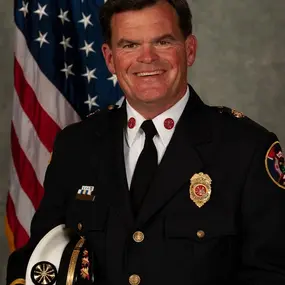
Fire Chief (Ret.) | Author | Speaker | Instructor
PATRICK J. KENNY has been a member of the fire service for over 42 years, and before retiring in January 2021 was the Fire Chief in Hinsdale and Western Springs, Illinois. He served as a Chief Officer for over 25 years.
He has been a speaker in multiple countries on Mayday for Mental Health® for more than a decade. He is the international best-selling author of TAKING THE CAPE OFF: How to Lead Through Mental Illness, Unimaginable Grief and Loss, and has articles published in the areas of mental health, leadership, fire safety, and fire code challenges. In 2021, he was awarded Fire Chief Emeritus status by the Illinois Fire Chiefs Association. He was awarded the Fire Engineering/International Society of Fire Service Instructors (ISFSI) George D. Post Instructor of the Year Award for 2020-2021.


