


 Apple Podcasts
 Spotify
 YouTube
 RSS Feed
 From Ashes To Insights: Untold Stories Of Fire Marshals | S5 E26
Join us in this smoldering episode as we sit down with Erik Mickelsen, a seasoned Investigator from the Franklin Township Fire Marshals Office and Somerset County Fire Investigation Unit.
Join us in this smoldering episode as we sit down with Erik Mickelsen, a seasoned Investigator from the Franklin Township Fire Marshals Office and Somerset County Fire Investigation Unit. With nearly two decades of experience, Erik delves into the essential role of the Fire Marshal, offering a unique perspective on fire scenes that differs from that of on-the-ground firefighters.
We tackle the emotional complexities of investigating Line-of-Duty Deaths (LODD) and the critical importance of mental health in this field. Erik shares his coping strategies and discusses the hidden stress of fire code enforcement. From understanding the weight of loss to identifying emotional triggers, this conversation sheds light on the resilience required in fire investigation.
This episode is made possible by Circl Brain:
Website: https://www.circlbrain.com/
Contact: sales@circlbrain.com
Thanks to the CRACKYL App:
Get the Free CRACKYL App!
This episode is made possible by First Responder Center for Excellence:
Website: https://firstrespondercenter.org/
Contact Erik Mickelsen
LinkedIn: https://www.linkedin.com/in/erik-mickelsen-iaai-cfi-ect-nafi-cfei-463a101a
Contact Responder Resilience:
Phone: +1 844-344-6655
Email: info@respondertv.com
Our website with past episodes and more: https://www.respondertv.com/
YouTube: https://www.youtube.com/c/ResponderResilience
LinkedIn: https://www.linkedin.com/company/responder-resilience-podcast/
Instagram: https://www.instagram.com/respondertv/
Facebook: https://www.facebook.com/responderTV/
Fire investigation is a forensic science. It's a unique forensic science unto itself. A lot of these scenes are difficult, and we're trying to all get a job done, but we're also all human. I became paranoid about fire safety in my house. It came out of nowhere, but I would wake up in the middle of the night and to go out and check the smoke detectors in the hallway, and I would do that several times a night. I feel like we're checking in with each other more. We're watching each other, we're evaluating signs and symptoms of how people are behaving. There's been incidents where I've had a direct emotional impact because of the scene or things we're doing. And then I've had others where I've come home, I've been fine for a few days, and then all out of the blue, it slams you like a truck.
SPEAKER_04Welcome to Respond Resilience, along with Dr. Stacy Raymond. I'm David Dashinger. Today our guest is Eric Mickelson. He's an investigator with the Somerset County Prosecutor's Office Fire Investigations Unit. Since 2004, and he's also a certified fire investigator. We explore the vital role of the fire marshal, the unique perspectives on fire scenes, the emotional challenges of investigating line of duty deaths, and Eric is going to share insights on critical incident stress, mental health in the field, coping strategies for loss and the hidden stressors of fire code enforcement.
VoiceoverThis episode is made possible by Circle Brain. If you're a first responder, it's time to take brain health seriously. Go to circlebrain.com to learn more because the toughest battles deserve the sharpest minds. There's a new app built by firefighters for firefighters, and it's called Crackle. Download the app now for free as a legacy member and get early access to exclusive content, tools, and updates as they drop. Get the free app at crackle.responderTV.com.
SPEAKER_04We invite you to like and subscribe, YouTube respond resilience, Facebook Responder TV, LinkedIn, Apple Podcasts, Spotify, and go to our website, respondertv.com for past episodes and guest information. We'll be right back to speak with Eric after this.
VoiceoverIn this family, more of us die by our own hands and by the hazards of the job.
SPEAKER_06In this family, up to a quarter of 911 telecommunicators have symptoms of post-traumatic stress. In this family, our mental health and wellness are in high risk, while respondents are quietly suffering.
VoiceoverIn this family, many struggle with job-related stress, burnout, injury, disruption, substantivity, and related to problems.
SPEAKER_04In this family, we have to help.
SPEAKER_03Welcome to Fire Resilience. We co-host retired lieutenant David Dashinger, Dr. Stacey Raymond, and Bobby Emily, LCSW EFTV.
SPEAKER_04We'd like to welcome Eric Mickelson. He's served as the Fire Marshal with the Franklin Township Fire Prevention Department in Somerset County, New Jersey since 2005, and he's been the Chief Fire Marshal in Baumbrook since 2007. An active investigator with the Somerset County Prosecutor's Office Fire Investigation Unit since 2004. Eric is a certified fire investigator through the IAAI and a certified evidence collection technician. He holds additional certs in post-blast investigation, wild land fire investigation, and is recognized by the NAFI as a fire and explosion investigator. Known for his expertise in fire scene sketching, Eric provides precise scene representations and recreations. He earned his Bachelor's of Science from Rutgers University. All that said, Eric, a warm welcome to Respond to Resilience.
SPEAKER_05Thank you, David. Thank you, Stacey. I appreciate you both having me on today and uh helping me to contribute to uh your your amazing cause and your amazing podcast that reaches so many people with so many important topics. So I'm just glad to be a part of it. Thank you.
SPEAKER_06You're welcome, Eric. So let's start by you if you could just tell us a little bit about your uh journey.
SPEAKER_05Sure. So uh currently I I work full-time for Franklin Township fire prevention as a fire marshal, um, fire investigator, uh, firefighter. And um, so my journey uh really began at Rutgers University when I was studying from my undergrad. Um I was uh had ambitions of pursuing a career in law enforcement. And um while I was there, I I was looking for ways to uh separate myself from the crowd and kind of bolster my resume. And and I decided, you know, volunteering would be something that would be advantageous to the process. So I decided to volunteer with one of the local fire departments, and I thought, look, this is a great way to segue into the emergency services and to get some exposure and also give back to the community and and make myself more of a valuable candidate as I enter uh the process of you know keep getting into law enforcement potentially. So I uh I joined the local volunteer fire company and um uh started going to fire school and one of the early classes that we took was fire science and fire chemistry. And it it absolutely was one of those topics that just captivated me. I was always into science, always into chemistry, and it was just something about it really uh struck my interest and and it it left me like wanting more. So I I continued long after that class to to research and read about it and and pursue my knowledge, but it became quickly a passion. And I I I immediately fell in love with the fire service and and and everything, every aspect of it. Um at the same time, I started an internship at the local police department uh working in admin. Uh and then at night and on the weekends, they would give me the opportunity to ride along with some of the detectives. Uh and so that was another unique experience where I began to become infatuated with the investigative process. And so I had these two ideas in my head that were just uh you know had quickly become passionate areas, the the fire science and and and the investigative process. So I I continued along uh the journey, and um one of the days when I was at the police department, I was delivering some packages downstairs, and there was a sign on the post on the board posted saying that the county was creating a fire investigation unit. So they were looking to take firefighters, fire marshals, and police officers to form this task force within the county. So I asked one of the detectives, hey, you know, I I'm interested in this. Can I approach this? So he made a few phone calls, and within a few weeks, I I was invited to stop up and talk to the police sergeant, the detective sergeant that was putting the unit together. And um, you know, look, I I I was kind of straightforward with him. I said, I don't really know anything about this, I have no business being here. But uh I said, I I I work hard, I I've worked in construction my whole life. I can I can work a shovel for you, I can, you know, I can all I have a lot of good things to offer up, but I'm willing to learn if you're willing to teach me. So um, so he took a chance on me, right? And and so a lot of us in life get to where we are because people take a chance on us. And so uh so that gentleman brought me on, and uh that was really the first place where I was exposed to what a fire marshal was, right? So as I started to interact with that group, I started to realize that the fire marshal and the role and responsibility of fire marshal was exactly what I was looking for in life. It was that responding to calls, fire science, fire chemistry, mixed with the investigative process. And it was like the best of both worlds coming together in one job. So I quickly made up my mind that that was the direction I was going, and um and so that's where I started concentrating my efforts.
VoiceoverHey, first responders, you face tough calls and hazards every shift, but the fiercest battles, they're happening inside your brain. Meet Circle Brain, your essential mental training partner. Your brain adapts to stress, trauma, and exhausting shifts, but not always in ways that serve you. These invisible changes can show up as fatigue, brain fog, irritability, or memory lapses long before they become obvious. With a circle, you get more than a gadget. Simply put on the headset and play a quick game. In minutes, you'll receive personalized insights into your mental speed, power, and focus. It's built on 60 years of neuroscience research and designed to boost the cognitive resilience you need to crush every challenge. After putting one years in the first corner, I didn't realize how compromised my brain actually was until circle showed me. And thankfully, it's helped me increase my overall brain health. If you're a first responder or support those who are, it's time to take brain health seriously. If you're ready to level up your brain game, contact us now at sales at circlebrain.com. Circle. Because the toughest battles deserve the sharpest mind.
SPEAKER_04Can you go a little deeper, Eric, into the role of fire marshal? Because I mean, even firefighters that respond, we know a lot about what the fire marshal does. We have a sense of, you know, they're inspecting plans or doing inspections uh on site, they're showing up to investigate after a structure fire. But at a certain point, we leave and you guys continue. So can you kind of go a little deeper into the role of fire marshal? How does it integrate to the overall fire response?
SPEAKER_05Sure. So uh, you know, the the fire marshals and the fire inspectors out there are sort of the uh forgotten child of the fire service a lot of times. You know, we we uh some departments where like such as mine, where we play a role in fire suppression, we we still get involved in that avenue. But a lot of departments they show up after the fact, like you said, David. And um, and and people don't really understand their purpose or what they actually do and how important it is. Um, and the reality is we play a vital role in the fire safety industry and and have a profound effect not only on our communities and the safety of our residents, but on the safety of our first responders, right? Um we're out there every day knocking on these doors of businesses, making sure that they're compliant, checking these buildings, the structural integrity, conducting these fire safety inspections, and ultimately it has a significant impact and a proven impact um on a reduction in incidents and an increase in safety for not only the public that occupy our town and visit our town, but of the residents that live here, right? And and and our firefighters that are responding to these buildings.
SPEAKER_06Um you give an example, like of uh, you know, so you come in, you say, okay, you need to have uh better exit signs, or you need to have uh, you know, the this this equipment in your office. So can you give an example of how that has improved or saved lives?
SPEAKER_05Sure. So um along those lines, uh a recent violation that we identified that was significant, one of my deputies over in Baumbrook was out conducting an inspection and uh walked back into a storage room and and noticed that there was a soft spot in the floor. Uh upon further investigation, he had moved some boxes only to uncover that there was actually a hole through the floor into the basement. And it was only about two feet away from an exit door. Um so we moved we moved quickly to involve the building department, right, to get them down there to consider the building and tag the building as structurally unsafe. And then we issued violation notices to uh you know, orders to correct to get the the owner moving. And then we take it a step further. We call the dispatch center and the fire chiefs and we let them know hey, put a note on this property. So when these guys show up and this building's filled with smoke, uh our firefighters don't end up in the basement uh when they walk in the door. So unfortunately, those incidents are far too common. But that was one recently where you know, look, if we had not found that incident, and then you fill that building with smoke and send our firefighters in there, the chances of them falling into the basement are pretty good. And and then, you know, the the risk of injury or death for them is is you know, it it's it's it's it's a major problem. So we uh we have identified a lot of that over the years, and we continue to, and that's really where we need to continue our maintenance and our routine inspections.
SPEAKER_04Yeah, I know it's uh it's a constant ongoing thing, right? It you're just basically um you get through all your I don't know if you if anybody ever gets through their full list of buildings and and residences and commercial occupancies, but uh once that's done, you kind of have to circle back and start all over again, right? It's kind of a continual cycle.
SPEAKER_05Yeah, it's you know it's a shame because uh a lot of times the fire prevention department, when you look at budgets and you know how departments respond to economic times, fire prevention department is is a lot of times the first place where resources are cut, right? Where manpower is taken away. And you know, that's unfortunately that's the wrong place to cut from because we are the ones that are out there maintaining these buildings and having this significant impact on all these variable factors. So yeah.
SPEAKER_04Well, I'd love to shift into this. Um, again, talking about you know, fire suppression shows up, does their thing, knocks down the fire, does some overhaul. You know, if we're good, we try to preserve anything that might be useful as evidence for a fire investigation. But how does your perspective as a fire marshal differ than the line firefighters who are on scene? And how do you look at the scene differently?
SPEAKER_05Yeah, so uh, you know, I look in my community, in both communities that I serve, we have a really great uh group of firefighters and fire suppression companies that that just do a tremendous job. And we're very integrated. So we we constantly communicate with them. They know kind of like what we expect when they're done with their scene, uh, to not trash it or to preserve certain areas for us or or certain things that may stand out that they'll notify us about. So we there's a good flow of information back and forth, and there's a good education from their chiefs down to the rank and file of what's expected and and how they can assist us in our process. So, you know, uh in in Franklin where I work, we we do respond out on these incidents. So it a lot of times it's a transition of a change of hat, right, through to somewhere at at some point where we show up and at at some point when the where the fire or the incident is under control, one of us has to break off and start documenting the scene through photography or taking notes or starting to gather information about the incident itself. So it's a balancing act for for us. Uh but we like to think we've got it uh down pretty good.
SPEAKER_06So then um when you walk when you in particular walk into a a building that uh has been on fire and has been um extinguished, what are you seeing that like a a firefight, an ordinary firefighter, not a fire marshal? What are you seeing that they're not seeing right?
SPEAKER_05Some of the things that that we're looking for is we're looking for how did that incident migrate throughout the compartment or the structure, right? And and does that incident progression line up with the ignition sequence theory that we're starting to develop? Um what fire patterns and fire effects are we seeing uh that are consistent with what we're being told by the first responders that came through that door initially, or witnesses that that first gave us a great statement. So we're kind of uh we're moving slowly in there. We usually uh you know start from the area of least damage and work our way in, and uh if we can safely do that. And uh and we're taking note of every piece of this as we work our way through. So we're really examining every detail as we go through.
SPEAKER_06And I this is this fascinates me. I don't know why I'm so excited about this part of firefighting, but I've seen too many uh forensic file episodes. My husband will tell you, like, I need to stop. But like, you know, the difference between like uh somebody just happened to die, pass away in a burning structure versus a murder, something that's been staged or whatever. So I don't know, can you comment on that? Like, what are you going in there looking for? You know, like somebody passed away, you know, in in a in a um burning structure, and you know, you're getting reports that, well, he just didn't wake up or you know, he's a heavy sleeper or whatever, but you know, what are you looking for?
SPEAKER_05Sure. So um when we have uh a fatal fire, our approach expands, right? So um it becomes a collaborative effort. It's not just a fire marshal that responds to the scene. So for example, if if I'm investigating a fatal fire, at that point I would call for the prosecutor's office to send a task force unit out, and within that task force unit, we would get police detectives and a team of individuals that are skilled and work together to process that scene appropriately. Uh so in the case of a fatal fire, um, we do move extremely slow. Uh a lot of us have unique specialties, but we also are cross-trained uh to pick up on certain things that are significant or stand out. And then, of course, we also work in conjunction with our medical examiner's office because we depend a lot on their investigation to tie all of our evidence together. Uh we we just recently had uh a very significant course, an important course with Dr. Elaine Pope, who she's a uh forensic anthropologist. I don't know if you know her, but she does some amazing research on fatal fire investigations. So the other thing is it's a constant evolving science, right? So we we were trying to stay on the cutting edge of it, learn the best techniques, what the most uh unique information and uh important information that's out there. So we had the great experience of having Elaine in um last month for a three-day course, and it was it was amazing. So we try to stay on the cutting edge, we try to stay proficient in our in our science and um and and do the best we can. But you know, fire investigation is a forensic science, it's a unique forensic science unto itself. It's it's separate and distinct from the other forensic sciences, but the applications are the same in many instances.
SPEAKER_04So yeah, and just to take that a step further, um, because I imagine the kinds of investigations you are doing could involve uh pediatric fatality, could involve um a line of duty death. How do you manage the emotional weight of that situation while you're conducting the investigation?
SPEAKER_05Yeah, so unfortunately I've experienced uh both in my career. Um thankfully uh I've only been a part of one line of duty death, but um but I I I have processed you know quite a few fatal scenes uh throughout my 22 years uh doing this. It's um it's challenging. Uh it's it's it's not something that's uh easily dealt with, um, especially you know from our perspective where we show up and we're part of that suppression effort, and then all of a sudden you have to you have to change gears and now investigate this scene as well. Uh the uh the fatal fire, the um firefighter fatality that we investigated was early on in my career. It was uh back in 2006, and um it was uh it was a really difficult um and unique experience that um I never wanna unfortunately you know, I never want to go through again. Umfortunately um we we had to we had to do our job that day and and get to the bottom of it and conduct a full investigation after the challenging incident had had f had
SPEAKER_04Hey firefighters, let's take a moment to talk about something important. There's a new app built by firefighters for firefighters, and it's not just another wellness tracker or generic resource hub, it's called Crackle. You've probably seen the magazine, but this is the next evolution. The app is about one thing helping firefighters not fail. Not just on the job, but in life, in your health, your relationships, your mindset, and your longevity. That's why Crackle is designed to meet firefighters exactly where they are, with resources that make sense, are easy to use, and actually respect your time. You can download the app now for free as a legacy member. That means you get early access to exclusive content tools and updates as they drop. Use the QR code on the screen to download the Crackle app, or you can download it from the App Store or Google Play and stay in the fight. Not just at work, but at home and in your own head too. Because your best days shouldn't be behind you, they should be ahead of you. How are you interfacing with people like, let's say, coworkers in the department or family members who have lost a loved one? How does how does that piece work in terms of you know how you how you have to deal with the emotional weight of that piece of your job?
SPEAKER_05Yeah, so we our fire marshals don't uh really deal with the family directly. If we don't have to, we'll usually have the police officers handle that interaction or our police detectives that are on the team handle that interaction. Uh, but certainly, you know, dealing with uh the emotions of each other, right? And and the collaborative uh emotions of the team are are challenging because a lot of these scenes are difficult and um and we're trying to all get a job done, but we're also all human. And um, and so it's it's difficult. And um, so look, the one good thing is that we we've got a great group that's really close knit. We uh we know what each of us are gonna do in the next step. We we kind of really anticipate each other's next move and work well together. So and I think we're in sync not only professionally but emotionally also. So that helps. It helps when you have a smaller group. We you know, my department is smaller, so there's a more personal interaction. We're not dealing with hundreds of guys, we're dealing with nine guys. Um we're we're we're more of a tight-knit group of brothers that uh that understand each other sometimes too well emotionally, right? Yes, like sometimes that plays the opposite, but but it really it it's it's a unique experience.
SPEAKER_06So how that how do you help each other? Like, are you just is someone able to say, you know, I'm not handling this case really well, or are you pointing it out to them, like or you seem a little different, you know, and then what's the next step? Like, how do you guys cope with with uh fire fatalities?
SPEAKER_05Yeah, so that's evolved over the years, right? So when I first started, um there was still a lot of that swallow it down and and move on and just get back to work um sort of mentality, and that that's nobody's fault. That's just the way that the fire service has progressed, right? I mean that's that's that's where we were 22 years ago. And it doesn't seem like that long ago, but it that's that's kind of where we were. Uh we, you know, since then I've noticed uh a significant difference in the industry, and I'm sure you guys have as well. Otherwise, we wouldn't be doing this podcast to bring awareness to this stuff and and really to deal with the uh the challenges appropriately to make sure that our first responders are are dealing with it and healing long term. So, you know, back then, again, we we did have a different approach to it, and some of those incidents it it really was kind of try to figure it out on your own how to deal with it. Whereas nowadays, I I feel like we're checking in with each other more, right? We're we're watching each other, we're evaluating signs and symptoms of how people are behaving differently or how uh they're acting differently, and and we're more aware of it. So it's it's it's definitely changed. And so look, if somebody's struggling, there are resources now to get them that help they need. And whereas they didn't they didn't have those uh 22 years ago. That just wasn't a thing.
SPEAKER_06So do you have peer support team?
SPEAKER_05We do. So through our uh our local or our our statewide union, the New Jersey FMBA, we have uh critical incidence stress debriefing team that uh is at our disposal. We can call them anytime. They're a great group of peers that'll come out. Uh one of our dispatchers sits on that uh that on that board and is active with the group. And and and look, they'll come out in the drop of a hat if you need them. Um and so they're they're a tremendous group. Um there are other agencies that will also come out um that I know have come to the town. The Apollo team was one of them that rings a bell. I don't know if they're still active or not, but um, you know, I I think that group from the FNBA is so well received because it's a group of peers, right? These are people that are out there doing the job. So you're not talking to uh a doctor or somebody you're not familiar with. These are your brothers and sisters that put on the uniform every single day and you can relate to. So I think it creates a more uh open and free environment to express what's really going on. Whereas some maybe sometimes that gets lost in the mix. So yeah, Casey, there is a place for the doctors to jump in there too. But sometimes, you know, people that put on our uniform men every day are unique, you know, and it's uh sometimes you can only relate to other people in uniform.
SPEAKER_06Correct, correct. We're working on that. We're trying, we're working actively to educate more clinicians on how do you you know, how do you talk to a firefighter, how do you how do you help a police officer? So we're working on that.
SPEAKER_05The one unique thing is that and that I found over my career is that sometimes the impact of these events doesn't take place for days or weeks. And it's it's it's weird how um how that happens, and I I can't quite figure it out. And I I can't quite figure it out personally either. There's been incidents where I've had a direct emotional impact because of a scene or things we're doing, and then I've had others where I've come home, I've been fine for a few days, and then all out of the blue, it it slams you like a truck, and it's right, right. Where did this come from? I was fine a few days ago, and all of a sudden I'm struggling, I'm having a hard time.
SPEAKER_06And well, Eric, the quick answer to that is that you guys get so good at compartmentalization that you're able to tuck it away for a couple days, but then um it starts to bubble to the surface. That's kind of how the mind works. So for those that those incidents that take a couple of days, that could be due to compartmentalization because you're so good at it. The other thing is it depends on how the news is handling it, right? So if you're hearing about it on the news or there's just more talk about it, or things are coming out from the investigation or whatever, then you may have uh a delayed emotional response depending on what news is coming to the surface.
SPEAKER_05So yeah, I think the other key part of this, you know, for a lot of us, is the support system that we have at home. Um, my my wife is I wouldn't be here today if it wasn't for her. And um she's important, you know, she's she she's more than just my wife, she's my best friend, and uh, she's somebody I can turn to. She has a background as a social worker. She's she currently works as a nurse. I mean, I think she needed that social work degree to understand me and what's every every first responder spouse should be a social worker, really.
SPEAKER_04Yeah, yeah.
SPEAKER_05But um, you know, look, I I'm really fortunate because I have I have a really strong support system at home with her, and she's she's amazing. I I really don't know how I would have made it through the last 20 years without her. And um, I I really I owe everything to her. I would I would be a much different person uh if if it wasn't for her guidance and support throughout the years.
SPEAKER_06You see, but and that's a rarity, right? That you have a social worker wife, and so did so does David as a social worker wife.
SPEAKER_04So you get it, David.
SPEAKER_05We're constantly being analyzed.
SPEAKER_04Yeah, we're setting the trend here.
SPEAKER_06But you know, not a lot of firefighters have that luxury, right? And so we're putting together a book, actually. Um, David Bonney, who's the other uh co-host, and myself, we're putting together a book for clinicians, you know, for those um clinicians that want to work with first responders, because because we need more of them. And um when they are culturally competent, then maybe firefighters, police officers, EMS personnel, dispatch, etc., will feel more comfortable coming to us. You know, that's part of the problem, is that there are not a lot of us.
SPEAKER_04So it's geographical too. We need more in some parts of the country um specifically. But um, yeah, but this is gonna help, um, Eric, as I said offline, because we also want to cover some of the specialties within fire law enforcement, uh, particularly that um having these conversations about the specialty that you are doing as an investigator and marshal really help um add some information dimension and uh important content to that book. So, you know, we appreciate you for sharing all of this so far.
SPEAKER_05Yeah, absolutely. Um, thank you. And and that's that's an amazing endeavor, and I'm sure it will reach and help a lot of people. So uh we're hoping. Yeah, absolutely.
SPEAKER_04This episode is made possible by the First Responder Center for Excellence. Discover more at firstrespondercenter.org and connect with us on X, Facebook, LinkedIn, Instagram, and YouTube.
VoiceoverAre you a clinician working with first responders? Or perhaps a first responder eager to enhance your mental health knowledge? We have something special just for you. Introducing the Clinician's Guide to Working with First Responders series, exclusively on Responder TV. Join us as we explore vital topics that can transform your practice and boost your resilience. Dive into master class episodes like Clinician's Guide to Wellness Programs and Internships with Wendy Hummel, building trust with law enforcement with Dr. Medina Baumgart, Clinician's Guide to Peer Support and Officer Wellness with Captain Mike Fumiati, mental health canines and crisis response with Brad Cole, Clinician's Guide to Inpatient Treatment Facilities with Pat Fitzgibbons, working with unique fire and law populations with Dr. Robbie Adler Tapia, and Clinician's Guide to Psychological Autopsies with Elizabeth Cole and more. Don't miss out. Tune in to elevate your practice and increase your cultural competency. Visit respondertv.com or find us on YouTube, Facebook, Apple Podcasts, and Spotify.
SPEAKER_04What are some of the stressors or maybe even the less visible stressors that you experience or investigators and marshals experience when you're doing code enforcement?
SPEAKER_05Sure. So um, you know, just dealing with and and it's not always, you know, we're still part of the fire department, and when we show up, generally we're pretty well received. Uh, but uh, but we we're well received until the notice of violation comes out, right? And then and then the relationship changes, it takes a turn. So um, you know, look, we some and some of that stress is is identifiable with uh law enforcement, right? Because we're uh ultimately enforcing codes and standards. And you know, look, I we've always said it that like a police officer can come in and he can take away your liberties, right? He can lock you up and and take away your freedom. And some people actually have a harder time when we come in and and we hit them financially, right? So sometimes that's perceived as more of a threat than putting handcuffs on you and taking you away to jail. So uh, you know, we we're we're not always the uh the popular person that walks through the door. So there's there are unique challenges that go along with that. We unfortunately, not everybody, and I know this is hard to believe, but not everybody wants to comply and make their building safe. And uh, you know, we um we do run into a a fair amount of stress with dealing with people. Um there are instances where you know our guys have been threatened or where we have to get the police involved. And you know, look, that's not the normal occurrence, but it does it does occur. And and it takes a special person to go out and do this job because ultimately you're dealing with confrontation almost every day. You're you're you're presenting people with bad news or news that's gonna cost them money or make them change maybe how their business is run, and and that's not always popular. And um, so you know, look, there are days where you you know people talk to you uh inappropriately and and make you feel like you're you're a piece of garbage, basically, coming in and uh but ultimately we try to explain to them that we're doing our job. Some people just don't want to hear it. Uh, but those those are difficult days, and um, you know, it's difficult to stand in front of somebody and have them scream and yell at you and rip your head off and then be expected to just swallow that and go home and and put that away. So that's you know, look, police officers understand that better than anybody, right?
SPEAKER_06Yeah, thankless part of your job.
SPEAKER_05Yeah, it really is. And um thank goodness we don't deal with that regularly, but it does it does pop up more than more than once in a while. So sure.
SPEAKER_04Yeah, and it's not always that you're saying you need to put a smoke detector here. Sometimes it could be probably thousands and hundreds of thousands of dollars worth of changes that need to be made when someone is not complying with code on a construction project and there's fire suppression systems, uh detection systems, whatever, egress. Some of that really gets expensive to change, right?
SPEAKER_05Oh, yeah, absolutely. Yeah, sure. You know, a lot of these things have a direct impact on their business. Sometimes we do have to close businesses down for a period of time until they can be brought up to compliance, and you know, that's uh so yeah, it's it's not too popular. And uh and and then look, we also find ourselves in court regularly uh with these issues. So there's that. So there's a there's a part of our job that exists that a lot of people don't see and and don't realize that we're we're coping with, and it's it's not easy all the time.
SPEAKER_06Like let's say you show up on scene, there's a structure fire, and you notice that there's materials in there that are burning, like because you're familiar with how you know which ones are toxic and which ones are not, like more so than the average firefighter, right? Or it's a hoarding situation and there's dog feces or cat feces, and now it's aerated, and you know the the firefighters are being exposed to it. Like, what do you do to protect the firemen that are going in?
SPEAKER_05Right. So you know, there's there's two sides to that question. Uh protecting the firefighters, you know, that that kind of thing we like to think we can handle uh on a on a routine inspection where we identify these hazards and at least have some some pre-plans for these guys to know what they're getting into prior to showing up on scene.
SPEAKER_06It's a residence and you've never been inside that house before, but it's a hoarding situation, or you know.
SPEAKER_05That's the challenging part is that we don't know what's going on in your the majority of your buildings in town, your residential structures. So um we we do the best we can during the fire suppression efforts, but ultimately um, you know, it's it you you have to figure out these conditions when you're inside and operating, unfortunately. One of the things that um I just was discussing with a colleague uh this week, earlier this week, was the the health and safety of the fire investigator in the post-fire scene. So everybody assumes, uh a lot of people assume that once the fire's out, the emergency is over and and the environment is safe. When in reality, all those uh fuel packages within the environment that we uh now just burned out are now off-gassing toxic chemicals. And especially now with uh with lithium-ion batteries and the you know how uh they are out there and in great numbers, they're really uh it's challenging for fire investigators because that they're still off-gassing really toxic um chemicals into the environment, and we have to take a different stance now when we enter these environments to protect ourselves uh as best we can because we don't know the long-term effects of what this is going to do.
SPEAKER_04We touched on this earlier, just talking about you know taking on putting on taking off glasses um periodically, and when you're on scene, because of that off-gassing and the other contaminants on scene, um I know you have to kind of really be careful about cross-contaminating, like you know, you're gonna take a break and eat lunch. You gotta obviously you don't want to get that that's you know, those toxins in your lunch. So, what kind of steps do you have to take that are like above and beyond what we normally think about to kind of protect yourself from um you know from getting exposure?
SPEAKER_05Yeah, so similar to mental health, um, scene safety has some has been something that has um you know uh evolved and developed over the years. And now there's a lot more resources out there for um learning about what the proper channels to take are and and also safety equipment is a lot more available, readily available, and and people are more aware of it, right? So it's a topic we're talking about regularly. So uh yeah, I mean you brought up a great point. Uh cross-contamination. It's not only taking a break at the scene, it's taking that contaminated uniform or mask or gloves back to your vehicle and then taking it back to your house and washing it in your washing machine, right? So we're all whereas years ago you would wear the same uniform home and it would go right into the wash. That doesn't happen anymore. Uh we're we're a lot more cognizant of what toxins are being transferred and really what carcinogens are ending up back at our house and exposing our families. So um, we are definitely taking steps and procedures to combat that and to make our job safer. Uh, but it is it is difficult because, again, to your point, Stacey, we don't know what we're dealing with when you enter an environment. And even a post-fire environment, we're dealing with burned remains of items, some items that we can't we obviously can't identify. Uh, so there are hidden toxins and and hidden dangers in all these environments.
SPEAKER_04Are you uh are you doing metering like continuous metering, or how do you kind of look for things that are not visible to the eye?
SPEAKER_05Yeah, so we do. We each investigator has uh a four-gas meter that they carry with them in the environment while we're working, and then we also try to set up fans and introduce fresh air, clean air, or air movement through the compartment the best we can. You know, we we've got a variety of different respirators nowadays that we have access to. Uh Tyvek suits, different, you know, we we it there's a lot more equipment that's available to us now than there was 22 years ago for sure.
SPEAKER_06What is that meter that you mentioned? What is this now?
SPEAKER_05Yeah, so it's a four-gas meter, it monitors the environment for uh hazardous environment hazardous tech um excuse me, hazardous chemicals or uh hazardous uh gases, and uh also monitors the oxygen level within the compartment as well.
SPEAKER_04Right. That's become pretty standard for firefighters uh as well, um, operating on scene plus the uh hydrogen cyanide, right? That's another one that we're constantly starting to meter for, even in overhaul.
SPEAKER_05Yeah, absolutely. It's it's those ones that uh those hidden dangers that uh we don't know long term what they're gonna do to us. And uh that's the scary part, you know, especially with the uh the HF that's being emitted from these lithium ion batteries. Yeah. Uh, you know, we've seen instances where it's had uh a significant impact on civilians caught in those compartments with direct exposure, but it's still it's still prevalent when we show up and do our investigation.
SPEAKER_00Sure. Introducing FDTs. The only gourmet tea crafted with first. Responders and their families in mind. Proudly firefighter and veteran-owned, our collection of gourmet organic teas is uniquely designed to honor those who are on the front lines to protect our communities. At FDTs, we believe in quality. That's why we source the freshest organic tea available, offering you the most popular flavors that not only excite your taste buds, but also bring comfort and relaxation to your daily life. Indulge in our specialty blends. Classic Earl Grey, soothing chamomile, vibrant green tea with ginger root, decadent chocolate salty caramel black tea, and robust Irish breakfast. FDTs makes for a special and unique gift, perfect for any occasion or season. Taste the difference and show your appreciation for the rescuers in your life with FDTs. Available on FDTs.com and in our Etsy store, Fire Department Prince. Also available on Walmart.com as Fire Department Prince.
SPEAKER_04You know, as first responders, I think we we have like a different approach on how we view our family's safety. You know, we might be a little bit more proactive or over the top, or some might say neurotic or controlling. Um in your world, how do the experiences you have with pediatric fatalities shape your views on your family's safety practices within your home or just your family's activities?
SPEAKER_05Sure. Thanks, David. I mean, I this is a topic that unfortunately I I've I've dealt with more than once throughout my career. And it's it's been challenging. And uh again, thank goodness I have uh my wife at home to help me sort of process through this. But um, you know, I I'll use one incident in particular to kind of walk through how this happens and and what occurred. Uh we had a uh fire at a hotel where we had two young children expire. And um post-fire investigation and and days later, uh, you know, it was a really difficult scene, it was really difficult to process. We we we had all the emotional reactions that go along with that scene. Uh, but at that time in my career, I I had my kids at home were young. Uh they were five and let's see, at that point she was one. So I had f a five-year-old and a one-year-old. And um I I became um paranoid about fire safety in my house. And it it lasted, it came out of nowhere. It was uncharacteristic of how I would normally behave. Uh, but I would wake up in the middle of the night uh to go out and check the smoke detectors in the hallway, and I would do that several times a night. Um, there were instances where I would wake up in the middle of the night smelling smoke, and I would run throughout the house uh, you know, wondering what was going on, and my wife would wake up and say, What are you doing? You know, what's going on here? And and I I I swore it was real. Like I really didn't see the smoke in the house. And and that that went on for for months. It was it was really challenging. Uh, I became really overprotective of our house, uh, of the environment in our house. And um it it was almost to a fault. It was it was it was really clouding uh my normal routine of living. And uh it was something that, you know, look, it was part of the process, it was part of the healing process, but it it adversely affected me to the point where I I had to uh I had to sort of talk through that and and get some assistance to uh to be able to process that more appropriately.
SPEAKER_06Sure. Yeah, makes sense.
SPEAKER_04Yeah, thank you for sharing that. I think that's important for first responders to hear, uh, because I think in some way we all do a little bit of that. Um, you know, and we may be affected by a call that makes us even more um, you know, uh hypervigilant in some ways, or uh we just you know we we we see things differently than the average uh person does, and especially when it comes to our family and our kids, we just, you know, obviously we wanted them to be safe, but we have almost too much knowledge about what can go wrong, right?
SPEAKER_05Absolutely, and and you know, that's maybe the unique thing about being a fire marshal, too, is that too much knowledge component, right? So uh um my wife will buy something on Amazon and plug it in, and I'll come home and find it and be like, what's that? And is it UL rated? And if it's not, get it out of this house. And and I we we've that's been the topic of discussion more than once in our house, and it's like, you know, I saw a fire once from one of these things, and it's you know, or yeah, the heating pad or the crock pot or certain items where everybody else is comfortable using them, but not no.
SPEAKER_04No, I mean you you never look at an outlet strip the same, right?
SPEAKER_05So yeah, but you know, I think it's impossible not to bring that home because you you do see what can occur, and ultimately, look, you your your parental instinct kicks in and and you're trying to keep your home safe and the people that you love safe. So it's a good thing and it's a bad thing, you know.
SPEAKER_04It's uh it's a mixed blessing. Eric, uh, this has been fantastic. Um, anything else you want to share about like what you're up to, any or where can people find you out there on social media, website, anything like that?
SPEAKER_05Sure. So I post regularly articles on LinkedIn about fire investigation. I'm pretty active in the fire investigation community. Uh so uh I I started a series recently on uh back to basics, which is just going back to the basic information that we all learned in basic fire investigation school and sort of uh re-engaging our minds and uh creating exercises in our minds for fire investigators to to just refresh and uh maybe topics that we haven't always uh haven't always talked about or haven't seen in a little while. So that's been unique. And uh but yeah, I I'm small and accessible online and uh always willing to reach out and make new connections.
SPEAKER_04So great. Well, appreciate that. Stacey, final thoughts.
SPEAKER_06Just uh Eric, I learned a lot today. Thank you so much. Um, you're our first fire marshal that we interviewed, and it was great to have you.
SPEAKER_05Thank you to both of you. I'm really happy to be part of this again, and and I really appreciate what you guys are doing because this is this is important, right? And the message that you're getting out there, it has a profound effect, and a lot of people are seeing it. And and look, when we talk about where things were 20 years ago as compared to today, it's because of efforts like this, right? Coming to the forefront, um, having the access to these types of uh forums and to learn about what's actually going on, not only in the industry, but in within ourselves and how do we deal with it. So I thank the both of you for including me and for your your efforts.
SPEAKER_04Eric, this has been uh great. I've learned a lot as well, and uh something I've been wanting to bring on the show for a while. So appreciate you being the person to kind of share that with us.
SPEAKER_05Thank you both. Appreciate it.
SPEAKER_04All right. Remember, like and subscribe, YouTube responder resilience, Facebook, responder TV, LinkedIn, Apple Podcasts, Spotify. Go to our website, respondertv.com for past episodes and guest information. Until the next time, stay safe, be kind to yourself. Take care.
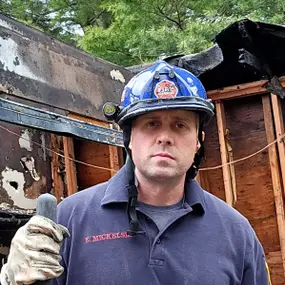
Fire Investigator | Fire Marshal
Erik Mickelsen has served as a Fire Marshal with the Franklin Township Fire Prevention Department in Somerset County, New Jersey, since 2005 and has been the Chief Fire Marshal in Bound Brook since 2007. An active Investigator with the Somerset County Prosecutor’s Office Fire Investigation Unit since November 2004, Erik is a Certified Fire Investigator through the IAAI and a certified evidence collection technician. He holds additional certifications in post-blast investigation and wildland fire investigation, and is recognized by NAFI as a Fire and Explosion Investigator. Known for his expertise in fire scene sketching, Erik provides precise scene representations and recreations. He earned his Bachelor of Science from Rutgers University.


