


 Apple Podcasts
 Spotify
 YouTube
 RSS Feed
 Nervous System Recalibration©: Finding Focus Under Pressure | S5 E29
Join us for an insightful conversation with Doug Allen, the author of “An Operator's Guide to the Nervous System”. With a deep commitment to serving military personnel and the first responder community, Doug offers a fresh perspective on achieving peak performance through an innovative technique that recalibrates your nervous system for the challenges of the current environment.
Join us for an insightful conversation with Doug Allen, the author of “An Operator's Guide to the Nervous System”. With a deep commitment to serving military personnel and the first responder community, Doug offers a fresh perspective on achieving peak performance through an innovative technique that recalibrates your nervous system for the challenges of the current environment.
Listeners will gain valuable insights into the importance of managing nervous system arousal levels in real-time, understand the impact of stress on cognitive function, and discover effective strategies for maintaining mental clarity in high-pressure situations. Don’t miss this opportunity to enhance your understanding of resilience and recovery in demanding roles.
Thanks to our resource partner, Circl Brain. Because the toughest battles deserve the sharpest minds. Go to https://www.circlbrain.com/ or contact sales@circlbrain.com
Thanks also to our resource partner, the First Responder Center for Excellence, https://firstrespondercenter.org
Thanks to our resource partner, CRACKYL. Download the FREE CRACKYL App: http://crackyl.respondertv.com
Contact Doug Allen:
Website: https://www.agttc.org/
$1.00 will go to Responder Resilience Podcast from book orders made directly through the AGTTC website if you write "RESILIENT" in the signing option.
Facebook: https://www.facebook.com/agttcclinic
LinkedIn: https://www.linkedin.com/in/doug-allen-cd-sep-msw-337a2a94/
Contact Responder Resilience:
Phone: +1 844-344-6655
Email: info@respondertv.com
Our website with past episodes and more: https://www.respondertv.com/
YouTube: https://www.youtube.com/c/ResponderResilience
LinkedIn: https://www.linkedin.com/company/responder-resilience-podcast/
Instagram: https://www.instagram.com/responder.tv/
Facebook: https://www.facebook.com/responderTV/
We all know people that tell the story a thousand times to the blue in the face and nothing seems to happen. It's never about the story, it's about the impact. Nervous system recalibration allows you to immediately identify what data your nervous system is bringing in and assess it. And watching how the body moves, we can then see what the body needs in that moment. The way that we heal is through connection. And if you're not able to establish a connection, then you're not actually going to be able to help them heal. We can really shape the way that we're seeing 11 billion pieces of data that are coming to our system at any moment. We only have a capacity for like 5 billion. We can actually selectively choose the 5 billion that are going to shape the way we're responding.
VoiceoverWelcome to Responder Resilience, along with my co-host Bonnie Rubley, LCSW EMT, I'm David Dashinger. Join us as we speak with Doug Allen. He's the author of An Operator's Guide to the Nervous System, and he's also the director of Atlantic Group and Trauma Training Center, where he works with active and retired military members and the first responder community. We're going to discover how to unlock your peak performance with an in-the-moment action technique that recalibrates your nervous system to operate more appropriately for the current environment. This episode is made possible by Circle Brain. If you're a first responder, it's time to take brain health seriously. Go to circlebrain.com to learn more because the toughest battles deserve the sharpest minds. There's a new app built by firefighters for firefighters, and it's called Crackle. Download the app now for free as a legacy member and get early access to exclusive content, tools, and updates as they drop. Get the free app at crackle.responderTV.com. This episode is made possible by the First Responder Center for Excellence. Discover more at FirstresponderCenter.org and connect with us on X, Facebook, LinkedIn, Instagram, and YouTube. Please like and subscribe, YouTube, Responder Zooms, Facebook, Responder TV, LinkedIn, Apple Podcasts, Spotify, and go to our website, respondertv.com for past episodes and guest information. We'll be right back to speak with Doug after this. In this family, all of us die by our own hands and by the hazards of the job.
SPEAKER_02In this family, up to a quarter of 911 telecommunicators have symptoms of post-traumatic stress. In this family, our mental health and wellness are in crisis, and our responders are quietly suffering.
Bonnie RumillyIn this family, many struggle with job-related stress.
VoiceoverIn this family, we have helped vital information and resources, resilience strategy. Welcome to Responding Resilience. We co-host retired Lieutenant David Cashinger, Dr. Stacy Raymond, and Bonnie Remily, LCSW EMTV. We'd like to welcome Doug Allen. He's the author of Operator's Guide to the Nervous System and serves as director of Atlantic Group and Trauma Training Center. With a focus on both tactical and practical approaches, Doug explores how outdated narratives surrounding stress and trauma can lead to injury and hinder recovery. He specializes in nervous system recalibration, a method that enables individuals to achieve peak performance and maintain a healthy nervous system through moment-to-moment recovery techniques. Doug, welcome to Respond Resilience. Thanks, David. Appreciate it. Like to be here.
Bonnie RumillyWe're excited to have you to learn some of these strategies, for sure. So tell us about your background as an infantryman and what happened then on leading you into social work.
SPEAKER_02Yeah, it's it's pretty strange. A lot of people kind of laugh at the fact that I went from being a combat uh veteran in the infantry to going into social work school. It's a lot different in Bonnie. You would you would certainly appreciate that. Uh it was uh was not an expected trajectory for me. Um really I was born I was born into service. My father was a 27-year police officer uh in the city. I lived in the country, uh, and that was my dad's way of coping with it. He wanted to stay as far away from it as possible. And a lot of first responders can can uh probably appreciate that, but also there's an awareness too that that's not always um an avenue that they can choose. Sometimes you just have to be live in the same place that you work. And we just happen to be fortunate enough, just the way the geography works in Nova Scotia, Canada, that we could he could work in the city and then we could hide away into the woods somewhere. But I grew up close to Cornwallis, which was the Canadian Forces uh basic training base. Uh and so I I kind of was surrounded by by operators, as I call them, so military and and first responders and family members in the paramedicine world and and firefighters as well. So I kind of knew at a very young age, uh before I probably realized it was other options, I was kind of already destined to go into service. And infantry was the service that I that I really wanted to go with. I had a strong passion for it, to be sort of the front of the line, tip of the spear, as we call it. Uh, and so uh really wasn't a question in my mind what I was going to do, and and uh I did it. Uh I loved it, uh, and I was I definitely had a lot of experiences with it that were uh good and bad and uh that were life-changing in in both positive and also negative ways. So uh I had developed a post-traumatic stress disorder. I no longer meet the criteria for that. Uh and uh and now I help others do the same. I don't believe in this philosophy as well, you're stuck with it, so we have to make the best of it. I don't believe that whatsoever. Uh, and that's part of that mainstream model that I that I fight back against, uh, and which is why I got such an interest in working in the nervous system and in trauma. Um that really came about uh the at the end of or a tail end of my career, I guess, was really in Afghanistan when it was really heavy combat. My my platoon was involved daily in in combat missions, and uh uh it was interesting because I was a leader, so I was a section commander in probably if you people that know of Afghanistan, it was kind of like the section commander's war. It was like um that was the the knowledge on the ground. They were the ones that saw very intimately what was happening, they get to call the shots to hire because they were the leadership that was there. So um had a really amazing um uh position there, I think. But what was really interesting is I was watching these these young soldiers, 1920, um, going through and making these incredible decisions in the split in a split moment, uh, some of which was to engage the enemy, and then the other moment they're administering first aid, saving uh the the locals that were that were sort of victim to the war. And I was just in awe. I was astounded that because I, when I was 19, uh even though I had been overseas and done other things, this was something a little bit different. When I was 19, I was not making those decisions, and so when I came back, my my trajectory kind of shifted. My my my emphasis and focus was on these troops, these humans that were doing um uh superhuman things in my eyes. And so I really wanted to invest in them when I came back. And as as I did come back, I took over as a platoon warrant. And suddenly I was like, well, now that I'm the platoon warrant, I actually want to find out who Private and Corporal and Master Corporal and Sergeant So-and-so are. I want to find out what you know what's their first name, what's their what is their passion? What do they do after work? Uh, what do they do for healing? And what do they do for when they leave the military? Do they have something in place? So I started to really focus on that. And then that just one thing led to another, and I I changed my trajectory to to really working with those who become injured. Um and fortunately, I just managed to find a way, uh I managed to find some people in the system that recognized what I was doing, thought it was a good idea, and they gave me the opportunity to do it. So yeah.
VoiceoverYou touched on what I think is a very fascinating area, and I'll add to that that as you mentioned, you're seeing saying younger and younger people put in this position of um having to make critical decisions in the moment and maybe multitasking at the same time. We're probably seeing the same thing in emergency services where the turnover rate, um, this younger and younger people coming into the job, moving to uh promoted uh officer positions at probably younger ages. Tell us a little bit about your insights that you gained while you were uh deployed about this sort of like the mental process of making these decisions in those in those critical moments.
SPEAKER_02Well, I think uh I think I was fortunate because I was also really curious about the environment that I was in. So here I am watching these these people of Afghanistan and watching how they sort of went about their day-to-day, noticing how they functioned. We're in a war zone and they're functioning differently than we're functioning. And so I'm kind of watching everybody in the way that they're functioning in the environment and noticing how we're approaching it differently, um, which I think allowed me to have context for saying this is uh it has more to do with physiology than it does, uh, than it does simply the environment that we're in. Like there's there's something about how we are holding the experience. Uh, and so that made me really curious when I came back to really start studying, not about the story, which is interesting because you know, we all know people that tell the story a thousand times till they're blue in the face, and nothing seems to happen. It's never about the story, it's about the impact. And if we're going to talk about the impact, and what is impact? It's not, it's not necessarily it's not psychological, it's it's physiological, which leads to the psychological component of it. And so this is where I ended up really deep diving into the nervous system and biology and the how our systems function, and then what how we try to make sense of it, which is the psychology.
VoiceoverHey, first responders, you face tough calls and hazards every shift, but the fiercest battles, they're happening inside your brain. Meet Circle Brain, your essential mental training partner. Your brain adapts to stress, trauma, and exhausting shifts, but not always in ways that serve you. These invisible changes can show up as fatigue, brain fog, irritability, or memory lapses long before they become obvious. With a circle, you get more than a gadget. Simply put on the headset and play a quick game. In minutes, you'll receive personalized insights into your mental speed, power, and focus. It's built on 60 years of neuroscience research and designed to boost the cognitive resilience you need to crush every challenge. After 21 years as a first responder, I didn't realize how compromised my brain actually was until Circle showed me. And thankfully, it's helped me increase my overall brain health. If you're a first responder or support those who are, it's time to take brain health seriously. If you're ready to level up your brain game, contact us now at sales at circlebrain.com. Circle. Because the toughest battles deserve the sharpest minds.
Bonnie RumillyAnd you touched on this before, but the term PTSD, you know, this notion that people have this death sentence that they live with forever, and we have to just help them figure out how do they do that. We on the podcast look at it as PTSI, post-traumatic stress injury. That's the language that we use. Um, that's what Stacy and I use with our clients and all of our team members because we're trying to shift that stigma. Um, those are two very different ways to look at one problem. Um, you know, and we all have different ways that we do that as well. So I'm very curious to hear about your clinical body of work. But before we do that, what are some common misconceptions in your view of therapy that therapists or clinicians might have of military or first responder population?
SPEAKER_02Yeah, the first one that I see, and I mean I teach um cultural competency to clinicians. The first one is sort of the deer in the headlights look. And that is, I can't imagine how hard it must be to be a first responder. I can't imagine how much how hard it must be just to do your job. So that instant thank you for your service, I am in awe of what you do, and I'm just I am just gonna try to help you as best I can because it's so overwhelming that I I can't imagine what it would be like. And so suddenly we start to dehumanize them, and and the way that we heal is through connection. And if you're not able to establish a connection because of this, then you're not actually gonna be able to help them heal. And quite often you you end up um promoting or you end up supporting part of the thing that keeps us injured all the time, which is like it's that bad. And so then if you can't sit in the experience with your client, then it's validation for the client that I am so bad and I am so broken that there's no way that I'm going to be able to heal.
VoiceoverDoug, you you started talking about um retelling the story, and um I'd love you to kind of weigh in about is it, you know, how helpful is it to recount that story and what physiological changes happen in first responders when they start talking about it, and where did you make the shift from the mainstream narrative to um where you're at now in terms of stress and trauma?
SPEAKER_02Yeah. Yeah, I just sort of smile when you say that because that's exactly how I work. Quite often when I work, I I turn the volume off from my clients. So when they're as they're talking, I just I just I don't really listen to what they're saying necessarily. I'm actually watching their body. So I was trained in somatic psychology through the uh Peter Levine school. Uh, and it was amazing. Uh, I went to the US to do that back before they were running it in Canada. And what was great about that, I started working with all these other professions in the US, and the US works a little bit different than we do. It's not quite uh, it's not as um uh canalyzed in in and uh discipline in in in terms of if I'm a social worker, I do this, if I'm a psychologist, I do this, I'm a naturopath, I do all these things. So they but we really started to work uh with the body and noticing the responses versus it's not about what you say, it's about what you do. And so the body immediately starts to, and this is we've seen this book, so the body keeps a score, all these things, the body has these somatic markers that they they go to uh that are expressing how the body is responding to what they're talking about, and that comes back to the nervous system. The nervous system is really interesting. Our our brain actually is sitting in our in a vat that has no windows, has no doors, it has absolutely zero anything whatsoever. The only thing it does is it sits in the dark and it it tries to understand all of the sensory data that's coming through the entire body, it tries to understand what that means, and then it guesses, it makes the best guess that it can and predicts what we need to do to be safe. And so it doesn't react, it predicts, and so it makes this prediction, and then all of a sudden our bodies go into this predictive uh way to be able to prevent more injury from happening to us, and it's not always accurate, but in watching those, uh watching how the body moves, uh, we can then see what the body needs in that moment, and so somatically we can actually help process that. When when I work with first responders and and and law enforcement in particular, what's really interesting is they start to go into the story. Law enforcement have a really particularly interesting way of doing it because they talk originally they're if they're nice and and they're relaxed and they feel safe and they want to dive into a conversation, they'll talk as I don't know, we'll call them Blair. Blair will just talk as Blair, and then as he starts to get into the story, Blair turns into Constable So-and-so, and he starts to go into his notebook. And he talks in exactly note for note. And I when I work with clinicians, I teach them just watch this and then notice kind of where they're going. And if you notice they're going into their chest, if they're going into their notebook, right, they're actually losing themselves in that moment. They're getting sort of that trauma vortex, they're losing, and they it's it's odd because they're actually kind of trained that way as well, because they have to go into a courtroom and somebody's saying, Prove to me that you did what was appropriate, prove to me that what your actions were were the correct ones, because I don't think they are, and I'm gonna prove that they're not. Now you're on the stand and off you go. And suddenly you have to, in a very split second, all the actions you had to take in order to keep yourself safe and other people safe. Now you're on the spotlight to see if you were competent in doing it. That's a lot of pressure. And so it's better to go with the notebook because the notebook, the notebook won't lie. The notebook will keep me safe. If I go into how I felt about it, I'm gonna lose, I'm gonna lose because then I'm bringing I'm too vulnerable, too unsafe.
Bonnie RumillySo so can you talk about the importance of that nervous system recalibration for our listeners?
SPEAKER_02Yeah, so nervous system recalibration, uh, to me it's not word salad, so that's a very specific um uh set of skills that I've developed. And nervous system recalibration is not about calming down. There's no way, there's no way in a first responder world that you can um you you can find a safe space, you can get away, you can relax, you can do all of this things, all these things when you're in operations. When you are in operations, you need a nervous system that's going to operate appropriately. That means your nervous system has to be able to fluctuate. It needs to, it needs to ramp up when it needs to work, and it needs to dial down when it when you don't have to go to that extreme. So uh nervous system recalibration allows the operator to be able to identify within their system in a in a very brief moment, very quickly, essentially, is my nervous system operating appropriately for the current environment? And I always akin this to, for example, if I'm in rush hour traffic, I want my nervous system to be activated so that I can navigate traffic, negotiate the people crossing the street that aren't looking, uh, listen for sirens, I can do all of these things. I need a level of activation in order for that to occur. Right. I don't want that level of activation to be that way when I'm on uh sitting on a Sunday night reading a book on the couch. Right. So it's appropriate for it to it's appropriate for it to activate and if to calm down. And what's interesting is we talk about um nervous system regulation. We talk about how do we keep the nervous system calm. And that's a very um, it can be a canalizing thing because what we end up doing is, especially with first responders and military, because they're well trained to do what they're told to do. So they come in and say, I need you to be regulated, I need you to calm down so that we can do this work. And when you tell me that, here's what I can do. Okay, I'm good. Let's do it. I've done this, I do this for 12 hours a day. I'm now ready to go, whatever you say I'm gonna do. But what's in fact happening is I've just established, I've just created this cognitive override where I'm actually shutting down my body so that I can pay attention to you and get through the session. And when the session's over, I haven't got a clue what we did, but I did it.
Bonnie RumillyWell, so we're compartmentalizing the therapy session just like they compartmentalize the calls. If you think about that, what you just said.
SPEAKER_02Yeah, for sure. Exactly. So then we've actually then we're actually promoting the very, the very uh the habit or the conditioning that we're actually trying to decondition so. We can get to the person. So, yeah.
VoiceoverHey firefighters, let's take a moment to talk about something important. There's a new app built by firefighters for firefighters, and it's not just another wellness tracker or generic resource hub, it's called Crackle. You've probably seen the magazine, but this is the next evolution. The app is about one thing helping firefighters not fail. Not just on the job, but in life, in your health, your relationships, your mindset, and your longevity. That's why Crackle is designed to meet firefighters exactly where they are, with resources that make sense, are easy to use, and actually respect your time. You can download the app now for free as a legacy member. That means you get early access to exclusive content tools and updates as they drop. Use the QR code on the screen to download the Crackle app, or you can download it from the App Store or Google Play and stay in the fight. Not just at work, but at home and in your own head too. Because your best days shouldn't be behind you, they should be ahead of you.
Bonnie RumillySo can you talk about how the recalibration or the calibration relates to the window of tolerance that we teach our responders?
SPEAKER_02Yeah, I love the window of tolerance. Dan Siegel did a phenomenal job in about 1999. And I think it was about 2000 and I could be wrong on this, 2003 or so. He actually wrote a new book on it to basically address that it was being misunderstood. And then he added, he actually tried to insert a timeline. So then he inserted time as the fourth dimension to be able to say, well, actually everything flows, everything has a because it was too, it was too uh um uh bifurcated. So this had to happen and this had to happen, etc. Um, I don't use the I use the window of tolerance when I when I introduce the idea of how a nervous system works, but then I move on to what I call an allodynamic mode uh model, which is more of uh spectrum versus uh bifurcated. But uh with the window of tolerance, ultimately, if we were to by speaking in the window of tolerance language, what nervous system recalibration does is it um it takes away uh the implied belief that uh activation is is uh unhealthy and deactivation is unhealthy. So it kind of widens the window of our understanding of capability. I am able to be highly activated and cognitively functioning, and I'm also able to then have less activation but still be cognitively functioning. And there's the critical piece, so and this eliminates that that sort of trigger. I always challenge the people that use I got triggered, because what they're talking about, that trigger, they're talking about this when my when my nervous system goes from here to there and I lose it, and that is true, it does happen, but when I break it down with my clients, I'm like, well, let's go back. And sometimes it was really interesting. I was working with one, and we actually went back the entire 24-hour period to see what happened that day. And what happened that day was they felt great, they felt really great, and they went out and they decided to do something they hadn't done in a long time. They decided to do some construction work on the house. I had some projects that needed to be done. I'm on leave because I'm on stress leave. And suddenly I feel like, wow, the sun is out, I can feel the sun on my face. So then all of a sudden their peripheral uh the uh nervous system is engaged. Uh, I can I can smell the flowers, I want to feel that tool in my hand, I'm hitting the nails with the, you know, all these wonderful things. And they saw a glance of the neighbor through the window. And all of a sudden, their system started to shift towards the neighbor. The neighbor is looking at me doing construction work. The neighbor thinks that I that knows that I'm on leave because of stress. They're gonna say that I'm doing construction work, therefore they're gonna think that I'm lying. They're gonna call me in, call me a fraud. His wife wants to go to the store, has to go to the store, or now thinking all of these things. So then when he comes in, I don't know, I just snapped, I snapped in the in the parking lot of the store, and I don't know why. I just I couldn't handle the crowd. I'm like, let's back it up. So as we backed it all up, we could actually see where it started from, and nervous system recalibration allows you to to uh immediately identify what your what data your nervous system is bringing in and assess it. And so when you do that, it'll it isn't a trigger anymore. It's like, no, actually, I I resolved all of these things that have happened throughout the day. And that's the critical part that's missing in a lot of mainstream uh psychological models, is it's not about the nervous system's sole purpose is to overcome. And I can't finish that sentence because it's just it's designed to overcome whatever it perceives as impeding us from eat, sleeping, and pooping is something that needs to be overcome so our body can go back to eat, sleeping, and pooping. And so if we're able to allow it to overcome these things, then it doesn't then become over-stimulated, overactivated. It has a sense of I've achieved my mission, I've achieved my goal, and then it goes into rest recovery and repair. And that's what nervous system recalibration does.
VoiceoverDoug, you work with something called breast. Am I saying that correctly?
SPEAKER_02Yeah, so can you talk about that?
VoiceoverJust give us a little like um overview of it and maybe an example of how it can be implemented to help somebody.
SPEAKER_02Yeah, breast is the are the five key components that that allow us to understand or that were that influence how our nervous system is functioning. So it's breathing. I know everybody's like, oh, breathing, here we go. Everybody's using that as like it's all we hear. And as soon as we tell somebody just breathe, right, especially a first responder, the first thing they want to do is cock up their fists and off you go. And it's true, but the reason why everybody's gravitated towards breathing is because it's it's it is the only thing that is the actuator for our nervous system functioning. So if you think of parasympathetic uh uh sympathetic system, breathing is the actuator to sort of drive the energy towards one or the other. And so it's just mechanical, it's just pure mechanics, and we have to accept it. Um, so breathing is the first thing, and you'll notice as soon as you're as soon as you mention breathing to somebody, and you probably have done it just by me saying it, we start to pay attention to our breath instantly. And so the first thing I watch for is I watch for people the way they change their breath, and then I just notice it. Either I change the way I breathe, and then they change the way they breathe, or I call them out on it. Hey, what's going on with your breath right now? Like, yeah, I stop breathing. What do you think you should do about that? I don't know, let's see what happens. Right? Bonnie knows exactly what I'm talking about. She's probably done a thousand times with her client. Or I say this, which is really interesting because they're the I call it the sort of the uh the chainsaw effect when it comes to trauma. It's like they start to talk about their trauma and it's like and you can see a comment and it's like ring. And what I simply do is I just simply go, Oh, just a second, this sounds really important. I just gotta take a breath. Okay, what were you saying? And I get this look like, what is wrong with you? And they go, okay, anyway. So what I was saying was, and suddenly they're much calmer and they're much clearer, right? And they've just adjusted, they recalibrated their nervous system through breath. It that's more appropriate to the current environment. They're not in that situation, they're on my couch, and now they're able to talk. So that's why breathing is so critically important. It's very easy to see, super easy to feel, uh, and it's something that we can work collaboratively with, or we could do it on our own. The next one is rhythm. So rhythm is movement. Uh, and and if you look at all the physiology, everything from cellular, cellular physiology, uh, what requires for growth, development, uh, repair, everything is the is actually oxygen and movement. Oxygen and movement create growth uh and and development. So all these things that we need, so when we move, we have the ability, we have opportunities. If we can move anything, our nervous system recognizes that we have ability to do something, we have opportunities. When we freeze, we don't. Rabbits, on the other hand, are really interesting. Rabbits freeze for success. And what I mean by that is if you watch a rabbit get caught, like when a rabbit sees a predator, it goes, it does it really well. But their nervous system, their superpower is the freeze, they have the ability to freeze, and what happens is their nervous system gets jacked, just like ours, but it's stored and it waits, it's waiting for the opportune time for that wolf to go, are you guys coming? And then the rabbit goes and he's gone. It works really well, but for us, it doesn't, because our our superpower is our cognition, which is really unfortunate for us. And I talk about this in the book. The worst thing they could have ever done is made cognition our superpower. Because as soon as we become activated, the energy gets deviated from our nervous from our cognition and into uh into our nervous system. So that's always a problem with that. But so when we actually go into freeze, our nervous system says, Okay, you better figure this out because I'm gonna store up a bunch of energy, and you if you don't figure it out, that energy's got to go somewhere. So this is what happens. Um and so we also notice this, and Bonnie will know like this is when we see dissociation. I can't leave, I can't do anything with this, I'm completely trapped, it's too much for me. And if I can't go, I'll go. And so dissociation occurs, and so this is kind of what happens. But if we learn rhythm, if we learn how our bodies move, uh then we're able to actually find opportunity. I work with like with law enforcement, it's really interesting, especially if there's and correctional officers, even more interesting. How am I supposed to move? If I move, I'm seen, and if I'm seen, they're gonna read that and they're gonna they're gonna use that against me. But there are simple things that you can actually do. First of all, breathing. Can I feel my chest move when I breathe? Second of all, is can I shift my weight from my toes, not standing on my toes, but can I shift it forward and can I shift it backwards? Nobody knows I'm doing it, but and you can try this at home, you can try this with each other. You can all you simply do is move in towards something, notice what your body feels like. It's like, whoa, this is intense. This is, I need to defend myself. And then notice just lean back just a little bit. It's like, oh, I got I got space to breathe. I got space to if I have space to breathe, I have space to respond. And that means I have time on my hands. So uh that's why rhythm is so important. E is for environment. So the environment itself. Uh, what is the environment telling me? What am I not seeing? Because suddenly my my whole vision is canalized to this one situation. If I if I am able to see the environment, does that shift the way my nervous system is responding? I always think about this like if you saw a guy grab somebody else and pile drive him into the ground, you'd be like, holy, what's going on? But then if you looked around and you're in an arena and watching mixed martial arts, for example, it's like, oh, this is great, completely different. But we're watching the exact same thing. So recognizing the environment and the impact. The other one is social engagement. I being a combat soldier, I can tell you being in combat and having people shoot at you and having to engage with them is terrifying. But when you go, this is completely terrifying, and you look over and you see somebody that's with you and goes, Yeah, this is completely terrifying. Suddenly, even though it's terrifying, it seems like it's okay. Suddenly, it's like, wow, we could do this together, can't we? Because we have that social engagement. Or it could be this is really interesting with autism. You'll notice that people with autism don't necessarily look at you, they'll make don't don't make eye contact. But what they're doing is they're actually de, they're they're taking away data so that they can listen and respond to you. So it's very interesting. Uh, and so the other one is curiosity, and curiosity is where the cognitive functioning comes in. Do you have capacity to be curious about all of these things? And do you have capacity to wonder, can I change the way I breathe right now and still be safe? Can I move right now and still be safe? Can I look around in this environment? All of these different things. So that's why I use Bresk. And it can be very quick, much quicker than I explained it.
Bonnie RumillyWell, I love an example just for the listeners and viewers. Could you give just a quick tangible example of using this with one of your clients recently? And this strikes me as efficient with all, just thinking about my own clients and the work, but it seems particularly important for veterans and law enforcement.
SPEAKER_02Yeah, I use this uh like in with my clients, uh, individual clients. Sometimes I use one in ones or twos, like I'll just be like, hey, look at me and I will make on contact, and it changes the physiology. Or as I said, I'll just I'll just I'll just show them my breathing or or I'll identify their breathing or what have you. Uh but I do when I do training is I actually train um I train operators on how to do this very mechanically, and I train clinicians how to do this as well so they can actually experience it. And I basically put them on other sides of the room and I have them looking at each other with their partner, and I have them go as neutral as possible, which already activates our nervous system because, like, oh, you want me to stand here without my arms crossed or hands in pockets? Oh, really? What's going on then? What are you noticing? I'm noticing my my heart rate, and I'm noticing I'm my breathing into the chest. I'm like, okay, notice that. And now, as you notice it, how can you shift it? Is it now that you've identified it? What happens? Oh, actually, I'm breathing a bit more into my stomach now. And right, have you looked around? No, oh, oh, right. Okay, yeah, it's actually much different now. Ah, great. Now let's walk towards each other. And so this is what I do step by step. We walk towards each other and notice all of these changes, notice the breathing shifts, noticing how our rhythm shifts, we start to become canalized, our legs become uh pillars of frozen or solid uh concrete, various things, noticing the environment. I forgot who's beside me. Uh, social engagement, I can't even look at this person's eyes right now. All of these things that we do, but if we have the opportunity to explore them, we can see what it feels like to then negotiate and essentially overcome that stress. And as we overcome pieces of stress, our stress level is automatically going to be lower. And the lower our stress level is, the more cognition we have available. So there's only so much energy in the body. And if we're not fighting to save our lives, we can be curious about other things. We can allow curiosity and flexibility in the way that we operate.
VoiceoverAre you a clinician working with first responders? Or perhaps a first responder eager to enhance your mental health knowledge? We have something special just for you. Introducing the Clinician's Guide to Working with First Responders series, exclusively on Responder TV. Join us as we explore vital topics that can transform your practice and boost your resilience. Dive into master class episodes like Clinician's Guide to Wellness Programs and Internships with Wendy Hummel, Building Trust with Law Enforcement with Dr. Medina Baumgart, Clinician's Guide to Peer Support and Officer Wellness with Captain Mike Fumiati, Mental Health Canines and Crisis Response with Brad Cole, Clinician's Guide to Inpatient Treatment Facilities with Pat Fitzgibbons, working with unique fire and law populations with Dr. Robbie Adler Tapia, and Clinician's Guide to Psychological Autopsies with Elizabeth Pole and more. Don't miss out. Tune in to elevate your practice and increase your cultural competency. Visit responderTV.com or find us on YouTube, Facebook, Apple Podcasts, and Spotify. In the first responder world, there's a couple of unique situations that involve, say, 911 dispatchers who may be taking back-to-back-to-back calls or medics, say who are out there again, uh sort of just clearing the hospital and getting dispatched out to the next call without a break. How can this be adapted to those kind of use cases where someone doesn't really have the opportunity to just, you know, take a half an hour to recalibrate? How can they do that?
Bonnie RumillyYou don't need a half.
SPEAKER_02You don't, exactly. And that's exactly when it's when it's to be used. So it's to be used in the moment, moment to moment. And you can do this, you can absolutely do. I do it all the time. And I I when I teach law enforcement, uh, they use, I'm pretty sure you guys use the same one. It's called the IMIM or the use of force model. And so in Canada, the Ombudsman had written a report in 2016 highlighting 22 things that must change in in policing. Uh, and that was in 2016, in order for us to be have a healthy police service uh for the police officers. And so from what I know right now, uh that they still haven't actually been resolved, but my nervous system recalibration resolved 21 of the 22 that they talked about. And so I built it into the model. And how it's used is in the moment, I can tell how I'm my breathing is. In the moment, I could tell if I'm frozen in time. In the moment, I can tell if I'm not paying attention to the rest of the environment. Uh, I can tell if I'm not being socially engaged or if I'm being too socially engaged. So having those those capacities and having that understanding, you can recalibrate your nervous system while in operation so that you operate better. And the argument is when I go back to the IMIM, when the policeman is in court, they can say, Why did you do that? And they can say, Well, actually, I was thinking quite clearly. Uh I made a very conscious decision to do this, and I acted really quickly because I could see that this was the best option of all the options for to ensure uh I was safe and everybody else was safe. So uh it's really important that they're able to do this because all too often, um especially in infantry, all the all the operator trades they have this let's operate on adrenaline, get in the adrenaline and go. But that really shuts our cognition off, which is the thing that we need the most in order to be able to have a healthy response and also to recover later. So it's not about taking time out to do it, it's about having the ability to do it while you're in operations and you can do it. The argument that's been made to me, and I love it, is that yeah, well, I don't want to lose my touch. I I need to, I need to keep I need to keep on point. If if I relax too much, then I won't be I won't be as efficient. And I'm like, I guarantee you will be because our system doesn't work that way. We have within uh was it one one hundredth of a second, our bodies respond before our cognition ever catches up. So what has to happen is our our physiology is already reacting. Like think of something dropping off uh from the ceiling. Before you know what it is, you instantly flinch. I can't stop that from you because that system works way too quick. But then what happens? There's two more phases that happen from that. One is the flinch, but then the other one is the identification of it. So the identification is oh, there's something falling from the ceiling, and there's still one more to process to happen after that, right? After you'll be able to identify it, you have to contextualize it. Oh, that is that is a spider that's not poisonous, that's okay. First, that's a poisonous spider. So it's actually about half a second, it takes an entire half a second for that whole process to occur, and then we and then we play off of that of that determination. This is what I believe it to be, and my behavior is then gonna be shaped by it. And there's a whole bunch of processes that are happening before that. So if we're able to actually tap in and have a conscious awareness of that, we can really shape the way that we're seeing this 11 billion pieces of data that are coming to our system at any moment. We only have a capacity for like five billion. We can actually selectively choose the five billion that are going to shape the way we're responding, and that could be much healthier.
Bonnie RumillyThis is such a great conversation and so many parallels just with the EMDR work as well. We hear constantly if I do EMDR on that, then I'm not gonna be able to respond the way I'm supposed to. And it's the same explanation, right? Is The more awareness that you build on your nervous system and how it works, the better it will function. And it sounds like everything you're talking about supports that. I wanted to ask you, um, we hear that you've written a book that's called An Operator's Guide to the Nervous System. Talk to us about that book. How did it come about? And what's your goal with that book?
SPEAKER_02Yeah, so that came about from I was quite surprised when I when I had to, when I presented it, I presented a conference here. I had to sort of describe it a little bit. And I was very surprised. I got, you know, 20 years of infantry background, but I actually have 17 years now of dedicated to working and advocating and working with first responders and military in a supportive way. So the 17 years of work experience that has gone into this, uh, it blew me away. Uh, I really feel old now, but actually I feel uh I feel like I did my homework as well. So uh it's 17 years of researching how the nervous system functions, and but actually how parts of our bodies function, and really challenging the narratives that are out there in psychology and saying that, well, does that make any sense or is that pontificated or is that philosophical? Thank you. Is that like way too much out there? Uh, and really challenging them. Where do they get that from? And does that actually fit the data? And that's why I love about neuroscience. I mean, uh, look at Lisa Feldman Barrett, top 0.1% of all neuroscientists that are cited today, she's the one that actually showed that the brain isn't the um is isn't there to perceive, it's actually there to predict. And so neuroscience has really brought a lot of answers to uh psychology that are really important. And I think um yeah, I really gravitated to that because that fits right in with the mechanics of how a body works. Um, so that's kind of all of the book is a 17 years a culmination of that, written written in a language of from 20 years of infantry experience and and being a cop's kid. So it's it's kind of it's written in a way that's unusual, I think. Uh, it's written uh from a place of love to my fellow operators, but it comes from clinical competence. It comes from like I'm I'm doing my homework because it's important enough. And so uh it's a beautiful blend of that, I think. I think.
Bonnie RumillyWell, I particularly love that model for a million reasons, as you could imagine. I know Stacy would too, and as does David. So uh can't wait to get a copy of that. Uh it'll be great to read, I'm sure.
VoiceoverDoug, where can people find the book, find you, your organization, uh, any other links you want to share, social media, that kind of stuff.
SPEAKER_02Yeah, so um my my I have a clinic here, but I don't see people coming to the clinic from all over the place. But uh the Atlantic Group and Trauma Training Center uh does go all over all over the place. I do international uh uh webinars and whatnot. But uh you can also go to agtc.org and on there you can actually direct uh purchase the book uh uh as well as it'll be it's on Amazon and and chapters and a few other ones too. Um but you can certainly go there, uh certainly go to the website. Uh I'm fairly approachable. So if there are any questions or uh if there's an expression of interest, I I do like to travel to actually connect with people and teach and and and train and whatnot. Um so they can reach out uh at um info at agtc.org.
unknownOkay.
SPEAKER_02And I'm pretty flexible. Sounds great. Bonnie, final thoughts?
Bonnie RumillyYeah, this has been wonderful, Doug. I really, really appreciate your insights and how you've connected all of your work just with your personal experience. I think anyone who listened or viewed today will get so much out of what you said, and we really appreciate you taking out your time to be here with us.
SPEAKER_02Well, I think it's been fascinating. It's been great uh sharing space with both of you. And I think if I could say one more thing, I think I've always been fascinated how the entire world was rebuilt after World War I and World War II, and it came from those soldiers that did it. And so there's no difference now. We are perfectly able and capable, and we've we're not victims. We are we are people that are very strong, that have been injured, but we still have capacity, and it's about honoring that capacity.
VoiceoverUh, and I think we can all do it. I want to um just wish you the best of luck moving forward and keep sharing that out in the world. Thanks, David. Appreciate it. Thank you. Remember, like and subscribe, YouTube, responder resilience, Facebook, responder TV, LinkedIn, Apple Podcasts, Spotify, and go to our website, respondertv.com. We have past episodes and guest information. Till the next time, stay safe, be kind to yourself. Take care.
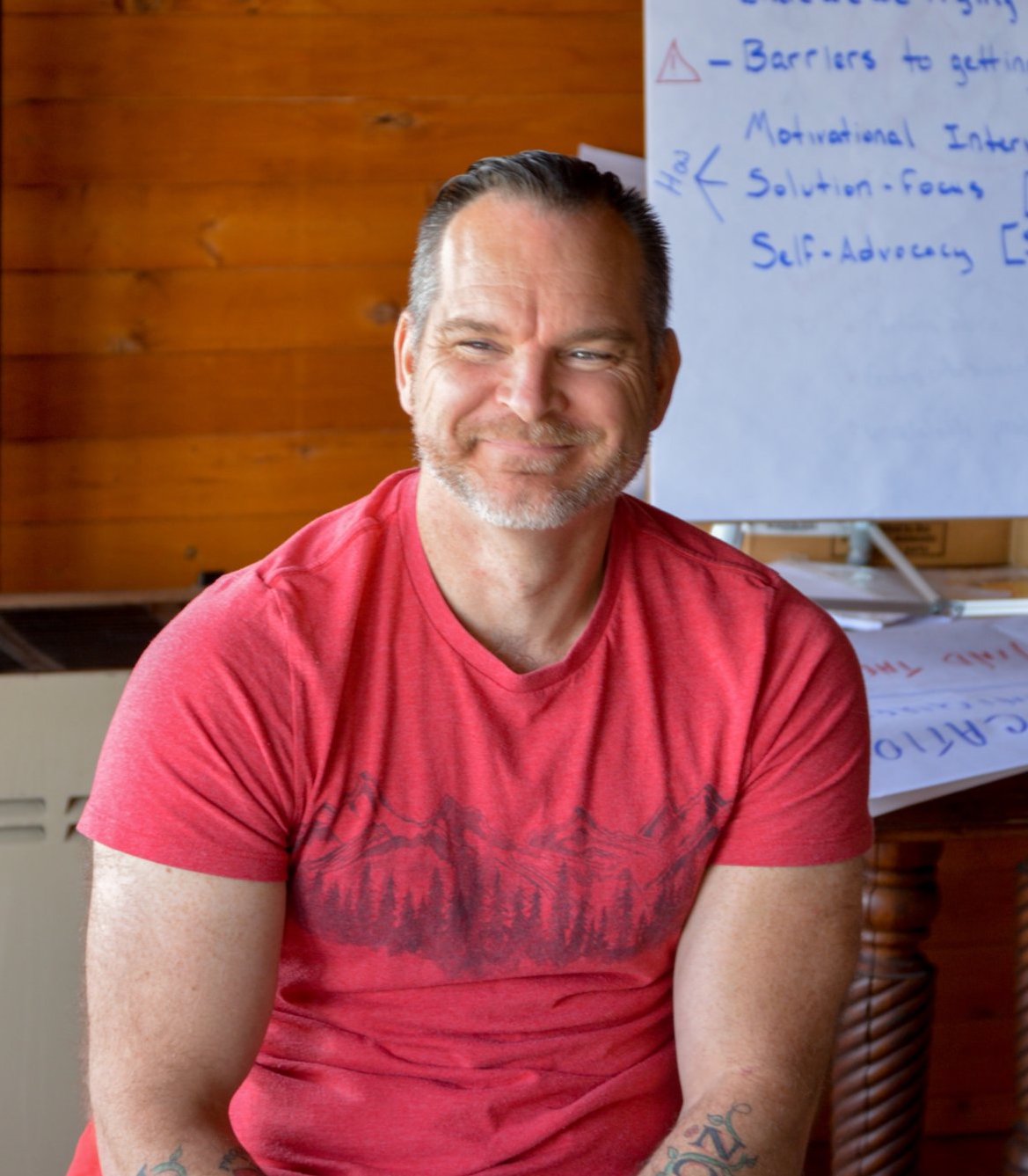
Combat Veteran | Trauma Therapist | Author
Doug Allen is a 20-year combat veteran who now specializes in the nervous system as a trauma therapist. He has developed the Allodynamic Model of repair and is the creator of Nervous System Recalibration©, an in-the-moment action technique used to not ‘ground’ or 'regulate’ but recalibrate one’s nervous system to operate more appropriately for the current environment. Doug works with active and retired members of the military and First Responder community and is an international educator in cultural competence and trauma for other clinicians wishing to work with them.


