


 Apple Podcasts
 Spotify
 YouTube
 RSS Feed
 Battling Burnout with Brainspotting and Sleep Strategies | S5 E30
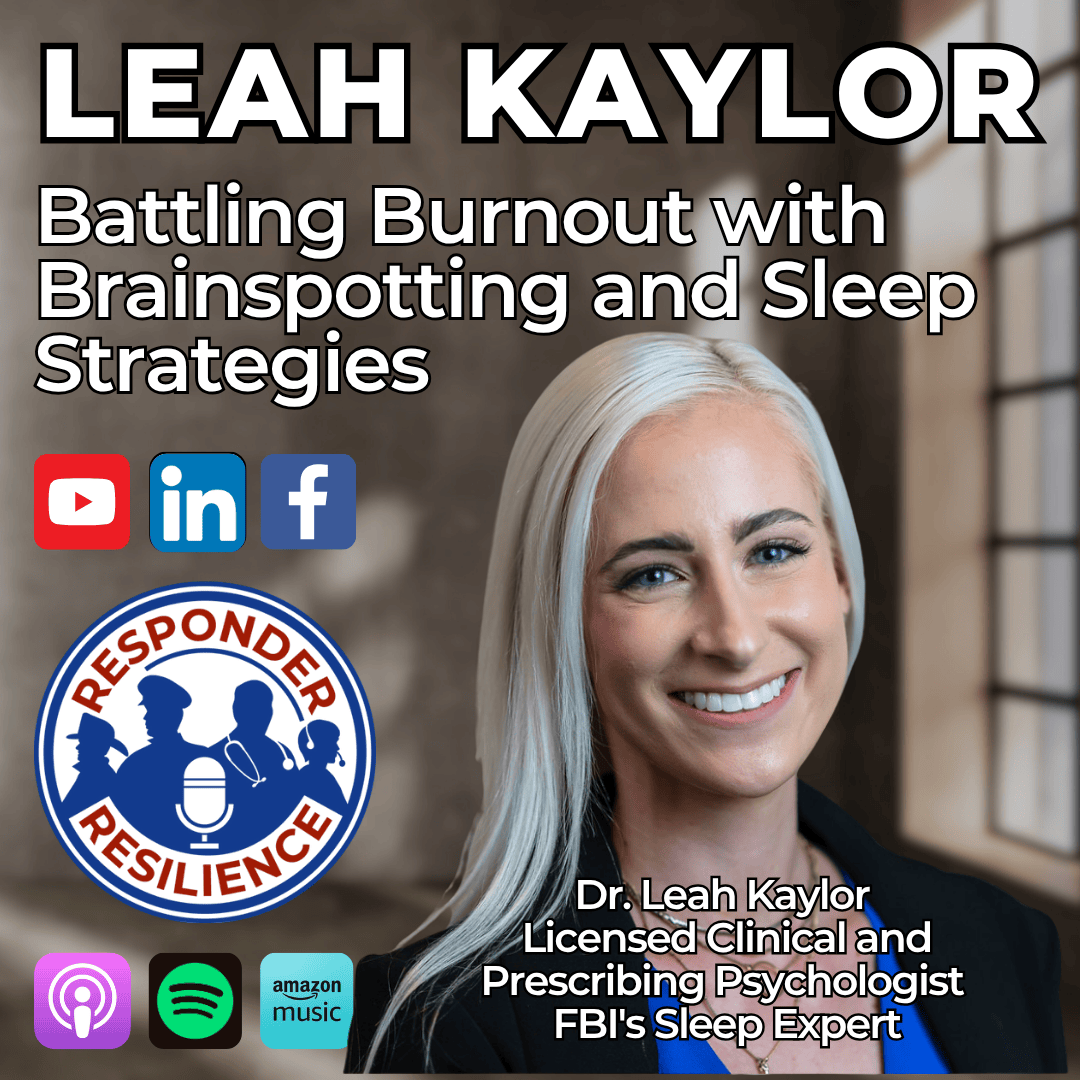
What if the key to mental wellness lies not just in the mind but in the bed? In this eye-opening episode, Dr. Leah Kaylor, the FBI's sleep expert helps to unravel the intricate relationship between sleep and resilience, exploring how addressing sleep issues can spark essential conversations about mental health within this high-stakes profession.
What if the key to mental wellness lies not just in the mind but in the bed? In this eye-opening episode, Dr. Leah Kaylor, the FBI's sleep expert helps to unravel the intricate relationship between sleep and resilience, exploring how addressing sleep issues can spark essential conversations about mental health within this high-stakes profession.
With Dr. Kaylor's insights and her groundbreaking upcoming book, *If Sleep Were A Drug*, we confront the pressing sleep challenges that threaten the well-being of our bravest. And we navigate the fascinating world of brainspotting—a transformative approach that promises to redefine recovery methods for those on the front lines. Tune in for a discussion that might just alter your perception of mental health in ways you never imagined.
Thanks to our resource partner, Circl Brain. Because the toughest battles deserve the sharpest minds. Go to https://www.circlbrain.com/ or contact sales@circlbrain.com
Thanks also to our resource partner, the First Responder Center for Excellence, https://firstrespondercenter.org
Thanks to our resource partner, CRACKYL. Download the FREE CRACKYL App: http://crackyl.respondertv.com
Contact Dr. Leah Kaylor:
Website: http://drleahkaylor.com/
Instagram: https://www.instagram.com/drleahkaylor/
LinkedIn: https://www.linkedin.com/in/leah-kaylor-ph-d-mp-rxp-a75497222/
Contact Responder Resilience:
Phone: +1 844-344-6655
Email: info@respondertv.com
Our website with past episodes and more: https://www.respondertv.com/
YouTube: https://www.youtube.com/c/ResponderResilience
LinkedIn: https://www.linkedin.com/company/responder-resilience-podcast/
Instagram: https://www.instagram.com/responder.tv/
Facebook: https://www.facebook.com/responderTV/
I think we're getting better and better about stigma around mental health, but I think when you get into law enforcement, and then I think whenever you get into you know the most elite law enforcement agency in the entire world, you're still gonna find that stigma there. It's much harder to ask your body to go to sleep when it doesn't want to, but it's much easier to ask your body to stay awake later. Because if you're not getting good sleep, here's what you're gonna do to your brain, here's what you're gonna do to your body, the cardiovascular system. I'm not telling you that you can't have caffeine. I'm gonna give you some education and then you do with it what you will. That's one of the things that I love doing is just giving people education. And once you know something, you can't unknow it. And then you decide what you do with that information.
VoiceoverWelcome to another episode of Responder Resilience, along with my co-host, Dr. Stacy Raymond. I'm David Dashinger. In this episode, we're gonna be joined by Dr. Leah Kaler, a licensed clinical and prescribing psychologist and the FBI's sleep expert for the past five years. We're unraveling the mysteries of brain spotting. What exactly is it and how does it differ from EMDR? And we're going to tackle some of the pressing sleep challenges faced by first responders and discuss Dr. Kaler's upcoming book, The Sleep Advantage. So get ready for an enlightening conversation that just might change the way you think about first responder mental wellness. This episode is made possible by Circle Brain. If you're a first responder, it's time to take brain health seriously. Go to circlebrain.com to learn more because the toughest battles deserve the sharpest minds. There's a new app built by firefighters for firefighters, and it's called Crackle. Download the app now for free as a legacy member and get early access to exclusive content, tools, and updates as they drop. Get the free app at crackle.responderTV.com. This episode is made possible by the First Responder Center for Excellence. Discover more at Firstresponder Center.org and connect with us on X, Facebook, LinkedIn, Instagram, and YouTube. Remember to like and subscribe, YouTube, Responder Resilience, Facebook, Responder TV, LinkedIn, Apple Podcasts, Spotify. Go to our website, responder TV.com for past episodes, guest information. We'll be right back to speak with Dr. Leah after this.
SPEAKER_09In this family, more of us die by our own hands and by the hazards of the job.
SPEAKER_02In this family, up to a quarter of 911 telecommunicators have symptoms of post-traumatic stress. In this family, our mental health and wellness are in crisis, while responders are quietly suffering.
SPEAKER_09In this family, many struggle with job-related stress, burnout, moral injury, sleep disruption, substance abuse, and relationship problems. In this family, we can help the helpers.
VoiceoverWith vital information and resources, resilience strategies.
SPEAKER_03Success stories of overcoming the obstacle.
VoiceoverWelcome to Responder Resilience. We co-host retired Lieutenant David Dashinger, Dr. Stacy Raymond, and Bonnie Rumley, LCSW EMTV. We'd like to welcome Dr. Leah Kayler. She's a licensed clinical and prescribing psychologist specializing in trauma and sleep science. She served as the FBI's sleep expert for over five years, helping agents recover from exposure to critical incidents and high stress operations. With advanced training in psychopharmacology and certifications in EMDR and brain spotting, Dr. Leah blends cutting-edge neuroscience with practical strategies to optimize recovery, resilience, and performance. She's a sought-after speaker, educator, and consultant. And her upcoming book, The Sleep Advantage, offers actionable tools to reclaim beneficial sleep. Dr. Leah, welcome to Respond to Resilience.
SPEAKER_01Thank you for having me. I'm excited to be here today.
SPEAKER_03So, Dr. Leah, let me start by asking you: can you just please share a little bit about your journey? Sure.
SPEAKER_01So I'm I'm verbose. I'm going to try and keep it short and sweet here. So I always knew that I was probably going to have a career in forensics, but I didn't know what necessarily that was going to look like. So one of my very first experiences was doing shadowing of a psychiatrist and a psychologist in a maximum security all-male prison with a death row. That experience was very, very interesting. And it made me realize that that was not going to be sustainable because my anxiety was far too high to have an entire career within a prison. Then I kind of did some flip-flopping and instead of doing offender work, then I moved to doing victim work. So I worked with a lot of folks who had experienced trauma. A lot of these individuals were uh had experienced some type of sexual abuse, whether that was in childhood or in adulthood. And I knew that I was doing a lot of fantastic work, but I also felt like I didn't think that that could be sustainable either. So I'm kind of like trying to figure out where my niche is. And then I get a full-time position with the FBI as a psychologist. And I think, okay, this is probably where I need to be in law enforcement. Like Goldilocks, three times a charm. Like I finally found the right fit.
VoiceoverAnd when you landed at the when you landed at the FBI, like, did you start off in sleep as your area of expertise or how did how did that um evolve?
SPEAKER_01Yeah, great question. So I before coming to the FBI, I was at the Memphis VA Medical Center. I was completing my final year of my PhD. And when you're in your final year, you're doing lots of different rotations, you're doing lots of different experiences, getting as many tools and tips and tricks as you can before they let you out on your own to become your own licensed psychologist. And I got a couple of the rotations that I really, really wanted. But I can't remember if I actually wanted the sleep rotation or not, or if it was just one of the ones that someone needed to take. And as I think back on it now, I couldn't be more grateful that I got the sleep rotation because it opened my eyes to how many people are struggling with sleep, how many people are having undiagnosed sleep conditions, especially obstructive sleep apnea, how many people are struggling with nightmares. Like it really, really opened my eyes. Not that I was a great sleeper, had a passion for sleep until I got to the sleep clinic, but you know, I'm I'm teaching these sleep hygiene courses, and I have a small group, you know, maybe like 20 people in the room, and people are just actively falling asleep on me. And you know, I'm used to it now. I like I do not take offense.
SPEAKER_03I think that happens to a lot of psychologists. I'm just putting that out there. Okay. Yes, yes.
SPEAKER_01I do not take offense because I think that there are so many people out there who are chronically sleep deprived. So to answer your question, David, um, I I wrap up at the VA, I get my full-time psychologist at the bureau. Uh, within my first couple of days, the supervisor at the time was like, okay, Leah, what's going to be your thing? And you know, there's I think we're getting better and better about stigma around mental health. But I think when you get into law enforcement, and then I think whenever you get into, you know, the most elite law enforcement agency in the entire world, you're still gonna find that stigma there. And so I thought, all right, well, how about I educate people on sleep? I, you know, present myself as very friendly and down to earth, and you can get to know me and realize that I'm not super scary. And then, you know, maybe I can get my foot in the door and get people to talk to me more so about mental health. And that's exactly what happened because I get tons and tons of referrals for sleep issues. When in fact, you know, I'll get the person, I start to work with them. And in reality, what's actually manifesting as a sleep issue, but it's really untreated anxiety, depression, trauma. Right. Yeah, you name it. So that's that's really what it is. So I'm so grateful to have trauma and sleep as my two specialties because they go hand in hand. And in my opinion, you're gonna have a really hard time treating one without the other, especially when we're talking about our first responder military populations.
VoiceoverHey, first responders, you face tough calls and hazards every shift, but the fiercest battles, they're happening inside your brain. Meet Circle Brain, your essential mental training partner. Your brain adapts to stress, trauma, and exhausting shifts, but not always in ways that serve you. These invisible changes can show up as fatigue, brain fog, irritability, or memory lapses long before they become obvious. With a circle, you get more than a gadget. Simply put on the headset and play a quick game. In minutes, you'll receive personalized insights into your mental speed, power, and focus. It's built on 60 years of neuroscience research and designed to boost the cognitive resilience you need to crush every challenge. After putting on your slipper's corner, I didn't realize how compromised my brain actually was until Circle showed me. And thankfully, it's helped me increase my overall brain health. If you're a first responder or support those who are, it's time to take brain health seriously. If you're ready to level up your brain game, contact us now at sales at circlebrain.com. Circle. Because the toughest battles deserve the sharpest minds.
SPEAKER_03How clever, you know, to have that be the entrance point, you know, for having first responders come into therapy. Because, you know, it's so much easier to say, yeah, I'm having trouble sleeping. You know, it seems more biological, medical, everyone sleeps.
SPEAKER_01Exactly.
SPEAKER_03You know, or not. And so that's a nice foot in the door. And then of course, you get to the bottom of why they're not sleeping and why they're you know, what how that's impacting their their health, both physically and mentally. So I just want to understand a little bit more about your role in the in the FBI. Are you considered uh um an embedded clinician?
SPEAKER_01So everything that I say here, my own thoughts, feelings, opinions, beliefs. This podcast is not sponsored by the FBI or endorsed by it. Um, so to talk a little bit about my position, I am a full-time employee of the Bureau. Uh, I am a psychologist, and I serve as a resource for any employees, whether that's special agents, whether that's professional staff, joint task force officers, and then also family members as well. So I, since it's at the federal level, my license is good for any of our federal employees. So it doesn't matter what state they're located in. We have a lot of folks who are overseas deployed doing things. So it's really very cool that I get a chance to work with anyone anywhere who needs these very specialty services. So I'm I'm so uh pleased to have that ability to be able to offer that.
SPEAKER_03Will you do telehealth? Um somebody's stationed somewhere else in another country.
SPEAKER_01I would say that that's the majority of what it is that I do. There are some people that I see in person, but I would say the vast majority of my caseload are people who are virtual because again, it's especially whenever people are saying, Oh, I'm having a hard time sleeping. I feel like at this point in time, I've been with the bureau for over five years now, and people are like, Oh, you need to go talk to Dr. Leah. So it's very easy to set up telehealth, and that's a lot of my caseload is helping people telehealth. Yeah.
VoiceoverSo obviously, sleep is a complicated uh topic, more so for first responders than the civilian population just because of shift work, crazy hours, working lots of hours, um, you know, over time, extra shifts. How do you navigate that? And are there practical tools you you share with them that help them improve sleep and kind of get uh get the most out of it?
SPEAKER_01Yes. So just like what you mentioned, everybody is unique and different, and everyone's gonna have various different things that they bring to the table and those dynamics that change the way in which that I work with them. So one of the very first things that I ask everybody to do, and this is the same thing that I did when I was working at the BA, is I have everyone fill out a sleep log. And I normally do that for two, even three weeks before we really dig into sleep. Because here's the thing we you can tell me how you slept last night. You can tell me how you slept the night before that. But as we get further and further back, we're just poor historians. It's not that we're we're trying to lie or or to be deceitful or anything like that. We just have poor memories, especially for something that is so mundane is sleeping every single night.
SPEAKER_04Right.
SPEAKER_01And so often when I ask people to tell me about sleep and how they're sleeping, I'll get information, but then sometimes it's conflicting, sometimes it's a little bit confusing. Like I'm I'm trying to follow them. So one of the best tools in my toolkit, and it's super low budget because I just have a paper and pencil. You know, I I think that nowadays, like wearables are very exciting. But my mine is super free, low tech. I give people a paper and pencil and I ask them to track their sleep. Uh, and the paper is like for every morning, I have them fill out various different things, and then every evening I have them fill out different things, and then we'll get together after two or three weeks and we analyze it together. And that's really where I can get down to brass tacks and give people very specialized information on what's going on with them. Because I think the first time that we meet, the person has finally come to terms with, okay, I'm gonna get help. And then oftentimes it's just kind of all this information all at once, and so it's easier for me to see things laid out in and patterns over a couple of weeks. Yeah.
SPEAKER_03And it also makes it seem more medical too, because you know, you it's not uncommon. People have to track their blood pressure, want you to take it every day. And then and then let's talk about what your blood pressure is. People will say, you know, they they take it once, it was fine, but but it's not fine when you know when you when you study it over the course of of a week, you know, a different time and you take it a different time of the day.
SPEAKER_01So and I think with the tracking too, it also helps people because I I try not to see people until I have like two or three weeks' worth of data because maybe you're sick, maybe you're on TDY and you're at a hotel, maybe you're doing various different things. So I think that just a few days worth of sleep data sometimes just isn't good enough. But whenever they're doing it and they're doing it consistently, which is the key, you know. I I used to I I tell this story of being at the VA and I used to have a waiting room and I would see people, they had like a blank sleep log in front of them, and they're like furiously filling it out in the waiting room, like waiting to come back to my office. I'm like, this is not how it works. You have to do it every morning and every evening to get good data. Right. And then that's how I'm gonna help you the most. But also if you are doing it right and you're filling it out every morning and every evening, you're gonna start to see some patterns too. Because the log that I'm asking people is, are you napping? There there's you know, all information about how you're sleeping at night. But then also getting to your question, Dave, is did you have any caffeine? When was when did you stop eating? Did you have any alcohol? Did you take a nap? What time did you exercise? What did that look like? How much energy did you have? So there's a lot of daytime questions too that as you're filling this out two, three weeks, you're gonna start to see some things emerging too. And I think that that's kind of empowering of like, oh, okay, maybe I can do something about this.
VoiceoverYeah, and a lot of those are very easy, um, at least accessible fixes, right? You can absolutely you can you can make your own changes as far as caffeine consumption, alcohol consumption, um, you know, taking naps, those are all under our control.
SPEAKER_01And I feel very strongly about giving people tools that are free, that are science-based, that are just easy to do. Like, yes, you have to find the time to do it, and that's on you. You know, you can lead a horse to water, but you can't make a drink. But I do believe in, you know, you don't have to buy all these gadgets. You don't have to do this, you don't have to do that. Yeah. You there are a lot of free things that you can do within your control. You just have to make the time to make that happen. And I I feel very strongly about that. You know, I'm also a prescriber too. Um, I've been a I've been a prescriber now for like almost a year. And first and foremost, I'm always a psychologist. And so I think that one thing that we see is everybody wants this magic pill, right? Yeah. And I I've gotten this question so many times because I probably do sleep lecture within the bureau. And then I'm also like moving out into the community too to share this knowledge. And I've gotten this question so many times about sleep aids, melatonin, and over-the-counter prescription that I have a slide now. And this is exactly what we're talking about, David, is it's a pyramid. And at the very bottom of the pyramid, these are behavioral changes that I'd like to see you make. So again, the timing of your exercise, um, the timing in which you stop eating, like the time maybe you like spicy meals, like not having that too close to bed, like cutting off even just regular fluids too close to bed. Then the next layer of the pyramid is environmental modifications. So making sure that your bedroom is dark, cool, quiet, you know, making sure that we, if there's noise, do you need a white noise machine? Do you need some nature sounds? Then as you're making these changes and you're doing this for a couple of weeks, if not a couple months, and you're still not seeing changes, the next thing we probably need to do is think about a sleep study. And you know, again, people are like, well, tell me about the pills, tell me about the pills. Right.
SPEAKER_03And then people want just a quick fix, right? They want it like this. Um mentality that we have. Just doc, just give me something because I want to sleep.
SPEAKER_01Right. And I'll tell you what, even though I haven't been a prescriber for that long, I've I have yet to prescribe any sleeping medications because I feel very strongly against it. So I'd rather see you have a sleep study because there are so many people out there with undiagnosed obstructive sleep apnea. And that's a huge, huge problem. Like if you know about it or if you don't know about it and you're not treating it one way or another, it's a huge problem with some very, very serious consequences. And then once we move up the ladder, the the pyramid, if you will, the next part is over-the-counter. And again, I think that there's just so much misinformation out there. Like if we talk about diphenhydramine, the active ingredient and most over-the-counter sleep aids, after three days, it's no better than a placebo.
SPEAKER_03Really? So that's Benadryl? Diphenhydrate.
SPEAKER_01Benadryl, ZQL, you know, like you flip over the back and the active ingredient, diphenhydramine, after three days, it's no better than a placebo. But also, and I'm gonna I'm gonna throw this out there because I think it's important that people know, I'm saying there's an association. I'm not saying cause. We know that there, when you're taking an anticholinergic or something like a diphenhydramine for a long period of time, it is associated with neurodegenerative conditions like Alzheimer's, like dementia. So whenever I have people come to me and they're like, Yeah, I've been taking ZQL for two decades, I'm like, this is a problem. We need to talk about this. Yes. Yeah, it's a it's a huge issue. And then, like, again, like melatonin, you know, we can talk about this. Like everybody, everybody and their grandmother and their children is taking melatonin. And this is a problem because your body naturally makes melatonin. It knows how to do that. It it does it every day. And there are ways that you can strengthen that, which is fantastic. Again, free, easy. One of those would be getting outside within an hour of waking up and looking at the sun. Again, super free and easy. But people take melatonin like it's candy. Well, the bottom line is melatonin is not meant to be taken like that. It's good for shift workers when you're specifically trying to shift your sleep. It's great for jet lag when you're moving through time zones very quickly, but it's not made for daily use. And people don't understand that. Yeah. And so, and also, too, you know, just the other day I was on the phone with um uh a lead research researcher in circadian rhythms because I wrote a chapter on shift work in the book, and I wanted to make sure that everything was like very sound. So he's working with me and we're having this conversation about melatonin, and I'm getting ready to go overseas here in a couple of days. And he says, You know, are you gonna use melatonin for your jet lag? And I said, Oh, you know, I I really don't want to. I don't like that, but you know, I'll give it a go. And he says, Well, if you don't have any and you're gonna go shopping for it, you should be looking for anywhere from one to three milligrams. And he gives me some other information, like not combined with anything else, fast acting. So I can't, I went to three stores that day. All the milligrams are 10, 25. They are so incredibly high. And he tells me, Leah, one to three. And again, this is very specific for jet lag. I'm going to be crossing over many, many time zones.
SPEAKER_03Right. Yeah.
SPEAKER_01But it's just, it blew me away that I had to go to three different stores. And the lowest milligram that I could find was three. I couldn't even find one.
SPEAKER_04That's interesting.
SPEAKER_01It's really, it's really unfortunate. And then to answer your question, the the very tip top of the pyramid is prescription sleep aids because there is a place for it. There's a time and a place. There are people who that will be appropriate for. But again, everybody wants this magic fix. Everybody wants this magic pill. But we're not talking about the black box warning that comes with ambient and sonata and lunesta because there are unusual sleep behaviors that can happen with it. And it's also associated with amnesia for forgetting what it is that you did during that period of time. And I have a lot of people come up to me after sleep lectures to say, I never knew I was doing this until my husband filmed me doing weird shit in the middle of the night. And so it's there is no magic pill. There is no magic fix. You have to make time and you have to make the effort to do the different things that I'm going to teach you about.
VoiceoverHey, firefighters, let's take a moment to talk about something important. There's a new app built by firefighters for firefighters, and it's not just another wellness tracker or generic resource hub. It's called Crackle. You've probably seen the magazine, but this is the next evolution. The app is about one thing helping firefighters not fail. Not just on the job, but in life, in your health, your relationships, your mindset, and your longevity. That's why Crackle is designed to meet firefighters exactly where they are, with resources that make sense, are easy to use, and actually respect your time. You can download the app now for free as a legacy member. That means you get early access to exclusive content tools and updates as they drop. Use the QR code on the screen to download the Crackle app, or you can download it from the App Store or Google Play and stay in the fight. Not just at work, but at home and in your own head too. Because your best days shouldn't be behind you, they should be ahead of you. You're touching on something else, and this could also uh be be affected by alcohol and perhaps even caffeine is the restorative um healing part of sleep is when we're able to drop into the deeper parts, um, REM sleep, for example. Right. Sometimes, um, correct me if I'm wrong, sometimes taking these um medications or too much caffeine or too much alcohol will will prevent us from getting into that, enter into that deep uh restorative sleep.
SPEAKER_01Absolutely. Yeah, you're hitting the nail on the head. So a lot of people, we didn't talk about this, but a lot of times doctors will prescribe benzodiazepines for sleep. Benzodiazepines are horrible for sleep. They are not going to help your sleep architecture at all. They're not gonna preserve that. And when I say sleep architecture, I mean moving through light sleep, deep sleep, REM sleep, these sleep cycles that you will move through throughout the night if you're a normal, average, healthy sleeper and you don't already have a sleep disorder. And ambient sonata lunesta, the Z drug category, does a better job of preserving sleep architecture, but it's not as good as just sleeping naturally and doing what your body knows how to do. And you're exactly right. Whenever it comes to alcohol, a lot of people say, well, alcohol makes me feel sleepy. Yeah, it does. It's a sedative, it will make you feel sleepy. But once it actually gets into the system and starts metabolizing and getting broken down in the stomach, then it turns into a stimulant. And it's gonna do the opposite effect. It's going to make you have very surface level sleep. Your sleep is going to be very fragmented and broken. It's not going to be this deep restorative sleep that we talk about, like the deep sleep and the REM sleep that we need. And then because you're in this more surface level, you are more easily awoken by sounds. So it's just going to be very broken sleep. So you're exactly right. Sleep is, you know, I think people think sleep is for the weak, or they think that whenever you sleep, that your brain and body just shut down. And that couldn't be further from the truth. I mean, when we think about REM sleep, if we had two people, one person's in REM sleep and they have a cap with electrodes on their head, and we have one person who is awake and alert and problem-solving, and we put electrodes on their head, the brain waves look very, very similar. Very active because the brain is so active during REM sleep. And so when we're getting in our own way by using alcohol to help us sleep, then we are getting in our own way as far as healing and the restorative processes that happen at night that can't happen any other time. They have to happen at night.
SPEAKER_03So, Dr. Lee, how do you deal with the resistance uh that you must come across when you know people they they really like their alcohol? Yeah, they like their coffee. So how do you deal with that?
SPEAKER_01Well, first and foremost, I would say it's all about meeting people where they are, right? As a psychologist, like this is a huge thing that we have to do. And so I'll tell people not that you can't have just say, for example, you mentioned caffeine. I'm not telling you that you can't have caffeine. I'm gonna give you some education and then you do with it what you will. So let's take an example. Here's my here's my dog cup, because I love my dog. So let's say, for example, that this is a thermos, like filled with with coffee. And I'll just tell people because I think a lot of folks just don't realize this. So the half-life of caffeine, and every person is a unique special snowflake, but is normally six-ish hours for the for the normal person. You know, we're gonna have some people who are ultra rapid metabolizers, we're gonna have people who are poor metabolizers, but we're going with six hours for your normal person. So we drink this whole entire mug of coffee at 6 a.m. So at noon, six hours later, we still have half of it rocking and rolling in our system. Then six hours later, we still have this much rocking and rolling in the system. That's half-life. So I think it's important to give people education, but I'm not saying that you can't caffeinate. Let me tell you how to do it better. So oftentimes people wake up like they roll out of bed and then the coffee pot is right there because that's what they're just conditioned to do. That's not the greatest time to caffeinate because you already have adrenaline and cortisol coursing through the body because that helps you wake up and get started with your day. Like that's just normal, naturally what happens with these hormones and with these chemicals. So if you put caffeine on top of that, you're kind of reving an engine that's already like in overdrive, like it's not gonna do anything. But if you wait 90 minutes and then you caffeinate, that's where you're gonna hit the sweet spot. Those chemicals are starting to naturally dissipate. And as they dissipate, then when you get caffeine in the system there, that's when you're gonna get the best bang for your box. I'm not telling you you can't do it. Right. And also, too, like if you if you have a schedule that is going to be something that's more stable, and I realize not everybody has that, but if you are, you know, a day shift worker and maybe your bedtime is we'll just say 9 p.m., if you're cutting out caffeine early in the afternoon, then that will be a good strategy to help you sleep. So again, I'm not telling you that you can't do it. I'm just gonna try and educate you in a better way to be able to do it. And again, I think as we, as I'm working with someone, even after that initial several weeks of tracking sleep, I still continue to ask them to track. And then I think that they start to see, oh, okay, maybe she's right. Uh, you know, because on the sheet, I ask you to track your caffeine and when you're having it and how much you're having it. So I think that it's really just hitting it home of no, when you track things and you see the changes that you're making, and then you see how much better you're sleeping at night, how much more energy you have during the day, how much more clearly you can think, then the changes start to make more sense and you start to get buy-in there.
VoiceoverAre you a clinician working with first responders? Or perhaps a first responder eager to enhance your mental health knowledge? We have something special just for you. Introducing the Clinician's Guide to Working with First Responders series, exclusively on Responder TV. Join us as we explore vital topics that can transform your practice and boost your resilience. Dive into master class episodes like Clinician's Guide to Wellness Programs and Internships with Wendy Hummel, Building Trust with Law Enforcement with Dr. Medina Baumgart, Clinician's Guide to Peer Support and Officer Wellness with Captain Mike Fumiati, Mental Health Canines and Crisis Response with Brad Cole, Clinician's Guide to Inpatient Treatment Facilities with Pat Fitzgibbons, working with unique fire and law populations with Dr. Robbie Adler Tapia, and Clinician's Guide to Psychological Autopsies with Elizabeth Pole and more. Don't miss out. Tune in to elevate your practice and increase your cultural competency. Visit responderTV.com or find us on YouTube, Facebook, Apple Podcasts, and Spotify.
SPEAKER_03The maybe the more difficult chemical then is alcohol, right? It's part of the culture. Everyone does it. Totally. And it does, you know, the anxiety relief that you get from it, the calming down, drowsy feeling you get from it, you know, obviously it's addictive. So how do you deal with that?
SPEAKER_01I would say, you know, everybody's this suggestion may not land across the board, but if you're if you're someone who has alcohol here and there, if you can have it earlier in the day, maybe in with your dinner, or say, for example, it's a day where you have your day off and you are at like a picnic during the daytime, and maybe you have a beer there. So you still feel like you can have something without me saying, Oh, well, no more. You can't take, you can't have this because people don't like that. No, yeah, that doesn't land well of me saying, mm-mm, we're done here. And also, too, if you've been doing this for a long time and this is your go-to sleep aid, me taking it away from you, cold turkey, is not going to be a good strategy. So perhaps I'd work with the person and say, like, okay, let's see, let's track. I'm not gonna ask you to change anything for let's say two weeks and just track, be honest with me, because that's first and foremost. I think people don't want to be honest. No, and and that's you know, one thing I learned in the case.
SPEAKER_03If you're gonna have a beer at a picnic, I almost started laughing. Hey, you know, that's that's not those aren't the numbers that that that are happening.
SPEAKER_01Exactly. And that's what I learned in grad school. And when I was on my substance abuse rotation, is whatever people tell you, add several more, and that's where you'll actually get to the accurate answer. So but it's also about building trust, right? Like, I'm I don't want to call you out as a liar because are you gonna come back to our next appointment? No, probably not. So I'm gonna try and work with you, and you know, again, everything when you're working with me is confidential. So I want you to track this and I want you to be honest about it. Okay, so if it is six beers every night before dinner or before sleep, yeah, can we okay? Let's go very slow then. Maybe for the next week, we just do five and see how that goes. Yeah. And for the next week, maybe four and see how that goes. It is, it's less painful, and also if you've been doing this for a long time, your body's less likely to freak out if I do it this way. Right? Yeah, so it's it, but I think a big piece of it is education, and I think that that's one of the things that I love doing is just giving people education. And once you know something, you can't unknow it. And then you decide what you do with that information and kind of trying to empower people to just make better choices. And I think that oftentimes if someone's using alcohol, there's a reason behind that. It's not because, like, wow, this beer is so tasty, like maybe, but I kind of doubt it. I've had beer before and it tastes like shit. So I really don't think that that's what it is. Right. And so that's where, you know, once you start to build that trust, figuring out okay, is this underlying depression, anxiety, PTSD, like something's going on underneath, and then giving people tools to try and fix that and work on that during the daytime, too. So I think that it's definitely a multi-fauceted approach. Um, but but you're right, alcohol is a huge problem.
VoiceoverWell, I I love that you meet people where they're at, and they're almost more active participants in this whole uh process, which has really got to be empowering. Um, there's so much I love to unpack with you. Um one of the things you mentioned in passing, and I think it's really important, yeah, is shift work. And that's yeah, you know, very different in the world of fire, different in EMS. It's probably very different in um law enforcement, probably in the uh the world that you're in. How does shift work come into play with optimizing sleep hygiene and optimizing sleep in general?
SPEAKER_01So shift work is so incredibly challenging, and this is something that I will get questions about. And oftentimes um, when I get these questions, they more so come from leaders, which is very exciting for me because the the nature of the beast is emergencies don't end when the sun goes down, or crime doesn't stop when the sun goes down. In fact, it's probably the opposite. And so we have to have these people out on the streets protecting us or taking care of us or whatever the case may be. So shift work is a necessary evil, like it has to happen. There's, you know, even in a perfect world, I don't know that we could get away from having shift work because of hospitals and whatnot. So, how do we work with what we've got? And so one of the one of the things that I try and address in the book is asking people about their chronotype. And when I say that, I mean you've probably heard of I'm an early bird or I'm a night owl. And there are truly people like that. Like for me, I am the definition of an early bird. Like, I like to get up, like I like to watch the sunrise, like I like to get my day started. But for example, my best friend, she will sleep all day long. She's kind of like a vampire. I don't understand. And like her day doesn't get started until like the sun sets, and she's up all night long. But that's when she does her best work and that's what she likes. And she works for herself. So she's made that work for her, and when she is most psychologically and cognitively sound to do the work that she needs to do. So I think that there are people out there who are going to be naturally early birds or night owls. And so, if there are ways to capitalize on this, like when we're making a schedule, talking to our employees and asking them, what is it that you naturally you like to do? And I I hope that there will be people out there who self-identify as night owls and who want to take on that shift because that works with their personal circadian rhythm, but it also works to get the job done too. So I think that if we take that as a first step, and I imagine that a lot of people, well, I don't want to say this because sometimes depending upon the organization, like night shift comes with some perks, maybe like a little bit of extra pay or this or that. But I hope that we can align it with the people who already naturally have that chronotype first and then kind of build from there. And there's a couple other things that leaders can do in when we're talking about circadian rhythm, in that it's much easier if we have to have rotating shifts, because I understand that that's just the nature of the beast sometimes. If we're gonna do that, it's so much easier to rotate forward, meaning going from day shift to evening shift to night shift, and then continuing that. It's so much easier. And think about it like it's much harder to ask your body to go to sleep when it doesn't want to, but it's much easier to ask your body to stay awake later. And that's what we're doing when we're rotating forward. But some places just don't have this education. And that's why, you know, that's one of the chapters of the book is I talk about if you're trying to rotate backwards, going from night shift to evening shift to day shift, that's asking your body to go to sleep earlier. And that is just really, really hard to do if you're not sleepy and you're not tired. So there's things like that where leaders can can make a change. But also, as I'm writing this book and I'm putting together like an entire section for leaders, there are some awesome, very forward-thinking departments. Like, for example, um, there's a few fire departments that I was reading about who everyone, you know, we've moved away from, or hopefully we're moving away from, I should say, like the room that has all of these bunk beds and everyone's there all together. Because that's just really disruptive. And like if you got one poor person snoring like a chainsaw, like forget about it, you know, we're gonna kick you out. But now people are having their own individual sleeping spaces, but not just that, because that's a fabulous step in the right direction. But now we have people in various different teams. So if we only need this particular team to go out, but not that team, then we have alarms that only wake up the team that we need, which is fantastic. So we're not ringing the alarm and waking up the whole firehouse, which is again getting smarter about the way that we do things.
SPEAKER_03Yes.
SPEAKER_01Again, when we think about alarms, like especially if you're not, if you're in a deep sleep or you're not expecting it, or you're just trying to get this like rest that you've been waiting for, when an alarm goes off, holy hell, like your heart's pounding out of your chest, you know, even the word alarm, like it's it scares us, it wakes us up, it pulls us out. And so if we can get to a place where we're having alarms, and this is one of the fire departments that I was reading about, has a more gentle alarm system where they're using like sound that is much more gradual and lighting that is much more gradual. So we're not giving you this punch of adrenaline in the face by waking you up. Instead, we're doing it a little bit more friendly, gently. And so I think that there's things like that that we can capitalize on. And I realize that that takes money to be able to do those things and put those things into implementation. But I think that we can learn a lesson in that that is so much more sleep-friendly to do things like that. And uh yeah.
VoiceoverYeah, great answer. Um, you really covered a lot. And before we kind of uh shift gears into brain spotting, uh, please share a little bit more about your book when you're expecting to release it. Anything else you want to share about it?
SPEAKER_01I am so excited about this book. So, what happened? You know, I I love talking about sleep. As you can tell, like I kind of just like light up whenever it's time to talk about sleep. I never thought I would write a book, but here we are. I went to a conference um back in October, and it was a first responder wellness conference, and something really cool happened. I am normally a lineup of speakers, and it's like you don't have any choice. You are here in the room, you don't get to go to anything else. Like, this is where the conference is, and you will sit still all day and you will listen to the speakers we put in front of you. And so I always have a captive audience. But what happened in Wisconsin that was really cool was my sleep talk was optional. It was a breakout session, and I had a massive room, and we still didn't have enough seats. And I was like, whoa, okay, like something is happening, and this is exactly what I want to be seeing. So the talk goes amazing. It's fantastic. I have someone come up to me afterwards and just say, Oh, wow, this was so wonderful. But you know what? My best friend wasn't here, and she's the one who needs this information. Like, do you have a website? Do you have a handout? Do you have a book?
SPEAKER_03And I'm like, Book?
SPEAKER_01You you would read a book if I wrote a book? Like and just like hit me like a ton of bricks. So that was October 30th. I go home and when I decide I'm gonna do something, yeah, you better watch out. Right. I write all of October or excuse me, I write all of November, all of December, and I hand my book over to an editor on January the first.
SPEAKER_03Wow.
SPEAKER_01Because I love sleep. And like I've had six years worth of talking and educating and working one-on-one with people and seeing a lot of things and hearing a lot of things. So it was just so much fun for me to write it. So you mentioned the title, The Sleep Advantage. So turns out someone already has that title. We just found out.
SPEAKER_03We just found out. Wow. Okay.
SPEAKER_01Yes, which luckily we found out before it went to print. Um, so the the title now has changed. So it is if sleep were a drug. Why sleep is the ultimate advantage? No prescription required. If sleep were a drug. If sleep were a drug. So that is the new title.
VoiceoverUm and the timing in these things is so uh important, right? Like as you're writing chapters, things change, people change jobs. They're you know, there's a lot of moving parts, and book is a little more of a permanent record of of all this information. So it's uh so yeah, it's it's challenging to get it all right. And you were you've definitely lucked out to to have that um that insight to the title was already taken.
SPEAKER_01So yes, we we got very lucky in the timing in which we figured out that this title was already taken. But I'm I'm very pleased with the new title. I'm super excited. Like the the cover that we're working with is very eye-catching. But the thing that's very unique about this book is like I mentioned, I've spent my career with veterans, with service members, with special agents, with first responders, and that is who this book is written for. This is the first responder edition. And so when I wrote it, the person who wrote my foreword, um, who is Colonel Dave Grossman, he said, Leah, I am so happy that you wrote this book. But he said, I need to give you this piece of advice. Take out everything that has to do with first responders because this book will help everybody. And I said, Dave, with all due respect, because you deserve a lot of respect, I'm putting this book out there because these are my people. And as a psychologist, Stacey, you know, people like to hear that you understand them, that you understand what they're going through, that you have been there with them. Not that I carry a service weapon, but I get it. I've worked with y'all long enough to understand how to get through. So, yes, there will probably be future books for the general population and everything else, but this one is for my people. This is for first responders. So the way that it's laid out is why is sleep important? Because we talk about I'll sleep when I'm dead. And that's one of the things that I addressed, not even in the first chapter, in the introduction of I'll sleep when I'm dead and why this mindset is so so damaging and how we need to have a culture. It'll come sooner. Oh, exactly. No, you're exactly right. You want to sleep when you're dead? Fast forward it. Yeah, you will. You'll be in the grave much quicker. So, and then I also I'm not above a scare tactic. I love a good scare tactic because I think that it, you know, people need to wake up to the importance of sleep. And so that's what the first chapter or so is about is if you're not getting good sleep, here's what you're gonna do to your brain, here's what you're gonna do to your body, the cardiovascular system, everything. I really break it down in detail. And then I talk about, okay, you know, I think I hit you over the head enough. Let's get into it. Why is deep sleep important? Why is REM sleep important? Why is late sleep important? And how we get in our own way. And then, like there are chapters on alcohol, on napping, on caffeine, on video games, on sharing a bed with someone else, um, uh letting your pet sleep with you, you know, all these different things that maybe you wouldn't realize. No. Yeah. So I address tons of things. And then I talk about because this book, you know, I wanted to include everything. Like I wanted this to be a handbook for if you are struggling, this is the one book that you need that will give you practical strategies to start tonight. So the next section is if you're having nightmares, here's what to do. If you have restless leg, here's what to do. If you think you might have obstructive sleep apnea, here's what to do. And so it's really just this one-stop shop for all the information that you need. And then I have a section for leaders on how they can be more sleep, sleep smarter leadership, essentially. So that's what it is in a nutshell. And it's coming out October 1st.
VoiceoverYou've covered so much that I think is hugely important in the, as you we also mentioned earlier, shift work. But I love the fact that you're tapping into the leadership piece to this because when it comes to work sleep on the job or at the job, yeah, um without leaders understanding the nature of sleep and and how it affects performance and mental health and all the uh and physical health, um without their buy-in and support, we can't change some of the things about how we sleep at the firehouse or maybe uh whatever our job is, how we sleep. So I'm so happy to hear that you're you've tapped into that piece and I applaud you for it.
SPEAKER_01Thank you. Yeah, I feel like that chapter is so important, but I didn't know where to put it other than the last chapter to kind of wrap things up. And I'm like, well, shit, it's way more important than just the last chapter, but that's kind of where it fit in. But nonetheless, yes, if you don't have that buy-in and you don't have people fighting for you and telling you that it's okay to sleep, then things aren't going to change. It has to come from the top down.
SPEAKER_04Yeah.
SPEAKER_00Introducing FDTs. The only gourmet tea crafted with first responders and their families in mind. Proudly firefighter and veteran-owned, our collection of gourmet organic teas is uniquely designed to honor those who are on the front lines to protect our communities. At FDTs, we believe in quality. That's why we source the freshest organic tea available, offering you the most popular flavors that not only excite your taste buds, but also bring comfort and relaxation to your daily life. Indulge in our specialty blends: classic Earl Grey, soothing chamomile, vibrant green tea with ginger root, decadent chocolate salty caramel black tea, and robust Irish breakfast. FDTs makes for a special and unique gift, perfect for any occasion or season. Taste the difference and show your appreciation for the rescuers in your life with FDTs. Available on FDTs.com and in our Etsy store, Fire Department Prince. Also available on Walmart.com as Fire Department Prince.
VoiceoverLet's spend our last few minutes talking about brain spotting. Stacey, what would you like to ask?
SPEAKER_03Yeah, so uh just so that Dr. Leah knows, like we've had several episodes um talking about EMDR. So you do not need to necessarily rehash what EMDR is. But what we would like to know, because we've never talked about brain spotting, is how is brain spotting um just give us a little background on it, and then how is it different than EMDR? And why would you pick brain spotting over EMDR or vice versa?
SPEAKER_01Yeah, and thank you for asking. So uh I'm certified in both EMDR and brain spotting. EMDR was the modality that I came to first. Uh, but just to give you even a little bit more background, is when I was in graduate school, I was trained in cognitive processing therapy and prolonged exposure. And then I got to the bureau and I was like, huh, y'all don't like to talk about your feelings. No. Okay. I need to figure something else out. So that's how I came to EMDR. And I it's a very well-loved tool. It is something that I use very often in my clinical toolkit. And then I heard some other clinicians talking about brain spotting. And I'm like, ooh, I'm curious. Let's go see what this is all about.
SPEAKER_04Yeah.
SPEAKER_01So to give you some historical background, Dr. David Grand is the one who created or discovered brain spotting, if you will. And that was in 2003. But he used to be a train the trainer for EMDR. So he would travel around the world and he would teach other clinicians how to do EMDR. And in his experience, he found that some people just didn't have the greatest results. He felt like there were some people who just didn't get what they needed out of it. So he started to do some experimentation. He was using like the eye movements that EMDR is famous for, but kind of slowing them down. He also added some very soothing bilateral music. And in his his book, which is called Brain Spotting by Dr. David Grant, it's a very fun, easy read. And it kind of breaks down the history of how he came to be and how he came to discover this. And in the first chapter, he talks about working with an ice skater. And her name is Karen, and they are working together. And they've been doing EMDR for a very long time. She's getting ready to go to the Olympics. Like she can't land this triple axle loop. And they've been working together, like trying to figure this out for like performance enhancement. And basically, he's doing the eye movements and he slowed down the traditional EMDR eye movements. And as he's moving across her visual field, he sees her eyes kind of wobble or like do something strange. And he's like, hey, you know, humor me for a minute. Let's just stop at this spot in which your eyes kind of wobbled. Let's just see what happens. And he holds his fingers there at that spot and just has her stare at that area. And she describes it in the book as like all these images and thoughts and memories flying through her head and things that didn't have anything to do with ice skating and things that they never talked in therapy, and like her parents fighting and the death of her grandmother, and all these things are just like flying through her brain. And they do this for like 10 minutes. You know, she's just staring at this one spot. And afterwards, they're kind of like, well, that was weird. See you next week. And uh, you know, wrap up the session. She goes to ice skating the next day and lands this triple axle loop and never has a problem again. It's like, all right, that was kind of cool, you know. So he has a lot of clinicians who are um therapy clients. So he's like, Hey, will you humor me? Like, can I can I try some things out? And he starts to figure out that he's getting really, really good results with brain spotting. And brain spotting is pulling a lot from EMDR because it was discovered as an outgrowth of EMDR. So the sounds that I talked about, he has them where headphones or like bone conductors, if you're familiar with what those are. And he has this music that's going from side to side, so it's getting that bilateral stimulation, and it's also activating the parasympathetic nervous system so that rest and digests this calming. And it's uh you can listen to the music for free. Um, it's called biolateral on YouTube, Dr. David Grant, and it's very soothing. Like I listen to it all the time. I like the ocean sounds one. But nonetheless, you have the clients listen to that and then you find the brain spot. So, one of the cool things that I like to do when I talk about what brain spotting is, and I'll ask you guys to do this, is to, and I'm not gonna have you tell me the answer. What is the best gift that you've ever gotten? Just think about that. Okay. What did your eyes do? What did you notice?
VoiceoverLooked up, looked up maybe to the side slightly.
SPEAKER_03And Stacy, I saw your eyes kind of go down this way. Down to the left. And that this is a lot of NLP, right? To the understanding behind it. So the left being in the past.
SPEAKER_01So whenever we're talking about brain spotting, essentially the explanation behind this is that I've asked you, I've asked your brain to go into its various different memory filing cabinets and to look for all the gifts. Like maybe you looked for anniversary gifts or gifts that your child gave you, or old gifts when you were a child. You know, your brain was kind of like sifting through all these files of where are the, where are the where's the best gift? And that is the eyes moving are an outward manifestation of what the brain is doing on the inside of looking for these memory files. And so what I asked you to do was look for something that was a very neutral memory, or maybe a positive one, probably. And that where your eyes ended up landing is that brain spot for that memory. Right. And so we have brain spots for lots of different things for traumatic memories, for super positive memories, for neutral memories. You can have thousands and thousands of brain spots. And the way that we find that is we, and this is a lot of somatic work too, is asking the individual to, if there's something in particular that they want to work on, asking them to start thinking about that and notice where they're feeling that in their body. So maybe, oh, like my heart is feeling really heavy, or oh my gosh, like the butterflies in my stomach are just going nuts. So we figure out what is the strongest somatic sensation that's happening in their body. And then I kind of just tell them, I'm gonna act like an eye doctor, and I'm gonna show you a couple different spots, and then you tell me where you feel that sensation strongest. And we'll move through. So I'll start over here and just ask, okay, you know, how's that how those butterflies in the stomach feeling when you look here? Move it over to here, move over to here, and then okay, so we figured out, oh, they were it was really strong right here. Okay, so let's just experiment with moving up and see how that sensation changes. Experience moving down, see how anything changes. And you would think that a lot of people, you know, especially when we're talking about this particular population, may not be very in touch with their body, but you would be surprised at how many people are like, oh, yep, right there, that's the spot. Right there, you found it. And um, you know, there's you know, we're just scratching the surface right now. Like there are so many tips and tricks and and things that you learn when you go through the various different phases of training, but just in the most basic level one, when we find that brain spot, essentially what I ask people to do is kind of to go inside. And I explain to them that when I'm asking you to stare at this particular spot, what may happen could be a combination of different things. So it may be that you're seeing things like you're seeing them on a movie screen in your mind. Maybe you're gonna hear things, maybe that's music or someone talking or something that is salient, maybe glass breaking. Perhaps you are noticing sensations in your body. So when I do my own brain spotting and I am the client, I feel like a lot of tightness in my jaw. Maybe I'll feel some tightness in my back. So you'll notice physical sensations and then sometimes even a little bit of movement too. Like the very first time I went away to brain spotting training and I was the client, I'd never done this before. I am working with my practice partner and I tell her, I think that we need to call the coach over because nothing's happening. Meanwhile, my hand just starts twitching. I'm like, whoo, I'm not doing that. Okay, something's happening. So I tell people that it could be like a combination of various different things. And there are some people that I work with and they are they are visual processors to the max and they're seeing tons of imagery. For me, I don't really see anything, but I feel it in my body. And so everyone is very different. But what's happening is we're getting the bilateral stimulation through the sound that's moving from ear to ear, but then we're also asking clients, once we've found that brain spot, to what we call drop in. And what that means, and I I wish I had my brain here to show you. I don't have my fake brain. I normally do. I apologize, I was not prepared. But we have the prefrontal cortex, which is right behind our forehead here, and that's where our executive functioning happens. That's where we can think through pros and cons. That's where we know this happened a long time ago, I'm safe now. Um, you know, logical, rational thinking. But then way back here, we got the amygdala. And the amygdala is like our fire alarm, our smoke alarm. It's like, hey, freak out, freak out, you know, and and it's thinking that we are back in that crisis or that very serious, scary moment. And so when we ask the client to drop in, the prefrontal cortex is getting a chance to talk to the amygdala, and they're getting a chance to get on the same page and communicate with each other of, hey, it's not 10 years ago, we're not there.
SPEAKER_03It's not happening anymore.
SPEAKER_01We're safe now. So they get a chance to talk to each other. So there's there's several different things that are going on within brain spotting, but I have had the pleasure of getting to use it with lots of different folks, and it is rapidly becoming my favorite tool. I love using brain spotting.
VoiceoverThat is that is so cool. Um we're gonna have to wrap up, but um thanks for sharing that. Maybe we'll come back and revisit this in a part two.
SPEAKER_04Absolutely.
VoiceoverAs we close, Dr. Leah, where can people find you? Any uh links, website, social media you want to share?
SPEAKER_01I am on most places at Dr. Leah Kalar. Uh, I also have a website, drleahler.com, and then my book is coming out on October 1st, if sleep were a drug.
VoiceoverAbsolutely. Well, thank you. It's been absolutely a pleasure and learned a lot today. So uh I want to just you know shout out kudos for all you're doing for first responders um with all this amazing work.
SPEAKER_01Thank you so much. Thanks for having me, guys.
unknownDr.
SPEAKER_03Leah, just before you go, I just I'm very um appreciative of your excitement about over sleep because I it's it's critical. Somebody else's so important.
SPEAKER_01Somebody's gotta be it.
SPEAKER_03Somebody's gotta be, yeah.
SPEAKER_01I will volunteer tribute. I love talking about sleep, and I will continue to talk with excitement to as many people who will listen to me.
VoiceoverRemember to like and subscribe, YouTube, responder resilience, Facebook, Responder TV, LinkedIn, Apple Podcasts, Spotify. Go to our website, responder TV.com for past episodes, guest information. Till the next time, stay safe, be kind to yourself. Take care of the
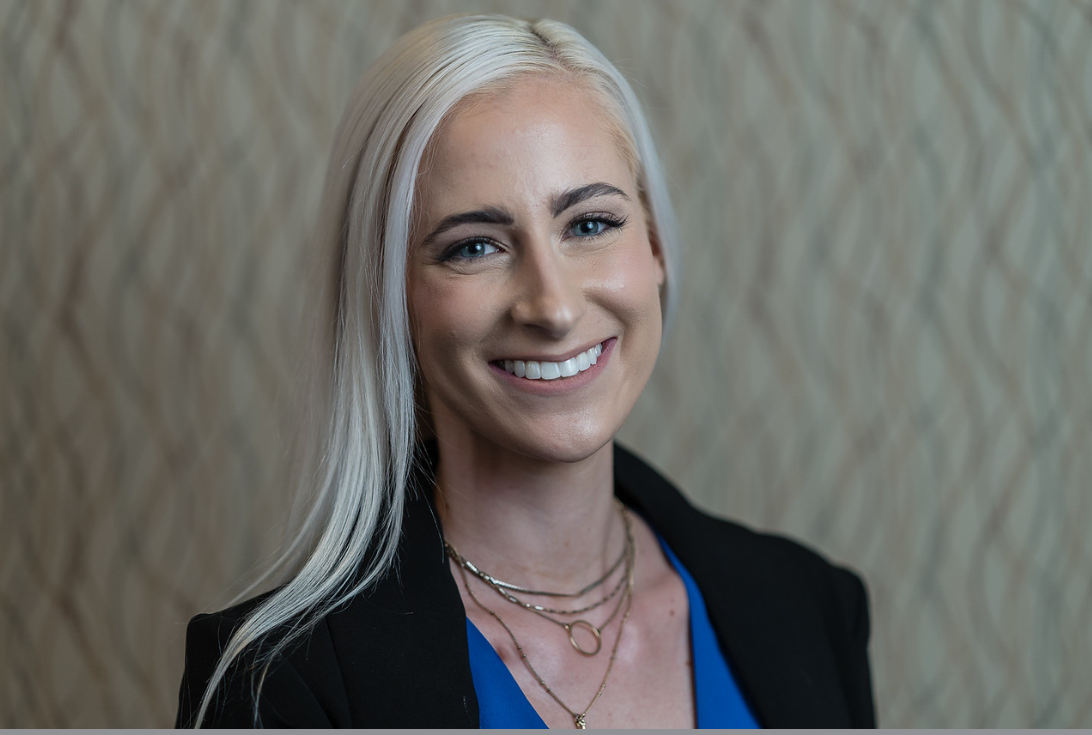
Licensed Clinical and Prescribing Psychologist | FBI’s Sleep Expert
Dr. Leah Kaylor is a licensed clinical and prescribing psychologist specializing in trauma and sleep science. She has served as the FBI’s sleep expert for over five years, helping agents recover from exposure to critical incidents and high-stress operations. With advanced training in psychopharmacology and certifications in EMDR and Brainspotting, Dr. Kaylor blends cutting-edge neuroscience with practical strategies to optimize recovery, resilience, and performance. She is a sought-after speaker, educator, and consultant, and her upcoming book, The Sleep Advantage, offers actionable tools to reclaim. Don't miss out on quick hits on education on her youtube channel @drleahkaylor


