


 Apple Podcasts
 Spotify
 YouTube
 RSS Feed
 S5 E38 Navigating The Journey To Resilience with Guest John Creamer
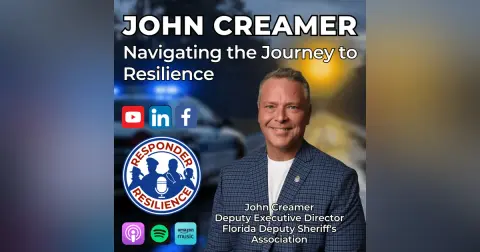
In this episode, we address the realities of mental health in high-stress professions, the impact of training, and the often-overlooked importance of creative outlets for healing with John Creamer, the Deputy Executive Director of the Florida Deputy Sheriff’s Association. With over 32 years in law enforcement and a wealth of experience in executive leadership, John reveals the harsh realities facing first responders today and the crucial need for effective training and resilience strategies. Get ready to rethink mental wellness and join us for a raw and insightful conversation about fostering true resilience.
Now available! Helping the Helpers: A Clinician’s Guide to First Responder Mental Wellness, our new book that equips you to build a First Responder-Centered Practice that works. Get your copy here: https://www.amazon.com/dp/1969267003
Go to https://www.respondertv.com/p/helpingthehelpers/ for more book info.
Thanks to our resource partner, EMS & FIRE PRO EXPO. Join us for the largest gathering of EMS and fire professionals in New England, September 24 - 27, 2025, at the Mohegan Sun in Connecticut! Sign up at https://emspro.org/
Thanks also to our resource partner, FightCamp. Harness the strength of boxing to release stress, build resilience, and connect with a supportive community. For free shipping and a free month of membership, go to https://joinfightcamp.com/shop/ and use the code RRPONE.
Thanks to our resource partner, CRACKYL. Download the FREE CRACKYL App: http://crackyl.respondertv.com
Contact John Creamer:
Website: Level2consultinggroup.com fldeputysheriffs.org
Facebook: @floridadeputysheriffsassociation
Instagram: @fldeputysheriffs
Your LinkedIn page link: @john-creamer-28973a1b2 https://www.linkedin.com/company/florida-deputy-sheriffs-association-inc
Contact Responder Resilience:
Phone: +1 844-344-6655
Email: info@respondertv.com
Our website with past episodes and more: https://www.respondertv.com/
YouTube: https://www.youtube.com/c/ResponderResilience
LinkedIn: https://www.linkedin.com/company/responder-resilience-podcast/
Instagram: https://www.instagram.com/responder.tv/
Facebook: https://www.facebook.com/responderTV/
So resiliency is always going to be my number one priority because if this is not well and this is not well, nothing else matters. I was one of those guys that had my whole life revolved around that badge. And when I no longer had the badge, I thought I was no longer a person. It's a noble profession. It is a calling, and you do make a difference. But you have to be aware of yourself, your family, and you have to realize that when you leave this world, nobody from your organization is going to be standing there as you take your last breath. It's going to be your family. At the height of my career is when I started to crumble the most. You know, I wore three stars on my collar, and I just didn't know it would be okay to ask for help.
VoiceoverWelcome to another episode of Responder Resilience. I'm David Dashinger, along with my co-host, Bonnie Rumley, LCSW EMT. We're welcoming our guest today, John Creamer. John is the Deputy Executive Director of the Florida Deputy Sheriff's Association, and he's here to address the realities of mental health and high-stress professions, the impact of training, and often overlooked importance of creative outlets for healing. So join us in a minute as we discuss John's journey from the pressures of the badge to advocating for the training, resilience, and mental wellness of first responders. Thanks to our resource partner, EMS and Fire Pro Expo, the largest gathering of EMS and fire professionals in New England, September 24th through 27, 2025, at the Mohegan Sun in Connecticut. Sign up at EMSPro.org. There's a new app built by Firefighters for Firefighters, and it's called Crackle. Download the app now for free as a legacy member and get early access to exclusive content, tools, and updates as they drop. Get the free app at crackle.responderTV.com. Thanks also to our resource partner, Fight Camp. For free shipping and a free month of membership. Go to joinfightcamp.com slash shop and use the code R R P O N E. We invite you to like and subscribe, YouTube, Responder Resilience, Facebook, Responder TV, LinkedIn, Apple Podcasts, Spotify, and our website is respondertv.com for past episodes and guest information. We'll be right back to speak with John after this.
SPEAKER_01In this family, more of us die by our own hands and by the hazards of the job.
VoiceoverIn this family, up to a quarter of 911 telecommunicators have symptoms of post-traumatic stress. In this family, our mental health and wellness are in crisis, and the responders are quietly suffering.
SPEAKER_09In this family, many struggle with job-related stress.
VoiceoverIn this family, we can help. Welcome to Responder Resilience. We co-host retired Lieutenant David Katchinger, Dr. Stacey Raymond, and Bonnie Rimley, LCSW EMTV. So we're really pleased to bring on John Creamer today. He's got 32 plus years in law enforcement and 12 years in executive leadership. He is the Chief Executive Officer of Level 2 Consulting Group, advising agencies on leadership, organizational change, and officer resiliency. And as Deputy Executive Director of the Florida Deputy Sheriff's Association since 2019, John developed statewide training for over 25,000 officers. As Chief Deputy of the Volusia Sheriff's Office, he oversaw a staff of over 1,000 and a budget of $100 million. A graduate of the FBI National Academy and Florida State University, he is skilled in policy, strategy, and public speaking. John, warm welcome to Respond to Resilience.
SPEAKER_02Okay, hey, thank you. I appreciate it. Thank you. This is a fantastic experience already. Thank you, Dave.
SPEAKER_09We're excited to meet you. We've been watching all of your wonderful endeavors on social media for a while. So it's great to finally be able to meet you in person.
SPEAKER_02Sam Bonnie, this is this is a big um a big deal for me. So thank you.
SPEAKER_09Thank you too. Well, as the stereotypical therapist that I am, I'm gonna dive right in here and ask you a little bit about your background.
unknownOkay.
SPEAKER_09So I'd love for you to talk a little bit about your childhood, your upbringing, and what led you to law enforcement.
SPEAKER_02Okay. So we're not getting the ACEs or anything like that. So we'll no, not yet.
SPEAKER_09We'll keep that for another podcast.
SPEAKER_02Yeah, trust me, you could you could write a book. Um so yeah, I I grew up, I was born and raised in Tallasey, Florida. Um, my grandfather, uh, during World War II uh was a Tallacy firefighter and a Tallacy police officer. So he would pull a shift at the at the back then there's one fire station. He would pull a shift at the fire station uh and then pull the next shift as a police officer, have a day off and repeat. And he did that through a uh section of World War II. And then when the war was over, the the full-time firefighters and police officers came home, and my grandfather returned to his job um that he had prior to the war. So after that, my my dad was the oldest uh boy in his family. And uh my dad went into the Marine Corps, came home, and and he was a Talasi firefighter from 1966 to 1996. And then uh one of my uncles went uh when he got home from Vietnam, he became a Talasi police officer from 1969 to 2001. And then I had um another uncle who also served in Vietnam, and he came home and went a different route. So uh, and then I married into law enforcement and first responders. So you could you could almost say it's a shallow gene pool, or the correct way I would say is we we come from a family of service, but that's that's how I got started.
VoiceoverWow, that must you must have some great stories from uh the fire department in the 60s, if uh if you were around for that. But having been kind of influenced by so many different people in your family, what what effect did that have on you and your career path and your choices?
SPEAKER_02Well, it's it's all I knew. Um, and it's so you know, dad was gone uh 24 hours at a time, and and back then the city of Tallahassee, which is the capital city in Florida, was much, much smaller. So there were only five fire stations for the city and the county, and uh the Tallahassee Fire Department was the only professional uh you know, fire service, if you will, for multiple counties. So uh even when he was off, he wasn't off. So he would be called in, you know, back then the building codes were different and they would they would be called in for multiple arm fires and things like that. So I was used to being him, I was used to him being gone, but it also as a child brought me great anxiety that he would not come home. Um, so there's that, and then uh, you know, like I said, my Uncle George, um same thing. It would it would, you know, when they got together to hear them talk about you know calls they'd been on and and war stories and things like that, it was completely fascinating. So it it was it made an indelible mark about uh how proud I was a dad and then the fear I'd have that he wouldn't come home. And to this day, when I smell uh a fireplace or woods burning, I think of my dad, because no matter how many times he showered before he got off duty, he always smelled like smoke when he came home.
SPEAKER_09Wondering how some of those memories and parts of your childhood of being really marinated in this culture shaped your views on mental health and wellness.
SPEAKER_02Yeah, so uh I didn't have I'll be honest with you, I you so they were a different breed of men, right? They, I mean, like I said, my dad was in the Marines and and my uncles uh served in Vietnam in combat, and they were different breed of people, and they didn't really talk about that. It was more of a hey, rub some dirt on it, you're all right, get back in the game. But um, I'm not gonna lie to you, if my if my my dad passed away three years ago, if he were here today, I think he would be very, very honest about his struggle with PTSD. So he retired in 1996, and he had been off for about nine months with mental health issues, and it all came crashing in on my dad, and I don't think he knew how to ask for help. And I watched that and I didn't understand it. And um it was only after he passed away, sadly, my dad was an artist. He did a lot of drawings and a lot of paintings, but I was able to find a personal notebook that where he had done a lot of self-reflection, and um that's where I found out how bad his struggle with PTSD really, really was. And uh, I wish I would have known that. I wish I could have talked to him about it because frankly, I I I I jumped in the same rabbit hole and um I didn't know how to handle it. Um I wish he was alive for us to discuss it, but I saw what he went through, and that's what helped me recognize I'm not okay.
VoiceoverYou have a career, 32 plus years in law enforcement. With all that, we we all experienced some amount of exhaustion and burnout doing that job or the jobs in in emergency services. Can you talk a little bit about did that come into play and how did you process through that or where did it take you in your in your journey?
SPEAKER_02Yeah, um, so this is just John's theory on life, right? Is is like from zero to five years, I got it. No problem. I'm learning the job, everything's fun, everything's exciting. From five years to 10 years is kind of when you're like kind of mastering your craft and maybe going ahead, like to be a detective, I'd like to do SWAT. And then from 10 to 15, you're kind of like, hey, this sucks. Um and in that 10 to 15 years, you decide whether I don't know if you do it consciously, am I gonna be a toxic employee or am I gonna bounce back and be and make this career what I wanted it? And then you move forward. So I have that hindsight now, but at the time, um going back to ACES, which is another podcast, based on some things in my childhood, I wanted to be involved in working violent crime. I wanted to be involved in things where there was a truly a victim that I could help. So that often meant the most heinous crimes, crime scenes, you know, um a lot of morbid things that I did that I thought was going to help me along the way, and actually it it hampered any growth. So I found myself um involved in risky behavior. I found myself involved in uh some adrenaline junkie um activities, you know, motorcycles, repelling, you know, jumping off and out of things, um, lots of like excessive working out, things like that. Then I started getting promoted, and I thought that, you know, the promotional route would really help um help me mature and see things from a different level, which it did. But even when I got to be uh an administrator, it got to the point that I hated every minute of it. Um I would go to work late and I would leave early. And uh at the time my wife would come home and find me in bed, um, sometimes at three or four in the afternoon, uh where I just pulled the sheets over me and and just wanted it all to go away. So at the height of my career is when I started to crumble the most. And I at that time I didn't know how to ask for help because I was, you know, I wore three stars on my collar, and I just didn't I didn't know it would be okay to ask for help.
SPEAKER_09Well, thank you for being so vulnerable and sharing some of these things. I know it's not easy to say them publicly like this, but the more people like you who do, the more people will hopefully have that epiphany and say, I don't need to do this alone anymore.
SPEAKER_07Yeah.
SPEAKER_09All units stand by for confirmed structure fire with important persons.
VoiceoverIn a world where first responders save lives, this book could help save theirs by preparing you to answer when they call for help. Based on over 200 conversations and the trusted team behind the Responder Resilience podcast, helping the helpers gives you the tools to understand their world, speak their language, and earn their trust. This work is challenging, but deeply needed and profoundly rewarding. Their stories don't start with trauma, but too often they end there. Infused with real-life experiences, this guide reveals the human behind the badge and equips you to build a first responder-centered practice that works, from understanding their culture to the practical realities of working with first responders and chapters across the spectrum of first responder professions. You'll gain insight into the hidden struggles that shape their reality and the steps you can take to help them heal. When trust is shattered, the stakes are high. This book helps you build it before it's too late. Are you ready to make a difference? Be the resource they can count on. Order your copy of Helping the Helpers, the clinician's guide to first responder mental wellness today.
SPEAKER_09I know that you use um words like momentum, exhaustion, rebirth in your career. How do you think some of those things came out of your rock bottom, so to speak?
SPEAKER_02Well, um, I I've always been a student of life. So I I was raised, uh, I mean, we lived out in the middle of nowhere, and uh we didn't have a lot, but I I would always escape through reading and um and and watching movies and things like that. So when I recognized that I was not okay, I also, like I just said, I didn't feel like I could ask for help. So I started doing a lot of reading um and trying to trying to self-diagnose what's going on here. Um so it was through some reading and and then I started really getting into resiliency, not just for for law enforcement, but going back to the military. So the reading took me down um a pathway um and showed me that it was okay to invest in myself and it was okay to be honest with myself. And um I I was one of those guys that had my whole life revolved around that badge. And when I no longer had the badge, I thought I was no longer a person. So reading really helped, and then I started talking to people and I I started reaching out to other people that struggled as well that were that were honest, and I think that helped me focus on words like rebirth, um, digging deep, doing the shadow work, and and living in the dark night of the soul, if you will.
SPEAKER_09You know, that I am the badge belief. We see it so much, and I think when people are in it, you don't realize how pervasive and how detrimental it is to your future. Do you have any words of advice for people listening who might be realizing, you know, I might be one of those people? How do I change that? How do I get beyond that? How do they even realize that they should be beyond that?
SPEAKER_02Okay, that's that's a great question. So again, in in John's world, we should everybody should have a mentor and a mentee that you can be honest with, that you can be really honest with and be brutally almost to the point you're stepping on their toes. I never thought I was a guy that uh the badge meant everything to me. I never I never thought that. I'm like, pfft, that's never gonna be me. I there's more to me than this, but uh, it was me. So my whole point about having a mentor is if if somebody had poured into me and said, listen, when you leave, you at some point you're not even gonna be uh a memory anymore because your whole uh everybody you worked with is gonna leave as well. And you are spilling your youth, you're so you're wasting your youth, you're spilling your blood, your mental health, you're giving all that away for this organization that you think matters. And at the end of the day, the organization doesn't really care about you as much as you think. Um so I thought I was one of those guys that was safe, and then when I no longer had a badge, it it did it did crumble around me. But what I would tell somebody coming up today is you know, live your life. Law enforcement, all first responders, firefighters, um, EMS, everything, it's a it's a noble profession. It is a calling, and you do make a difference, but you have to be aware of yourself, your family, and you have to realize that when you leave this world, nobody from your organization is going to be standing there as you take your last breath. It's gonna be your family. So don't trade your family uh for the pursuit of that badge. That that's what I would tell people.
VoiceoverYeah, John, that's so so important. We've spent a lot of time focused on that part of the career, the the the end, really the ending of it, and the transition into life 2.0. And uh we've done some podcasts on it, it's in it's in our book. Uh, I thank you for shedding the light on that because we don't get that, right? Nobody tells us that when we're in recruit school or even during during the whole uh journey of the career, so it needs to be uh needs to be repeated as much as possible. Speaking of that phase, um so after your law enforcement career ended, how did you wind up becoming part of the FDSA and doing that um doing what you're doing now in terms of being uh an advocate and and really out there um for this whole state of Florida and the deputies that serve it?
SPEAKER_02Well, I gotta I gotta tell you, I mean, uh this is just me, um, but I I do believe there's a God and I do believe that we we have a path and and and he has a future for all of us, um, even when we don't want it or don't want to see it. And I was one of those people that thought that God existed for everybody but me. I didn't feel like I was worth it. So uh I started doing some part-time work for the Deputy Sheriff's Association when I was still in law enforcement. Um we I I was able to bring some training um to the organization that that I felt like was a benefit to other deputies. And then when I retired from full-time law enforcement, um the the executive director with FDSA is is Keith Dean, who I've known for years. And Keith's like, hey, do you do you want to come on board full-time? And I'm like, I would love to. Um yeah, that would be a passion of mine. So from there, I mean, Keith trusted me enough, and and our board, our elected board, trusted me enough to give me a wide berth to start working on training. And what my thought was had somebody told me at the beginning of my career that I was going to run out of runway with how I handled stress, um, I wish I would have known that 30 years ago. So I started incorporating my journey, my struggle with the training that we did with FTSA. And um, I I I have to say that I'm very, very proud of that. But that's that's how that came to be. It was I I felt like God opened doors for me. I felt like Keith and the board trusted me. And then I feel like the training that we bring our deputies is uh is extremely uh beneficial. And I I I would hope to say that it's it's helped some deputies finish their career strong um and and well.
SPEAKER_09It's a compelling story of how you began there, and I would really love to hear about some of your key initiatives and projects that you're focusing on right now.
SPEAKER_02Okay, so we we just this is uh a momentous occasion for us, we just brought on the largest sheriff's office in Florida. Um so our uh membership is gonna rise to over 30,000 deputies. So there's about 44,000 deputies in Florida that that we can track, and so we just brought on um an agency that has over 5,000. So uh our training is all over across the state. F today I'm in I'm in the Walton County Sheriff's Office. Uh I'm in Santa Rosa Beach, and um the sheriff Michael Atkinson was kind enough to let me use the studio. We're here for training. So about 30 minutes north of where I'm at, uh, we're doing training on Bitcoin, cryptocurrency, and blockchain. So What's that got to do with the Florida Deputy Sheriff's and Resiliency? Is I've tried to broaden what we do because uh the world's changing. It changes daily. There's this concept called Moore's Law that talks about technology, and technology usually becomes obsolete in about 18 months, 24 months. And I think it's way uh way sooner than that now. And and I believe that's the same way with everything we do in law enforcement. So resiliency is always going to be my number one priority because if this is not well and this is not well, nothing else matters. So we do a great deal on leadership, resiliency, finishing strong. And then from there, I've started incorporating what's going on real time. So we have uh classes on real-time crime centers on intelligence-led policing, um, bitcoin, cybercrimes, uh, artificial intelligence, things like that. So we've kind of opened up a portfolio, and then recently we brought in um a retired captain from Las Vegas, uh, Metro PD, and Dave, you were there. Um came in and we you talked about his experience at 1 October with the sniper shootings at Mandalay Bay, not just about that incident, but about his pathway to resiliency as well. So that's that's kind of how I got here in our our portfolio, if you will.
VoiceoverYeah, it's amazing work you're doing, John. And uh, I had no idea that it had that scope to it. And yes, I was fortunate to be there for Josh Bitzko's uh presentation. We were also fortunate to have him on the podcast, and that'll be uh I think we're gonna drop that on October 1st as a contribute to that to that uh tragic event. Yeah, and his book just dropped as well.
SPEAKER_01Yes, yes. Attention, all first responders. Join us for the largest gathering of EMS and fire professionals in New England. Get ready for the EMS and Fire Pro Expo happening September 24th to 27th, 2025, at the Mohegan Sun in Connecticut. Connect with over 2,500 fellow first responders. Learn from 90 plus world-class speakers, and explore 300 plus continuing education opportunities designed just for you. Dive into hands-on workshops that challenge your skills and elevate your career while enjoying fine dining and entertainment. This is your chance to gain insights that could change lives, yours included. Don't miss out. Register now at emspro.org and be part of this transformational experience. See you there.
VoiceoverBoxing has the power to change lives, especially for first responders. Fight Camp embraces your journey, whether you're stepping into the ring for the first time, returning after a break, or aiming to elevate your fitness. Harness the strength of boxing to release stress, build resilience, and connect with a supportive community one punch at a time. For free shipping and a free month of membership, go to joinfightcamp.com slash shop and use the code RRP1. That's R-R-P-O-N-E. You mentioned this uh in passing, and I want to find out more about it. Um and we're talking about like creative outlets as maybe as therapy or ways to process um some of our past trauma. How does that play a role in your life? Are you an artist, a writer, both, and how do you how do you express yourself creatively?
SPEAKER_02Yeah, so um yeah, I've I've always enjoyed uh drawing. Um I was never really that good at it. I've always enjoyed writing and and journaling. And what I found was when I was under the most stress in law enforcement, I stopped doing anything creative. I I became um cocooned from the rest of the world. So all I could really see was law enforcement in my role, whether it was a supervisor, a detective, or an administrator. And it was all consuming. And anything I did to to deal with that didn't I wasn't doing it anymore. And what I some of the things I did just I just ran out of runway and and then the white knuckling didn't work. So I would say in the past four years, I really picked up photography. Um, and it was just a photography with a beat up iPhone, and I was able to get some amazing shots, and um that led me to going back to drawing and painting. And and again, when it started out, it looked like somebody, you know, was having a seizure trying to paint. Um but it's been very, very cathartic because there's things in your mind that if you just start painting free-handed, you all of a sudden something that's been on your mind is there on a mat or on a canvas, and uh it's just been liberating because your mind is completely free of stress because all you're trying to do is create. So between the photography, the painting, and the writing, um I love it. I I I should have never stopped.
SPEAKER_09Well, those are great ways to get some of your emotions and thoughts out on paper. You know, you said something before where we were talking about people who are the badge and that's their only focus. And I think we all talk about the adrenaline seeking, the cortisol junkies, you know, some of these terms that we've all coined and throw around. But sometimes I think that people use the badge as an addiction and it's way beyond just, you know, I am blue or I am this badge. How do we break through with people who literally have an addiction to their profession? And and it's not a choice that they don't want to do painting or any of these other things, but they get such a thrill or addicted to the feelings that making some kind of a difference makes. What could we say to those people?
SPEAKER_02That's a good question. Um I think the main word would be validation. I think folks that that have that mindset are being validated more at work than they are at home or in the other facets of their life, or so they think. Um, they think that you know um driving lights and sirens, uh sirens, fighting, getting in a shooting, solving homicide, you know, jumping out of an armored personnel carrier or being a pilot or a canon handler, that that's all fun. I mean, it's a lot of fun. But um, after a while, uh you're gonna be 55 years old like me, and things hurt. And um and those things don't validate you anymore. So I think the the how do we touch them, and I think would be when we bring them on, like uh either in the academy or onboarding, and and we have um a more in-depth block about validation as a human being, um, rather than an adrenaline junkie. Because if you're if you're a good person and you know who you are and you and you can validate yourself and you're just kind, then all the adrenaline stuff is uh can kind of supplement that. But when the adrenaline things are gone, you're still a whole individual. That's where I would start.
VoiceoverYeah.
SPEAKER_09I think uh great advice.
VoiceoverYeah, I think touching back to to the ACEs, uh, you know, and the internal validation that you mentioned, John, is um some of us perhaps didn't have that skill growing up and into adulthood, and somehow the the job provides that for us. Um, you know, all the accolades and you know, the the the good uh good interactions we have with the public. And obviously, um, you know, it feels great to put on the uniform and wear a badge and do cool stuff. Um, but it's sometimes it's a a substitute for the lack of that internal. Um yeah.
SPEAKER_02And I and I I learned that the hard way, frankly. I mean, yeah, I had a chest full of metals, a SWAT operator, and got to do all these cool things. And and people that saw me in that realm had no idea how I grew up or um you know the the weaknesses that I that I perceived I had as a child, all those were gone with that uniform on. Um so that that's that's where I learned it the hard way. And it goes back to what we talked about originally when the badge and the uniform are gone, I'm still left with this shell. Right.
VoiceoverSo yeah, and that's something that um I think we also can't emphasize enough is how to find purpose after we leave the job. Do you have any words of wisdom you would share on that um to someone who's getting close to the finish line?
SPEAKER_02Yeah, I I would. And it's funny you mentioned that is um so there's a lot of things in life that are just serendipitous, but I'm I'm actually I'm writing a book for myself, uh, whether anybody ever reads it or not. It's it's about life after law enforcement, and it's life lessons that I wish I had known um or I wish somebody had told me that would make the transition easier. So in law enforcement, we're so used to there's uh there's a manual in first responders as well. There's SOPs, there's general orders, there's you know, all it's if this then that. Um, but there's nothing on leaving law enforcement. There's nothing.
VoiceoverYeah.
SPEAKER_02The closest thing is that the police executive research forum, they did a uh a huge study on, I think it was called Life 2.0. I could be wrong on the title, but they did a pretty comprehensive uh piece of work about leaving law enforcement, but it was for people that have already left. Um, so yeah, I would tell people that it's it's just so hard to think about retiring when you're in the heat of battle, right? It's so hard when they're, hey, save for your retirement, but you're like, but I'm having fun right now. And it goes the same way with your mental health. Well, I don't want to think about retirement, and then all of a sudden you're at retirement age. But I would definitely have an exit ex exit strategy, and that would mean um finding a way to re-enter, if you will, normal society because the world is not a bad place. We're taught for decades, you know, there are mean people out there and they're trying to kill you. Look, look around every corner, look twice. But when you get back into the world after law enforcement, there yes, there are mean people, but they're not lurking in the shadows like we were told. So I would really start trying to change my mind, uh, how how my mind thought. I would start looking at some creative outlets, um those things. And hopefully one day I can write this book and somebody would would care enough to to read it. But I think there definitely needs to be a transition transition. It should be something that's taught within an agency as well. Um and as a side note, you know, the number of suicides for retired first responders is is pretty high. It's one of the things that we don't shed enough light on. And I think I think we do a disservice by not by not helping people plan and have an exit strategy when they leave the job. Yeah, 100%.
SPEAKER_09I think first responders are reactive, right? They wait until that day when they're struggling and now we have to deal with it. It's like they're so crisis and 911 oriented, they do that with themselves as well. Um, how do you recommend, in your opinion and in your experience, that they can build resilience as they go when you're working those long hours, when you're just depleted and your day off is just the errands. How can someone find that time and space for building resilience?
SPEAKER_02Well, you you have to make it. Um, frankly, you just have to make it. And it for me, it starts with a calendar. Um, if I if I rope off time every morning, this is this is my mental health time. Um, and before I start my day, um then my day gets better and it helps me carpe dum, it helps me seize the day and be more effective and efficient and just a better human being to those around me. But to your point, um, most people, and again, I'm not looking at this strictly from um the law enforcement lane, but that's kind of how I see the world a lot of times, is we're so busy answering calls for service, right? You're you you you leave roll call, they're holding calls. You go answer a call, and you're like, hey, here's some advice, here's how to make this work, or hey, I'm gonna work this burglary, here's this, here's that, and you move on. Um but when we're off duty, a lot of times we're so tired we don't want to do anything. We just want to veg. We want to get into our nothing box, and it's easy not to make time for yourself. So I would say schedule an hour a day for you, whether it's reading a book, whether it's sitting on the back porch with a cup of coffee or water, um, and just think about where you are and where you want to be, because uh I I doubt where you are right now is where you want to be.
VoiceoverGreat advice. Yeah, simple self-care, um, which which is something we do forget about. We we tend to like leave that to last. We're not we're so good at taking care of everyone else and not so good at taking care of ourselves.
SPEAKER_02Yeah, and and one other thought about that is you know, when you fly, the one of the first things they do when they do the safety briefing is when the oxygen masks drop, what do you yours they tell you put yours on first before you help anybody around you? And that's something that we fail to do in many areas of our life, especially when it comes to self-care.
SPEAKER_00Introducing FDTs, the only gourmet tea crafted with first responders and their families in mind. Proudly firefighter and veteran-owned, our collection of gourmet organic teas is uniquely designed to honor those who are on the front lines to protect our communities. At FDTs, we believe in quality. That's why we source the freshest organic tea available, offering you the most popular flavors that not only excite your taste buds, but also bring comfort and relaxation to your daily life. Indulge in our specialty blends. Classic Earl Grey, soothing chamomile, vibrant green tea with ginger root, decadent chocolate salty caramel black tea, and robust Irish breakfast. FDTs makes for a special and unique gift, perfect for any occasion or season. Taste the difference and show your appreciation for the rescuers in your life with FDTs. Available on FDTs.com and in our Etsy store, Fire Department Prince. Also available on Walmart.com as Fire Department Prince.
VoiceoverJohn, what would you like people to know about um things going on with FDSA? Any uh initiatives you have going on, trainings, projects, uh the podcasts, what would you like to share?
SPEAKER_02Yeah, and so it's it's just a very, very exciting time for FDSA. Like I said, we we just picked up um 5,000 extra members. So this is, I mean, this is an all-time record for the the size of our organization, which is a not-for-profit. You know, we exist, we were created by deputies for deputies, and our our logo, our motto is we serve those who serve. So it's an exciting time. You know, our our our um our team that make the things make the trains you know run on time is growing. There's new initiatives that are popping up left and right, and and frankly, the problem that we have is trying to keep up with it, which is a really good problem compared to you know a handful of years ago. So, from from my my view of the land, um one of the most exciting things that we're doing is our second annual um conference is is in May of 2026. We had a conference last year, we kind of were you know just you know surveying the land. Can we pull this off? Is it gonna be successful? Would people come? And it was an overwhelming success. And we partnered with um a guy named Larry Barrisnoy from uh TACOps, and Larry came in and showed us how he did things and um was a tremendous partner, and the conference was a huge success. And I think when we have our second conference in May of 2026, I would I would imagine the attendance is gonna double. And those that that conference itself is not like the typical um police chief conference or sheriff's conference. It's not just a lecture. There's lecture, but there's a lot of hands-on things. There's a lot of resiliency-based uh training, there's defensive tactics, there's shooting, things like that. That's very exciting in and of itself. Um, secondly, that we're like I said in the beginning, we're branching our training out, our portfolio is growing um by leaps and bounds. And then what we offer, the you know, the subject matter is is growing as well. Uh, that's very exciting. And here's what we don't talk about enough is we have a program called the Linda Hand Fund. And it's I would describe it as a benevolence fund, but the Linda Hand Fund is when a deputy sheriff in Florida or anybody that works for a sheriff in Florida, you know, we all go through hardship, and it's especially hard for a public servant to go, I need help, let alone with their own mental health, like we've been discussing. Um, but with financial help where they have a sick child, a sick wife, or God forbid they're dealing with an illness themselves. Uh our Linda Hand fund um has given out um hundreds of thousands of dollars to deputies in their darkest hour. And I'm glad to see that program's continuing to grow. And we have donors that uh give often, and that's exciting to see because that's what makes a difference. Um, our podcast, uh, like I said, when we're you know almost like in the green room, uh I it's surprising the number of people that have downloaded and listened to our podcast. And I think if you if you look at the guests that we've had on and who's coming on, it is a uh a potpourri of people and and all facets of the first responder realm. And uh I I just feel like we're bringing a good message to the street, and it's that's exciting. There's there's way more to talk about, but those are the biggest things from my perspective.
VoiceoverUh exciting times.
SPEAKER_02Yeah, that's great.
SPEAKER_09It sounds like the stars are aligning for you, and and all of the things that have happened in the past have prepared you for where you stand right now, and you're in a place where you can do so much good. Um, and that's just exuding from you. So it's inspiring, it's great to hear. It'll be great to see where you go next. Um do you have any little sneak peeks or anything? I know you kind of tongue in cheek mentioned a book, but do you have any other projects you want to let us know that you're prepping to do?
SPEAKER_02Yeah, yeah. So um from the FDSA standpoint, if you go to flddeputysheriffs uh.org, you can see what we're doing. Uh, there's a huge momentum building in that realm. But for me as an individual, um I have a webpage I have not published yet. It's it's uh level twoconsulting uh.org. And I haven't published it yet because my brother got sick uh and and with cancer, an aggressive form of cancer, and passed away in June. Um so I hope hope to go back to that. And with some help from uh my daughter, my my daughter has a master's degree in journalism, and she and both of my kids are wonderful in tech savvy. We're gonna get that web page up and running pretty soon. But um what has really helped me lately is writing articles. And uh again, whether anybody reads them or not, uh it's cathartic. Yeah, so uh I I published two articles lately. The the the one that's been the most popular is about leadership when you have a leader who's uh all hat and no horse. So you can go to my LinkedIn page and read that. But those are some of the things that are coming down the pipe for me.
SPEAKER_09Well, thank you for sharing, and we're sorry to hear of the loss of your brother.
SPEAKER_02Thank you. My brother was a first responder, he was a deputy sheriff for 10 years, and then he he left uh the field and and had other endeavors and then frankly uh gave in to some of his demons. And uh whatever he did wrong in this road, he paid it back in spades before he left. But but thank you for saying that.
VoiceoverYou're welcome. It's just been uh an amazing conversation. We've covered a lot of ground, and you are doing outstanding work out there. I feel inspired hearing you speak about it. So keep up everything you're doing. Uh really appreciate you being here spending this time with us.
SPEAKER_02This has been a genuine pleasure, and I and I gotta say, uh, Bonnie and Dave, this is the first time I've been on this side of the camera. So this is amazing. And thank you for what you do. And and I see us overlap a lot a lot on LinkedIn, and uh, I'm grateful for what you guys do for everybody as well. So thank you.
SPEAKER_09Thank you, John. We feel the same way.
VoiceoverAbsolutely our honor. Remember to like and subscribe. We're on YouTube, Responder Resilience, Facebook, Responder TV, LinkedIn, Apple Podcasts, Spotify. Go to our website, respondertv.com. You can find past episodes, guest information, and check out our book, Helping the Helpers, the Clinician's Guide to First Responder Mental Wellness. It's on Amazon. Till the next time, stay safe, be kind to yourself. Take care.
