Apple Podcasts
 Spotify
 YouTube
 RSS Feed
 Clinician’s Guide to Embedding in Disaster Responses | S5 E44
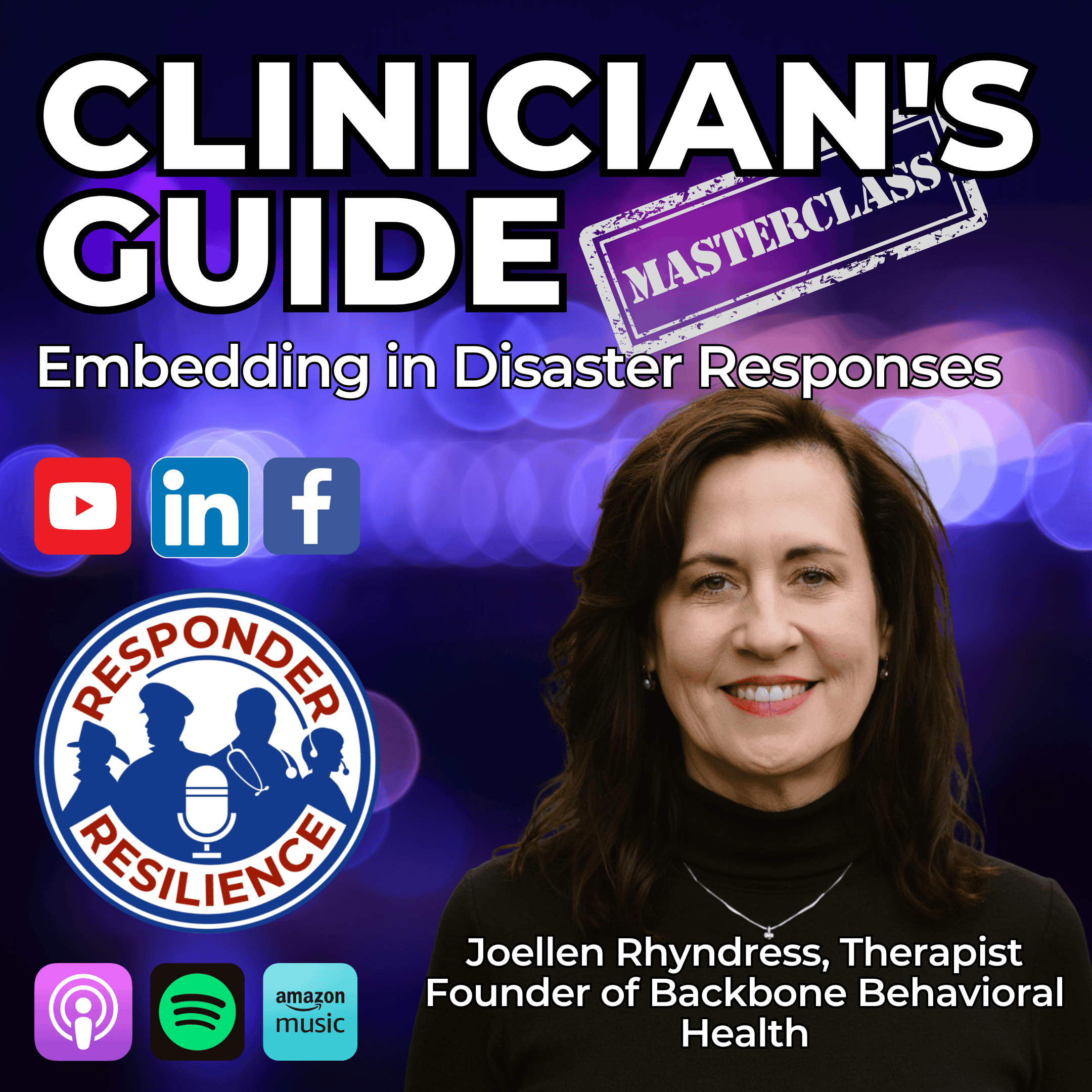
In this Clinicians' Guide Masterclass, we turn the spotlight on the often-overlooked world of mental health in disaster response.
In this Clinicians' Guide Masterclass, we turn the spotlight on the often-overlooked world of mental health in disaster response. Join us as Joellen Rhyndress, a seasoned therapist, shares authentic stories from the front lines of crisis management, revealing what it's truly like to be an embedded clinician in the chaos. We’ll tackle the tricky balance of cultural competence and trust, and we’ll discuss resilience and misconceptions about responder mental health. Buckle up for a wild ride through the gritty side of mental health work when deployed to critical incidents.
One of the responses I did was to stay with our uh youth our team, which is urban search and rescue team, while they were doing the work that they needed to do after Halene. Swana Noah is a like little suburb of Asheville and it was decimated after Helene. And I remember talking to people that live there and them having to drive past my school, and the school is no longer there. Our church is gone. One thing that you do need to know is like how to not get in the way. And I'm really good at that because I'm not doing any of the things that people are doing. Even if they didn't talk about things in that moment, having me there is comforting and makes a huge difference for them. They can look over and see somebody that they know and trust.
SPEAKER_08Welcome to Responder Resilience, along with my co-host, Dr. Stacey Raymond. I'm David Dashinger. Today we're going to dig into the critical world of disaster response with Joelyn Reindress, a seasoned therapist and the founder of Backbone Behavioral Health. Join us as she shares her insights on being an embedded clinician during disaster deployments and mass casualty events. And we're going to explore how cultural competence can make or break trust, the power of resilience and healing, and tackling misconceptions surrounding responder mental health.
SPEAKER_06Thanks to our resource partner, First Responder Project, whose no-cost First Responder Retreats offer you a chance to reclaim connection and learn vital skills. This isn't just a retreat, it's a lifeline to keep you mentally strong at work and emotionally present at home. Take a stand for your well-being and the connections that matter most. Sign up now for your FRP retreat. Learn more and register at FirstresponderProject.org.
SPEAKER_00There's a new app built by Firefighters for Firefighters, and it's called Crackle. Download the app now for free as a legacy member and get early access to exclusive content, tools, and updates as they drop. Get the free app at crackle.responderTV.com.
SPEAKER_06Thanks also to our resource partner, Fight Camp. For free shipping and a free month of membership. Go to joinfightcamp.com slash shop and use the code R R P O N E.
SPEAKER_08Remember to like and subscribe, YouTube, Responder Resilience, Facebook, Responder TV, LinkedIn, Apple Podcasts, Spotify, and go to our website, respondertv.com for past episodes and guest information. We'll be right back to speak with Joe Ellen after this. In this family, more of us die by our own hands and by the hazards of the job.
SPEAKER_01In this family, up to a quarter of 911 telecommunicators have symptoms of post-traumatic stress.
SPEAKER_04In this family, our mental health and wellness are in high risk, while responders are quietly suffering.
SPEAKER_08In this family, many struggle with job-related stress, burnout, or injury, street disruption, substance abuse, and relationship problems. In this family, we had help-to-helpers.
SPEAKER_01With vital information and resources, resilience strategies, and success stories of overcoming the obstacles.
SPEAKER_07Welcome to Responder Resilience. With co-hosts retired Lieutenant David Dashinger, Dr. Stacey Raymond, and Bonnie Rumoli, LTSW EMTV.
SPEAKER_08We'd like to welcome Joelyn Reindress. She's a licensed clinical social worker and the founder of Backbone Behavioral Health. With over 20 years of experience in crisis response and behavioral health, she has a strong background in supporting first responders, veterans, and communities dealing with natural disasters and mass casualties. Joelyn earned her master's in social work from Grand Valley State University and has personal insight into the challenges like officer-involved shootings and first responder suicide having grown up in a law enforcement family. She serves as a clinical advisor for the National Park Service and U.S. Fish and Wildlife Service and provides care to wildland firefighters, rangers, veterans, EMS, and police across the country. Joellen, welcome to Responder Resilience.
SPEAKER_02Thank you. It's a privilege to be here.
SPEAKER_04So, Joelan, I'd like to start by asking you, you know, since you come from a law enforcement family, how did that shape your uh your career path?
SPEAKER_02Interestingly enough, my husband and I were talking about this a little bit last night about uh how I never knew what a social worker was growing up. Um I had never in my family uh had anyone go talk to anybody in mental health, or did we ever discuss that? Which was interesting now that that's my chosen profession. Uh and we're we were talking about how the the like the first, I think I was 23, the first time I met a social worker. Uh so I didn't know anything about mental health growing up at all. However, I did know a lot about trauma. Uh being a family member from people that experience trauma through their work, uh, people that are and being a community member as well that had an interest in in trauma from when I was young. Uh so that really that helped shape my career path. I think the the career path that I'm where I'm at now definitely is shaped, uh was shaped by my family. I'm able to understand or speak the language, I guess, of first responder culture. And um that goes really far uh with uh getting tr building trust with people, building some sort of rapport. So it was it was rather natural. I also, because I come from a first responder family, I have a lot of dark humor. And um, and it's and actually the other day I was in a meeting with we were in a meeting talking about Helene, our plan for the response to the anniversary of Helene. And uh we were planning on doing a staff ride and we're gonna stop do go to these stops where where bodies were recovered, right? And um, I made a very off-color comment that just sort of popped out. And I went like because I was like, Where am I? And then I was like, Oh, it's okay. Um, that that humor isn't always acceptable other places, like you know, with a third grade teacher or something like that. But um uh so it's been helpful to me to be able to be myself as a therapist, which I think makes me a better therapist, and actually any kind of a good therapist to be able to be yourself. And I so that me growing up in the culture allows me to be able to do that at work. And I love it. I absolutely love it.
SPEAKER_08It kind of changes the energy around uh speaking to people like law enforcement. I think some people get, you know, a little nervous or um, you know, rightly so. You probably have apprehension about talking to them where once you have that comfort level, um, it changes the the vibe of the conversation and and the whole, you know, as you said, stuff like dark humor can you know can pop out without it being an issue.
SPEAKER_04But even sharing that you come from a law enforcement family, and I I share that as well. My father was a police officer, so that that almost kind of help it helps with a shoe in, you know, with the trust.
SPEAKER_08So circle back to Hurricane Helene um in a couple of minutes. Before we do that, um I kind of stumbled across your LinkedIn bio and I saw the the work that you have done and are doing. Um, and especially the part about being embedded clinician in natural disasters and MCIs. And I thought, this is amazing. I've never heard of anyone who does this. So talk a little bit about how you got into that and why, you know, what it requires that's a little different than sitting in an office and seeing first responders.
SPEAKER_02It it's a lot different. Um, and uh how I initially got into it was for uh with my the first place that I worked, which is actually in Michigan, at the community mental health center, I was an act team leader, and then I transitioned to the community that I come from is Muskegon County, and it's a pretty violent place. Uh we have a lot of uh street street level violence. Um it's on a lake, so there's a lot of uh traumatic and tragic accidents that happen around water. So our director decided to have a position called she named it psychological first aid specialist. So I took that position and started that role at our agency and had a room of volunteers that would go with me to traumatic events and I would plan the response for our local ones. Then my agency uh hurricane Harvey happened, and we were uh Red Cross was a very long clinician to respond to that hurricane, and I don't remember why. So I was like, hell no, and my agency was like and I'm like why not? That was my first response was with the Red Cross. My agency paid me to go. I made my I still got paid, but I went to Hurricane Harvey and worked as a Red Cross volunteer, um, providing support to all people that were responding at the to or all people that had uh experienced Harvey. Uh so that was my first big large national scale disaster, and I continue to do that with the Red Cross. I actually got to lead the response to um a mass casualty event, which was the Dayton mass shooting. Uh and that was uh surprisingly, I mean, the way I'm gonna talk about it, it was like the coolest thing ever for me, but I know that it wasn't cool for most people. Uh you know, so I want to say that, but having being able to have that experience was um very much, I learned a ton. And it also gave me uh some confidence to continue to do that kind of work, uh, which I did. And then when I moved to North Carolina, I became an embedded clinician through the company I worked for uh in police and fire departments, and then we would also do the federal deployments, which is where I and then I got to know some of the people pretty well, and they were like, I think Joe Allen could come out here and go to this fire camp. And so I did. I mean, like really part of it is I just don't know any better. Maybe um I drive during the day because I'm not a good driver, but other than that, like I don't I don't you I don't have a lot of fear around those types of things. Um so that was that's how I got into doing that. I I enjoy that kind of work tremendously. I like the um I like the planning involved in disaster work. I think it brings a different kind of clinician to the table. And I feel very comfortable around clinicians, those kinds of clinicians. And so it's like very much a good peer community for me, which helps a lot because sometimes I don't feel as comfortable with other clinicians, you know, in com at conferences or whatever, you know, other things. We don't look at things, we don't come from things the same way. We don't look at things the same way. So it was it's been a huge benefit to me that way as well, working with other clinicians that serve the same population or do the same kind of work that um that I do.
SPEAKER_00All units stand by for a confirmed structure fire with report of persons trained. In a world where first responders save lives, this book could help save theirs by preparing you to answer when they call for help. Based on over 200 conversations and the trusted team behind the Responder Resilience podcast, helping the helpers gives you the tools to understand their world, speak their language, and earn their trust. This work is challenging, but deeply needed and profoundly rewarding. Their stories don't start with trauma, but too often they end there. Infused with real-life experiences, this guide reveals the human behind the badge and equips you to build a first-responder-centered practice that works, from understanding their culture to the practical realities of working with first responders and chapters across the spectrum of first responder professions. You'll gain insight into the hidden struggles that shape their reality and the steps you can take to help them heal. When trust is shattered, the stakes are high. This book helps you build it before it's too late. Are you ready to make a difference? Be the resource they can count on. Order your copy of Helping the Helpers, the Clinician's Guide to First Responder Mental Wellness, today.
SPEAKER_02One of the responses I did was to stay with our uh USAR team, which is urban search and rescue team, um, while they were doing the work that they needed to do after Helene. And um that doesn't one of the things you one thing that you do need to know is like how to not get in the way. And I'm really good at that because I'm not doing any of the things that people are doing. I'm like, I'm not like I'm not gonna be, I'm not going on the boat with you and getting tipped over because then you'll worry about where's the therapist, and you you know, and we don't need you to be worried about me. So I'm usually at some staging place, right? Like in the fire camp. I had my own little trailer in the fire camp. And I'm not, I will go out to a fire, but I'm not fire fighting. That would not be helpful to anyone to have me try to do that. Um so I the that's that's the one thing that I think is really important to know is like knowing how to stay out of the way, how to where you you know, where to be. Don't crowd up on people when they're trying to do something. Um, pay attention to your own safety. Uh yeah, like they would walk places uh that were hugely debris fill filled areas. Like the debris was really, I don't know if you've seen any of the yeah, yeah.
SPEAKER_04Yeah, some of the images horrible.
SPEAKER_02Yes. I I tried to stay on level ground, so you know no one's having to. I did I did get stuck in the mud once and two firefighters had to let me know. You don't want to become a casualty or something. No, you know, I did save the energy drinks though. I had that's my I was like, I'm sinking.
SPEAKER_08Are you wearing civilian clothes or like what kind of gear do you wear when you're out at a fire camp or during this Helene response?
SPEAKER_02So I wear usually civilian clothes, and here's why. Um I am not a first responder, and I like to I like to be able to have that separateness. Um, I also don't call people by their last name. I call them by their first name like I would a family member, friend, or any other acquaintance that I have because I we're not peers in the same way. Like my role is different. Uh yeah, I don't use a last name. I don't call people by their rank. Um I use just first names. And I the keeping my own clothes is just a thing for me to um, except for boots. There's certain boots that I have to wear.
SPEAKER_03Sure.
SPEAKER_02Uh it's it's just a way for me to let people know that um I am not trying to be one of you. I'm I'm here in this particular role for you. Um and yeah, that's what I did. So I would stay, I would go with whoever if they found a body in a particular location. Firefighters are really good, and so are the police are really good about telling me, hey, can you go check on this person? So I would do a lot of like just checking on people. It's not like when they're trying to recover a body that I'm gonna be up in their face going, How are you feeling? You know, that's not gonna be an appropriate thing. What they will tell you if you ever get a chance to talk to anybody is that um even if they didn't talk about things in that moment, having me there is comforting and just and and makes a huge difference for them. They can look over and see somebody that they know and trust. And um and that was we we do they other teams that were from other places would bring people over and to chat occasionally too if they were particularly stressed about something. The interesting thing about first responders that I think is missed a lot is most of the issues that they have have nothing to do with their job. You know, it's a lot of personal stuff. So and personal stuff can come up at a disaster too.
SPEAKER_04Sure, sure. So um because you're saying you're not gonna respond as a first responder, and that's completely understandable. When you arrive at the scene of a wildland fire, a disaster, a critical incident, what are some of the the first things that you're thinking of and that you're going to do um to help?
SPEAKER_02Listen. I do a lot of listening and and people and asking some questions. Uh every situation is different, the dynamics are different. Uh you can't go to a specific scene and expect that you know what to expect because you do not. It'll be something completely different, and the people that are there are different, right? Like um sometimes it's it's it's typical of let's say a fire department. Um one of the last people I checked on before I left Asheville was there was a murder, right? And um they had worked this murder. And they were the reason why I was checking on them was because it was the first murder they ever worked. Right. So um that a rookie is gonna could respond differently than a senior firefighter is going to at a particular scene.
SPEAKER_03Right.
SPEAKER_02So it's like that. So anytime that I go someplace, the first thing that I do is just try to learn about what's them and what's going on with them.
unknownRight.
SPEAKER_02And what happened. You know, that's that's the most important piece.
SPEAKER_05Boxing has the power to change lives, especially for first responders. Fight Camp embraces your journey, whether you're stepping into the ring for the first time, returning after a break, or aiming to elevate your fitness. Harness the strength of boxing to release stress, build resilience, and connect with a supportive community one punch at a time. For free shipping and a free month of membership, go to joinfightcamp.com slash shop and use the code RRP1. That's R R P O N E.
SPEAKER_08So take us to you know one of these scenes that you've um maybe perhaps a wildland fire, you've said you had a trailer. Um, what does it look like when someone does need help? Like are you what modalities are you using or might you use? And do you give them tools, resources there on the spot that help them through that the rough patch that they're experiencing?
SPEAKER_02Yeah, it it and it depends on what I'm you know, what they bring to the table, right? If they bring something about the critical incident, then um then we do I do a lot of psychological first aid, which isn't therapy, right? Yeah, so I'm not diagnosing you. We're just talking about what's going on with you in the moment. I know a little bit about stress. Here's some things I know that can be helpful if you're if you're experiencing a high level of stress. Uh uh, I also your mind gets caught in the loop of trying to figure out something that you cannot make sense of. out of right like a disaster or something. I mean I walked around with the with this with the USAR team going just can't believe this. Just can't believe this is like this. Like this is so unbelievable. Right? So your mind is on this loop. So you don't really remember the ways that you stay resilient or help with what helps you with your resiliency or health in those moments. So I help people remind I remind them of those things because their mind is stuck stuck on the loop. I do I like a lot of psychoeducation. I wish I would have known a thing or two about a thing or two that it shouldn't be a clinician secret um you know about breathing and sleep and all those you know cool things that you know we really don't get taught. We should, but we don't. So that's that's the kind of thing that I rely on. And then of course like figuring out what other resources they may need moving forward if any.
SPEAKER_04So what do clinicians need to know if they're um you know they're trying to support someone um during the you know a critical incident and it's an ongoing it's a long lasting so kind of like the Helene Hurricane Helene situation in Asheville. So what what do you think clinicians need to know in order to properly support first responders?
SPEAKER_02Well the interesting thing about the fire camp was that I didn't you know it was a new kind of thing to do and I didn't get like a lot of people coming to talk to me about their problems. And one of the things that we figure is well they're still in work mode right so they're in work like they're in work mode. So they're not focusing on that they have put that into the little box or the cage or the cave or whatever they want to call it where they keep that stuff right yeah and that's where it needs to be. So I think understanding that they're that even if you are there to be a support it it's not going to be a deep dive into people what they're what they've experienced unless by chance that they want to come in and share about that right because they can't get it off their mind or whatever else. So to me that's one of the most important things it's like you're it's like I said the rule a lot of the time for during Helene was as support like I can look over there and there's somebody I know if this gets bad will be there for me right so that that I think is an important piece. You often see it with clinicians that go that start to do Red Cross stuff and they're like trying to like die really deep with people and that's not what you're there for. You know that doesn't matter whether they're bipolar really unless they need help getting their meds like that might be a thing. How however what do they need to get through the next couple days? What should they what do they need from you right now? So I think it's just being kind of aware that just because you feel really comfortable with all this clinical stuff that you know and want to do and practice that it's not the time or the place.
SPEAKER_04That's a good point.
SPEAKER_08See throughout incident command system before I'm just going to popcorn a couple of things and see what we can talk about with this. Okay. Um but in this scenario like you're describing being in bed and being deployed in the field on a you know ongoing disaster is there are there elements of peer support or critical incident stress management that come into play and maybe you know incident command I've heard of a peer support command post uh on a on a big uh MCI. Any of those things um practical in these scenarios?
SPEAKER_02Definitely peer support is always practical. I'm a huge proponent of peer support uh I even the way I do like I see my clients has a big peer element to it. A lot of times with my law enforcement clients I want I know who your emergency contact is but I want a release and I want to know who do I call if I don't hear from you and I'm worried about you. Because that's not necessarily the same person, right?
SPEAKER_03Right.
SPEAKER_02And so so it's like who give me uh I'm gonna use your peer before I'm gonna call your boss or your wife or somebody else that you might not want to know what's going on. I'm gonna use this peer person because I don't want to call the like in my family you don't call the law and the law it's probably an old fashioned thing to say but you know um that that peer can be way more beneficial in our in the relationship and your healing than um than just having your just having a therapist in my view.
SPEAKER_03Okay.
SPEAKER_02So peer support is very helpful that way. Sism is helpful uh for all kinds of reasons right that we that we've studied and we know uh the group the group element to me just brings a lot of normalization and heals people like in seconds it's like amazing it's like whoa we just okay yeah all we had to do was agree that we all felt like like this shitty and normalizes it for it normalizes it for everybody and they don't feel like the oddball who's completely stressed out. Yeah yeah like why is this bothering me and nobody else oh it's it is they just are better at hiding it's hiding it uh so peer support in those elements I think are really important. I think that um I peers also have a role and I usually challenge my clients this way like well if you're so big and tough why don't you go talk about your treatment or that you had treatment. Because if you don't you're not really not that big and tough so so peers that have had experience with a clinician whatever that may look like or their family member has, I think it's important for them to share and when they share it is heard completely different than um than from anybody else. The interesting thing about the place that I worked in North Carolina for five years was that after about six months I didn't get any referrals from our office at all. And I was full constantly like never not full um it was all word of mouth because that's who's going to show up and that's that's the real test right so so uh peers save lives.
SPEAKER_01As firefighters and first responders we're brilliant at the basics we master the art of stretching the line and we excel at being there for those who need us most yet even the best of us can be caught off guard. We sometimes face unexpected challenges like injury cancer or post-traumatic stress symptoms but you're not alone the First Responder Center for Experts is here to equip you with the tools and resources you need to stay informed and prepared with focus on staying strong, safe and resilient. Optimize your performance cutting health and information from sickness to determine medical evaluation to health awareness to cardiac health we've got you covered remember we're stronger together discover more at firstrespondercenter.org and connect with us on text Facebook LinkedIn Instagram and YouTube the First Responder Center for Excellence equip yourself with excellence for every call so what are some of the um biggest misconceptions Joelen um that you that you've seen about critical incident response and responder mental health well one the one that's my pet peeve would be it has a lot to do with clinicians.
SPEAKER_02During af right after Helene we had I think 13 if I remember correctly what it was told to me show up at our county dispatch together there's no toilets there's no water there's no food. They just self-dispatch to help out to help out to become a problem right and there was a lot like uh at one point there were I was in the EOC for the city of Asheville and they were like oh we want to bring over this other clinic and I was like uh I don't know who that is and no one's stepping foot in this room unless I know them and vet them so I think that there's that misconception that just because you're a clinician you can just walk right in here and people are going to talk to you or that it's appropriate time for you to be there or you know everyone wants to sit down and do a SISM. Maybe they don't maybe they're still in the the work mode right we maybe it's not scheduled an appropriate time uh maybe it needs to be at maybe you need a diffusing at 1 a.m. So those the the clinical the clinical profession's misconception I think about um how to respond has gotten in the way of us having a better better professional relationship with the culture with the with the other profession right uh so that that's the that's the huge one for me that I wish that would get better.
SPEAKER_08Talking about the deployment um if someone was interested in doing this kind of work as a clinician what what else would they need to know especially because these are probably extended deployments um obviously you know you're you're gonna have to adapt and pivot in a lot of situations and uh can you give us some insight into that maybe some examples of how you've had to um deal with you know unforeseen circumstances that you had to you know cope with or come up with a plan B.
SPEAKER_02Yeah so you can't expect your creature comforts right like that would be the first thing that people really don't know. I I uh went uh apparently I didn't know it at the time because apparently I just don't ask a lot of questions but I went to Saipan which I didn't even know was a part of the US apparently geography isn't taught well in Michigan I'm just gonna blame it on that. And they had a typhoon they call it a typhoon in the Pacific. They had a category five tech typhoon and basically when you show up to something like that there's no bathroom so you have to be comfortable digging a hole uh you have to be comfortable using a life straw to clean your water perhaps right so there's different levels and different and and different um things that you may need to be prepared for um so like I have a little I have a little air machine that makes the air noise the fan noise to drown out people so if I'm at a place and we don't know if we have complete privacy I have it's a little teeny one that battery charges I can charge it on my computer that I bring with me to make sure that people feel like they have some privacy right that can help with that. So I think that being a flexible person being a person that enjoys those kinds of challenges like I do like you know I'm living in an airstream right now and and uh you know creek water is is you know my friend in the shower is my what we wash with and this is you know I'm comfortable without the creature comforts so that's an important piece you know knowing that knowing where if you're going someplace what the weather's gonna be like is important so you're dressed appropriately uh you have you have the right kind of shoes that's a big thing lots of dry socks um so it's a lot about it's a lot about the preparation and and maybe even kind of knowing what you're doing ahead of time if you can ask a lot of questions about the area that you're going but that's not always possible. So sometimes it's like I find out like the day before hey can you go here? And then it's just about making do you know my hair is probably going to stay long for a very long time because ponytails are make life a lot easier when you can't do your hair and you can look better a little bit more professional with a ponytail right so it's it's kind of being able to pivot uh and enjoying that challenge I I think you have to enjoy it. Yeah embrace it uh-huh yes that's a better word embrace it I don't know if enjoy it all the time is the word yeah accept it and live yeah live with the land live with nature yes yes the fire camp was at like the the fire camp was great it was fine um however the road to get there was treacherous I was like I'm so glad I didn't drive I drove it at night didn't drive this during the day because I would have seen what I was where I was like oh my god so for me that's always the thing is like what's this road gonna be like but you can get on YouTube and watch videos which is a cool thing about roads you mean from that from what just happened you can you can go on YouTube and see if it's passable or or how to no I mean just like what the road is drive like how drivable is is it um you you know when you get up here and where when you get up to Michigan in the winter you know there's certain roads that you're gonna feel comfortable driving on and probably ones that you're not if it's snowy um or icy and the same thing in the in the mountains in North Carolina. Definitely out west that was that was a fire camp that was out west in California and it was I think it was the Aurora bore I can't remember the boreal fire and just the the where where it was this really curvy cliffy road was um you can you can get on YouTube and you can look to see what those roads are like driving. I'm like well it doesn't look like there's much traffic so I'll be okay because I'm just gonna go slow just get off the road if somebody gets on with me.
SPEAKER_04So um what practical tools or approaches do you help first responders learn who have been in these critical incidents so that they're better prepared you know for the the next one that might happen?
SPEAKER_02Uh with hill I I'll use Helene because there's a lot uh there's a lot to learn uh with spending a year with the fire department and police department when knowing them so well before too uh some of the things that that often we don't understand is that's going to occur is that the responses are going to be far much way after the event that we need to the it trickles out later after you feel comfortable after all the stress is gone. I would say the number one symptom first responders have is to feel somehow guilty or responsible for an event. That's a helper thing you know a symptom that helpers have though we do too as clinicians. So I think understanding that like that's a normal way to feel and normalizing that's an important piece to knowing that you're okay, right? You're you're okay. I think that understanding the um the difference with disasters and critical incidents is nobody ever is prepared, right? That's why they're critical incident because if they would have been prepared it probably wouldn't have happened. They would have fixed it before it happened right um so this thing happens and I think I think that fire actually started by somebody got on like drove off the cliff like was in an accident and it was a car fire and then you know then the whole park or whatever it was is on fire. And then house is burnt I think in that one too I know I know that that happened um you know if you're with responders that are from the area they're gonna have to live and see this and they knew what it was like before and they now know the place that they went uh what was when Swana Swana Noah is a like little suburb of Asheville and it was decimated after Halloween. And I remember talking to people that live there and them just like having to drive past my school and the school's no longer there. Our church is gone those types of things people don't you know we don't think about if we're um if we're not if the disaster isn't happening where we're from as a clinician if you live where the disaster happened um you're gonna be different. You are going to be affected by the incident as well right yeah so having different limits around how uh your self-care and what that you know how much you can give uh is something to pay attention to because we you know we don't need people to burn out because of their their the need is high at the time we need them to take care we need clinicians to take care of themselves as well around these particular kinds of events that happen in their hometowns or where they're from so I think it's different when you're traveling to one that's not where I went to school I don't know any different than the way the place looks now right so it's not the effect isn't going to be nearly as the same as it would be if that's where my that's my community.
SPEAKER_08Yeah thanks for touching on the self-care piece because um I think that's something that clinicians need to consider especially um yeah the dynamics of of being in a disaster where you are it's you know it's your home and it's your roots versus place that you're just you know visiting so to speak because um could you being sent there or deployed there. We've covered a lot but anything else we didn't cover that you'd like to share and it doesn't have to just be about um disaster response but anything else that you would like clinicians to know about working with the first responder population or things that you think are valuable to uh be aware of I think the one thing to that you know that I'd like to touch on is that if there is a disaster critical incident most likely there's going to be a loss of life of a first responder um and that changes things tremendously right and um and and unfortunately that happened in Helene uh the first question that I asked was is everybody accounted for do we know where have we talked to everybody?
SPEAKER_02Do we you know do we have every do we know where everybody's at or do we know if every when what I was asking is do we know if every if who do we know who's alive, right? Or who isn't because because you hear a bunch of stuff in the beginning of a disaster about things but you can't count on any of that stuff that you hear because it's just talk. So I think that that's an important piece to remember that that there's probably at least an injury if not a death um and there is definitely ways to approach that that are a little different than um other kinds of work that you might do. Giving people all of the control is is to me number one. Like like you know if if a decision needs to be made about somebody's safety mental health safety I'm gonna make that decision. Like I don't like I'll just do it. Like I don't have any problem doing that. But anything else that needs to happen around events need to be filtered through the people that it happened to like they need to have the control because that's how that's how we help them heal right so that's that's an important piece I think like don't you know you might want to come in and I like you know like Joel might come in oh I've been to a fire before I know what to do.
SPEAKER_08That's not what's needed at this particular time especially if there's been an injury or a death well great thank you that's amazing insight um Stacy any final thoughts?
SPEAKER_04So I I just thank Joel and You bring a facet to you know helping first responders that I'm not I don't think we've ever really heard about um in our uh podcast before. So, you know, very eye-opening, very helpful, you know, for all of us to be aware of. So thank you very much for bringing that to us today.
SPEAKER_02Well, thank you for doing this podcast because you save lives, right?
SPEAKER_08Our mission is if we you know can touch one person and help them, uh, we've succeeded. And um, you know, we just launched a book in September where we tried to do a deep dive for clinician awareness, but also for peer support, EAP, chaplains, agency leadership families, um, to help them understand first responder world and some of the niches that exist in our professions. And um we knew we couldn't get everything in the book. And now that we've covered this with you, we look at the podcast as like the living expansion of the book. So um hopefully there's people out there, clinicians and others who want to step up into this role because um it seems like it's very much needed for first responders who are in these highly unusual and dramatic responses. So thanks for all you do and continue to do.
SPEAKER_02Thank you so much. I appreciate it.
SPEAKER_08Remember to like and subscribe, YouTube responder resilience, Facebook, Responder TV, LinkedIn, Apple Podcasts, Spotify. Go to our website, respondertv.com for past episodes, guest information. Until the next time, stay safe, be kind to yourself. Take care.
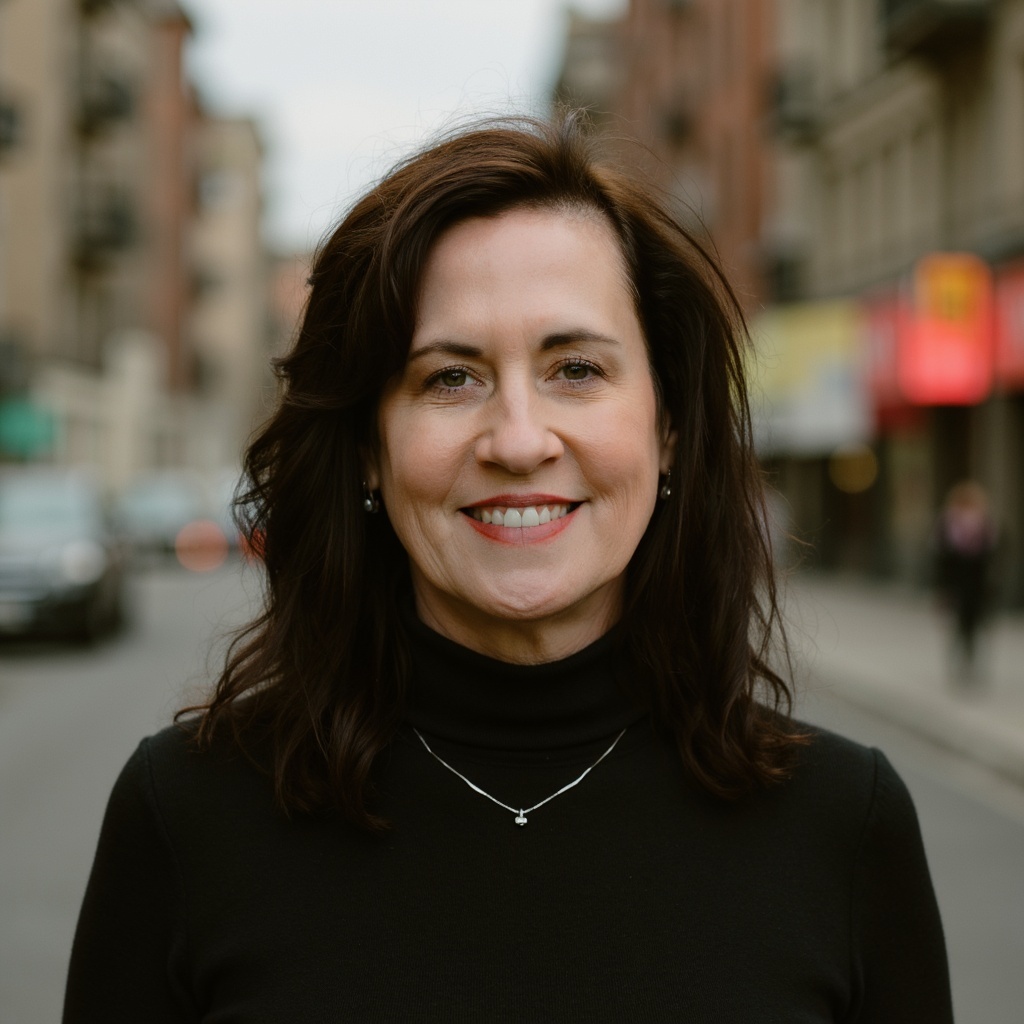
LCSW | Embedded Clinician | Advisor to National Park Service and U.S. Fish and Wildlife Service
Joellen Rhyndress, LCSW, is the founder of Backbone Behavioral Health and a licensed clinical social worker with over 20 years of experience in crisis response and behavioral health. She earned her MSW from Grand Valley State University and has extensive experience supporting first responders, veterans, and communities after natural disasters and mass casualty events. Joellen grew up in a law enforcement family and brings personal and professional insight into officer-involved shootings, line-of-duty deaths, and first responder suicide. She is a clinical advisor for the National Park Service and U.S. Fish and Wildlife Service and provides direct clinical care to wildland firefighters, rangers, veterans, EMS, fire, and police nationwide.