Apple Podcasts
 Spotify
 YouTube
 RSS Feed
 Becoming Unbreakable with Guest Kwesi Millington | S5 E45
In this episode, we sit down with Kwesi Millington—a former RCMP officer whose life changed forever after a high-profile incident and the mental health crisis that followed.
In this episode, we sit down with Kwesi Millington—a former RCMP officer whose life changed forever after a high-profile incident and the mental health crisis that followed. Kwesi opens up about the pressures of policing in the public eye and what it really takes to rebuild after hitting rock bottom. Expect a candid, thought-provoking conversation that digs into the personal cost of the uniform, the journey toward healing, finding purpose after the job, and the bold ideas needed to become “unbreakable”.
Contact Kwesi Millington:
Website: www.kwesimillington.com
Facebook: https://www.facebook.com/kwesi.millington
Instagram: www.instagram.com/kwesispeaks
LinkedIn: www.linkedin.com/in/kwesimillington
Contact Responder Resilience:
Phone: +1 844-344-6655
Email: info@respondertv.com
Our website with past episodes and more: https://www.respondertv.com/
YouTube: https://www.youtube.com/c/ResponderResilience
LinkedIn: https://www.linkedin.com/company/responder-resilience-podcast/
Instagram: https://www.instagram.com/responder.tv/
Facebook: https://www.facebook.com/responderTV/
And a couple minutes later, ambulance attendants arrive, fire arrives, they start doing CPR on him. I hear the words, no officer ever wants to hear just a few minutes later, time of death. A lot of lawyers looked at what we did and said, these guys did what they were trained to do. Sometimes you do everything right, but something goes wrong. And that's the world that we live in. I was supposed to be a police officer for 25 years, but when I was able to let that go and say, you know what, I can still have a purpose doing something else, then I realized I don't have to feel like a victim of something I lost. I can say, how can I help someone going forward? We get broken sometimes, we can still have use and value in our life. We are unbreakable, even though we've been broken, we can still produce beautiful things in our lives.
SPEAKER_05Welcome to Responder Resilience, along with my co-host Dr. Stacy Raymond. I'm David Dashinger. Today we're diving into the realities of mental health, resilience, and personal transformation with former RCMP officer Quacy Millington. After an incident responding to a call about a man who'd violently destroyed airport property, which ended in an untimely death, Quaisty faced speculation, wrongful accusation, and unjustified incarceration. As someone who's faced these challenges as well as ADHD, PTSD, depression, Quaisty shares invaluable insights on navigating the toughest times in both your personal and professional life. And if you've ever felt the weight of your responsibilities or struggled in silence, this conversation is for you. So join us as we get into that in a few minutes.
SPEAKER_03Thanks to our resource partner, First Responder Project, whose no-cost First Responder Retreats offer you a chance to reclaim connection and learn vital skills. This isn't just a retreat, it's a lifeline to keep you mentally strong at work and emotionally present at home. Take a stand for your well-being and the connections that matter most. Sign up now for your FRP retreat. Learn more and register at FirstresponderProject.org.
SPEAKER_00There's a new app built by Firefighters for Firefighters, and it's called Crackle. Download the app now for free as a legacy member and get early access to exclusive content, tools, and updates as they drop. Get the free app at crackle.responderTV.com.
SPEAKER_03Thanks also to our resource partner, Fight Camp, for free shipping and a free month of membership. Go to joinfightcamp.com slash shop and use the code R R P O N E.
SPEAKER_05We invite you to like and subscribe YouTube Responder Resilience, Facebook, Responder TV, LinkedIn, Apple Podcasts, Spotify, and go to our website, respondertv.com, past episode and gest information. We'll be right back to speak with Clazy after this. In this family, more of us die by our own hands and by the hazards of the job.
SPEAKER_06In this family, a quarter of nine million life electronics. In this family, our mental health is all of us.
SPEAKER_05In this family, obstacle.
SPEAKER_04Welcome to Fire Resilience.
SPEAKER_05We'd like to welcome Quasey Millington. He's a former RCMP that's Royal Canadian Mounted Police officer who's overcome struggles professionally as well as personally dealing with ADHD, PTSD, and depression. Quacy now teaches youth and high-stress organizations how to avoid burnout, build mental health, and cultivate resilience in their lives. He travels internationally as a motivational speaker and he's given over 200 talks to students and organizations about confidence and mental health. Quasi, welcome to Respond to Resilience.
SPEAKER_01Pleased to be here.
SPEAKER_07So Quasi, I'd like to start out by asking you, um, can you share a little bit about your journey into law enforcement and what initially drew you into the profession?
SPEAKER_01Uh well, thank you for that. Um it's funny because I think a lot of times you may hear stories of people saying, uh, it was my dream ever since I was a kid, and I wanted to be an officer. And that is not the case with me. Okay. Um, I didn't know what I wanted to do. I was in school, I got a university degree, and I was working um, you know, in a typical uh cubicle office job. And one day we were on strike and I was walking the picket lines, and I literally looked over to the street and I saw um a police officer helping someone, and I thought, you know what? I don't want to be in an office, I want to do that. I want to be out every day is different, helping people, um, and the kind of like call to adventure that just it would like lit lit a switch in me and um or hit a switch in me, and I ended up saying, Okay, I think I want to go do that.
SPEAKER_05So interesting how um we get exposed to these things, right? Maybe completely not by choice, but uh in my case, we bought a house next to a firehouse, and that led me into the whole career in the fire service. But um, yeah, life is interesting like that, isn't it?
SPEAKER_01Yeah, absolutely, absolutely. Um, and you know, you you gotta listen to that intuition. And so I um I applied for city forces, like I'm in Toronto, Canada, and I applied to city forces. Um, and then I applied to the RCMP. And the difference is the RCMP is like our national police force. So I always say it's the FBI of Canada. Um and so you can be placed anywhere in the country, whereas if you apply within your city, you're obviously only going to be policing in your city. And I thought I'm willing to travel, I just want to do something different and do something that feels like it's meaningful to me. So I applied to the RCMP.
SPEAKER_05Let's fast forward to um to this incredible story that you live through, and that's um kind of touch on what caused you to leave law enforcement after serving for was it like 10 years?
SPEAKER_01Um yeah, so my my career was uh ended up being 12 years altogether. Um but a few years into uh my first posting was um in a city uh called Richmond, it's on the west coast of Canada, and uh I ended up being placed in uh a Vancouver airport. So I was on patrol in the airport one night, and we got a call uh a man who was causing a disturbance, he was breaking airport property. Um, and myself and three other officers, we went up and we ended up talking to the guy. So at first we tried to talk to him, anyways. Um, so we go into the airport, it's your typical scene. You see people waiting for their loved ones to arrive, you see the public side, the secure side, and as I approach this guy, I can see that there is debris around him, he's broken some things, and as I was approaching him, someone says, Hey, he doesn't speak English. And so when you don't know the same language as someone, what do you do? You try to communicate them with communicate with them with like hand signals, whatever you can to try to get your message across. So I made a miming sign with my hand, um, you know, paperwork, tried to like pretend like I was opening tape opening paperwork, things that I thought would be universally understood. Now, I thought he was gonna grab his passport and that would be the end of it. We'd figure this out, and that would be the end of the call. But instead, he turned around and he grabbed what we call law enforcement weapon of opportunity, right? He picks up a stapler from a table, fist in one hand, fist in the other hand, and training kicks in. I back up and I immediately uh see the combative stance. I use a taser on him, and we're under we're in a fight with him to get on get him under arrest. So there's four officers, one guy trying to get him under arrest. Uh finally we do get him under arrest. We get handcuffs on him, and we think, well, at least I thought, okay, at least we got him under control, we can figure this thing out. But a few minutes later, I hear on the radio, my partner says, We need EHS here, ambulance attendants right away. He's turning blue. And a couple minutes later, ambulance attendants arrive, fire arrives, they start doing CPR on him, and I hear the words no officer ever wants to hear just a few minutes later, the time of death. Now, unfortunately, I didn't know he had pre-existing heart conditions. I didn't know that there was something called excited delirium that he was going through at the time, um, and his heart basically failed after we arrested him. So that was something I never expected to happen. But in policing, what do you do? You go to a traumatic incident or any first responder basically. You go to a traumatic incident, then you gotta go back to work, right? So that's what I did. I went back to work, um, and there was a guy actually in the airport recording the whole thing. So it ended up being uh broadcast on the news. He actually put it on, it was actually put on YouTube, um, and a lot of people saw it, and my fellow officers saw it. Officers from other police forces saw it, and all of them told me the same thing. Quasi, if I was in your situation, I probably would have done the same thing, right? You did nothing wrong, three separate police forces, the entire province of British Columbia. Like a lot of lawyers looked at what we did and said these guys did what they were trained to do. Um, so I figured I go back to work and sometimes you do everything right, but something goes wrong, and that's the world that we live in. A couple years later, after that, I'm asked to testify in what's called a public inquiry. So basically, you're on the stand, you have to answer questions as to what you did during that case. The only problem is there was two years between when I went to the case and when I actually testified. And when I speak to first responders, especially, I always say, if someone asked you to remember all the details of something you did two years ago, would you forget some things? Of course. So I made mistakes on the stand. Um, and when I testified, some of the answers I gave were incorrect, accidentally incorrect, but still incorrect based on what I did that night uh in 2007. And unfortunately, I was charged with perjury coming out of that. So I testify, I go home, I figure I'm back to work. This is just you know part of the journey of being an officer. But there's a letter waiting for me saying, Quasey Millington, you've been charged with perjury. And as I mentioned, they were accidental mistakes. I've never lied a day in my career, but unfortunately, I was charged, I was convicted, and I was sentenced to two and a half years in prison. Yeah. And so, you know, you you do what you think you're supposed to do, you follow all the rules you're supposed to, and these types of things still happen. And I remember December 12th, 2017, I was in jail, and um three officers from the RCMP uh walked in and handed me my my papers. Basically, you're discharged, you're no longer your services are no longer required. So that was my last day as an officer. Um, and so yeah, that was my journey from becoming a police officer one of the proudest days of my life to um unfortunately uh losing my career.
SPEAKER_03You're trained to help people heal, but first responders, they carry trauma that's buried under silence, stigma, and stress. Helping the helpers gives you the framework to connect, to speak their language, earn their trust, and actually make an impact. From the experienced team and clinicians behind the Responder Resilience podcast, this isn't theory. It's real-world support for the ones who need you most. And this book isn't just for clinicians. If you're an agency leader, peer support team, chaplain, EAP, wellness program coordinator, or family member, helping the helpers will equip you with the tools, language, and insight to make a difference. Be the resource they can count on. Order your copy of Helping the Helpers on Amazon today.
SPEAKER_07How long did you spend in jail?
SPEAKER_01Uh so in Canada, you have to serve a 30-year sentence, um, mandatory, no matter how good how much good behavior you have. So for me, it was 10 months in the correctional system.
SPEAKER_05So I would imagine it's easy to adopt a victim mindset when this kind of adversity happens, especially you've lost not only your job but your freedom and probably a ton of other stuff that we can't even imagine unless we, you know, walked in those shoes. How do you maintain or how do you come overcome the victim mindset and then kind of shift into something that might be more positive moving forward?
SPEAKER_01Yeah. And and I do that get that question a little from time to time. You know, um, at first I it was more the shuld I have done this as a career thought. Because like I said, I didn't even have a dream to become a police officer as a kid. It wasn't like my lifelong dream ended. And so a part of me thought, okay, maybe I should never have walked into this career in the first place. If the road that I took has brought me here, then why did I take that road? Um, and and I thought if I if I was to say I didn't have a victim mindset per se, I just had a um why did this happen to me? You know, like and I guess that probably is what a victim mindset is, but um you know what's the point of of being here? And um, I think what got me through was the being able to say there must be something else I can do with this life. Um and if I if I got into policing to help people, I might be able to help people in another way. And when I finally got around to saying policing is no longer in my life and be able to let that go, I think a lot of times we we hold on to what we think our life is supposed to be like. Yeah, I was supposed to be a police officer for 25 years, but when I was able to let that go and say, you know what, I can still have purpose doing something else, then I realized I don't have to feel like a victim of something I lost. I can say, How can I help someone going forward? How can I do something that gives me purpose going forward in my life? And that changed everything for me. Then I finally was able to say, I can let go of a policing career that I no longer have.
SPEAKER_07So, really what happened was you um you didn't let the policing profession define your reason for existence. You you went deeper than that and said, How how can I help someone, how can I help people in other ways? Because that seems to be you know more foundational to your to your personality. Um policing was just the job, but the wanting to help other people is is really what um kept your head above water, so to speak.
SPEAKER_01Yeah, a hundred percent. And I read a book called Start With Why by Simon Sinek years ago, and he said that you always come back to why you do what you do, and that was so key for me because I tied everything. My my whole identity was policing when I was an officer. Uh, because you wear the uniform, you know, you're on shift, you uh spend some of your off days with people that are other other officers, especially when you're transplanted. Like I was um basically across the country was where I was posted. So the only people I knew were police officers. So on duty, I hang out with police officers. Off duty, I took extra shifts. I did overtime with police officers. When I'm on when I'm not working, I'm hanging out with other officers. Uh sometimes I even put on the red surge, right? The red jacket, which is you know a widely recognized symbol, and you do like ceremonial duties, like you go to a football game and you you know carry the Great Cup, which is our Super Bowl of our Canadian football. So I was always wrapped up into that. So that became my identity. And so when that was taken away for a while, I thought, then who am I if I'm not that anymore? And it was when I realized if I be if I go back to my foundational reason for why I do this in the first place, then there's got to be something else I can do in my life to still feel good about myself, still feel productive, and still feel like I have purpose. Um, and so that that's what I kind of held on to.
SPEAKER_05Yeah, I think that's so applicable to retirement in general and from emergency services where people struggle with that loss of identity, loss of the mission and the tribe. And um, but the way you put it is so uh clear that you know you didn't change who you are. Um, you're able to actually take that, you know, those qualities and reapply them in a different way. So um so anybody looking at retirement or in retirement can certainly take that as a uh you know as a valuable lesson.
SPEAKER_01Absolutely, absolutely. Yes, yeah, and like you said, especially retirement, um, you know, you ask yourself, what are you gonna do after this? So what brought you to the job? What kept you going? Those foundational principles are going to help guide you, no matter if you are young and you've retired, or if you are older and maybe you don't do the job anymore, there's something else you could do that still fulfills your purpose.
SPEAKER_05Great, great.
SPEAKER_02Boxing has the power to change lives, especially for first responders. Fight Camp embraces your journey, whether you're stepping into the ring for the first time, returning after a break, or aiming to elevate your fitness. Harness the strength of boxing to release stress, build resilience, and connect with a supportive community one punch at a time. For free shipping and a free month of membership, go to joinfightcamp.com slash shop and use the code RRP1.
SPEAKER_05That's R-R-P-O-N-E Quacy on your website used the term unbreakable. Why did you choose that and what does it mean to you?
SPEAKER_01Yeah. The term unbreakable, and it if if you look closely, you go to my website and you'll see the word, uh, the way I've written it, the way I've designed it, is it's in broken letters, right? So it's not a solid letter. Uh all the letters aren't solid. They're broken because we all get broken at times. It's how you repair yourself that makes you quote unquote unbreakable. Nobody's unbreakable, but it's just how you repair yourself after that. And I think back to kind of when I created it, and it was years ago when my son was about three years old. We were in the living room and coloring in one of his favorite books. Um, and that came from a cartoon called Paw Patrol. And he was coloring uh with a red crayon, and the crayon uh he slips out of his hand, it breaks into, and he starts crying, and he runs over to the garbage can, he's about to throw it out, and I go over and I'm like, Phoenix, that's his name. Um, don't throw it out. And he said, Daddy, it's broken. And so I took both halves of the crayon. We go back to the couch, I give him a half, and I take a half myself. I put the the coloring book in front of him and I say, Does your piece still color? And I make him color with that half a crayon. And he says yes, and then I start coloring, and I'm like, Does my piece still crayon? And he's like, Yes, daddy. And I then said, You know what? Now we have two crayons. And I believe the same goes true in life. Like we get broken sometimes, but we can still produce beautiful things, we can still have use and value in our life. Um, and that's why I said, you know what? That's what we are. We are unbreakable, even though we've been broken, we can still produce. Produce beautiful things in our lives. Um, and that's something I want, you know, all your listeners to remember. Yeah, great reframe.
SPEAKER_05Appreciate that.
SPEAKER_07Yeah, that's a great example. Um so, Quasy, how do you maintain a strong mindset and and don't fall into the pit of victimhood? Like, is there something that you practice on a daily basis or weekly basis to keep your mindset strong?
SPEAKER_01Uh yeah, absolutely absolutely. And you know, probably some these are some of the things that other people have said before, but they actually work and that's why they you keep hearing them. Yeah, so sometimes you'll say something and people will roll their eyes. Oh, I've heard of that before. Well, you've heard of it before because it works. Yeah. You know, writing down uh things you're grateful for, like remembering those things. And I try not to focus on just a list of things every day as some kind of checklist for the day. I said, okay, well, what is something that what actually went well today? And so I drill about the actual thing that happens. So it's not just I'm grateful for my family. No, I take down some time and I write down at some point in the day, whether it's beginning or end of the day, whenever it comes to me. You know, today I dropped my son off to school and I saw a smile on his face as he played as he walked in with one of his good friends, and it made me think at least he doesn't feel alone, and I'm grateful that he's in he's comfortable in his environment. Right? So it became an actual moment that I can relive and feel. Because if you just write down lists of things you're grateful for, it's not gonna work because you haven't added the feeling and reliving the moment. Um gratitude or win practices for the day um is something that I do regularly. And I did that even when I was in prison. And I uh like the my days inside, like what's something that went well today. Um, because I knew if I could do it in my lowest moments, then I can do it when life is pretty good too. Um, and and working out is another one. Uh physical fitness, um, I can't tell you how much that's done for me uh from you know push-ups in in a solitary cell. I spelled I spent some of my time in solitary uh when I was inside, not for punishment, but because uh for protection for police officer, um and so yeah, push-ups inside to now I fitness, I'm I work out you know four to five days a week. Um, and now it's it's really my mental health, it helps so much. And they've done studies on it showing that it improves your mental health as well. Um, and then just re I I try to read a lot too. So read or listen to something that is uplifting as well, and then I have a spiritual practice as well.
SPEAKER_05Yeah, can you talk a little bit more about the spiritual practice and and you know, kind of in the framework of how maybe other law enforcement officers could take something from what you've found to be successful and perhaps employ that in their own spiritual practice or their own, you know, daily life?
SPEAKER_01Yeah, no, absolutely. Um, so I I grew up Christian, um, and the Bible is something that I've always read. Um, but I've also added in other religions. I'm like a Christian mix now because uh when I uh I remember every Wednesday in in the jail, they had a Buddhist monk that would come in and do a one hour, one hour meditation with those who wanted to participate. Uh, was I successful at it? Not at all. But um I I had moments where I could have silence within that hour and I have to keep bringing myself back. So yes, I that's actually another practice. I try to meditate, um, but not like sit on a pincushion for an hour, but just have you know moments where I just maybe walk and breathe, like I have a walking pad in my house, or I spend five minutes in silence, try to add that in. Uh so I started diving into you know reading books on Buddhism as well. Um, so now my spiritual practice is more just reading something spiritual that centers me, whether it's from the Bible, uh, another religious text, or uh A Course in Miracles, which is another book that I read. Um, and and that's kind of my spiritual practice, and then prayer, prayer. And sometimes prayer means just talking to God, and sometimes it means writing down uh what I would say if he was right in front of me. And that's kind of a weird way to approach it, but that's how how I how I do things as well. And it's been really helpful.
SPEAKER_06My dad would go on binges, so he would be gone for 24 to 48 hours at a time. I was at a complete loss, did not know what I was gonna do, he would disappear, and we couldn't get a hold of him, was just very traumatizing. These are human problems.
SPEAKER_00Before you were a cop, you were a son, a brother, a sister, a mother, a child. If you get mad about the nights and the weekends, you go back to well, you shouldn't know what you're getting into.
SPEAKER_02If someone comes home and you can just they've got that thousand yard stare, at least say, I see you're frustrated, I see you're devastated, I see you're sad, I see you look stressed out. You wanna talk about it?
SPEAKER_07Quasey, there's another um concept um in addition to the unbreakable that um you seem to have uh coined and capitalized on. It's never your reality, it's your response that counts. So can you elaborate on that, what you mean by that?
SPEAKER_01Uh yeah, no, and and I will say that that's uh that's not my line. Um, I stole it from my mom. Um, you know, when just uh a few months before I was born, she found out that my dad was having an affair and um he was about to have a child with another woman. So my half-brother and I are literally 23 days apart. Um and when she found that out, uh, you might think, you know, there'd be like she'd always talk negatively about my dad to me and uh say he's such a bad person and all that, but she never did any of that. Um and she actually pushed me to try to have a relationship with him. I only saw my dad a handful of times growing up. Uh, but I remember when I finally sat down with her and I said, Mom, you weren't bitter, you never went after him, you didn't take him to court or do any of those things that you might see someone do in that situation. Uh, she just said to me, I chose not to be bitter, and just remember, in your life, you're gonna face unfair, unpredictable, uncontrollable things, but it's not your reality that matters, it's your response. And I like I've always remembered that because you know that's life. We always have things that are out of out of our control, the things that you can't control, uh, things that you wish you could change. You can't change your reality, you can't change what happens, but you can always change how you respond to it. Um, and so that's something that I've always taken with me. And it really helped uh at one of the lowest points in my life when I found myself behind bars uh for you know perjury, something I didn't do. And yeah, so that that really helped.
SPEAKER_05Let's take it to um kind of back to law enforcement. What what advice or kind of wisdom would you share with law enforcement officers perhaps struggling with burnout, kind of having, you know, maybe they've kind of lost their love for the job or the feeling like you know, victims themselves from uh some situation within the agency, which could be institutional abandonment or some um moral injury involved with doing the job. What kind of uh wisdom would you give to someone who's doing the police work and just kind of lost that, you know, that initial spark and love for the job?
SPEAKER_01Yeah. Um and you know, uh everything that I offer is just you know, hopefully something that you can take and use. Um when it comes to the burnout, those daily practices are huge to to help you kind of re refocus. Um I would say learn learn to say no. Um, I think that I burned out by saying too many yeses, but too much overtime, uh too many extra shifts, too much um I'll I'll do this just because I want to advance and want to show you, uh, you as in my supervisor that I would want a promotion or I uh I want to be a team player. You you can say no and it's okay. Um, and so that's something that I would say uh also going back to that why you started in the first place, but not only that, what keeps you going? Um, not only what's your why, but uh Simon Sinek sa uh he also says in his one of his other books, what's your just cause? Because your why will get you started, your just cause will keep you going. Um, so my why for becoming a speaker, I speak to first responders uh as well as students. Uh my why for starting was to help people, like the same reason I became a police officer, but my just cause what keeps me going, is that there are too many suicides in our profession, in my former profession. And if I can help just even one person in every talk I go to who might be thinking that route, not take that step, then that's what keeps me going. And sometimes if there's a gap in time between when you started your career and now when you're kind of um feeling that burnout, that just cause what keeps you going now. It might be different than what why you started. And so I'd say try to come back to that. Uh, but no, I think is a huge huge one, and also making sure you have something that fires you up outside of your career. Um that is so huge because most uh, anyways, a lot of people that I talked to in the first resumer profession don't have that big fire that lights them up outside of their career. If you have that, then you realize okay, this is just a piece of my life, right? Not your whole life.
SPEAKER_07That's a huge so what are you doing now? Um, tell us about your book and what your activities are.
SPEAKER_01Um, yeah, no, I my main my main book that I share with first responders. I've written three books, uh, but one's one's a journal because I'm a journaler, so I wrote a journal. Um, I wrote a book for students called Unbreakable, but I also wrote a book for first responders called Rise. Um and if I'll I'll actually let you know if people want to reach out to me online and just uh send me a message saying uh resilience podcast. Um actually, I should say responder resilience podcast. If they send me a message with that, I will send you uh the first chapter of my book, Rise, for free. So if they want that, please reach out. Um but I wrote that book just to share things that I've learned about building resilience and being resilient, uh, even if you're going through challenges. And so that's called Rise. Um and what do I do now is I I travel, as I said, to across North America speaking to um high stress frontline organizations as well as students about mental health and resilience. Um, and that's my tagline, as you mentioned earlier. It's not your reality, it's your response. How do you respond in life when things uh are feel like they're weighing you down? You're trained to help people heal.
SPEAKER_03But first responders, they carry trauma that's buried under silence, stigma, and stress. Helping the helpers gives you the framework to connect, to speak their language, earn their trust, and actually make an impact. From the experienced team and clinicians behind the Responder Resilience podcast, this isn't theory. It's real-world support for the ones who need you most. And this book isn't just for clinicians. If you're an agency leader, peer-support team, athlete, EAT, wellness program coordinator, or family member, helping the helpers will equip you with the tools, language, and insight to make a difference. Be the resource they can count on. Order your copy of Helping the Helpers on Amazon today.
SPEAKER_05We started this podcast five years ago, and at the time it wasn't quite the buzzword that it is now, but now it's we're seeing it everywhere. Um, how do you define resilience? What what are some sort of you know practical um applications or examples of resilience, um, the way you would you would quantify it?
SPEAKER_01If I was gonna define it now, I would say resilience is not necessarily a trait like you are resilient, but more the tools that you use to build yourself back up. Um because the ability to say, I am gonna go through things, what's gonna help me bounce back? What's gonna help me to manage those things? If you have that tool belt, as a police officer, I always had the tool belt of all the different things I could use. What tools do you have to bounce back or to be able to handle the things that you go through in your life? If you know and can reach for those quickly and be able to use those to manage what you're going through, then I say you are resilient. So it's not the trait you have, it's the tools that you use to bounce back when things go to go wrong. Yeah.
SPEAKER_07So you're suggesting really being equipped prior to hardship happening.
SPEAKER_01Yeah, yeah, it's a hundred percent. I mean, it's it a lot of times we wait for something to happen and then we respond to it. But if you have some things happen to you in your life and you know how to handle those things, then when they happen, then you're you're prepared for it. Like when the world locked down and everybody was in isolation. I was like, I've already done solitary, so um isolation is a great standing on your head, so to speak. Yeah, so I'm like, okay, I'll just do what I what I did when I was inside, you know. Now I get to be free and go for a walk. It's it's so different, right? So um I have the tools, and that's what made me quote unquote resilient.
SPEAKER_05Yeah. Excellent. So uh where can people find you? Website, social media, any other channels you want to share?
SPEAKER_01Um, yeah, no, absolutely. Uh so I'm pretty much on most social media, but um most active on probably Instagram, which is QuacySpeaks, K W E S I Speaks. Um, and that's where if you send me a message with responder resilience, I'll send you chapter one of my book Rise because I just want to get that out there if people want it uh for value. But Quasi Millington um or on LinkedIn is where you just find me my name and uh Quasyspeaks.com website.
SPEAKER_05Fantastic. Um and we got to thank Scott Medlin for introducing us. Um Scott uh spoke very highly of you. So um we're so glad you were able to spend this time with us, give us a little insight into your story and your world and the things that um that have worked for you and to uh keep paying forward this uh kind of who you are in the world and to keep that foundational purpose going. So we appreciate you.
SPEAKER_07Thank you. I feel honored to uh you know be able to interview you because you're like a walking, talking, living example of resilience. I mean, how many cops get arrested and incarcerated and you know now you know you you are um passing along what you've learned about resilience. You know, you still have a smile on your face, and that's that's very impressive.
SPEAKER_01Thank you.
SPEAKER_05Thank you for saying that. Really appreciate it. Thank you. Keep up the great work, Lacey. Thank you. Remember to like and subscribe, YouTube, respond to resilience, Facebook, responder TV, LinkedIn, Apple Podcasts, Spotify. Go to our website, respondertv.com for past episodes and guest information. Until the next time, stay safe, be kind to yourself. Take care.
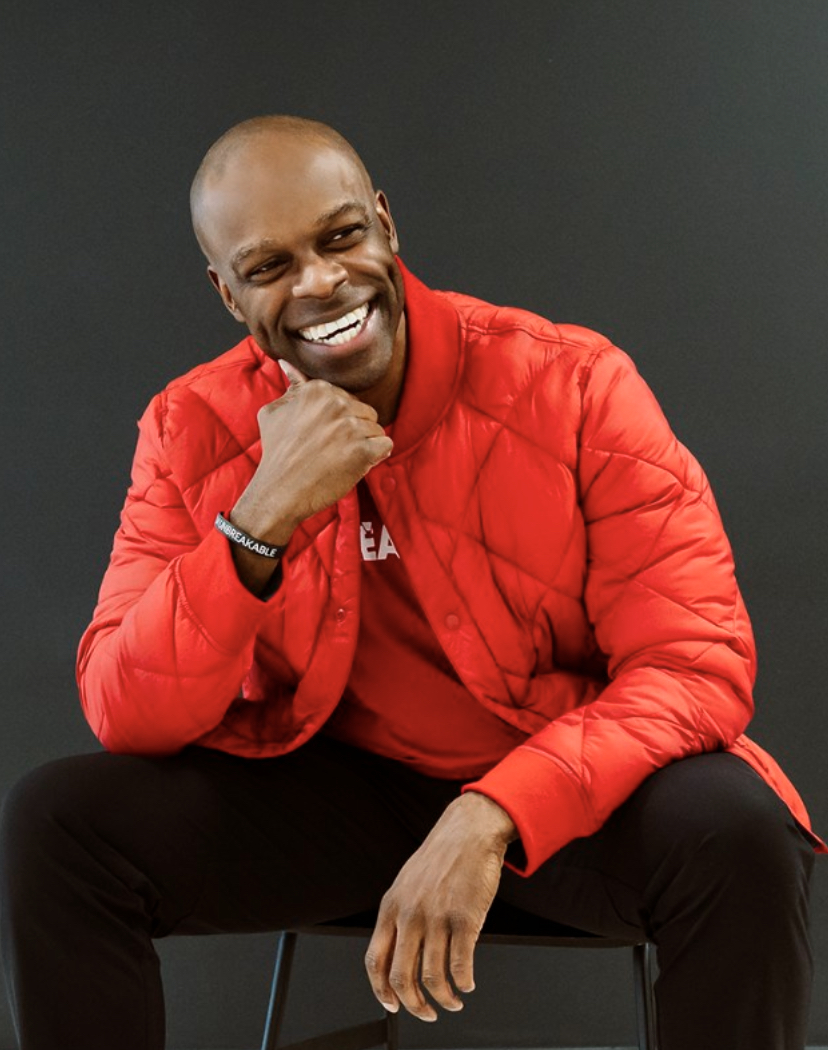
Former Police Officer | Author | Speaker
Kwesi Millington is a former RCMP police officer, who has overcome struggles professionally as well as personally dealing with ADHD, PTSD and Depression.
He now teaches youth and high-stress organizations how to avoid burnout, build mental health and cultivate resilience in their lives.
Kwesi travels internationally as a Motivational Speaker, and has given over 200 talks to students and organizations about confidence and mental health.