Apple Podcasts
 Spotify
 YouTube
 RSS Feed
 We Eat Our Own: Navigating Betrayal and Adversity with Guest Autumn Schmidt | S5 E51
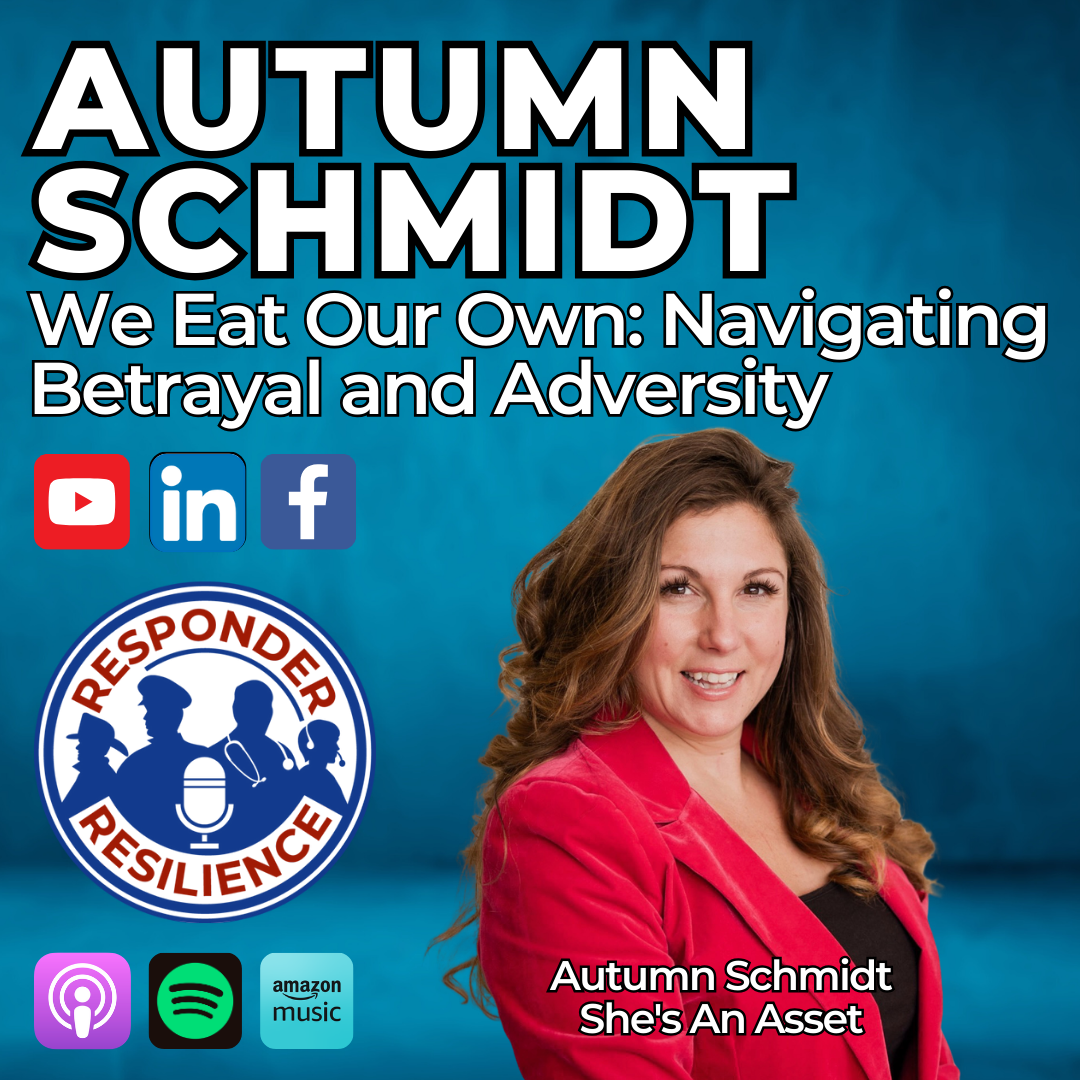
We dive deep into the heart and soul of Autumn Schmidt, a former police officer whose journey from the front lines of law enforcement to the forefront of women's empowerment is nothing short of remarkable.
In this gripping episode, we dive deep into the heart and soul of Autumn Schmidt, a former police officer whose journey from the front lines of law enforcement to the forefront of women's empowerment is nothing short of remarkable. Autumn’s story is rich with the kind of raw vulnerability that reveals the gritty reality of betrayal and adversity in a profession that often demands unwavering strength.
She candidly shares her battles—both physical and emotional—that shaped her path, including the brutal truth behind the phrase “we eat our own” that echoes through the corridors of law enforcement. With her business, "She's An Asset," Autumn isn’t just advocating for awareness; she’s igniting a movement that blends safety, confidence, and sisterhood into a powerful lifeline for women everywhere.
Join us as we unravel the complexities of her experiences, the challenges women face in law enforcement, and the steadfast support systems that could reshape an industry. This episode promises an unfiltered exploration of resilience and empowerment that challenges the status quo and inspires us all to rise stronger together.
Contact Autumn Schmidt:
Website: https://shesanasset.com/
Facebook: https://www.facebook.com/shesanasset/
Instagram: https://www.instagram.com/theautumnschmidt
LinkedIn: https://www.linkedin.com/in/autumnclifford/
Contact Responder Resilience:
Phone: +1 844-344-6655
Email: info@respondertv.com
Our website with past episodes and more: https://www.respondertv.com/
YouTube: https://www.youtube.com/c/ResponderResilience
LinkedIn: https://www.linkedin.com/company/responder-resilience-podcast/
Instagram: https://www.instagram.com/responder.tv/
Facebook: https://www.facebook.com/responderTV/
Right, so I got into law enforcement when I was 20 years old. I had aspirations to be one of the first female chiefs. Really, my whole entire life, David, was all about law enforcement. The first responder who sets out to do that kind of job, we all know it's a calling. You're doing it for the love of the job and all of the things, and when you don't have your badge anymore, there really is this identity crisis I feel like we all go through. So what if I got to where I was supposed to be in the career and I'm meant to take all of that training, education, experience and apply it somewhere else? What if that's the plan?
SPEAKER_07Welcome to Respond Resilience. I'm David Dashinger. Today we're going to be speaking with Autumn Schmidt, a former cop who's been through the trenches and emerged not just as a survivor, but as a warrior and advocate for women's empowerment. We're talking betrayal, overcoming adversity, and the raw truth behind the phrase, we eat our own. Autumn's journey to founding her business, she's an asset, isn't just a career change, it's a holistic approach to personal safety by blending situational awareness, self-protection, and confidence-building strategies.
SPEAKER_05Thanks to our resource partner, First Responder Project, whose no-cost First Responder Retreats offer you a chance to reclaim connection and learn vital skills. This isn't just a retreat, it's a lifeline to keep you mentally strong at work and emotionally present at home. Take a stand for your well-being and the connections that matter most. Sign up now for your FRP retreat. Learn more and register at FirstresponderProject.org.
SPEAKER_07This episode is made possible by the First Responder Center for Excellence. Discover more at FirstresponderCenter.org and connect with us on X, Facebook, LinkedIn, Instagram, and YouTube.
SPEAKER_00There's a new app built by Firefighters for Firefighters, and it's called Crackle. Download the app now for free as a legacy member and get early access to exclusive content, tools, and updates as they drop. Get the free app at crackle.responderTV.com.
SPEAKER_07We invite you to like and subscribe, YouTube Respond Resilience, Facebook, Responder TV, LinkedIn, Apple Podcasts, Spotify. And check out our website, respondertv.com for past episodes and guest information. We'll be right back to speak with Autumn after this.
SPEAKER_01In this family, more of us die by our own hands than by the hazards of the job.
SPEAKER_06In this family, up to a quarter of 911 telecommunicators have symptoms of post-traumatic stress. In this family, our mental health and wellness are in crisis, while responders are quietly suffering. In this family, many struggle with job-related stress, burnout, injury, disruption, substances, and relationship problems. In this family, we can help the helpers. With vital information and resources, resilient strategies, and success stories of overcoming the obstacles. Welcome to Responder Resilience. We co-host retired Lieutenant David Dashinger, Dr. Stacy Raymond, and Bonnie Rimley, LCSW EMTV.
SPEAKER_07I'd like to welcome Autumn Schmidt, who is the founder of She's an Asset. It's a women's safety and empowerment training company that takes a holistic approach to personal safety by blending situational awareness, self-protection, and confidence building strategies. Her teachings are unique as she applies her law enforcement, martial arts, and education backgrounds in her teaching. Autumn, welcome to Responder Resilience.
SPEAKER_03Thanks for having me, David. I'm excited to be here.
SPEAKER_07Well, I'd love to just kind of ease into the conversation by having you speak a little bit about kind of where you grew up and how your life path into adulthood uh led you to law enforcement.
SPEAKER_03Yeah, thanks for asking. So I have been in the martial arts since I've been five years old. I'm a second degree black belt. I have literally been fighting my entire life. I tell a story about how when I was just five years old, maybe five and a half, um, I was bullied on the playground. A boy came up to me and randomly sucker punched me. Like he gave me an uppercut right to the stomach, right into the diaphragm. So obviously it knocked the wind out of me. And I reacted and I got him in a scarf. And uh we both ended up in detention for a week. And that I have to tell you, because I was in the martial arts and my sensei, my instructor, he was a police officer. And going through all of that and just like I felt like I did nothing wrong, and I just would defended myself. And honestly, that was kind of the kickstart of my interest in law enforcement. I also have an uncle who was a police chief in a small town in Maine for like 20 years, and you know, his influence as well as my martial arts instructor, you know, they were really great influences in my life. And I knew, you know, I'm I'm five, six and I'm built like a brick shit house. I'm like this girl, like I meant to be out doing something and not, you know, sitting at a desk. And honestly, you know, that's what a lot of us first responders say. It's like we we know we don't want to sit behind a desk, but that that really was the truth. Um, and so that really is what got me started. I went to, you know, I I used to get in fights a lot in high school. And uh so um, yeah, I was you know, when when you're competing, so one thing, David, is uh I competed in the martial arts and I won multiple New England uh championships, Maine State championships. I met Chuck Norris. I competed nationally, I competed internationally, and um so my again, my martial arts like Dojo and my instructor, they were so proud of me, they would they would put that out in the newspapers a lot, and that really put a target on my back, which I think a lot of first responders can relate with, unfortunately, in today's day and age. And so I grew up with groups of girls trying to fight me. I mean, everywhere I went, people were trying to fight, girls who were trying to fight me, guys didn't care, nobody cared, but um girls would gang up on me, they'd come from behind me and throw me into the lockers, just different things like that. So I think um I think on my journey between that and the influences that I had, I just felt like I had a set of skills that I really wanted to offer to the public. And I just really, for me, I wanted to be able to help, you know, pick somebody up, pick those up who were in need because you know, so many times, like look, I had my ass handed to me so many times.
SPEAKER_07So like I was like, Yeah, yeah. And speaking of the martial arts piece, because I I find this very, really interesting, uh, in terms of doing the job as a police officer, did it come into play on a day-to-day basis or was it useful in certain circ situations, um, kind of giving you confidence, maybe a skill set that helped you do the job better?
SPEAKER_03You know, I think for my martial arts background, uh it's a mixed martial art because there's people wondering on here what did she study? So it's a shotokan karate, which is a Japanese-style karate, but I trained in jujitsu, judo, uh, Muay Thai. We I boxed. So a very mixed of martial arts in there. And it was always, you know, that discipline. The discipline was so huge, being respectful to people. You know, I'm five years old and having to say, you know, yes, ma'am, no, ma'am, yes, sir, no, sir, my entire life, which really I think played in it was so good for me while being a law enforcement officer to really just show up with that respect, uh, even when it was hard, right? Even when it's hard, and you're dealing with people who you don't want to be nice to on the road.
SPEAKER_07So let's look at um your time on the job. Talk a little bit about how that kind of played out. And did you have the career you had it kind of visualized having? And if not, what happened? And how did you what were the some of the challenges you faced in that situation?
SPEAKER_03Yeah. So did I have the career that I visualized myself having? No. So I right, so I got into law enforcement when I was 20 years old. I was a part-time police officer. At 22, I went through the full-time police academy in the state of Maine. That's the 18-week living academy that every full-time police officer in the state has to go through. And um, I planned on putting my 25 years in, which is Maine has a 25-year um retirement for law enforcement. Some departments have 20 years, uh, but my department that I was working for was a 25. I planned on honestly working my way up. I had aspirations to be one of the first female chiefs, and um that got cut short. So I met my husband in the police academy, and I moved two hours south to the southern end of Maine. I moved police departments, and really my whole entire life, David, was all about law enforcement. We have all of our friends were cops, you know, just that's just what it was. I was getting my master's, I have a master's in criminal justice, but at the time I was working uh for that. And so, and I was working, I was making my way, I was working with the Detective Bureau. I had just got on Maine's first Federal Human Trafficking Task Force. I was a part of our honor guard, I was a defensive tactics instructor at the Maine Criminal Justice Academy, also a certified instructor at our academy. So I was very, as you can see, involved, you know, in my career, where I was going, what I was doing. And um I when I was 26 and a half years old, I suffered a career-ending back injury. I have a herniated, torn, and degenerative disc all on my lowest back. It causes my legs to go numb and sometimes my feet to go numb. It also uh causes excruciating pain, which does not allow me to stand, sit, or walk for long periods. And unfortunately, you know, just being 26 and a half at the time, I wasn't, I did not, I still won't have surgery. I wasn't a candidate then, I won't have it. And um, and so suddenly, literally pretty much overnight, I was careerless. I was told that, you know, full-time law enforcement I could not do anymore. Um, the uniform from the uniform to the job duties itself, I just couldn't do it. And I think that, you know, a lot of police officers will be able to agree with me on some level that when you're a law enforcement officer, that's what you want to do, right? So the idea of me essentially like being a dispatcher, I I could I tried, I couldn't do it. It just wasn't it was very soul sucking for me. Um, I have a lot of respect for dispatchers. I don't know how you guys do it. Thank you, thank you. But it just wasn't for me. Also, I couldn't sit or stand. So essentially, David, I was like, what am I gonna do with my life? And I suffered. Um, I was couch-ridden for six months, and I was in therapy five days a week, and I got diagnosed with PTSD and depression and an anxiety disorder, and I went through one of you know the lowest lows of my life.
SPEAKER_05You're trained to help people heal, but first responders, they carry trauma that's buried under silence, stigma, and stress. Helping the helpers gives you the framework to connect, to speak their language, earn their trust, and actually make an impact. From the experienced team and clinicians behind the Responder Resilience podcast, this isn't theory. It's real-world support for the ones who need you most. And this book isn't just for clinicians. If you're an agency leader, peer support team, chaplain, EAP, wellness program coordinator, or family member, helping the helpers will equip you with the tools, language, and insight to make a difference. Be the resource they can count on. Order your copy of Helping the Helpers on Amazon today.
SPEAKER_07How did you get back to life 2.0 uh with those circumstances? What what worked for you? What kind of tools, resources, um, personal growth? What what was what was the magic sauce there?
SPEAKER_03Yeah, so first I'd like to say this. It wasn't easy and it wasn't an overnight thing. And while I was not suicidal, I did not have a plan, I was low. Like I just I just felt like I just I'm like, what am I like, why am I here? What am I doing? And any first responder, and I know like David, you can probably relate to some extent, but like any first responder who sets out to do that kind of job, we all know it's a calling. It just is because we know it's a calling. You're you're doing it for the love of the job and all of the things. And when you know you don't have your badge anymore, there really is this identity crisis I feel like we all go through. And that is what I went through. And there was a lot of things that had happened during that. My department um stopped like uh the chief sent out an email, told everybody not to have any contact with me. You know, the my partner um invited me from his wedding. And that was really hard because he was one of my best friends. And so I not only did I lose my career, I felt like I lost everything and everybody all at once. Um and so well, I did, and it was reluctantly because it was there was there was a there was several months I was just in it and I was just low. And I'm like, you know, I try to go for walks and I try to be outside as much as I could. The sun was helpful, you know. Um, but I spent a lot of time watching Tony Robbins videos, I'm just being honest, and he he really inspired me, you know. And listen, when I tell you watching a lot, like that's all I did, it was on repeat because I had to get that into my subconscious mind, David. That hey, like this this isn't it, and I am good enough and I can do this and I can pivot. And there's more, there's more for me out there.
SPEAKER_07Well, I love that choice that you made because um we always have a choice what we're going to be kind of inputting into our mental space, like we're gonna be scrolling through some, you know, dramatic, traumatic, and negative social media or news, where we could look at something that's gonna be supportive, um, that gives us positive input, like the Tony Robbins, you know, video. Um, so I love that you you made that choice. And and did that help you kind of pull out of that spiral?
SPEAKER_03Yeah, totally. And so I always tell this really funny story when people ask me this question. And so um, I'm Italian, part Italian, my mother is Italian, and she's 5'3 and scary as hell. And so she she and about two months in, she called me up one day and she she lives two hours from me, and she called me up and she said, I have had enough of this. I know you're going through the toughest thing in your life, but I'm done with you being depressed. It's time to take head, pull it out of ass, and we are going to, you know, she's like, So, what she did, David, is she gave me a gift and she um would have me, she'd send me Tony Robbins videos, like 20 minute ones. I mean, because like Tony can go on forever, but she'd send me like 20-minute videos, and then she would make sure that I watched them. So she'd call me 30 minutes later, give me 10 minutes to process, and then she'd call me and say, Okay, so what'd you learn? What actions are we taking? And that was really impactful. My husband was super supportive that way. He would spend a lot of time talking to me. And and here's what I'd like to say is like when you're in that low, it is very like you need strategic people talking to you because somebody who just agrees with you isn't helpful. Right. You want that, that's what we want when we're in that low. Can you agree with that?
SPEAKER_07But it's also somebody holding you accountable.
SPEAKER_03That's it. But we need what we actually need is we need someone who can empathize, but also grab our hands and make us take these steps that maybe are really hard. And so I was, you know, very fortunate that way, you know, having a husband who's a cop, you know, he he understood, he understood better than a lot of people would, simply because you know, if he went through it, he knew that this would be just as devastating for him. And so, but he would help me and and help me see that I was so much more than just the job. And and one thing that really helped me get through this, and um, I I've coached hundreds of law enforcement officers across the country. And one thing that I just and this has helped them too, and I like to pass this word out, right? But what if it all happened for us? Like Tony Robbins says, it happened for us, not to us. So what if I got to where I was supposed to be in the career and I'm meant to take all of that training, education, experience and apply it somewhere else? What if that's the plan? And you know, David, when I started contemplating that, and I'm like, oh then it wasn't so bad because I was like, maybe that is the plan.
SPEAKER_07Yeah. And sometimes in that moment, in that dark moment, we can't see that. Um, but I think what you're touching on, I I'm really fascinated by this, is that we get drawn into a profession like law enforcement or being a first responder, there's some part of us that is foundationally wired to do that job, to be of service, to have a skill set. Maybe we're taking adversity from childhood and and it's made us it's given us superpowers that make us a good cop or a good firefighter, a good paramedic. That really doesn't leave us, does it? Like when we go to that next phase after the job. Talk about that. How does that play out in in your how did it play out in your journey into the next phase?
SPEAKER_03I think you're a hundred percent right. I think that part of us is the drive that we all have to get into this career and then you know, and to continue. You on whether it be in the career or outside the career is helping people and you know trying to, you know, I a lot of times in law enforcement we hear about being the lighthouse, right? Being the lighthouse, helping, you know, guide the passing ships and helping guide people. And I think, you know, so I started a coaching, a professional coaching company, literally from the couch I'm sitting on, like because I couldn't do anything else. And so back in 2015, um, or 2016, I started, I started coaching people. And I just all I did was I took that same urge of like, all right, I need to help. Like I need to, how can I help? How can I serve? I was serving on the streets. Now, how can I serve from my couch? And I just started putting things out there and started talking to people. And people, you know, one thing that I am, you know, one of the things that's in my wheelhouse is really helping women with confidence building. And so that was really where I started is I started helping women with confidence building. A couple years later, that transformed into you know, focusing on law enforcement and then women in law enforcement. Um, and yeah, that drive, that drive is what's been keeping me going. And it is what started. So I have a podcast, fellow podcaster, just like you, David. And my podcast, I started in 2017, and I was that girl who did that, started that podcast, and I keep it up on purpose because if you listen to the first 20 to 25 episodes, you hear a very angry former police officer. Like you hear, and it's raw and it's real. And the reason I put it up is because I felt like I can't be the only one. But this was back, this was back before you know resilience was a big thing, and this was back before you know podcasting for law enforcement was a big thing, and and all the social media pages, see, they weren't there back in the day. And so I started, you know, I just started and just that same, you know, I felt like I wanted to serve, but this time I wanted to serve. I felt like my brothers and sisters in blue who either were going through what I went through or had or eventually one day they were gonna, you know, they were gonna have some sort of issue that was really gonna, you know, bring them to their knees, like I did.
SPEAKER_01Announcing new on our website, over 400 new tools and resources. First responder grants, hotlines, discounts, support, and mental health links. Over 400 national and state resources. Find helpful tools and resources today. Go to respondertv.com slash resources to connect.
SPEAKER_07Well, first of all, kudos for being one of the pioneers of podcasting. Back from the you know, the early days, the frontier days. That's that's pretty amazing. You don't often meet somebody who's been doing it for eight years, uh, which is an eternity in the podcasting world. So kudos for that. Um I want to I want to focus on something that I think you're you're touching on, and that's when we get to that second chapter after leaving the job, we like we said, we have a skill set, we have a drive, we have a you know, kind of a mission to serve others. But how does podcasting or some other creative endeavor help us to process? Like you're talking about starting off the first episodes, you were more raw and angry, and maybe that's changed over time. How does the podcast or any creative outlet help you to process, you know, the the adversity that you've been through?
SPEAKER_03Well, for me, talking, so how I process is I I I like to talk. I'm a woman, that's what we do, right? Um, I like to talk, and what really helped me was so I had a I had this very unique experience where I just did this podcast simply because I like to talk and I'm not I I don't like to write. So blogging, I I try it, I try to write emails. I'm not good at it. I'm like because it's I just I don't know, I'm much better at spoken word, and so I'm like, well, I'm just going to, and I think this was even back before video. Like, um, the video that we were doing, I could go live and Facebook and Periscope was popular, but I'm not even sure that video on Instagram was like huge yet. I don't think it was, and so I just I processed by telling my story, putting it out there, and then all of a sudden my inbox was flooded. My inbox became flooded by people saying, Oh my god, I you understand me. No, I've never heard anybody say the things that you say, but this is my life. This is how I've been men and women from across the world. This wasn't just the US, I mean across the world. And so when I think to answer, go back and answer your question. I processed by being, I got to say and I got to get off of my chest all of the stuff that had been happening to me, my thoughts, my opinions. And there was this group of people who understood it and they appreciated it. They appreciated my rawness. And so I tried to stop because I was like, I don't have anything else to say. Like, I got it all off my chest, but then my inbox became flooded, and they were like, Oh no, no, no, no, no, no. Keep talking. I make episodes for my spouses, make episodes from my kids, make episodes about this and that, and like tell me your thoughts. And um, yeah, for uh, you know, four years, it was uh it was really great. We took we it was a lot of momentum building, and it really did help me overcome um a lot of that stuff.
SPEAKER_07Yeah, I would say in in my world, um leaving the job and not too long afterwards, starting this podcast, that it became an opportunity to, in some ways, like address some of the things I thought were, you know, injustices or um mistakes or bad leadership or just you know things that I wish I had done differently, that I can now bring it to light through the podcast. I could, you know, reach out to a guest I thought would address that particular thing really well, or I'd hear a speaker at a conference and go, wow, this person really brings it home on this topic. Let's have them on. So I, you know, I totally concur that we can um, you know, life doesn't end when we leave the job and our, you know, our our beautiful kind of intentions or what we're able to bring to the world um continues. And we can sometimes use the negative parts of the job to now create some positive content or messaging out there. So I love that you're uh you found the same thing in your podcast.
SPEAKER_03Yeah, and and David, what I'd like to ask you, like what caused you to want to start the podcast after everything you went through?
SPEAKER_07So before I retired, uh a group came to our department. They're called the Fairfield County Trauma Response Team. It's a group of clinicians who will respond to critical incidents and do debriefings, they'll do um therapy, they'll do referrals, they'll do outreach education. And like they did to my department, they brought a couple of clinicians and a first responder, talked about post-traumatic stress, talked about EMDR, neither of which I had really been aware of, and the fact that there were clinicians who specifically are trained and familiar with our world. It was like the light bulb went off. So fast forward when I got to retirement and was looking for my plan A fell through, I was looking for plan B. I thought, let's start a podcast with Bonnie and Stacy, who were on that Fairfield County trauma response team, and we'll talk about first responder mental wellness. That's kind of the genesis of it, and it's been like an ongoing, you know, education. Like every week, um get to meet, speak to people who are doing incredible things out there, um, either you know, through their through their life, through their work, through the books, movies, podcasts. Um it's there's such a great community of people out there who are pushing the you know, pushing the uh envelope of what's possible and and how how we can be better at life and doing this job.
SPEAKER_03I agree. So good. Well, we're glad that you did that because we're all here.
SPEAKER_07We're all here. Yeah. So um I want to talk a little bit about that phrase, we eat our own. Um, I've certainly seen some of that in my experience, and you started to relate a little bit of that. Can you talk a little bit more about that? What a what do you want first responders to know about that and how we, you know, how we sometimes are not very kind to our colleagues?
SPEAKER_03I think that we all know that. I think if you've been on the job for a minute, you have to be in the job for a minute because yeah, it took it took me a little while. I think I was I learned quicker. Um, you know, sometimes, not all times, but sometimes being a woman in this job, um, you catch shit really quickly. And so I did. And I I saw it, but I didn't want to see it because there is this whole idea that it's a quote unquote brother and sisterhood. And um I disagree now, uh straight up. I've gone through enough to know that I I very much disagree. And um when it comes to eating our own, so I'll tell you my story. Let me tell you my story. So I I and the reason I'm telling this story is this because I know that somebody listening it has can relate to what I'm about to say. So I, as you know, so been doing this. I'm a professional speaker, I keynote, I train, I travel across the country. I'm also a coach, right? Also the podcaster. I host my own trainings in my own classes, and you know, I do all the things. In 2022, I was focused up until 2022, I was focused just on women in law enforcement. The reason why is because I didn't see anybody doing that. I saw a lot of beautiful, beautiful female officers taking pictures of themselves and putting them on social media. But what I didn't see was a woman being like, hey ladies, I made these mistakes. Don't make this like, don't make these mistakes, don't do this. If you want to get in the job, act like this, you know, don't wear makeup on your so don't cake it on so much that it shows up on the collars of your uniform because that looks really unprofessional. If you're gonna wear nails, you better be able to fight and arrest somebody in them. Because I personally arrested somebody and three nails popped off. Okay. And like again, it was in a compliant situation, and I looked, I just looked very unprofessional, to be honest with you. And I didn't I didn't like that feeling. I have a very bubbly personality that can be misconstrued as to now I have a crush on somebody or I'm flirting or I'm sleeping with somebody. And so I wanted, well, and like it just kind of turned into that from like me doing this podcast and putting it out there and just talking. Um, women were reaching out to me. And I uh I've hosted four retreats for female, uh, for first responders, three of them for women, one we had men and women. And they were you know, just the the conversation just was constant, like, hey, like you need to be out here, you need to be the voice. And so I was, and um, people didn't like that. And um, my inboxes were always flooded, always flooded. But I um I don't know, because I wore I I for marketing purposes, so technically I'm still a police officer, I'm part-time, I do not do patrol. I literally um manage a small police department's social media, David. So I don't consider like I'm never like, hey, I'm still caught, because it just like even though technically I am, like it just gives you the wrong picture, right? But technically I still am. So what I would do for marketing purposes is I would just wear a white t-shirt and I'd put my bulletproof vest on and I'd make videos talking to female officers. And it got to them, which was great. But then there was a lot of men and some women who didn't like the things that I had to say because I was I was being truthful and I was calling some things out that people didn't like, and that was okay. I mean, I I'm used to having haters, I'm used to all that. But then in 2022, the internet came for me. So then what happened was I found out what it was like to be famous, David, without being actually famous. And it uh broke my heart, to be honest. And I had hundreds and hundreds of profiles on Instagram, most of them fake, but um some weren't. And, you know, influencers, law enforcement influencers who have no idea who I am, they don't know anything about me. They got on this bandwagon. Um, many actually that you know our listeners probably follow, to be straight up with you. And they were passing around and creating memes about me, um, and comparing me to just things that were just not even like not even remotely true, but because I was a woman, or I am a woman, like that's what happened, or they don't like some of the shit that I'd say. And so they, you know, what do what do we all do in law enforcement? Well, we create memes about it and you know, satire stuff, but it got to a point where um anything that I would post or anything online, anything that would happen, people were would comment and they would it would just get really, really, really, really negative. And then one day uh I got asked to speak at a first responder conference, and somebody from the internet saw that and they called up the director, and they were like, I can't believe that you're gonna have autumn speak. Don't you know she was never a police officer? Don't you know she slept with her whole department? Don't you know that she um was only an auxiliary police officer and she preys on women? Like, and I'm like, wow, like you got really creative with all that. Um so uh, you know, fortunately for me, the director was like, Can you send me your resume? Like, I I want to, you know, if this is all true, send me your resume and I'm gonna check into this. And do you think they did that? No, any single time these haters that I had were called forward, send me your resume so I can like look into this. Um it nobody would. Nobody would actually stand up and say, Yeah, I know for a fact this is all true because it's not. Uh, anyways, but that was enough, David. That really it it um it took me out. I'm not gonna lie. You know, I wish I could sit here and I could pull a David Goggins and I could be like, you know, but that the true, I mean, I'm healed enough to be able to like stand here with you today and be on a law enforcement uh podcast and to be able to talk about it and go publicly in front of my audiences and talk about it. But I will tell you, like that really that knocked me down a lot. It was a lot of things that happened. So when we talk about eating our own, um in my mind, that was that was massive for me.
SPEAKER_00All units stand by for confirmed structure fire with important person's training. In a world where first responders save lives, this book could help save theirs by preparing you to answer when they call for help. Based on over 200 conversations and the trusted team behind the Responder Resilience podcast, helping the helpers gives you the tools to understand their world, speak their language, and earn their trust. This work is challenging, but deeply needed and profoundly rewarding. Their stories don't start with trauma, but too often they end there. Infused with real-life experiences, this guide reveals the human behind the badge and equips you to build a first responder-centered practice that works, from understanding their culture to the practical realities of working with first responders and chapters across the spectrum of first responder professions. You'll gain insight into the hidden struggles that shape their reality and the steps you can take to help them heal. When trust is shattered, the stakes are high. This book helps you build it before it's too late. Are you ready to make a difference? Be the resource they can count on. Order your copy of Helping the Helpers, the Clinician's Guide to First Responder Mental Wellness today.
SPEAKER_07It had to be absolutely heartbreaking to go through and um especially just you know fighting for your um reputation and uh and how that can affect your career moving forward. So um did you did you experience that on a more local level uh while you were on the job? Like did that show up in terms of the coworkers, the department you worked in?
SPEAKER_03Yeah, I mean, I think, you know, and again, I don't I don't like to speak in terms of like women are problems or we're you know mortars and all these things, but the thing is, I mean, at the end of the day, women make up 12% of law enforcement. And so it's the the it the game is just harder for us. And so, you know, from day one, I was proving myself in every area in ways that uh um a man next to me wouldn't have to. I never had a problem with that either. Like I knew that going into it, and that's a lot of the I'll be honest, that's a lot of the shit that I would say online is like, ladies, you can't get into this job and then why because it's gonna be because it's harder for you because you went into it knowing it's going to be. So just want to, you know, have that caveat is that, but the difference, David, is people knew people who worked with me, they they know me. They they they know who I am, they know my reputation, they know the kind of work that I would produce, they know who I am as a person. The internet would make up the stuff. I mean, the things that they made up, and then but and then everybody was like, Yeah, that that's that's the truth. And then you're like, it's the same thing the media does today, but it was it was just the law enforcement world, and it was only on Instagram. Like, come on Facebook, but they wouldn't because you'd have to be like legit, and everybody knows me on Facebook, so and they wouldn't do it on LinkedIn, same exact thing. Um, I got a few spammy messages on TikTok, not a lot, but it was all on Instagram because you can easily hide behind that, I think. I'm not sure.
SPEAKER_07We talked about the specific challenges or some of them, the specific challenges that women in law enforcement face. And what kind of support systems do you think would be helpful? Maybe that you're not seeing out there or you don't see enough of.
SPEAKER_03I'm not sure if I what I don't see out there. I think we've really come. I think we've come a long ways when it comes to like support. You know, there's a ton of podcasts such as yourself and programs and life coaches and it seems like groups that have really been supportive. I'm I'm very happy to be a part of the early, the early stages of that was one of the you know, I didn't know anybody coaching law enforcement uh back in 2017 when I started. And I do know that that was pivotal for a lot of my people. I think I think here's the deal. I think the biggest thing, and that's why I tell the story that I just told you, is because I just want anybody to listen, whether you're you faced it on the internet or whether you're dealing with it in your department or you had dealt with it. I need you to know you're not alone. And I think what's really important is it it may feel so personal, but it's not because when the I'm telling you right now, that went from me and then it went to somebody else, and somebody else, and somebody else. And it just keeps going. And it is this idea, I think, where yeah, law enforcement, we're dealing with the three to five percent of the population nobody wants to deal with, right? And if you look at studies and statistics, what do they tell us? You become like the five people you spend all of your time with. And so, you know, I'm gonna just say it like it is, like I always do. There's a real battle in law enforcement to really be on the up and up because you got to think of those, think of those vibes, right? You're you're with the people nobody wants to be around, David. If you're not constantly focusing on up-leveling and changing your vibe and doing the meditation and the yoga and getting around people who inspire you, you will become low vibe. And so, in my opinion, that is what's going on in law enforcement. That's why we eat our own, is because we kind of end up, unfortunately, mentally becoming like the criminals that we don't want to be around, or we, you know, that we're dealing with. And I noticed it. I noticed that I would get myself in these negative places. And then if I'm negative, I'm definitely going to be negative towards you. And so, you know, my advice is really become aware of that. That's the first step. Yeah, and that was why people hired me and worked with me as a coach, because that was like the number one thing that I'd be pointing out is like, hey, like you're being really negative right now. Do you realize that? And um, and teach them how to get out of that. And it's really about rewiring our brains, doing different things. I'm a big fan of you know, uh being mindful. So mindfulness while we exercise, mindfulness, you know, while we do yoga and meditation and journaling, the science behind journaling. I know you know that. I know you talk about that, but the science behind journaling is so, so important. Um, and I just really, really want first responders to know all of that's not woo-woo. It's actually what will help you be stay the best version of yourself and a very difficult career.
SPEAKER_07You know, all these resources, it's not like one size fits all. Some people will find one thing more helpful than another. And uh I really want to just highlight what you said about negativity, that I think inherently as human beings, we're wired for negativity. And it's almost like we have to work hard to overcome the inertia when we start getting drawn into that. For me, I would be at the kitchen table at the firehouse and uh critical, you know, people are criticizing, complaining, getting negative. And I would just choose to leave the room. Like we don't have to stay in the room, whatever that room is, whether it's online or a physical place. Um, we need to, like you said, immerse ourselves more in a positive um influences, external input. And so uh thank you for shedding the light on that.
SPEAKER_03I am always one to say the things that most people won't, right, David? That's that's me.
SPEAKER_07Okay. Let's wrap up by having you talk a little bit about establishing she's an asset and talk a little bit about what it does and the impact it's had on empowering women.
SPEAKER_03Yeah, thanks for um highlighting that. So she's an asset came from again, um, that time in 2022 when the internet came for me, I was on my yoga map. And what I heard, what I kept hearing, so while the internet was coming for me, my my inboxes were flooded with women saying, Can you keep fighting this? Because I'm going through this in my department. I'm going through this too. I'm going through this too. You're not the only one. And so I really did. That's why I stood up. That's why I didn't just disappear. And what I heard on my yoga mat one day was she's not a liability, she's an asset. And so the idea with the company is that, you know, we're a women's empowerment training company, do that through a variety of, you know, trainings and coaching and programs. But the idea is that so many of us are looking on the outside of us to get filled up or to uh fix ourselves because for some reason we think that we are uh broken. And I think that's very easy to think, especially when you're a first responder. I felt like that for a while. But the idea is you're missing nothing. And so I have hosted trainings across the country for police departments, for women. I have uh created a situational awareness training program uh for civilians that has been very popular. I have also uh trained EMTs, correctional officers on this curriculum of it's a resiliency curriculum, but it's just different. It's it's just you know, a lot of it I'm talking about, like the laws of attraction and your mind and you know what you think about, you bring about. And so the company um is that's also the name of my podcast, and um it's been really effective. It's we're you know, we're impacting a lot of people.
SPEAKER_07Sounds great. Um, where can people find you, the uh your training, your podcast, anything you want to share?
SPEAKER_03Yeah, so uh she's an asset.com, or you can come and find me on social media. She's an asset everywhere: Facebook, Instagram, TikTok. I'm under uh Autumn Schmidt.
SPEAKER_07Fantastic. Well, I knew this was gonna be a great conversation, and you did not disappoint. Um, I think we cover a lot of really important topics that are gonna impact people that need to hear about it. So I want to thank you so much for you know being so willing to be open and honest, and also for all you're doing out there in the world to keep making it a better place.
SPEAKER_03Thanks, David. I appreciate it. Thanks for having me on.
SPEAKER_07Remember to like and subscribe, YouTube responder resilience, Facebook, responder TV, LinkedIn, Apple Podcasts, Spotify. Go to our website, respondertv.com for past episodes and guest information. Until the next time, stay safe, be kind to yourself. Take care.
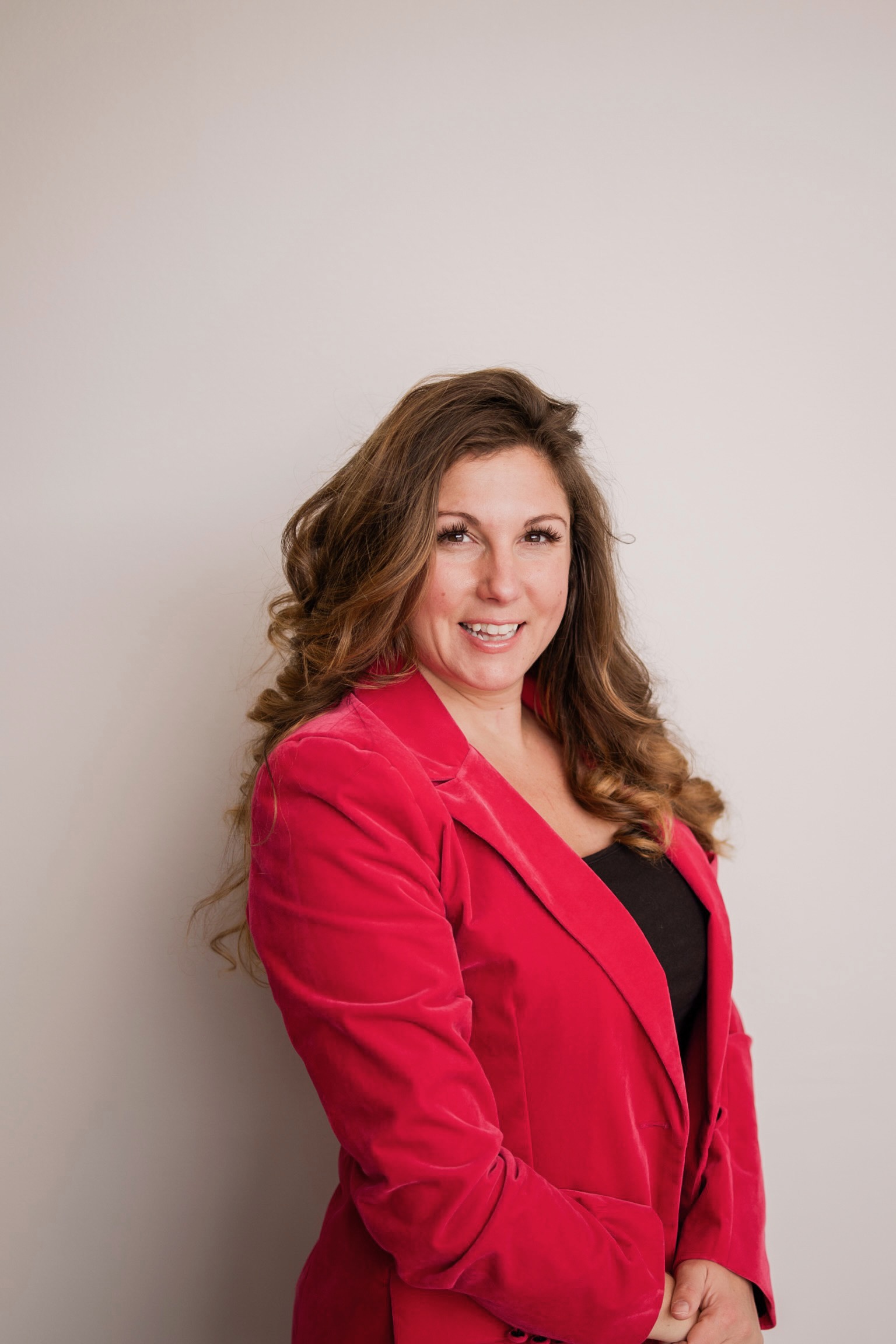
Former Police Officer | Coach | Speaker
Autumn Schmidt is the founder of She’s An Asset, a women’s safety and empowerment training company that takes a holistic approach to personal safety by blending situational awareness, self-protection, and confidence-building strategies. Her teachings are unique as she applies her law enforcement, martial arts, and education background in her teachings.